Backup as Data: Eon and Microsoft Fabric Unify Live Analytics on OneLake

  • Thread Author
Eon’s new integration with Microsoft Fabric and OneLake reframes a decades‑old IT pattern: instead of treating backups as inert insurance copies, enterprises can now expose them as live, governed data assets that accelerate analytics, AI/ML training, and BI while promising measurable cloud storage savings. This collaboration — announced in a public preview on November 18, 2025 — positions Eon to convert protected database snapshots into queryable Iceberg/Delta artifacts surfaced directly inside Fabric through OneLake shortcuts and table APIs, allowing teams to access backup data without creating separate analytics copies.

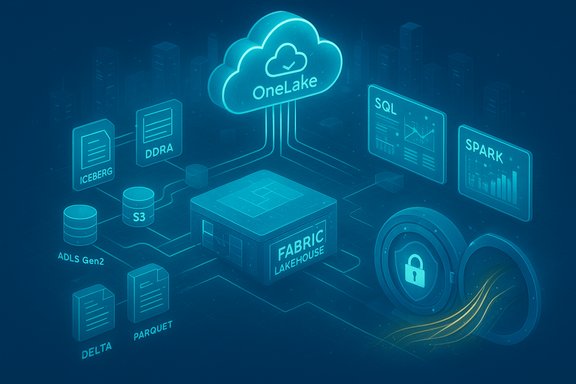
Fabric Lakehouse with OneLake cloud linking Iceberg, Delta, Parquet and S3/ADLS to SQL and Spark.Background / Overview​

Enterprises traditionally maintain multiple copies of the same data: production replicas for live systems and separate copies for analytics, compliance, or long‑term retention. That duplication inflates cloud storage bills, creates operational complexity, and lengthens time‑to‑insight for analytics and model training. Eon’s pitch is simple and bold: make the backup itself the canonical, queryable historical data source — managed, versioned, and discoverable — and expose it to analytics engines without full restore or ETL. The company describes this capability as part of its cloud backup posture management (CBPM) platform; Eon’s engineering pedigree traces to the CloudEndure founders and former AWS migration and DR leaders. Microsoft Fabric’s OneLake is the technical linchpin that makes zero‑copy access plausible. OneLake is designed as a tenant‑wide logical lake with support for open table formats (Delta, Apache Iceberg, Parquet) and shortcuts — virtual pointers that let Fabric present external storage locations as if they were native lakehouse tables. These shortcuts, together with OneLake’s Table APIs, enable Fabric workloads (SQL, Spark, Power BI, AI Foundry) and third‑party engines to read in‑place data without duplicating it. Microsoft’s documentation explicitly covers shortcuts, cross‑cloud targets (ADLS Gen2, S3, GCS), caching controls, and table discovery for Delta and Iceberg artifacts. Eon says the combined solution can reduce cloud storage costs up to 50% for some customers by eliminating duplicate analytics copies and using incremental‑forever deduplication techniques, while keeping security and governance intact through Entra ID and Fabric’s access controls. Those vendor‑stated savings are an attention‑grabbing headline but require careful validation in every customer environment.

How the integration works — technical anatomy​

The announced integration relies on three core technical ingredients: conversion of backup artifacts into open table formats, OneLake shortcuts and Table APIs to virtualize metadata and present tables to Fabric, and governance controls to preserve retention and security semantics.

1. Backup ingestion and table generation​

  • Eon connects to enterprise backup vaults across clouds (Azure, AWS, GCP) and converts database snapshots and backup artifacts into open table formats — typically Apache Iceberg or Delta backed by Parquet file storage.
  • This conversion includes schema inference, versioned metadata logs, and point‑in‑time table generation so that each snapshot becomes a discoverable, versioned table for analytics and model training.
  • The output is a sequence of immutable Parquet files plus Iceberg/Delta metadata that engines can query directly.

2. OneLake visibility via shortcuts and table APIs​

  • Once backups are rendered into open formats and stored in object storage, Eon exposes those locations to Fabric by creating OneLake Shortcuts or otherwise registering the storage paths with OneLake’s metadata layer.
  • Shortcuts behave like symbolic links: they appear as folders or tables inside a lakehouse or KQL database and can point to ADLS Gen2, S3, GCS, or other supported targets without moving data. Microsoft documents how shortcuts map Delta and Iceberg artifacts into Fabric’s table namespace and how engines can consume them.
  • OneLake Table APIs and metadata virtualization allow third‑party engines that understand Iceberg or Delta to discover and query the data without bespoke connectors.

3. Live query without rehydration​

  • Fabric workloads (SQL, Spark, Real‑Time Intelligence, and AI Foundry) can query the tables in place — no rehydration, no ETL, no separate analytics copy.
  • Shortcut caching is available to reduce repeated cross‑cloud egress costs or to accelerate reads for frequently accessed files, with configurable retention windows. Microsoft’s docs describe caching behavior, region-specific limitations, and file size caveats that enterprises must plan for.

4. Governance and protection​

  • Eon integrates with Azure Entra ID (Azure AD) and Fabric workspace permissions to maintain strict RBAC and auditing for backup artifacts exposed to analytics.
  • OneLake and Fabric provide cataloging, lineage, and workspace‑level RBAC; Eon asserts the backup artifacts remain encrypted and immutable according to enterprise retention policies. Those security assurances are central to adoption but require independent validation per tenant due to workspace and preview/GA differences.

What this enables for enterprises — benefits and use cases​

  • Cost efficiency through zero‑copy analytics: eliminating separate analytics copies can reduce redundant storage and the compute overhead of ETL and restore jobs. Vendor messaging cites up to 50% storage reductions as a headline figure.
  • Faster time to insight: teams can query historical snapshots instantly, enabling retrospectives, audits, model training on historical states, and forensic analysis without waiting for restores.
  • Single source of truth for historical state: backups preserve original transaction ordering and point‑in‑time correctness, which can be valuable for compliance and model fidelity.
  • Multicloud continuity: Eon advertises support for Azure, AWS, and GCP backups, enabling a unified analytics surface across clouds while preserving each backup copy in the customer’s tenancy.
  • New AI workflows: backup data is often rich in labeled, historical events — a natural training ground for anomaly detection, forecasting models, and supervised learning experiments.
These use cases align with a growing vendor trend to reduce duplication and treat data in place as the authoritative analytic surface — a pattern Microsoft itself has designed OneLake to support.

Critical analysis — strengths, caveats, and hidden costs​

The Eon + Microsoft Fabric story is technically plausible and attractive, but several important operational and risk considerations must be weighed before organizations reassign their backup copies to analytics duty.

Strengths​

  • Platform fit: OneLake’s shortcut model and support for open formats (Iceberg/Delta) are explicit platform primitives that enable read‑in‑place patterns; Eon’s conversion of backups into these formats is a natural complement.
  • Vendor credibility: Eon’s founders and investors give the company market credibility; public filings and PR coverage document its rapid rise since launching from stealth.
  • Operational simplicity for data teams: when executed correctly, removing ETL and rehydration lowers engineering overhead and accelerates analytics velocity.

Key caveats and risks​

  • Vendor claims vs. customer reality: the “up to 50%” storage savings headline is a vendor estimate. Realized savings depend on whether the organization currently stores duplicate analytics copies, retention policies, deduplication effectiveness, storage tier selection (hot vs cool vs archive), and whether analytics workloads scan large historical snapshots frequently. Treat vendor‑stated percentages as pilot hypotheses to validate in your environment.
  • Performance trade‑offs: reading from cold or archive storage in place can increase query latency and IO costs. Frequent analytic scans over large backups may still be cheaper and faster if pre‑aggregated or staged into hot analytics storage. OneLake’s caching reduces repeated egress but has limits and retention windows that need to be tuned.
  • Restore semantics and application‑consistency: backups used for analytics must still preserve application‑consistent semantics required for recovery. Converting a backup into a queryable Iceberg/Delta table is useful, but teams must confirm the conversion preserves the data fidelity required for point‑in‑time restores and that it does not interfere with RPO/RTO guarantees. Always maintain tested restore playbooks alongside analytics exposure.
  • Security and privileged access surface: exposing backups to analytics broadens the access footprint. Historically, backup copies are isolated, air‑gapped, or immutable to mitigate ransomware and insider threats. Making them queryable even as read‑only requires careful RBAC mapping, SIEM integration, and least‑privilege testing to avoid accidental or malicious exposure. Fabric and OneLake provide governance tools, but many of the enforcement responsibilities fall to tenant administrators and the integration implementation.
  • Regulatory and retention conflicts: backup retention and legal hold semantics often differ from operational analytics retention. Presenting backups to analytics teams risks accidental exposure of data that must stay under strict retention and discovery rules. Enterprises need to map retention metadata and legal holds into OneLake cataloging and enforce it through Purview/lineage controls.
  • FinOps and chargeback ambiguity: if backups become multipurpose assets, procurement and engineering must rework cost allocation. Which team pays for storage versus compute when backups are used for ML training? Unclear chargeback policies can cause budgetary and governance friction.

A practical pilot playbook — validate before you expand​

Adopting backup‑as‑data should proceed as a controlled program. Below is a practical, prioritized pilot checklist IT and data teams can follow:
  • Define objectives and success metrics: cost reduction, query latency targets, or time‑to‑model improvements.
  • Inventory backup sources and retention policies: list databases, storage accounts, and current analytics pipelines that would be impacted.
  • Select a representative workload for the pilot: choose a dataset with production‑like size, transaction rate, and realistic retention windows.
  • Convert and store: configure Eon to produce Iceberg/Delta artifacts into an isolated storage account so you can test in a sandboxed environment.
  • Create OneLake Shortcut(s): add shortcuts to a dedicated Fabric workspace and enable caching if appropriate. Monitor propagation times and metadata discovery.
  • Run analytics and measure: execute typical SQL and Spark workloads; capture latency, IO, egress, and compute costs; compare with baseline ETL-based approaches.
  • Test full restore: perform a live restore from the same backup artifacts to validate application‑consistent recovery and confirm RPO/RTO preservation.
  • Validate governance and logging: confirm Entra ID roles, workspace RBAC, access logs, and SIEM integration capture and enforce least‑privilege access.
  • Model FinOps: define chargeback rules, query quotas, and alert thresholds to prevent uncontrolled analytics scans over archived backups.
  • Update runbooks and compliance playbooks: reflect the new discovery surface and ensure legal holds and retention rules are mapped to OneLake catalog metadata.

Deployment considerations and limitations​

  • Feature parity and preview behavior: Eon’s OneLake integration was announced as a public preview. Preview features can behave differently across regions and workspaces; check the feature availability matrix in your tenant and validate behavior in the target workspace before production rollout.
  • Shortcut limits and naming restrictions: OneLake imposes limits on the number of shortcuts per item and has naming/character restrictions; plan naming conventions accordingly. Shortcut discovery of Delta/Iceberg artifacts may require specific folder structures.
  • Cache sizing and retention policy: OneLake’s shortcut cache reduces egress but has limits (per‑file size caching rules, retention windows of 1–28 days). Understand caching semantics to avoid unexpected egress charges.
  • Region and storage tier behavior: queries against cold or archive tiers incur different latency and cost profiles. Model expected query patterns against the chosen storage tier; for heavy scan workloads, a hybrid staging model may still be optimal.

Who should lead this work inside the enterprise?​

Adopting backup‑as‑data spans several functional areas and requires coordinated governance.
  • Platform/Cloud Engineering: owns the backup artifacts, storage accounts, and restores — responsible for ensuring recovery semantics are preserved.
  • Data Engineering: consumes backup tables for analytics and model training — responsible for query patterns, schemas, and data hygiene.
  • Security & Compliance: maps retention, legal holds, audit logging, and SIEM ingestion; runs least‑privilege tests and tabletop restore scenarios.
  • FinOps: establishes chargeback rules and monitors storage vs compute cost evolution.
  • DevOps/Incident Response: updates runbooks, orchestrates DR rehearsals, and certifies any changes to the restore process.
A cross‑functional working group with a clear RACI (Responsible, Accountable, Consulted, Informed) model reduces the risk of the backup layer becoming a swamp of contested responsibilities.

Market context and strategic implications​

Eon’s announcement is part of a broader trend: vendors and platform providers are converging around zero‑copy data access models that aim to cut redundant copies and accelerate AI/analytics adoption. Microsoft has explicitly built OneLake to be a tenant‑wide logical lake with mechanisms for mirroring, shortcuts, and table APIs — patterns that other vendors (including Celonis, Fivetran, and Confluent) have embraced to reduce ETL and data duplication. Eon’s positioning as a CBPM company that turns backups into queryable data lakes aligns with this market momentum, and the startup enjoys strong backing and media coverage following its launch from stealth and rapid funding rounds. From a strategic perspective, turning backups into an active data platform can increase ROI on retained data, open new ML training surfaces, and simplify analytics pipelines. But it also shifts the enterprise’s risk envelope — backups that were once the domain of IT and security become an analytic resource that must be governed with equal rigor. Organizations that treat this capability as a controlled enabler — piloting, validating, and mapping governance before broad rollout — can capitalize on the upside while managing the new surface area.

Recommended evaluation checklist for procurement and architecture teams​

  • Confirm OneLake Table API and shortcut behavior in your target region and workspace tier; verify preview vs GA differences.
  • Require a live restore test as part of procurement: the vendor must demonstrate that the conversion to Iceberg/Delta does not impair application‑consistent restores.
  • Quantify storage and query cost scenarios across realistic workloads, including cold/archival access patterns and potential egress.
  • Validate RBAC and observability: ensure Entra ID roles, Fabric workspace RBAC, and audit logs meet compliance requirements.
  • Define FinOps rules and quotas for analytics scanning of backup datasets to prevent runaway compute or egress costs.

Conclusion​

Eon’s integration with Microsoft Fabric and OneLake offers a compelling shift in how enterprises can monetize and operationalize their largest under‑used data asset: backups. The technical building blocks are real — OneLake shortcuts and table APIs combined with open table formats (Iceberg/Delta) provide a credible mechanism for read‑in‑place analytics — and Eon has the product positioning and funding to pursue the opportunity aggressively. That said, the approach is not a plug‑and‑play replacement for existing recovery practices. The headline savings and productivity gains should be treated as hypotheses to be validated via pilots that measure restore fidelity, query performance, governance mapping, and total cost of ownership. Organizations that run disciplined pilots, update runbooks, and align FinOps and security policies will be best positioned to unlock the twin benefits of lower cloud spend and faster analytics while preserving the fundamental mission of backups: resilient, reliable recovery.
Eon’s vision — of backups transforming from passive insurance to an active growth engine — is strategically significant. The technology and platform support exist to make it practical. The responsible path forward is cautious optimism: test thoroughly, govern tightly, and scale only after the recovery guarantees are unquestionable.

Source: markets.businessinsider.com Eon Collaborates with Microsoft to Turn Database Backups into a Growth Engine for Enterprises
 

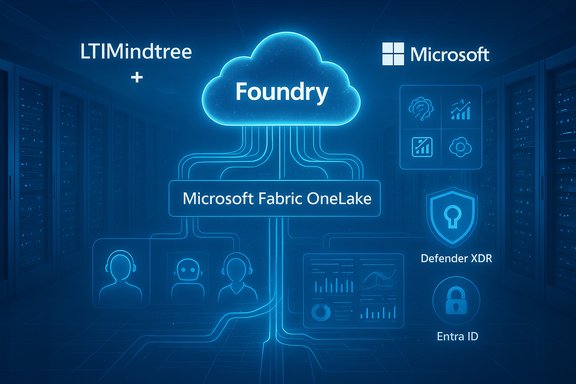
LTIMindtree has formally deepened its global collaboration with Microsoft to accelerate enterprise adoption of Microsoft Azure and scale AI‑powered transformation across cloud migration, data modernization, productivity (Microsoft 365 Copilot) and security—an initiative that packages Azure OpenAI through Microsoft Foundry, Microsoft Fabric, and a full Microsoft security stack into transactable offerings and a co‑engineered go‑to‑market designed to move customers “from pilots to productivity.”

Neon blue cloud labeled Foundry connects Microsoft Fabric OneLake in a data center.Background​

LTIMindtree is the post‑merger combination of L&T Infotech (LTI) and Mindtree, now operating as a global systems integrator with broad Microsoft credentials and a stated Microsoft Business Unit and Cloud Generative AI Center of Excellence to co‑develop and scale generative AI solutions. The company has been public about embedding Microsoft technologies into its IP and services portfolio, including Canvas.AI and other delivery accelerators that map to Azure capabilities. Microsoft’s enterprise AI strategy has pivoted around four primary pillars in recent quarters: a model and governance control plane (Microsoft Foundry), cloud‑hosted LLM access (Azure OpenAI), an integrated analytics/data plane (Microsoft Fabric/OneLake), and productivity copilots (Microsoft 365 Copilot). LTIMindtree’s announcement explicitly aligns its customer programs and delivery IP with that stack, signalling a deeper co‑engineering and co‑sell effort with Microsoft.

What LTIMindtree announced — the practical headline​

LTIMindtree’s expanded collaboration with Microsoft is less a single product tie‑up and more a packaged delivery model that bundles technology, security, governance and commercial levers for customers. The core elements the company has announced include:
  • A formal Microsoft‑facing business unit and a Microsoft Cloud Generative AI Center of Excellence to prototype, govern and operationalize generative AI for clients.
  • Embedded use of Azure OpenAI via Microsoft Foundry to build domain copilots, retrieval‑augmented generation (RAG) pipelines and agentic automation.
  • Acceleration packages for Microsoft 365 Copilot adoption with a governance‑first rollout model tied to Entra ID and DLP controls.
  • Data modernization using Microsoft Fabric / OneLake as the unified data plane that feeds AI and analytics workloads.
  • A security‑first managed services baseline built on Defender XDR, Microsoft Sentinel, Intune, Windows Autopatch and Entra ID intended as a repeatable blueprint for customers.
  • Commercial mechanisms to accelerate migrations and consumption such as Azure Consumption Commitment advisory (MAAC/MACC), co‑sell motions and transactable marketplace offerings to shorten procurement cycles.
These components are being positioned as an end‑to‑end pathway: unify data, host models under a governance control plane, embed copilots and agents into workflows, and operate everything under a hardened Microsoft security and operations posture.

Why this matters: the practical value proposition for enterprise IT​

The announcement is intentionally pragmatic. LTIMindtree and Microsoft are selling a workflow for customers that tries to solve the three most common enterprise problems with generative AI: data grounding, governance, and operationalization.
  • Faster time to production — Prebuilt migration factories, data modernization accelerators and Copilot adoption packages reduce the repetitive engineering work that turns proofs‑of‑concept into sustained production services.
  • A governed model hosting surface — Using Microsoft Foundry and Azure OpenAI keeps inference workloads inside Azure’s control plane with model catalogs and routing to support compliance and observability.
  • A single data spine — Microsoft Fabric and OneLake are intended to provide the governed datasets required to ground LLMs and to reduce data duplication and sprawl across analytics and AI pipelines.
  • Security and operational trust — A repeatable deployment of Defender XDR, Sentinel, Intune and Entra ID forms a standardized security baseline to protect identities, endpoints and cloud telemetry. LTIMindtree says it already applies this stack internally as a template for customers.
Those are clear selling points for enterprise buyers who have been frustrated by pilot fatigue and a lack of repeatability in AI programs.

Technical architecture: how the pieces map to enterprise implementations​

Azure OpenAI + Microsoft Foundry: model hosting and agent orchestration​

LTIMindtree plans to build domain copilots and agentic solutions by leveraging Azure OpenAI models surfaced through Microsoft Foundry. In practical terms that means:
  • Data is ingested and secured in Azure storage or Fabric/OneLake.
  • Semantic/vector indexes or Fabric indexes are created to support retrieval.
  • Model inference is routed through Foundry, which offers model choice, routing, observability and governance tools.
  • Copilots and agents are connected to business systems via APIs and managed runtimes.
This is the standard enterprise RAG pipeline adapted to Microsoft’s Foundry control plane; it prioritizes hosting sensitive operations within a customer’s Azure tenancy for compliance and data residency reasons. The Foundry approach also helps with multi‑model strategies when customers require model diversity.

Microsoft Fabric: the data foundation​

Microsoft Fabric is being pitched as the “single source of truth” data plane that feeds AI and analytics workloads. Using Fabric’s OneLake, LTIMindtree intends to:
  • Unify data engineering, data science and BI under one governed layer.
  • Create curated datasets to ground copilots and reduce hallucination risk.
  • Use Fabric Real‑Time Intelligence to support low‑latency analytics for operational use‑cases.
When implemented correctly, a unified data plane simplifies lineage, access controls and the data hygiene required for reliable LLM outputs. LTIMindtree has been named a featured partner for Fabric Real‑Time Intelligence in partner materials.

Microsoft 365 Copilot: governance‑first workplace AI​

LTIMindtree emphasizes a governance‑first approach to rolling out Microsoft 365 Copilot—starting with pilots, mapping DLP and Entra policies, conducting red‑team output checks, and gradually integrating Copilot into line‑of‑business workflows such as sales enablement, legal summarization and product documentation.
The company also reports internal adoption of Copilot as a reference point for customer rollouts. While internal deployment is a valuable practical proof point, the scale and outcomes of specific productivity gains will vary by customer and require measurement.

Security stack and SOC modernization​

LTIMindtree says it has deployed the full Microsoft security stack internally—Defender XDR, Microsoft Sentinel, Intune, Windows Autopatch and Entra ID—and ingests telemetry monthly for automated threat detection and response. Microsoft customer case materials previously documented a large endpoint modernization project (over 85,000 endpoints standardized using Intune and Autopatch), which lends credibility to LTIMindtree’s capacity to run large scale deployments. That integrated security posture is central to the partner pitch: security and governance are not optional extras but prerequisites for enterprise‑grade AI.

Commercial mechanics: how migrations and costs will be managed​

A critical practical detail in this announcement is the use of Azure Consumption Commitments (MAAC/MACC) and co‑sell marketplace offers to underwrite migrations and early deployments.
  • MAAC-style commitments can provide customers with pricing stability and joint funding for migrations, but they require careful modeling of expected consumption volumes and exit/phase provisions.
  • Transactable marketplace listings and co‑sell incentives shorten procurement and enable more predictable go‑to‑market mechanics for packaged accelerators.
These commercial levers can accelerate adoption, but they also create risk if forecasted workloads don’t materialize—procurement teams must insist on transparent cost simulations for 1, 3 and 12‑month horizons.

Delivery IP and proof points​

LTIMindtree is packaging this Microsoft stack with proprietary delivery assets and accelerators such as Canvas.AI, BlueVerse, Cloud Accelerate Factory and vertical accelerators. Those assets are intended to reduce custom engineering and shorten the journey from proof‑of‑concept to production. The company points to several operational references—most notably the Intune/Windows Autopatch endpoint modernization across tens of thousands of devices—as evidence of execution scale. However, productized IP and accelerators vary in maturity; buyers should require live demos, reference architectures and measurable KPIs before committing to large consumption commitments.

Strengths of the LTIMindtree–Microsoft play​

  • Integrated stack approach: Combining Foundry, Fabric, Copilot and Microsoft’s security portfolio creates a cohesive, end‑to‑end platform that reduces integration friction for customers.
  • Repeatable deployment patterns: Migration factories and playbooks can lower engineering costs and shorten delivery timeframes.
  • Operational security baseline: A prebuilt security posture using Defender XDR + Sentinel + Entra + Intune addresses one of the largest enterprise adoption barriers—trust and governance.
  • Commercial accelerators: MAAC advisories and marketplace offers can provide funding and pricing certainty for migrations.
  • Scale and domain delivery capability: LTIMindtree’s global footprint and staff scale give it practical capacity to staff large transformation programs. Industry wins and Microsoft partner recognitions support that claim.

Risks, gaps and realistic caveats​

The announcement is compelling but not risk‑free. IT leaders assessing LTIMindtree’s Microsoft‑centric pathway should weigh the following:
  • Vendor concentration and lock‑in: Deep alignment with Microsoft’s stack simplifies operations but increases strategic dependence on a single cloud and model ecosystem. Portability of copilots and data pipelines to other clouds will require design tradeoffs.
  • Consumption risk and stranded spend: MAAC‑style commitments require realistic forecasting. Overcommitting to Azure consumption without flexible phase gates can create stranded spend if use‑cases don’t scale.
  • Operational maturity of IP: Accelerators like Canvas.AI and BlueVerse reduce time to value, but customers must independently validate IP robustness, SLAs and support models across geographies.
  • Marketing vs. measurable outcomes: Phrases such as “leading the way in enterprise AI” are self‑reported; independent benchmarks and customer KPIs should be demanded. Where LTIMindtree makes specific operational claims—such as ingesting “comprehensive security data monthly for automated threat response”—those are company declarations and should be validated in the customer contract and SOC runbooks.
  • Governance overhead: Embedding Copilot and LLMs into workflows requires robust DLP, selective data exposure controls and continuous monitoring; insufficient investment in governance will amplify legal, regulatory and reputational risk.

Due diligence checklist for enterprise buyers​

IT leaders planning a commercial pilot or migration with LTIMindtree and Microsoft should insist on the following before committing:
  • Define measurable KPIs: productivity uplift, query accuracy, latency SLAs, cost per inference and mean time to detect/respond for security incidents.
  • Ask for a short, governed pilot scope with deliverables: data residency plan, MLOps outputs, cost simulations (1/3/12 months) and a post‑pilot roll‑forward plan.
  • Request a security runbook: show how Sentinel playbooks, Defender automation and Entra conditional access integrate with Copilot usage logs and DLP controls.
  • Negotiate MAAC carefully: phase commitments with the ability to pause or reallocate consumption to avoid stranded spend.
  • Validate IP and accelerators: request functional demos, code access or architecture walkthroughs and reference customers in the same vertical.
  • Insist on auditability: logging of prompt inputs, model versions, data access decisions and a defined red‑team process for model outputs.
  • Confirm exit and portability terms: clarify how data and model artifacts are exported if you change providers.
These steps reduce the strategic and financial risk of taking a packaged hyperscaler approach to enterprise AI.

Market implications: why GSIs and hyperscalers are converging​

LTIMindtree’s move is part of a broader industry pattern where Global System Integrators (GSIs) and hyperscalers create tighter commercial and technical alignments:
  • Hyperscalers provide the platform, model catalog, governance and scale.
  • GSIs bring industry domain expertise, delivery muscle and IP that convert platform capability into business outcomes.
This dynamic accelerates adoption but also concentrates power: procurement teams must weigh the operational advantages against potential regulatory scrutiny and long‑term strategic flexibility. For LTIMindtree, the alignment helps convert pipeline into consumption and provides a competitive differentiator in the mid‑cap services market where scale and AI capability increasingly win deals. Recent large deals announced by LTIMindtree indicate momentum for this model, but buyers should evaluate vendor consolidation implications carefully.

How LTIMindtree’s public evidence stacks up​

There are verifiable pieces of evidence that strengthen LTIMindtree’s claims:
  • The official Business Wire press release details the expanded collaboration and quotes from LTIMindtree and Microsoft executives.
  • LTIMindtree’s own news page mirrors the press release and provides additional program framing.
  • Microsoft customer stories previously documented LTIMindtree’s large scale endpoint modernization (85,000+ endpoints), demonstrating credible execution capability on device management and Autopatch/Intune programs.
At the same time, some claims remain as marketing statements until validated in customer contracts—particularly assertions about monthly telemetry ingestion volumes, specific productivity uplift percentages from Copilot, or the operational maturity of accelerators across verticals. These should be treated as vendor assertions until independently audited in live deployments.

Short term outlook and what customers should expect​

In the near term, the announcement will likely produce a predictable set of outcomes:
  • An uptick in packaged Azure migration and Copilot adoption offers marketed by LTIMindtree to enterprise accounts.
  • Joint co‑sell motions and marketplace listings that accelerate procurement cycles for customers prepared to adopt Microsoft‑native stacks.
  • More proof points and customer success stories as LTIMindtree rolls out pilot programs and publishes metrics—if and when those metrics are auditable, they will materially affect procurement confidence.
Longer term, the partnership may pressure competitors (other GSIs) to deepen hyperscaler alignments, which could further concentrate enterprise AI delivery around a few dominant cloud ecosystems.

Conclusion​

LTIMindtree’s expanded partnership with Microsoft is an archetypal example of how systems integrators are reorganizing to industrialize AI: standardize the data layer (Microsoft Fabric/OneLake), host models under a governance control plane (Azure OpenAI via Microsoft Foundry), embed copilots into productivity flows (Microsoft 365 Copilot), and operate under a hardened security baseline (Defender XDR, Sentinel, Intune, Windows Autopatch, Entra ID). The commercial mechanics—MAAC advisory, co‑sell motions and marketplace offers—are designed to convert technical capability into consumable, funded projects. That package is attractive and pragmatic for customers seeking a fast, repeatable path from pilot to production, but it is not a plug‑and‑play guarantee. Enterprises should insist on measurable KPIs, transparent consumption modeling, stringent governance controls and contractual safeguards for portability before committing to large‑scale consumption agreements. Where LTIMindtree’s internal references and Microsoft customer stories demonstrate real scale and technical competence, some of the more granular operational claims remain vendor assertions until validated in field deployments. Adopting this pathway thoughtfully—through governed pilots, detailed cost and security runbooks, and a focus on auditability—gives organizations a credible route to accelerate Azure adoption and realize AI‑driven business outcomes while managing the strategic risks of vendor concentration and consumption exposure.

Source: Analytics India Magazine LTIMindtree Expands Partnership with Microsoft to Accelerate Microsoft Azure Adoption, Drive AI-Powered Transformation | AIM
 

Tessell’s latest update positions the company as a serious contender for enterprises intent on modernizing heterogeneous database estates on Azure while embedding AI into routine database operations, real‑time analytics, and migration workflows. The vendor has rolled out AI‑driven management tools across major engines (Oracle, SQL Server, MySQL, PostgreSQL), introduced a non‑intrusive “lift & shine” path for Oracle workloads on Azure, and built near‑real‑time pipelines into Microsoft Fabric and OneLake that promise fresher data for analytics and machine learning. The release reiterates Tessell’s multi‑cloud DBaaS thesis — one control plane across clouds — and brings attention back to two practical questions every IT leader faces: how much risk does this reduce, and what new tradeoffs does it introduce?

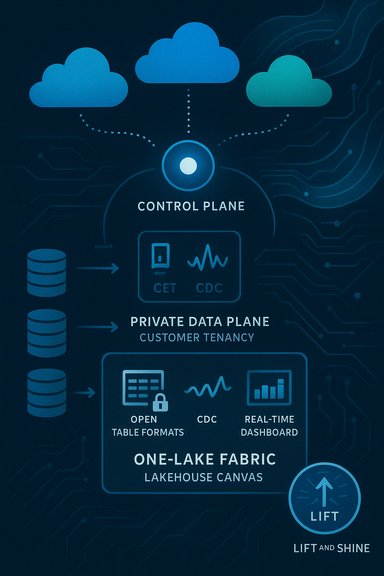
Cloud data fabric diagram with control plane, private data plane, and lakehouse canvas.Background​

Tessell has been marketing itself as a multi‑cloud Database‑as‑a‑Service (DBaaS) that consolidates operations across cloud providers and database engines. The platform claims to combine a unified control plane, a data plane that runs in the customer’s cloud tenancy, and AI automation layers to handle much of the routine database lifecycle work. Recent company materials and product pages emphasize three recurring themes:
  • Unified management across cloud providers and engines.
  • Automated, AI‑assisted operations (performance tuning, scaling, governance).
  • Near‑real‑time data movement into analytics platforms, notably Microsoft Fabric/OneLake.
These updates build on Tessell’s earlier product positioning and a sequence of funding and go‑to‑market moves intended to expand its footprint among enterprise customers migrating large, heterogeneous database estates into cloud environments.

What’s in the update: platform enhancements explained​

Tessell’s announcements cover several discrete areas that together form a coherent product push for Azure‑centric modernization.

AI‑powered management across engines​

Tessell now advertises AI‑driven operational tooling for a range of widely used database engines:
  • Oracle
  • SQL Server
  • MySQL
  • PostgreSQL
The AI layer is described as handling tasks such as automated performance tuning, proactive resource scaling, governance enforcement, and cost controls. These capabilities aim to reduce manual DBA effort, accelerate remediation, and optimize resource allocation by analyzing telemetry and applying prescriptive changes automatically.
Why this matters: enterprises with multi‑engine fleets typically duplicate operational effort across toolsets. An AI layer that normalizes observability and automates repetitive fixes can reduce MTTR and operational headcount pressure — if the automation is reliable.

Migration without code changes: “lift & shine” for Oracle​

A core headline is Tessell’s “lift & shine” approach to Oracle on Azure. In practical terms that means:
  • Migrating Oracle instances to cloud infrastructure managed by Tessell without requiring application schema or code changes.
  • Preserving existing PL/SQL, extensions, and object models so that transactional applications continue to work as before.
  • Offering a managed control plane that orchestrates the migration and subsequent lifecycle.
The pitch is straightforward: reduce migration risk and speed up timelines by avoiding long, costly application refactors. For many Oracle customers — where packaged apps and years of customization are the norm — keeping the application layer untouched is often the deciding factor for cloud moves.

Near‑real‑time streaming to Microsoft Fabric and OneLake​

Perhaps the most strategic technical detail is Tessell’s integration with Microsoft Fabric and OneLake for continuous data streaming. The platform now supports sending inserts, updates and deletes from operational databases directly into OneLake using Fabric’s mirroring and real‑time ingestion primitives.
Key elements of this capability:
  • Open mirroring / CDC: Change events are captured and forwarded with low latency so analytics and AI layers consume near‑fresh data.
  • OneLake ingestion: Data lands in OneLake in open table formats, enabling downstream analytics, vector store creation, and RAG (retrieval‑augmented generation) workflows.
  • Private link transmission: Tessell emphasizes private, secure connectivity between customer tenancy and the ingestion targets to reduce exposure and align with enterprise networking and compliance constraints.
This integration is significant because it links transactional systems and analytics surfaces with minimal ETL overhead — an architectural move that supports both operational analytics and online AI features that depend on current data.

AI automation for operations and cost​

Beyond advisory tooling, Tessell’s platform includes automation that can:
  • Tune queries and indexes or recommend and apply schema changes.
  • Adjust compute and storage resources in response to workload signals.
  • Enforce policy‑driven governance for backups, retention, and data residency.
  • Provide cost‑control mechanisms that surface and act on runaway spend patterns.
The automation is presented as both proactive (predicting resource needs) and reactive (automatically remediating performance regressions). Tessell also pushes a conversational management experience (their “CoDaM”) designed to let teams query and control database operations through natural language interfaces.

Oracle modernization on Azure: what “lift & shine” really means​

The practical benefits​

  • Minimal application risk: Keeping schemas and code unchanged removes the most error‑prone element of migrations — application rewrites.
  • Faster time‑to‑cloud: The migration cadence is limited mainly by data transfer and cutover logistics rather than months of refactoring.
  • Preserves vendor‑specific features: For organizations relying on Oracle capabilities (RAC, Advanced Compression, specific optimizer behaviors), the lift & shine path aims to keep those primitives intact.

Technical mechanics (high level)​

A typical lift & shine migration involves:
  • Provisioning target infrastructure in the customer’s Azure tenancy.
  • Establishing secure data plane components that store database files, logs, and backups locally to the customer.
  • Streaming transaction logs or using near‑zero‑downtime migration tooling to move active workloads.
  • Performing cutover with minimal application changes and validating behavior under traffic.
Tessell’s product pages emphasize a white‑box data plane that lives in the customer’s cloud account, limiting third‑party access to metadata while the vendor manages the control plane externally. This pattern reduces perceived operational risk by retaining ownership of keys, networks, and storage inside the customer tenancy.

Risks and constraints​

  • Oracle feature parity: Not every on‑prem Oracle feature or third‑party extension maps perfectly to cloud compute/storage architectures. Customers must validate behaviors under representative workloads.
  • Licensing nuance: Bring‑Your‑Own‑License (BYOL) and license mobility specifics matter. Large Oracle estates have complex licensing arrangements that affect migration economics.
  • Performance regression risk: Moving an Oracle workload to a different storage or networking fabric can reveal performance sensitivity not visible in lab tests. Benchmarking on chosen Azure VM SKUs is essential.
These are standard cautions for any Oracle modernization; the lift & shine model reduces code risk but does not eliminate the need for careful testing and licensing validation.

Real‑time analytics and AI: streaming into Fabric and OneLake​

Tessell’s integration with Fabric targets a growing enterprise pattern: operational databases streamed continuously into a unified analytics lake so ML models and analytics apps work on near‑current data.

How it plugs into Fabric’s architecture​

Microsoft Fabric’s Real‑Time Intelligence and OneLake provide the receiving end for continuous streams. Key capabilities Fabric supplies that make this useful include:
  • Real‑time event hub and stream processing for ingesting high‑velocity changes.
  • OneLake as a central lakehouse in Delta/Parquet or other open formats to store canonical, governed data.
  • SQL in Fabric and vector/RAG features that allow embeddings and AI workflows to run close to the stored table data.
In practice, Tessell captures database changes and routes them into Fabric’s mirroring or event stream endpoints, resulting in low‑latency data availability for dashboards, model inference, and RAG pipelines.

Business outcomes enabled​

  • Near‑instant operational intelligence: Fraud detection, inventory recon, and real‑time dashboards benefit from minute‑or‑sub‑minute freshness.
  • Shorter model feedback loops: Models trained or scored on fresher data converge faster and yield more accurate operational decisions.
  • Reduced ETL complexity: Open mirroring and streaming lower the need for custom ETL code and separate batch windows.

Caveats​

  • Consistency semantics: Streaming CDC often provides eventual consistency for analytic tables; design must account for partial updates, out‑of‑order delivery, and idempotency.
  • Data lineage and governance: Real‑time pipelines can multiply surface area for governance; enterprises must ensure OneLake policies and Fabric governance are properly applied.
  • Cost profile: Streaming systems incur continual ingestion and compute cost — cost models should be validated against expected throughput and retention windows.

Customer scale claims: migration stories and what they mean​

Tessell’s customer materials cite large migrations — case pages reference migrations of hundreds of databases (700+ appears in promotional materials and case stems). These stories typically include reported savings in infrastructure and operations and headline metrics such as reduced RPO/RTO and cost reductions.
What to keep in mind when reading migration claims:
  • These figures are vendor‑reported and often reflect selected customer projects or aggregated internal metrics.
  • Outcomes depend heavily on the starting point: consolidation potential, application complexity, and existing license footprints vary dramatically.
  • Independent validation — benchmark tests, audited cost comparisons, and third‑party references — should form part of procurement due diligence.
In short, the scale and savings are plausible given the mechanics of consolidation and modern storage architectures, but IT teams should treat vendor numbers as starting points to be validated in a proof‑of‑value.

Security, governance and regulatory controls​

Tessell’s architecture emphasizes control of the data plane inside the customer’s cloud tenancy: keys, networks, snapshots and backups remain under customer control. The platform also lists compliance attestations and standard enterprise security measures.
Important points for regulated environments:
  • Data residency and policy controls: Policy‑driven placement and jurisdictional controls are essential for finance, healthcare, and government customers — Tessell highlights these as features.
  • Bring‑Your‑Own‑Key (BYOK) and tenant‑bound control plane: Keeping keys and storage in the customer’s account reduces exposure and audit friction.
  • Certifications and third‑party attestations: Vendor compliance documents should be reviewed and matched to regulatory requirements, and independent SOC/ISO reports requested during procurement.
These security patterns align with enterprise expectations, but compliance is never automatic — implementation detail matters.

Strengths: where Tessell’s approach is persuasive​

  • Heterogeneous engine coverage: Supporting the dominant engines (Oracle, SQL Server, MySQL, PostgreSQL) with a common control model reduces operational complexity and tool proliferation.
  • Non‑intrusive Oracle modernization: The lift & shine story removes the primary blocker for many Oracle customers — app refactoring — accelerating cloud adoption.
  • Tight integration with Azure analytics: Real‑time streams into OneLake/Fabric support modern AI and analytics use cases without heavy custom ETL.
  • Customer‑centred data plane: Running data plane artifacts in the customer tenant (networks, keys, backups) addresses fundamental trust and compliance concerns.
  • AI automation: Prescriptive automation for routine operations can materially reduce DBA toil if it behaves predictably and safely.
These strengths combine to create a coherent product narrative for enterprises primarily invested in Azure but requiring multi‑cloud flexibility.

Risks and cautions: where to dig deeper​

  • Marketing‑grade metrics vs. audited figures: Large migration and savings numbers are meaningful but often derived from selected wins. Ask for audited case studies and, where possible, an independent financial analysis.
  • Platform lock‑in: While Tessell promises multi‑cloud control, deep integration with Fabric/OneLake and vendor orchestration could introduce coupling that complicates future migration away from the platform.
  • Operational transparency: AI automation requires explainability. Organizations must insist on controls that allow pausing automated actions, audit trails for changes made by the AI layer, and easy rollback mechanisms.
  • Oracle compatibility edge cases: Not all Oracle deployments are identical. Verify support for replication topologies, advanced features, and third‑party integrations like GoldenGate or custom PL/SQL packages.
  • Cost modeling: Continuous streaming, high‑performance NVMe storage, and managed orchestration have a cost profile that can be favorable or expensive depending on scale and patterns. Build realistic TCO models that include ingestion, compute, storage, and support.
  • Governance complexity: Real‑time mirroring increases the number of systems subject to governance. Organizations should assess and automate policy enforcement and lineage tracking.
Being explicit about these risks in procurement conversations will avoid surprises in production.

Practical checklist for IT teams evaluating Tessell for Azure​

  • Inventory and compatibility
  • Catalogue database versions, features (RAC, advanced replication, extensions) and custom code.
  • Confirm vendor support for the exact feature matrix you rely on.
  • Proof of Value (PoV) plan
  • Choose a small but representative workload (workload mix, concurrency, storage patterns).
  • Run parallel performance and failover tests on the target Azure VM SKUs.
  • Performance and latency testing
  • Measure end‑to‑end transaction latency, commit times and peak throughput under realistic load.
  • Validate storage behavior (IOPS, latency) on chosen Azure disk types and VM families.
  • Backup, recovery and DR validation
  • Confirm point‑in‑time recovery semantics, cross‑region DR options and RTO/RPO targets.
  • Test backup encryption and key management (customer‑managed keys).
  • Security and compliance
  • Validate private link or VNet integration, IAM mapping, role‑based controls and audit logging.
  • Request SOC2/ISO certificates and run compliance proofs where needed.
  • Streaming and analytic integration
  • Validate end‑to‑end latency and idempotency of a CDC + Fabric/OneLake pipeline.
  • Confirm policy enforcement in OneLake and how access control flows from source to analytic tables.
  • Cost simulation
  • Model steady‑state and peak costs including ingestion, storage, compute and management fees.
  • Include impact of continuous streaming charges and extra analytics compute.
  • Contract and SLA review
  • Examine SLAs for migrations, incident response times, platform uptime and data recovery guarantees.
  • Ensure contract terms for data egress, portability and exit strategies are explicit.
  • Operational governance
  • Verify AI automation controls: audit logs, manual override, and escalation paths.
  • Ensure runbooks exist for common failure modes and rollback plans after cutover.
  • Long‑term portability planning
  • Document how to export data and metadata to alternative architectures if business needs change.
Following these steps reduces operational surprises and converts vendor claims into repeatable, verifiable outcomes.

Strategic implications for Azure‑centric enterprises​

Tessell’s feature set — especially the OneLake/Fabric streaming and lift & shine Oracle path — aligns with a broader trend: enterprises want a shorter path to operational AI with less engineering overhead. By collapsing migration pain points and offering continuous pipelines into analytics surfaces, Tessell reduces one axis of friction for developers, analysts, and ML teams.
For Microsoft’s Fabric narrative, vendor integrations like these make Fabric more attractive: they increase the breadth of data sources that can be kept fresh in OneLake, enabling richer Copilot and RAG applications. For enterprises, the practical effect is a tighter coupling between operational systems and cognitive applications — valuable, but requiring disciplined governance.

Final assessment​

Tessell’s announced enhancements present a credible, pragmatic set of capabilities for large organizations wrestling with multi‑vendor database estates and the desire to operationalize AI on Azure. The technical story is coherent: a customer‑resident data plane, a unified control plane, AI‑driven operations, and near‑real‑time pipelines into Fabric/OneLake. Those elements together can reduce migration complexity, accelerate analytics adoption, and cut repetitive DBA work.
However, the commercial and technical benefits rest on three verifiable pillars: real world performance under representative loads, transparent cost modeling, and rigorous governance controls. Many of Tessell’s headline numbers and migration tallies are vendor‑reported; IT teams should insist on proof‑of‑value projects, independent benchmarking, and contract terms that preserve portability and auditability.
For organizations prioritizing speed of modernization on Azure, Tessell’s approach is worth a careful PoV. For those for whom absolute portability, minimal third‑party orchestration, or strict vendor agnosticism is paramount, the tradeoffs merit deeper examination. In either scenario, the most robust strategy is evidence‑based evaluation: run repeatable tests, verify assumptions, and require clear operational exit paths before committing production workloads.

Source: IT Brief Australia Tessell enhances multi-cloud database platform with AI for Azure
 

Back
Top