

Bazzite arrived this year as a clear, gaming‑first Linux image that many enthusiasts now treat as more than an experiment — it’s a practical alternative for focused PC gaming on handhelds and midrange machines, but it is not a drop‑in replacement for Windows for everyone. Early hands‑on installs and community benchmarks show Bazzite bundles Proton, tuned Mesa and kernel builds, a console‑style UI, and containerized application management to reduce background noise and improve frame‑time consistency in shader‑heavy scenes, especially on thermally constrained hardware.
Despite this, Windows remains the safer, broader, and more frictionless platform for most gamers because of anti‑cheat, proprietary clients, and vendor tooling. Bazzite is best thought of as a powerful alternative — excellent for specific workflows and users who are comfortable with occasional tinkering — rather than a universal replacement. For readers considering the switch, the responsible path is measured: back up, test on external media, use dual‑boot while you validate your library, and rely on community guidance for the right driver/Proton/Mesa combinations. Those steps maximize the upside — a leaner, snappier gaming experience — while minimizing the tradeoffs that still tether the mainstream to Windows.
Source: Windows Central What is Bazzite, and is it better than Windows for PC gaming?
 Background
What Bazzite is, technically
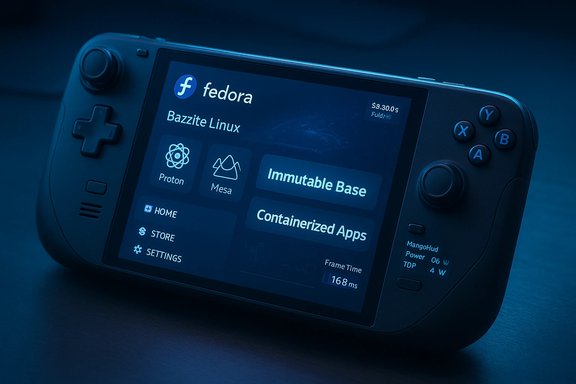
Bazzite is an image‑style, Fedora‑based Linux distribution purpose‑built for gaming. It follows the SteamOS design ethos—boot to a gaming‑first UI, ship with compatibility helpers (Proton), and include tuned Mesa drivers and kernel patches aimed at handhelds and gaming laptops. The distribution uses an immutable core (read‑only system files) and containers (flatpaks and Distrobox/Kontainer-style tools) for apps and launchers, which reduces the likelihood of a broken system after user modifications.- Immutable base: system files are protected; user data and game installs remain writable.
- Containerized apps: flatpaks and Distrobox/Kontainer isolate software, mirroring how Steam Deck and other modern images manage applications.
- Gaming stack: Proton helpers, tuned Mesa, Gamescope/Wayland handling, and exposed power/TDP controls are preconfigured for game performance.
Why Bazzite matters right now
Three converging forces raised Bazzite from niche to mainstream interest:- Valve’s Proton and Steam Deck efforts normalized Linux compatibility for many Windows titles.
- Improvements in Mesa, tuned kernels, and containerized app flows reduced friction.
- Large numbers of machines (and users) are reassessing Windows because of lifecycle events such as the end of Windows 10 mainstream support, pushing experimentation with alternatives.
How Bazzite compares with Windows for gaming
The performance story: why Bazzite can look faster
Several community hands‑ons and bench runs found that Bazzite offered steadier frame times and, in some scenes and power modes, higher average FPS than Windows on the same hardware. The explanation is practical, not mystical:- Shader compile and cache behavior: Modern games compile many shader permutations at runtime. Differences in how Proton + Mesa and Windows driver stacks manage shader caches can eliminate or reduce blocking stalls, which improves 1% lows and perceived smoothness.
- Reduced background system noise: A gaming‑first Linux image removes telemetry, OEM helper processes, and many services that run on Windows, lowering scheduler and I/O interruptions that can cause frame‑time variance.
- Direct power/thermal controls and tuned kernels: Bazzite exposes and ships tuned governors and kernel patches tailored for handheld workflows, offering steadier clocks and more consistent fan behavior in sustained loads.
Where Windows still leads
Despite those cases where Linux shines, Windows retains broad advantages:- Ecosystem breadth: Native clients for Xbox Game Pass, many anti‑cheat systems, and vendor tools (Armoury Crate, varied GPU utilities) are either Windows‑only or have significantly better support there. If those are central to a gamer’s routine, Windows is the safer choice.
- Multiplayer & anti‑cheat: Kernel‑level anti‑cheat solutions used by major multiplayer titles often block Linux or require vendor changes; many modern multiplayer experiences (Valorant, certain Call of Duty releases, etc. remain Windows‑exclusive.
- Driver predictability for some vendors: Nvidia’s closed‑source driver model can introduce regressions with kernel or Mesa updates; on Windows, Nvidia’s drivers are the primary focus and often appear more consistently stable out of the box for users who want a hands‑off experience.
Net: better for what, worse for what
- Better on Bazzite: single‑player, shader‑heavy AAA games on thermally constrained devices; handhelds and those who want a console‑like, low‑overhead gaming UI.
- Worse on Bazzite: games requiring kernel‑mode anti‑cheat, Game Pass native features, certain third‑party launchers that rely on Windows APIs; casual users who want zero tinkering.
Real‑world evidence and independent verification
Community hands‑ons (directional but repeatable)
Multiple independent creators and community testers have replicated directional gains: steadier 1% lows, faster resume from suspend, and measurable FPS uplifts in select scenes and power modes. Those tests are reproducible in the sense of showing similar trends across different machines, but they are not lab‑quality, multi‑run, version‑locked benchmarks — they are practical, hands‑on comparisons.Published bench work and larger projects
Larger outlets and labs have also focused on the same axis: Gamers Nexus ran experiments on Bazzite with a frozen test baseline and found Linux shows strong real‑world performance and that AMD hardware often fares particularly well under Linux stacks. The takeaway is consistent: Linux stacks can outperform Windows in specific scenarios when driver and shader handling favor the Linux path.What to treat cautiously
- Scene selection matters: Gains often come from a small number of shader‑heavy scenes; other scenes show parity or negligible differences.
- Software stack volatility: Driver or kernel updates can change outcomes quickly; testers often freeze stacks to preserve reproducibility.
- Anecdotal vs. statistical: Many reports are single runs or short play sessions; treat large percentage claims as directional evidence rather than universal truths.
The practical side: installing and using Bazzite
What ships with Bazzite
- Steam (desktop + Game Mode) and Proton helpers preinstalled.
- A searchable Bazaar that curates flatpak apps, including common launchers (Heroic, RetroArch) and utilities.
- Kontainer or Distrobox support for installing apps that aren’t in the Bazaar.
- Tools for power/TDP control, MangoHud, and various performance utilities out of the box.
First‑time setup: a pragmatic checklist
- Back up your Windows system image and create recovery media before altering a primary drive.
- Test Bazzite via a live USB or external SSD to validate drivers and display behavior without touching the internal Windows install.
- If you need Windows for Game Pass or anti‑cheat games, set up a dual‑boot configuration or keep a separate Windows SSD.
- Use the preinstalled Bazaar and Proton Experimental for non‑native titles; switch to GE‑Proton builds for stubborn games that require special tweaks.
- Keep an eye on driver versions and Mesa builds; the community often documents "sweet spot" combinations for specific GPUs.
Troubleshooting common frictions
- Missing native apps: Use browser streaming for Game Pass or run Windows clients via Proton/Lutris where possible, accepting that not all features will work.
- Anti‑cheat: Confirm the game’s anti‑cheat backend before committing. Community lists and databases note which titles are blocked by kernel‑mode or driver‑based anti‑cheat.
- Driver regressions: If you experience performance regressions, revert to the driver/kernel combo that worked or consult community threads for a patched Mesa or a recommended Nvidia package.
Risks, limits, and long‑term outlook
Biggest risks today
- Anti‑cheat and multiplayer lockouts remain the single largest blocker for a full migration away from Windows; until anti‑cheat vendors offer cross‑platform support, many popular online games will be off limits on Linux.
- Driver fragility: Closed drivers (notably Nvidia) can regress unexpectedly when kernels or Mesa change. Users must be willing to chase versions or accept a more hands‑on maintenance approach.
- Measurement variance: Early benchmark wins are real but contextual. They depend on power mode, scene, driver and Proton/Mesa versions. Expect results to change with software updates.
Strengths that point to wider adoption
- AMD’s open contributions to Mesa make Radeon hardware a safer, more predictable choice on Linux today; that helps Linux adoption in the short term.
- Containerization and an immutable base reduce the "break it and reinstall" fear for newcomers, making Bazzite friendlier to casual tinkerers than many classic distros.
- Valve’s continued focus on Proton and the Steam ecosystem widens the playable library and reduces friction for many titles.
The likely trajectory
In the short term, expect Linux gaming (Bazzite and SteamOS‑style images) to grow as a niche for enthusiasts and handheld owners who prioritize single‑player AAA and console‑like flows. In the medium term, improvements in anti‑cheat strategies, driver stability, and Proton will expand that niche into a credible secondary platform for many gamers. Long term, a shift will require coordinated action from anti‑cheat vendors, GPU vendors (especially Nvidia), and studios; until those pieces align, Windows will remain the primary platform for mainstream multiplayer and frictionless compatibility.A pragmatic decision guide
- If you play mostly single‑player AAA titles, enjoy tinkering, or use handheld hardware: Bazzite is worth testing and may offer perceptible improvements. Start with a live USB or dual‑boot.
- If you rely on Game Pass, play competitive online titles with proprietary anti‑cheat, or prefer a zero‑maintenance setup: stay on Windows or dual‑boot and keep Windows for those workloads.
- If you’re undecided: run Bazzite on an external drive and use it as a secondary, purpose‑built gaming OS. That gives you the best of both worlds without risking your primary Windows environment.
Conclusion
Bazzite is not simply "Linux" in the generic sense — it’s a targeted, Fedora‑based, gaming‑first distribution that packages Proton, tuned Mesa, containerized applications, and trimmed system services into an accessible image. For many players, especially on handhelds and midrange hardware, that focus translates into real, repeatable improvements in frame‑time consistency and sometimes average FPS in shader‑heavy scenes. Multiple community tests and larger labs have documented these directional gains, and the technical reasons are grounded and understandable: shader‑cache handling, reduced background noise, and direct power‑governor control.Despite this, Windows remains the safer, broader, and more frictionless platform for most gamers because of anti‑cheat, proprietary clients, and vendor tooling. Bazzite is best thought of as a powerful alternative — excellent for specific workflows and users who are comfortable with occasional tinkering — rather than a universal replacement. For readers considering the switch, the responsible path is measured: back up, test on external media, use dual‑boot while you validate your library, and rely on community guidance for the right driver/Proton/Mesa combinations. Those steps maximize the upside — a leaner, snappier gaming experience — while minimizing the tradeoffs that still tether the mainstream to Windows.
Source: Windows Central What is Bazzite, and is it better than Windows for PC gaming?
