

CVE-2026-50373 exposes an improper access-control flaw in the Windows Search component that can let an authenticated local attacker gain elevated privileges. Microsoft published the vulnerability on July 14, 2026, as part of its monthly security release, rating it Important with a CVSS 3.1 base score of 7.8.
Microsoft’s Security Update Guide describes the issue as a Windows Search Service elevation-of-privilege vulnerability. The National Vulnerability Database, using Microsoft’s supplied record, says an authorized attacker can exploit the flaw locally; CISA’s initial assessment records no known exploitation and classifies automated exploitation as unlikely. That makes CVE-2026-50373 a serious post-compromise tool rather than an internet-facing entry point—but one administrators should not leave available for attackers to chain with phishing, stolen credentials, or another code-execution flaw.
The CVSS vector is
That distinction matters. CVE-2026-50373 cannot, based on Microsoft’s published assessment, be launched directly against an untrusted Windows PC from elsewhere on the internet. An attacker first needs authorization to run code or otherwise interact with the vulnerable machine under an existing account.
Once those conditions are met, however, successful exploitation could have a high impact on confidentiality, integrity, and availability. The unchanged CVSS scope indicates that the compromise remains within the affected Windows security authority, but elevation to a more powerful account could still give an intruder the access needed to disable protections, alter files, extract credentials, install persistence, or interfere with system operation.
Microsoft maps the underlying weakness to CWE-284, Improper Access Control. The public description does not identify the vulnerable function, object, permission check, or exact elevation level. It also does not provide proof-of-concept code or enough implementation detail to determine whether the weakness resides in indexing, search protocols, file handling, service communication, or another part of the Windows Search architecture.
That limited disclosure is normal for a newly patched Windows vulnerability. It gives defenders enough information to prioritize deployment without immediately handing attackers a technical recipe for reproducing the bug.
Administrators should use the applicable July 2026 cumulative update rather than attempt to update or disable an individual Windows Search binary. Microsoft services Windows components cumulatively, so the security correction arrives with the normal operating-system package and the build-number advancement associated with it.
For managed estates, confirming the resulting OS build is more reliable than checking only whether an update job reports success. A device can appear compliant in an endpoint-management console while still awaiting a reboot, having rolled back an update, or having failed during component-store servicing.
Windows 10 systems deserve additional scrutiny because some listed editions are available only under specific servicing arrangements. The presence of Windows 10 Version 21H2 and 22H2 in the affected data does not restore general support to every consumer or business installation. Organizations relying on Extended Security Updates or specialized servicing channels should verify that devices are correctly licensed and actually receiving July 2026 security content.
A malicious attachment, browser flaw, compromised remote-management credential, or abused application account may initially place an attacker in a restricted user context. An elevation bug can then remove the boundary that prevents that foothold from becoming full control of the endpoint.
Windows Search is also a broadly deployed operating-system component. Even where users rarely type into the taskbar search box, Windows Search may remain installed and active to index content or support applications. Administrators should therefore avoid treating “our users do not use Search” as evidence that the vulnerable component is absent.
Disabling the Windows Search service may reduce exposure to some Search functionality, but Microsoft has not identified service shutdown as a complete mitigation for CVE-2026-50373. Without technical details showing the vulnerable path and when it is loaded, installing the security update remains the dependable remediation.
The initial CISA Stakeholder-Specific Vulnerability Categorization record marks exploitation as “none,” automation as “no,” and technical impact as “total.” As of July 15, 2026, that indicates no known exploitation rather than proof that exploitation is impossible or that researchers will not reverse-engineer the update.
The low attack complexity in Microsoft’s CVSS vector is the more important warning for defenders. Once a working technique becomes available, exploitation may not require unusual timing, a complicated race condition, or extensive victim interaction. The local-access prerequisite is the principal barrier.
After deployment, administrators should verify that endpoints have reached or exceeded the fixed build for their Windows version and completed any required restart. Security teams can separately monitor for suspicious service manipulation, unexpected changes to Search configuration, newly created privileged accounts, and untrusted processes launched from user-writable locations.
There is currently no public indication that CVE-2026-50373 is a zero-day, has been publicly disclosed before patch availability, or is being exploited in the wild. Microsoft’s confirmation establishes that the vulnerability exists and that affected systems require correction, but the underlying technical detail remains deliberately sparse.
For most organizations, CVE-2026-50373 should enter the normal accelerated Patch Tuesday workflow rather than trigger emergency isolation of Windows Search systems. The practical deadline is straightforward: move affected clients and servers past their listed vulnerable build before an exploit turns this newly disclosed local weakness into a reliable privilege-escalation step.
Microsoft’s Security Update Guide describes the issue as a Windows Search Service elevation-of-privilege vulnerability. The National Vulnerability Database, using Microsoft’s supplied record, says an authorized attacker can exploit the flaw locally; CISA’s initial assessment records no known exploitation and classifies automated exploitation as unlikely. That makes CVE-2026-50373 a serious post-compromise tool rather than an internet-facing entry point—but one administrators should not leave available for attackers to chain with phishing, stolen credentials, or another code-execution flaw.
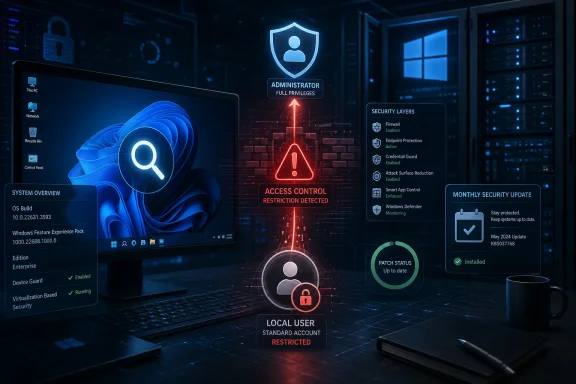 The Attacker Already Needs a Foot in the Door
The CVSS vector is CVSS:3.1/AV:L/AC:L/PR:L/UI:N/S:U/C:H/I:H/A:H. In operational terms, the attack vector is local, complexity is low, low-level privileges are required, and the victim does not need to click or approve anything once the attacker is positioned to exploit the weakness.That distinction matters. CVE-2026-50373 cannot, based on Microsoft’s published assessment, be launched directly against an untrusted Windows PC from elsewhere on the internet. An attacker first needs authorization to run code or otherwise interact with the vulnerable machine under an existing account.
Once those conditions are met, however, successful exploitation could have a high impact on confidentiality, integrity, and availability. The unchanged CVSS scope indicates that the compromise remains within the affected Windows security authority, but elevation to a more powerful account could still give an intruder the access needed to disable protections, alter files, extract credentials, install persistence, or interfere with system operation.
Microsoft maps the underlying weakness to CWE-284, Improper Access Control. The public description does not identify the vulnerable function, object, permission check, or exact elevation level. It also does not provide proof-of-concept code or enough implementation detail to determine whether the weakness resides in indexing, search protocols, file handling, service communication, or another part of the Windows Search architecture.
That limited disclosure is normal for a newly patched Windows vulnerability. It gives defenders enough information to prioritize deployment without immediately handing attackers a technical recipe for reproducing the bug.
Supported Windows Clients and Servers Need the Fix
Microsoft’s affected-product data spans Windows 10, current Windows 11 releases, and supported Windows Server editions. The fixed-build thresholds recorded for CVE-2026-50373 are:- Windows 10 Version 1809 and Windows Server 2019 are affected below build 17763.9020.
- Windows 10 Version 21H2 is affected below build 19044.7548.
- Windows 10 Version 22H2 is affected below build 19045.7548.
- Windows Server 2022 is affected below build 20348.5386.
- Windows 11 Version 24H2 is affected below build 26100.8875.
- Windows 11 Version 25H2 is affected below build 26200.8875.
- Windows 11 Version 26H1 is affected below build 28000.2269.
- Windows Server 2025, including Server Core, is affected below build 26100.33158.
Administrators should use the applicable July 2026 cumulative update rather than attempt to update or disable an individual Windows Search binary. Microsoft services Windows components cumulatively, so the security correction arrives with the normal operating-system package and the build-number advancement associated with it.
For managed estates, confirming the resulting OS build is more reliable than checking only whether an update job reports success. A device can appear compliant in an endpoint-management console while still awaiting a reboot, having rolled back an update, or having failed during component-store servicing.
Windows 10 systems deserve additional scrutiny because some listed editions are available only under specific servicing arrangements. The presence of Windows 10 Version 21H2 and 22H2 in the affected data does not restore general support to every consumer or business installation. Organizations relying on Extended Security Updates or specialized servicing channels should verify that devices are correctly licensed and actually receiving July 2026 security content.
A Local Flaw Still Changes the Post-Compromise Equation
Privilege-escalation vulnerabilities are frequently underestimated because they do not provide the attacker’s initial access. In real intrusions, that limitation often makes them complementary rather than harmless.A malicious attachment, browser flaw, compromised remote-management credential, or abused application account may initially place an attacker in a restricted user context. An elevation bug can then remove the boundary that prevents that foothold from becoming full control of the endpoint.
Windows Search is also a broadly deployed operating-system component. Even where users rarely type into the taskbar search box, Windows Search may remain installed and active to index content or support applications. Administrators should therefore avoid treating “our users do not use Search” as evidence that the vulnerable component is absent.
Disabling the Windows Search service may reduce exposure to some Search functionality, but Microsoft has not identified service shutdown as a complete mitigation for CVE-2026-50373. Without technical details showing the vulnerable path and when it is loaded, installing the security update remains the dependable remediation.
The initial CISA Stakeholder-Specific Vulnerability Categorization record marks exploitation as “none,” automation as “no,” and technical impact as “total.” As of July 15, 2026, that indicates no known exploitation rather than proof that exploitation is impossible or that researchers will not reverse-engineer the update.
The low attack complexity in Microsoft’s CVSS vector is the more important warning for defenders. Once a working technique becomes available, exploitation may not require unusual timing, a complicated race condition, or extensive victim interaction. The local-access prerequisite is the principal barrier.
Patch Validation Matters More Than Search Workarounds
Enterprises should deploy the July cumulative updates through their existing Windows Update for Business, Windows Server Update Services, Microsoft Configuration Manager, or third-party patching rings. Pilot testing remains appropriate, especially on servers running applications that depend heavily on indexed storage, Outlook search, document-management systems, or customized Search configurations.After deployment, administrators should verify that endpoints have reached or exceeded the fixed build for their Windows version and completed any required restart. Security teams can separately monitor for suspicious service manipulation, unexpected changes to Search configuration, newly created privileged accounts, and untrusted processes launched from user-writable locations.
There is currently no public indication that CVE-2026-50373 is a zero-day, has been publicly disclosed before patch availability, or is being exploited in the wild. Microsoft’s confirmation establishes that the vulnerability exists and that affected systems require correction, but the underlying technical detail remains deliberately sparse.
For most organizations, CVE-2026-50373 should enter the normal accelerated Patch Tuesday workflow rather than trigger emergency isolation of Windows Search systems. The practical deadline is straightforward: move affected clients and servers past their listed vulnerable build before an exploit turns this newly disclosed local weakness into a reliable privilege-escalation step.
References
- Primary source: MSRC
Published: 2026-07-14T07:00:00-07:00
Security Update Guide - Microsoft Security Response Center
 msrc.microsoft.com
