
Forza Horizon 6 arrives as one of the most interesting PC hardware stories of 2026 because its requirements appear to be more restrained than the visual ambition would suggest. The official launch date is now set for May 19, 2026 on Xbox Series X|S and PC, with a PlayStation 5 version coming later, and the PC spec sheet has become a talking point precisely because it hints at broad accessibility rather than a relentless push toward ultra-premium hardware. That makes the game a useful case study in how far modern optimization can go when a studio wants to keep a blockbuster racing franchise playable across a wide range of systems.
The important backdrop is that Forza Horizon has long been one of the most technically polished open-world racing series on PC. Each entry has balanced visual spectacle, fast streaming terrain, and a wide car roster against the practical reality that racing games must feel responsive even when the world is dense and the frame rate is under pressure. In that sense, Horizon has usually been less about brute-force graphics and more about engineering confidence: the ability to make high-speed motion, weather, foliage, and traffic feel seamless without asking every player to buy a flagship GPU.
For Forza Horizon 6, the timing matters as much as the specs. Microsoft and Playground Games are launching into a market where many big releases have raised the bar on memory, storage, and ray tracing, yet the early signal from the PC requirements suggests a more pragmatic philosophy. Reports and official material point to minimum PC requirements that are not outrageous by 2026 standards, while later coverage indicates the game is being positioned as visually ambitious without becoming inaccessible to mainstream gaming PCs.
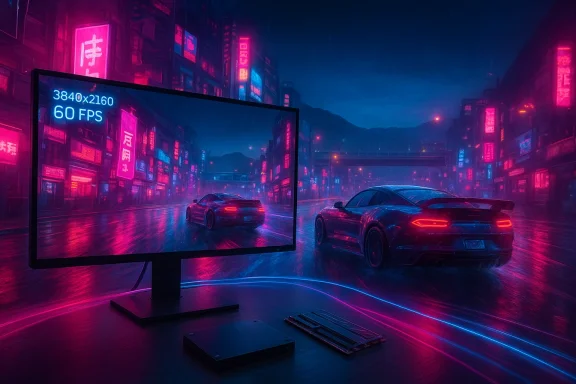
The series’ Japan setting also changes the technical conversation. Urban density, neon lighting, tight streets, expressways, and mountain routes can all push a renderer in different ways, especially if the game is trying to simulate weather, traffic, and a living city at speed. That makes the apparently modest requirements more surprising, because players often associate bigger worlds and richer lighting with much heavier system demands.
There is another reason the requirements matter: Forza Horizon is a flagship Xbox and PC title, so its hardware bar influences more than one audience. Consumers want to know whether they can play it at all, but OEMs, laptop makers, and GPU vendors also use these kinds of requirements as marketing signals. A game that runs well on midrange systems becomes a showcase for optimization; a game that demands elite hardware becomes a showcase for silicon.
Finally, the launch window places Forza Horizon 6 alongside other 2026 titles that are leaning hard into upscaling, SSD usage, and scale-based platform tiers. That broader trend is important because it means the conversation is no longer simply “what card do I need?” but “how much of the rendering pipeline is now handled by upscalers, frame generation, and smart asset management?” The reported and official details around Forza Horizon 6 sit directly inside that shift.
This also makes commercial sense. Racing games thrive when online lobbies are full, when car culture videos spread quickly, and when social sharing is easy. A low-ish barrier to entry helps all of those loops.
That is why the PC spec sheet should not be read as a promise that every system will enjoy ultra settings. Instead, it suggests that Playground Games is splitting the experience cleanly across tiers. The minimum baseline gets you in the door, while higher tiers likely unlock sharper textures, denser traffic, and more advanced lighting. The strategy is access first, spectacle second.
Recommended specs matter more for most readers because they represent the likely “sweet spot” for balance. That is where the frame rate, texture detail, and loading behavior should come together in a way that preserves the feel of Horizon as a premium production.
That means a spec sheet for Forza Horizon 6 is not just about graphics class. It is also about latency, storage, and how effectively the engine can sustain smooth motion while loading the world at high speed.
There is also the possibility that future patches, higher-resolution texture packs, or ray tracing modes will push the game further up the ladder over time. That is common with live service-adjacent launches and games that continue to add features post-release.
But ray tracing is never free. It imposes real GPU cost, and studios typically reserve the highest tiers for users who are prepared to accept the trade-offs. That is why “extreme RT” is best understood as an aspirational mode rather than the main way to play.
It also suggests that the team may be leaning on careful quality presets and smart fallback paths. That’s how you get a game that looks premium on a 2026 showcase PC while still running on a machine that is a couple of hardware generations older.
That is especially relevant in a fast racing game where clarity at speed matters. A good upscaler can be almost invisible; a poor one can blur the road edge, distant cars, and signs in ways that undermine the driving experience.
That means players on older mechanical drives may technically meet some other requirements and still have a poor time. The practical standard has shifted: if you want an open-world release to feel modern, you need solid storage.
For consumers, this is important because memory has become one of the easiest ways to avoid bottlenecking a capable GPU. For OEMs and prebuilt vendors, it is a reminder that system balance matters more than a single flashy component.
It also gives Microsoft and Playground Games a way to present the title as a modern but not elitist PC product. That’s a smart posture for a flagship game that needs scale.
For Microsoft, this is ideal. A large install base fuels engagement, and engagement fuels the perception that the Xbox-PC ecosystem is healthy and mutually reinforcing.
It also gives Microsoft a benchmark title for laptop partners and graphics vendors. Few genres show hardware scaling as clearly as racing, so a polished Horizon launch has ripple effects beyond the game itself.
In other words, the game is not just a product. It is a platform event.
A healthy PC release should reward new hardware without rendering older hardware useless. The initial read on Horizon 6 suggests exactly that balance.
The game is not being praised because it is weak. It is being noticed because it seems unusually thoughtful.
That is especially true in a genre where players compare frame pacing, input feel, and loading times with unusual attention.
A good spec article also helps separate rumor from evidence. In a year full of leaks, teasers, and premature assumptions, that clarity is not trivial.
That caution is especially important for a game with a substantial runway before release, because performance claims may mature as the studio finishes optimization.
Another thing to watch is how the game behaves across different display targets. The difference between 1080p, 1440p, and 4K will likely be far more important than the minimum/recommended labels alone, especially once ray tracing enters the picture. The most relevant question is not simply whether the game launches, but how cleanly it scales when players start pushing the visual envelope.
Source: Khel Now Forza Horizon 6 PC requirements: From minimum to extreme RT
Source: KitGuru Forza Horizon 6 PC system requirements announced - KitGuru
 Overview
The important backdrop is that Forza Horizon has long been one of the most technically polished open-world racing series on PC. Each entry has balanced visual spectacle, fast streaming terrain, and a wide car roster against the practical reality that racing games must feel responsive even when the world is dense and the frame rate is under pressure. In that sense, Horizon has usually been less about brute-force graphics and more about engineering confidence: the ability to make high-speed motion, weather, foliage, and traffic feel seamless without asking every player to buy a flagship GPU.For Forza Horizon 6, the timing matters as much as the specs. Microsoft and Playground Games are launching into a market where many big releases have raised the bar on memory, storage, and ray tracing, yet the early signal from the PC requirements suggests a more pragmatic philosophy. Reports and official material point to minimum PC requirements that are not outrageous by 2026 standards, while later coverage indicates the game is being positioned as visually ambitious without becoming inaccessible to mainstream gaming PCs.
The series’ Japan setting also changes the technical conversation. Urban density, neon lighting, tight streets, expressways, and mountain routes can all push a renderer in different ways, especially if the game is trying to simulate weather, traffic, and a living city at speed. That makes the apparently modest requirements more surprising, because players often associate bigger worlds and richer lighting with much heavier system demands.
There is another reason the requirements matter: Forza Horizon is a flagship Xbox and PC title, so its hardware bar influences more than one audience. Consumers want to know whether they can play it at all, but OEMs, laptop makers, and GPU vendors also use these kinds of requirements as marketing signals. A game that runs well on midrange systems becomes a showcase for optimization; a game that demands elite hardware becomes a showcase for silicon.
Finally, the launch window places Forza Horizon 6 alongside other 2026 titles that are leaning hard into upscaling, SSD usage, and scale-based platform tiers. That broader trend is important because it means the conversation is no longer simply “what card do I need?” but “how much of the rendering pipeline is now handled by upscalers, frame generation, and smart asset management?” The reported and official details around Forza Horizon 6 sit directly inside that shift.
What the Requirements Signal
The headline lesson from the early PC spec discussion is that Forza Horizon 6 does not appear to be built around an extreme entry barrier. That is notable because this is a premium open-world racer, not an indie experiment, and because the game’s visual ambition is obvious from the moment it was revealed. Yet the specs reported by multiple outlets suggest a deliberate attempt to keep the game within reach of the broad PC audience that has defined the Horizon series for years.A wider audience than expected
If a major racing title can run on mainstream hardware, it has a direct effect on adoption. More players can jump in on day one, more Game Pass users can sample it immediately, and more laptop and desktop owners can treat it as a standard install rather than a future upgrade target. In practice, that means less friction and fewer “wait until I build a new PC” delays.This also makes commercial sense. Racing games thrive when online lobbies are full, when car culture videos spread quickly, and when social sharing is easy. A low-ish barrier to entry helps all of those loops.
The engineering story behind “modest” specs
A requirement sheet can tell you what the studio thinks it can guarantee, but it does not reveal the whole performance philosophy. A game may have modest minimums because it is well optimized, because it scales aggressively, or because some of the visual options are heavily configurable. The truth is often a mix of all three.That is why the PC spec sheet should not be read as a promise that every system will enjoy ultra settings. Instead, it suggests that Playground Games is splitting the experience cleanly across tiers. The minimum baseline gets you in the door, while higher tiers likely unlock sharper textures, denser traffic, and more advanced lighting. The strategy is access first, spectacle second.
Why this matters for PC buyers
For consumers, the practical takeaway is simple: this does not look like a “buy a new GPU or forget it” release. It looks more like a well-scaled PC game with meaningful headroom for better hardware. That matters in 2026 because many buyers are navigating a market where component pricing, laptop thermals, and power efficiency all affect real-world gaming choices.- The game appears to be tuned for broad reach, not only top-end rigs.
- Midrange systems may have a real chance to deliver a credible experience.
- The requirements likely reflect optimization as much as raw graphics ambition.
- A stable frame rate at racing speeds matters more than headline screenshot quality.
- The spec strategy should help day-one adoption on PC Game Pass.
Minimum, Recommended, and the PC Ladder
One of the most useful ways to understand PC requirements is as a ladder rather than a single threshold. Minimum means “runs,” recommended means “designed experience,” and the high end is usually where visual indulgence begins. Forza Horizon 6 is interesting because its ladder appears to be shaped to serve both mass-market players and enthusiasts without making the entry rung feel punitive.Reading the tiers correctly
Minimum requirements are often misunderstood as a quality benchmark. They are not. They generally indicate the lowest practical setup the developer is willing to support, and in a racing game that usually means compromises in resolution, detail, and frame stability. The real question is not whether the game launches; it is how comfortable the experience feels at speed.Recommended specs matter more for most readers because they represent the likely “sweet spot” for balance. That is where the frame rate, texture detail, and loading behavior should come together in a way that preserves the feel of Horizon as a premium production.
Why racing games are different
Racing games have unusual performance demands compared with slower genres. Objects move through the frame quickly, the camera shifts constantly, and the game has to stream road, scenery, and traffic without stutter. Even a small hitch can be far more noticeable than it would be in a turn-based or strategy game.That means a spec sheet for Forza Horizon 6 is not just about graphics class. It is also about latency, storage, and how effectively the engine can sustain smooth motion while loading the world at high speed.
The likely hidden costs
Even when an official minimum looks friendly, there are usually some hidden assumptions. Players may need latest drivers, enough system RAM headroom, a reasonably modern CPU, and fast storage to avoid stutter in dense areas. In 2026, those are no longer exotic requirements, but they are still important.There is also the possibility that future patches, higher-resolution texture packs, or ray tracing modes will push the game further up the ladder over time. That is common with live service-adjacent launches and games that continue to add features post-release.
- Minimum specs usually optimize for playability, not beauty.
- Recommended specs are the more honest guide for most buyers.
- High-end settings will likely reward fast storage and stronger CPUs.
- Modern drivers and enough RAM still matter more than many players expect.
- Optional settings may dramatically change performance expectations.
Ray Tracing and Visual Ambition
The “extreme RT” framing attached to some of the reporting matters because it tells us where the game’s premium visuals likely live: not in the basic act of playing, but in the luxury tiers. That is increasingly how modern PC games are built. The base game must be approachable, while the ultra experience is a showcase for enthusiasts with more expensive hardware.What extreme ray tracing usually means
In a game like Forza Horizon 6, ray tracing could affect reflections, lighting accuracy, shadow quality, and surface response in wet or glossy conditions. For racing games, those effects are especially visible because cars are moving mirrors of the environment. A shiny body panel under neon light or rainy city streets can make the difference between “pretty” and jaw-dropping.But ray tracing is never free. It imposes real GPU cost, and studios typically reserve the highest tiers for users who are prepared to accept the trade-offs. That is why “extreme RT” is best understood as an aspirational mode rather than the main way to play.
The balancing act Playground Games faces
The challenge for Playground Games is to preserve the series’ signature fluidity while adding enough modern rendering features to satisfy an audience that expects technical leadership. If the minimum specs stay accessible, ray tracing has to live above the baseline. That is a good sign, because it suggests the studio is not sacrificing the core experience to chase the highest-end screenshots.It also suggests that the team may be leaning on careful quality presets and smart fallback paths. That’s how you get a game that looks premium on a 2026 showcase PC while still running on a machine that is a couple of hardware generations older.
Why upscaling will matter
At the higher end, the real conversation is likely to revolve around upscaling rather than raw native performance alone. As more PC titles rely on intelligent reconstruction, the question shifts from “Can my GPU render this natively?” to “Can my hardware sustain a high-quality reconstructed image with minimal artifacts?”That is especially relevant in a fast racing game where clarity at speed matters. A good upscaler can be almost invisible; a poor one can blur the road edge, distant cars, and signs in ways that undermine the driving experience.
- Ray tracing is likely a premium feature, not a baseline requirement.
- Reflections and wet-surface lighting should benefit the most.
- Upscaling will probably be central to high-end performance targets.
- The best experience may depend more on tuning than on raw brute force.
- Visual modes will likely vary sharply in cost and fidelity.
The Storage and Memory Story
In 2026, PC requirements are not only about CPU and GPU pairs. Storage and memory have become first-order concerns because modern open-world games stream far more data than older titles ever did. Forza Horizon 6 is part of that conversation, and that matters to both consumers and system builders.SSD expectations are now the norm
An SSD requirement is no longer shocking, but it is still significant when a game pushes large open-world environments and fast asset transitions. For racing titles, especially those with dense urban spaces, a solid-state drive helps reduce pop-in, loading delays, and hitching while traversing the world at speed. The difference is not subtle when the game is built around motion.That means players on older mechanical drives may technically meet some other requirements and still have a poor time. The practical standard has shifted: if you want an open-world release to feel modern, you need solid storage.
Memory requirements as a floor for stability
RAM requirements are another signpost. Even when the minimum looks manageable, a game of this scale can still benefit from extra memory to reduce swapping and background contention. That is especially true on PCs where the operating system, browser tabs, overlays, and launchers are all competing for headroom.For consumers, this is important because memory has become one of the easiest ways to avoid bottlenecking a capable GPU. For OEMs and prebuilt vendors, it is a reminder that system balance matters more than a single flashy component.
Why this is good news for laptop buyers
The upside is that SSDs and 16 GB-class memory configurations are now common even in mainstream gaming laptops. That means the game’s more demanding baseline may not be as exclusionary as it would have been five years ago. A 2026 release with sensible storage expectations is almost a relief.It also gives Microsoft and Playground Games a way to present the title as a modern but not elitist PC product. That’s a smart posture for a flagship game that needs scale.
- SSDs are now part of the open-world baseline.
- More RAM reduces stutter risk and background contention.
- Laptop buyers may be better positioned than they think.
- Storage speed matters as much as raw capacity in racing games.
- System balance is more important than any single spec.
Xbox, PC, and Platform Strategy
Forza Horizon 6 is not just a PC release; it is part of Microsoft’s broader ecosystem strategy. The official launch on Xbox Series X|S and PC, with Game Pass access at no additional cost and a later PS5 version, places the game at the center of Microsoft’s cross-platform ambitions. That makes the PC requirements more than a shopping list. They are a statement about where Microsoft wants the game to sit in its portfolio.The Game Pass effect
Game Pass changes how players think about system requirements because it lowers the cost of curiosity. A player who might hesitate to buy a $70 game can instead install it, test performance, and decide whether their PC is ready for higher settings. That means the minimum spec becomes a trial threshold rather than a purchase gate.For Microsoft, this is ideal. A large install base fuels engagement, and engagement fuels the perception that the Xbox-PC ecosystem is healthy and mutually reinforcing.
Why PC matters more than ever
The PC version also serves as a high-visibility showcase for Microsoft’s Windows gaming narrative. Every well-optimized first-party title helps reinforce the idea that Windows remains the definitive place for scalable PC gaming. If Forza Horizon 6 performs well across a range of hardware, it strengthens that message in a very visible genre.It also gives Microsoft a benchmark title for laptop partners and graphics vendors. Few genres show hardware scaling as clearly as racing, so a polished Horizon launch has ripple effects beyond the game itself.
Later PS5 release, different audience
The confirmed PS5 release later in the year broadens the audience but does not change the early platform strategy. First comes Xbox and PC; later comes PlayStation. That sequencing matters because it gives Microsoft and Playground Games a head start in community building, coverage, and Game Pass momentum.In other words, the game is not just a product. It is a platform event.
- Game Pass lowers the barrier to testing performance.
- PC serves as the most flexible showcase for optimization.
- Xbox and Windows get the first-wave spotlight.
- The later PS5 release broadens the total addressable audience.
- A successful launch strengthens Microsoft’s ecosystem story.
How It Compares to the Broader Market
To understand the significance of Forza Horizon 6’s PC requirements, it helps to compare them with the current direction of the broader PC gaming market. Many 2026 titles are increasingly explicit about SSDs, 16 GB RAM, and scalable upscaling options. That pattern suggests the industry has accepted that the average gaming PC is more capable than it was a few years ago, but that the very top end is still reserved for feature-rich visual modes.Accessible, but not simplistic
The interesting part is that Forza Horizon 6 appears to be following a middle path. It is not chasing a “run it on everything” philosophy, but it is also not making the entry point look punitive. That distinction matters because some publishers still confuse ambition with exclusion.A healthy PC release should reward new hardware without rendering older hardware useless. The initial read on Horizon 6 suggests exactly that balance.
A market shaped by optimization expectations
In 2026, players are more aware than ever that optimization is a feature. If a game launches with weak settings scaling, it gets called out immediately. If a game launches cleanly and runs well on a range of systems, it becomes a benchmark for the right reasons. That may be one reason the early reaction to Forza Horizon 6 has been so focused on its surprising accessibility.The game is not being praised because it is weak. It is being noticed because it seems unusually thoughtful.
Competitive implications
For rivals in the racing space, this raises the bar in a different way. It is not enough to look beautiful in screenshots; the game has to be easy to get running, easy to tune, and easy to recommend. A smooth PC launch can be just as valuable as a high-end visual showcase because it improves retention and word-of-mouth.That is especially true in a genre where players compare frame pacing, input feel, and loading times with unusual attention.
- Horizon 6 seems to favor balanced scalability over hard exclusivity.
- Optimization is increasingly viewed as a selling point.
- A smooth launch can matter more than a spec-sheet arms race.
- Racing fans are unusually sensitive to frame pacing and load behavior.
- The game could become a reference point for “well-optimized AAA.”
What the Articles Got Right
The Khel Now and KitGuru pieces are useful because they capture the immediate consumer question: what kind of PC do I need, and how scary are the numbers? That’s the right editorial instinct for a launch-spec story. Their coverage also reflects the broader conversation around minimum to extreme ray tracing settings, which is where most readers will focus once the novelty of the announcement settles.Why spec articles matter
These articles serve a real purpose even when they are not deeply analytical. They translate technical tables into everyday judgment: can I run this, should I upgrade, and is the game going to punish my current setup? That is the sort of practical framing PC audiences actually use.A good spec article also helps separate rumor from evidence. In a year full of leaks, teasers, and premature assumptions, that clarity is not trivial.
The limits of launch-day reporting
At the same time, early coverage often overstates the certainty of “recommended” and “extreme RT” language when the game’s final tuning may still be in flux. Spec sheets can evolve, day-one patches can change performance, and platform notes can be updated after the article is published. That is why the most responsible reading is to treat early PC requirements as a strong guide, not a final judgment.That caution is especially important for a game with a substantial runway before release, because performance claims may mature as the studio finishes optimization.
How readers should interpret the coverage
Forza Horizon 6 looks like a game where the headline is accessibility, but the tado be very demanding. That is exactly what many enthusiasts want: a low barrier to entry with a rich ceiling for powerful PCs.- The coverage correctly frames the consumer hardware question.
- The spec sheet is the right lens for a mainstream racing game launch.
- Early reports should be read as guidance, not prophecy.
- Day-one optimization may still improve or shift some assumptions.
- The real story is the combination of accessibility and headroom.
Strengths and Opportunities
The strongest thing about the current Forza Horizon 6 PC story is that it points to a release that could be both technically ambitious and widely playable. That is the sweet spot for a franchise that depends on mass participation, social sharing, and long-tail engagement. If Playground Games has really pulled off that balance, the game could become one of the best examples of modern PC scaling in a major AAA title.- Broad hardware accessibility should widen day-one adoption.
- Game Pass lowers the barrier to performance testing.
- Strong optimization would reinforce Microsoft’s PC gaming image.
- A good launch could expand the series’ reputation with laptop owners.
- High-end ray tracing offers premium appeal without harming the base game.
- The Japan setting gives the renderer a dramatic but marketable showcase.
- Cross-platform momentum may keep the community active longer.
Risks and Concerns
The biggest concern is that early requirements can flatter a game before real-world performance data arrives. A spec sheet may suggest comfort, yet the actual experience can still depend on patch quality, driver maturity, CPU balance, and how aggressive the graphics presets are in the wild. There is also a risk that the most visually interesting mode will be so expensive that only a small slice of players can really enjoy it.- Early specs may not fully reflect launch-day performance.
- Ultra ray tracing could be impractical for many users.
- Dense city sections may stress CPUs more than expected.
- Aggressive upscaling can introduce visual artifacts.
- Lower-end PCs may still require heavy tuning to stay smooth.
- Laptop thermals could complicate “recommended” assumptions.
- Community expectations may be inflated by the game’s visual reveal.
Looking Ahead
The next major milestone is simple: we need hands-on performance data. Benchmarks across GPUs, CPUs, and memory configurations will tell us whether the early optimism is justified and whether the game’s tuning is truly as elegant as the spec sheet suggests. Until then, the safest conclusion is that Forza Horizon 6 looks unusually friendly for a 2026 open-world racer, but that does not mean the top-end settings will be cheap or easy to drive.Another thing to watch is how the game behaves across different display targets. The difference between 1080p, 1440p, and 4K will likely be far more important than the minimum/recommended labels alone, especially once ray tracing enters the picture. The most relevant question is not simply whether the game launches, but how cleanly it scales when players start pushing the visual envelope.
- Final PC benchmarks from a range of hardware classes.
- How well the game handles 1440p and 4K workloads.
- Whether ray tracing becomes a real gameplay mode or a niche showcase.
- Driver updates from NVIDIA, AMD, and Intel around launch.
- Any day-one patch notes that alter the performance picture.
Source: Khel Now Forza Horizon 6 PC requirements: From minimum to extreme RT
Source: KitGuru Forza Horizon 6 PC system requirements announced - KitGuru
Last edited:
