

Microsoft and Dubai-based Pacific Controls have formalized a cloud-first play for large-scale Internet of Things deployments by bringing Pacific Controls’ Galaxy 2021 platform onto Microsoft Azure — a move that packages device gateways, big‑data telemetry and managed services into a single enterprise offering aimed at smart cities, telecom operators and heavy asset owners.
Pacific Controls (sometimes styled Pacific Control Systems or PCS) has built its business around managed, cloud-enabled IoT and machine‑to‑machine services — including large command-and-control centers and a software platform called Galaxy (Galaxy‑2021 or Galaxy 2021) designed to manage buildings, fleets and city infrastructure. The company has repeatedly promoted Galaxy as a “platform of platforms” capable of integrating energy, transport, healthcare and other municipal or enterprise systems. Microsoft’s role in the arrangement is to provide the Azure cloud infrastructure and analytics services that Galaxy 2021 will run on, plus access to Azure’s commercial channels. Pacific Controls’ materials and press releases note Galaxy 2021’s integration with Azure services such as Event Hubs, Stream Analytics and Azure Machine Learning, and they position the offering as available through Azure’s IoT marketplace and certified for Azure in early 2016. This announcement first surfaced in technology media coverage and press pages in late 2015, and the public documentation from Pacific Controls and third‑party news outlets describes the effort as a commercialization of Galaxy 2021 on top of Microsoft Azure.
However, the buyer must treat vendor marketing claims with healthy skepticism, verify security and compliance artifacts, and demand site references and joint‑support documents before committing to wide rollouts. The practical benefits (faster time to market, hybrid analytics, vertical integrations) are compelling — but they come with real operational and governance trade‑offs (vendor lock‑in, data gravity, and the need for rigorous lifecycle security). Organizations evaluating Galaxy‑on‑Azure should:
Conclusion
Microsoft’s collaboration with Pacific Controls to operate Galaxy 2021 on Azure is a credible, use‑case oriented approach to delivering managed IoT services — particularly for customers that prefer an integrated platform and operational support. The architectural building blocks are well‑established, but prudent buyers should validate operational proof points, security posture and long‑term commercial terms before accepting the vendor narrative of a single‑click enterprise IoT panacea.
Source: BetaNews https://betanews.com/article/micros...ntrol-systems-for-new-iot-management-system/]
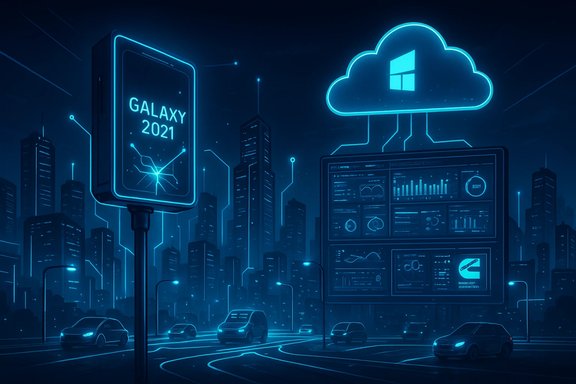 Background
Pacific Controls (sometimes styled Pacific Control Systems or PCS) has built its business around managed, cloud-enabled IoT and machine‑to‑machine services — including large command-and-control centers and a software platform called Galaxy (Galaxy‑2021 or Galaxy 2021) designed to manage buildings, fleets and city infrastructure. The company has repeatedly promoted Galaxy as a “platform of platforms” capable of integrating energy, transport, healthcare and other municipal or enterprise systems. Microsoft’s role in the arrangement is to provide the Azure cloud infrastructure and analytics services that Galaxy 2021 will run on, plus access to Azure’s commercial channels. Pacific Controls’ materials and press releases note Galaxy 2021’s integration with Azure services such as Event Hubs, Stream Analytics and Azure Machine Learning, and they position the offering as available through Azure’s IoT marketplace and certified for Azure in early 2016. This announcement first surfaced in technology media coverage and press pages in late 2015, and the public documentation from Pacific Controls and third‑party news outlets describes the effort as a commercialization of Galaxy 2021 on top of Microsoft Azure. What Pacific Controls’ Galaxy 2021 actually claims to deliver
Galaxy 2021 is sold and positioned as an enterprise-grade, multi‑vertical IoT management platform with several component promises:- Managed platform-as-a-service for IoT workloads: device onboarding, lifecycle management, and continued monitoring.
- Big‑data ingestion and analytics, combining edge gateway telemetry with cloud stream processing.
- A multi‑protocol IoT gateway (G2021) intended to connect heterogeneous assets — buildings, vehicles and industrial equipment — to the Galaxy cloud.
- Marketplace availability and partner integrations (for example, a documented integration with Cummins Connected Diagnostics to deliver engine diagnostics on Galaxy).
Technical anatomy: how the pieces fit (and what’s verifiable)
Galaxy‑on‑Azure is not a single closed appliance; the publicly described architecture couples Pacific Controls’ Galaxy platform and gateway devices with Azure services that are well‑documented and widely used in industrial IoT solutions:- Device ingress and identity: Azure IoT Hub / Event Hubs style ingestion for high‑volume telemetry and two‑way device control. Microsoft documentation shows IoT Hub is the standard entry point for secure device telemetry and message routing to downstream services.
- Stream processing and edge analytics: Azure Stream Analytics (cloud and IoT Edge modules) for near‑real‑time computations and low‑latency decisions close to assets. Microsoft docs confirm Stream Analytics can run in IoT Edge containers and integrate with IoT Hub/Event Hubs.
- Machine learning and enrichment: Azure Machine Learning and other analytics services are cited by Pacific Controls as part of the Galaxy data pipeline for predictive maintenance and “actionable business intelligence.” Azure docs and the Pacific Controls press material both describe this integration point.
Strategic rationale: why Microsoft and PCS paired up
- For Pacific Controls:
- Speed to scale: running on Azure removes the need to build and operate hyperscale backend infrastructure and taps Microsoft’s global footprint and compliance tooling.
- Commercial reach: Azure Marketplace and Microsoft channel partners provide sales and distribution channels to telcos, OEMs and governments.
- For Microsoft:
- Verticalization: Galaxy offers pre‑packed vertical use cases (smart city, fleet, energy) and industry integrations that make Azure more attractive to regulated buyers who want repeatable solutions rather than raw primitives.
- Edge credibility: partnering with an experienced managed‑services operator gives Microsoft a reference architecture for managed command centers and 24x7 operations in regions where PCS already operates.
Strengths and potential upsides
- Rapid enterprise packaging: For organizations that lack in‑house IoT platform skills, Galaxy‑on‑Azure promises a turn‑key path from device to dashboard. Pacific Controls’ integration with established players like Cummins suggests real-world vertical integrations are available.
- Hybrid edge/cloud capability: By using Azure Stream Analytics and IoT Edge modules, Galaxy can run analytics close to the device for low latency and continue cloud-based model retraining for broader learning and cross‑site insights. This hybrid model is both technically supported by Azure and valuable for industrial use cases.
- Telco and OEM route-to-market: Pacific Controls’ existing relationships with telecom operators and its “command control centers” help enterprises deploy managed services across geographies where they lack local operations. That operational footprint matters when managed monitoring is a commercial requirement.
- Use‑case breadth: The platform’s remit (smart buildings, fleet, energy, municipal services) can drive cross‑sell opportunities; organizations that manage multiple asset classes can benefit from a unified data fabric and common operational dashboards.
Risks, limitations and real concerns
- Vendor lock‑in and data gravity: packaging a commercial IoT stack around a vendor platform that itself depends on Azure services increases data gravity. Exiting or migrating such a stack will be complex, expensive and time‑consuming. Decision‑makers should demand clear data‑export guarantees, documented APIs and migration playbooks. This is a typical risk with integrated platform + cloud models.
- Security and device lifecycle: large IoT fleets require robust identity, firmware management and secure over‑the‑air update processes. Public materials describe analytics and monitoring, but published details about PCS’s device authentication model, patch cadence and PKI practices are limited in consumer‑facing announcements. Enterprises should request explicit security architecture, penetration test results and third‑party compliance attestations before production rollouts.
- Regulatory & data residency complexities: smart‑city and utility data can be sensitive and subject to local laws. Running services across Azure regions may not meet requirements in every jurisdiction unless appropriate Azure region deployment, data residency controls and contractual safeguards are in place. Pacific Controls points to Azure’s data residency options, but buyers must validate regional availability and contractual terms.
- Proven production references: Pacific Controls cites partnerships and marketplace listings, and some vertical integrations (e.g., Cummins) are documented, but large, independently audited case studies demonstrating long‑term reliability, SLA adherence and cost of ownership at city scale are limited in public materials. Buyers should insist on on‑site references, runbooks and a clear joint‑support model with Microsoft.
- Interoperability with brownfield OT: many industrial estates have legacy control systems, proprietary protocols and air‑gapped architectures. Gateway support for specific OT protocols and the process for safe, certified integration into control networks must be validated on a site‑by‑site basis. Pacific Controls advertises broad protocol coverage, but independent verification at the device level is still needed.
Security and governance checklist for IT and operational buyers
- Ask for a joint support and escalation runbook that names Pacific Controls and Microsoft contacts, SLAs, and on‑call coverage.
- Verify device identity and lifecycle controls: per‑device credentials, X.509 support and documented OTA update mechanism.
- Confirm data residency options and encryption-at-rest/in-transit configurations for the Azure regions you will use.
- Request independent security assessments, penetration test summaries and SOC / ISO attestation for the Galaxy hosting and PCS operations centers.
- Pilot before scale: run a single‑site PoC that includes failure‑mode testing (connectivity loss, rollback, corrupted telemetry) and measure p95 latencies for end‑to‑end actions.
Commercial considerations and procurement red flags
- Pricing model clarity: cloud + managed services often means a mix of capital and recurring fees. Confirm how device counts, telemetry volume, stream processing jobs and storage drive billing.
- Support boundaries: when incidents cross domain boundaries (device vs. cloud vs. network), ensure contracts define ownership and reimbursement for service outages.
- Intellectual property and analytics rights: clarify who owns derived models and aggregated telemetry — the customer, the platform provider, or shared IP — and any rights Pacific Controls or Microsoft claim for anonymized telemetry.
How this fits a broader Azure IoT partner pattern
The Pacific Controls announcement mirrors a common industry pattern: hyperscalers provide scale and primitives while domain specialists package vertical workflows, tools and managed operations. Microsoft has worked with other industrial partners to embed Azure IoT primitives into vertical stacks (manufacturing, asset management, robotics and utilities). That partner model reduces integration friction for enterprise buyers but shifts the selection risk to the quality of the partner implementation and the clarity of joint support between partner and hyperscaler.Practical guidance for WindowsForum and Windows‑centric readers
- For IT teams already heavily invested in Azure, Galaxy‑on‑Azure may speed time to production by delivering prebuilt connectors and vertical telemetry pipelines.
- For OT and facilities teams, insist on trialing device‑level gateway functionality (G2021 or equivalent) to validate protocol compatibility, deterministic behavior and local‑control failover.
- For procurement and legal: include exit clauses, data export formats, and acceptance criteria that measure operational outcomes (MTTR, false‑positive rates, prediction accuracy) rather than only feature checklists.
What’s verifiable — and what needs more proof
Verifiable:- The Microsoft + Pacific Controls commercial relationship and Galaxy 2021’s availability on Azure (announced in October 2015 and referenced in multiple press notices and marketplace listings).
- Technical fit with Azure services: Galaxy documents and Microsoft docs both show how stream analytics, Event Hubs/IoT Hub and Azure Machine Learning can form the backend for an IoT platform.
- Concrete vertical integrations such as the Cummins Connected Diagnostics deployment on Galaxy.
- Production‑scale reliability, long‑term TCO and SLA performance for city‑scale or utility‑scale deployments — public materials do not publish independent audits or multi‑year benchmarks.
- Specific device security posture and firmware lifecycle commitments across large fleets — these operational details must be requested and validated during procurement.
Final assessment
The Pacific Controls — Microsoft tie‑up is a classic example of hyperscaler + domain partner delivery: it combines Azure’s cloud and analytics primitives with Pacific Controls’ IoT platform and managed operations to create a commercially packaged IoT solution aimed at government, telco and heavy‑asset markets. That combination can materially reduce integration effort and accelerate deployment, particularly for organizations that want an operational, managed solution rather than building from primitives.However, the buyer must treat vendor marketing claims with healthy skepticism, verify security and compliance artifacts, and demand site references and joint‑support documents before committing to wide rollouts. The practical benefits (faster time to market, hybrid analytics, vertical integrations) are compelling — but they come with real operational and governance trade‑offs (vendor lock‑in, data gravity, and the need for rigorous lifecycle security). Organizations evaluating Galaxy‑on‑Azure should:
- Run an instrumented pilot that includes failure and security testing.
- Require explicit SLAs and a migration playbook.
- Insist on third‑party security attestations and in‑region data residency guarantees.
- Measure operational KPIs during the pilot, not just feature parity.
Conclusion
Microsoft’s collaboration with Pacific Controls to operate Galaxy 2021 on Azure is a credible, use‑case oriented approach to delivering managed IoT services — particularly for customers that prefer an integrated platform and operational support. The architectural building blocks are well‑established, but prudent buyers should validate operational proof points, security posture and long‑term commercial terms before accepting the vendor narrative of a single‑click enterprise IoT panacea.
Source: BetaNews https://betanews.com/article/micros...ntrol-systems-for-new-iot-management-system/]
