

At WWDC26 on June 8, 2026, Apple announced iOS 27 and companion updates for iPad, Mac, Watch, Vision Pro and Apple TV, centering the release on a rebuilt Siri AI, expanded Apple Intelligence features, and new family-safety controls across its ecosystem. The company’s message was unmistakable: after two years of being judged against faster-moving AI rivals, Apple wants to turn the operating system itself into the assistant. The risk is just as clear. Apple is asking users, developers, parents, and regulators to trust that a more personal Siri can be powerful without becoming invasive, useful without becoming erratic, and available without becoming another regional compliance maze.
For most of the iPhone era, Siri has been a brand more than a breakthrough. It arrived early, became culturally recognizable, and then spent years being outpaced by assistants that were better at open-ended language, web synthesis, and multi-step task execution. WWDC26 was Apple’s attempt to reset that story in one keynote.
The new Siri AI is not being sold as a better voice command layer. Apple described a system that can understand personal context from messages, emails, photos, on-screen content, and web queries, then act across apps and devices. That is a meaningful shift from “set a timer” to “understand what I am trying to do, infer the relevant information, and help me complete the task.”
That repositioning matters because Apple’s historic strength has never been raw model spectacle. It has been integration. The company does not need Siri to win a benchmark war if Siri becomes the most convenient way to move between calendar, photos, mail, maps, notes, reminders, and third-party apps on the device already in your hand.
But that is also why WWDC26 felt less like a feature reveal than a credibility test. Apple has spent years insisting that privacy, on-device processing, and tight platform control are not constraints but advantages. Siri AI is where that claim meets reality.
That decision is a quiet admission that the old invocation model is no longer enough. A modern assistant is not simply a voice that appears when summoned by a button or hotword. It is a workspace: a place where a user can ask follow-up questions, revisit context, compose drafts, generate actions, and treat the assistant less like a command line and more like an operating surface.
On iOS 27, Siri can reportedly be summoned through familiar gestures and through a chatbot-like app experience. That brings Apple closer to the interaction patterns already popularized by ChatGPT, Gemini, Copilot, and other assistants. The difference is that Apple’s version is meant to live inside the platform rather than alongside it.
That distinction is not cosmetic. A standalone assistant app on a phone can answer questions; an operating-system-level assistant can change settings, create reminders from visible content, search personal data, summarize communications, and move information across apps. The moment Siri can see the screen and understand personal context, it stops being a utility and becomes an interface layer.
This is where Apple’s advantage and danger converge. Users may welcome an assistant that finally understands the difference between a random web query and a message from a spouse about tomorrow’s flight. They may be less comfortable if the boundary between helpful context and excessive surveillance feels vague, even if Apple insists the architecture is privacy-first.
Google, OpenAI, Microsoft, Anthropic, Meta, and others have defined the public imagination of generative AI faster than Apple has. Android users have already seen aggressive assistant experiments. Windows users have watched Microsoft wire Copilot into Windows, Edge, Office, GitHub, and enterprise workflows with varying degrees of polish and resistance. Apple’s WWDC26 response is not to pretend it led the category. It is to argue that the category only becomes mainstream when it becomes ambient, personal, and deeply integrated.
That is a classic Apple move. The company often arrives after the first wave of experimentation and tries to turn a chaotic product category into a controlled experience. Sometimes that works brilliantly. Sometimes it produces a polished version of a market that has already moved on.
Siri AI’s integration across iOS 27, iPadOS 27, macOS 27, watchOS 27, visionOS 27, and tvOS 27 is designed to make the assistant feel less like an app and more like a continuity layer. The iPhone, Mac, Watch, and Vision Pro are not separate endpoints in Apple’s narrative; they are different surfaces for the same personal computing fabric.
For WindowsForum readers, the comparison to Microsoft is unavoidable. Microsoft has treated AI as a productivity accelerant first, tying Copilot to enterprise subscriptions, developer tooling, and document workflows. Apple is treating AI as a personal operating-system feature first. One company begins with the workplace; the other begins with the pocket.
Apple has spent years presenting itself as the company that protects users from the data appetites of the broader technology industry. Partnering with a major AI model provider does not automatically undermine that promise, especially if Apple mediates requests through privacy-preserving infrastructure. But it does make the architecture matter more than the branding.
Users will not care which model answers a generic trivia question. They will care deeply if the assistant is reading messages, identifying people in photos, interpreting on-screen bank statements, or generating reminders from private emails. At that point, “powered by” becomes less important than “processed where,” “stored how,” and “visible to whom.”
Apple’s phrase “privacy-first” has become familiar enough that it risks sounding like wallpaper. WWDC26 raises the stakes because Siri AI’s usefulness depends precisely on the kind of personal context that privacy-sensitive users guard most carefully. If Siri cannot understand enough, it will feel dumb. If it understands too much without transparent controls, it will feel creepy.
That is the paradox of personal AI. The better it gets, the more intimate it becomes. Apple is betting that its reputation, hardware control, and privacy architecture can make that intimacy acceptable.
That matters because the assistant becomes more useful when it can follow the user across contexts. A query started on an iPhone, a document drafted on a Mac, a reminder surfaced on a Watch, and a visual interaction on Vision Pro all become more valuable if they share a coherent understanding of the user’s intent. Apple’s long-running Continuity strategy now has an AI-shaped extension.
The iOS 27 feature set also appears to mix headline AI with more traditional operating-system maintenance. Faster app launches, improved photo processing, smoother AirDrop transfers, interface personalization, and updates to Photos, Safari, Messages, Mail, and the App Store are not glamorous in the way Siri AI is. They are the features that determine whether the update feels solid after the keynote fades.
That balance is important. AI features can sell the story, but performance and reliability determine whether users keep the software installed without resentment. Apple knows this, and WWDC26’s packaging suggests the company wants iOS 27 to feel like both an AI leap and a quality-of-life release.
That is probably the point. The consumer AI market has been flooded with demos that impress once and then disappear from daily use. Apple’s best chance is to make AI small, repeated, and embedded: a better crop, a faster reply, a reminder created from a conversation, a shortcut generated without learning automation syntax.
Natural-language Shortcuts could be especially significant if Apple executes well. Shortcuts has long been powerful but intimidating, beloved by tinkerers and underused by normal users. If Siri AI can turn ordinary language into reliable automations, Apple could unlock a layer of iOS that has been hiding in plain sight.
The challenge is determinism. Users tolerate creative variation in image generation; they are less forgiving when an automation sends the wrong message, changes the wrong setting, or triggers the wrong workflow. For sysadmins and power users, the first question will not be whether Siri can create a shortcut. It will be whether the generated shortcut is inspectable, predictable, and governable.
The new tools include child accounts, enhanced communication approvals, redesigned Screen Time features, more precise app access permissions, daily time allowances across app categories, schedules to manage usage, and stronger communication safety protections. That is a substantial package, and it arrives at a time when governments, parents, schools, and platform operators are all under pressure to show they are taking youth safety seriously.
Apple’s advantage here is that parental control can be built into the device rather than bolted on through third-party monitoring software. A parent who already manages Family Sharing, Apple IDs, app approvals, location sharing, and Screen Time may prefer a single integrated dashboard over a patchwork of apps. The company can also frame these controls as privacy-preserving alternatives to more invasive surveillance products.
But family safety features are politically and technically delicate. Too little control and parents say the platform is indifferent. Too much control and children, privacy advocates, or regulators may worry about over-monitoring. Apple is trying to thread the needle by giving parents more granular tools while presenting the system as protective rather than punitive.
For Windows and enterprise administrators, there is a familiar lesson here. Device management is no longer just about security policy. It is about behavioral policy, identity, safety, and compliance. Consumer platforms are absorbing concepts that IT departments have managed for years.
That fractures Apple’s usual promise of a unified experience. A user in the United States may get the full iOS 27 Siri AI pitch later this year, while a user in the EU may see a more limited version on the same class of device. A Mac user in Europe may get features an iPhone user in Europe does not. For a company that sells continuity as a virtue, that is a meaningful complication.
Apple will likely argue that regulation is forcing product compromises. European regulators will likely argue that gatekeeper platforms must obey competition rules before rolling out deeply integrated services. Users may care less about the legal theory than the practical result: the feature advertised globally may not arrive globally.
This is not just an Apple problem. AI assistants are becoming entangled with privacy law, competition law, data residency, child safety rules, copyright disputes, and platform governance. The more capable the assistant, the more regulatory surface area it creates. Siri AI is arriving in a world where software features increasingly ship with jurisdictional footnotes.
Developers have reason to be interested. If Siri AI can understand app capabilities and invoke actions through natural language, smaller apps could become more accessible to users who never explore menus or settings. A budgeting app, writing tool, travel planner, or health tracker could gain a conversational front end without building an entire assistant from scratch.
Developers also have reason to be cautious. Apple has a long history of turning platform capabilities into competitive pressure. If the system assistant can summarize, compose, search, edit, and automate across categories, some app features become OS features. The boundary between enabling developers and absorbing their value will matter.
Subscription models add another wrinkle. If AI-assisted features are tied to iCloud storage tiers or other paid services, developers will need to understand where Apple’s monetization ends and theirs begins. The platform owner is not just providing APIs; it is shaping user expectations about which intelligence features should be free, bundled, metered, or premium.
But operating-system support is not the same thing as AI feature support. Apple Intelligence features have already been limited by hardware requirements, and the most advanced Siri AI capabilities may not be available equally across all devices that can install iOS 27. This is the new normal for AI-era operating systems: the version number tells only part of the story.
That distinction will matter in IT planning. A fleet may be “iOS 27 compatible” while still lacking the hardware needed for the features executives saw in the keynote. Support desks will need to explain why two phones running the same OS behave differently. Documentation, procurement, and user training will need to account for AI capability tiers, not just software versions.
Windows users have seen a similar dynamic with AI PCs, NPUs, and Copilot-branded features that depend on newer silicon. Apple’s ecosystem is more controlled, but it is not immune to the same fragmentation. AI makes hardware age visible in new ways.
The operating system is becoming a broker for AI actions. It knows what is on screen, what apps can do, what files and messages are relevant, what policies apply, and which model should handle the request. Whether the assistant is called Siri, Copilot, Gemini, or something else, the strategic prize is the same: control the layer where user intent becomes software action.
For administrators, that raises hard questions. Can AI actions be logged? Can they be disabled by policy? Can sensitive apps opt out of screen awareness? Can generated content be audited? Can parents, schools, and employers define boundaries without breaking the user experience?
Apple’s consumer-first framing does not eliminate those questions. If anything, it makes them more urgent. Once users become accustomed to AI-mediated workflows on personal devices, they will expect similar convenience on managed devices. Enterprise IT will inherit the expectations long before every governance issue is solved.
Apple’s path to success is therefore narrow. The assistant must be obviously more capable than old Siri, safer-feeling than rival assistants, faster than doing the task manually, and consistent enough that users try it again after the first mistake. It must also work across languages, regions, app categories, and hardware tiers without turning into a support matrix only enthusiasts understand.
The delayed EU rollout is an early reminder that Apple does not fully control the playing field. The company can design the stack, polish the interface, and negotiate model partnerships, but regulators and regional compliance requirements now shape product availability in real time. AI assistants are not just software features; they are policy events.
Still, WWDC26 was not a minor update wearing an AI costume. It was Apple’s attempt to redefine the user interface around personal context. If the company succeeds, Siri AI may become the first version of Siri that matters as much as the brand always suggested it did.
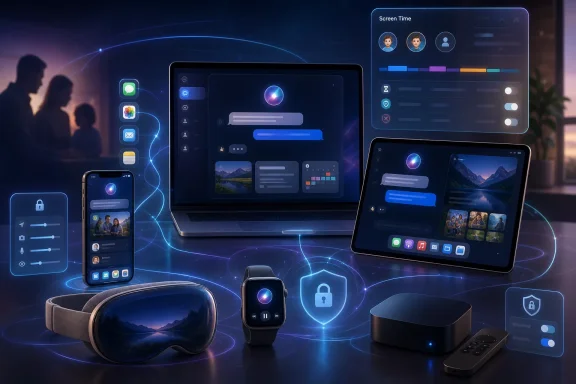 Apple Turns WWDC Into a Referendum on Siri
For most of the iPhone era, Siri has been a brand more than a breakthrough. It arrived early, became culturally recognizable, and then spent years being outpaced by assistants that were better at open-ended language, web synthesis, and multi-step task execution. WWDC26 was Apple’s attempt to reset that story in one keynote.The new Siri AI is not being sold as a better voice command layer. Apple described a system that can understand personal context from messages, emails, photos, on-screen content, and web queries, then act across apps and devices. That is a meaningful shift from “set a timer” to “understand what I am trying to do, infer the relevant information, and help me complete the task.”
That repositioning matters because Apple’s historic strength has never been raw model spectacle. It has been integration. The company does not need Siri to win a benchmark war if Siri becomes the most convenient way to move between calendar, photos, mail, maps, notes, reminders, and third-party apps on the device already in your hand.
But that is also why WWDC26 felt less like a feature reveal than a credibility test. Apple has spent years insisting that privacy, on-device processing, and tight platform control are not constraints but advantages. Siri AI is where that claim meets reality.
The Assistant Is No Longer a Voice in the Corner
The most important detail in Apple’s announcement may not be the phrase “Siri AI” at all. It is the dedicated Siri app.That decision is a quiet admission that the old invocation model is no longer enough. A modern assistant is not simply a voice that appears when summoned by a button or hotword. It is a workspace: a place where a user can ask follow-up questions, revisit context, compose drafts, generate actions, and treat the assistant less like a command line and more like an operating surface.
On iOS 27, Siri can reportedly be summoned through familiar gestures and through a chatbot-like app experience. That brings Apple closer to the interaction patterns already popularized by ChatGPT, Gemini, Copilot, and other assistants. The difference is that Apple’s version is meant to live inside the platform rather than alongside it.
That distinction is not cosmetic. A standalone assistant app on a phone can answer questions; an operating-system-level assistant can change settings, create reminders from visible content, search personal data, summarize communications, and move information across apps. The moment Siri can see the screen and understand personal context, it stops being a utility and becomes an interface layer.
This is where Apple’s advantage and danger converge. Users may welcome an assistant that finally understands the difference between a random web query and a message from a spouse about tomorrow’s flight. They may be less comfortable if the boundary between helpful context and excessive surveillance feels vague, even if Apple insists the architecture is privacy-first.
Apple’s AI Catch-Up Strategy Is Really an Ecosystem Strategy
The easy criticism is that Apple is late. That criticism is not wrong, but it is incomplete.Google, OpenAI, Microsoft, Anthropic, Meta, and others have defined the public imagination of generative AI faster than Apple has. Android users have already seen aggressive assistant experiments. Windows users have watched Microsoft wire Copilot into Windows, Edge, Office, GitHub, and enterprise workflows with varying degrees of polish and resistance. Apple’s WWDC26 response is not to pretend it led the category. It is to argue that the category only becomes mainstream when it becomes ambient, personal, and deeply integrated.
That is a classic Apple move. The company often arrives after the first wave of experimentation and tries to turn a chaotic product category into a controlled experience. Sometimes that works brilliantly. Sometimes it produces a polished version of a market that has already moved on.
Siri AI’s integration across iOS 27, iPadOS 27, macOS 27, watchOS 27, visionOS 27, and tvOS 27 is designed to make the assistant feel less like an app and more like a continuity layer. The iPhone, Mac, Watch, and Vision Pro are not separate endpoints in Apple’s narrative; they are different surfaces for the same personal computing fabric.
For WindowsForum readers, the comparison to Microsoft is unavoidable. Microsoft has treated AI as a productivity accelerant first, tying Copilot to enterprise subscriptions, developer tooling, and document workflows. Apple is treating AI as a personal operating-system feature first. One company begins with the workplace; the other begins with the pocket.
The Gemini Detail Complicates Apple’s Privacy Pitch
Reports that Siri AI is powered, at least in part, by Gemini make the announcement more interesting than a simple “Apple builds its own AI assistant” story. Apple can still own the interface, privacy architecture, system integration, and user experience while relying on outside model expertise where it makes sense. That is pragmatic. It is also awkward.Apple has spent years presenting itself as the company that protects users from the data appetites of the broader technology industry. Partnering with a major AI model provider does not automatically undermine that promise, especially if Apple mediates requests through privacy-preserving infrastructure. But it does make the architecture matter more than the branding.
Users will not care which model answers a generic trivia question. They will care deeply if the assistant is reading messages, identifying people in photos, interpreting on-screen bank statements, or generating reminders from private emails. At that point, “powered by” becomes less important than “processed where,” “stored how,” and “visible to whom.”
Apple’s phrase “privacy-first” has become familiar enough that it risks sounding like wallpaper. WWDC26 raises the stakes because Siri AI’s usefulness depends precisely on the kind of personal context that privacy-sensitive users guard most carefully. If Siri cannot understand enough, it will feel dumb. If it understands too much without transparent controls, it will feel creepy.
That is the paradox of personal AI. The better it gets, the more intimate it becomes. Apple is betting that its reputation, hardware control, and privacy architecture can make that intimacy acceptable.
iOS 27 Is the Delivery Vehicle, Not the Whole Story
The iPhone remains the gravitational center of Apple’s ecosystem, so iOS 27 naturally drew most of the attention. But the WWDC26 announcements were broader than a phone update. Apple tied the new intelligence layer to iPadOS 27, macOS 27, watchOS 27, visionOS 27, and tvOS 27, signaling that Siri AI is intended to be a platform-wide behavior rather than a single-device feature.That matters because the assistant becomes more useful when it can follow the user across contexts. A query started on an iPhone, a document drafted on a Mac, a reminder surfaced on a Watch, and a visual interaction on Vision Pro all become more valuable if they share a coherent understanding of the user’s intent. Apple’s long-running Continuity strategy now has an AI-shaped extension.
The iOS 27 feature set also appears to mix headline AI with more traditional operating-system maintenance. Faster app launches, improved photo processing, smoother AirDrop transfers, interface personalization, and updates to Photos, Safari, Messages, Mail, and the App Store are not glamorous in the way Siri AI is. They are the features that determine whether the update feels solid after the keynote fades.
That balance is important. AI features can sell the story, but performance and reliability determine whether users keep the software installed without resentment. Apple knows this, and WWDC26’s packaging suggests the company wants iOS 27 to feel like both an AI leap and a quality-of-life release.
The Photos and Shortcuts Updates Show Where AI May Actually Stick
Some of the most practical AI features announced around iOS 27 are not the ones that sound most futuristic. Suggested replies in Messages, context-aware Notes and Reminders creation, natural-language Shortcuts generation, improved image cleanup, image extension, and spatial reframing in Photos are the sort of features that can become habit without users thinking of them as “AI.”That is probably the point. The consumer AI market has been flooded with demos that impress once and then disappear from daily use. Apple’s best chance is to make AI small, repeated, and embedded: a better crop, a faster reply, a reminder created from a conversation, a shortcut generated without learning automation syntax.
Natural-language Shortcuts could be especially significant if Apple executes well. Shortcuts has long been powerful but intimidating, beloved by tinkerers and underused by normal users. If Siri AI can turn ordinary language into reliable automations, Apple could unlock a layer of iOS that has been hiding in plain sight.
The challenge is determinism. Users tolerate creative variation in image generation; they are less forgiving when an automation sends the wrong message, changes the wrong setting, or triggers the wrong workflow. For sysadmins and power users, the first question will not be whether Siri can create a shortcut. It will be whether the generated shortcut is inspectable, predictable, and governable.
Family Safety Becomes a Platform Argument
Apple’s expanded parental controls were not a side note. They were part of the same broader argument: Apple wants to be trusted with the most personal parts of digital life.The new tools include child accounts, enhanced communication approvals, redesigned Screen Time features, more precise app access permissions, daily time allowances across app categories, schedules to manage usage, and stronger communication safety protections. That is a substantial package, and it arrives at a time when governments, parents, schools, and platform operators are all under pressure to show they are taking youth safety seriously.
Apple’s advantage here is that parental control can be built into the device rather than bolted on through third-party monitoring software. A parent who already manages Family Sharing, Apple IDs, app approvals, location sharing, and Screen Time may prefer a single integrated dashboard over a patchwork of apps. The company can also frame these controls as privacy-preserving alternatives to more invasive surveillance products.
But family safety features are politically and technically delicate. Too little control and parents say the platform is indifferent. Too much control and children, privacy advocates, or regulators may worry about over-monitoring. Apple is trying to thread the needle by giving parents more granular tools while presenting the system as protective rather than punitive.
For Windows and enterprise administrators, there is a familiar lesson here. Device management is no longer just about security policy. It is about behavioral policy, identity, safety, and compliance. Consumer platforms are absorbing concepts that IT departments have managed for years.
Europe Is Where Apple’s Universal Platform Story Breaks
The most revealing line in the WWDC26 coverage may be the one about delay. Apple confirmed that Siri AI and several Apple Intelligence features will be delayed in the European Union on iOS and iPadOS because of Digital Markets Act requirements, even as availability continues on macOS, watchOS, and visionOS in the region.That fractures Apple’s usual promise of a unified experience. A user in the United States may get the full iOS 27 Siri AI pitch later this year, while a user in the EU may see a more limited version on the same class of device. A Mac user in Europe may get features an iPhone user in Europe does not. For a company that sells continuity as a virtue, that is a meaningful complication.
Apple will likely argue that regulation is forcing product compromises. European regulators will likely argue that gatekeeper platforms must obey competition rules before rolling out deeply integrated services. Users may care less about the legal theory than the practical result: the feature advertised globally may not arrive globally.
This is not just an Apple problem. AI assistants are becoming entangled with privacy law, competition law, data residency, child safety rules, copyright disputes, and platform governance. The more capable the assistant, the more regulatory surface area it creates. Siri AI is arriving in a world where software features increasingly ship with jurisdictional footnotes.
Developers Get Opportunity With a Side of Platform Anxiety
Apple’s App Store and developer updates were less prominent than Siri AI, but they may determine whether the assistant becomes a true ecosystem layer or remains mostly an Apple-app showcase. Systemwide actions and deeper app integration are only transformative if third-party developers can participate in useful, predictable ways.Developers have reason to be interested. If Siri AI can understand app capabilities and invoke actions through natural language, smaller apps could become more accessible to users who never explore menus or settings. A budgeting app, writing tool, travel planner, or health tracker could gain a conversational front end without building an entire assistant from scratch.
Developers also have reason to be cautious. Apple has a long history of turning platform capabilities into competitive pressure. If the system assistant can summarize, compose, search, edit, and automate across categories, some app features become OS features. The boundary between enabling developers and absorbing their value will matter.
Subscription models add another wrinkle. If AI-assisted features are tied to iCloud storage tiers or other paid services, developers will need to understand where Apple’s monetization ends and theirs begins. The platform owner is not just providing APIs; it is shaping user expectations about which intelligence features should be free, bundled, metered, or premium.
The Compatibility Story Is Better for iOS Than for AI
One of the more user-friendly pieces of the iOS 27 story is device support. Reports indicate that every iPhone from the iPhone 11 onward will support iOS 27, avoiding the cutoff some users had feared. That is good news for households and organizations trying to extend hardware life.But operating-system support is not the same thing as AI feature support. Apple Intelligence features have already been limited by hardware requirements, and the most advanced Siri AI capabilities may not be available equally across all devices that can install iOS 27. This is the new normal for AI-era operating systems: the version number tells only part of the story.
That distinction will matter in IT planning. A fleet may be “iOS 27 compatible” while still lacking the hardware needed for the features executives saw in the keynote. Support desks will need to explain why two phones running the same OS behave differently. Documentation, procurement, and user training will need to account for AI capability tiers, not just software versions.
Windows users have seen a similar dynamic with AI PCs, NPUs, and Copilot-branded features that depend on newer silicon. Apple’s ecosystem is more controlled, but it is not immune to the same fragmentation. AI makes hardware age visible in new ways.
Windows Users Should Watch the Management Layer, Not the Marketing
For a WindowsForum audience, the immediate temptation is to treat WWDC26 as Apple theater: a keynote, a naming exercise, a few flashy demos, and another round of ecosystem lock-in. That would miss the larger industry signal. Apple, Microsoft, and Google are all moving toward the same destination, even if they describe it differently.The operating system is becoming a broker for AI actions. It knows what is on screen, what apps can do, what files and messages are relevant, what policies apply, and which model should handle the request. Whether the assistant is called Siri, Copilot, Gemini, or something else, the strategic prize is the same: control the layer where user intent becomes software action.
For administrators, that raises hard questions. Can AI actions be logged? Can they be disabled by policy? Can sensitive apps opt out of screen awareness? Can generated content be audited? Can parents, schools, and employers define boundaries without breaking the user experience?
Apple’s consumer-first framing does not eliminate those questions. If anything, it makes them more urgent. Once users become accustomed to AI-mediated workflows on personal devices, they will expect similar convenience on managed devices. Enterprise IT will inherit the expectations long before every governance issue is solved.
The Real Test Starts After the Keynote Glow Fades
The history of voice assistants is littered with impressive demos and disappointing habits. Users try the feature, encounter a few failures, and retreat to taps, typing, and search. Siri AI has to overcome not only technical limitations but years of user conditioning that Siri is best reserved for simple commands.Apple’s path to success is therefore narrow. The assistant must be obviously more capable than old Siri, safer-feeling than rival assistants, faster than doing the task manually, and consistent enough that users try it again after the first mistake. It must also work across languages, regions, app categories, and hardware tiers without turning into a support matrix only enthusiasts understand.
The delayed EU rollout is an early reminder that Apple does not fully control the playing field. The company can design the stack, polish the interface, and negotiate model partnerships, but regulators and regional compliance requirements now shape product availability in real time. AI assistants are not just software features; they are policy events.
Still, WWDC26 was not a minor update wearing an AI costume. It was Apple’s attempt to redefine the user interface around personal context. If the company succeeds, Siri AI may become the first version of Siri that matters as much as the brand always suggested it did.
The WWDC26 Bet Comes Down to These User-Facing Consequences
Apple’s announcements were broad, but the practical stakes are fairly concrete. The keynote was about AI, but the user impact will be measured in device eligibility, regional availability, family controls, app integration, and whether Siri can finally perform reliably enough to become a daily habit.- Siri AI is the centerpiece of iOS 27, but its value depends on how well Apple turns personal context into reliable actions rather than impressive demos.
- The dedicated Siri app signals that Apple now sees the assistant as a workspace, not just a voice-command overlay.
- Expanded parental controls make family safety part of Apple’s platform trust argument, not merely a settings-panel upgrade.
- EU delays show that AI features will increasingly ship according to regulatory geography, not just product readiness.
- iOS 27 device support may be broad, but the most advanced Apple Intelligence capabilities are likely to remain tied to newer hardware.
- Developers gain a new surface for discovery and automation, while also facing the risk that Apple’s assistant absorbs features that once belonged inside apps.
References
- Primary source: Moomoo
Published: 2026-06-14T22:45:28.918483
- Independent coverage: Mashable
Published: 2026-06-14T21:40:28.903061
Everything we learned about iOS 27 at WWDC 2026 | Mashable
Apple took to the stage at WWDC 2026 and showed off everything iOS 27 will have to offer when it launches later this year.mashable.com - Independent coverage: aol.com
Published: 2026-06-14T20:40:28.933248
Apple Unveils Next-Gen Intelligence, Siri AI & Teases iOS 27 Features - AOL
Apple has unveiled Siri AI at the Worldwide Developers Conference, which is set to be “an entirely new version of Siri that is profoundly more intelligent, knowledgeable, and capable.” This new version of Siri will be integrated into iPhone, iPad, Mac, Apple Watch, and Apple Vision Pro, creating...www.aol.com - Related coverage: tomshardware.com
Apple demonstrates cross-platform Siri upgrades in macOS 27 Golden Gate at WWDC — update brings Liquid Glass improvements and unifies AI strategy | Tom's Hardware
macOS 27 brings new AI features and, finally, matching corner radii.www.tomshardware.com - Related coverage: techradar.com
iOS 27 and Siri AI compatibility explained — confirmed device requirements for Apple's new software updates | TechRadar
Plus compatibility information for iPadOS 27www.techradar.com - Related coverage: creativebloq.com
Apple has finally caught up on AI with the new Siri for iPhone, iPad and Mac – but there's one problem | Creative Bloq
Every Apple WWDC 2026 update live as it happened.www.creativebloq.com
- Related coverage: macrumors.com
Top Stories: WWDC 2026 Recap With Siri AI, iOS 27, macOS Golden Gate, and More
WWDC 2026 has come to a close, and it brought a number of announcements with the headliner being the new Siri AI functionality available both in a standalone app and integrated throughout most of Apple's next-generation operating systems.www.macrumors.com - Related coverage: techcrunch.com
WWDC 2026: Everything announced on Siri AI, iOS 27, Apple Intelligence, and more | TechCrunch
Apple primarily made the case for an improved experience with its long-standing Siri assistant, which like most other announcements had a hefty helping of AI.techcrunch.com - Official source: images.apple.com
Due to DMA, Siri AI delayed in EU for iOS 27 and iPadOS 27 - Apple (UK)
Due to the Digital Markets Act, Apple will not be able to ship Siri AI in the European Union with the release of iOS 27 and iPadOS 27.images.apple.com - Related coverage: techjournal.org
WWDC 2026: Siri Runs on Google Gemini (+ iOS 27)
At WWDC 2026 Apple rebuilt Siri on a custom Google Gemini model and unveiled iOS 27. Here's everything announced and what it means for your iPhone.techjournal.org - Related coverage: apple.com.cn
Apple 推出新一代 Apple 智能、Siri AI 等新功能 - Apple (中国大陆)
Apple 今日推出即将发布的软件预览,以及将随这些软件推出的新一代 Apple 智能和 Siri AI。www.apple.com.cn - Related coverage: livemint.com
Apple WWDC 2026 Highlights: Apple launches iOS 27, macOS Golden Gate and Siri AI | Mint
Apple WWDC 2026 LIVE Updates: Apple has launched iOS 27, macOS Golden Gate, Siri AI and Apple Intelligence updates for iPhones and other related ecosystem. www.livemint.com
- Related coverage: tomsguide.com
Apple WWDC 2026 recap: Siri AI, iOS 27, Apple Intelligence, and all the biggest announcements | Tom's Guide
Siri AI is about to have a big impactwww.tomsguide.com - Related coverage: 9to5mac.com
Apple unveils new Siri AI, dedicated app, and enhanced Apple Intelligence features in iOS 27 - 9to5Mac
At WWDC 2026, Apple is detailing its Apple Intelligence improvements, starting with its Google Gemini collaboration. The company is also...9to5mac.com - Official source: apple.com
Apple elevates the iPhone experience with iOS 26 - Apple
Apple today previewed iOS 26, a major update that brings a beautiful new design, intelligent experiences, and improvements to the apps users rely on every day.www.apple.com
