

Darnell Adler’s Lifeline AI, a U.S.-based personal safety startup from a recent University of Southern California graduate, won the Red Bull Basement 2026 World Final in San Francisco on June 3, earning $100,000, Microsoft Azure credits, and mentorship from Red Bull Ventures. The win matters less because another student founder has a check and more because it shows where consumer AI is being pushed next: out of the chatbot window and into high-stakes, real-world workflows. Lifeline AI’s promise is simple and unnerving: summon help silently, without visibly unlocking a phone, dialing, or speaking. That simplicity is exactly why the hard questions start now.
Personal safety apps have traditionally assumed that users can perform a sequence of deliberate actions under stress. Unlock the phone, find the app, press a button, speak to a dispatcher, share a location, message a contact. In an ordinary usability test, those steps look manageable; in a coercive, violent, medically acute, or otherwise dangerous situation, they can become fantasy.
Lifeline AI’s pitch cuts through that problem by treating visible interaction as the failure point. The product is described as a personal safety system that can trigger instant, silent alerts without requiring the user to visibly use a phone. In other words, the emergency workflow is not “open the right app,” but “make the device understand that something is wrong when normal interaction is unsafe.”
That is a compelling reason for judges to reward it. It is also a reminder that the next wave of AI products will not always arrive as obviously artificial intelligence products. The most meaningful AI layer may be the inference engine buried inside a safety workflow, deciding when to escalate, whom to notify, and how to communicate context without forcing the user to compose a message.
The phrase “AI-powered” has been stretched nearly beyond usefulness, but Lifeline AI lands in a category where prediction and automation are more than decoration. A silent alert system has to distinguish between intent and accident, urgency and noise, genuine threat and false trigger. The central design problem is not merely how to send a message; it is how to create trust in a system that users may need during the worst minute of their lives.
That scale is the story behind the story. A competition that once might have rewarded pitch decks and prototypes is now built around founders using AI-assisted tools to move quickly from idea to MVP. The program’s positioning is explicit: first-time founders can use mentorship, cloud infrastructure, and AI-powered development tools to build something closer to a product than a slideware concept.
This is where the “vibe coding” era meets the old startup demo day. The barrier to putting together a working prototype has fallen, but the barrier to building something reliable, secure, and responsibly deployed has not. If anything, the gap between demo and production has become more dangerous because prototypes now look more convincing.
That tension was visible in the finalist roster. TruthShield AI from Canada tackled scam detection; Denmark’s Seabed Surveillance proposed monitoring suspicious vessel activity through vibration signals from undersea cables; Germany’s Please Touch This Art applied AI to museum accessibility; Taiwan’s Eyeflow focused on home-based ophthalmology monitoring. These are not trivial convenience apps. They are attempts to put AI into domains where mistaken outputs can affect money, infrastructure, mobility, medical care, or personal safety.
Red Bull’s format rewards ambition, and the 2026 field had plenty of it. But Lifeline AI won because it sits at the intersection of a universal anxiety and a plausible device-native solution. Nearly everyone understands the need to call for help without escalating danger. Nearly everyone also understands how often phones are both lifelines and liabilities.
A personal safety platform must answer questions that are less glamorous than a winning pitch but more important than the trophy. How does the system authenticate that the user intended to trigger an alert? How does it avoid accidental activations without making the trigger too hard to use? What happens when connectivity is poor, location is imprecise, the battery is low, permissions are disabled, or the phone is in a pocket, purse, car console, or another room?
There is also the question of where the alert goes. A message to trusted contacts is operationally different from a call to emergency services, and both differ from a live relay through a monitoring center. Each path brings its own legal, technical, and ethical burden. If Lifeline AI eventually touches public emergency infrastructure, it will have to operate in a world where dispatchers, carriers, handset makers, platform owners, and local authorities all have their own constraints.
The most successful consumer safety tools tend to hide complexity from users, but they cannot eliminate it. Apple’s Emergency SOS, crash detection, satellite emergency messaging, fall detection on wearables, and location-sharing features have trained users to expect their devices to intervene in moments of danger. They have also shown how sensitive the space is to false positives, regional availability, privacy tradeoffs, and backend coordination.
Lifeline AI is therefore entering a market that is both promising and unforgiving. The app does not merely need to work in a demo. It needs to behave predictably across the messy combinations of hardware, operating systems, permissions, networks, and human panic that define real emergencies.
Azure credits are not just free compute. They are a gravitational field. A startup that begins building its backend on Azure may naturally adopt Microsoft’s identity services, telemetry, databases, AI tooling, security controls, and compliance frameworks. For a safety product, that could be useful; it could also shape the architecture before the founder fully understands the regulatory and operational obligations ahead.
Cloud infrastructure is the obvious place to handle alert routing, trusted contact management, inference pipelines, audit logs, analytics, and integrations. But a safety system must also decide what belongs on-device. A silent emergency trigger that depends entirely on a remote model or cloud round trip may be fragile in precisely the moments it is needed most. Conversely, an on-device-only approach may limit context, escalation logic, and administrative oversight.
This is the emerging architecture debate for consumer AI: what should happen locally, what should happen in the cloud, and what should never be collected at all. In a productivity app, the answer can be guided by performance and cost. In a personal safety app, the answer has to include surveillance risk, abuse scenarios, and the possibility that the person creating danger may also have access to the user’s device, accounts, or location.
Microsoft’s cloud credibility can help a young company speak the language of enterprise-grade security. It does not automatically solve the product’s trust problem. If Lifeline AI becomes a real service, users will need clear answers about data retention, encryption, model behavior, escalation history, access controls, and whether sensitive emergency context is used for training or analytics.
A false negative could mean a user believed help was coming when it was not. A false positive could mean police or trusted contacts are alerted unnecessarily, potentially creating embarrassment, cost, panic, or even danger. A poorly designed workflow could expose a victim’s attempt to seek help. A compromised account could turn a safety tool into a stalking tool.
This is why the product’s most important feature may not be the alert trigger itself, but the surrounding threat model. Personal safety software has to assume adversarial conditions. The person a user fears may be physically nearby, monitoring the device, demanding to inspect messages, controlling a shared account, or using family-location features as a tool of coercion.
That reality makes subtle design choices unusually consequential. Does the app leave visible traces? Can it be disguised? Can alerts be canceled safely? Can contacts be configured without exposing the user? Can a user test the system without causing panic? Can an abuser disable it easily? Can law enforcement or third parties request data, and under what process?
These are not edge cases; they are the product category. A safety app that ignores them risks becoming a polished demo for people who are already safe enough to use it. Lifeline AI’s winning premise is that existing tools fail in constrained moments. The company will now have to prove that its own tool has been designed around those constraints from the beginning.
That ubiquity is powerful. It is also the reason the operating system platforms matter. On iOS and Android, background execution, sensor access, emergency calling behavior, lock-screen capabilities, notification handling, privacy permissions, and anti-abuse rules are tightly controlled. A safety app can promise a seamless emergency gesture, but Apple and Google ultimately decide which kinds of background behavior are allowed.
The same dynamic applies to Windows-adjacent ecosystems. Windows PCs are less likely to be the device in someone’s pocket during a street-level emergency, but they remain part of the user’s identity, account, and safety graph. Microsoft accounts, Azure backends, Teams-style communications infrastructure, Copilot-era AI services, and cross-device notification patterns may all become relevant if safety tools move from standalone apps to broader personal cloud systems.
That is why Lifeline AI should be watched beyond the startup competition circuit. The product points toward a future where safety, identity, location, and AI inference are stitched across devices. A phone may trigger the alert, but the response network may include cloud services, desktop dashboards, trusted-contact portals, emergency operators, and wearable or automotive signals.
For IT pros, that raises familiar management questions in a more emotional domain. Who owns the data? Who manages access? What logs are created? Can organizations support employee safety tools without becoming custodians of sensitive personal information? What happens when a university, employer, or city wants to deploy something similar at scale?
That spread is a useful snapshot of where early-stage AI entrepreneurship is going. The first consumer wave was dominated by content generation and productivity assistants. The next wave is trying to embed AI into systems that sense, decide, and trigger action in the physical world.
Denmark’s Seabed Surveillance is a good example of the geopolitical version of that shift. Undersea cables have become a more visible part of national infrastructure conversations, and a system that detects suspicious vessel-related vibrations from existing cable signals is exactly the kind of idea that sounds futuristic until it becomes obvious. Portugal’s Lumination, with adaptive public lighting, fits the smart-city version of the same pattern. Slovakia’s SoilScale and Spain’s Biosoil show how AI is being paired with drones, satellite imagery, engineered biology, and environmental remediation.
This matters because the Red Bull Basement format is not just producing apps. It is creating a talent funnel for young founders who think of AI as a general-purpose control layer. That is exciting, but it also means competitions have to become more serious about validation. A prototype in public lighting, emergency response, or medical monitoring cannot be judged only by novelty and charisma.
The good news is that the judges included people from AI tooling, cloud, semiconductors, entrepreneurship, and athletics. The less comfortable truth is that real-world deployment will require domain-specific review that no three-day final can fully provide. Lifeline AI earned the spotlight. Now it enters the slower, less photogenic phase where safety claims meet regulators, platform policies, liability, and user trust.
For Lifeline AI, that room may be especially important. A personal safety company should not be forced into reckless growth metrics before it has proven reliability and abuse resistance. The worst version of this story would be a viral app that acquires users faster than it builds operational maturity. In emergency-adjacent software, scale without dependability is not success; it is exposure.
Equity-free funding also changes the story for student founders. It lets a recent graduate move from “interesting idea” to “funded experiment” without immediately surrendering to the venture capital clock. That does not remove commercial pressure, but it can buy time to build with more care.
At the same time, no startup competition is charity in the purest sense. Red Bull gets brand association with frontier entrepreneurship, Microsoft gets promising workloads and developer mindshare, Replit and other ecosystem players benefit from AI-assisted creation narratives, and finalists get publicity. The arrangement can be mutually beneficial, but it should be understood as an ecosystem strategy, not simply a benevolent grant.
That does not diminish Adler’s win. It clarifies what the win represents. Lifeline AI is not only a student safety app with prize money; it is a case study in how consumer AI products are now being discovered, funded, cloud-enabled, and marketed before the broader public has had a chance to interrogate their assumptions.
That creates a difficult design paradox. The system may need rich context to be useful: where the user is, whom to notify, what message to send, whether the situation is escalating, and whether a response has been acknowledged. But every additional signal collected can become a liability if mishandled, subpoenaed, breached, misinterpreted, or accessed by the wrong person.
The company will also have to decide how transparent the system should be. A safety app should explain itself clearly enough for users to trust it, but not so visibly that it exposes vulnerable users. Documentation, onboarding, test modes, and support flows all become part of the threat model. Even marketing screenshots can reveal assumptions that abusers learn to exploit.
This is where many well-meaning safety technologies stumble. They optimize for the average user rather than the endangered user. They assume account privacy where none exists, device control where none exists, and calm decision-making where panic dominates. Lifeline AI’s thesis is that the interface must adapt to danger. Its privacy architecture has to do the same.
For Microsoft and other cloud partners, this is a chance to demonstrate that responsible AI is not merely about model cards and content filters. It is about building systems that reduce risk under adversarial human conditions. That includes minimizing data, securing defaults, designing auditability without surveillance creep, and giving users practical control when they may not have full control of their devices.
Lifeline AI is still at the beginning of that road. The Red Bull Basement win validates the idea, the pitch, and the founder’s ability to persuade a serious panel. It does not validate deployment at scale. That distinction matters, especially in a media environment where AI startups are often treated as inevitable the moment they win a prize.
The next steps should be practical and unglamorous: controlled pilots, false-positive testing, accessibility review, abuse-case analysis, platform-policy negotiation, security audits, and consultation with emergency response professionals. The company will need to define what it is and what it is not. Is it an emergency alert app, a trusted-contact system, a dispatcher relay, a campus safety tool, a personal AI agent, or some combination of those?
Each answer changes the obligations. A trusted-contact alert tool can move faster but may provide less formal response. A direct emergency-services integration carries more weight but requires deeper coordination. A campus or enterprise deployment may be easier to pilot but raises governance concerns. A consumer app may scale faster but faces the harshest variety of real-world contexts.
The temptation will be to market Lifeline AI as a universal safety layer. The more responsible path is likely narrower at first. Safety products often become trustworthy by serving a specific use case extremely well before expanding. If Adler wants Lifeline AI to become a global standard, the first challenge is deciding where the standard begins.
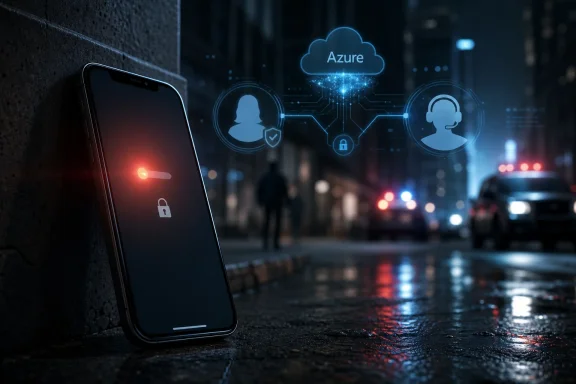 Lifeline AI Wins Because the Best Safety Interface Is No Interface at All
Personal safety apps have traditionally assumed that users can perform a sequence of deliberate actions under stress. Unlock the phone, find the app, press a button, speak to a dispatcher, share a location, message a contact. In an ordinary usability test, those steps look manageable; in a coercive, violent, medically acute, or otherwise dangerous situation, they can become fantasy.Lifeline AI’s pitch cuts through that problem by treating visible interaction as the failure point. The product is described as a personal safety system that can trigger instant, silent alerts without requiring the user to visibly use a phone. In other words, the emergency workflow is not “open the right app,” but “make the device understand that something is wrong when normal interaction is unsafe.”
That is a compelling reason for judges to reward it. It is also a reminder that the next wave of AI products will not always arrive as obviously artificial intelligence products. The most meaningful AI layer may be the inference engine buried inside a safety workflow, deciding when to escalate, whom to notify, and how to communicate context without forcing the user to compose a message.
The phrase “AI-powered” has been stretched nearly beyond usefulness, but Lifeline AI lands in a category where prediction and automation are more than decoration. A silent alert system has to distinguish between intent and accident, urgency and noise, genuine threat and false trigger. The central design problem is not merely how to send a message; it is how to create trust in a system that users may need during the worst minute of their lives.
Red Bull Basement Turns the Student Pitch Into an AI Product Factory
Red Bull Basement has always occupied a slightly unusual corner of the startup ecosystem. It is part competition, part incubator, part brand platform, and part talent discovery machine. The 2026 edition brought teams from more than 40 countries to San Francisco after a global application pool reported at more than 138,000, with finalists building minimum viable products across health, agriculture, education, environmental monitoring, accessibility, and digital services.That scale is the story behind the story. A competition that once might have rewarded pitch decks and prototypes is now built around founders using AI-assisted tools to move quickly from idea to MVP. The program’s positioning is explicit: first-time founders can use mentorship, cloud infrastructure, and AI-powered development tools to build something closer to a product than a slideware concept.
This is where the “vibe coding” era meets the old startup demo day. The barrier to putting together a working prototype has fallen, but the barrier to building something reliable, secure, and responsibly deployed has not. If anything, the gap between demo and production has become more dangerous because prototypes now look more convincing.
That tension was visible in the finalist roster. TruthShield AI from Canada tackled scam detection; Denmark’s Seabed Surveillance proposed monitoring suspicious vessel activity through vibration signals from undersea cables; Germany’s Please Touch This Art applied AI to museum accessibility; Taiwan’s Eyeflow focused on home-based ophthalmology monitoring. These are not trivial convenience apps. They are attempts to put AI into domains where mistaken outputs can affect money, infrastructure, mobility, medical care, or personal safety.
Red Bull’s format rewards ambition, and the 2026 field had plenty of it. But Lifeline AI won because it sits at the intersection of a universal anxiety and a plausible device-native solution. Nearly everyone understands the need to call for help without escalating danger. Nearly everyone also understands how often phones are both lifelines and liabilities.
The $100,000 Check Is Only the Start of the Due Diligence
Lifeline AI’s prize package includes $100,000, $25,000 in Microsoft Azure credits, and mentorship from Red Bull Ventures. For a young founder, that is meaningful runway. For a product that claims to improve emergency response, it is not nearly enough to make the hard parts disappear.A personal safety platform must answer questions that are less glamorous than a winning pitch but more important than the trophy. How does the system authenticate that the user intended to trigger an alert? How does it avoid accidental activations without making the trigger too hard to use? What happens when connectivity is poor, location is imprecise, the battery is low, permissions are disabled, or the phone is in a pocket, purse, car console, or another room?
There is also the question of where the alert goes. A message to trusted contacts is operationally different from a call to emergency services, and both differ from a live relay through a monitoring center. Each path brings its own legal, technical, and ethical burden. If Lifeline AI eventually touches public emergency infrastructure, it will have to operate in a world where dispatchers, carriers, handset makers, platform owners, and local authorities all have their own constraints.
The most successful consumer safety tools tend to hide complexity from users, but they cannot eliminate it. Apple’s Emergency SOS, crash detection, satellite emergency messaging, fall detection on wearables, and location-sharing features have trained users to expect their devices to intervene in moments of danger. They have also shown how sensitive the space is to false positives, regional availability, privacy tradeoffs, and backend coordination.
Lifeline AI is therefore entering a market that is both promising and unforgiving. The app does not merely need to work in a demo. It needs to behave predictably across the messy combinations of hardware, operating systems, permissions, networks, and human panic that define real emergencies.
Microsoft Azure Credits Put the Cloud Inside the Safety Claim
For WindowsForum readers, the Microsoft angle is not incidental. Jessica Hawk, Microsoft’s corporate vice president for Azure product marketing, was part of the judging panel, and Azure credits are part of the prize package. That puts Lifeline AI squarely inside the broader cloud-and-AI commercialization pipeline that Microsoft has spent the last several years building.Azure credits are not just free compute. They are a gravitational field. A startup that begins building its backend on Azure may naturally adopt Microsoft’s identity services, telemetry, databases, AI tooling, security controls, and compliance frameworks. For a safety product, that could be useful; it could also shape the architecture before the founder fully understands the regulatory and operational obligations ahead.
Cloud infrastructure is the obvious place to handle alert routing, trusted contact management, inference pipelines, audit logs, analytics, and integrations. But a safety system must also decide what belongs on-device. A silent emergency trigger that depends entirely on a remote model or cloud round trip may be fragile in precisely the moments it is needed most. Conversely, an on-device-only approach may limit context, escalation logic, and administrative oversight.
This is the emerging architecture debate for consumer AI: what should happen locally, what should happen in the cloud, and what should never be collected at all. In a productivity app, the answer can be guided by performance and cost. In a personal safety app, the answer has to include surveillance risk, abuse scenarios, and the possibility that the person creating danger may also have access to the user’s device, accounts, or location.
Microsoft’s cloud credibility can help a young company speak the language of enterprise-grade security. It does not automatically solve the product’s trust problem. If Lifeline AI becomes a real service, users will need clear answers about data retention, encryption, model behavior, escalation history, access controls, and whether sensitive emergency context is used for training or analytics.
AI Safety Meets Personal Safety, and the Collision Is Messy
The phrase “AI safety” usually evokes model alignment, hallucinations, deepfakes, autonomous agents, and cybersecurity. Lifeline AI drags the term into a more literal domain: human safety. That shift is important because the consequences of error are easier to understand and harder to excuse.A false negative could mean a user believed help was coming when it was not. A false positive could mean police or trusted contacts are alerted unnecessarily, potentially creating embarrassment, cost, panic, or even danger. A poorly designed workflow could expose a victim’s attempt to seek help. A compromised account could turn a safety tool into a stalking tool.
This is why the product’s most important feature may not be the alert trigger itself, but the surrounding threat model. Personal safety software has to assume adversarial conditions. The person a user fears may be physically nearby, monitoring the device, demanding to inspect messages, controlling a shared account, or using family-location features as a tool of coercion.
That reality makes subtle design choices unusually consequential. Does the app leave visible traces? Can it be disguised? Can alerts be canceled safely? Can contacts be configured without exposing the user? Can a user test the system without causing panic? Can an abuser disable it easily? Can law enforcement or third parties request data, and under what process?
These are not edge cases; they are the product category. A safety app that ignores them risks becoming a polished demo for people who are already safe enough to use it. Lifeline AI’s winning premise is that existing tools fail in constrained moments. The company will now have to prove that its own tool has been designed around those constraints from the beginning.
The Smartphone Is Still the Emergency Device Everyone Already Carries
Lifeline AI’s advantage is that it builds around the device most people already have. Dedicated panic buttons, wearables, satellite messengers, smart jewelry, and home security devices all have roles, but phones remain the universal computing endpoint. They are location-aware, network-connected, sensor-rich, and socially normalized.That ubiquity is powerful. It is also the reason the operating system platforms matter. On iOS and Android, background execution, sensor access, emergency calling behavior, lock-screen capabilities, notification handling, privacy permissions, and anti-abuse rules are tightly controlled. A safety app can promise a seamless emergency gesture, but Apple and Google ultimately decide which kinds of background behavior are allowed.
The same dynamic applies to Windows-adjacent ecosystems. Windows PCs are less likely to be the device in someone’s pocket during a street-level emergency, but they remain part of the user’s identity, account, and safety graph. Microsoft accounts, Azure backends, Teams-style communications infrastructure, Copilot-era AI services, and cross-device notification patterns may all become relevant if safety tools move from standalone apps to broader personal cloud systems.
That is why Lifeline AI should be watched beyond the startup competition circuit. The product points toward a future where safety, identity, location, and AI inference are stitched across devices. A phone may trigger the alert, but the response network may include cloud services, desktop dashboards, trusted-contact portals, emergency operators, and wearable or automotive signals.
For IT pros, that raises familiar management questions in a more emotional domain. Who owns the data? Who manages access? What logs are created? Can organizations support employee safety tools without becoming custodians of sensitive personal information? What happens when a university, employer, or city wants to deploy something similar at scale?
The Competition’s Finalists Show AI Moving Into Infrastructure
Lifeline AI was the winner, but the rest of the top 10 tells a broader story. The finalists were not merely building chatbots with nicer interfaces. They were applying AI to fraud detection, undersea cable monitoring, public lighting, agriculture, soil remediation, ophthalmology, accessibility, education, and social networking.That spread is a useful snapshot of where early-stage AI entrepreneurship is going. The first consumer wave was dominated by content generation and productivity assistants. The next wave is trying to embed AI into systems that sense, decide, and trigger action in the physical world.
Denmark’s Seabed Surveillance is a good example of the geopolitical version of that shift. Undersea cables have become a more visible part of national infrastructure conversations, and a system that detects suspicious vessel-related vibrations from existing cable signals is exactly the kind of idea that sounds futuristic until it becomes obvious. Portugal’s Lumination, with adaptive public lighting, fits the smart-city version of the same pattern. Slovakia’s SoilScale and Spain’s Biosoil show how AI is being paired with drones, satellite imagery, engineered biology, and environmental remediation.
This matters because the Red Bull Basement format is not just producing apps. It is creating a talent funnel for young founders who think of AI as a general-purpose control layer. That is exciting, but it also means competitions have to become more serious about validation. A prototype in public lighting, emergency response, or medical monitoring cannot be judged only by novelty and charisma.
The good news is that the judges included people from AI tooling, cloud, semiconductors, entrepreneurship, and athletics. The less comfortable truth is that real-world deployment will require domain-specific review that no three-day final can fully provide. Lifeline AI earned the spotlight. Now it enters the slower, less photogenic phase where safety claims meet regulators, platform policies, liability, and user trust.
Equity-Free Money Is a Signal in a Market Addicted to Capture
One of the more interesting details in the Red Bull announcement is that the funding is described as equity-free. That matters because young founders often pay for early support with ownership, control, or platform lock-in. Competitions that provide money without taking a stake can give first-time founders more room to learn before they negotiate with investors.For Lifeline AI, that room may be especially important. A personal safety company should not be forced into reckless growth metrics before it has proven reliability and abuse resistance. The worst version of this story would be a viral app that acquires users faster than it builds operational maturity. In emergency-adjacent software, scale without dependability is not success; it is exposure.
Equity-free funding also changes the story for student founders. It lets a recent graduate move from “interesting idea” to “funded experiment” without immediately surrendering to the venture capital clock. That does not remove commercial pressure, but it can buy time to build with more care.
At the same time, no startup competition is charity in the purest sense. Red Bull gets brand association with frontier entrepreneurship, Microsoft gets promising workloads and developer mindshare, Replit and other ecosystem players benefit from AI-assisted creation narratives, and finalists get publicity. The arrangement can be mutually beneficial, but it should be understood as an ecosystem strategy, not simply a benevolent grant.
That does not diminish Adler’s win. It clarifies what the win represents. Lifeline AI is not only a student safety app with prize money; it is a case study in how consumer AI products are now being discovered, funded, cloud-enabled, and marketed before the broader public has had a chance to interrogate their assumptions.
Privacy Is the Product, Not a Settings Page
If Lifeline AI becomes a widely used personal safety platform, privacy will not be a compliance checkbox. It will be part of the core value proposition. Users will be trusting the system with moments of fear, location, contact networks, behavioral signals, and possibly evidence of threats or abuse.That creates a difficult design paradox. The system may need rich context to be useful: where the user is, whom to notify, what message to send, whether the situation is escalating, and whether a response has been acknowledged. But every additional signal collected can become a liability if mishandled, subpoenaed, breached, misinterpreted, or accessed by the wrong person.
The company will also have to decide how transparent the system should be. A safety app should explain itself clearly enough for users to trust it, but not so visibly that it exposes vulnerable users. Documentation, onboarding, test modes, and support flows all become part of the threat model. Even marketing screenshots can reveal assumptions that abusers learn to exploit.
This is where many well-meaning safety technologies stumble. They optimize for the average user rather than the endangered user. They assume account privacy where none exists, device control where none exists, and calm decision-making where panic dominates. Lifeline AI’s thesis is that the interface must adapt to danger. Its privacy architecture has to do the same.
For Microsoft and other cloud partners, this is a chance to demonstrate that responsible AI is not merely about model cards and content filters. It is about building systems that reduce risk under adversarial human conditions. That includes minimizing data, securing defaults, designing auditability without surveillance creep, and giving users practical control when they may not have full control of their devices.
The Hard Part Is Becoming Boring Enough to Trust
The paradox of emergency technology is that the best version becomes almost boring. It works when invoked, stays quiet when not needed, explains itself clearly, and does not turn every unusual signal into a crisis. It earns trust not through dramatic demos, but through years of dependable behavior.Lifeline AI is still at the beginning of that road. The Red Bull Basement win validates the idea, the pitch, and the founder’s ability to persuade a serious panel. It does not validate deployment at scale. That distinction matters, especially in a media environment where AI startups are often treated as inevitable the moment they win a prize.
The next steps should be practical and unglamorous: controlled pilots, false-positive testing, accessibility review, abuse-case analysis, platform-policy negotiation, security audits, and consultation with emergency response professionals. The company will need to define what it is and what it is not. Is it an emergency alert app, a trusted-contact system, a dispatcher relay, a campus safety tool, a personal AI agent, or some combination of those?
Each answer changes the obligations. A trusted-contact alert tool can move faster but may provide less formal response. A direct emergency-services integration carries more weight but requires deeper coordination. A campus or enterprise deployment may be easier to pilot but raises governance concerns. A consumer app may scale faster but faces the harshest variety of real-world contexts.
The temptation will be to market Lifeline AI as a universal safety layer. The more responsible path is likely narrower at first. Safety products often become trustworthy by serving a specific use case extremely well before expanding. If Adler wants Lifeline AI to become a global standard, the first challenge is deciding where the standard begins.
The San Francisco Win Gives Lifeline AI a Platform, Not a Pass
The concrete news is straightforward, but the implications are larger than a competition result.- Lifeline AI won the Red Bull Basement 2026 World Final in San Francisco after a three-day event featuring teams from more than 40 countries.
- Founder Darnell Adler receives $100,000, $25,000 in Microsoft Azure credits, and mentorship from Red Bull Ventures.
- The product’s central idea is a silent personal safety alert that avoids visible phone interaction during emergencies.
- The finalist field showed AI moving beyond chatbots into accessibility, agriculture, environmental monitoring, infrastructure, education, fraud detection, and health.
- Lifeline AI’s biggest challenge is not the winning pitch but proving reliability, privacy, abuse resistance, and operational clarity in real-world emergencies.
- Microsoft’s Azure role gives the startup credible infrastructure options while also putting cloud architecture, data governance, and responsible AI design under the microscope.
References
- Primary source: EntrepreNerd
Published: 2026-06-05T20:30:46.611028
- Related coverage: redbull.com
- Related coverage: streetinsider.com
Lifeline AI Wins Red Bull Basement World Final as Startup Competition Awards $100,000 in Equity-Free Funding
More than 138,000 applicants from over 40 countries used AI-powered tools and vibe coding to develop startup ideas through Red Bull...www.streetinsider.com - Related coverage: webdisclosure.com
Red Bull |
Lifeline AI wins Red Bull Basement World Final, receiving $100,000 in equity-free funding. Startup competition attracted 138,000+ applicants from 40+ countrieswww.webdisclosure.com
- Related coverage: prnewswire.com
Early-Stage Founders and Students Across the Nation to Compete at Red Bull Basement 2026
/PRNewswire/ -- It takes one idea to make an impact. Applications are open for Red Bull Basement, the global innovation competition empowering emerging... www.prnewswire.com
- Related coverage: trymimetic.com
Red Bull Basement World Final with 12 Scrappy Founders - SF AI Events | June 03, 2026
Red Bull Basement is a global program for first-time founders to develop ideas into real products with the help of mentorship and AI tools. Its 2026 World...trymimetic.com
- Related coverage: startupbusiness.it
Red Bull Basement, up to $100,000 for innovative ideas
The new edition of the global competition is accepting applications until 5 April, with the final to be held in Silicon Valleywww.startupbusiness.it
- Related coverage: windowsforum.com
Red Bull Basement 2026 Prize: $100K Equity Free, Azure & Replit Credits | Windows Forum
Red Bull’s latest outline for Red Bull Basement makes a bold promise to student founders and early-stage teams: the Global Winner will walk away with USD...windowsforum.com - Related coverage: news.mit.edu
Startup making reusable emergency housing wins MIT $100K competition
The winner of the 2026 MIT $100K competition was Uplift Microhome, whose modular housing units can provide their own power and water for faster deployments.news.mit.edu - Related coverage: internationalaisafetyreport.org
- Related coverage: chronicle1909.com
Books and Brews 2026
The 2026 Books and Brews fundraiser event held at the Springfield Library on February 21, 2026 from 6-9 PM.www.chronicle1909.com
