

LSEG Risk Intelligence launched Identity Gateway on June 2, 2026, introducing a Microsoft Azure-built access layer that lets organisations connect through one API to trusted digital identity schemes across 10 European markets. The pitch is not simply faster onboarding; it is a bet that digital identity is becoming too fragmented for banks, fintechs, marketplaces, and regulated platforms to wire together one country at a time. If LSEG is right, identity verification is moving from a compliance workflow into shared financial infrastructure. If it is wrong, Identity Gateway becomes another middleware layer in a market already full of abstractions.
The most important detail in LSEG’s announcement is not the number of launch markets or even the claimed 80–90 percent reduction in time to go live. It is the phrase “single, standardised API and commercial framework.” That is the kind of language vendors use when a market has become operationally unbearable.
Digital identity has not developed like card payments, where a handful of networks and processors created a relatively predictable global acceptance model. It has developed more like public-sector authentication, bank-grade know-your-customer tooling, and consumer wallet technology all colliding at once. Italy, the Netherlands, Denmark, Spain, and other European markets have their own histories, policy priorities, assurance models, and user expectations.
For a regulated financial firm, that fragmentation is not academic. An onboarding team can discover that a digital ID scheme is well adopted in one country, legally meaningful in another, unfamiliar in a third, and technically awkward in a fourth. Each connection brings its own contracts, certificates, testing cycles, data mapping, fallback flows, and compliance review.
LSEG’s Identity Gateway tries to turn that sprawl into a routing problem. Instead of asking each organisation to become an expert in every national or regulated private scheme, LSEG wants to sit between the relying party and the identity ecosystem. That is a familiar move in financial technology: when the underlying rails are fragmented, a gateway promises to hide the mess.
The question is whether identity can be normalised the same way payments were. A payment either settles or it does not; identity is messier. It carries legal meaning, personal data, assurance levels, revocation questions, fraud exposure, and user consent. The API can simplify access, but it cannot make every scheme equivalent.
The political idea behind the EU wallet is elegant: citizens, residents, and businesses should be able to prove identity and share verified attributes across borders without surrendering unnecessary data. The commercial reality is less tidy. Every member state will implement its own wallet within a common framework, and every relying party will need to decide when, where, and how to accept those credentials.
That is where LSEG sees the opening. The company is not presenting Identity Gateway as a consumer wallet, a national identity system, or a replacement for existing verification methods. It is presenting it as a standardised access layer for organisations that need to consume those schemes without rebuilding their stack for every market.
This matters because the “wallet” story is often told from the user’s perspective: one phone, one credential, one tap to prove something. But enterprises live on the other side of that transaction. They need to know what data they receive, what assurance level it carries, whether it satisfies local regulation, how it is logged, how it integrates with anti-money-laundering checks, and what happens when the user cannot or will not use the scheme.
If the EU wallet rollout produces 27 national implementations that are technically aligned but operationally distinct, gateways become attractive. They let banks and fintechs delay some complexity, centralise contracting, and preserve a single downstream workflow. In that sense, Identity Gateway is less a product launch than a market prediction: LSEG is betting that digital identity will become mandatory enough to matter, but fragmented enough to require intermediaries.
For WindowsForum readers, the Microsoft connection is worth pausing on. The last decade of enterprise identity has been shaped by Microsoft Entra ID, Azure infrastructure, conditional access, device compliance, and the broader move away from perimeter security toward identity-centric control. LSEG is entering that world from a different angle: external identity proofing and trusted scheme access rather than workforce authentication.
Those two worlds are increasingly adjacent. A customer identity that begins in a national wallet or regulated private scheme may ultimately feed account creation, risk scoring, step-up authentication, fraud monitoring, and transaction approval. In a large enterprise, those flows touch cloud services, security logs, customer data platforms, case management tools, and sometimes Windows-based back-office systems that were never designed with reusable digital credentials in mind.
But Azure does not solve the trust problem by itself. The hard work is not merely hosting a reliable gateway; it is mapping diverse identity schemes into outputs that compliance teams, risk engines, and product teams can rely on. The phrase “built on Azure” answers questions about infrastructure posture. It does not answer the deeper governance question: who is responsible when a credential is accepted, misread, stale, spoofed, revoked, or insufficient for a particular regulatory purpose?
That is where LSEG’s institutional brand helps. This is not a startup asking banks to trust a new identity experiment. It is the London Stock Exchange Group’s risk intelligence arm offering a layer adjacent to its existing identity verification, data-based checks, document verification, and broader financial crime tooling. In regulated markets, vendor credibility is part of the product.
Identity integrations are not just engineering projects. They are procurement projects, legal projects, data protection projects, security projects, and customer experience projects. A clean API wrapper can accelerate the engineering piece, but the organisation still has to decide whether a given identity method is appropriate for a given product, customer segment, risk tier, and jurisdiction.
That distinction matters because digital identity is often sold as friction reduction. The user proves who they are through a trusted scheme, the organisation avoids document upload and manual review, and everyone moves faster. But high-assurance identity can also introduce new friction if customers lack the relevant wallet, distrust the flow, encounter device compatibility issues, or fall into an edge case the digital scheme does not handle.
The strongest version of LSEG’s argument is not that every onboarding journey should become wallet-first. It is that organisations need a more flexible orchestration model. In some cases, a national digital identity scheme may be the cleanest route. In others, a document check, database match, bank-account verification, biometric liveness check, or manual review may still be necessary.
That is why Identity Gateway sits alongside LSEG’s broader identity verification offering rather than replacing it. The future is unlikely to be one universal identity button. It is more likely to be a risk-based menu of methods, where trusted digital identity schemes are used when they improve assurance, reduce fraud, or satisfy regulation better than legacy checks.
Digital identity schemes promise to reuse trust. If a government-backed or regulated private credential can attest that a person is who they claim to be, the relying party may not need to rebuild the proof from scratch. That reduces repeated exposure of documents and can improve security when implemented well.
But reusable trust creates a new dependency chain. The relying party must trust the issuer, the wallet, the scheme rules, the cryptographic presentation, the gateway, and its own interpretation of the data. Each link can fail differently. A forged passport scan and a misconfigured wallet acceptance rule are not the same kind of risk, but both can lead to bad onboarding decisions.
LSEG’s role is therefore not neutral plumbing. By standardising access and outputs, it influences how identity assertions are consumed. That is useful if the standardisation is careful, transparent, and aligned with regulatory expectations. It is dangerous if it encourages organisations to treat different credentials as interchangeable simply because they arrive through the same pipe.
This is the unresolved tension at the heart of digital identity infrastructure. The market needs abstraction because fragmentation is costly. The market also needs nuance because identity is jurisdictional, contextual, and deeply sensitive. Good gateways will reduce needless complexity without flattening important distinctions.
That invisibility is typical of financial infrastructure. Card processors, screening databases, account verification networks, and sanctions tools shape user experience without appearing as consumer brands. LSEG is aiming for that same layer of influence in digital identity access.
The early buyers are likely to be organisations with cross-border ambitions and regulatory pressure: banks, fintechs, trading platforms, payments companies, insurance providers, gambling operators, telecoms firms, and marketplaces with compliance-heavy onboarding. For them, adding one more national ID option is not transformative. Adding a repeatable way to consume many of them could be.
The customer experience stakes are real. Onboarding abandonment remains a problem whenever users are asked to scan documents, take selfies, wait for manual review, or retry failed checks. A trusted digital identity route can be faster and cleaner, especially in countries where national schemes are already widely adopted.
The fraud stakes are just as important. Document-based verification is under pressure from synthetic identities, compromised credentials, deepfakes, and increasingly polished fraud kits. A well-governed digital identity scheme can raise the cost of fraud by shifting proof away from uploaded images and toward verified credentials. It will not eliminate fraud, but it can change the attacker’s workload.
The serious analysis sits between those poles. A digital identity system can be privacy-preserving if it minimises disclosure, uses strong consent flows, avoids unnecessary central logging, supports selective attribute sharing, and gives users meaningful alternatives. It can also become privacy-hostile if it encourages every service to demand high-assurance identity for low-risk interactions.
Gateways like LSEG’s sit at a sensitive point in that debate. They do not issue the national credentials, but they can shape how widely and easily those credentials are accepted. That can be good when it reduces repeated document exposure. It can be troubling if it lowers the operational barrier for identity demands in contexts where pseudonymity or lower-assurance access should remain possible.
For regulated finance, the case is strongest. Banks and payment firms already have legal duties to know their customers, prevent financial crime, and verify identity in defined circumstances. A trusted digital scheme may be a better user experience than uploading a passport image to yet another vendor.
Outside high-risk or regulated contexts, the calculus changes. The more digital identity becomes convenient infrastructure, the more tempting it becomes to use it everywhere. The industry’s challenge is to avoid turning “easy to verify” into “always required to verify.”
That is where the WindowsForum audience should pay attention. Digital identity schemes may look like mobile-wallet policy from a distance, but their adoption creates practical work for IT operations. Integration endpoints need network controls. API keys or certificates need lifecycle management. Audit events need retention and correlation. Help desks need playbooks for failed verification attempts that are not simply “try another browser.”
Microsoft’s ecosystem makes some of this easier in enterprises already using Azure services, Entra identity governance, Sentinel, Defender, Purview, and Power Platform workflows. But customer identity proofing remains separate from employee identity and device management. Confusing the two can lead to bad assumptions.
A national digital ID assertion that a customer is a real person is not the same as a secure session, a trusted device, or a low-risk transaction. It is one input. It must be combined with behavioural signals, fraud analytics, account history, transaction context, and policy decisions.
The better enterprise architectures will treat digital identity as a high-value claim that enters a broader risk engine. The weaker ones will treat it as a magic stamp. LSEG’s messaging leans toward the former, with references to risk-based checks and broader verification methods, but customers will decide how mature the implementation becomes.
The value of such a product compounds if it becomes embedded. Once an organisation routes identity checks through a gateway, maps downstream systems to its outputs, trains support teams on its failure codes, and aligns compliance policies around its assurance models, switching costs rise. That is especially true if the gateway keeps adding markets and schemes.
This is the classic infrastructure play. The provider starts by reducing integration pain. Over time, it becomes the control point through which customers access a changing ecosystem. If the ecosystem grows more fragmented, the control point becomes more valuable.
There is a competitive risk here, too. Digital identity is crowded with specialist verification vendors, wallet providers, trust-service companies, banks, government platforms, and cloud giants. LSEG will need to prove that its gateway is not merely convenient, but authoritative enough for serious regulated use.
That proof will come from coverage, reliability, scheme depth, contractual clarity, data quality, auditability, and regulatory acceptance. Launching across 10 European markets is a start. The harder test will be how quickly LSEG adds coverage, how well it handles edge cases, and whether customers find that the abstraction holds under real compliance scrutiny.
A credible gateway must therefore expose meaningful differences rather than hide them completely. Customers need to know which scheme was used, what level of assurance was achieved, what attributes were returned, whether the user consented to specific data sharing, and what fallback path applied. Standardised outputs are useful only if they do not erase context.
This is also where regulators may eventually focus. If digital identity gateways become major relying-party access points, supervisory attention will follow. Authorities will want to understand operational resilience, outsourcing dependencies, cross-border data transfers, incident response, and the governance of identity claims.
The industry has been here before with cloud outsourcing, payments intermediaries, and sanctions screening platforms. Convenience creates concentration. Concentration creates systemic questions. A gateway that simplifies identity access for hundreds of regulated firms can itself become critical infrastructure.
That does not make the model wrong. It makes transparency and resilience central to the value proposition. LSEG’s brand gives it a head start, but the product category will be judged by how it behaves when schemes change, outages occur, regulations diverge, and fraudsters adapt.
That is a strong proposition in 2026 because the digital identity market is not settling down; it is accelerating. The EU wallet framework, national identity modernisation, private reusable identity networks, and AI-driven fraud pressure are all moving at once. Organisations cannot simply pick a vendor and freeze the architecture for five years.
The winners in this space will not be those with the flashiest demo. They will be the providers that keep pace with scheme evolution while giving enterprises stable interfaces and defensible compliance evidence. In other words, the product is partly software and partly maintenance of trust.
For IT teams, that shifts the procurement question. The issue is not only “Does this API work?” It is “Will this provider keep the identity map current, explain changes clearly, support audits, and help us avoid accidental non-compliance?” That is a higher bar, and it is where LSEG’s risk intelligence positioning becomes important.
There is also a strategic implication for smaller fintechs. Large banks can afford country-by-country integrations if they must, even if they dislike the cost. Smaller firms expanding across Europe often cannot. A credible gateway could lower the barrier to offering higher-assurance onboarding in multiple markets, which may intensify competition.
That distinction helps explain why this announcement matters even though it is not a consumer product. Infrastructure decisions made now will shape how digital identity is used later. If gateways make high-assurance verification easy, more organisations will use it. If they make privacy-preserving, selective, risk-based verification easy, the market may develop healthier defaults. If they make broad identity demands too frictionless, backlash will follow.
The most concrete implications are already visible:
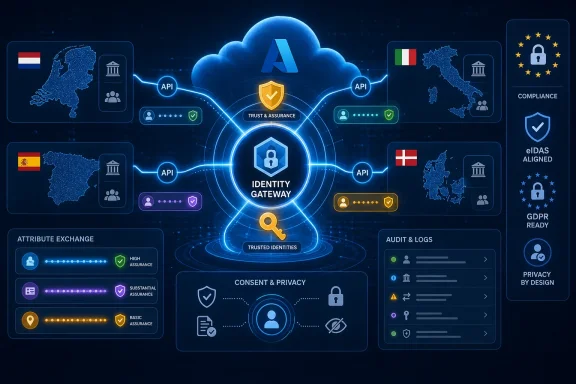 LSEG Is Selling an Escape From the Country-by-Country Identity Trap
The most important detail in LSEG’s announcement is not the number of launch markets or even the claimed 80–90 percent reduction in time to go live. It is the phrase “single, standardised API and commercial framework.” That is the kind of language vendors use when a market has become operationally unbearable.Digital identity has not developed like card payments, where a handful of networks and processors created a relatively predictable global acceptance model. It has developed more like public-sector authentication, bank-grade know-your-customer tooling, and consumer wallet technology all colliding at once. Italy, the Netherlands, Denmark, Spain, and other European markets have their own histories, policy priorities, assurance models, and user expectations.
For a regulated financial firm, that fragmentation is not academic. An onboarding team can discover that a digital ID scheme is well adopted in one country, legally meaningful in another, unfamiliar in a third, and technically awkward in a fourth. Each connection brings its own contracts, certificates, testing cycles, data mapping, fallback flows, and compliance review.
LSEG’s Identity Gateway tries to turn that sprawl into a routing problem. Instead of asking each organisation to become an expert in every national or regulated private scheme, LSEG wants to sit between the relying party and the identity ecosystem. That is a familiar move in financial technology: when the underlying rails are fragmented, a gateway promises to hide the mess.
The question is whether identity can be normalised the same way payments were. A payment either settles or it does not; identity is messier. It carries legal meaning, personal data, assurance levels, revocation questions, fraud exposure, and user consent. The API can simplify access, but it cannot make every scheme equivalent.
The EU Wallet Deadline Turns Middleware Into Strategy
LSEG’s timing is not accidental. Europe is heading into a decisive phase for digital identity as the EU Digital Identity Wallet framework moves from policy architecture toward national implementations. Member states are expected to make wallets available by the end of 2026, and that creates both a massive opportunity and a massive integration headache.The political idea behind the EU wallet is elegant: citizens, residents, and businesses should be able to prove identity and share verified attributes across borders without surrendering unnecessary data. The commercial reality is less tidy. Every member state will implement its own wallet within a common framework, and every relying party will need to decide when, where, and how to accept those credentials.
That is where LSEG sees the opening. The company is not presenting Identity Gateway as a consumer wallet, a national identity system, or a replacement for existing verification methods. It is presenting it as a standardised access layer for organisations that need to consume those schemes without rebuilding their stack for every market.
This matters because the “wallet” story is often told from the user’s perspective: one phone, one credential, one tap to prove something. But enterprises live on the other side of that transaction. They need to know what data they receive, what assurance level it carries, whether it satisfies local regulation, how it is logged, how it integrates with anti-money-laundering checks, and what happens when the user cannot or will not use the scheme.
If the EU wallet rollout produces 27 national implementations that are technically aligned but operationally distinct, gateways become attractive. They let banks and fintechs delay some complexity, centralise contracting, and preserve a single downstream workflow. In that sense, Identity Gateway is less a product launch than a market prediction: LSEG is betting that digital identity will become mandatory enough to matter, but fragmented enough to require intermediaries.
Azure Gives the Product Cloud Credibility, Not Automatic Trust
LSEG says Identity Gateway is built on Microsoft Azure, a detail that will matter to enterprise buyers but should not be overread. Azure gives the product a familiar cloud foundation, especially for banks, insurers, and regulated firms already invested in Microsoft’s compliance, security, and identity tooling. It also helps frame the gateway as scalable infrastructure rather than a narrow point solution.For WindowsForum readers, the Microsoft connection is worth pausing on. The last decade of enterprise identity has been shaped by Microsoft Entra ID, Azure infrastructure, conditional access, device compliance, and the broader move away from perimeter security toward identity-centric control. LSEG is entering that world from a different angle: external identity proofing and trusted scheme access rather than workforce authentication.
Those two worlds are increasingly adjacent. A customer identity that begins in a national wallet or regulated private scheme may ultimately feed account creation, risk scoring, step-up authentication, fraud monitoring, and transaction approval. In a large enterprise, those flows touch cloud services, security logs, customer data platforms, case management tools, and sometimes Windows-based back-office systems that were never designed with reusable digital credentials in mind.
But Azure does not solve the trust problem by itself. The hard work is not merely hosting a reliable gateway; it is mapping diverse identity schemes into outputs that compliance teams, risk engines, and product teams can rely on. The phrase “built on Azure” answers questions about infrastructure posture. It does not answer the deeper governance question: who is responsible when a credential is accepted, misread, stale, spoofed, revoked, or insufficient for a particular regulatory purpose?
That is where LSEG’s institutional brand helps. This is not a startup asking banks to trust a new identity experiment. It is the London Stock Exchange Group’s risk intelligence arm offering a layer adjacent to its existing identity verification, data-based checks, document verification, and broader financial crime tooling. In regulated markets, vendor credibility is part of the product.
Faster Integration Is the Easy Part of a Harder Identity Problem
The headline efficiency claim is striking: LSEG says Identity Gateway can reduce time-to-market by up to 80–90 percent compared with independent integrations, where connecting to individual schemes can take several months per market. Even allowing for the usual vendor optimism around “up to” figures, the operational pain it describes is real.Identity integrations are not just engineering projects. They are procurement projects, legal projects, data protection projects, security projects, and customer experience projects. A clean API wrapper can accelerate the engineering piece, but the organisation still has to decide whether a given identity method is appropriate for a given product, customer segment, risk tier, and jurisdiction.
That distinction matters because digital identity is often sold as friction reduction. The user proves who they are through a trusted scheme, the organisation avoids document upload and manual review, and everyone moves faster. But high-assurance identity can also introduce new friction if customers lack the relevant wallet, distrust the flow, encounter device compatibility issues, or fall into an edge case the digital scheme does not handle.
The strongest version of LSEG’s argument is not that every onboarding journey should become wallet-first. It is that organisations need a more flexible orchestration model. In some cases, a national digital identity scheme may be the cleanest route. In others, a document check, database match, bank-account verification, biometric liveness check, or manual review may still be necessary.
That is why Identity Gateway sits alongside LSEG’s broader identity verification offering rather than replacing it. The future is unlikely to be one universal identity button. It is more likely to be a risk-based menu of methods, where trusted digital identity schemes are used when they improve assurance, reduce fraud, or satisfy regulation better than legacy checks.
The Product Is Really About Reusable Trust
The identity verification industry has spent years trying to reduce the absurdity of repeatedly proving the same facts to different companies. A user opens a bank account, verifies their name, address, date of birth, and document. Then they repeat similar steps at a brokerage, a crypto exchange, an insurer, a payments app, and a government portal.Digital identity schemes promise to reuse trust. If a government-backed or regulated private credential can attest that a person is who they claim to be, the relying party may not need to rebuild the proof from scratch. That reduces repeated exposure of documents and can improve security when implemented well.
But reusable trust creates a new dependency chain. The relying party must trust the issuer, the wallet, the scheme rules, the cryptographic presentation, the gateway, and its own interpretation of the data. Each link can fail differently. A forged passport scan and a misconfigured wallet acceptance rule are not the same kind of risk, but both can lead to bad onboarding decisions.
LSEG’s role is therefore not neutral plumbing. By standardising access and outputs, it influences how identity assertions are consumed. That is useful if the standardisation is careful, transparent, and aligned with regulatory expectations. It is dangerous if it encourages organisations to treat different credentials as interchangeable simply because they arrive through the same pipe.
This is the unresolved tension at the heart of digital identity infrastructure. The market needs abstraction because fragmentation is costly. The market also needs nuance because identity is jurisdictional, contextual, and deeply sensitive. Good gateways will reduce needless complexity without flattening important distinctions.
Banks and Fintechs Will Care Before Consumers Notice
Most consumers will not encounter Identity Gateway by name. If the product succeeds, it will disappear into onboarding flows, account recovery journeys, high-risk transaction checks, and regulated service sign-ups. The user may see a familiar national identity option, not LSEG’s infrastructure layer behind it.That invisibility is typical of financial infrastructure. Card processors, screening databases, account verification networks, and sanctions tools shape user experience without appearing as consumer brands. LSEG is aiming for that same layer of influence in digital identity access.
The early buyers are likely to be organisations with cross-border ambitions and regulatory pressure: banks, fintechs, trading platforms, payments companies, insurance providers, gambling operators, telecoms firms, and marketplaces with compliance-heavy onboarding. For them, adding one more national ID option is not transformative. Adding a repeatable way to consume many of them could be.
The customer experience stakes are real. Onboarding abandonment remains a problem whenever users are asked to scan documents, take selfies, wait for manual review, or retry failed checks. A trusted digital identity route can be faster and cleaner, especially in countries where national schemes are already widely adopted.
The fraud stakes are just as important. Document-based verification is under pressure from synthetic identities, compromised credentials, deepfakes, and increasingly polished fraud kits. A well-governed digital identity scheme can raise the cost of fraud by shifting proof away from uploaded images and toward verified credentials. It will not eliminate fraud, but it can change the attacker’s workload.
Privacy Will Decide Whether “Convenience” Becomes a Liability
Digital identity discussions often collapse into two simplistic camps. One camp treats reusable digital credentials as an obvious upgrade over document uploads and password-based account recovery. The other sees every digital ID project as a step toward surveillance, exclusion, and over-centralised control.The serious analysis sits between those poles. A digital identity system can be privacy-preserving if it minimises disclosure, uses strong consent flows, avoids unnecessary central logging, supports selective attribute sharing, and gives users meaningful alternatives. It can also become privacy-hostile if it encourages every service to demand high-assurance identity for low-risk interactions.
Gateways like LSEG’s sit at a sensitive point in that debate. They do not issue the national credentials, but they can shape how widely and easily those credentials are accepted. That can be good when it reduces repeated document exposure. It can be troubling if it lowers the operational barrier for identity demands in contexts where pseudonymity or lower-assurance access should remain possible.
For regulated finance, the case is strongest. Banks and payment firms already have legal duties to know their customers, prevent financial crime, and verify identity in defined circumstances. A trusted digital scheme may be a better user experience than uploading a passport image to yet another vendor.
Outside high-risk or regulated contexts, the calculus changes. The more digital identity becomes convenient infrastructure, the more tempting it becomes to use it everywhere. The industry’s challenge is to avoid turning “easy to verify” into “always required to verify.”
Windows Shops Will Meet This Through APIs, Logs, and Compliance Reviews
For Windows-heavy enterprises, Identity Gateway will not arrive as a desktop feature. It will arrive as an integration requirement. Someone in the organisation will need to connect the API, route the outputs into customer onboarding systems, monitor failure modes, secure secrets, review logs, and explain the data flow to risk and privacy teams.That is where the WindowsForum audience should pay attention. Digital identity schemes may look like mobile-wallet policy from a distance, but their adoption creates practical work for IT operations. Integration endpoints need network controls. API keys or certificates need lifecycle management. Audit events need retention and correlation. Help desks need playbooks for failed verification attempts that are not simply “try another browser.”
Microsoft’s ecosystem makes some of this easier in enterprises already using Azure services, Entra identity governance, Sentinel, Defender, Purview, and Power Platform workflows. But customer identity proofing remains separate from employee identity and device management. Confusing the two can lead to bad assumptions.
A national digital ID assertion that a customer is a real person is not the same as a secure session, a trusted device, or a low-risk transaction. It is one input. It must be combined with behavioural signals, fraud analytics, account history, transaction context, and policy decisions.
The better enterprise architectures will treat digital identity as a high-value claim that enters a broader risk engine. The weaker ones will treat it as a magic stamp. LSEG’s messaging leans toward the former, with references to risk-based checks and broader verification methods, but customers will decide how mature the implementation becomes.
LSEG Is Building a Moat Around Regulated Identity Workflows
Identity Gateway also fits a broader LSEG strategy. The group has spent years expanding beyond exchange operations into data, analytics, risk intelligence, screening, identity verification, and market infrastructure. In that context, a digital identity gateway is not a random product. It is a way to deepen LSEG’s position inside regulated workflows.The value of such a product compounds if it becomes embedded. Once an organisation routes identity checks through a gateway, maps downstream systems to its outputs, trains support teams on its failure codes, and aligns compliance policies around its assurance models, switching costs rise. That is especially true if the gateway keeps adding markets and schemes.
This is the classic infrastructure play. The provider starts by reducing integration pain. Over time, it becomes the control point through which customers access a changing ecosystem. If the ecosystem grows more fragmented, the control point becomes more valuable.
There is a competitive risk here, too. Digital identity is crowded with specialist verification vendors, wallet providers, trust-service companies, banks, government platforms, and cloud giants. LSEG will need to prove that its gateway is not merely convenient, but authoritative enough for serious regulated use.
That proof will come from coverage, reliability, scheme depth, contractual clarity, data quality, auditability, and regulatory acceptance. Launching across 10 European markets is a start. The harder test will be how quickly LSEG adds coverage, how well it handles edge cases, and whether customers find that the abstraction holds under real compliance scrutiny.
The Gateway Model Wins Only If It Preserves the Differences That Matter
The danger in any “connect once” story is that it oversells sameness. Digital identity schemes are not just different endpoints. They reflect national law, administrative culture, technical governance, and public trust. A Danish digital identity flow and a Spanish one may both satisfy a product manager’s desire for remote verification, but they may not be identical in assurance, liability, user reach, or regulatory treatment.A credible gateway must therefore expose meaningful differences rather than hide them completely. Customers need to know which scheme was used, what level of assurance was achieved, what attributes were returned, whether the user consented to specific data sharing, and what fallback path applied. Standardised outputs are useful only if they do not erase context.
This is also where regulators may eventually focus. If digital identity gateways become major relying-party access points, supervisory attention will follow. Authorities will want to understand operational resilience, outsourcing dependencies, cross-border data transfers, incident response, and the governance of identity claims.
The industry has been here before with cloud outsourcing, payments intermediaries, and sanctions screening platforms. Convenience creates concentration. Concentration creates systemic questions. A gateway that simplifies identity access for hundreds of regulated firms can itself become critical infrastructure.
That does not make the model wrong. It makes transparency and resilience central to the value proposition. LSEG’s brand gives it a head start, but the product category will be judged by how it behaves when schemes change, outages occur, regulations diverge, and fraudsters adapt.
The Real Launch Is the Operating Model
The announcement is framed as a product launch, but the more interesting story is the operating model it implies. LSEG is offering to manage identity fragmentation as an ongoing service. That means tracking new schemes, maintaining integrations, updating mappings, absorbing regulatory changes, and keeping customers from having to rebuild their identity layer every time a country moves.That is a strong proposition in 2026 because the digital identity market is not settling down; it is accelerating. The EU wallet framework, national identity modernisation, private reusable identity networks, and AI-driven fraud pressure are all moving at once. Organisations cannot simply pick a vendor and freeze the architecture for five years.
The winners in this space will not be those with the flashiest demo. They will be the providers that keep pace with scheme evolution while giving enterprises stable interfaces and defensible compliance evidence. In other words, the product is partly software and partly maintenance of trust.
For IT teams, that shifts the procurement question. The issue is not only “Does this API work?” It is “Will this provider keep the identity map current, explain changes clearly, support audits, and help us avoid accidental non-compliance?” That is a higher bar, and it is where LSEG’s risk intelligence positioning becomes important.
There is also a strategic implication for smaller fintechs. Large banks can afford country-by-country integrations if they must, even if they dislike the cost. Smaller firms expanding across Europe often cannot. A credible gateway could lower the barrier to offering higher-assurance onboarding in multiple markets, which may intensify competition.
The Digital ID Fight Moves From Wallets to Rails
The practical lesson from LSEG’s launch is that digital identity is entering its infrastructure phase. The public debate will still revolve around wallets, privacy, government schemes, and consumer adoption. The enterprise battle will increasingly revolve around access layers, orchestration, assurance translation, and compliance evidence.That distinction helps explain why this announcement matters even though it is not a consumer product. Infrastructure decisions made now will shape how digital identity is used later. If gateways make high-assurance verification easy, more organisations will use it. If they make privacy-preserving, selective, risk-based verification easy, the market may develop healthier defaults. If they make broad identity demands too frictionless, backlash will follow.
The most concrete implications are already visible:
- LSEG is positioning Identity Gateway as a single API and commercial framework for accessing government-backed and regulated private digital identity schemes across multiple European markets.
- The launch coverage spans 10 European markets, including Italy, the Netherlands, Denmark, and Spain, with more countries and schemes expected over time.
- The claimed 80–90 percent reduction in time-to-market should be read as an integration-efficiency claim, not a guarantee that regulatory review, privacy assessment, or customer experience design becomes automatic.
- The EU Digital Identity Wallet framework is likely to increase demand for intermediaries that can translate national implementations into usable enterprise workflows.
- Windows and Microsoft-centric IT teams will experience this trend through cloud integrations, identity logs, security monitoring, compliance workflows, and customer onboarding systems rather than through a native Windows feature.
- The long-term test for Identity Gateway will be whether it preserves scheme-specific assurance and legal context while still reducing the operational burden of cross-border identity verification.
References
- Primary source: fintech.global
Published: 2026-06-02T14:30:10.227959
LSEG launches Identity Gateway for digital ID access
LSEG Risk Intelligence, the risk and identity verification arm of the London Stock Exchange Group, has unveiled Identity Gateway, a new infrastructure layer built to streamline access to trusted digital identity schemes across multiple markets. The product offers organisations a single...fintech.global - Related coverage: lseg.com
LSEG Risk Intelligence launches Identity Gateway to simplify access to trusted digital identity schemes | LSEG
LSEG Risk Intelligence today announced the launch of Identity Gateway, a new technology infrastructure layer designed to simplify access to trusted digital identity schemes.www.lseg.com - Related coverage: solutions.lseg.com
- Related coverage: ec.europa.eu
- Related coverage: commission.europa.eu
European Digital Identity
The EU is creating a personal digital wallet for every EU citizen to use for both online and offline public and private services across the EU. Find out more.commission.europa.eu - Related coverage: digital-strategy.ec.europa.eu
Entrée en vigueur du règlement sur l’identité numérique
Les règles relatives à l’établissement d’une identité numérique européenne sont entrées en vigueur lundi. Ils ouvriront la voie à tous les citoyens et résidents de l’UE pour qu’ils puissent bénéficier d’un portefeuille européen personnel d’identité numérique en 2026.digital-strategy.ec.europa.eu
- Related coverage: consilium.europa.eu
European digital identity (eID): Council adopts legal framework on a secure and trustworthy digital wallet for all Europeans - Consilium
The Council adopted a new framework for a European digital identity (eID). www.consilium.europa.eu
- Related coverage: better-internet-for-kids.europa.eu
- Related coverage: eudecentralisation.org
Main air routes in Europe
Highly detailed planet Earth at night with embossed continents, illuminated by light of cities, translucent and reflective ocean. Earth is surrounded by a luminous network, representing the major air routes based on real dataeudecentralisation.org
