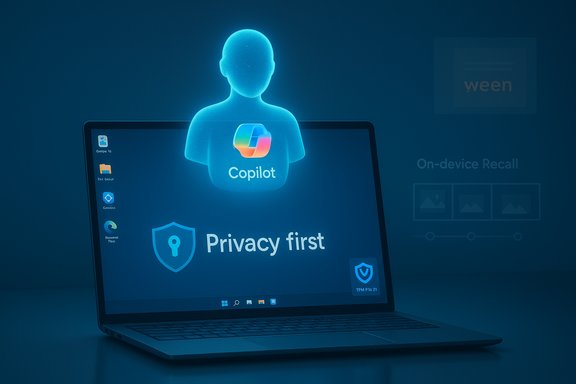
Microsoft’s AI chief publicly blasted what he called a tide of “cynics” after a wave of user backlash over Microsoft’s AI direction for Windows 11, arguing that seeing advanced conversational and generative AI as “underwhelming” is astonishing — even as the company faces mounting questions about reliability, privacy and whether AI has been prioritized over core OS quality.
Background
In mid-November, Microsoft’s head of its consumer AI organization pushed back on social-media criticism by pointing to how far the technology has come — contrasting today’s multimodal, conversational systems with the simple mobile games many users grew up with. The comments landed against a noisy background: the Windows leadership’s declaration that Windows is “evolving into an agentic OS,” a high-visibility promotional clip showing Copilot misstep on a basic accessibility task, and renewed scrutiny of the controversial Recall feature that captures frequent snapshots of on-screen activity.That convergence of events crystallized a broader story: Microsoft is charging ahead with a bold, platform-scale AI strategy while many everyday users, security researchers and enterprise customers are asking a simple question — can the company be trusted to ship AI that is useful, accurate, secure and respectful of privacy?
Why the reaction matters: the context of Microsoft’s AI push
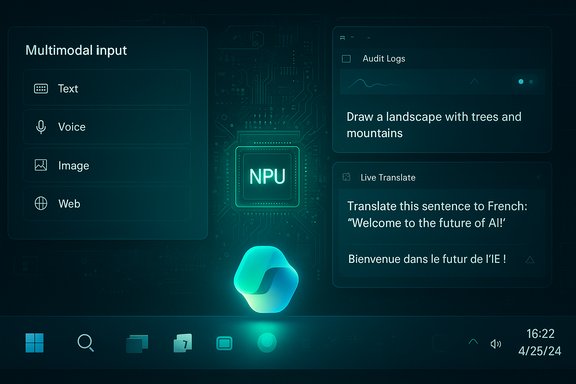
Microsoft has restructured significant resources around large-scale consumer AI: a centralized AI leadership, deep partnerships with model providers, and product integrations that put AI into core surfaces such as search, Office and Windows. The aim is clear — make AI a fabric of the operating system so tasks can be automated, complex workflows simplified, and new multimodal experiences enabled.This vision includes:
- Copilot (conversational assistant) embedded across Windows and Microsoft 365.
- Copilot Vision and Copilot Actions, which provide screen-aware assistance and automated action execution.
- The company’s work on secure, hardware-enabled experiences branded for “Copilot+ PCs.”
- Ambitious features such as Recall, a local timeline that indexes on-screen activity to let users “search across time.”
But potential isn’t product. The recent backlash shows that enthusiasm inside Microsoft does not automatically translate to user trust or adoption.
The flashpoints: marketing stumbles and real-world failures
Two discrete incidents crystallized public frustration this month.1. The “agentic OS” message and user pushback
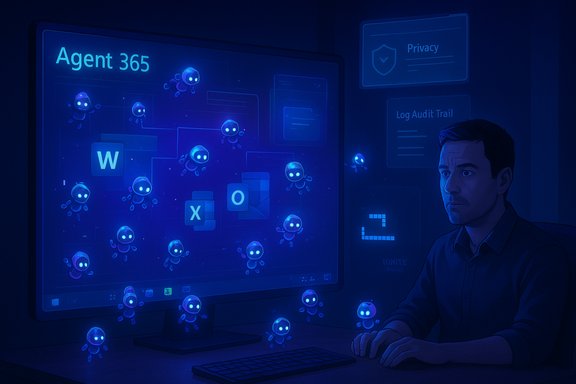
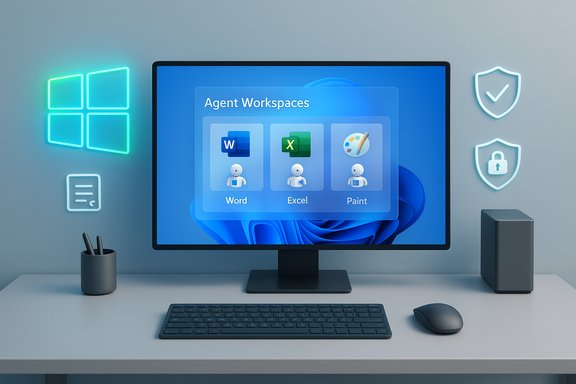
Windows leadership’s statement that Windows is “evolving into an agentic OS” was intended for developer and enterprise audiences but quickly became a flashpoint. Many users read the phrase as shorthand for a Windows that will act autonomously — making decisions, changing settings, and pushing cloud-tethered services. The reaction was rapid and overwhelmingly negative on public channels: users voiced fears about loss of control, forced integrations, and creeping telemetry.The backlash wasn’t just about semantics. It reflected a deeper fatigue: users see a steady stream of intrusive prompts, defaulted services, and repeated regressions in basic Windows behavior. When messaging leans heavily on agentic promises without clear guardrails, opt-out paths, or concrete reliability improvements, it inflames those pre-existing grievances.
2. A promotional Copilot video that undermined the product narrative
Microsoft’s marketing clip showing Copilot guiding a user to change on-screen text size backfired when the assistant recommended the wrong control path and even suggested an already-selected value. The feed went viral precisely because it was a marketing piece — not a developer demo — and therefore read as an official claim about reliability.A few things made that misstep damaging:
- The scenario was trivial and widely understood, so errors were obvious.
- The clip was distributed by official Windows channels and amplified by an influencer, giving it high visibility.
- The video was taken down, which fed a narrative of embarrassment rather than corrective clarity.
Recall: innovation or a privacy time bomb?
If Copilot’s headline problems are about reliability and user experience, Recall is where trust and threat models collide with visceral force.Recall’s premise is simple: capture frequent screenshots of the user’s screen and index them with OCR so the user can search what they saw — a photographic memory for the PC. To make that work at scale Microsoft built a local pipeline and described numerous hardening measures: snapshots stored locally, encryption of data, keys protected by hardware roots of trust (TPM/Pluton and Windows Hello Enhanced Sign-in Security), and runtime isolation using virtualization-based-security enclaves (VBS).
Even with those mitigations, security researchers and privacy advocates have repeatedly flagged structural problems:
- The dataset Recall creates contains everything visible on the screen: passwords, personal messages, sensitive documents, and other ephemeral content.
- Local encryption and enclaves protect data from casual access, but if an attacker reaches the device and elevates privileges, an accessible database or extracted image store can become a goldmine.
- Tools and proofs-of-concept show how a compromised system could scrape Recall’s data much faster than older attack patterns; that speed drastically reduces the window for automated remediation.
- The feature’s original iterations were difficult for users or administrators to fully remove, increasing concerns about mandatory telemetry.
Strengths in Microsoft’s approach
Despite legitimate criticisms, several strengths underpin Microsoft’s AI direction.- Scale and integration. Microsoft can embed AI across OS, cloud, productivity apps, and developer tools. That integration allows scenarios not possible with point solutions: cross-application automation, enterprise policy controls, and managed AI experiences for organizations.
- Hardware-enabled security posture. Copilot+ initiatives tie features to specific hardware and platform protections (TPM/Pluton, VBS, Windows Hello ESS). When implemented correctly, that provides a stronger baseline than purely software-only approaches.
- Product and research leadership investment. The company’s AI leadership is focused on long-term productization: hiring research talent, partnering on models, and building engineering teams. That sustained investment is what’s required to make AI dependable and scalable.
- Enterprise control surfaces. Microsoft’s history with enterprise management — Group Policy, Intune, Windows Update for Business — gives it the tools to ship large-scale changes while offering admins centralized controls and deployment options.
Where Microsoft is vulnerable: three overlapping trust gaps
- Reliability gap — feature correctness versus flashy demos
- Users expect basic tasks to "just work" before they trust an assistant to act on their behalf. Demonstrations that show failures on elementary tasks widen the credibility gap. Engineers and QA teams must prioritize stateful, deterministic behavior for everyday scenarios.
- Privacy and threat model gap — local indexing creates systemic risk
- Recall and similar features increase the value of a single compromised device massively. Even with strong encryption and secure enclaves, the attack surface is broader. Risk-averse enterprises and cautious consumers will be slow to opt into such features without provable controls and simple removal paths.
- Communications gap — messaging misfires and a tone-deaf narrative
- Announcing a shift to an “agentic OS” without clearly articulating opt-outs, enterprise controls, and rollback pathways gives critics easy targets. When product leaders belittle critics on public channels — however understandably frustrated they might be — it deepens polarization rather than building consensus.
Practical recommendations for Microsoft
To move from defensive posture to regained confidence, Microsoft needs a three-pronged strategy: ship reliably, defend clearly, and communicate humbly.Ship reliably
- Re-prioritize fixes for core OS stability and UX regressions that users cite most often (search, File Explorer, context menus) before shipping new agentic behaviors.
- Institute a “mundane scenarios first” QA rule: if Copilot can’t handle routine accessibility and settings tasks flawlessly, delay broader agentic rollouts.
- Expand real-world beta testing with diverse user segments and transparent bug-tracking reporting.
Defend clearly
- Publish a detailed, accessible threat model for features like Recall — what it protects against, where residual risks remain, and concrete hardening timelines.
- Provide simple uninstall/do-not-enroll flows and enterprise policy toggles; for privacy-sensitive features, default to “off” and make opt-in frictioned by design for higher assurance.
- Offer a third-party security assessment and publish an executive summary that non-technical admins can understand.
Communicate humbly
- Avoid gladiatorial language on social platforms when users are genuinely worried. Public engagement from senior product leaders should be calming and explanatory, not dismissive.
- Run a visible “trust and safety” roadmap that ties public commitments to release milestones and independent validation.
- When a marketing piece or demo misfires, respond quickly with a candid explanation and, if necessary, a follow-up that shows the corrected path.
Guidance for users and IT professionals
- Consumers concerned about privacy should treat Recall and similar features cautiously: wait for stable releases and clear admin controls or run those features only on dedicated, secured Copilot+ hardware.
- Enterprise administrators should:
- Audit Copilot and Recall enrollment settings in preview channels.
- Use centralized policy controls to block or restrict sensitive features until vetted.
- Train employees on risk scenarios — what to do if a machine is suspected of compromise — and ensure endpoint protection is tuned to detect opportunistic exfiltration attempts.
- Power users and privacy-conscious customers should demand clear, granular opt-outs and the ability to fully delete all local indexing artifacts from the UI with minimal steps.
The long view: innovation requires trust-building engineering
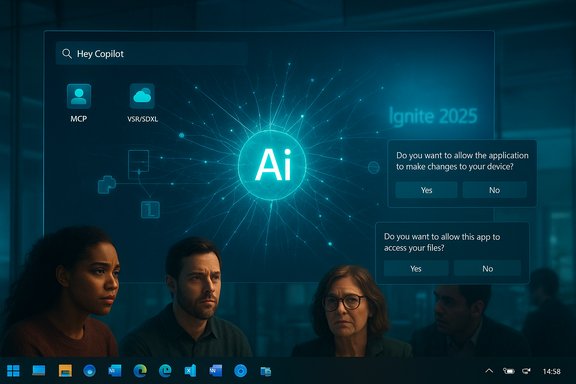
Microsoft is right to explore agentic workflows and multimodal assistants; the potential productivity wins are real. A trustworthy, helpful assistant would be transformative for many users — and Microsoft has the distribution and ecosystem to make widespread benefits possible. But the company’s strategy must be grounded in engineering discipline and social responsibility.AI at the OS level is not just a feature toggle — it changes the fundamental relationship between software and user intent. Agents that act on behalf of users must be demonstrably conservative, auditable, and reversible. They must fail gracefully, surface uncertainty clearly, and never assume consent for actions with security or privacy implications.
That means slowing down where necessary to get the foundations right:
- solid UX and device stability,
- airtight threat modeling and hardware-backed protections,
- marketing and messaging that align with the product’s actual capabilities.
Conclusion
The public spat over whether AI is “underwhelming” is less about the raw capability of today’s models and more about trust. Microsoft’s leadership celebrates generative and conversational milestones — and rightfully so — but user trust will be earned through demonstrable reliability, airtight privacy protections, and modest, clear communication.Techniques such as on-device encryption, TPM-protected keys, and virtualization-based enclaves are positive technical steps. Yet architecture alone cannot substitute for polished UX, robust QA, and governance frameworks that make bold features safe for everyday use.
The path forward is straightforward in principle: prioritize the basics, fix the flubs in public demos, harden privacy-sensitive features like Recall, and meet critics with evidence and remedies rather than derision. Only by closing the reliability, privacy and communications gaps will Microsoft convert AI’s technical promise into the broad-based user confidence the company needs to make Windows the dependable, smart OS it aims to be.
Source: TechRadar https://www.techradar.com/computing...ows-11s-new-direction-are-mind-blowing-to-me/