Microsoft’s AI Storefront Is Moving Faster Than Its Internal Rulebook
The awkward part for Microsoft is not that it is being cautious. It is that its caution is colliding with its own platform strategy.
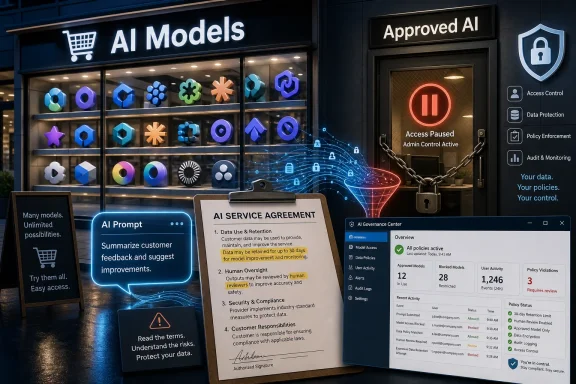
Microsoft has spent the past two years turning GitHub Copilot, Azure AI, and Foundry into a marketplace for frontier models. The pitch is simple: customers should not have to pick a single AI religion. They can use OpenAI, Anthropic, Mistral, Meta, xAI, or whatever model family best fits the workload, with Microsoft providing the enterprise wrapper.
Claude Fable 5 fits neatly into that commercial story. Anthropic introduced it on June 9, 2026, as the public-facing version of its more restricted Mythos-class model family. It is meant to bring higher-end reasoning and coding capabilities to a broader audience, but with added safeguards in sensitive areas such as cyber and biological risk.
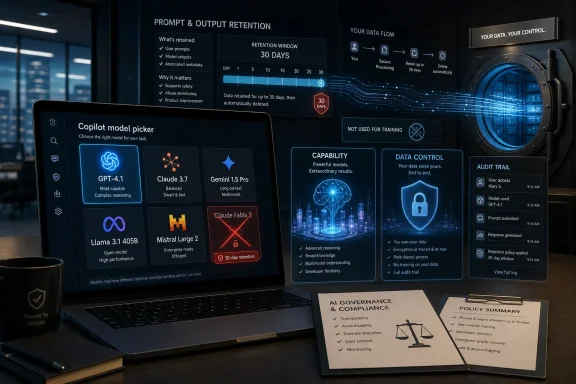
Yet according to reporting relayed from Microsoft employees, the model is not appearing in the internal GitHub Copilot model selector used by Microsoft staff. Employees have reportedly been told that Anthropic’s data-retention requirements are still under legal review and that the company has not approved internal use.
That is not a small footnote. Microsoft is effectively telling customers, “You can use this through our products,” while telling its own employees, “Not until we understand what happens to the data.”
Fable 5 Is a Public Model With a Private-Sector Catch
Anthropic’s framing is that Claude Fable 5 is not merely another chatbot upgrade. It is a safer public variant of a model class Anthropic previously treated as too capable for broad release.
The company’s earlier Claude Mythos Preview, announced in April 2026, was positioned as a high-capability system whose availability would be limited because of misuse concerns. The June release splits that lineage into two products. Claude Mythos 5 remains the more restricted version for vetted organizations, while Claude Fable 5 is the general-access version with extra guardrails.
Those guardrails are the crucial detail. Anthropic says Fable 5 shares the same underlying model as Mythos 5 but applies additional safety mechanisms, especially around cyber and bio domains. Higher-risk prompts may be blocked, downgraded, or routed away from the most capable behavior.
That design is defensible from a safety standpoint. If a model crosses a capability threshold where it can materially help with sophisticated abuse, the vendor has to do more than publish a usage policy and hope for the best. But safety monitoring has a cost, and in this case the cost is data retention.
Anthropic says covered models such as Fable 5 and Mythos 5 require 30-day retention of prompts and outputs for safety purposes. It has also said limited reviewers may access conversations when significant harm is suspected or when a customer submits a written request. For companies accustomed to zero data retention commitments, that is a hard turn.
The Enterprise AI Bargain Just Got Repriced
For years, enterprise AI procurement has leaned on one reassuring phrase: zero data retention. Vendors knew that large companies would not feed sensitive code, incident data, customer records, or unpublished product plans into a black box unless they could say the data was not retained for training or human review.
That promise became a commercial lubricant. It allowed AI tools to move from experimental browser tabs into developer workflows, support desks, legal teams, and security operations. It let CISOs tolerate a new class of risk because the contract at least narrowed the blast radius.
Claude Fable 5 complicates that bargain. Anthropic is not saying it wants the data for model training. It is saying that higher-capability models need retained traffic so the company can detect dangerous use, audit model behavior, and enforce safety controls. That is a different rationale, but the enterprise consequence is similar: user prompts and model outputs may persist outside the customer’s immediate control for a defined period.
From Anthropic’s perspective, this is responsible deployment. From a Microsoft legal team’s perspective, it is a new data path that must be mapped, classified, and approved. Both can be true at once.
The fight is not really privacy versus safety. It is safety governance versus enterprise data governance, and neither side gets to declare victory by slogan.
Why Microsoft’s Own Employees Are the Most Sensitive Test Case
It may seem odd that Microsoft would restrict employee access to a model it is willing to offer customers. In reality, Microsoft employees are among the riskiest possible users from a data-classification standpoint.
A Microsoft engineer asking an AI assistant for help debugging code may paste unreleased product details, vulnerability context, internal infrastructure names, private customer telemetry, or fragments of source code. A program manager might summarize confidential roadmap plans. A security researcher might test exploit chains or malware behavior as part of legitimate work.
Those prompts are not ordinary corporate chatter. They can include the kind of information attackers spend years trying to obtain.
That makes retention and review policies especially sensitive. Even if Anthropic’s access is limited, contractual, and safety-focused, Microsoft still has to answer basic questions before approving use: what data could leave Microsoft’s controlled environment, who can review it, under what conditions, where it is stored, how deletion works, and whether any exceptions extend beyond the advertised retention window.
This is the kind of review that frustrates employees who want the best tools immediately. It is also the kind of review that prevents a productivity feature from becoming an e-discovery nightmare, an export-control problem, or a security incident.
The “Human Reviewer” Detail Is Doing More Work Than It Seems
The phrase that will make enterprise lawyers pause is not “30 days.” It is “reviewers.”
A 30-day retention period is not automatically disqualifying. Many enterprise systems retain logs, tickets, chat messages, audit trails, crash dumps, and telemetry for far longer. The more consequential question is whether retained AI conversations can be accessed by humans outside the customer organization.
Anthropic says review is limited and tied to potential significant harm or customer request. That may be reasonable, and in a frontier-model context it may be necessary. But from a corporate governance standpoint, “limited” is not the same as “impossible.”
If an employee pastes proprietary code into Claude Fable 5, and that exchange is flagged by a safety system, could an Anthropic reviewer see it? If a red-team prompt contains details about an unpatched vulnerability in Microsoft software, could it become part of an external safety review workflow? If a customer’s confidential data is included in a prompt, what obligations arise?
These are not gotcha questions. They are the basic mechanics of running AI inside regulated and security-conscious enterprises.
The irony is that Anthropic’s safety posture may be strongest precisely where its enterprise posture becomes most difficult. The company is trying to build a model that is powerful enough to require active monitoring. Enterprises are asking whether they can safely use a model that requires active monitoring.
Foundry Makes the Vendor Problem a Microsoft Problem
Microsoft Foundry is supposed to abstract away the mess of model choice. Customers want access to the best model for a workload without rebuilding their governance stack each time a provider ships a new frontier release.
That abstraction is useful, but it has a limit. Microsoft can broker access, manage identity, integrate billing, and provide deployment tooling. It cannot magically erase the underlying provider’s data-handling requirements.
This is where platform neutrality becomes operationally messy. Microsoft can offer Claude Fable 5 alongside other models, but if Anthropic’s terms impose retention that differs from another provider’s terms, customers must know that before they route sensitive workloads through it. A model picker is not just a performance menu. It is a compliance decision.
That matters for Windows and Microsoft 365 shops because AI adoption is increasingly being bundled into familiar admin surfaces. The more AI feels like a normal toggle in Copilot, Azure, or GitHub, the easier it is to forget that each model may come with different rules about data, logging, moderation, and review.
Microsoft’s internal suspension is therefore a useful warning flare. If Microsoft’s own lawyers need time to evaluate the policy, enterprise customers should not assume their existing AI approval covers the new model just because it appears in a Microsoft product.
The Cybersecurity Argument Cuts Both Ways
Anthropic’s caution around Mythos-class models is rooted partly in cybersecurity risk. A sufficiently capable coding and reasoning model can help defenders find bugs, write patches, analyze malware, and automate incident response. The same capabilities can help attackers improve exploit chains, generate convincing phishing infrastructure, or troubleshoot malicious code.
Fable 5’s safeguards are meant to preserve the upside while suppressing the worst misuse. That is the right ambition. The security industry desperately needs AI systems that can help understaffed teams triage alerts, audit code, and reason across sprawling environments.
But defenders also handle extremely sensitive material. A security operations team using an AI model during an active incident may paste indicators of compromise, forensic timelines, suspicious scripts, customer impact summaries, and internal network architecture. A product security team may feed in proof-of-concept exploit details before a patch is ready.
Those are exactly the kinds of conversations enterprises do not want retained outside tightly controlled boundaries. The better the model is at security work, the more likely it is to be used with security-sensitive data. That makes the retention policy more consequential, not less.
This is the paradox of frontier AI in the SOC: the models become useful enough to deserve real work, and real work is precisely what makes governance hard.
Developers Will Feel This First
For most WindowsForum readers, the immediate practical impact will land in developer tooling. GitHub Copilot has become the most visible place where model choice meets daily work.
Developers are already learning that different models have different strengths. Some are better at long-context refactoring, some at test generation, some at explaining legacy code, and some at agentic multi-file edits. A model like Claude Fable 5 will attract attention if it materially improves coding assistance.
But corporate developers do not live in a consumer app world. They work inside repository policies, source-code confidentiality rules, customer data restrictions, and software supply-chain controls. If a company has approved Copilot under one retention model, adding Fable 5 is not automatically a harmless upgrade.
The prudent move for administrators is to treat model selection as a governed configuration, not a user preference. If developers can switch among models with different data terms, then the model selector becomes part of the enterprise risk surface.
That does not mean blocking every new model. It means documenting which models are approved for which classes of work. Public sample code is one thing. Proprietary source, unreleased vulnerability details, and customer-specific logs are another.
Customers Should Read the Admin Console Like a Contract
The modern AI admin console is full of friendly language: enable, preview, try, connect, add model. Underneath those verbs are legal and security commitments that may differ sharply by provider and model family.
With Claude Fable 5, the important distinction is not simply “Anthropic versus OpenAI” or “Copilot versus Foundry.” It is whether a specific model is covered by a retention policy that overrides zero-retention expectations. Enterprises need to know whether prompts and outputs are retained, who can access them, whether retention is required or optional, and how that changes across direct Anthropic access, cloud-provider access, and Microsoft-mediated access.
This is especially important because many organizations adopted AI tools through pilots. A small group of developers tried a tool, productivity improved, procurement caught up later, and governance was layered on after usage had already spread. That pattern becomes dangerous as models cross new capability thresholds and vendors attach new safety requirements.
The safe assumption is no longer that all models inside a platform inherit the same data policy. The safe assumption is that every frontier model may carry its own operating conditions.
Microsoft’s pause should encourage customers to ask more precise questions of their vendors. Not “is this enterprise-ready?” but “what exact data is retained, for how long, for what purpose, by whom, in what geography, and under what exception process?”
Anthropic Is Testing a New Social Contract for Frontier Models
There is a broader policy experiment embedded in Anthropic’s move. The company is effectively saying that the most capable models cannot be deployed under the same data-handling expectations as less capable models.
That argument will not please everyone, but it is coherent. If a model can materially assist with high-risk activities, then a provider may need telemetry and review mechanisms to detect abuse. A zero-retention product can be attractive to customers while leaving the vendor blind to misuse.
The problem is that enterprises built their AI adoption strategies around the opposite assumption. They wanted more capability with less vendor visibility. Anthropic is now saying that, at least for its highest-capability systems, more capability may require more visibility.
This is a serious fork in the road. One path leads to powerful models with strict customer-side isolation but weaker provider oversight. Another path leads to powerful models with active provider safety monitoring but more complicated enterprise approvals. A third path may involve trusted execution environments, customer-controlled logging, cryptographic audit mechanisms, or regulated-access programs that try to satisfy both sides.
For now, the market is being forced to improvise. Microsoft’s internal restriction is one visible example of that improvisation.
The Optics Are Bad, but the Governance Is Healthy
There is an easy cynical read here: Microsoft is happy to sell customers a model it will not let its own employees use. That line will travel well on social media, and it is not entirely unfair.
But the more useful interpretation is that Microsoft is doing what large organizations should do when a vendor changes the data rules around a powerful tool. It is pausing, evaluating, and deciding whether the policy fits internal requirements. That is not hypocrisy. It is governance.
The real criticism would be if Microsoft failed to make those distinctions clear to customers. If Claude Fable 5 is available through Microsoft channels, the relevant retention and review requirements should be surfaced plainly in product documentation, admin controls, procurement materials, and model-selection interfaces. Customers should not discover a material data-policy difference after a developer has already pasted sensitive code into a prompt.
There is also a competitive wrinkle. Microsoft is deeply invested in OpenAI, but it has also been expanding support for rival models because enterprise customers want choice. Every non-OpenAI model Microsoft offers creates a governance obligation Microsoft cannot fully control.
That is the cost of becoming the AI model supermarket. You can stock every brand, but you still have to label the ingredients.
The Windows Admin’s AI Job Keeps Expanding
For Windows administrators and IT pros, this episode is another reminder that AI governance is becoming part of ordinary endpoint, identity, and productivity management.
The old software approval model was already difficult. Admins had to decide which apps could run, which browser extensions were allowed, which SaaS tools could store company data, and which plugins could touch email or files. AI adds a new layer because the risky behavior is often not the app itself but what users paste into it.
A browser-based chatbot, a Copilot model switcher, an IDE extension, a Teams bot, and an Azure model endpoint can all become paths for sensitive data to leave the organization. The controls are scattered across identity policy, DLP, endpoint management, cloud configuration, developer tooling, and procurement contracts.
Claude Fable 5 is simply a high-profile case because the model is powerful and the retention policy is explicit. Less visible AI tools may pose similar or worse risks with weaker disclosures.
The practical answer is not panic. It is inventory. Organizations need to know which AI tools are in use, which models they expose, what data classes are permitted, and what contractual terms apply. Without that map, every new model launch becomes a scramble.
Microsoft’s Pause Turns a Product Launch Into a Policy Moment
The concrete facts are narrow: Anthropic launched Claude Fable 5 and Claude Mythos 5 on June 9, 2026; Fable 5 is the public, safeguarded member of the Mythos-class family; Anthropic requires retention for covered high-capability models; and Microsoft is reportedly holding back internal employee use while it evaluates those terms. The implications are larger.
This is what enterprise AI looks like when the frontier moves faster than the policy stack. A model can be technically available, commercially packaged, and still not cleared for internal use by one of the world’s most sophisticated software companies.
That should sober up anyone who treats AI model launches like ordinary feature updates. They are not. Each model release can alter the risk equation through new capabilities, new safety systems, new logging requirements, and new human-review pathways.
Near-term, Microsoft may approve Claude Fable 5 for some internal uses, approve it with restrictions, or keep it blocked for sensitive work. Customers should expect similar conditional outcomes inside their own organizations.
The Fine Print Is Now the Feature
The useful lesson from the Fable 5 episode is not that one model is safe or unsafe. It is that the fine print has become inseparable from the product.
A model’s benchmark scores, coding ability, context window, and agentic performance matter. But for enterprise use, they sit beside retention, review, auditability, deletion, isolation, and contractual control. The best model on paper may be the wrong model for a confidential workload if its operating terms do not fit the organization’s risk model.
For IT leaders, the immediate playbook is straightforward:
- Organizations should verify whether Claude Fable 5 or any Mythos-class model is enabled in their Microsoft, Anthropic, cloud, or developer-tool environments.
- Administrators should treat model choice as a governed policy setting rather than a harmless user preference.
- Security teams should define which data classes may be used with retained and reviewable AI systems before employees improvise their own rules.
- Procurement and legal teams should ask whether zero data retention still applies when customers select newer high-capability models.
- Developers should assume that past approval for one AI assistant or model does not automatically cover a newly added frontier model.
- Vendors should surface retention and review differences directly in the workflow, not bury them in external policy pages.
The Fable 5 launch may be remembered less for its raw capability than for the line it drew between consumer-style AI access and enterprise-grade AI approval. Microsoft’s pause is a reminder that powerful models do not enter companies merely through APIs and product menus; they enter through contracts, risk registers, admin controls, and the judgment of people paid to imagine what happens when a prompt contains something it should not. The next wave of AI adoption will belong not just to whoever ships the strongest model, but to whoever can make its power governable.