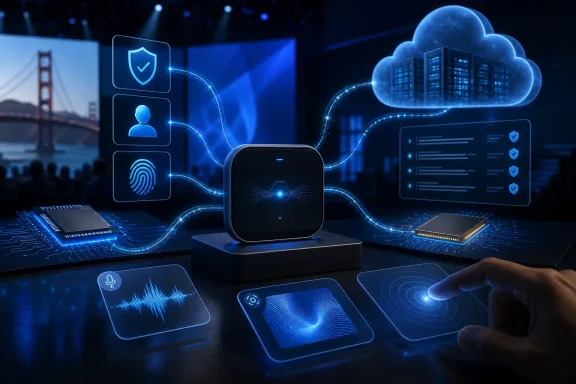
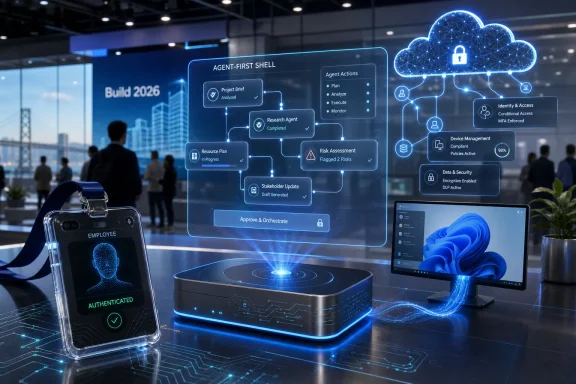
Microsoft used Build 2026 in San Francisco on June 2 to disclose Project Solara, a chip-to-cloud platform for “agent-first” devices built around Microsoft Device Ecosystem Platform, an AOSP-based operating system layer, rather than Windows itself. That is the fact that should make every Windows watcher sit up. Not because Windows is being killed, but because Microsoft is now openly sketching a future category of computing where Windows is no longer the default answer. The company’s bet is that the next platform war may not be won by the operating system with the richest app catalog, but by the one that makes the operating system disappear.
Project Solara is easiest to misunderstand if you read it as another Windows variant. It is not Windows Lite, not Windows Core OS resurrected under a sunnier name, and not a spiritual successor to Windows Phone. Microsoft is describing it as a platform for devices whose primary interface is not an app launcher, a desktop, or a mobile home screen, but an AI agent that can summon the right interface only when needed.
That distinction matters because Windows has always been the visible stage on which computing happens. Even when Microsoft modernized the shell, moved settings into new panels, or pushed Copilot into the taskbar, the basic contract remained recognizable: the user opens applications, manages files, chooses windows, and decides what runs where. Solara inverts that contract. The shell is not a place where apps live; it is a host for agents.
The operating system underneath is Microsoft Device Ecosystem Platform, or MDEP, a Microsoft-managed platform based on the Android Open Source Project. Microsoft has already positioned MDEP as an enterprise-grade foundation for device makers that want Microsoft security, management, and services without building on full Windows. Project Solara takes that foundation and points it at a more ambitious idea: hardware whose job is to remain available, contextual, and low-friction rather than general-purpose.
That is why the phrase “doesn’t include Windows” is not just a gotcha. For three decades, Microsoft’s strongest instinct was to make Windows fit the next device category, even when the fit was awkward. Phones, tablets, embedded terminals, kiosks, Surface experiments, mixed reality hardware, and lightweight education PCs all got some version of the Windows argument. Solara suggests Microsoft has absorbed a harder lesson: in some categories, Windows is too much operating system.
Project Solara is designed to sidestep that trap by arguing that the app catalog itself is no longer the center of gravity. Microsoft’s pitch is that these devices are “not meant to run traditional apps,” which is less a product detail than a strategic escape hatch. If the user is not expected to browse an app store, Microsoft does not need to recreate iOS or Android’s gravitational field. It needs agents that can interact with services, workflows, and enterprise systems on the user’s behalf.
That is the attractive version of the story. The more skeptical version is that every failed platform eventually explains why the old metrics no longer apply. BlackBerry thought keyboards and secure messaging would hold. Windows Phone thought Live Tiles and integration would differentiate. WebOS thought elegance would be enough. Solara’s claim is that agents change the rules, but Microsoft still has to prove that users will accept an intermediary between themselves and the services they already know how to use.
The strongest case for Solara is not that consumers are desperate for another gadget. It is that enterprises already buy specialized devices that are not quite phones, not quite PCs, and not quite appliances. Frontline workers carry scanners, badges, rugged handhelds, shared tablets, Teams phones, conference-room controllers, and single-purpose endpoints. Those environments care less about TikTok and more about identity, fleet management, security policy, battery life, auditability, and whether the device can survive a shift.
That is where Windows Phone nostalgia becomes a distraction. Solara is not trying to beat the iPhone at being a smartphone, at least not yet. It is trying to define a category where the phone and PC are overqualified, the smartwatch is underpowered, and the enterprise still wants Microsoft in the control plane.
That is a pragmatic choice. AOSP gives device makers a mature base for mobile-class hardware, touch displays, wireless connectivity, power management, sensors, cameras, and the kinds of compact form factors Microsoft showed as concepts. Qualcomm and MediaTek participation makes sense in that context. If you want a badge-like device or an eight-inch desk companion, the silicon and board-support ecosystem looks much more Android-adjacent than PC-adjacent.
It also reflects a new humility in Redmond’s platform strategy. Microsoft no longer has to pretend every endpoint must be a Windows endpoint for Microsoft to win. If identity flows through Entra, management flows through Intune and related tooling, agents are built with Microsoft’s developer stack, and cloud intelligence runs through Microsoft services, then the kernel and app runtime become less sacred. Microsoft can own the experience above the OS without owning the OS lineage.
That does not mean the choice is risk-free. AOSP is not magic dust. It brings its own update cadence concerns, device fragmentation pressures, vendor dependencies, and security-maintenance obligations. Microsoft can put an enterprise wrapper around it, but IT departments will still ask how long devices are supported, how firmware is delivered, how vulnerabilities are patched, how attestation works, and whether hardware partners will keep up once the first wave of enthusiasm fades.
There is also a branding problem. To enthusiasts, “AOSP-based Microsoft platform” sounds like a delicious reversal after years of watching Microsoft fight Android in phones and then embrace it in Surface Duo, Teams devices, and enterprise endpoints. To enterprise buyers, it may sound like another device-management wrinkle. If Solara is to become more than a keynote concept, Microsoft has to make MDEP feel less like Android with paperwork and more like a coherent Microsoft-managed appliance platform.
For Windows users, the Start menu has always been more than a menu. It is a statement about control. It says installed software is discoverable, launchable, pinnable, searchable, and removable. Even when Microsoft cloud-connected Windows search, promoted Store apps, and embedded Copilot, the core assumption remained that the user is navigating a system of named tools.
An agent-first shell says the named tool matters less than the desired outcome. The user asks, gestures, taps, speaks, or presents context, and the system assembles the interaction. The interface can be visual, voice-driven, touch-driven, or multimodal. The UI can be generated just in time because there is no expectation that every task begins with a preinstalled app icon.
That promise is powerful, and also dangerous. App interfaces are inefficient, but they are legible. Users learn where buttons live, where data goes, what permissions were granted, and which vendor is responsible when something breaks. Agentic interfaces can blur those boundaries. If a Solara device summarizes a message, files a ticket, checks a calendar, and triggers a workflow, the user may get an elegant outcome while losing sight of the chain of authority behind it.
This is where Microsoft’s enterprise emphasis is not just marketing insulation. In a consumer context, an always-available AI agent sounds like a privacy argument waiting to happen. In an enterprise context, Microsoft can talk about policy, audit logs, managed identities, role-based access, data boundaries, and compliance. The company knows the only way to make agentic devices acceptable at work is to make administrators feel that the agent is governed rather than merely helpful.
The badge concept is especially revealing. It evokes the workplace ID card, the pager, the iPod nano, the small Android handheld, and the AI pin all at once. That ambiguity may be the point. Microsoft is exploring a device that could identify the user, listen or respond during work, display lightweight information, and provide a secure agentic surface without asking the employee to pull out a phone or open a laptop.
The desk concept is easier to imagine in Microsoft’s existing world. The company already owns a huge share of the workday through Windows, Teams, Outlook, Edge, Microsoft 365, and Azure. A desk-bound agent device could function as a meeting aide, workflow console, notification filter, dictation endpoint, or secure bridge into enterprise systems. It could also be a less intrusive way to put Copilot-like behavior into physical space without turning every PC interaction into an AI prompt box.
But concept devices are forgiving because they do not yet carry the burden of procurement. Real buyers will ask whether a badge device replaces something already issued, duplicates a phone, violates workplace surveillance norms, or creates new loss and theft risks. They will ask whether a desk device is better than a cheap tablet, a Teams display, a laptop docking setup, or a browser tab. They will ask whether the agent saves enough time to justify another managed endpoint.
That is the difficult part of Microsoft’s vision. The company is not just selling software architecture; it is trying to create a reason for new hardware to exist. The industry has a graveyard full of “companion” devices that made sense in demos and faded in daily life. Solara’s survival will depend on whether Microsoft can find workflows where the hardware form is not ornamental but necessary.
That repositioning has been underway for years. Microsoft became a cloud company without requiring Windows clients. It made Office and Teams first-class citizens on iOS, Android, macOS, and the web. It bought GitHub, embraced Linux in Azure, shipped WSL, and treated Edge as a cross-platform browser rather than a Windows-only moat. Solara extends that logic from software distribution to device architecture.
For Windows enthusiasts, this is both uncomfortable and clarifying. The PC is still the most capable personal computing device, but it is no longer the only place Microsoft expects meaningful work to happen. Windows becomes one node in a larger Microsoft fabric: the heavy workstation, the development host, the enterprise desktop, the gaming platform, and the local AI runtime for serious compute. Solara aims at a different layer: lightweight, ambient, task-mediated computing.
That division could ultimately help Windows. One of Microsoft’s recurring mistakes has been forcing Windows to absorb every trend until the product feels cluttered with strategic anxiety. If Solara gives Microsoft a place to experiment with agent-first interfaces, adaptive UI, and specialized endpoints, Windows may not need to become a weird hybrid of desktop OS, chatbot appliance, and mobile shell. It can borrow what works without pretending to be every device.
The risk is that Microsoft’s attention shifts faster than customer reality. Enterprises still need Windows to be stable, governable, repairable, and predictable. Developers still need coherent APIs. Gamers still need performance and compatibility. If Project Solara becomes the shiny future while Windows users get half-integrated agent features and more cloud nudges, the backlash will be predictable. Microsoft must prove that building beyond Windows does not mean neglecting the people still living inside it.
Traditional apps have obvious defects, but they create boundaries. A Salesforce app belongs to Salesforce. A banking app belongs to the bank. A Teams app belongs to Microsoft. Permissions, support channels, user expectations, and liability all line up imperfectly but visibly. Agentic computing can dissolve that clarity by turning many back-end services into ingredients inside a single conversation or adaptive interface.
That is tolerable for low-stakes tasks. If an agent formats notes or finds a document, a mistake is annoying. If it approves an expense, changes a shift schedule, summarizes a customer record, updates a ticket, or sends a message under someone’s identity, a mistake becomes operational. The more useful Solara becomes, the more pressure it puts on governance.
This is why the phrase “adaptive access layer” deserves scrutiny. It sounds like interface magic, but in practice it must become a permissions and policy system. What data can the agent see? Which actions require confirmation? Which workflows are blocked on unmanaged networks? What happens when the cloud agent is unavailable? Can a user inspect the reasoning or at least the action trail? How does an organization revoke access when a device is lost?
The answers will determine whether Solara is a platform or a demo. Enterprise IT does not reject new device categories automatically; it rejects mystery. If Microsoft can turn agentic access into something observable, enforceable, and boring in the best possible way, Solara has a chance. If it asks administrators to trust the cloud because the keynote looked impressive, it will run into the same wall as every other overconfident AI rollout.
Microsoft’s advantage is that it does not have to win the consumer fashion war first. It can begin where it is strongest: work. A badge-style assistant for healthcare, logistics, retail, manufacturing, field service, hospitality, or campus environments has a clearer business case than a consumer AI trinket asking people to carry one more device. A desk agent that fits into Microsoft 365 workflows has a clearer route to adoption than a general-purpose smart speaker trying to become an office colleague.
The company’s disadvantage is that it is not naturally trusted as an intimate hardware companion. Microsoft earns trust in enterprises through management, contracts, support, and integration, not because employees want more Microsoft-branded devices around them. If Solara devices are perceived as surveillance badges, productivity meters, or always-listening corporate appliances, the agent-first future will meet labor and privacy resistance long before it reaches technical maturity.
That tension is already visible in the form factors. A badge can be empowering if it reduces friction for a nurse, warehouse worker, technician, or security guard. It can be oppressive if it becomes a sensor package attached to a human being. A desk device can be helpful if it filters meetings and handles routine tasks. It can be resented if it becomes another corporate endpoint that records, prompts, nags, and measures.
Microsoft’s job is not only to build the platform. It has to define the social contract around it. That means visible controls, clear recording states, local processing where appropriate, transparent retention policies, and administrative tools that protect employees as well as employers. The future of computing cannot be “always available” if users experience that as “always watching.”
The likely answer is agents, connectors, skills, workflow integrations, and adaptive UI components. That fits Microsoft’s broader Build 2026 theme around agent platforms, Microsoft Foundry, GitHub, cloud deployment, and local AI infrastructure. It also matches the company’s desire to make enterprise data and business processes accessible through governed AI intermediaries. But the developer experience has to become concrete quickly.
A platform without apps can still have a developer ecosystem, but it needs different primitives. Developers will need to define capabilities, permissions, data contracts, UI surfaces, fallback behaviors, observability hooks, and human-confirmation points. They will need test environments that simulate device context, intermittent connectivity, identity states, and multimodal interaction. They will need a way to prove that an agent does the right thing before it is allowed near production workflows.
This is one area where Microsoft may be better positioned than most AI hardware hopefuls. It already has enterprise developer relationships, identity infrastructure, management tooling, productivity data, and cloud AI services. Solara does not need to persuade developers to learn a brand-new consumer platform from scratch if it can plug into systems they already use to build internal tools and business processes.
Still, Microsoft must avoid the classic platform-owner temptation to declare architecture before usability. Developers do not adopt visions; they adopt workflows that let them ship. If building for Solara feels like writing policy documents for a device category that may never arrive, the ecosystem will stall. If Microsoft can make agent capabilities portable across Windows, web, Teams, mobile, and Solara endpoints, then the new hardware becomes an extension of existing work rather than a speculative island.
Traditional endpoint security assumes software runs on a device and accesses resources according to identity, policy, and network conditions. Agentic systems complicate that by introducing autonomous or semi-autonomous action. The agent might interpret intent, compose steps, call tools, and move data between systems. Even if each individual action is authorized, the sequence may create new risk.
That is why Microsoft’s chip-to-cloud framing matters. It implies a secure chain from silicon and firmware through operating system, identity, cloud services, and management. For an enterprise badge or desk device, administrators will expect hardware-backed identity, secure boot, encrypted storage, remote wipe, update guarantees, conditional access integration, logging, and policy enforcement. They will also expect agent-specific controls that go beyond ordinary mobile-device management.
The agent layer needs its own security vocabulary. Organizations will want to restrict which agents can run on which devices, which models can process which data, which tasks require user confirmation, and whether sensitive work can be performed when the device is off-premises. They will want red-team results, data residency options, and ways to disable entire classes of behavior after an incident. A cute concept device becomes serious the moment it can trigger real business actions.
Microsoft has an opportunity here because it can sell Solara as the disciplined alternative to chaotic AI gadgets. The enterprise does not want random hardware with vague cloud backends roaming the workplace. It wants manageable endpoints with contractual accountability. If Microsoft turns Project Solara into the “boring secure AI device platform,” that may sound less glamorous than the keynote language, but it is exactly what would make the category real.
That could be good. Windows needs better ways to manage context across applications, automate repetitive workflows, and expose local AI capabilities without turning every app into a chatbot bolted onto a sidebar. A mature agent model could make Windows more capable if it respects the user’s control and the desktop’s strengths. The PC is still where many complex tasks begin, branch, and finish.
It could also be bad if Microsoft treats the Windows desktop as a funnel into cloud-mediated agents that users did not ask for. The Windows community has become wary of features that arrive as productivity enhancements and behave like engagement surfaces. Copilot integration, account prompts, cloud backup nudges, Start menu promotions, and Edge defaults have all trained users to inspect Microsoft’s motives. Solara will not help that trust problem if its ideas reappear in Windows as mandatory ambient assistance.
The boundary matters because Windows and Solara serve different tolerances. A special-purpose enterprise badge can be locked down and task-specific. A Windows PC is a general-purpose machine where users expect ownership, compatibility, and escape hatches. Microsoft can make Solara opinionated because it is new. It must be more careful when importing those opinions into Windows.
The best outcome is a two-way exchange without category confusion. Let Solara test agent-first devices where the shell can be minimal. Let Windows adopt the underlying governance, local execution, and agent orchestration lessons where they enhance the PC. Do not turn Windows into a badge, and do not make the badge pretend to be a PC.
 Microsoft’s Next Device Bet Starts by Shrinking the Operating System
Project Solara is easiest to misunderstand if you read it as another Windows variant. It is not Windows Lite, not Windows Core OS resurrected under a sunnier name, and not a spiritual successor to Windows Phone. Microsoft is describing it as a platform for devices whose primary interface is not an app launcher, a desktop, or a mobile home screen, but an AI agent that can summon the right interface only when needed.That distinction matters because Windows has always been the visible stage on which computing happens. Even when Microsoft modernized the shell, moved settings into new panels, or pushed Copilot into the taskbar, the basic contract remained recognizable: the user opens applications, manages files, chooses windows, and decides what runs where. Solara inverts that contract. The shell is not a place where apps live; it is a host for agents.
The operating system underneath is Microsoft Device Ecosystem Platform, or MDEP, a Microsoft-managed platform based on the Android Open Source Project. Microsoft has already positioned MDEP as an enterprise-grade foundation for device makers that want Microsoft security, management, and services without building on full Windows. Project Solara takes that foundation and points it at a more ambitious idea: hardware whose job is to remain available, contextual, and low-friction rather than general-purpose.
That is why the phrase “doesn’t include Windows” is not just a gotcha. For three decades, Microsoft’s strongest instinct was to make Windows fit the next device category, even when the fit was awkward. Phones, tablets, embedded terminals, kiosks, Surface experiments, mixed reality hardware, and lightweight education PCs all got some version of the Windows argument. Solara suggests Microsoft has absorbed a harder lesson: in some categories, Windows is too much operating system.
The Ghost of Windows Phone Still Haunts the Room
Any Microsoft device platform that is not Windows immediately drags the conversation back to Windows Phone. That comparison is emotionally satisfying but technically incomplete. Windows Phone failed for many reasons, but the app gap became the most durable explanation because it was the problem users could feel every day. If the bank, airline, social network, school, game, fitness tracker, or workplace tool was missing or second-rate, the elegance of the operating system did not matter.Project Solara is designed to sidestep that trap by arguing that the app catalog itself is no longer the center of gravity. Microsoft’s pitch is that these devices are “not meant to run traditional apps,” which is less a product detail than a strategic escape hatch. If the user is not expected to browse an app store, Microsoft does not need to recreate iOS or Android’s gravitational field. It needs agents that can interact with services, workflows, and enterprise systems on the user’s behalf.
That is the attractive version of the story. The more skeptical version is that every failed platform eventually explains why the old metrics no longer apply. BlackBerry thought keyboards and secure messaging would hold. Windows Phone thought Live Tiles and integration would differentiate. WebOS thought elegance would be enough. Solara’s claim is that agents change the rules, but Microsoft still has to prove that users will accept an intermediary between themselves and the services they already know how to use.
The strongest case for Solara is not that consumers are desperate for another gadget. It is that enterprises already buy specialized devices that are not quite phones, not quite PCs, and not quite appliances. Frontline workers carry scanners, badges, rugged handhelds, shared tablets, Teams phones, conference-room controllers, and single-purpose endpoints. Those environments care less about TikTok and more about identity, fleet management, security policy, battery life, auditability, and whether the device can survive a shift.
That is where Windows Phone nostalgia becomes a distraction. Solara is not trying to beat the iPhone at being a smartphone, at least not yet. It is trying to define a category where the phone and PC are overqualified, the smartwatch is underpowered, and the enterprise still wants Microsoft in the control plane.
AOSP Is the Pragmatic Choice Microsoft Once Would Have Resisted
The most interesting technical fact about Solara is not that it uses AI. In 2026, every Microsoft announcement uses AI. The more revealing fact is that Microsoft is building the device OS layer on AOSP, a foundation associated with Android’s hardware ecosystem, not with Windows’ application or driver heritage.That is a pragmatic choice. AOSP gives device makers a mature base for mobile-class hardware, touch displays, wireless connectivity, power management, sensors, cameras, and the kinds of compact form factors Microsoft showed as concepts. Qualcomm and MediaTek participation makes sense in that context. If you want a badge-like device or an eight-inch desk companion, the silicon and board-support ecosystem looks much more Android-adjacent than PC-adjacent.
It also reflects a new humility in Redmond’s platform strategy. Microsoft no longer has to pretend every endpoint must be a Windows endpoint for Microsoft to win. If identity flows through Entra, management flows through Intune and related tooling, agents are built with Microsoft’s developer stack, and cloud intelligence runs through Microsoft services, then the kernel and app runtime become less sacred. Microsoft can own the experience above the OS without owning the OS lineage.
That does not mean the choice is risk-free. AOSP is not magic dust. It brings its own update cadence concerns, device fragmentation pressures, vendor dependencies, and security-maintenance obligations. Microsoft can put an enterprise wrapper around it, but IT departments will still ask how long devices are supported, how firmware is delivered, how vulnerabilities are patched, how attestation works, and whether hardware partners will keep up once the first wave of enthusiasm fades.
There is also a branding problem. To enthusiasts, “AOSP-based Microsoft platform” sounds like a delicious reversal after years of watching Microsoft fight Android in phones and then embrace it in Surface Duo, Teams devices, and enterprise endpoints. To enterprise buyers, it may sound like another device-management wrinkle. If Solara is to become more than a keynote concept, Microsoft has to make MDEP feel less like Android with paperwork and more like a coherent Microsoft-managed appliance platform.
The Agent Shell Is the New Start Menu
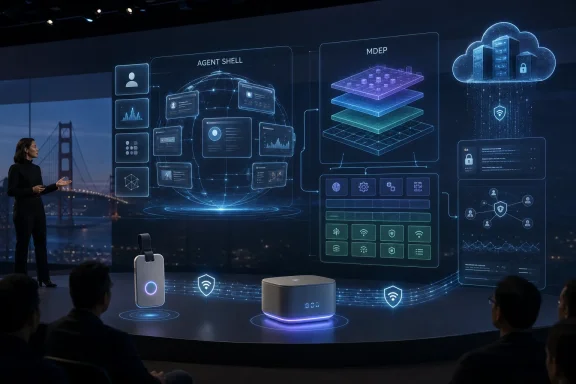
The central software idea in Project Solara is the Agent Shell, which Microsoft describes as a way to dynamically load and tailor multiple cloud-based agents. That is not merely a new front end. It is Microsoft’s attempt to replace the app launcher as the organizing metaphor of computing.For Windows users, the Start menu has always been more than a menu. It is a statement about control. It says installed software is discoverable, launchable, pinnable, searchable, and removable. Even when Microsoft cloud-connected Windows search, promoted Store apps, and embedded Copilot, the core assumption remained that the user is navigating a system of named tools.
An agent-first shell says the named tool matters less than the desired outcome. The user asks, gestures, taps, speaks, or presents context, and the system assembles the interaction. The interface can be visual, voice-driven, touch-driven, or multimodal. The UI can be generated just in time because there is no expectation that every task begins with a preinstalled app icon.
That promise is powerful, and also dangerous. App interfaces are inefficient, but they are legible. Users learn where buttons live, where data goes, what permissions were granted, and which vendor is responsible when something breaks. Agentic interfaces can blur those boundaries. If a Solara device summarizes a message, files a ticket, checks a calendar, and triggers a workflow, the user may get an elegant outcome while losing sight of the chain of authority behind it.
This is where Microsoft’s enterprise emphasis is not just marketing insulation. In a consumer context, an always-available AI agent sounds like a privacy argument waiting to happen. In an enterprise context, Microsoft can talk about policy, audit logs, managed identities, role-based access, data boundaries, and compliance. The company knows the only way to make agentic devices acceptable at work is to make administrators feel that the agent is governed rather than merely helpful.
The Concept Hardware Tells Us What Microsoft Is Really Testing
Microsoft’s two early concepts, a badge-like device and a desk device, are not random shapes. They are a map of the places where Microsoft thinks the PC is no longer the best vessel for AI assistance. A badge is about mobility, presence, authentication, and quick capture. A desk device is about ambient availability, meetings, voice, and the liminal space between a smart speaker, a Teams endpoint, and a workstation companion.The badge concept is especially revealing. It evokes the workplace ID card, the pager, the iPod nano, the small Android handheld, and the AI pin all at once. That ambiguity may be the point. Microsoft is exploring a device that could identify the user, listen or respond during work, display lightweight information, and provide a secure agentic surface without asking the employee to pull out a phone or open a laptop.
The desk concept is easier to imagine in Microsoft’s existing world. The company already owns a huge share of the workday through Windows, Teams, Outlook, Edge, Microsoft 365, and Azure. A desk-bound agent device could function as a meeting aide, workflow console, notification filter, dictation endpoint, or secure bridge into enterprise systems. It could also be a less intrusive way to put Copilot-like behavior into physical space without turning every PC interaction into an AI prompt box.
But concept devices are forgiving because they do not yet carry the burden of procurement. Real buyers will ask whether a badge device replaces something already issued, duplicates a phone, violates workplace surveillance norms, or creates new loss and theft risks. They will ask whether a desk device is better than a cheap tablet, a Teams display, a laptop docking setup, or a browser tab. They will ask whether the agent saves enough time to justify another managed endpoint.
That is the difficult part of Microsoft’s vision. The company is not just selling software architecture; it is trying to create a reason for new hardware to exist. The industry has a graveyard full of “companion” devices that made sense in demos and faded in daily life. Solara’s survival will depend on whether Microsoft can find workflows where the hardware form is not ornamental but necessary.
Windows Is Not Being Replaced, but It Is Being Repositioned
The lazy read is that Project Solara is Microsoft admitting Windows has no future. The more accurate read is that Microsoft is separating the future of computing from the future of Windows, which may be even more consequential. Windows remains indispensable for local productivity, gaming, development, enterprise applications, peripherals, and the huge installed base of PC workflows. But Microsoft is no longer pretending that every future endpoint must descend from it.That repositioning has been underway for years. Microsoft became a cloud company without requiring Windows clients. It made Office and Teams first-class citizens on iOS, Android, macOS, and the web. It bought GitHub, embraced Linux in Azure, shipped WSL, and treated Edge as a cross-platform browser rather than a Windows-only moat. Solara extends that logic from software distribution to device architecture.
For Windows enthusiasts, this is both uncomfortable and clarifying. The PC is still the most capable personal computing device, but it is no longer the only place Microsoft expects meaningful work to happen. Windows becomes one node in a larger Microsoft fabric: the heavy workstation, the development host, the enterprise desktop, the gaming platform, and the local AI runtime for serious compute. Solara aims at a different layer: lightweight, ambient, task-mediated computing.
That division could ultimately help Windows. One of Microsoft’s recurring mistakes has been forcing Windows to absorb every trend until the product feels cluttered with strategic anxiety. If Solara gives Microsoft a place to experiment with agent-first interfaces, adaptive UI, and specialized endpoints, Windows may not need to become a weird hybrid of desktop OS, chatbot appliance, and mobile shell. It can borrow what works without pretending to be every device.
The risk is that Microsoft’s attention shifts faster than customer reality. Enterprises still need Windows to be stable, governable, repairable, and predictable. Developers still need coherent APIs. Gamers still need performance and compatibility. If Project Solara becomes the shiny future while Windows users get half-integrated agent features and more cloud nudges, the backlash will be predictable. Microsoft must prove that building beyond Windows does not mean neglecting the people still living inside it.
The App Gap Becomes an Accountability Gap
Microsoft’s claim that Solara devices do not need traditional apps is strategically clever. It may also move the hardest problem rather than eliminate it. If users no longer choose apps, they still need to know which services an agent can reach, what it is allowed to do, and who is accountable when it acts incorrectly.Traditional apps have obvious defects, but they create boundaries. A Salesforce app belongs to Salesforce. A banking app belongs to the bank. A Teams app belongs to Microsoft. Permissions, support channels, user expectations, and liability all line up imperfectly but visibly. Agentic computing can dissolve that clarity by turning many back-end services into ingredients inside a single conversation or adaptive interface.
That is tolerable for low-stakes tasks. If an agent formats notes or finds a document, a mistake is annoying. If it approves an expense, changes a shift schedule, summarizes a customer record, updates a ticket, or sends a message under someone’s identity, a mistake becomes operational. The more useful Solara becomes, the more pressure it puts on governance.
This is why the phrase “adaptive access layer” deserves scrutiny. It sounds like interface magic, but in practice it must become a permissions and policy system. What data can the agent see? Which actions require confirmation? Which workflows are blocked on unmanaged networks? What happens when the cloud agent is unavailable? Can a user inspect the reasoning or at least the action trail? How does an organization revoke access when a device is lost?
The answers will determine whether Solara is a platform or a demo. Enterprise IT does not reject new device categories automatically; it rejects mystery. If Microsoft can turn agentic access into something observable, enforceable, and boring in the best possible way, Solara has a chance. If it asks administrators to trust the cloud because the keynote looked impressive, it will run into the same wall as every other overconfident AI rollout.
Microsoft Is Chasing the Post-Smartphone Opening Everyone Else Can See
The timing of Project Solara is not accidental. The smartphone market is mature, PCs are stable rather than explosive, and the industry is searching for a new personal device category that AI can justify. Humane, Rabbit, Meta, OpenAI-adjacent hardware rumors, smart glasses, AI earbuds, and agentic wearables all orbit the same premise: perhaps the next computer is not a rectangle full of apps.Microsoft’s advantage is that it does not have to win the consumer fashion war first. It can begin where it is strongest: work. A badge-style assistant for healthcare, logistics, retail, manufacturing, field service, hospitality, or campus environments has a clearer business case than a consumer AI trinket asking people to carry one more device. A desk agent that fits into Microsoft 365 workflows has a clearer route to adoption than a general-purpose smart speaker trying to become an office colleague.
The company’s disadvantage is that it is not naturally trusted as an intimate hardware companion. Microsoft earns trust in enterprises through management, contracts, support, and integration, not because employees want more Microsoft-branded devices around them. If Solara devices are perceived as surveillance badges, productivity meters, or always-listening corporate appliances, the agent-first future will meet labor and privacy resistance long before it reaches technical maturity.
That tension is already visible in the form factors. A badge can be empowering if it reduces friction for a nurse, warehouse worker, technician, or security guard. It can be oppressive if it becomes a sensor package attached to a human being. A desk device can be helpful if it filters meetings and handles routine tasks. It can be resented if it becomes another corporate endpoint that records, prompts, nags, and measures.
Microsoft’s job is not only to build the platform. It has to define the social contract around it. That means visible controls, clear recording states, local processing where appropriate, transparent retention policies, and administrative tools that protect employees as well as employers. The future of computing cannot be “always available” if users experience that as “always watching.”
The Developer Story Is Still the Missing Middle
Build is a developer conference, so the absence of a conventional app model is both bold and awkward. Developers understand platforms through APIs, distribution channels, monetization, debugging, tooling, and deployment. If Solara is not about traditional apps, Microsoft must explain what developers actually build.The likely answer is agents, connectors, skills, workflow integrations, and adaptive UI components. That fits Microsoft’s broader Build 2026 theme around agent platforms, Microsoft Foundry, GitHub, cloud deployment, and local AI infrastructure. It also matches the company’s desire to make enterprise data and business processes accessible through governed AI intermediaries. But the developer experience has to become concrete quickly.
A platform without apps can still have a developer ecosystem, but it needs different primitives. Developers will need to define capabilities, permissions, data contracts, UI surfaces, fallback behaviors, observability hooks, and human-confirmation points. They will need test environments that simulate device context, intermittent connectivity, identity states, and multimodal interaction. They will need a way to prove that an agent does the right thing before it is allowed near production workflows.
This is one area where Microsoft may be better positioned than most AI hardware hopefuls. It already has enterprise developer relationships, identity infrastructure, management tooling, productivity data, and cloud AI services. Solara does not need to persuade developers to learn a brand-new consumer platform from scratch if it can plug into systems they already use to build internal tools and business processes.
Still, Microsoft must avoid the classic platform-owner temptation to declare architecture before usability. Developers do not adopt visions; they adopt workflows that let them ship. If building for Solara feels like writing policy documents for a device category that may never arrive, the ecosystem will stall. If Microsoft can make agent capabilities portable across Windows, web, Teams, mobile, and Solara endpoints, then the new hardware becomes an extension of existing work rather than a speculative island.
Security Will Decide Whether Solara Is a Platform or a Pilot
The most important audience for Project Solara may not be developers or end users. It may be security teams. An agent-first device is valuable because it can do things. It is risky for exactly the same reason.Traditional endpoint security assumes software runs on a device and accesses resources according to identity, policy, and network conditions. Agentic systems complicate that by introducing autonomous or semi-autonomous action. The agent might interpret intent, compose steps, call tools, and move data between systems. Even if each individual action is authorized, the sequence may create new risk.
That is why Microsoft’s chip-to-cloud framing matters. It implies a secure chain from silicon and firmware through operating system, identity, cloud services, and management. For an enterprise badge or desk device, administrators will expect hardware-backed identity, secure boot, encrypted storage, remote wipe, update guarantees, conditional access integration, logging, and policy enforcement. They will also expect agent-specific controls that go beyond ordinary mobile-device management.
The agent layer needs its own security vocabulary. Organizations will want to restrict which agents can run on which devices, which models can process which data, which tasks require user confirmation, and whether sensitive work can be performed when the device is off-premises. They will want red-team results, data residency options, and ways to disable entire classes of behavior after an incident. A cute concept device becomes serious the moment it can trigger real business actions.
Microsoft has an opportunity here because it can sell Solara as the disciplined alternative to chaotic AI gadgets. The enterprise does not want random hardware with vague cloud backends roaming the workplace. It wants manageable endpoints with contractual accountability. If Microsoft turns Project Solara into the “boring secure AI device platform,” that may sound less glamorous than the keynote language, but it is exactly what would make the category real.
Windows Users Should Watch the Boundary, Not the Branding
For the WindowsForum crowd, the central question is not whether Solara is secretly Windows. It is how much of Solara’s agent model leaks back into Windows, and under what terms. Microsoft rarely builds a new interaction model in isolation. If the Agent Shell proves useful, pieces of it will influence Copilot, Windows shell experiments, Teams devices, Edge, and Microsoft 365 surfaces.That could be good. Windows needs better ways to manage context across applications, automate repetitive workflows, and expose local AI capabilities without turning every app into a chatbot bolted onto a sidebar. A mature agent model could make Windows more capable if it respects the user’s control and the desktop’s strengths. The PC is still where many complex tasks begin, branch, and finish.
It could also be bad if Microsoft treats the Windows desktop as a funnel into cloud-mediated agents that users did not ask for. The Windows community has become wary of features that arrive as productivity enhancements and behave like engagement surfaces. Copilot integration, account prompts, cloud backup nudges, Start menu promotions, and Edge defaults have all trained users to inspect Microsoft’s motives. Solara will not help that trust problem if its ideas reappear in Windows as mandatory ambient assistance.
The boundary matters because Windows and Solara serve different tolerances. A special-purpose enterprise badge can be locked down and task-specific. A Windows PC is a general-purpose machine where users expect ownership, compatibility, and escape hatches. Microsoft can make Solara opinionated because it is new. It must be more careful when importing those opinions into Windows.
The best outcome is a two-way exchange without category confusion. Let Solara test agent-first devices where the shell can be minimal. Let Windows adopt the underlying governance, local execution, and agent orchestration lessons where they enhance the PC. Do not turn Windows into a badge, and do not make the badge pretend to be a PC.
The Solara Bet Comes Down to Five Hard Realities
Project Solara is not a Windows replacement story so much as a Windows boundary story. Microsoft is admitting that the next wave of endpoints may not need the desktop, the Win32 legacy, or an app catalog in the traditional sense, while still needing Microsoft’s identity, cloud, management, and developer ecosystem.- Microsoft is building Project Solara around MDEP, an AOSP-based platform, because small agent-first devices fit the mobile and embedded hardware world better than the traditional PC stack.
- The company’s strongest early opportunity is in enterprise and frontline environments, where specialized devices already exist and where manageability can matter more than consumer app availability.
- The Agent Shell is Microsoft’s attempt to replace the app launcher with a task-driven interface, but that shift creates new accountability and permission problems.
- Windows remains central to Microsoft’s platform strategy, but Solara shows that Microsoft no longer sees Windows as the necessary base for every future computing device.
- The concept hardware will only matter if Microsoft can prove that a badge or desk agent is more useful than a phone, PC, tablet, or Teams endpoint already in the workplace.
- Security, governance, update guarantees, and user trust will decide whether Solara becomes a real ecosystem or another impressive Microsoft concept that never escapes the pilot phase.
References
- Primary source: Windows Central
Published: Wed, 03 Jun 2026 00:26:08 GMT
Microsoft outlines its vision for “the next computer” with Project Solara, an agentic platform that exists liminally in your pocket and on your desk | Windows Central
After Windows Phone, Microsoft is eager to get ahead of the next paradigm shift in computing, and it's betting big on an agentic hardware and software future.www.windowscentral.com - Related coverage: techradar.com
50 Microsoft tools you can use for free just in time for Build 2026 | TechRadar
Free tools from across the Microsoft ecosystemwww.techradar.com - Related coverage: tomsguide.com
Microsoft Build 2026 preview — all the big announcements to expect | Tom's Guide
Microsoft Build 2026 should be a showcase for the company's latest and upcoming AI efforts. Here are some of the big announcements we expect to see.www.tomsguide.com - Official source: learn.microsoft.com
Microsoft Device Ecosystem Platform documentation | Microsoft Learn
The Microsoft Device Ecosystem Platform (MDEP) is the Android-based platform from Microsoft that enables device manufacturers and software developers to deliver innovative solutions, backed by Microsoft's reputation for security, trust, and management. Built on the Android Open Source...learn.microsoft.com - Official source: commandline.microsoft.com
Composing a new platform for agent-first devices - Command Line
New interaction technology enables new types of computers. Learn more about Microsoft’s Project Solara.commandline.microsoft.com - Official source: blogs.microsoft.com
Microsoft Build 2026: Be yourself at work - The Official Microsoft Blog
Platforms shift when developers build. We explore, choose tools, dream, create. This platform shift comes with more information than ever, ready at your fingertips. This shift, it’s about building fast AND THEN: it’s about building, operating, optimizing and observing. Securing your...blogs.microsoft.com
- Official source: techcommunity.microsoft.com
MDEP at Microsoft Ignite 2024 | Microsoft Community Hub
Join us at Microsoft Ignite 2024 to hear the latest news about Microsoft Device Ecosystem Platform! techcommunity.microsoft.com
- Related coverage: arstechnica.com
Microsoft's Project Solara is an Android OS designed for agents instead of apps - Ars Technica
Microsoft missed the boat on apps, so get ready for agents.arstechnica.com - Related coverage: tecnogeek.com
- Related coverage: nxtoffice.nl
Wat is MDEP? Uitleg over Microsoft Device Ecosystem Platform
MDEP is Microsofts Android/AOSP-platform voor enterprise Teams-devices. Lees wat het is, wat het uniek maakt en waarom het belangrijk is voor IT-beheer.www.nxtoffice.nl - Related coverage: thenextweb.com
Microsoft unveils Project Solara: an OS for agent-first devices
Microsoft's Project Solara is a new platform for devices that run AI agents instead of apps. Two concept designs, a badge and desk device, are piloting with Best Buy, CVS, Levi's, and Target.thenextweb.com - Official source: microsofters.com
Project Solara: Microsoft prepara dispositivos con agentes IA | Microsofters
Microsoft presenta Project Solara, una plataforma basada en MDEP para crear dispositivos empresariales centrados en agentes de IA. microsofters.com
- Official source: blogs.windows.com
Build 2026: Furthering Windows as the trusted platform for development
Build is one of our favorite moments each year - a chance to connect with the global developer community and share what we’ve been building. Over the past year, we have connected with many developers pushing the boundaries of what’s possible onblogs.windows.com - Related coverage: investing.com
Microsoft unveils Project Solara for mobile AI devices By Investing.com
Microsoft unveils Project Solara for mobile AI deviceswww.investing.com - Official source: download.microsoft.com
- Official source: cdn.techcommunity.microsoft.com