

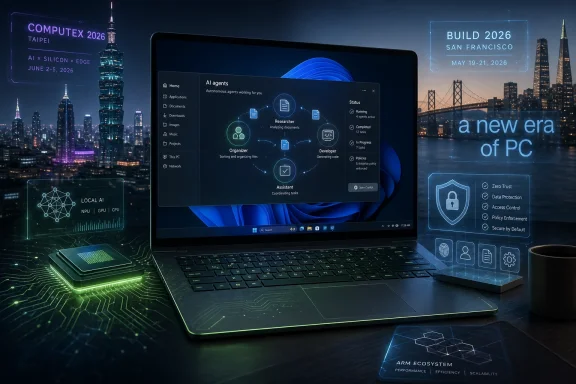
Nvidia-powered Windows PCs are reportedly set to debut during Computex 2026 in Taipei and Microsoft Build 2026 in San Francisco, with Nvidia, Microsoft, and Arm teasing the announcement on May 29 through coordinated posts promising “a new era of PC.” The phrase is marketing, but the timing is not accidental. If the report holds, Windows is about to get its most serious non-x86 hardware challenger since Qualcomm’s Snapdragon X launch — and this time the challenger is the company that already owns the AI accelerator conversation.
For most of the Windows era, the PC processor story has been a two-company drama with occasional cameos. Intel defined the mainstream, AMD kept the market honest, and everyone else learned how difficult it is to move Windows away from x86 compatibility, enterprise inertia, and decades of driver expectations. Nvidia’s reported entry as the main processor vendor for Windows PCs changes the cast because Nvidia is not arriving as a scrappy CPU hopeful. It is arriving as the company that made the AI boom commercially legible.
That matters because Microsoft’s current PC pitch is no longer simply about faster boot times, better battery life, or thinner chassis. The company has spent the past two years trying to convince consumers and enterprises that the AI PC is a category rather than a sticker. Copilot+ PCs gave Microsoft a hardware floor for neural processing, but the first wave also exposed the limits of a category that was stronger in positioning than in must-have daily workflows.
Nvidia gives Microsoft a more dramatic story. A Windows PC with Nvidia silicon is not merely a laptop with a different instruction set; it is a chance to fuse CPU, GPU, and local AI compute into a platform that looks less like a traditional notebook and more like a personal inference machine. That is the strategic prize behind the teaser.
The reported Computex-and-Build split also says something important. Computex is where the hardware ecosystem watches supply chains, OEM designs, thermals, and launch partners. Build is where Microsoft talks to developers, and developers are the missing half of the Windows-on-Arm story. If Microsoft wants Nvidia-powered Windows PCs to be more than show-floor glass, it needs software makers to believe there is a real installed base coming.
The Snapdragon X generation changed the tone. Windows on Arm became credible enough for mainstream reviewers to discuss battery life, thermals, and performance without immediately stopping at compatibility. Microsoft’s Prism translation layer helped, native Arm64 apps grew more common, and Qualcomm finally gave Windows OEMs a chip that could plausibly be compared to Apple Silicon in the same sentence.
But credibility is not inevitability. Windows remains the world’s messiest software ecosystem because that mess is part of its value. The same platform that runs modern web apps and Arm-native Office also has to satisfy a sysadmin with a decade-old VPN client, a small business with a weird printer utility, a gamer with anti-cheat software, and a developer who forgot which dependency in the toolchain still assumes x86.
That is where Nvidia’s reported arrival cuts both ways. On one hand, Nvidia’s brand can make Windows on Arm feel less experimental and more performance-oriented. On the other, Nvidia brings expectations. Users will not forgive app gaps, driver weirdness, or game incompatibility just because the logo on the machine is green.
Nvidia’s advantage is that it already has the developer gravity Microsoft wants. CUDA is not just a toolkit; it is an ecosystem moat. The company’s GPUs dominate AI training and inference not because competitors cannot do matrix math, but because developers, frameworks, libraries, and deployment pipelines have been shaped around Nvidia’s stack for years.
A Windows PC built around Nvidia silicon could give Microsoft a more convincing local AI narrative. Instead of asking users to imagine why an NPU matters, Microsoft can point to a familiar AI compute brand and say: this is the machine that runs agents, models, and creative workloads locally. That is especially powerful as privacy, latency, and cloud cost become central objections to putting every AI task in a data center.
The reported Microsoft platform for local AI agents fits this arc. Microsoft does not merely want Copilot to answer questions. It wants Windows to become an execution environment where agents can inspect context, use apps, move data, and complete tasks with less round-tripping to cloud services. That requires a different relationship between operating system, security model, app permissions, and hardware acceleration.
If that sounds ambitious, it is. It also sounds risky. A local agent platform is only useful if users trust it, developers can target it, and administrators can govern it. Otherwise, it becomes another layer of automation that enterprises disable until the audit team stops hyperventilating.
But Nvidia does not need to replace Intel or AMD to change the market. It only needs to make Windows OEMs believe that a premium Arm-based, Nvidia-accelerated PC category can command attention, margins, and developer investment. That would put pressure on every vendor selling “AI PC” as a minor refresh rather than a new compute platform.
The more interesting competitive question is Qualcomm. Snapdragon X made Windows on Arm respectable, but Nvidia could make it fashionable. Qualcomm has the modem heritage, mobile efficiency, and early mover advantage in the current Copilot+ wave. Nvidia has the AI halo, GPU identity, and developer mythology.
That sets up a strange future for Microsoft. For years, Windows suffered from too little credible silicon diversity outside x86. Now Microsoft may have to manage a more fragmented Arm ecosystem while still keeping x86 users confident they are not being left behind. The company wants competition, but not chaos.
This is why Build matters as much as Computex. Hardware announcements can create excitement; SDKs, APIs, migration tools, and compatibility guarantees create platforms. Microsoft has to show that Nvidia-powered Windows PCs are not a one-off branch but part of a coherent Windows roadmap.
Surface has always been Microsoft’s way of telling the rest of the PC industry what kind of Windows machine it wants to see. Sometimes that has produced category-defining hardware. Sometimes it has produced elegant machines that demonstrated Microsoft’s ambition more clearly than the market’s appetite.
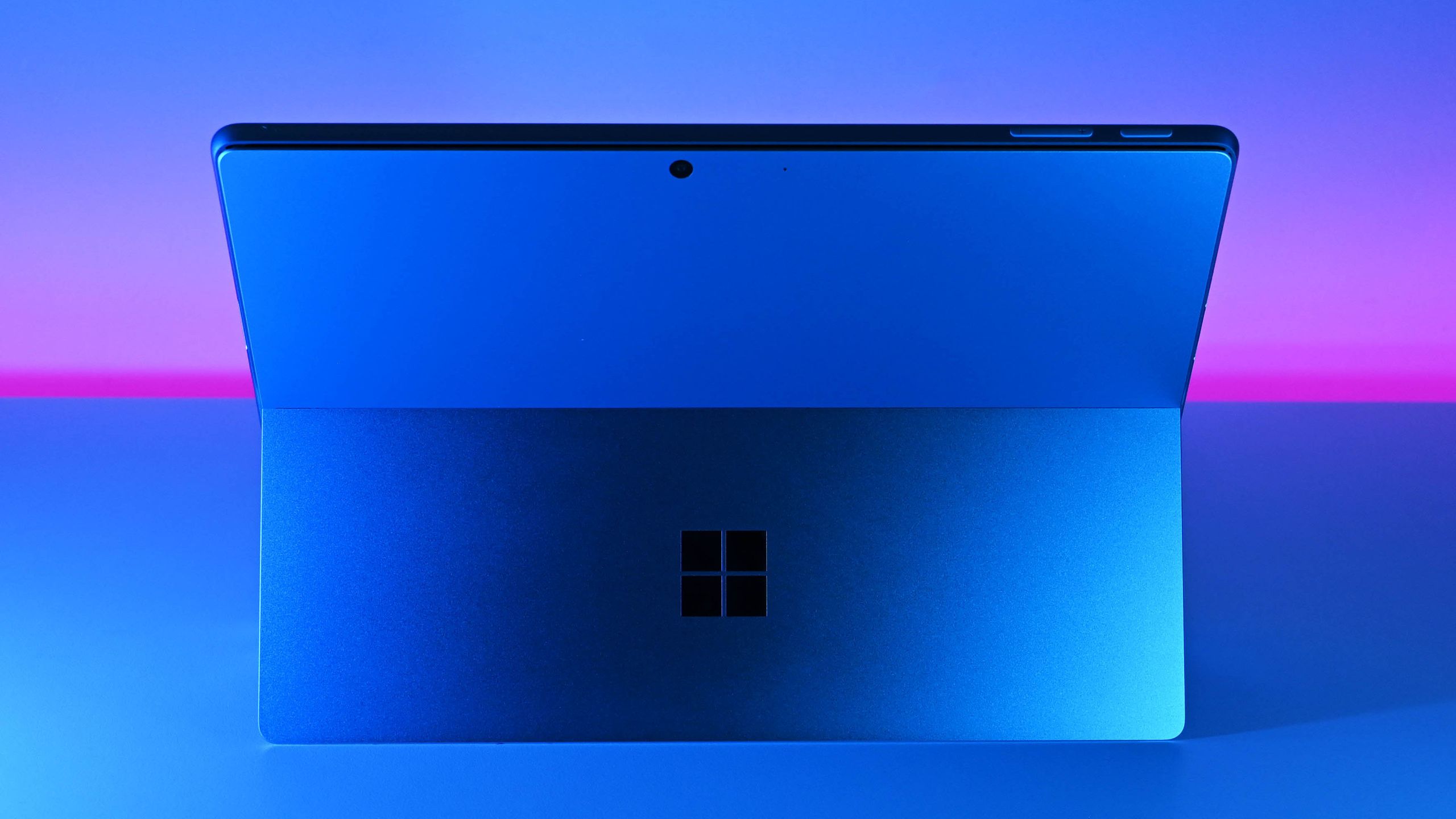
A Surface with Nvidia silicon would say Microsoft is not treating this as a science project. It would also put Microsoft in the uncomfortable position of proving that its own apps, services, developer tools, and management stack are ready for the architecture shift. Surface cannot hide behind OEM variation; it becomes the reference experience.
That reference experience would need to be excellent on day one. Battery life must be competitive, wake and standby behavior must be seamless, creative apps must run well, and Windows Update must not become a driver roulette table. If Microsoft wants IT pros to take these machines seriously, it needs fewer caveats than the Arm PCs of the past.
The Surface lesson is clear: beautiful hardware cannot compensate for platform uncertainty forever. If Nvidia-powered Windows PCs arrive with first-party polish and credible third-party support, they could reset expectations. If they arrive with footnotes, they will revive every old Windows-on-Arm complaint Microsoft has spent years trying to bury.
This is the natural endpoint of Microsoft’s recent AI push. Copilot began as a chat interface, then became a sidebar, then an app, then a brand spread across Microsoft 365, Windows, GitHub, Edge, and Azure. Agents are the next escalation because they promise not just answers, but action.
The problem is that action is where trust breaks. An assistant that summarizes a document can be wrong and annoying. An agent that moves files, sends messages, changes settings, queries business data, or invokes local tools can be wrong and dangerous. The line between helpful automation and uninvited behavior is thin, especially on a platform as broad as Windows.
Local execution does not automatically solve that. It may reduce latency and keep some data on device, but it also means the operating system needs a rigorous permission model for agent behavior. Users and administrators will need to know what an agent can see, what it can change, what it has already done, and how to reverse it.
For security teams, this is not an abstract concern. Windows endpoints are already contested territory. Adding agentic automation increases the value of the endpoint and expands the number of workflows that need policy, logging, containment, and identity checks. Microsoft’s agent story will succeed only if it treats governance as a feature, not a compliance appendix.
App developers need confidence that Arm-native Windows is worth targeting. AI developers need local inference APIs that do not require them to rewrite everything for each hardware vendor. Enterprise developers need management hooks, identity integration, and deployment paths that fit existing Windows estates. Game developers need a reason to care beyond a speculative future installed base.
The danger for Microsoft is over-promising. “AI agents on Windows” can mean everything from glorified scripting to a genuinely new app model. “Local AI” can mean a small model running privately on a laptop or a hybrid workflow that still depends heavily on cloud services. Developers will quickly separate demos from durable platform capabilities.
Nvidia can help by bringing mature tooling and performance credibility. But Microsoft still owns the Windows developer contract. If APIs are fragmented, documentation is thin, or capabilities are locked to a narrow slice of hardware, developers will wait. Waiting is deadly in platform transitions because users then see fewer native experiences, which slows hardware adoption, which further discourages developers.
The company’s job at Build is not merely to announce that agents are coming. It is to make the Windows desktop feel programmable for the AI era without making it feel unsafe, vendor-locked, or temporary.
That is where the reported Nvidia push faces the least glamorous but most important test. Corporate Windows environments are held together by endpoint management tools, security agents, VPNs, device control software, legacy installers, print workflows, line-of-business apps, and procurement cycles that punish novelty. A PC platform can be technically impressive and still be a headache for deployment.
Arm compatibility has improved, but “improved” is not the same as “invisible.” IT departments will want hardware qualification lists, native versions of endpoint security software, reliable driver packaging, and clarity on which workloads still belong on x86. They will also want Microsoft to explain how local agents interact with existing controls such as Intune policy, Defender telemetry, identity enforcement, and data loss prevention.
The AI angle complicates procurement. A faster NPU or GPU may be attractive, but many organizations are still deciding which AI workloads should run locally, which should run in the cloud, and which should not run at all. Buying a premium AI PC fleet before governance is settled may feel premature.
That does not mean enterprises will ignore the category. It means the first wave may land with developers, executives, creators, and specialized teams rather than broad office deployments. The mainstream enterprise PC refresh is conservative by design, and Nvidia-powered Windows machines will have to earn their way into it.
That expectation could be difficult to satisfy on early Arm-based Windows systems. Games are among the hardest workloads to move cleanly because they involve engines, launchers, anti-cheat systems, graphics APIs, peripheral software, overlays, and performance-sensitive translation paths. A machine can be a great AI laptop and still be a disappointing gaming laptop if the software stack is not ready.
Microsoft and Nvidia will need to be careful with positioning. If these PCs are pitched as AI workstations in laptop form, buyers may judge them on productivity, creative acceleration, and developer workflows. If the market hears “Nvidia laptop” and assumes gaming parity with x86 GeForce notebooks, disappointment could arrive quickly.
There is also a strategic upside if Nvidia solves enough of the puzzle. A capable Arm Windows gaming platform would be a major blow to the idea that high-performance PC gaming must remain x86-bound. But that is a larger claim than the current report supports.
For now, the safer reading is that Nvidia’s first Windows PC push is about AI compute and platform leverage, not replacing every gaming laptop at Best Buy. The gaming question will hover over the launch anyway because Nvidia’s own brand makes it impossible to avoid.
That is important because PC categories are not created by chips alone. They require motherboard designs, firmware maturity, driver readiness, component availability, retail planning, support training, and enough units to make developers believe the market exists. Apple could move the Mac to its own silicon because it controlled the whole stack. Microsoft has to herd an ecosystem.
Nvidia’s reported collaboration with Arm — and possibly MediaTek, according to earlier industry rumors — reflects that complexity. Nvidia can provide GPU and AI expertise, but a competitive PC system-on-chip involves CPU cores, memory architecture, display engines, connectivity, power management, firmware, and platform validation. The Windows PC market is unforgiving because buyers compare not only benchmark charts but also price, ports, noise, battery, and repairability.
This is where the “new era” language should be treated with caution. The first devices may be impressive, but a new era requires second and third generations. It requires multiple OEMs, multiple price bands, and enough boring reliability that users stop thinking about the architecture.
The history of Windows hardware is littered with impressive first attempts that never became default choices. Nvidia’s advantage is that it has the capital, brand, and ecosystem leverage to keep pushing if the first wave is merely good. Microsoft’s challenge is ensuring the software story is good enough that Nvidia wants to.
The reason is simple: AI changes the economics of where work happens. Cloud models are powerful, but they are expensive, latency-sensitive, and politically complicated when sensitive data is involved. Local AI does not replace cloud AI, but it gives Microsoft a way to argue that Windows remains the natural place where personal context, enterprise policy, and compute meet.
That is why a local agent platform could be more important than any single device launch. If Windows becomes the trusted runtime for agents that can work across local apps, files, browsers, and enterprise services, Microsoft strengthens the operating system’s relevance in a world where many tasks have drifted to the browser. The desktop becomes less of a launcher and more of an orchestrator.
Nvidia’s silicon would make that argument easier to believe. Powerful local inference gives Microsoft room to build experiences that feel immediate rather than remote. It also gives developers a reason to target Windows as an AI execution environment, not merely a client for cloud APIs.
But reclaiming the PC narrative requires restraint. Users have already shown fatigue with AI features that feel bolted on, intrusive, or undercooked. The winning version of this strategy is not “AI everywhere.” It is AI that makes the PC more capable while giving users clearer control.
The most concrete signals will not be slogans. They will be whether Microsoft or Dell shows shipping hardware, whether Nvidia names the silicon and its availability window, whether Microsoft explains how Windows will expose local AI capabilities to developers, and whether the app compatibility story is specific rather than aspirational.
The announcement also needs clarity on where these machines sit in the Copilot+ PC family. If they are simply another Arm option with better GPU and AI performance, the story is evolutionary. If Microsoft presents them as the preferred hardware foundation for local agents, the story becomes more disruptive — and more politically sensitive for other silicon partners.
For WindowsForum readers, the practical posture is cautious interest. This could be one of the most important Windows hardware shifts in years. It could also be another over-marketed AI PC launch whose most useful features arrive later than the hardware.
 Microsoft’s Next PC Bet Is Not Just Another Laptop Chip
For most of the Windows era, the PC processor story has been a two-company drama with occasional cameos. Intel defined the mainstream, AMD kept the market honest, and everyone else learned how difficult it is to move Windows away from x86 compatibility, enterprise inertia, and decades of driver expectations. Nvidia’s reported entry as the main processor vendor for Windows PCs changes the cast because Nvidia is not arriving as a scrappy CPU hopeful. It is arriving as the company that made the AI boom commercially legible.That matters because Microsoft’s current PC pitch is no longer simply about faster boot times, better battery life, or thinner chassis. The company has spent the past two years trying to convince consumers and enterprises that the AI PC is a category rather than a sticker. Copilot+ PCs gave Microsoft a hardware floor for neural processing, but the first wave also exposed the limits of a category that was stronger in positioning than in must-have daily workflows.
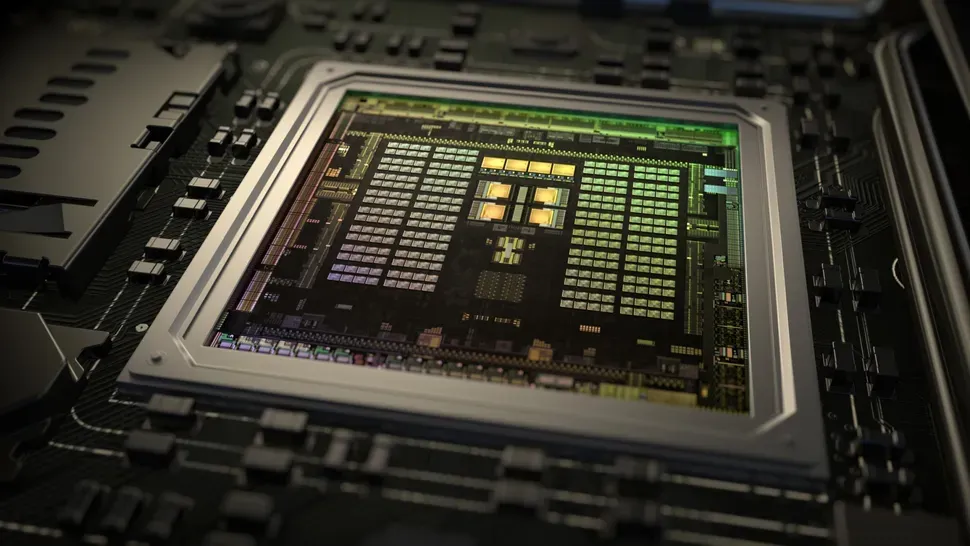
Nvidia gives Microsoft a more dramatic story. A Windows PC with Nvidia silicon is not merely a laptop with a different instruction set; it is a chance to fuse CPU, GPU, and local AI compute into a platform that looks less like a traditional notebook and more like a personal inference machine. That is the strategic prize behind the teaser.
The reported Computex-and-Build split also says something important. Computex is where the hardware ecosystem watches supply chains, OEM designs, thermals, and launch partners. Build is where Microsoft talks to developers, and developers are the missing half of the Windows-on-Arm story. If Microsoft wants Nvidia-powered Windows PCs to be more than show-floor glass, it needs software makers to believe there is a real installed base coming.
The Ghost of Windows RT Still Haunts Every Arm PC
Microsoft has tried this movie before, and the first version ended badly. Windows RT taught buyers that “Windows” without the full Windows application universe felt like a bait-and-switch. Surface Pro X improved the design and ambition but still carried the burden of emulation, missing native apps, and the uncomfortable sense that early adopters were paying premium prices to beta-test Microsoft’s architecture strategy.The Snapdragon X generation changed the tone. Windows on Arm became credible enough for mainstream reviewers to discuss battery life, thermals, and performance without immediately stopping at compatibility. Microsoft’s Prism translation layer helped, native Arm64 apps grew more common, and Qualcomm finally gave Windows OEMs a chip that could plausibly be compared to Apple Silicon in the same sentence.
But credibility is not inevitability. Windows remains the world’s messiest software ecosystem because that mess is part of its value. The same platform that runs modern web apps and Arm-native Office also has to satisfy a sysadmin with a decade-old VPN client, a small business with a weird printer utility, a gamer with anti-cheat software, and a developer who forgot which dependency in the toolchain still assumes x86.
That is where Nvidia’s reported arrival cuts both ways. On one hand, Nvidia’s brand can make Windows on Arm feel less experimental and more performance-oriented. On the other, Nvidia brings expectations. Users will not forgive app gaps, driver weirdness, or game incompatibility just because the logo on the machine is green.
Nvidia Is Selling the AI PC Microsoft Wants to Exist
The PC industry’s first AI pitch was awkward because it often sounded like a hardware requirement in search of a habit. A neural processing unit could blur your background, summarize text, generate images, and accelerate a few local models. Useful, yes. Transformational, not yet.Nvidia’s advantage is that it already has the developer gravity Microsoft wants. CUDA is not just a toolkit; it is an ecosystem moat. The company’s GPUs dominate AI training and inference not because competitors cannot do matrix math, but because developers, frameworks, libraries, and deployment pipelines have been shaped around Nvidia’s stack for years.
A Windows PC built around Nvidia silicon could give Microsoft a more convincing local AI narrative. Instead of asking users to imagine why an NPU matters, Microsoft can point to a familiar AI compute brand and say: this is the machine that runs agents, models, and creative workloads locally. That is especially powerful as privacy, latency, and cloud cost become central objections to putting every AI task in a data center.
The reported Microsoft platform for local AI agents fits this arc. Microsoft does not merely want Copilot to answer questions. It wants Windows to become an execution environment where agents can inspect context, use apps, move data, and complete tasks with less round-tripping to cloud services. That requires a different relationship between operating system, security model, app permissions, and hardware acceleration.
If that sounds ambitious, it is. It also sounds risky. A local agent platform is only useful if users trust it, developers can target it, and administrators can govern it. Otherwise, it becomes another layer of automation that enterprises disable until the audit team stops hyperventilating.
The Real Fight Is Over Who Defines the Post-x86 Windows PC
Intel and AMD should not be written out of this story. Both companies are already shipping AI PC silicon, both understand Windows certification and OEM economics, and both have deep relationships with enterprise buyers. The x86 incumbents also benefit from a blunt fact: compatibility remains the ultimate feature.But Nvidia does not need to replace Intel or AMD to change the market. It only needs to make Windows OEMs believe that a premium Arm-based, Nvidia-accelerated PC category can command attention, margins, and developer investment. That would put pressure on every vendor selling “AI PC” as a minor refresh rather than a new compute platform.
The more interesting competitive question is Qualcomm. Snapdragon X made Windows on Arm respectable, but Nvidia could make it fashionable. Qualcomm has the modem heritage, mobile efficiency, and early mover advantage in the current Copilot+ wave. Nvidia has the AI halo, GPU identity, and developer mythology.
That sets up a strange future for Microsoft. For years, Windows suffered from too little credible silicon diversity outside x86. Now Microsoft may have to manage a more fragmented Arm ecosystem while still keeping x86 users confident they are not being left behind. The company wants competition, but not chaos.
This is why Build matters as much as Computex. Hardware announcements can create excitement; SDKs, APIs, migration tools, and compatibility guarantees create platforms. Microsoft has to show that Nvidia-powered Windows PCs are not a one-off branch but part of a coherent Windows roadmap.
Surface Would Turn the Rumor Into a Declaration
The Axios report suggests the first Nvidia-powered Windows computers could include devices from Microsoft and Dell. Dell would make sense as a commercial signal: if a major OEM commits, enterprise buyers will at least pay attention. But Surface would be the symbolic move.Surface has always been Microsoft’s way of telling the rest of the PC industry what kind of Windows machine it wants to see. Sometimes that has produced category-defining hardware. Sometimes it has produced elegant machines that demonstrated Microsoft’s ambition more clearly than the market’s appetite.
A Surface with Nvidia silicon would say Microsoft is not treating this as a science project. It would also put Microsoft in the uncomfortable position of proving that its own apps, services, developer tools, and management stack are ready for the architecture shift. Surface cannot hide behind OEM variation; it becomes the reference experience.
That reference experience would need to be excellent on day one. Battery life must be competitive, wake and standby behavior must be seamless, creative apps must run well, and Windows Update must not become a driver roulette table. If Microsoft wants IT pros to take these machines seriously, it needs fewer caveats than the Arm PCs of the past.
The Surface lesson is clear: beautiful hardware cannot compensate for platform uncertainty forever. If Nvidia-powered Windows PCs arrive with first-party polish and credible third-party support, they could reset expectations. If they arrive with footnotes, they will revive every old Windows-on-Arm complaint Microsoft has spent years trying to bury.
Local Agents Move the PC From Tool to Actor
The most consequential part of the report may not be the chip at all. Microsoft is reportedly preparing a new platform that would let AI agents perform tasks locally on Windows computers. That turns the PC from a place where users run software into a place where software can act across the user’s environment.This is the natural endpoint of Microsoft’s recent AI push. Copilot began as a chat interface, then became a sidebar, then an app, then a brand spread across Microsoft 365, Windows, GitHub, Edge, and Azure. Agents are the next escalation because they promise not just answers, but action.
The problem is that action is where trust breaks. An assistant that summarizes a document can be wrong and annoying. An agent that moves files, sends messages, changes settings, queries business data, or invokes local tools can be wrong and dangerous. The line between helpful automation and uninvited behavior is thin, especially on a platform as broad as Windows.
Local execution does not automatically solve that. It may reduce latency and keep some data on device, but it also means the operating system needs a rigorous permission model for agent behavior. Users and administrators will need to know what an agent can see, what it can change, what it has already done, and how to reverse it.
For security teams, this is not an abstract concern. Windows endpoints are already contested territory. Adding agentic automation increases the value of the endpoint and expands the number of workflows that need policy, logging, containment, and identity checks. Microsoft’s agent story will succeed only if it treats governance as a feature, not a compliance appendix.
Developers Are the Audience Microsoft Cannot Afford to Bore
Build is not a consumer launch stage. It is where Microsoft tries to persuade developers that its abstractions are worth adopting. For Nvidia-powered Windows PCs, that persuasion has to happen at multiple layers.App developers need confidence that Arm-native Windows is worth targeting. AI developers need local inference APIs that do not require them to rewrite everything for each hardware vendor. Enterprise developers need management hooks, identity integration, and deployment paths that fit existing Windows estates. Game developers need a reason to care beyond a speculative future installed base.
The danger for Microsoft is over-promising. “AI agents on Windows” can mean everything from glorified scripting to a genuinely new app model. “Local AI” can mean a small model running privately on a laptop or a hybrid workflow that still depends heavily on cloud services. Developers will quickly separate demos from durable platform capabilities.
Nvidia can help by bringing mature tooling and performance credibility. But Microsoft still owns the Windows developer contract. If APIs are fragmented, documentation is thin, or capabilities are locked to a narrow slice of hardware, developers will wait. Waiting is deadly in platform transitions because users then see fewer native experiences, which slows hardware adoption, which further discourages developers.
The company’s job at Build is not merely to announce that agents are coming. It is to make the Windows desktop feel programmable for the AI era without making it feel unsafe, vendor-locked, or temporary.
The Enterprise Buyer Will Ask the Boring Questions First
Consumer coverage will focus on performance, battery life, and whether Nvidia can produce a Windows laptop that feels like the first truly exciting Arm PC. Enterprise IT will start somewhere else. Can it be imaged, managed, secured, patched, audited, repaired, and supported without creating a new operational island?That is where the reported Nvidia push faces the least glamorous but most important test. Corporate Windows environments are held together by endpoint management tools, security agents, VPNs, device control software, legacy installers, print workflows, line-of-business apps, and procurement cycles that punish novelty. A PC platform can be technically impressive and still be a headache for deployment.
Arm compatibility has improved, but “improved” is not the same as “invisible.” IT departments will want hardware qualification lists, native versions of endpoint security software, reliable driver packaging, and clarity on which workloads still belong on x86. They will also want Microsoft to explain how local agents interact with existing controls such as Intune policy, Defender telemetry, identity enforcement, and data loss prevention.
The AI angle complicates procurement. A faster NPU or GPU may be attractive, but many organizations are still deciding which AI workloads should run locally, which should run in the cloud, and which should not run at all. Buying a premium AI PC fleet before governance is settled may feel premature.
That does not mean enterprises will ignore the category. It means the first wave may land with developers, executives, creators, and specialized teams rather than broad office deployments. The mainstream enterprise PC refresh is conservative by design, and Nvidia-powered Windows machines will have to earn their way into it.
Gaming Is the Awkward Missing Promise
Nvidia’s brand is inseparable from PC gaming, which makes this reported Windows-on-Arm move especially delicate. The average user who hears “Nvidia-powered PC” may not think first about local agents or AI inference. They may think about GeForce, drivers, DLSS, and whether their Steam library runs.That expectation could be difficult to satisfy on early Arm-based Windows systems. Games are among the hardest workloads to move cleanly because they involve engines, launchers, anti-cheat systems, graphics APIs, peripheral software, overlays, and performance-sensitive translation paths. A machine can be a great AI laptop and still be a disappointing gaming laptop if the software stack is not ready.
Microsoft and Nvidia will need to be careful with positioning. If these PCs are pitched as AI workstations in laptop form, buyers may judge them on productivity, creative acceleration, and developer workflows. If the market hears “Nvidia laptop” and assumes gaming parity with x86 GeForce notebooks, disappointment could arrive quickly.
There is also a strategic upside if Nvidia solves enough of the puzzle. A capable Arm Windows gaming platform would be a major blow to the idea that high-performance PC gaming must remain x86-bound. But that is a larger claim than the current report supports.
For now, the safer reading is that Nvidia’s first Windows PC push is about AI compute and platform leverage, not replacing every gaming laptop at Best Buy. The gaming question will hover over the launch anyway because Nvidia’s own brand makes it impossible to avoid.
This Is Also a Supply Chain Story Wearing an AI Costume
Computex is not just a stage for keynote spectacle. It is where the PC supply chain tells the world what it is ready to build. If Nvidia-powered Windows PCs are shown there, the announcement will be read through the lens of OEM commitments, manufacturing partners, memory configurations, thermal envelopes, and launch timing.That is important because PC categories are not created by chips alone. They require motherboard designs, firmware maturity, driver readiness, component availability, retail planning, support training, and enough units to make developers believe the market exists. Apple could move the Mac to its own silicon because it controlled the whole stack. Microsoft has to herd an ecosystem.
Nvidia’s reported collaboration with Arm — and possibly MediaTek, according to earlier industry rumors — reflects that complexity. Nvidia can provide GPU and AI expertise, but a competitive PC system-on-chip involves CPU cores, memory architecture, display engines, connectivity, power management, firmware, and platform validation. The Windows PC market is unforgiving because buyers compare not only benchmark charts but also price, ports, noise, battery, and repairability.
This is where the “new era” language should be treated with caution. The first devices may be impressive, but a new era requires second and third generations. It requires multiple OEMs, multiple price bands, and enough boring reliability that users stop thinking about the architecture.
The history of Windows hardware is littered with impressive first attempts that never became default choices. Nvidia’s advantage is that it has the capital, brand, and ecosystem leverage to keep pushing if the first wave is merely good. Microsoft’s challenge is ensuring the software story is good enough that Nvidia wants to.
Microsoft Is Trying to Reclaim the PC Narrative From the Cloud
There is a larger irony here. Microsoft spent years moving value away from the local PC and into cloud services. Office became Microsoft 365, storage moved to OneDrive, identity moved to Entra, management moved to Intune, and AI at scale lives in Azure. Now the company is rediscovering the strategic importance of the endpoint.The reason is simple: AI changes the economics of where work happens. Cloud models are powerful, but they are expensive, latency-sensitive, and politically complicated when sensitive data is involved. Local AI does not replace cloud AI, but it gives Microsoft a way to argue that Windows remains the natural place where personal context, enterprise policy, and compute meet.
That is why a local agent platform could be more important than any single device launch. If Windows becomes the trusted runtime for agents that can work across local apps, files, browsers, and enterprise services, Microsoft strengthens the operating system’s relevance in a world where many tasks have drifted to the browser. The desktop becomes less of a launcher and more of an orchestrator.
Nvidia’s silicon would make that argument easier to believe. Powerful local inference gives Microsoft room to build experiences that feel immediate rather than remote. It also gives developers a reason to target Windows as an AI execution environment, not merely a client for cloud APIs.
But reclaiming the PC narrative requires restraint. Users have already shown fatigue with AI features that feel bolted on, intrusive, or undercooked. The winning version of this strategy is not “AI everywhere.” It is AI that makes the PC more capable while giving users clearer control.
The Week Ahead Belongs to the Fine Print
The coordinated teaser has done its job. It turned an industry rumor into a calendar event and ensured that Computex and Build audiences will be watching for the same thing. Now the hard part begins: turning anticipation into a platform story that survives first contact with specs, prices, and compatibility charts.The most concrete signals will not be slogans. They will be whether Microsoft or Dell shows shipping hardware, whether Nvidia names the silicon and its availability window, whether Microsoft explains how Windows will expose local AI capabilities to developers, and whether the app compatibility story is specific rather than aspirational.
The announcement also needs clarity on where these machines sit in the Copilot+ PC family. If they are simply another Arm option with better GPU and AI performance, the story is evolutionary. If Microsoft presents them as the preferred hardware foundation for local agents, the story becomes more disruptive — and more politically sensitive for other silicon partners.
For WindowsForum readers, the practical posture is cautious interest. This could be one of the most important Windows hardware shifts in years. It could also be another over-marketed AI PC launch whose most useful features arrive later than the hardware.
The Nvidia Windows Moment Will Be Measured in Deployments, Not Keynotes
The next few days should separate the rumor from the roadmap, but the outline is already visible. Nvidia wants into the mainstream PC processor market, Microsoft wants Windows to become a local AI and agent platform, and Arm wants another proof point that the Windows ecosystem is no longer synonymous with x86.- Nvidia-powered Windows PCs are reportedly expected to be shown during Computex 2026 in Taipei and Microsoft Build 2026 in San Francisco.
- Microsoft, Nvidia, and Arm jointly teased “a new era of PC” on May 29, pointing attention toward Taipei as the hardware industry gathers for Computex.
- The reported launch would deepen Microsoft’s Windows-on-Arm strategy beyond Qualcomm’s Snapdragon X generation.
- A separate reported Microsoft platform for local AI agents could make the operating system, not just the chip, the real announcement.
- Enterprise adoption will depend less on AI branding than on compatibility, management, security controls, and supportability.
- The biggest unanswered questions are shipping dates, OEM partners, pricing, app readiness, and whether Microsoft can make local agents useful without making Windows feel less trustworthy.
References
- Primary source: The Indian Express
Published: 2026-05-31T06:42:09.034132
Nvidia-powered Windows PCs to make debut at Computex 2026: Report
Microsoft is also expected to debut a new platform aimed at enabling AI agents to perform tasks locally on Windows computers, as per reports.indianexpress.com - Related coverage: techradar.com
Windows 12 at Build 2026: What to expect
What Build 2026 signals about the future of the Windowswww.techradar.com
- Related coverage: axios.com

Scoop: First Windows PCs powered by Nvidia chips to debut next week
The chips will appear in Microsoft Surface computers and PCs from other manufacturers.www.axios.com
- Related coverage: pcgamer.com
Nvidia's N1X laptop chip has cropped up on a Lenovo login page, adding fuel to the speculative fire
A portent of things soon to come?www.pcgamer.com
- Related coverage: tomsguide.com
- Related coverage: techspot.com
- Related coverage: tomshardware.com
Nvidia and Microsoft tease "a new era of PC" ahead of Computex 2026 — coordinated social media posts could indicate that rumored N1X laptops will be Windows on Arm systems
An Nvidia-powered Arm PC running Windows could inspire new local AI experiences beyond Copilot+.www.tomshardware.com
- Related coverage: ebisuda.net
Microsoft Build 2026:WindowsがAIエージェント実行基盤に進化、Azure Agent Meshでオンプレ・クラウド横断の分散エージェント管理を実現
Build 2026でMicrosoftがWindows Agent RuntimeとAzure Agent Meshを発表。WindowsをAIエージェントのOSレベル実行プラットフォームとして正式に位置づけた。 www.ebisuda.net
- Related coverage: windowscentral.com
Microsoft and NVIDIA tease "new era of computing"
Microsoft and NVIDIA posted matching “new era of PC” teasers with coordinates for Computex, igniting predictions that the long‑rumored N1X chip is finally about to surface. www.windowscentral.com
- Related coverage: masonailab.com

NVIDIA Windows AI PC 傳聞代表什麼?本機 AI Agent 正在變成 PC 新戰場 | Mason AI Lab
Axios 報導 NVIDIA、Microsoft、Dell 可能在 Computex 與 Build 展示 NVIDIA 晶片 Windows PC。這背後是本機 AI Agent、AI PC 與 Windows 平台競爭。 masonailab.com
- Related coverage: edgen.beta.edgen.tech
- Official source: blogs.windows.com

Windows 365 for Agents: The Cloud PC’s next chapter
A new chapter for Windows 365 In 2021, Microsoft introduced Windows 365, reimagining the PC as a cloud service that streams a Cloud PC—a complete, secure, personalized Windows experience to any device, anywhere. This innovation gave orga blogs.windows.com
- Related coverage: gagadget.com
NVIDIA and Microsoft tease "a new era of PC" ahead of Computex 2026
Synchronized posts from both companies point to N1X ARM chips with Blackwell graphics — and a potential challenge to Qualcomm's grip on Windows on ARM.gagadget.com
- Related coverage: hardware-news.de

Nvidia, Microsoft, Arm und MediaTek deuten gemeinsam auf neue PC-Plattform zur Computex 2026 hin - Hardware News
Vier der wichtigsten Akteure im aktuellen PC-Geschäft haben am 29. Mai zeitgleich denselben Teaser auf X veröffentlicht. Nvidia, Microsofts Windows-Account, Arm und MediaTek posteten unabhängig voneinander den Satz „A new era of PC“ zusammen mit den Koordinaten 25.0528, 121.5990. Wer die Zahlen... www.hardware-news.de
- Official source: microsoft.com
- Related coverage: nvidia.com

NVIDIA GTC Taipei 2026 | June 1-4
Register now for GTC Taipei 2026, June 1-4. Explore the future of AI with experts and experience hands-on workshops at this global AI conference.www.nvidia.com - Related coverage: ti.com
Computex | TI.com
www.ti.com - Related coverage: computexdaily.com

AI Goes Physical — Taiwan Leads Global Industry Transformation as COMPUTEX 2026 Opens Tomorrow in Taipei | COMPUTEX Daily - COMPUTEX 2025 Official Publication Website
[Taipei, June 1, 2026] COMPUTEX 2026 will officially open tomorrow (June 2) at Taipei Nangang Exhibition Center Halls 1 and 2 and TWTC Hall 1. Under t computexdaily.com
- Related coverage: gigabyte.com
- Related coverage: taiwanplus.com
TaiwanPlus – Bringing Taiwan to the World
Your source of news, culture, and infotainment from Taiwan, a voice of freedom in Asia. Watch our 24/7 live stream.www.taiwanplus.com
- Related coverage: computex.biz
