

Microsoft and NVIDIA are expected to use the opening days of Computex 2026 and Microsoft Build to reveal the first wave of Windows PCs built around NVIDIA’s rumored N1X Arm chip, after coordinated “new era of PC” teasers from NVIDIA and Microsoft’s Windows and Surface leadership on May 29. If the reports are right, this is not just another silicon announcement. It is the most credible attempt yet to give Windows on Arm a performance story that reaches beyond battery life, thin laptops, and Microsoft’s own patience.
That matters because Surface has spent the last few years looking less like Microsoft’s idea factory and more like its compliance department: safe shells, predictable refreshes, and a product line increasingly defined by what partners do around it. An NVIDIA-powered Surface would not automatically fix that. But it would finally give Surface something it has lacked since the heyday of the Surface Pro and Surface Book: a reason to exist as a market-shaping device rather than a nicely machined reminder that Microsoft also sells PCs.
The blunt version is that Surface has become boring at exactly the moment Windows hardware needs to become interesting again. Microsoft has spent the last two years trying to persuade the industry that the PC is entering an AI-native era, but much of the physical hardware carrying that message has felt familiar: better NPUs, newer processors, thinner chassis, more Copilot branding, and the same basic laptop-tablet compromises.
That is not the same as failure. The Snapdragon X-based Surface Pro and Surface Laptop were important machines because they gave Windows on Arm a mainstream Microsoft platform after years of half-steps, developer caveats, and Windows RT ghosts. They also showed that battery life and standby behavior on Windows laptops could finally feel less embarrassing next to Apple Silicon.
But Surface used to do more than validate a platform. It made the platform legible. The original Surface Pro forced a messy conversation about tablets that could also be real PCs. The Surface Book turned the detachable into a piece of hardware theater. The Surface Studio, commercially niche though it was, gave Windows a creator workstation that looked unlike anything else on the desk.
The recent Surface story has been more administrative. Microsoft has used it to demonstrate Copilot+ PC requirements, Arm compatibility, and enterprise-friendly device management. Those are necessary jobs, but they are not the kind of jobs that make enthusiasts argue in comment sections or make OEMs rethink their roadmap.
N1X, if it arrives in a Surface-class device, could change that because it would attack the weak point in the current Windows on Arm pitch. Qualcomm has done the hard work of making Arm plausible for mainstream Windows laptops. NVIDIA could make it aspirational.
NVIDIA brings a different kind of credibility to the table. In the Windows ecosystem, NVIDIA is not primarily a CPU company trying to earn trust. It is the GPU company PC gamers, workstation buyers, AI developers, and creative pros already optimize around, complain about, and ultimately buy in huge numbers. If its Arm SoC can deliver credible RTX graphics inside a laptop-class power envelope, the conversation shifts from “Can Windows on Arm run my apps?” to “Can this replace the kind of x86 laptop I actually wanted?”
That is a much harder and more interesting question. Qualcomm’s Snapdragon X chips helped Windows on Arm escape the low-expectation trap, but their graphics story has never had the same gravity as their efficiency story. For many users, especially those who do anything involving games, CUDA-adjacent workflows, local AI tinkering, GPU-accelerated creation, or external display-heavy setups, the GPU remains the difference between a nice laptop and a primary machine.
The rumor mill has been circling around a chip that sounds less like a MacBook Air competitor and more like an attempt to blur the line between an AI PC, a creator laptop, and a gaming-capable Windows machine. That does not mean an N1X Surface would be a handheld console, a Razer Blade replacement, or a mobile workstation killer on day one. Power limits, drivers, thermals, memory bandwidth, and software compatibility will decide the real product.
But the ambition is the point. Windows on Arm has already had enough “good enough for productivity” moments. What it has lacked is a halo.
That is why the “new era of PC” language matters, even if the phrase itself has been worn smooth by marketing departments. Microsoft already used the Copilot+ PC launch to define a new baseline for AI-capable Windows hardware. The problem is that a baseline is not a ceiling. NPUs may be necessary for local AI features, but they are not enough to make the PC feel newly powerful to users who buy machines for games, engineering tools, media work, or GPU-heavy experimentation.
An NVIDIA Arm PC could give Microsoft a bridge between two stories it has struggled to connect. On one side is the efficient, always-on, AI-assisted laptop narrative pushed by Copilot+ PCs. On the other is the existing high-performance Windows ecosystem dominated by x86 CPUs and discrete NVIDIA GPUs. N1X would suggest those worlds do not have to remain separate.
There is also a political dimension. Microsoft benefits when no single silicon vendor owns the future of Windows. Intel and AMD remain central to the PC, and Qualcomm has given Windows on Arm its first serious modern footing. NVIDIA’s arrival would give Microsoft another lever, another headline, and another way to pressure the ecosystem toward Arm-native apps and better power-performance tradeoffs.
For Surface, that matters because the brand is most useful when Microsoft is trying to bend the market. A normal Surface refresh can validate partner hardware. A strange Surface can provoke it.
That is why a rumored N1X Surface feels more natural than it might first appear. Microsoft does not need Surface to win the entire PC market. It needs Surface to demonstrate the shape of machines that partners may be too cautious to build first. If Dell, Lenovo, ASUS, HP, and others are also preparing NVIDIA Arm laptops, a Surface device could serve as the cleanest expression of the concept: the Windows team, the Surface team, and NVIDIA telling one story in one machine.
The risk is that Surface has not always handled silicon transitions gracefully. Windows RT poisoned the well for many users because the hardware looked like a Windows PC while the software reality felt like a trap. Later Arm Surfaces were more capable, but still carried the burden of explaining emulation, app compatibility, driver gaps, and performance tradeoffs.
The Snapdragon X generation improved that calculus, but it did not erase it. Admins still have to think about VPN clients, endpoint agents, printer drivers, niche utilities, line-of-business apps, virtualization, and weird old installers. Enthusiasts still ask what happens to games with anti-cheat systems, mods, overlays, and launchers. Developers still care about toolchains, containers, SDKs, and native builds.
An N1X Surface would therefore need to be sold with unusual honesty. If Microsoft markets it as magic, it will invite backlash. If it positions it as the next serious step in a long transition, it may earn the trust that earlier Windows on Arm attempts squandered.
Qualcomm has helped with the first two, particularly by getting Arm PCs into mainstream laptop designs. NVIDIA could help with the third. A Windows Arm machine with serious RTX hardware creates a stronger reason to care about native performance, GPU acceleration, AI frameworks, media pipelines, and game compatibility. It gives software makers a more exciting target than “your app runs with better battery life.”
That does not mean CUDA suddenly becomes the universal answer on Windows Arm laptops, or that every game studio will immediately prioritize Arm-native Windows builds. But NVIDIA has a developer ecosystem that stretches across gaming, creative applications, AI, simulation, and workstation software. If the company is serious about consumer Windows Arm silicon, it brings not just hardware but pressure.
Microsoft needs that pressure. The Microsoft Store was not enough. The Copilot+ PC badge was not enough. Even improved emulation is not enough, because emulation is a bridge, not a destination. A platform transition only becomes durable when developers believe the new target has premium users worth serving.
That is where a Surface device can matter disproportionally. Surface buyers may not represent the whole market, but Surface announcements still set tone. Put NVIDIA silicon inside a Microsoft flagship and suddenly Windows on Arm looks less like an efficiency SKU and more like a strategic lane.
That is especially true for Surface. Microsoft sells Surface into organizations that expect tight integration with Intune, Autopilot, Windows Update for Business, firmware servicing, and hardware support channels. If an N1X Surface appears, the enterprise question will not be whether it wins a benchmark. It will be whether it behaves like a manageable Windows endpoint.
The biggest compatibility risks are not the obvious apps everyone tests on stage. They are the boring ones. Security agents, DLP tools, legacy browser extensions, peripheral utilities, finance plugins, medical-device software, industrial control tools, scanner packages, and ancient line-of-business applications tend to define the real upgrade boundary inside organizations.
Microsoft has improved Windows on Arm compatibility substantially, and Arm-native app availability is far better than it was in the Windows RT era. Still, enterprises will not treat an NVIDIA Arm Surface as a drop-in replacement for every Intel or AMD fleet device until they have pilot data. That is not cynicism; it is operational memory.
The best early market for an N1X Surface may therefore be power users, developers, creators, and executives who can tolerate some edge-case friction in exchange for something genuinely new. The broader enterprise opportunity comes later, after the drivers harden, vendors certify, and the help desk stops treating Arm as an exception.
NVIDIA changes the expectations immediately. If the badge says RTX, users will expect more than casual gaming and cloud streaming. They will expect DLSS support, stable drivers, broad game compatibility, external display sanity, and performance that makes sense against familiar GeForce laptops. That expectation may be unfair for a first-generation Arm SoC, but it is unavoidable.
This is where Microsoft has an opening and a trap. The opening is that Xbox, Game Pass, DirectX, Windows, and Surface all sit inside the same company. If Microsoft wants to make Windows on Arm gaming real, it has more internal leverage than anyone else in the industry. It can coordinate developer tools, compatibility guidance, storefront signals, and first-party testing.
The trap is pretending that branding solves engineering. A beautiful Surface with an impressive NVIDIA chip will not matter to gamers if major titles refuse to launch, if anti-cheat breaks multiplayer, or if performance varies wildly depending on whether a game is native, translated, or driver-optimized. PC gamers forgive heat and fan noise more readily than they forgive uncertainty.
That is why an N1X Surface, if it exists, may need to be careful about its identity. A creator-and-AI laptop that happens to game well is a safer first promise than a gaming Surface that has to answer for every unsupported title on Steam.
The x86 incumbents also have the benefit of inertia. Every enterprise image, every weird peripheral, every game with an ancient launcher, and every technician’s muscle memory starts from the assumption that Windows PCs run on x86. That installed base is not romantic, but it is powerful.
NVIDIA’s challenge is not merely to beat a benchmark. It has to make the trade worthwhile. Better GPU performance at a given power level would help. Excellent battery life would help. AI acceleration that developers actually use would help. A premium Surface design would help. But none of those individually erases the value of compatibility.
The real threat to Intel and AMD is not that one N1X laptop wins one category. It is that Windows becomes more architecturally plural without becoming fragmented. If Microsoft can make Arm and x86 feel like different implementation details rather than different worlds, then PC buyers can choose based on battery, graphics, thermals, price, and form factor instead of fear.
That is the long game. N1X would not end the x86 laptop era. It would signal that the Windows PC no longer has to be defined by it.
But that would be an unfair reading. Platform transitions need multiple vendors, not one savior. Qualcomm’s strength is efficiency and integration across mainstream laptop designs. NVIDIA’s possible strength is performance, graphics, and developer gravity. Those are different lanes, and Windows benefits if both exist.
There is precedent in the x86 world. Intel and AMD do not have to win the same workloads in the same way for competition to improve the market. If Windows on Arm becomes a two-vendor or three-vendor ecosystem, developers have more reason to optimize and OEMs have more room to experiment.
Microsoft, in particular, should want Qualcomm to succeed even if NVIDIA steals the headlines. A Windows Arm market dependent on one chip vendor would be strategically fragile. A Windows Arm market with Qualcomm at the efficient mainstream end and NVIDIA at the performance halo end begins to look like an ecosystem.
That ecosystem is exactly what Surface should be used to dramatize.
That means the device around N1X matters as much as the chip. A lazy chassis with a hot new processor would be a missed opportunity. A truly considered Surface — with excellent cooling, repairable-enough construction, a strong display, sane ports, long battery life, and a clear target user — could make the silicon feel inevitable rather than experimental.
It also means Microsoft must resist overclaiming. The company’s recent AI PC messaging has sometimes sprinted ahead of user-visible reality. Recall’s troubled rollout showed that a “future of Windows” feature can become a trust problem when Microsoft misjudges privacy, clarity, or timing. N1X would face a different but related risk: the gap between stage-demo excitement and day-one reliability.
The best Surface launches have balanced aspiration with concrete utility. The kickstand was not a slogan. The detachable keyboard was not a white paper. The Surface Dial, even when niche, was at least an object you could understand. If N1X is to matter, Microsoft must show what users can do that they could not reasonably do before in the same form factor.
A new chip is only a lifeline if it pulls the product somewhere.
An N1X Surface cannot satisfy all of them equally, but it must know which ones it is courting first. If it is a creator laptop, say so. If it is a developer workstation for the Arm transition, say so. If it is a premium AI PC with unusually strong graphics, say so. The worst answer would be a fog of “new era” language that avoids the hard edges.
Those hard edges are where trust is built. Microsoft should be explicit about app compatibility, gaming expectations, battery claims, driver support, enterprise deployment, and whether the machine is meant to replace existing Surface Laptop Studio or Surface Pro-class hardware. It should explain what runs natively, what runs translated, and what still needs work.
This is especially important because Surface has disappointed some of its most loyal followers by leaving obvious product gaps. The Surface Studio has languished. The Surface Laptop Studio’s future has been uncertain. The Surface Go line has struggled to justify itself. The brand still has affection, but affection is not the same as momentum.
A bold NVIDIA Surface would not erase those gaps. It would, however, suggest that Microsoft has not forgotten how to make Surface interesting.
For Windows users, the most concrete promise is choice. A credible NVIDIA Arm PC would give buyers another path to long battery life and high performance without defaulting to Apple or accepting the familiar heat-and-noise tradeoffs of powerful x86 laptops. It could also push Intel, AMD, and Qualcomm to respond faster.
For administrators, the promise is more cautious. If Microsoft delivers enterprise-grade servicing and compatibility, N1X devices could eventually become attractive for certain mobile roles. If it does not, they will remain executive toys and developer pilots.
For developers, the message is louder. Windows on Arm is no longer just about making sure your app does not break on a thin laptop. It may soon be about reaching premium machines with NVIDIA graphics and Microsoft’s full platform attention.
For Surface, the stakes are existential in a softer sense. The brand is not about to vanish, but relevance can fade before revenue does. N1X offers Microsoft a way to make Surface part of the next Windows argument rather than a footnote to it.
Still, the concrete implications are already visible.
That matters because Surface has spent the last few years looking less like Microsoft’s idea factory and more like its compliance department: safe shells, predictable refreshes, and a product line increasingly defined by what partners do around it. An NVIDIA-powered Surface would not automatically fix that. But it would finally give Surface something it has lacked since the heyday of the Surface Pro and Surface Book: a reason to exist as a market-shaping device rather than a nicely machined reminder that Microsoft also sells PCs.
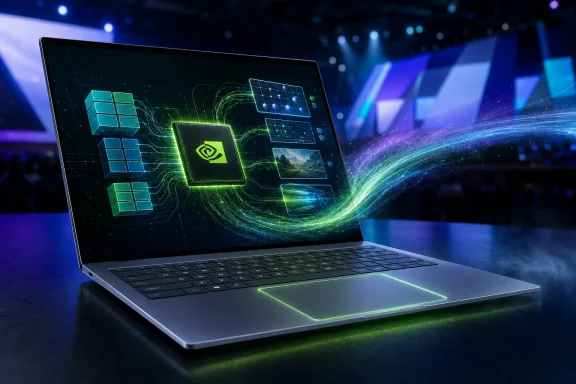 Surface Needs More Than Another Spec Bump
The blunt version is that Surface has become boring at exactly the moment Windows hardware needs to become interesting again. Microsoft has spent the last two years trying to persuade the industry that the PC is entering an AI-native era, but much of the physical hardware carrying that message has felt familiar: better NPUs, newer processors, thinner chassis, more Copilot branding, and the same basic laptop-tablet compromises.That is not the same as failure. The Snapdragon X-based Surface Pro and Surface Laptop were important machines because they gave Windows on Arm a mainstream Microsoft platform after years of half-steps, developer caveats, and Windows RT ghosts. They also showed that battery life and standby behavior on Windows laptops could finally feel less embarrassing next to Apple Silicon.
But Surface used to do more than validate a platform. It made the platform legible. The original Surface Pro forced a messy conversation about tablets that could also be real PCs. The Surface Book turned the detachable into a piece of hardware theater. The Surface Studio, commercially niche though it was, gave Windows a creator workstation that looked unlike anything else on the desk.
The recent Surface story has been more administrative. Microsoft has used it to demonstrate Copilot+ PC requirements, Arm compatibility, and enterprise-friendly device management. Those are necessary jobs, but they are not the kind of jobs that make enthusiasts argue in comment sections or make OEMs rethink their roadmap.
N1X, if it arrives in a Surface-class device, could change that because it would attack the weak point in the current Windows on Arm pitch. Qualcomm has done the hard work of making Arm plausible for mainstream Windows laptops. NVIDIA could make it aspirational.
The Rumor Is Really About Graphics, Not Arm
The headline number attached to N1X is the rumored 20-core Arm CPU, but the more disruptive piece is the RTX-class GPU architecture reportedly sitting beside it. Windows on Arm has long been judged by whether it can run Office, Edge, Teams, development tools, and a tolerable spread of legacy Win32 apps. That was a survival test. It was not a vision.NVIDIA brings a different kind of credibility to the table. In the Windows ecosystem, NVIDIA is not primarily a CPU company trying to earn trust. It is the GPU company PC gamers, workstation buyers, AI developers, and creative pros already optimize around, complain about, and ultimately buy in huge numbers. If its Arm SoC can deliver credible RTX graphics inside a laptop-class power envelope, the conversation shifts from “Can Windows on Arm run my apps?” to “Can this replace the kind of x86 laptop I actually wanted?”
That is a much harder and more interesting question. Qualcomm’s Snapdragon X chips helped Windows on Arm escape the low-expectation trap, but their graphics story has never had the same gravity as their efficiency story. For many users, especially those who do anything involving games, CUDA-adjacent workflows, local AI tinkering, GPU-accelerated creation, or external display-heavy setups, the GPU remains the difference between a nice laptop and a primary machine.
The rumor mill has been circling around a chip that sounds less like a MacBook Air competitor and more like an attempt to blur the line between an AI PC, a creator laptop, and a gaming-capable Windows machine. That does not mean an N1X Surface would be a handheld console, a Razer Blade replacement, or a mobile workstation killer on day one. Power limits, drivers, thermals, memory bandwidth, and software compatibility will decide the real product.
But the ambition is the point. Windows on Arm has already had enough “good enough for productivity” moments. What it has lacked is a halo.
Microsoft’s Timing Says as Much as the Teaser
The coordinated timing around Computex and Build is not subtle. Computex is where PC silicon companies and OEMs tell the hardware story. Build is where Microsoft tells developers why that hardware matters. If Microsoft and NVIDIA are lining up both stages, they are not merely launching a chip; they are trying to make a platform argument.That is why the “new era of PC” language matters, even if the phrase itself has been worn smooth by marketing departments. Microsoft already used the Copilot+ PC launch to define a new baseline for AI-capable Windows hardware. The problem is that a baseline is not a ceiling. NPUs may be necessary for local AI features, but they are not enough to make the PC feel newly powerful to users who buy machines for games, engineering tools, media work, or GPU-heavy experimentation.
An NVIDIA Arm PC could give Microsoft a bridge between two stories it has struggled to connect. On one side is the efficient, always-on, AI-assisted laptop narrative pushed by Copilot+ PCs. On the other is the existing high-performance Windows ecosystem dominated by x86 CPUs and discrete NVIDIA GPUs. N1X would suggest those worlds do not have to remain separate.
There is also a political dimension. Microsoft benefits when no single silicon vendor owns the future of Windows. Intel and AMD remain central to the PC, and Qualcomm has given Windows on Arm its first serious modern footing. NVIDIA’s arrival would give Microsoft another lever, another headline, and another way to pressure the ecosystem toward Arm-native apps and better power-performance tradeoffs.
For Surface, that matters because the brand is most useful when Microsoft is trying to bend the market. A normal Surface refresh can validate partner hardware. A strange Surface can provoke it.
The Surface Brand Was Built for This Kind of Risk
Surface has always worked best when it made Microsoft’s partners slightly uncomfortable. The first Surface devices were not instantly perfect, but they forced OEMs to stop treating Windows tablets as bargain-bin experiments. The Surface Pro did not invent the 2-in-1, but it gave the category a reference point. Even when Surface products were commercially modest, they often clarified what Microsoft wanted Windows hardware to become.That is why a rumored N1X Surface feels more natural than it might first appear. Microsoft does not need Surface to win the entire PC market. It needs Surface to demonstrate the shape of machines that partners may be too cautious to build first. If Dell, Lenovo, ASUS, HP, and others are also preparing NVIDIA Arm laptops, a Surface device could serve as the cleanest expression of the concept: the Windows team, the Surface team, and NVIDIA telling one story in one machine.
The risk is that Surface has not always handled silicon transitions gracefully. Windows RT poisoned the well for many users because the hardware looked like a Windows PC while the software reality felt like a trap. Later Arm Surfaces were more capable, but still carried the burden of explaining emulation, app compatibility, driver gaps, and performance tradeoffs.
The Snapdragon X generation improved that calculus, but it did not erase it. Admins still have to think about VPN clients, endpoint agents, printer drivers, niche utilities, line-of-business apps, virtualization, and weird old installers. Enthusiasts still ask what happens to games with anti-cheat systems, mods, overlays, and launchers. Developers still care about toolchains, containers, SDKs, and native builds.
An N1X Surface would therefore need to be sold with unusual honesty. If Microsoft markets it as magic, it will invite backlash. If it positions it as the next serious step in a long transition, it may earn the trust that earlier Windows on Arm attempts squandered.
NVIDIA Gives Windows on Arm the Missing Developer Bait
The underappreciated part of NVIDIA entering Windows on Arm is not the consumer laptop spec sheet. It is the developer incentive. Developers port and optimize when the market is large, when the hardware is desirable, or when the technical payoff is obvious. Ideally, all three.Qualcomm has helped with the first two, particularly by getting Arm PCs into mainstream laptop designs. NVIDIA could help with the third. A Windows Arm machine with serious RTX hardware creates a stronger reason to care about native performance, GPU acceleration, AI frameworks, media pipelines, and game compatibility. It gives software makers a more exciting target than “your app runs with better battery life.”
That does not mean CUDA suddenly becomes the universal answer on Windows Arm laptops, or that every game studio will immediately prioritize Arm-native Windows builds. But NVIDIA has a developer ecosystem that stretches across gaming, creative applications, AI, simulation, and workstation software. If the company is serious about consumer Windows Arm silicon, it brings not just hardware but pressure.
Microsoft needs that pressure. The Microsoft Store was not enough. The Copilot+ PC badge was not enough. Even improved emulation is not enough, because emulation is a bridge, not a destination. A platform transition only becomes durable when developers believe the new target has premium users worth serving.
That is where a Surface device can matter disproportionally. Surface buyers may not represent the whole market, but Surface announcements still set tone. Put NVIDIA silicon inside a Microsoft flagship and suddenly Windows on Arm looks less like an efficiency SKU and more like a strategic lane.
The Enterprise Pitch Is Still the Hardest One
For IT departments, the exciting part of N1X is also the suspicious part. A new architecture, a new silicon vendor in the Windows client CPU space, and a new GPU stack inside thin-and-light PCs all sound like support tickets waiting to happen. Enterprises do not buy “new era” messaging; they buy predictable deployment, long driver support, security baselines, repairability, firmware stability, and a clear answer when something breaks.That is especially true for Surface. Microsoft sells Surface into organizations that expect tight integration with Intune, Autopilot, Windows Update for Business, firmware servicing, and hardware support channels. If an N1X Surface appears, the enterprise question will not be whether it wins a benchmark. It will be whether it behaves like a manageable Windows endpoint.
The biggest compatibility risks are not the obvious apps everyone tests on stage. They are the boring ones. Security agents, DLP tools, legacy browser extensions, peripheral utilities, finance plugins, medical-device software, industrial control tools, scanner packages, and ancient line-of-business applications tend to define the real upgrade boundary inside organizations.
Microsoft has improved Windows on Arm compatibility substantially, and Arm-native app availability is far better than it was in the Windows RT era. Still, enterprises will not treat an NVIDIA Arm Surface as a drop-in replacement for every Intel or AMD fleet device until they have pilot data. That is not cynicism; it is operational memory.
The best early market for an N1X Surface may therefore be power users, developers, creators, and executives who can tolerate some edge-case friction in exchange for something genuinely new. The broader enterprise opportunity comes later, after the drivers harden, vendors certify, and the help desk stops treating Arm as an exception.
Gaming Is the Promise Microsoft Cannot Fake
If NVIDIA and Microsoft want to call this a new era of PC, gaming is the test they cannot dodge. Windows owns PC gaming culturally and commercially, but Windows on Arm has not. The reasons are familiar: anti-cheat compatibility, x86 translation overhead, graphics driver maturity, launcher assumptions, modding tools, and decades of PC gaming middleware that did not have Arm laptops in mind.NVIDIA changes the expectations immediately. If the badge says RTX, users will expect more than casual gaming and cloud streaming. They will expect DLSS support, stable drivers, broad game compatibility, external display sanity, and performance that makes sense against familiar GeForce laptops. That expectation may be unfair for a first-generation Arm SoC, but it is unavoidable.
This is where Microsoft has an opening and a trap. The opening is that Xbox, Game Pass, DirectX, Windows, and Surface all sit inside the same company. If Microsoft wants to make Windows on Arm gaming real, it has more internal leverage than anyone else in the industry. It can coordinate developer tools, compatibility guidance, storefront signals, and first-party testing.
The trap is pretending that branding solves engineering. A beautiful Surface with an impressive NVIDIA chip will not matter to gamers if major titles refuse to launch, if anti-cheat breaks multiplayer, or if performance varies wildly depending on whether a game is native, translated, or driver-optimized. PC gamers forgive heat and fan noise more readily than they forgive uncertainty.
That is why an N1X Surface, if it exists, may need to be careful about its identity. A creator-and-AI laptop that happens to game well is a safer first promise than a gaming Surface that has to answer for every unsupported title on Steam.
Intel and AMD Are Not Standing Still
The temptation is to frame N1X as NVIDIA and Microsoft riding in to rescue Windows from Intel and AMD. That is too simple. Intel’s recent laptop chips have improved efficiency and AI acceleration, AMD remains formidable in integrated graphics and mobile performance, and both companies have deep compatibility advantages that matter to buyers who just want Windows to behave like Windows.The x86 incumbents also have the benefit of inertia. Every enterprise image, every weird peripheral, every game with an ancient launcher, and every technician’s muscle memory starts from the assumption that Windows PCs run on x86. That installed base is not romantic, but it is powerful.
NVIDIA’s challenge is not merely to beat a benchmark. It has to make the trade worthwhile. Better GPU performance at a given power level would help. Excellent battery life would help. AI acceleration that developers actually use would help. A premium Surface design would help. But none of those individually erases the value of compatibility.
The real threat to Intel and AMD is not that one N1X laptop wins one category. It is that Windows becomes more architecturally plural without becoming fragmented. If Microsoft can make Arm and x86 feel like different implementation details rather than different worlds, then PC buyers can choose based on battery, graphics, thermals, price, and form factor instead of fear.
That is the long game. N1X would not end the x86 laptop era. It would signal that the Windows PC no longer has to be defined by it.
The Qualcomm Question Is Awkward but Healthy
A successful NVIDIA Arm PC would also complicate Qualcomm’s moment. Snapdragon X chips gave Windows on Arm credibility just as Microsoft needed a credible Copilot+ PC launch. Qualcomm did the unglamorous work of pushing battery life, responsiveness, and mainstream OEM adoption into the conversation. If NVIDIA now arrives with a flashier GPU story, Qualcomm may look like the opening act.But that would be an unfair reading. Platform transitions need multiple vendors, not one savior. Qualcomm’s strength is efficiency and integration across mainstream laptop designs. NVIDIA’s possible strength is performance, graphics, and developer gravity. Those are different lanes, and Windows benefits if both exist.
There is precedent in the x86 world. Intel and AMD do not have to win the same workloads in the same way for competition to improve the market. If Windows on Arm becomes a two-vendor or three-vendor ecosystem, developers have more reason to optimize and OEMs have more room to experiment.
Microsoft, in particular, should want Qualcomm to succeed even if NVIDIA steals the headlines. A Windows Arm market dependent on one chip vendor would be strategically fragile. A Windows Arm market with Qualcomm at the efficient mainstream end and NVIDIA at the performance halo end begins to look like an ecosystem.
That ecosystem is exactly what Surface should be used to dramatize.
A Lifeline Is Not the Same as a Cure
So, is N1X the lifeline Surface has been waiting for? Potentially, yes — but only if Microsoft treats it as a product philosophy rather than a stunt. Surface does not need a one-off curiosity. It needs a renewed reason for customers to believe Microsoft hardware is where Windows futures arrive first.That means the device around N1X matters as much as the chip. A lazy chassis with a hot new processor would be a missed opportunity. A truly considered Surface — with excellent cooling, repairable-enough construction, a strong display, sane ports, long battery life, and a clear target user — could make the silicon feel inevitable rather than experimental.
It also means Microsoft must resist overclaiming. The company’s recent AI PC messaging has sometimes sprinted ahead of user-visible reality. Recall’s troubled rollout showed that a “future of Windows” feature can become a trust problem when Microsoft misjudges privacy, clarity, or timing. N1X would face a different but related risk: the gap between stage-demo excitement and day-one reliability.
The best Surface launches have balanced aspiration with concrete utility. The kickstand was not a slogan. The detachable keyboard was not a white paper. The Surface Dial, even when niche, was at least an object you could understand. If N1X is to matter, Microsoft must show what users can do that they could not reasonably do before in the same form factor.
A new chip is only a lifeline if it pulls the product somewhere.
The Computex Surface Moment Has to Prove It Knows Its Audience
Microsoft’s challenge is that Surface now has several audiences that want different things. Enthusiasts want novelty and performance. IT pros want manageability and long support. Developers want native tooling and stable virtualization. Creators want displays, GPU acceleration, and quiet sustained performance. Ordinary buyers want a laptop that does not make them think about architecture.An N1X Surface cannot satisfy all of them equally, but it must know which ones it is courting first. If it is a creator laptop, say so. If it is a developer workstation for the Arm transition, say so. If it is a premium AI PC with unusually strong graphics, say so. The worst answer would be a fog of “new era” language that avoids the hard edges.
Those hard edges are where trust is built. Microsoft should be explicit about app compatibility, gaming expectations, battery claims, driver support, enterprise deployment, and whether the machine is meant to replace existing Surface Laptop Studio or Surface Pro-class hardware. It should explain what runs natively, what runs translated, and what still needs work.
This is especially important because Surface has disappointed some of its most loyal followers by leaving obvious product gaps. The Surface Studio has languished. The Surface Laptop Studio’s future has been uncertain. The Surface Go line has struggled to justify itself. The brand still has affection, but affection is not the same as momentum.
A bold NVIDIA Surface would not erase those gaps. It would, however, suggest that Microsoft has not forgotten how to make Surface interesting.
The Real Test Will Come After the Keynote
The keynote version of N1X will be easy to admire. The real version will be judged in device labs, IT pilots, Steam libraries, battery rundown tests, kernel driver edge cases, and developer workflows. That is where “new era” becomes either a platform shift or a marketing artifact.For Windows users, the most concrete promise is choice. A credible NVIDIA Arm PC would give buyers another path to long battery life and high performance without defaulting to Apple or accepting the familiar heat-and-noise tradeoffs of powerful x86 laptops. It could also push Intel, AMD, and Qualcomm to respond faster.
For administrators, the promise is more cautious. If Microsoft delivers enterprise-grade servicing and compatibility, N1X devices could eventually become attractive for certain mobile roles. If it does not, they will remain executive toys and developer pilots.
For developers, the message is louder. Windows on Arm is no longer just about making sure your app does not break on a thin laptop. It may soon be about reaching premium machines with NVIDIA graphics and Microsoft’s full platform attention.
For Surface, the stakes are existential in a softer sense. The brand is not about to vanish, but relevance can fade before revenue does. N1X offers Microsoft a way to make Surface part of the next Windows argument rather than a footnote to it.
The Signal Inside Microsoft’s Sparkly Teaser
The rumor stack is thick enough to take seriously, but still thin enough to handle carefully. Until Microsoft and NVIDIA put names, specs, devices, ship dates, and prices on stage, N1X remains a reported product rather than a proven platform. That distinction matters, especially for readers who have lived through too many Windows hardware reinventions that looked cleaner in slides than in support queues.Still, the concrete implications are already visible.
- Microsoft and NVIDIA appear to be coordinating a PC announcement around Computex 2026 and Microsoft Build, with the public messaging centered on a “new era of PC.”
- The rumored N1X chip is widely described as an Arm-based NVIDIA SoC with a 20-core CPU and RTX-class integrated graphics, though final shipping specifications remain unconfirmed.
- A Surface device using N1X would give Microsoft a more ambitious Windows on Arm flagship than the current productivity-focused Snapdragon X machines.
- The biggest near-term barriers are software compatibility, driver maturity, gaming support, thermals, enterprise certification, and honest messaging.
- If NVIDIA delivers credible graphics performance in an efficient Windows Arm laptop, it could force the entire PC market to treat Arm as a premium architecture rather than a battery-life niche.
- Surface will only benefit if Microsoft builds a complete, purposeful device around the chip instead of using it as a one-cycle publicity engine.
References
- Primary source: Windows Central
Published: Sun, 31 May 2026 14:00:00 GMT
Once left in the dust, Surface could be on the forefront of "a new era of PC" | Windows Central
Microsoft and NVIDIA teased a major hardware reveal that points to the long‑rumored N1X chip and a possible shift in Surface’s trajectory.www.windowscentral.com - Related coverage: axios.com
Microsoft, Dell to debut Nvidia-powered laptops
The chips will appear in Microsoft Surface computers and PCs from other manufacturers.www.axios.com
- Related coverage: techradar.com
10 products that launched at Microsoft Build — and what happened to them | TechRadar
From Windows 8 to Copilot, here’s everything that was born at Buildwww.techradar.com - Related coverage: techspot.com
Nvidia's long-rumored N1X Arm chip pairs a 20-core CPU with RTX graphics | TechSpot
Nvidia appears ready to make its long-anticipated move into consumer Arm PCs after years of speculation and sporadic leaks. A report from DigiTimes Taiwan indicates that the...www.techspot.com - Related coverage: tomshardware.com
Nvidia and Microsoft tease "a new era of PC" ahead of Computex 2026 — coordinated social media posts could indicate that rumored N1X laptops will be Windows on Arm systems | Tom's Hardware
An Nvidia-powered Arm PC running Windows could inspire new local AI experiences beyond Copilot+.www.tomshardware.com - Official source: news.microsoft.com
- Related coverage: ebisuda.net
Microsoft、謎の新型Surfaceをティーズ――Computexで「PCの新時代」を予告 | ebisuda.net
MicrosoftがComputex前にカーブディスプレイらしき新Surface画像を公開、NvidiaのArm新チップとの連携も濃厚にwww.ebisuda.net
- Related coverage: tweaktown.com
NVIDIA and Microsoft tease 'a new era of PC' ahead of Computex, and it's hard not to link this to the fabled N1X chip
N1X sightings have been piling up for months, and with Windows 12 ruled out, the new era of PC is almost certainly NVIDIA chips and new Surface hardware. www.tweaktown.com
- Related coverage: windowslatest.com
Report: Nvidia prepares multiple Arm-based chips for 2026 and 2027, first-gen could debut with Windows 11 26H1
NVIDIA is still planning a Windows on Arm chip, with N1X-based laptops expected as early as Q1 2026. More CPUs are planned. www.windowslatest.com
- Official source: microsoft.com
- Official source: info.microsoft.com
