

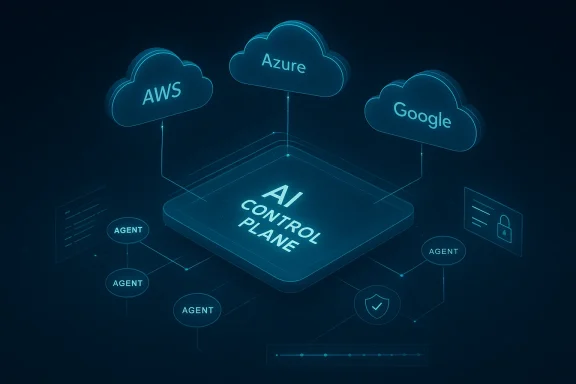
Pervaziv AI’s Cortex 3.5 is more than another incremental enterprise AI update. It is a clear attempt to turn multicloud complexity into a single, governed execution surface, with support now extending across AWS, Microsoft Azure, and Google Cloud. The company is positioning the release as a move from assistant-style AI toward agentic orchestration, where AI does not merely answer questions but helps execute work across infrastructure, developer tools, and security systems. That matters because the enterprise market is rapidly shifting from “Can AI help?” to “Can AI act safely, across systems, at scale?”
Pervaziv AI is entering a crowded but fast-growing category: enterprise AI platforms that promise to connect cloud operations, code workflows, and security operations under one control layer. The company’s own site already frames Cortex as a “Cortex Coding Agent” and DevSecOps suite, with recent release notes and product pages emphasizing secure AI infrastructure for modern engineering teams Azure and Google Cloud support to its earlier AWS footprint, while also increasing the number of AI agents, enterprise connectors, and operational capabilities described in the launch materials.
That expansion is strategically important because the enterprise cloud estate is rarely neat. Most organizations do not live in a single-vendor world; they run mixed estates shaped by acquisitions, line-of-business preferences, regulated workloads, legacy dependencies, and cost optimization. In that environment, a tool that can reason across cloud providers without forcing a rip-and-replace migration can be attractive. The pitch is not just that Cortex understands the enterprise; it is that it understands the enterprise as it actually exists.
The framing also reflects a broader industry shift from static automation toward agentic systems. The language around “orchestration,” “control layer,” “auditable workflows,” and “real-time context” places Cortex 3.5 in the same conceptual lane as other recent enterprise platforms that are trying to move AI closer to execution rather than analysis. That direction is consistent with what we’re seeing in adjacent enterprise AI and security stories: customers want fewer point solutions and more governed systems that can connect identity, data, workflows, and enforcement .
Pervaziv’s announcement also arrives a leaning harder into multicloud and orchestration narratives. Recent WindowsForum coverage of Oracle’s multicloud moves highlighted how enterprises increasingly treat coexistence as a feature, not a compromise . That same logic is now being applied one layer up, where AI platforms are expected sprawl rather than pretend it does not exist. In that sense, Cortex 3.5 is not just a product release; it is a bet on the architecture of the next enterprise operating model.
Cortex 3.5 appears to be addressing that cohesion problem directly. Pervaziv AI’s product materials already describe Cortex as a secure AI platform for code review, vulnerability detection, remediation, and multi-cloud software delivery, and the company has been iterating steadily through earlier releases such as Cortex 2.5 and Cortex 2.7 . The new release broadens the platform from a primarily AWS-centered story into a more explicit multiclou.because enterprise AI adoption has moved beyond the “chatbot on top” phase. Buyers increasingly want context-aware systems that can read enterprise state, understand permissions, and take actions inside real tools. The more ambitious vendors are now trying to own the execution plane—the layer that connects prompts to approvals, actions, and audit trails. Pervaziv’s language around control layers, secure execution, and traceability suggests it wants Cortex to be one of those execution planes rather than just another developer assistant.
The platform also sits in a competitive lane that includes cloud-native security vendors, AI governance vendors, and workflow automation platforms. Recent WindowsForum coverage of Microsoft’s agentic security push shows how much emphasis major vendors are placing on governance, identity, and auditability as AI becomes more autonomous . Pervaziv is clearly borrowing from that playbook, but with a narrower focus on engineering and security operations teams who need cloud context an also an important historical lesson here. Enterprise software often succeeds when it makes complexity feel boring. The best infrastructure products are not those that dazzle in a demo, but those that remove friction in production. If Cortex 3.5 can truly unify workflow, cloud context, and security execution across AWS, Azure, and Google Cloud, it could become useful in the way that enterprise infrastructure products are useful: quietly, repeatedly, and deeply.
Cortex 3.5’s messaging suggests the company wants to move into that second category. The release says the platform can securely access infrastructure context, orchestrate workflows, and automate operations across major cloud providers through a unified AI control layer. That is a bigger claim than simple productivity enhancement. It implies the system is intended to sit above the individual applications and become part of the enterprise’s operating fabric.
Cortex 3.5’s promise is that it can span those differences without losing control. That is ambitious. It is also exactly where the value is if it works.
Azure support follows a similar pattern. The launch materials cite support for Azure Virtual Machines, AKS, Functions, App Service, Azure SQL Database, Cosmos DB, Azure AI Search, Azure OpenAI Service, Blob Storage, and network primitives like VNet and NSGs . That matters because Azure is often where enterprise AI and enterprise governance converge. A platform that can operate in that environment while staying security-aware has a better chance of fitting into real-whe company is also emphasizing the scale of the release in more generalized terms, saying Cortex 3.5 brings 40+ AI agents, 12+ enterprise connectors, and 300+ operational capabilities. Those counts should be read cautiously; feature totals are marketing language, not proof of enterprise maturity. Still, they signal an effort to present Cortex as a broad orchestration environment rather than a narrow point product.
That is why connector breadth is promising, but connector behavior is the real test. If Cortex can safely coordinate actions across GitHub, Azure DevOps, Jira, Confluence, Slack, Microsoft 365, Google Workspace, and cloud control planes, it moves closer to being a genuine control layer.
This is where the distinction between assistance and orchestration becomes critical. A helpful assistant increases productivity. An orchestrator changes how work gets done. If Cortex can coordinate cloud operations, surface the right enterprise context, and act through guarded workflows, it becomes a kind of software control plane. That is the real prize in enterprise AI right now.
The challenge, of course, is trust. The more autonomy a system gets, the more important it becomes to know what it saw, what it decided, and why it acted. The WindowsForum coverage of Microsoft’s own agentic security architecture is a useful reminder that major platform vendors are pushing hard on observability, identity, and governance for this exact reason . Pervaziv’s emphasis on auditable execution suggests it understands the same problem.
Cortex 3.5’s architecture appears to be built around those concerns. The company highlights auditable workflows, secure execution, and integration with enterprise systems. Those are the kinds of ingredients that move an agentic product from prototype to production.
The launch materials say Cortex supports secure code development, vulnerability assessment, infrastructure automation, cross-platform integration, and auditable execution. Those categories map directly to the concerns of engineering and security teams. If a platform can help write code, identify risks, and manage cloud operations while keeping actions traceable, it speaks the language of enterprise buyers who have to answer to compliance, audit, and incident response.
This security framing is especially important in multicloud environments. The more clouds you use, the more places a mistake can happen. Identity boundaries can drift. Secrets can be exposed. Network assumptions can fail. Tooling can fragment. In that context, an AI platform that centralizes action while preserving traceability can be appealing, provided it does not become a new source of risk itself.
The external context is also helpful here. Microsoft’s recent security messaging has emphasized the need to defend not only data and endpoints, but also agents, prompts, and orchestration layers . That broader security conversation validates the basic premise that Pervaziv is betting on: as AI becomes operational, security must become structural.
Enterprises use multiple clouds for reasons that are rarely ideological. Sometimes they need the best data service in one cloud and the best AI service in another. Sometimes they have legacy investments that cannot move quickly. Sometimes they need resilience, negotiation leverage, or regulatory flexibility. Whatever the reason, the result is the same: the enterprise estate is fragmented, and any credible AI control layer has to deal with that fragmentation.
Pervaziv’s decision to support AWS, Azure, and Google Cloud also positions Cortex against a class of tools that assume one cloud is the center of gravity. In practice, many customers want the opposite. They want a neutral operational layer that can reduce complexity without forcing them deeper into one vendor’s architecture.
That is where the competitive logic gets interesting. Recent coverage of Oracle’s multicloud strategy showed that coexistence can become a strength rather than a weakness when a vendor is indispensable in the middle of the architecture . Pervaziv is making a similar bet, but at the AI orchestration layer instead of the database or connectivity layer.
That puts Pervaziv in the same conversation as cloud security vendors, AI governance vendors, DevOps automation platforms, and emerging agentic systems. Each of those categories overlaps with part of Cortex’s pitch. What differentiates Pervaziv is the claim that it can unify those layers under one control surface, rather than leaving them as separate tools with separate policies.
This is also where the company’s enterprise messaging matters. The more it sounds like a generic AI startup, the less credibility it will have in large accounts. The more it sounds like an infrastructure company with security discipline, the more likely it is to be evaluated seriously. Enterprise buyers are not buying hype; they are buying operational confidence.
The competitive pressure will likely come from two directions. First, large platform vendors will continue to expand their own agentic and governance layers, making it harder for smaller companies to justify a separate control plane. Second, best-of-breed security and DevOps vendors will argue that no single platform can do all of this safely. Pervaziv will need to show that breadth does not dilute reliability.
If Cortex can genuinely pull information from GitHub, Azure DevOps, Jira, Confluence, Slack, Microsoft 365, and Google Workspace while also understanding cloud state, it could reduce a significant amount of context switching. That would make it valuable not because it is flashy, but because it removes friction from everyday engineering work. That kind of friction reduction is often where enterprise software wins.
The release also suggests an ambition to move upstream in the software lifecycle. Rather than waiting for developers to finish work and then handing it to a separate security tool, Cortex wants to embed security and infrastructure awareness earlier. That “shift-left” posture has been common in security for years, but AI may finally make it more operationally practical.
There is still a distinction between helping a developer and directing a developer. Cortex 3.5 seems to sit somewhere in between. It does not appear to be trying to replace engineering judgment; it is trying to augment it with better context and faster execution. That is likely the right positioning, because enterprises remain cautious about fully autonomous systems in critical workflows.
The second thing to watch is how Pervaziv handles the governance conversation. If the company can demonstrate strong identity controls, safe execution boundaries, and useful logs, it will be much easier to win trust in regulated or high-stakes environments. If not, the platform risks being seen as a sophisticated demo rather than a dependable operating layer.
The third thing to watch is the competitive response from cloud providers and adjacent AI platforms. The more the market embraces agentic orchestration, the more every vendor will claim to offer a control layer. The real differentiator will be whether those claims survive contact with complex enterprise reality.
Source: AiThority Pervaziv AI Ushers Multicloud Environments into Agentic AI Era across AWS, Microsoft Azure, Google Cloud with Cortex 3.5
 Overview
Pervaziv AI is entering a crowded but fast-growing category: enterprise AI platforms that promise to connect cloud operations, code workflows, and security operations under one control layer. The company’s own site already frames Cortex as a “Cortex Coding Agent” and DevSecOps suite, with recent release notes and product pages emphasizing secure AI infrastructure for modern engineering teams Azure and Google Cloud support to its earlier AWS footprint, while also increasing the number of AI agents, enterprise connectors, and operational capabilities described in the launch materials.That expansion is strategically important because the enterprise cloud estate is rarely neat. Most organizations do not live in a single-vendor world; they run mixed estates shaped by acquisitions, line-of-business preferences, regulated workloads, legacy dependencies, and cost optimization. In that environment, a tool that can reason across cloud providers without forcing a rip-and-replace migration can be attractive. The pitch is not just that Cortex understands the enterprise; it is that it understands the enterprise as it actually exists.
The framing also reflects a broader industry shift from static automation toward agentic systems. The language around “orchestration,” “control layer,” “auditable workflows,” and “real-time context” places Cortex 3.5 in the same conceptual lane as other recent enterprise platforms that are trying to move AI closer to execution rather than analysis. That direction is consistent with what we’re seeing in adjacent enterprise AI and security stories: customers want fewer point solutions and more governed systems that can connect identity, data, workflows, and enforcement .
Pervaziv’s announcement also arrives a leaning harder into multicloud and orchestration narratives. Recent WindowsForum coverage of Oracle’s multicloud moves highlighted how enterprises increasingly treat coexistence as a feature, not a compromise . That same logic is now being applied one layer up, where AI platforms are expected sprawl rather than pretend it does not exist. In that sense, Cortex 3.5 is not just a product release; it is a bet on the architecture of the next enterprise operating model.
Background
The rise of multicloud was initially driven by risk management and bargaining power. Enterprises wanted to avoid lock-in, spread workloads across providers, and choose services based on technical fit rather than vendor loyalty. Over time, that strategy became less of a hedge and more of a default operating reality. Once companies started placing identity services, analytics stacks, developer tooling, and customer workloads across multiple clouds, they discovered a new challenge: cohesion.Cortex 3.5 appears to be addressing that cohesion problem directly. Pervaziv AI’s product materials already describe Cortex as a secure AI platform for code review, vulnerability detection, remediation, and multi-cloud software delivery, and the company has been iterating steadily through earlier releases such as Cortex 2.5 and Cortex 2.7 . The new release broadens the platform from a primarily AWS-centered story into a more explicit multiclou.because enterprise AI adoption has moved beyond the “chatbot on top” phase. Buyers increasingly want context-aware systems that can read enterprise state, understand permissions, and take actions inside real tools. The more ambitious vendors are now trying to own the execution plane—the layer that connects prompts to approvals, actions, and audit trails. Pervaziv’s language around control layers, secure execution, and traceability suggests it wants Cortex to be one of those execution planes rather than just another developer assistant.
The platform also sits in a competitive lane that includes cloud-native security vendors, AI governance vendors, and workflow automation platforms. Recent WindowsForum coverage of Microsoft’s agentic security push shows how much emphasis major vendors are placing on governance, identity, and auditability as AI becomes more autonomous . Pervaziv is clearly borrowing from that playbook, but with a narrower focus on engineering and security operations teams who need cloud context an also an important historical lesson here. Enterprise software often succeeds when it makes complexity feel boring. The best infrastructure products are not those that dazzle in a demo, but those that remove friction in production. If Cortex 3.5 can truly unify workflow, cloud context, and security execution across AWS, Azure, and Google Cloud, it could become useful in the way that enterprise infrastructure products are useful: quietly, repeatedly, and deeply.
The move from automation to orchestration
Automation is task-specific. Orchestration is system-specific. That distinction is central to understanding why Cortex 3.5 is noteworthy. A tool that can create a ticket or generate code is helpful; a tool that can coordinate actions across identity, infrastructure, source control, collaboration, and cloud services is more strategically valuable.Cortex 3.5’s messaging suggests the company wants to move into that second category. The release says the platform can securely access infrastructure context, orchestrate workflows, and automate operations across major cloud providers through a unified AI control layer. That is a bigger claim than simple productivity enhancement. It implies the system is intended to sit above the individual applications and become part of the enterprise’s operating fabric.
Why multicloud makes orchestration harder
Multicloud sounds flexible, but it is operationally messy. Each cloud has its own IAM model, networking constructs, monitoring surfaces, APIs, and service conventions. In practice, that means any orchestration layer must normalize a lot of subtle differences before it can safely act. That is why enterprise buyers should care about governance, connector depth, and auditability as much as they care about feature count.Cortex 3.5’s promise is that it can span those differences without losing control. That is ambitious. It is also exactly where the value is if it works.
- Enterprises want fewer swivel-chair workflows.
- Security teams want reproducible actions.
- Platform teams want consistent abstractions.
- Developers want context inside the tools they already use.
- Leaders want speed without giving up control.
What Cortex 3.5 Adds
The most visible change in Cortex 3.5 is its expanded cloud coverage. According to the launch materials, the platform now supports a broad set of services in Google Cloud and Microsoft Azure, in addition to existing AWS functionality . That means Pervaziv is no longer trying to prove its worth in a single-cloud environment. Instead, it is making the case that the same AI layer can span the three major cloud ecosystems ente Google Cloud list is especially broad. It spans compute and containers, data and analytics, AI/ML, storage and databases, networking and security, operations, and developer tools. That scope suggests the company is trying to provide practical operational reach rather than a symbolic integration checkbox. If an enterprise can interrogate resources, understand state, and initiate actions across services such as BigQuery, GKE, Vertex AI, Cloud Logging, IAM, and Cloud Build from one system, the platform begins to resemble an operational console rather than a chatbot.Azure support follows a similar pattern. The launch materials cite support for Azure Virtual Machines, AKS, Functions, App Service, Azure SQL Database, Cosmos DB, Azure AI Search, Azure OpenAI Service, Blob Storage, and network primitives like VNet and NSGs . That matters because Azure is often where enterprise AI and enterprise governance converge. A platform that can operate in that environment while staying security-aware has a better chance of fitting into real-whe company is also emphasizing the scale of the release in more generalized terms, saying Cortex 3.5 brings 40+ AI agents, 12+ enterprise connectors, and 300+ operational capabilities. Those counts should be read cautiously; feature totals are marketing language, not proof of enterprise maturity. Still, they signal an effort to present Cortex as a broad orchestration environment rather than a narrow point product.
Connector depth matters more than connector count
In enterprise software, a connector is only valuable if it actually supports the workflow that matters. A shallow integration can make a demo look impressive while leaving production teams with manual gaps. What buyers will care about is whether Cortex can handle the edge cases: permission mismatches, naming differences, context loss, and approval routing.That is why connector breadth is promising, but connector behavior is the real test. If Cortex can safely coordinate actions across GitHub, Azure DevOps, Jira, Confluence, Slack, Microsoft 365, Google Workspace, and cloud control planes, it moves closer to being a genuine control layer.
The platform’s core proposition
Pervaziv is not selling one feature. It is selling a stack. That stack includes code generation, vulnerability analysis, infrastructure automation, and execution traceability, all under a security-first design. The company’s older messaging around secure AI coding and DevSecOps makes the new release feel like an expansion of a coherent roadmap rather than a one-off repositioning .- More cloud coverage increases utility.
- More agents increase task diversity.
- More connectors improve workflow reach.
- More capabilities raise the platform’s surface area.
- More surface area also raises the governance burdenc agentic AI gets used in wildly different ways across the industry, so it is worth being precise. In the strongest sense, agentic AI means a system that can reason over context, choose actions, and execute tasks through tools and permissions. That is a far more consequential claim than “AI can draft a message” or “AI can summarize a page.”
This is where the distinction between assistance and orchestration becomes critical. A helpful assistant increases productivity. An orchestrator changes how work gets done. If Cortex can coordinate cloud operations, surface the right enterprise context, and act through guarded workflows, it becomes a kind of software control plane. That is the real prize in enterprise AI right now.
The challenge, of course, is trust. The more autonomy a system gets, the more important it becomes to know what it saw, what it decided, and why it acted. The WindowsForum coverage of Microsoft’s own agentic security architecture is a useful reminder that major platform vendors are pushing hard on observability, identity, and governance for this exact reason . Pervaziv’s emphasis on auditable execution suggests it understands the same problem.
What makes an agent enterprise-ready
An enterprise agent is not judged by raw creativity. It is judged by reliability under policy. That means it needs boundaries, logging, and predil right systems without becoming a privilege escalation risk.Cortex 3.5’s architecture appears to be built around those concerns. The company highlights auditable workflows, secure execution, and integration with enterprise systems. Those are the kinds of ingredients that move an agentic product from prototype to production.
Why orchestration is the new control point
The market is increasingly converging on a simple idea: whoever controls orchestration controls enterprise AI adoption. Models will matter, but the layer that links models to tools, identities, and policies will matter more in production. That is why control planes are suddenly everywhere in enterprise AI conversations.- Orchestration creates repeatability.
- Governance creates trust.
- Traceability enables audits.
- Context reduces hallucinated actions.
- Policy prevents overreach.
Security as the Differentiator
Pervaziv is clearly leaning on security-first design as one of its primary differentiators. That is smart, because enterprise AI buyers are not looking for raw novelty anymore. They are looking for systems that can safely touch sensitive code, infrastructure, and operational data without creating new risks.The launch materials say Cortex supports secure code development, vulnerability assessment, infrastructure automation, cross-platform integration, and auditable execution. Those categories map directly to the concerns of engineering and security teams. If a platform can help write code, identify risks, and manage cloud operations while keeping actions traceable, it speaks the language of enterprise buyers who have to answer to compliance, audit, and incident response.
This security framing is especially important in multicloud environments. The more clouds you use, the more places a mistake can happen. Identity boundaries can drift. Secrets can be exposed. Network assumptions can fail. Tooling can fragment. In that context, an AI platform that centralizes action while preserving traceability can be appealing, provided it does not become a new source of risk itself.
The external context is also helpful here. Microsoft’s recent security messaging has emphasized the need to defend not only data and endpoints, but also agents, prompts, and orchestration layers . That broader security conversation validates the basic premise that Pervaziv is betting on: as AI becomes operational, security must become structural.
Security features buyers will scrutinize
The security story will live or die on implementation details. Buyers will ask how permissions are enforced, how actie whether agent behavior can be replayed during an investigation. Those are not optional questions; they are the difference between a useful platform and a liability.The hidden cost of security-first AI
Security-first design is not free. It often slows product development, increases integration complexity, and adds friction to workflows. But that friction is exactly what enterprise buyers may want. They would rather have a system that is slightly slower and much safer than a system that is fast but opaque.- Audit logs build trust.
- Least-privilege controls reduce blast radius.
- Policy-aware execution lowers compliance risk.
- Deterministic workflows support investigations.
- Reproducibility matters in regulated environments.
Multicloud as a Business Reality
One of the smartest parts of the Cortex 3.5 announcement is that it does not try to pretend multicloud is a transitional state. It treats multicloud as the normal condition of modern enterprise IT. That is a better read of the market than the old “choose one cloud and standardize forever” philosophy.Enterprises use multiple clouds for reasons that are rarely ideological. Sometimes they need the best data service in one cloud and the best AI service in another. Sometimes they have legacy investments that cannot move quickly. Sometimes they need resilience, negotiation leverage, or regulatory flexibility. Whatever the reason, the result is the same: the enterprise estate is fragmented, and any credible AI control layer has to deal with that fragmentation.
Pervaziv’s decision to support AWS, Azure, and Google Cloud also positions Cortex against a class of tools that assume one cloud is the center of gravity. In practice, many customers want the opposite. They want a neutral operational layer that can reduce complexity without forcing them deeper into one vendor’s architecture.
That is where the competitive logic gets interesting. Recent coverage of Oracle’s multicloud strategy showed that coexistence can become a strength rather than a weakness when a vendor is indispensable in the middle of the architecture . Pervaziv is making a similar bet, but at the AI orchestration layer instead of the database or connectivity layer.
Why neutrality is valuable
Neutrality is not the same as indifference. A neutral control layer can still be opinionated about policy, access, and workflow. It simply avoids forcing customers into a single-cloud worldview. That can be very ses with diverse estates.The interoperability challenge
Interoperability is where many platforms stumble. A vendor can claim cross-cloud support, but if the controls do not behave consistently across environments, the user experience collapses. That means Pervaziv will need to prove more than compatibility; it will need to prove coherence.- Cloud services differ in naming and structure.
- IAM policies are not interchangeable.
- Logging and monitoring semantics vary.
- Network constructs do not map one-to-one.
- Operational trust requires consistent behavior.
The Competitive Landscape
Cortex 3.5 enters a market that is increasingly crowded with AI platforms, security tooling, and workflow orchestration products. The interesting question is not whether the space is competitive; it is how the category is being redefined. Buyers increasingly want platforms that can cross the boundaries between development, security, and operations.That puts Pervaziv in the same conversation as cloud security vendors, AI governance vendors, DevOps automation platforms, and emerging agentic systems. Each of those categories overlaps with part of Cortex’s pitch. What differentiates Pervaziv is the claim that it can unify those layers under one control surface, rather than leaving them as separate tools with separate policies.
This is also where the company’s enterprise messaging matters. The more it sounds like a generic AI startup, the less credibility it will have in large accounts. The more it sounds like an infrastructure company with security discipline, the more likely it is to be evaluated seriously. Enterprise buyers are not buying hype; they are buying operational confidence.
The competitive pressure will likely come from two directions. First, large platform vendors will continue to expand their own agentic and governance layers, making it harder for smaller companies to justify a separate control plane. Second, best-of-breed security and DevOps vendors will argue that no single platform can do all of this safely. Pervaziv will need to show that breadth does not dilute reliability.
Why category definition matters
In fast-moving markets, the winner often helps define the category before others do. If Cortex becomes known as a secure multicloud AI control layer for engineering and security teams, it gets a clearer story. If it is seen as just another AI productivity tool, it will have a harder time standing out.The rival response
Expect incumbents and adjacent vendors to respond with language around governance, observability, and policy. That does not mean Cortex will be eclipsed; it means the market is converging on a shared vocabulary. The real differentiator will be execution.- Platform vendors will emphasize native integration.
- Security vendors will emphasize visibility and control.
- Cloud providers will emphasize trust within their ecosystems.
- DevOps vendors will emphasize workflow efficiency.
- Buyers will compare actual operational fit, not slogans.
Enterprise vs consumer implications
For consumer users, all this may sound abstract. For enterprises, it is immediately practical. Consumer AI is largely about convenience and novelty. Enterprise AI is about policy, traceability, and lower operational risk. Cortex 3.5 is very clearly in the second camp.Developer Workflow Impact
For software engineering teams, the appeal of Cortex 3.5 is that it appears to collapse several separate workflows into one governed environment. Code review, infrastructure context, security checks, and operational automation often live in different tools, managed by different teams, with different degrees of visibility. That fragmentation slows delivery and increases the odds that important context gets lost.If Cortex can genuinely pull information from GitHub, Azure DevOps, Jira, Confluence, Slack, Microsoft 365, and Google Workspace while also understanding cloud state, it could reduce a significant amount of context switching. That would make it valuable not because it is flashy, but because it removes friction from everyday engineering work. That kind of friction reduction is often where enterprise software wins.
The release also suggests an ambition to move upstream in the software lifecycle. Rather than waiting for developers to finish work and then handing it to a separate security tool, Cortex wants to embed security and infrastructure awareness earlier. That “shift-left” posture has been common in security for years, but AI may finally make it more operationally practical.
There is still a distinction between helping a developer and directing a developer. Cortex 3.5 seems to sit somewhere in between. It does not appear to be trying to replace engineering judgment; it is trying to augment it with better context and faster execution. That is likely the right positioning, because enterprises remain cautious about fully autonomous systems in critical workflows.
How engineering teams may use it
The most plausible use cases are the ones that save time without taking over decision-making. For example, a platform team might use Cortex to retrieve infrastructure state before making changes, or a security team might use it to evaluate remediation options. Those are practical applications that fit current enterprise comfort levels.Where adoption may be fastest
Adoption will likely be strongest in organizations already living in multicloud environments with mature DevOps and security practices. These are the buyers who feel the pain most acutely and are most likely to value a unified control layer. Smaller teams may like the idea, but larger and more complex estates will feel the value first.- Faster incident triage.
- Better cloud-state visibility.
- Fewer manual handoffs.
- More consistent security checks.
- Less tool fragmentation.
Strengths and Opportunities
Cortex 3.5 has a real opportunity because it is speaking to a genuine enterprise pain point with a plausible architectural answer. The product is not trying to invent a new problem; it is trying to make multicloud operations and secure AI workflows easier to govern. That makes the story credible in a way many AI announcements are not. It also gives Pervaziv a chance to build trust with engineering, platform, and security teams at the same time.- Multicloud relevance across AWS, Azure, and Google Cloud.
- Security-first framing that fits enterprise buying criteria.
- Cross-tool integration with development and collaboration systems.
- Auditable execution that supports compliance and investigations.
- Agentic orchestration that goes beyond basic assistant workflows.
- Workflow consolidation that may reduce tool sprawl.
- Context-aware automation that can improve speed without removing control.
Risks and Concerns
The biggest risk is that the platform’s ambition could outrun its real-world reliability. Multicloud orchestration is difficult, and every added connector increases the chance of edge cases, permission mismatches, and workflow failures. Enterprise buyers will not forgive a product that sounds powerful but behaves inconsistently under pressure. They will especially not forgive one that creates opaque automation in security-sensitive environments.- Integration complexity may rise faster than usability.
- Governance claims will need strong real-world proof.
- Feature breadth could dilute product depth.
- Multicloud support may prove uneven across services.
- Agent autonomy may worry security and compliance teams.
- Marketing scale claims may outpace customer validation.
- Competition from hyperscalers could compress differentiation.
Looking Ahead
The most important thing to watch is whether Cortex 3.5 shows up in production environments, not just in product pages. Enterprise AI is entering a phase where proof matters more than promise. Customers will want to see whether the platform can actually coordinate secure actions across clouds, reproduce those actions for audit purposes, and keep behavior consistent as environments grow more complex.The second thing to watch is how Pervaziv handles the governance conversation. If the company can demonstrate strong identity controls, safe execution boundaries, and useful logs, it will be much easier to win trust in regulated or high-stakes environments. If not, the platform risks being seen as a sophisticated demo rather than a dependable operating layer.
The third thing to watch is the competitive response from cloud providers and adjacent AI platforms. The more the market embraces agentic orchestration, the more every vendor will claim to offer a control layer. The real differentiator will be whether those claims survive contact with complex enterprise reality.
- Production deployments in real enterprise estates.
- Evidence of auditability and replayable actions.
- Expansion of connectors without loss of coherence.
- Customer validation in security and engineering workflows.
- Competitive positioning against native cloud and security platforms.
Source: AiThority Pervaziv AI Ushers Multicloud Environments into Agentic AI Era across AWS, Microsoft Azure, Google Cloud with Cortex 3.5
