

On June 18, 2026, IBM published an analysis arguing that retail cyberattacks increasingly threaten not just stores, shipments, and revenue, but the accumulated customer trust that brands rely on to survive disruption. That is the right frame, and it is more important than the usual breach postmortem arithmetic. Retail security has become a reputational systems problem, where a login page, a warehouse API, a tax workflow, and an AI shopping agent all sit inside the same promise to the customer. The industry’s next competitive divide will not be between retailers that use more technology and those that use less, but between those that can make technology feel trustworthy and those that merely make it feel fast.
Retailers have spent the last decade flattening every possible bit of friction out of commerce. One-click checkout, saved cards, loyalty apps, curbside pickup, real-time inventory, marketplace integrations, and personalized offers all exist to make buying feel almost automatic. The trouble is that attackers love automatic systems too.
IBM’s warning lands because retail is not a neat, self-contained software business. It is a messy braid of suppliers, logistics companies, payment providers, manufacturers, tax systems, customer identity platforms, e-commerce portals, marketing clouds, and increasingly AI-driven decision engines. A compromise in one strand can tug on the whole rope.
That is why the old distinction between “a cyber incident” and “an operational disruption” has become inadequate. If a retailer cannot confirm where goods are, cannot trust the integrity of a supplier feed, cannot process payments, or cannot safely authenticate customers, the breach is no longer an IT event. It is a failure of the brand’s basic promise.
For luxury retailers, that promise is particularly unforgiving. Brands such as Hermès and Louis Vuitton do not sell only leather, fragrance, garments, or accessories. They sell continuity, scarcity, provenance, and the idea that every step from workshop to boutique has been controlled. A cyberattack does not need to expose millions of customer records to damage that story; it only needs to make the machinery behind the story look careless.
The wider retail market faces the same problem in less theatrical form. Grocery chains, electronics sellers, pharmacies, department stores, and direct-to-consumer brands all ask customers to believe that the item shown online exists, the payment process is safe, the delivery estimate is real, and the account holding their data will not become an attacker’s beachhead. That belief is now a core retail asset.
IBM’s 2026 X-Force reporting says major supply-chain and third-party compromises have increased nearly fourfold since 2020. That figure should make retail executives uncomfortable because third-party trust is the foundation of modern commerce. No large retailer truly runs alone.
The most exposed parts of the retail stack are often the least glamorous. Public-facing applications, customer portals, APIs, authentication systems, supplier integrations, and SaaS dashboards are not boutique showpieces. They are the doors through which employees, partners, vendors, customers, and automated systems pass all day.
IBM also reported a 44 percent year-over-year rise in attacks beginning with exploitation of public-facing applications. That matters because retail has spent years pushing more of its business logic outward. The store is now an app, the app is now a wallet, the wallet is now an identity layer, and the identity layer is increasingly connected to loyalty, support, returns, and recommendations.
The old castle-and-moat model was always flawed, but in retail it is now almost quaint. The moat has been replaced by a shopping journey that crosses mobile devices, cloud platforms, partner networks, payment rails, social media referrals, and physical stores. Every step is a chance to delight a customer, and every step is a chance to authenticate the wrong person, trust the wrong API call, or ingest poisoned data.
That distinction matters. The serious argument is not that technology cheapens luxury. It is that poorly governed technology can make luxury’s invisible disciplines look performative. A brand can still rely on expert perfumers, winemakers, designers, and craftspeople while using AI to support forecasting, compliance, logistics, anti-counterfeiting, customer service, and finance.
In that context, security is not a back-office hygiene issue. It is part of product integrity. If a fashion house cannot control supplier access, if a spirits company cannot trust tax and compliance reporting, or if a retailer cannot distinguish legitimate customer behavior from automated abuse, the brand’s polish starts to separate from its plumbing.
This is where the “trust” argument becomes more than marketing language. Customers may never see the tax model that keeps a beverage company compliant across jurisdictions, or the internal workflow that flags a suspicious supplier invoice. But they see the consequences when the machinery fails: product shortages, delayed refunds, bad support interactions, inconsistent pricing, fraud alerts, and vague breach notifications.
Investor trust follows the same logic. Fast, accurate financial close processes and secure systems are not glamorous, but they signal that management understands the enterprise it claims to run. A retailer that cannot control its data cannot credibly control its margins, compliance posture, or customer experience.
IBM Distinguished Engineer Jeff Crume’s blunt formulation is the one retailers should tape to the wall: attackers have learned that it is easier to log in than hack in. That sentence captures the great inversion of consumer security. The attacker does not need to defeat the brand’s infrastructure if the brand has trained customers and employees to hand over reusable secrets.
Phishing remains the mundane superweapon here. A fake contest, a spoofed bank message, a bogus HR portal, or a convincing supplier email can turn a trusted user into an access mechanism. Once credentials are stolen, the attacker may look less like an intruder than a returning customer, a vendor, or an employee.
Passkeys are not magic, but they are one of the most credible attempts to end this particular bargain. Built around cryptographic key pairs rather than shared passwords, passkeys make authentication harder to phish and easier for ordinary users to complete. The private key stays with the user’s device or credential manager, while the service sees the corresponding public key.
For retailers, the pitch is unusually attractive because passkeys aim at both sides of the conversion-security fight. They can reduce password resets and account takeover risk while also sparing customers from memorized secrets, SMS codes, and some of the clumsy rituals that make checkout feel punitive. In a business where a few seconds can decide a sale, that matters.
But implementation will separate serious retailers from checkbox adopters. A passkey rollout that leaves weak password fallback everywhere, confuses users across devices, or strands less technical customers will not deliver the promised trust. The goal is not to declare passwords dead in a press release; it is to make the safer path the normal path.
A payment step that fails without explanation feels like incompetence. A biometric confirmation before a high-value purchase can feel sensible. A forced password reset after suspicious activity may annoy a customer, but an account takeover will annoy them much more.
The real enemy is opaque friction. Retailers add security prompts, fraud holds, email verifications, CAPTCHAs, and account locks without explaining what risk they are managing or why the customer should trust the process. The result is an experience that feels both less secure and less convenient.
This is where WindowsForum readers will recognize a familiar enterprise pattern. Security controls that are bolted on late become user-hostile. Security controls designed into the workflow can become almost invisible. The best retail security will look less like a checkpoint and more like a well-engineered operating system permission model.
Retailers need to stop pretending that customers choose only speed. Customers choose confidence at speed. The winning experience is not the one with the fewest prompts; it is the one where every prompt feels like it belongs.
That is a significant shift in the psychology of shopping. E-commerce moved the customer from the store aisle to the browser. Mobile commerce moved the customer from the browser to the phone. Agentic commerce begins moving the decision itself into software that compares, negotiates, replenishes, and purchases on the customer’s behalf.
Accenture’s recent consumer research, which found that nearly three in four respondents would trust a personal AI agent more than a best friend to make a purchase on their behalf, should be read carefully. It does not mean consumers are ready to surrender all judgment to bots. It means many consumers are already exhausted by choice, subscriptions, pricing games, and service interactions.
Retailers will be tempted to see agents as a new conversion funnel. That would be dangerously incomplete. An AI shopper is not just another channel; it is a delegated authority. If a customer lets an agent buy detergent, airline tickets, medicine, wine, or clothing, the agent becomes part of the trust chain.
That creates hard security questions. What may the agent buy? How much may it spend? Which merchants may it use? Can it sign up for subscriptions? Can it negotiate returns? Can it share personal preferences? Can it call external tools? Can a malicious prompt, poisoned model, compromised plugin, or rogue integration alter its behavior?
These are not abstract concerns. The Model Context Protocol and similar tool-connection layers are being adopted because agents need ways to interact with external systems. Those pathways will become attractive targets. If the retail web trained attackers to steal passwords, agentic commerce may train them to steal permissions.
That possibility should alarm retailers that have relied on brand gravity to overcome operational sloppiness. A human customer may forgive a confusing return policy because the product looks beautiful. A software agent may route around the retailer because the policy is ambiguous, the inventory feed is unreliable, or the authentication process is brittle.
Trust will become more machine-readable. Retailers will need to expose enough information for agents to act safely without turning every integration into a new attack surface. That means signed data, scoped permissions, auditable transactions, clear consent, reliable identity, and revocation mechanisms that work at the speed of automated commerce.
The Windows ecosystem has lived through versions of this problem for years. Enterprises learned that manageability, identity, logging, and policy are not optional extras; they are the difference between a platform and a toy. Retailers entering agentic commerce will have to learn the same lesson quickly.
This will also change fraud. Today’s fraud teams look for suspicious users, devices, transactions, and patterns. Tomorrow’s fraud teams will also have to distinguish legitimate delegated agent behavior from compromised or manipulated agent behavior. A customer’s bot buying at 3 a.m. may be perfectly normal; a customer’s bot buying the wrong thing from the wrong merchant may be the first sign of compromise.
That is not a small thing. In retail, financial errors are often operational errors wearing a suit. Bad data about inventory, suppliers, taxes, rebates, promotions, or returns eventually shows up somewhere in the ledger. If AI can identify inconsistencies earlier, it can protect both compliance and management credibility.
But AI also introduces a new form of dependency. A retailer that uses AI to accelerate compliance decisions must understand where the data came from, what the model is allowed to infer, who can override it, and how errors are audited. Otherwise, the company has merely swapped slow human ambiguity for fast machine ambiguity.
The same is true in customer-facing systems. AI assistants that answer product questions, handle returns, recommend substitutions, or negotiate with personal shopping agents may improve service. They may also hallucinate policies, expose data, misapply discounts, or become vectors for prompt injection and tool abuse.
The useful stance is neither AI boosterism nor AI panic. Retailers should adopt AI where it makes trust more measurable, more consistent, or more recoverable. They should resist AI where it makes accountability harder to locate.
The first hours of a retail incident are therefore not merely technical. They are editorial. The company is telling a story through status pages, app behavior, employee instructions, store signage, customer emails, and media statements. If those messages conflict, customers conclude that the retailer does not know what is happening.
That conclusion is often worse than the breach itself. People can forgive a company for being attacked. They are less forgiving when the company seems confused, evasive, or indifferent to the practical consequences.
Preparedness must include customer experience under degraded conditions. Can stores operate safely if central systems are impaired? Can customers retrieve receipts, process returns, or verify orders? Can employees distinguish legitimate workarounds from risky improvisation? Can the company communicate clearly without overpromising?
This is where business continuity, cybersecurity, and brand management finally merge. A retailer that treats incident response as a legal exercise will sound like a legal department. A retailer that treats it as a trust exercise has a chance to sound like an accountable operator.
That does not mean every retailer needs the same controls. A global luxury group, a supermarket chain, a specialty e-commerce seller, and a regional furniture store have different risk profiles. But they all need to know which systems carry trust and which failures would most visibly violate customer expectations.
The answer will not always be obvious. A loyalty database may be more sensitive than a product catalog. A supplier portal may be more operationally critical than a marketing site. A tax compliance workflow may be more reputationally important than a flashy app feature. A returns system may be where customer anger crystallizes.
Security investment should follow those trust pathways. Identity modernization, passkey adoption, API governance, third-party risk management, observability, backup resilience, privileged-access controls, secure software development, and agent permissioning are not random items on a compliance spreadsheet. They are the structural supports for a retail promise that now spans physical and digital space.
The board-level conversation should also change. “Were we breached?” is a narrower question than “Can we still be trusted under attack?” The first invites a binary answer. The second forces executives to examine resilience, transparency, recovery, and the experience customers actually have when systems fail.
The easy sale is not always worth it. If reducing authentication friction increases account takeover, the retailer is borrowing revenue against future trust. If onboarding a supplier quickly means accepting poor security visibility, the retailer is expanding its attack surface in exchange for operational speed. If deploying an AI agent improves service metrics while granting excessive tool privileges, the retailer is automating risk.
This does not mean security teams should become the department of no. It means they need enough authority and product fluency to design safer yeses. Passkeys instead of passwords. Scoped tokens instead of broad access. Signed integrations instead of informal data feeds. Agent budgets and time limits instead of open-ended autonomy.
The most mature retailers will make these decisions before regulators, insurers, payment networks, or angry customers force them. The laggards will discover that trust, unlike inventory, cannot be restocked overnight.
For WindowsForum’s IT-minded audience, this should sound familiar. Users judge a platform by whether it wakes from sleep, installs updates cleanly, preserves files, respects identity, and recovers from failure. Retail customers judge brands in much the same way now, even if they use different language.
The retailer that can prove availability, authenticity, privacy, and accountability will have an advantage that is hard to copy. A competitor can imitate a discount. It can mimic a website layout. It can sponsor influencers and launch an app. It cannot quickly manufacture years of reliable behavior under pressure.
That is why trust is becoming the real retail moat. Not sentimentality, not sloganized “brand love,” but operational trust: the belief that the company’s systems will behave as promised when nobody is watching and recover honestly when something goes wrong.
The near-term agenda is concrete:
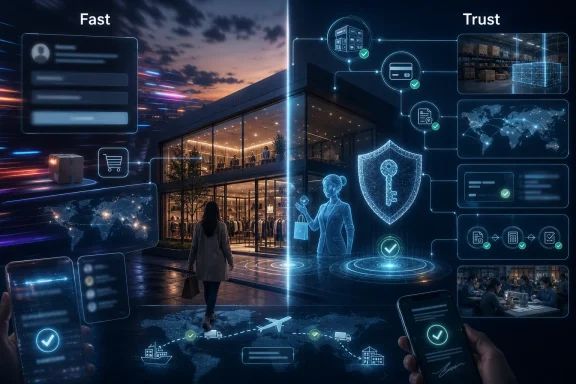 Retail Has Mistaken Convenience for Confidence
Retailers have spent the last decade flattening every possible bit of friction out of commerce. One-click checkout, saved cards, loyalty apps, curbside pickup, real-time inventory, marketplace integrations, and personalized offers all exist to make buying feel almost automatic. The trouble is that attackers love automatic systems too.IBM’s warning lands because retail is not a neat, self-contained software business. It is a messy braid of suppliers, logistics companies, payment providers, manufacturers, tax systems, customer identity platforms, e-commerce portals, marketing clouds, and increasingly AI-driven decision engines. A compromise in one strand can tug on the whole rope.
That is why the old distinction between “a cyber incident” and “an operational disruption” has become inadequate. If a retailer cannot confirm where goods are, cannot trust the integrity of a supplier feed, cannot process payments, or cannot safely authenticate customers, the breach is no longer an IT event. It is a failure of the brand’s basic promise.
For luxury retailers, that promise is particularly unforgiving. Brands such as Hermès and Louis Vuitton do not sell only leather, fragrance, garments, or accessories. They sell continuity, scarcity, provenance, and the idea that every step from workshop to boutique has been controlled. A cyberattack does not need to expose millions of customer records to damage that story; it only needs to make the machinery behind the story look careless.
The wider retail market faces the same problem in less theatrical form. Grocery chains, electronics sellers, pharmacies, department stores, and direct-to-consumer brands all ask customers to believe that the item shown online exists, the payment process is safe, the delivery estimate is real, and the account holding their data will not become an attacker’s beachhead. That belief is now a core retail asset.
The Supply Chain Is Where Brand Promise Meets Attack Surface
Supply-chain attacks are so dangerous in retail because the supply chain is where the customer-facing promise becomes operational fact. A product page can say “available,” but that claim depends on inventory systems, vendor data, warehouse routing, and last-mile logistics behaving honestly. When attackers interfere with those systems, they are not just delaying a box; they are corrupting the retailer’s ability to tell the truth.IBM’s 2026 X-Force reporting says major supply-chain and third-party compromises have increased nearly fourfold since 2020. That figure should make retail executives uncomfortable because third-party trust is the foundation of modern commerce. No large retailer truly runs alone.
The most exposed parts of the retail stack are often the least glamorous. Public-facing applications, customer portals, APIs, authentication systems, supplier integrations, and SaaS dashboards are not boutique showpieces. They are the doors through which employees, partners, vendors, customers, and automated systems pass all day.
IBM also reported a 44 percent year-over-year rise in attacks beginning with exploitation of public-facing applications. That matters because retail has spent years pushing more of its business logic outward. The store is now an app, the app is now a wallet, the wallet is now an identity layer, and the identity layer is increasingly connected to loyalty, support, returns, and recommendations.
The old castle-and-moat model was always flawed, but in retail it is now almost quaint. The moat has been replaced by a shopping journey that crosses mobile devices, cloud platforms, partner networks, payment rails, social media referrals, and physical stores. Every step is a chance to delight a customer, and every step is a chance to authenticate the wrong person, trust the wrong API call, or ingest poisoned data.
Heritage Brands Are Discovering That Craft Needs Cloud
The romantic version of luxury retail imagines ateliers, cellars, studios, and workshops untouched by modern IT. IBM’s Elaine Parr makes the more realistic point: high-end brands are not rejecting AI and automation. They are using them to clear away the work that prevents humans from doing the artisanal work customers actually value.That distinction matters. The serious argument is not that technology cheapens luxury. It is that poorly governed technology can make luxury’s invisible disciplines look performative. A brand can still rely on expert perfumers, winemakers, designers, and craftspeople while using AI to support forecasting, compliance, logistics, anti-counterfeiting, customer service, and finance.
In that context, security is not a back-office hygiene issue. It is part of product integrity. If a fashion house cannot control supplier access, if a spirits company cannot trust tax and compliance reporting, or if a retailer cannot distinguish legitimate customer behavior from automated abuse, the brand’s polish starts to separate from its plumbing.
This is where the “trust” argument becomes more than marketing language. Customers may never see the tax model that keeps a beverage company compliant across jurisdictions, or the internal workflow that flags a suspicious supplier invoice. But they see the consequences when the machinery fails: product shortages, delayed refunds, bad support interactions, inconsistent pricing, fraud alerts, and vague breach notifications.
Investor trust follows the same logic. Fast, accurate financial close processes and secure systems are not glamorous, but they signal that management understands the enterprise it claims to run. A retailer that cannot control its data cannot credibly control its margins, compliance posture, or customer experience.
The Password Is Now a Retail Liability
Retail has a particular weakness for passwords because passwords are familiar, cheap, and seemingly low-friction. Customers know how to type them, merchants know how to reset them, and product teams know that every extra authentication step can damage conversion. That calculation made sense when the main goal was reducing cart abandonment; it makes less sense when stolen credentials are one of the easiest routes into customer accounts and internal systems.IBM Distinguished Engineer Jeff Crume’s blunt formulation is the one retailers should tape to the wall: attackers have learned that it is easier to log in than hack in. That sentence captures the great inversion of consumer security. The attacker does not need to defeat the brand’s infrastructure if the brand has trained customers and employees to hand over reusable secrets.
Phishing remains the mundane superweapon here. A fake contest, a spoofed bank message, a bogus HR portal, or a convincing supplier email can turn a trusted user into an access mechanism. Once credentials are stolen, the attacker may look less like an intruder than a returning customer, a vendor, or an employee.
Passkeys are not magic, but they are one of the most credible attempts to end this particular bargain. Built around cryptographic key pairs rather than shared passwords, passkeys make authentication harder to phish and easier for ordinary users to complete. The private key stays with the user’s device or credential manager, while the service sees the corresponding public key.
For retailers, the pitch is unusually attractive because passkeys aim at both sides of the conversion-security fight. They can reduce password resets and account takeover risk while also sparing customers from memorized secrets, SMS codes, and some of the clumsy rituals that make checkout feel punitive. In a business where a few seconds can decide a sale, that matters.
But implementation will separate serious retailers from checkbox adopters. A passkey rollout that leaves weak password fallback everywhere, confuses users across devices, or strands less technical customers will not deliver the promised trust. The goal is not to declare passwords dead in a press release; it is to make the safer path the normal path.
Friction Is Not the Enemy; Bad Friction Is
Retailers often talk about security as if it is inherently hostile to experience. That is too simple. Customers hate pointless friction, but they tolerate meaningful friction when it is understandable, proportional, and visibly protective.A payment step that fails without explanation feels like incompetence. A biometric confirmation before a high-value purchase can feel sensible. A forced password reset after suspicious activity may annoy a customer, but an account takeover will annoy them much more.
The real enemy is opaque friction. Retailers add security prompts, fraud holds, email verifications, CAPTCHAs, and account locks without explaining what risk they are managing or why the customer should trust the process. The result is an experience that feels both less secure and less convenient.
This is where WindowsForum readers will recognize a familiar enterprise pattern. Security controls that are bolted on late become user-hostile. Security controls designed into the workflow can become almost invisible. The best retail security will look less like a checkpoint and more like a well-engineered operating system permission model.
Retailers need to stop pretending that customers choose only speed. Customers choose confidence at speed. The winning experience is not the one with the fewest prompts; it is the one where every prompt feels like it belongs.
Agentic Commerce Will Make Trust Programmable or Break It Entirely
The IBM piece becomes more interesting when it turns from today’s passwords and supply chains to tomorrow’s AI agents. Agentic commerce sounds like a futuristic add-on to retail, but the infrastructure is already forming. Mastercard announced Agent Pay for Machines in June 2026, positioning it as a way for AI agents and machines to conduct permissioned transactions at machine speed across its payments network.That is a significant shift in the psychology of shopping. E-commerce moved the customer from the store aisle to the browser. Mobile commerce moved the customer from the browser to the phone. Agentic commerce begins moving the decision itself into software that compares, negotiates, replenishes, and purchases on the customer’s behalf.
Accenture’s recent consumer research, which found that nearly three in four respondents would trust a personal AI agent more than a best friend to make a purchase on their behalf, should be read carefully. It does not mean consumers are ready to surrender all judgment to bots. It means many consumers are already exhausted by choice, subscriptions, pricing games, and service interactions.
Retailers will be tempted to see agents as a new conversion funnel. That would be dangerously incomplete. An AI shopper is not just another channel; it is a delegated authority. If a customer lets an agent buy detergent, airline tickets, medicine, wine, or clothing, the agent becomes part of the trust chain.
That creates hard security questions. What may the agent buy? How much may it spend? Which merchants may it use? Can it sign up for subscriptions? Can it negotiate returns? Can it share personal preferences? Can it call external tools? Can a malicious prompt, poisoned model, compromised plugin, or rogue integration alter its behavior?
These are not abstract concerns. The Model Context Protocol and similar tool-connection layers are being adopted because agents need ways to interact with external systems. Those pathways will become attractive targets. If the retail web trained attackers to steal passwords, agentic commerce may train them to steal permissions.
The Customer’s AI Agent Will Judge Your Store Before the Customer Does
Retailers have optimized for human perception: page design, product photography, star ratings, shipping badges, loyalty prompts, and recommendation modules. Agentic commerce adds a new audience. The customer’s AI agent may evaluate a retailer through structured data, policy terms, historical reliability, return friction, authentication requirements, security signals, and price behavior before the customer ever sees the page.That possibility should alarm retailers that have relied on brand gravity to overcome operational sloppiness. A human customer may forgive a confusing return policy because the product looks beautiful. A software agent may route around the retailer because the policy is ambiguous, the inventory feed is unreliable, or the authentication process is brittle.
Trust will become more machine-readable. Retailers will need to expose enough information for agents to act safely without turning every integration into a new attack surface. That means signed data, scoped permissions, auditable transactions, clear consent, reliable identity, and revocation mechanisms that work at the speed of automated commerce.
The Windows ecosystem has lived through versions of this problem for years. Enterprises learned that manageability, identity, logging, and policy are not optional extras; they are the difference between a platform and a toy. Retailers entering agentic commerce will have to learn the same lesson quickly.
This will also change fraud. Today’s fraud teams look for suspicious users, devices, transactions, and patterns. Tomorrow’s fraud teams will also have to distinguish legitimate delegated agent behavior from compromised or manipulated agent behavior. A customer’s bot buying at 3 a.m. may be perfectly normal; a customer’s bot buying the wrong thing from the wrong merchant may be the first sign of compromise.
AI Can Strengthen the Ledger and Poison the Well
IBM’s article makes a useful point that tends to get lost in the AI-security debate: AI is not only an attacker’s tool. It can also improve trust inside the enterprise. Retailers with complicated tax, reporting, and compliance obligations can use AI systems to flag anomalies and help close books more quickly and accurately.That is not a small thing. In retail, financial errors are often operational errors wearing a suit. Bad data about inventory, suppliers, taxes, rebates, promotions, or returns eventually shows up somewhere in the ledger. If AI can identify inconsistencies earlier, it can protect both compliance and management credibility.
But AI also introduces a new form of dependency. A retailer that uses AI to accelerate compliance decisions must understand where the data came from, what the model is allowed to infer, who can override it, and how errors are audited. Otherwise, the company has merely swapped slow human ambiguity for fast machine ambiguity.
The same is true in customer-facing systems. AI assistants that answer product questions, handle returns, recommend substitutions, or negotiate with personal shopping agents may improve service. They may also hallucinate policies, expose data, misapply discounts, or become vectors for prompt injection and tool abuse.
The useful stance is neither AI boosterism nor AI panic. Retailers should adopt AI where it makes trust more measurable, more consistent, or more recoverable. They should resist AI where it makes accountability harder to locate.
The Breach Notification Is Too Late to Save the Relationship
Retailers often act as though trust management begins after an incident, with a notification letter, a call center script, a credit-monitoring offer, and a carefully worded apology. By then, the most important damage may already be done. Customers form their judgment during the outage, the failed login, the missing order, the unexplained refund delay, and the first evasive support interaction.The first hours of a retail incident are therefore not merely technical. They are editorial. The company is telling a story through status pages, app behavior, employee instructions, store signage, customer emails, and media statements. If those messages conflict, customers conclude that the retailer does not know what is happening.
That conclusion is often worse than the breach itself. People can forgive a company for being attacked. They are less forgiving when the company seems confused, evasive, or indifferent to the practical consequences.
Preparedness must include customer experience under degraded conditions. Can stores operate safely if central systems are impaired? Can customers retrieve receipts, process returns, or verify orders? Can employees distinguish legitimate workarounds from risky improvisation? Can the company communicate clearly without overpromising?
This is where business continuity, cybersecurity, and brand management finally merge. A retailer that treats incident response as a legal exercise will sound like a legal department. A retailer that treats it as a trust exercise has a chance to sound like an accountable operator.
The Retail Security Budget Needs a New Story
Security leaders have long struggled to justify spending on avoided disasters. Retail makes that problem harder because margins can be thin, technology roadmaps are crowded, and customer-experience teams can resist anything that threatens conversion. The IBM framing gives CISOs a better argument: security protects the trust margin.That does not mean every retailer needs the same controls. A global luxury group, a supermarket chain, a specialty e-commerce seller, and a regional furniture store have different risk profiles. But they all need to know which systems carry trust and which failures would most visibly violate customer expectations.
The answer will not always be obvious. A loyalty database may be more sensitive than a product catalog. A supplier portal may be more operationally critical than a marketing site. A tax compliance workflow may be more reputationally important than a flashy app feature. A returns system may be where customer anger crystallizes.
Security investment should follow those trust pathways. Identity modernization, passkey adoption, API governance, third-party risk management, observability, backup resilience, privileged-access controls, secure software development, and agent permissioning are not random items on a compliance spreadsheet. They are the structural supports for a retail promise that now spans physical and digital space.
The board-level conversation should also change. “Were we breached?” is a narrower question than “Can we still be trusted under attack?” The first invites a binary answer. The second forces executives to examine resilience, transparency, recovery, and the experience customers actually have when systems fail.
The Hardest Part of Retail Security Is Saying No to the Easy Sale
Retailers are culturally wired to remove obstacles to purchase. That instinct built modern commerce. It also explains why weak logins, permissive integrations, sprawling vendor access, and under-governed automation survive longer than they should.The easy sale is not always worth it. If reducing authentication friction increases account takeover, the retailer is borrowing revenue against future trust. If onboarding a supplier quickly means accepting poor security visibility, the retailer is expanding its attack surface in exchange for operational speed. If deploying an AI agent improves service metrics while granting excessive tool privileges, the retailer is automating risk.
This does not mean security teams should become the department of no. It means they need enough authority and product fluency to design safer yeses. Passkeys instead of passwords. Scoped tokens instead of broad access. Signed integrations instead of informal data feeds. Agent budgets and time limits instead of open-ended autonomy.
The most mature retailers will make these decisions before regulators, insurers, payment networks, or angry customers force them. The laggards will discover that trust, unlike inventory, cannot be restocked overnight.
The New Retail Moat Is the System Customers Never See
The practical lesson from IBM’s retail-security argument is not that every brand should buy a particular tool or chase every new authentication trend. It is that the unseen systems behind retail now shape the visible brand more directly than ever. Supply-chain integrity, identity, compliance accuracy, AI governance, and incident response are not backstage functions. They are the stage.For WindowsForum’s IT-minded audience, this should sound familiar. Users judge a platform by whether it wakes from sleep, installs updates cleanly, preserves files, respects identity, and recovers from failure. Retail customers judge brands in much the same way now, even if they use different language.
The retailer that can prove availability, authenticity, privacy, and accountability will have an advantage that is hard to copy. A competitor can imitate a discount. It can mimic a website layout. It can sponsor influencers and launch an app. It cannot quickly manufacture years of reliable behavior under pressure.
That is why trust is becoming the real retail moat. Not sentimentality, not sloganized “brand love,” but operational trust: the belief that the company’s systems will behave as promised when nobody is watching and recover honestly when something goes wrong.
The Checkout Lane Is Becoming a Trust Test
Retail leaders should read the current wave of cyber and AI news less as a warning about exotic threats and more as a map of where ordinary commerce is going. The same forces that make shopping faster are making failure more consequential. The same automation that reduces cost can magnify a mistake. The same AI agent that delights a customer can become a delegated attack path if its permissions are sloppy.The near-term agenda is concrete:
- Retailers should treat supply-chain cybersecurity as a customer-trust issue, not merely a vendor-risk or procurement concern.
- Retailers should move beyond password-only account access where the customer experience and platform support make passkeys practical.
- Retailers should design security controls that explain themselves through the user experience instead of appearing as arbitrary friction.
- Retailers should govern AI agents with scoped permissions, spending limits, audit trails, and revocation paths before autonomous commerce becomes routine.
- Retailers should rehearse cyber incidents as customer experience failures, not only as technical and legal events.
- Retailers should measure security investments against the systems that most directly support brand promise, operational continuity, and customer confidence.
References
- Primary source: IBM
Published: 2026-06-19T01:50:11.413149
Retail’s most valuable asset isn’t inventory, it’s trust | IBM
When a cyberattack disrupts a retailer’s supply chain, the damage extends well beyond delayed shipments and lost revenue. For brands that have spent decades—or even centuries—cultivating a reputation for quality, a breach can undermine something far harder to restore: customer trust. www.ibm.com
- Related coverage: techradar.com
Are we finally starting to trust agents? New report claims 74% 'trust a personal AI agent more than their best friend' | TechRadar
Consumers are set to use AI agents even more in their shoppingwww.techradar.com
