

Samsung has introduced Flex Titanium, a new foldable-display structure that it says will debut in its next Galaxy foldables at Galaxy Unpacked in London on July 22.
Per Samsung’s July 14 announcement, Flex Titanium combines two titanium-based components: a titanium-alloy film and a titanium plate. The company says the revised stack is designed to improve structural strength while preserving the thinness and flexibility demanded by inward-folding OLED screens.
The notable change is the titanium plate beneath the display. Samsung says it uses precision micro-perforations in the fold area, allowing the plate to bend while still supporting the panel. That should help address two persistent foldable complaints: crease visibility and the gradual deformation that can result from repeated opening and closing.
Samsung also claims a tighter bond between display layers reduces micro-gaps, which can contribute to sagging around the fold. The company has not published independent durability figures, cycle ratings, or measurements for crease reduction.
Alongside the mechanical redesign, Samsung said its next-generation panels will use a higher-resolution structure and new organic materials intended to improve power efficiency. That could help offset the battery cost of the large internal displays used by Galaxy Z Fold-class devices, though Samsung has not provided device-level specifications.
The announcement does not mean every future Samsung foldable will necessarily receive the full titanium display stack. Nor does it establish whether the technology will appear in both book-style Fold models and clamshell Flip models. Those details, along with dimensions, weight, panel brightness, battery capacity, pricing, and availability, remain for Unpacked.
The useful information arrives on July 22, when Samsung is expected to identify the first devices using the display technology and publish their actual specifications.
Per Samsung’s July 14 announcement, Flex Titanium combines two titanium-based components: a titanium-alloy film and a titanium plate. The company says the revised stack is designed to improve structural strength while preserving the thinness and flexibility demanded by inward-folding OLED screens.
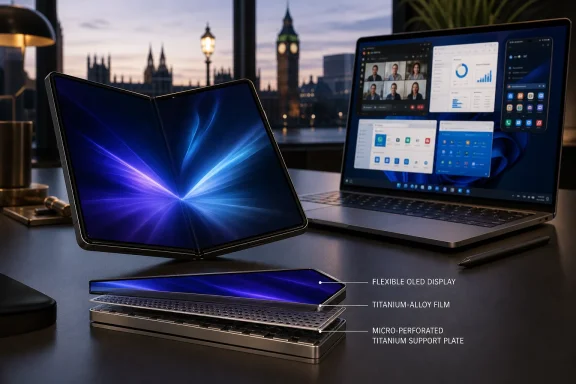 Less crease, more support
The notable change is the titanium plate beneath the display. Samsung says it uses precision micro-perforations in the fold area, allowing the plate to bend while still supporting the panel. That should help address two persistent foldable complaints: crease visibility and the gradual deformation that can result from repeated opening and closing.Samsung also claims a tighter bond between display layers reduces micro-gaps, which can contribute to sagging around the fold. The company has not published independent durability figures, cycle ratings, or measurements for crease reduction.
Alongside the mechanical redesign, Samsung said its next-generation panels will use a higher-resolution structure and new organic materials intended to improve power efficiency. That could help offset the battery cost of the large internal displays used by Galaxy Z Fold-class devices, though Samsung has not provided device-level specifications.
What is confirmed — and what is not
Samsung has confirmed Flex Titanium for its upcoming foldable Galaxy devices, but it has not named specific models in the announcement. Reports from Mobile World Live indicate the technology will be part of the hardware shown at the July 22 Unpacked event, which begins at 9 a.m. Eastern time.The announcement does not mean every future Samsung foldable will necessarily receive the full titanium display stack. Nor does it establish whether the technology will appear in both book-style Fold models and clamshell Flip models. Those details, along with dimensions, weight, panel brightness, battery capacity, pricing, and availability, remain for Unpacked.
Why Windows users should care
For Windows enthusiasts, the relevance is mostly in Samsung’s broader device ecosystem. A thinner, more durable Galaxy Fold with a less intrusive crease could make the large-screen Android device more practical alongside Windows PCs for Remote Desktop, Microsoft 365, Phone Link, and DeX workflows. But Flex Titanium is a hardware platform announcement, not a new Windows integration feature.The useful information arrives on July 22, when Samsung is expected to identify the first devices using the display technology and publish their actual specifications.
References
- Primary source: chshyd.in
Published: 2026-07-16T11:32:11+00:00
Loading…
chshyd.in - Independent coverage: Mobile World Live
Published: 2026-07-15T10:37:20+00:00
Loading…
www.mobileworldlive.com - Related coverage: tomsguide.com
Loading…
www.tomsguide.com - Related coverage: techradar.com
Inside Samsung Display's secret labs, where it builds and stress-tests next-gen displays — and says it's ready for Apple to launch a foldable: 'We mean it, we love other companies to join this market' | TechRadar
How Samsung builds, tests, and innovates its displays — and a big hint of what's to come.www.techradar.com - Related coverage: androidcentral.com
Loading…
www.androidcentral.com - Related coverage: t3.com
Loading…
www.t3.com