

Steven Sinofsky, the onetime architect of Windows 8 and the executive who led Microsoft’s play into first‑party hardware with Surface, appears in newly released Department of Justice Epstein files seeking blunt, transactional advice about how to walk away from Redmond — and those documents reopen a still‑fresh chapter in Microsoft’s recent history: the Surface RT misstep, the cost of a high‑profile executive exit, and what happens when corporate friction meets an unsavoury fixer.
Steven Sinofsky rose to prominence inside Microsoft as the engineering and product leader who shepherded major Windows releases and presided over the Windows division during the company’s pivot to tablets. He was widely visible in the run‑up to Windows 8 and the Surface launch, often the publi dramatic UI shift and hardware ambitions. Windows‑focused community archives from the Windows 8 era show how central Sinofsky was to the product narrative leading to the 2012 launches.
Microsoft’s Surface program — especially the ARM‑based Surface RT — represented the company’s most direct attempt to compete with Apple on integrated hardware and software. Surface RT shipped with Windows RT, an ARM‑only, restricted version of Windows that could not run legacy Win32 desktop applications, and it launched alongside Windows 8 in October 2012. That limited app compatibility, combined with product positioning and pricing choices, created an uphill battle for mainstream adoption. Within months the business was bleeding value; Microsoft took a near‑billion‑dollar charge to write down unsold Surface RT inventory, a move that became a public headline about strategy and execution.
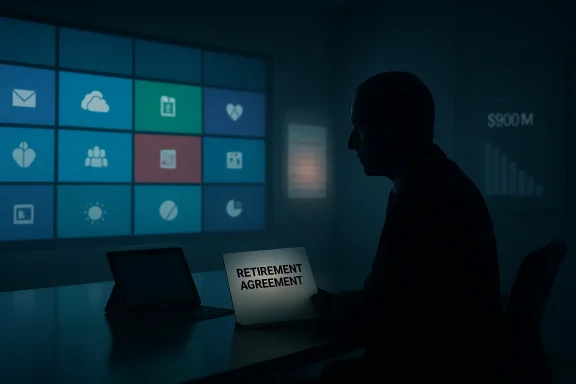
Sinofsky’s abrupt departure from Microsoft on November 12, 2012 — weeks after Windows 8 and Surface shipped — was framed at the time as a mutual decision. Over the following months, filings and reporting revealed the commercial pain points behind the new devices and the thorny mechanics of executive departures at large tech companies. The public record includes Microsoft’s Form 8‑K describing a “Retirement Agreement” with Sinofsky that reinstated extensive unvested stock awards in exchange for non‑compete and non‑disparagement covenants; that filing is the authoritative record of the deal that ultimately paid Sinofsky the value of some 418,361 shares, a package reported to be worth roughly $14.3 million at the time.
More incendiary are reports that Sinofsky forwarded an internal Microsoft thread — in which he warned that the Surface RT product was “about to catastrophically fail in a very public way” and that sales were tracking at roughly one‑tenth of expectations — to Epstein after his exit. That claim is central to recent coverage in trade press and was highlighted by The Register in its reporting on the DOJ files. The thread, as reported, also foresaw that once sales figures leaked, there would be no hiding the problem and “there is no long term without this.” If authenticated, that email offers a rare inside‑view of a senior product leader’s internal alarm about a flagship launch. However, readers should note: the direct, verbatim passages attributed to Sinofsky in public reporting derive from the unsealed document set and the way the pages were rendered and OCR’d; some lines are harder to verify independently because of redactions, scanning legibility and how third‑party trackers index the files. For that reason, the precise text and context warrant cautious treatment until original, unredacted pages are consulted.
Two corroborating strands emerge from the public record:
Where the story becomes complicated is the person at the other end of the line: Jeffrey Epstein. By the time these exchanges were happening, Epstein already carried a highly tainted reputation for criminal behaviour and manipulative networks; after his 2008 plea‑deal revelations and 2019 arrest, any association became intensely problematic for public figures. From an ethical and reputational standpoint, asking for negotiation help from someone with Epstein’s profile is a fraught choice that trades immediate tactical advice for long‑term reputational risk.
There are several legal and governance questions this raises for corporations and boards:
Key operational mistakes that compounded the problem:
From a product perspective the lessons are familiar: platform incompatibility, ecosystem immaturity and execution gaps can doom even well‑funded launches. From a governance and ethics perspective, the episode reinforces how the choice of advisers and the handling of exits matter as much as legal paperwork: optics, trust, and long‑term reputational capital are not free.
Finally, the public should read the newly surfaced emails with care. The documents establish proximity and transactional counsel between Sinofsky and Epstein and show the blunt arithmetic of executive negotiations; they do not demonstrate criminal conduct by Sinofsky. The larger, enduring lesson is institutional: companies and leaders must manage product risk, people risk, and reputational risk in tandem — and when they fail to do so, the consequences can reverberate for years.
Source: theregister.com Steven Sinofsky sought Epstein's advice on exiting Microsoft
 Background
Steven Sinofsky rose to prominence inside Microsoft as the engineering and product leader who shepherded major Windows releases and presided over the Windows division during the company’s pivot to tablets. He was widely visible in the run‑up to Windows 8 and the Surface launch, often the publi dramatic UI shift and hardware ambitions. Windows‑focused community archives from the Windows 8 era show how central Sinofsky was to the product narrative leading to the 2012 launches.Microsoft’s Surface program — especially the ARM‑based Surface RT — represented the company’s most direct attempt to compete with Apple on integrated hardware and software. Surface RT shipped with Windows RT, an ARM‑only, restricted version of Windows that could not run legacy Win32 desktop applications, and it launched alongside Windows 8 in October 2012. That limited app compatibility, combined with product positioning and pricing choices, created an uphill battle for mainstream adoption. Within months the business was bleeding value; Microsoft took a near‑billion‑dollar charge to write down unsold Surface RT inventory, a move that became a public headline about strategy and execution.
Sinofsky’s abrupt departure from Microsoft on November 12, 2012 — weeks after Windows 8 and Surface shipped — was framed at the time as a mutual decision. Over the following months, filings and reporting revealed the commercial pain points behind the new devices and the thorny mechanics of executive departures at large tech companies. The public record includes Microsoft’s Form 8‑K describing a “Retirement Agreement” with Sinofsky that reinstated extensive unvested stock awards in exchange for non‑compete and non‑disparagement covenants; that filing is the authoritative record of the deal that ultimately paid Sinofsky the value of some 418,361 shares, a package reported to be worth roughly $14.3 million at the time.
What the DOJ Epstein files add — and what they do not
The January‑February 2026 tranche of documents released by the Department of Justice under the Epstein Files Transparency regime included millions of items: emails, notes, images and scanned documents. Journalists and independent trackers mining the release quickly identified correspondence between Jeffrey Epstein and many prominent figures; among them, researchers located emails from (and apparently forwarded by) Steven Sinofsky. Those entries include at least one email Sinofsky sent to Epstein in November 2013 about Bitcoin and the Washington policy scene, a clear example that Sinofsky — after leaving Microsoft — was reaching out about technology topics.More incendiary are reports that Sinofsky forwarded an internal Microsoft thread — in which he warned that the Surface RT product was “about to catastrophically fail in a very public way” and that sales were tracking at roughly one‑tenth of expectations — to Epstein after his exit. That claim is central to recent coverage in trade press and was highlighted by The Register in its reporting on the DOJ files. The thread, as reported, also foresaw that once sales figures leaked, there would be no hiding the problem and “there is no long term without this.” If authenticated, that email offers a rare inside‑view of a senior product leader’s internal alarm about a flagship launch. However, readers should note: the direct, verbatim passages attributed to Sinofsky in public reporting derive from the unsealed document set and the way the pages were rendered and OCR’d; some lines are harder to verify independently because of redactions, scanning legibility and how third‑party trackers index the files. For that reason, the precise text and context warrant cautious treatment until original, unredacted pages are consulted.
Two corroborating strands emerge from the public record:
- Microsoft itself publicly recorded a material inventory charge related to Surface RT — a roughly $900 million adjustment disclosed in mid‑2013 — a financial event that anchors the claim that the RT launch materially underperformed. That write‑down was officially disclosed in Microsoft’s earnings statements and widely covered by international press.
- The DOJ’s released dataset contains email headers and messages listing Sinofsky’s name and correspondence with Epstein; independent repositories extracting and posting metadata and OCR text show multiple instances where Sinofsky appears in the Epstein corpus, including the Bitcoin note. That demonstrates a real material connection — the provenance and content of each message still require document‑by‑document inspection for full context.
Timeline and monetary realities
- October–November 2012: Microsoft launches Windows 8 and Surface RT/Surface Pro; Surface RT’s technical choices (ARM, Windows RT) constrain compatibility and market appeal. The product’s commercial results quickly fall short of expectations.
- November 12, 2012: Steven Sinofsky leaves Microsoft. The departure is abrupt and becomes the subject of immediate industry speculation.
- Mid‑2013: Microsoft announces a roughly $900 million charge tied to Surface RT inventory adjustments — a widely covered event that made public the scale of Surface RT’s commercial failure. The company also reduced Surface RT pricing and adjusted inventory provisioning.
- June–July 2013: SEC filings and an 8‑K disclose the “Retirement Agreement” between Sinofsky and Microsoft, spelling out the stock awards (418,361 shares) and behavioural covenants (non‑compete, non‑disparagement, cooperation in litigation). The disclosed value of the reinstated awards was reported at roughly $14.3 million based on market prices at the time.
- 2013–2018 and beyond: Records in the DOJ Epstein release later show emails involving Sinofsky and Epstein across the 2013–2018 window; trade coverage in 2026 surfaced a thread showing Sinofsky’s post‑departure engagement with Epstein about negotiation strategy and non‑competes, and referenced Sinofsky forwarding his internal warning about Surface RT to Epstein. The public media synthesis of those records is where the “seek advice from Epstein” narrative was most recently amplified.
Why a senior executive might involve a private adviser like Epstein — and the legal/ethical dimension
At its most prosaic, the exchange described in the newly public documents fits a familiar pattern: a departing executive is negotiating vesting, non‑compete limitations, publicity constraints, and future employment options. Large companies typically use severance, equity provisions and restrictive covenants to govern exits; executives naturally look for leverage and advice to maximize financial outcomes or preserve career mobility. In Sinofsky’s case, the record suggests he believed Microsoft would cling tightly to restrictive language and that he might be vulnerable to litigation if he joined a competitor — a point he made in internal notes and documented in the SEC disclosures.Where the story becomes complicated is the person at the other end of the line: Jeffrey Epstein. By the time these exchanges were happening, Epstein already carried a highly tainted reputation for criminal behaviour and manipulative networks; after his 2008 plea‑deal revelations and 2019 arrest, any association became intensely problematic for public figures. From an ethical and reputational standpoint, asking for negotiation help from someone with Epstein’s profile is a fraught choice that trades immediate tactical advice for long‑term reputational risk.
There are several legal and governance questions this raises for corporations and boards:
- How should companies vet and document third‑party advisers involved in executive negotiations?
- To what extent should boards and general counsel be aware of external advisers who may be influencing senior‑level exits?
- What are the enforcement realities of non‑competes and non‑disparagement provisions when lawsuits are filed — and how does a company’s past litigation posture affect bargaining leverage?
The product lessons: why Surface RT failed, and why the write‑down mattered
Surface RT’s commercial collapse is instructive for product and platform strategy. The core technical constraint — that Windows RT could not run legacy Win32 applications — placed the device in a confusing position: it looked like a PC, but its capabilities and software ecosystem made it behave like a limited tablet. Consumers comparing the Surface RT to the iPad or to Windows‑powered laptops found the tradeoffs unattractive.Key operational mistakes that compounded the problem:
- Platform mismatch: Windows RT’s app ecosystem was small and unfamiliar to enterprise customers who valued legacy compatibility. That limited buyer confidence.
- Price and positioning confusion: Microsoft’s later price cut (a $150 reduction on the base Surface RT model) signalled weak demand and contributed to the need for inventory markdowns.
- Costly marketing: Microsoft’s heavy advertising spend on Windows 8 and Surface inflated the launch cost base while hardware sales lagged; press analyses later highlighted the irony of massive ad spending versus modest hardware revenue.
- Organizational challenges: Shipping a hardware product from a primarily software company required new supply chain and channel capabilities; early Surface production and inventory planning failures amplified the financial exposure. Analysts described the inventory charge as partly driven by finished goods markdowns and component write‑offs.
Critical analysis: corporate culture, communication failures, and the price of escalation
The Sinofsky‑Epstein linkage is a prism through which several critical issues converge.- Leadership friction and communication breakdowns: The dramatic public posture around Windows 8, combined with an opaque product narrative and internal disagreement, made disagreement visible and acrimonious. Large‑scale launches require aligned distribution, channel, and marketing strategies; when those break down, finger‑pointing follows. Sinofsky’s internal alarm about Surface RT, if accurately reported, emphasizes the cost of mismatched expectations between product teams and executive leadership.
- Exit negotiations and institutional discretion: The SEC disclosure shows Microsoft’s standard practice of using equity vesting and restrictive covenants to shape post‑exit behaviour. That arrangement protected Microsoft’s commercial interests but also constrained Sinofsky’s options — the very friction that made external advice attractive. That said, the decision to involve a controversial private actor introduces outsized reputational risk for a departing executive and, by association, the company referenced in public records.
- Ethics and optics: Even absent allegations of criminality, consulting with a figure like Epstein is reputationally costly. Public disclosure of such counsel, particularly in a high‑visibility corporate fight, creates a lasting narrative that can overshadow technical and strategic analysis of product outcomes.
- Litigation as leverage: Sinofsky’s expressed fear of being dragged into suits — and the company’s documented history of aggressive litigation against ex‑employees — is a cautionary note about how legal posture becomes a bargaining chip. Boards should weigh the downstream effects of litigation strategies that seek deterrence through public litigation, especially where career damage to defendants becomes an unintended organizational coercion mechanism.
What we can verify — and what remains open
Verified, high‑confidence facts:- Microsoft publicly disclosed and justified a roughly $900 million inventory charge tied to Surface RT in mid‑2013, an official financial event covered across major outlets.
- Microsoft’s 8‑K and related SEC filings record a “Retirement Agreement” with Steven Sinofsky dated June 2013 that reinstated unvested awards (418,361 shares) in exchange for covenants; the stock value was reported at about $14.3 million around the time of disclosure. These filings are the legal, primary‑source record for the compensation arrangement.
- The DOJ’s Epstein document release includes emails and items that list Sinofsky as a correspondent; independent repositories and document extractors have published metadata and OCR text identifying Sinofsky in multiple messages.
- The precise wording of Sinofsky’s internal Surface RT warning — the alleged phrase “about to catastrophically fail in a very public way” — appears in trade coverage of the DOJ files but depends on scanned and OCR’d text in the released documents. Until readers inspect the original scanned images or Microsoft‑authenticated copies, small transcription errors and contextual omission are possible. Journalists citing those lines have relied on the released DOJ dataset; readers should treat the direct quotation with careful caveats pending confirmation from unredacted pages.
- The tactical back‑and‑forth about a "$20 million" demand and the exact counsel “Just repeat 20” come from email threads made public in the DOJ set and reported in outlets summarising the documents. They are plausible negotiation advice drawn from the exchanged messages, but the underlying negotiation dynamics and private counsel cannot be independently corroborated beyond the document text itself. As with all leaked or released documents, corroboration from multiple document originals improves confidence.
Lessons for Microsoft, for executives, and for readers
- For companies: major product pivots that require new hardware and ecosystems (OS + silicon + distribution) amplify execution risk. Microsoft’s Surface RT episode is a reminder to align platform economics, partner channels and the developer ecosystem before investing in first‑party inventory at scale.
- For executives: the mechanics of exit — equity vesting, restrictive covenants, public messaging and litigation risk — are part of compensation design. Seeking negotiation leverage is normal; choosing advisers is a reputational choice with long‑term consequences. Boards and general counsels should build protocols for vetting outside advisers in high‑stakes separations.
- For journalists and researchers: large public document dumps like the Epstein files are a trove for factual reconstruction, but OCR noise, redactions and metadata quirks require careful handling. Quote with caution, cross‑check document IDs, and prefer primary filings (SEC, 8‑K) for monetary and contract details when possible.
Conclusion
The recently disclosed DOJ files linking Steven Sinofsky to Jeffrey Epstein do not rewrite the history of Windows 8 or Surface RT, but they do shed a human, transactional light on what happens when a high‑profile launch goes sideways and an executive seeks a way out. The financial wounds were already public — Microsoft’s Surface RT inventory write‑down and Sinofsky’s retirement agreement are settled entries in the corporate record — but the correspondence adds texture that is both illuminating and uncomfortable.From a product perspective the lessons are familiar: platform incompatibility, ecosystem immaturity and execution gaps can doom even well‑funded launches. From a governance and ethics perspective, the episode reinforces how the choice of advisers and the handling of exits matter as much as legal paperwork: optics, trust, and long‑term reputational capital are not free.
Finally, the public should read the newly surfaced emails with care. The documents establish proximity and transactional counsel between Sinofsky and Epstein and show the blunt arithmetic of executive negotiations; they do not demonstrate criminal conduct by Sinofsky. The larger, enduring lesson is institutional: companies and leaders must manage product risk, people risk, and reputational risk in tandem — and when they fail to do so, the consequences can reverberate for years.
Source: theregister.com Steven Sinofsky sought Epstein's advice on exiting Microsoft
