

Households across the UK and Ireland have been urged to “open windows for 10 minutes a day” as a simple, low‑cost measure to refresh indoor air and reduce condensation, damp and the airborne concentration of respiratory particles — advice that is sound in principle but must be applied with important caveats about outdoor air quality, severe weather and the needs of vulnerable occupants.
Public messaging that distilled ventilation to a single, memorable instruction — open your windows for 10 minutes — has appeared repeatedly in local and national press and on social platforms. That shorthand reflects a longer-established body of building science and public‑health guidance promoting short, decisive bursts of natural ventilation (commonly phrased as 5–15 minutes) as an energy‑aware method to raise air changes per hour, dilute indoor contaminants and limit the mould and damp problems that follow repeated condensation.
Not all versions of the story are identical. In several reproductions of the item the original news page (the Irish Mirror or a local title referenced in social posts) is currently unavailable or returned a “page not found” message, which means direct verification of precise quotes or single‑sentence headlines is not possible at present. Readers should therefore treat the “10‑minute” headline as a public‑facing mnemonic that translates more detailed technical guidance rather than as a universal engineering spec.
Opening a window for a short, deliberate period is one of the simplest steps households can take to improve indoor air quality and reduce the concentration of airborne particles — whether those particles are viral aerosols, cooking fumes or excess moisture that seeds mould. The measure’s power lies in its accessibility and immediacy. Yet the simplicity of the slogan masks important conditionality: outdoor air quality, local weather, window geometry and the vulnerability of occupants all alter the optimal approach. Use the headline advice as a starting point; add monitoring (CO₂, humidity), filtration (HEPA), and common‑sense timing (avoid rush hours and smoke episodes) to turn a good mnemonic into a safe, effective habit.
Source: Irish Mirror https://www.irishmirror.ie/lifestyle/households-urged-open-windows-10-36519099/
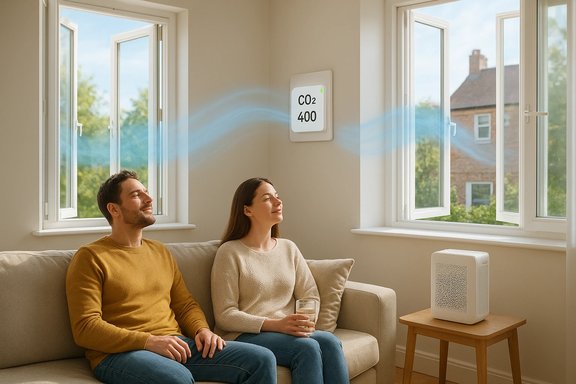 Background
Public messaging that distilled ventilation to a single, memorable instruction — open your windows for 10 minutes — has appeared repeatedly in local and national press and on social platforms. That shorthand reflects a longer-established body of building science and public‑health guidance promoting short, decisive bursts of natural ventilation (commonly phrased as 5–15 minutes) as an energy‑aware method to raise air changes per hour, dilute indoor contaminants and limit the mould and damp problems that follow repeated condensation.Not all versions of the story are identical. In several reproductions of the item the original news page (the Irish Mirror or a local title referenced in social posts) is currently unavailable or returned a “page not found” message, which means direct verification of precise quotes or single‑sentence headlines is not possible at present. Readers should therefore treat the “10‑minute” headline as a public‑facing mnemonic that translates more detailed technical guidance rather than as a universal engineering spec.
Why short bursts of ventilation work
The simple physics
Indoor air becomes stale because occupants emit carbon dioxide (CO₂), water vapour and aerosolized particles when speaking, breathing, cooking or showering. These aerosols and gases accumulate in enclosed spaces; bringing in outdoor air dilutes their concentration rapidly. When cross‑ventilation (openings on opposite sides of a room) is available, air changes per hour (ACH) spike and the room’s airborne pollutant load can fall dramatically within minutes. Building‑science modelling and outbreak analyses show that brief, full‑opening events often achieve a large share of the benefit of continuous ventilation while reducing heat loss compared with leaving windows cracked for hours. This approach is widely described in practical guidance as “short‑burst” airing or, in Germany, Stoßlüften (shock ventilation).Health and comfort benefits
- Lower viral load: Diluting aerosols reduces the concentration of airborne pathogens and therefore lowers transmission risk in shared spaces.
- Reduced CO₂: Lower CO₂ correlates with improved alertness and cognitive function in occupied rooms.
- Fewer VOCs and odours: Short bursts flush out fumes from cooking, cleaning and off‑gassing furniture.
- Humidity control: Regular airing reduces moisture spikes after showers or cooking, limiting the long‑term risk of mould growth.
What official guidance actually says
Multiple government and public‑health agencies and building engineering briefs have promoted intermittent ventilation as one practical mitigation when mechanical ventilation is limited. The pattern appearing in guidance and technical notes is consistent:- Encourage short, repeated ventilation events (commonly 5–15 minutes in cold weather) rather than leaving windows slightly open all day.
- Use cross‑ventilation where possible to maximize air exchange.
- Combine ventilation with source control (extractor fans during cooking or bathing) and filtration (HEPA or high‑MERV filters) when outdoor air is poor.
Practical, evidence‑based steps to ventilate your home safely
Short, practical checklists are the most useful tools for households trying to balance air quality, energy use and comfort.Quick household checklist
- Short, sharp bursts: Open windows widely for 5–15 minutes in rooms you’re occupying, particularly after guests leave or after aerosol‑generating activities (cooking, showering). In winter, aim for 5–10 minutes; in milder weather, 10–15 minutes.
- Prioritise cross‑ventilation: Open windows or doors on opposite sides of the space to create a through‑draft; this dramatically increases air exchange rates.
- Use extractor fans: Run kitchen and bathroom extractors on boost during and after use; these remove moisture and contaminants directly to the outside.
- When outdoor air is poor, choose filtration: If wildfire smoke, heavy traffic pollution, industrial emissions or pollen make outside air unhealthy, keep windows closed, set HVAC to recirculate and use portable HEPA purifiers or high‑efficiency central filters (MERV‑13 where compatible). Agencies explicitly warn that opening windows during smoke events increases indoor exposure.
- Time ventilation smartly: Avoid airing during rush hour next to busy roads or when a nearby source is producing visible emissions. Check local AQI or pollen forecasts and ventilate during cleaner periods.
Tools that help
- Portable HEPA air purifiers: Choose a unit sized for the room using CADR guidance (manufacturers and consumer agencies provide room‑size charts). Run purifiers with windows closed for best effect.
- CO₂ monitors: These provide a practical proxy for ventilation. Rising CO₂ indicates stale air and the need to ventilate. Monitors are aids, not definitive infection‑risk meters, but they are useful in classrooms and busy living spaces.
- Hygrometers: Keeping an eye on indoor humidity (above ~55% is a common threshold of concern) helps prevent condensation and mould. Use a dehumidifier in persistently damp spaces.
When opening windows is the wrong move
Public advice to “open windows” is conditional. There are several situations when opening windows will worsen indoor air quality.Wildfire smoke and very poor AQI
During smoke episodes, outdoor PM2.5 concentrations can be far higher than safe indoor levels. Public agencies (including national environmental authorities) explicitly advise closing windows, sealing leaks, switching HVAC to recirculate and using filtration instead of natural ventilation. Opening windows in these circumstances increases indoor exposure to fine particles and toxic combustion products.Busy roads, industrial plumes and peak pollution times
If your home faces a busy road or an industrial emitter, opening windows during rush hour or when visible emissions are present can allow vehicle exhaust and industrial pollutants indoors. Time ventilation for quieter parts of the day and ventilate rooms that face away from the source when possible.Allergy and pollen seasons
For people with severe pollen allergies, opening windows during high pollen counts will increase symptoms. Rely on filtration or ventilate at times when pollen counts are lower (often early morning or late evening depending on local patterns).Energy, comfort and vulnerable occupants
Repeated airing in freezing weather increases heating demand and can create unacceptable conditions for older adults, young children and people with chronic respiratory disease. Practical guidance for these households includes:- Use short (5–10 minute) full openings rather than leaving windows slightly ajar for long periods. Short bursts exchange air quickly while limiting heat loss.
- Keep bedrooms closed and prioritise ventilation in kitchens and bathrooms if heating is constrained. Public guidance recommends maintaining indoor temperatures around 18°C (64°F) where possible for older adults; balance ventilation frequency with heating strategies and consider mechanical filtration as an alternative.
- Heat rooms briefly before airing or open high‑level windows first (top sash) to reduce draughts while still exchanging air. Use curtains and radiator placement to trap heat after airing.
Risks of oversimplified messaging
The headline “open windows for 10 minutes” is a useful behaviour‑change nudge: it is memorable, low cost and immediately actionable, which helps public compliance. But the same simplicity creates risks:- It can omit crucial qualifiers about outdoor air quality and severe weather, which change the advice entirely.
- It encourages a one‑size‑fits‑all interpretation — the same 10 minutes in a small, single‑aspect room with no cross‑ventilation is not equivalent to 10 minutes in a room with opposing windows and a through draught.
- It can increase heating bills and discomfort if repeated without regard to vulnerable residents’ needs.
Practical walkthrough: ventilate smart during winter storms
If cold weather, snow or strong winds are forecast, follow a simple prioritized routine to reduce condensation without turning your home into an icebox:- Prioritise source control: Run extractors in kitchens and bathrooms on boost while in use and for several minutes after. This removes the moisture at the source.
- Short, targeted bursts: When conditions allow, open two windows on opposite sides of the room for 5–10 minutes. Cross‑ventilation is faster and reduces total airing time.
- Avoid peak gusts and driving snow: Do not open windows on elevations facing the worst wind or snowfall. Open windows during calmer periods to avoid water ingress and damage to soft furnishings.
- Restore heat quickly: After airing, close windows, lower blinds and return heating to previous levels. This reduces condensation risk on cold surfaces.
Filtration and mechanical fixes — what to buy and why
Not every household can rely on natural ventilation. Filtration and mechanical solutions offer robust alternatives, especially when outdoor air is poor.- HEPA portable air cleaners: Choose a device with a CADR appropriate for the room. Consumer agencies provide sizing charts and the EPA gives guidance on device selection and operation. Run with windows closed for best performance.
- Central HVAC filters: Where compatible, upgrade to MERV‑13 or better to capture virus‑sized particles and wildfire smoke. Check system compatibility; some older systems cannot handle denser filters without professional modification.
- CO₂ monitors and humidity sensors: Low‑cost monitors help households identify when to ventilate and when to rely on mechanical filtration instead.
Policy and institutional implications
Ventilation is not solely an individual responsibility; it is a systems issue for workplaces, schools and housing authorities.- Facilities with mechanical systems should maximise fresh‑air intake when outdoor air is safe and ensure filters are maintained and changed routinely. For many buildings, increasing HVAC runtime or switching to higher‑efficiency filters is a practical route to safer indoor air.
- Where natural ventilation is the norm (older schools, small offices), establish scheduled airing protocols, install CO₂ monitors to flag stale conditions and, where possible, deploy portable HEPA units in high‑occupancy rooms.
- Public messaging should be contextualised: link ventilation advice to local AQI alerts and weather warnings so that simple slogans do not encourage unsafe behaviour (for example, opening windows during smoke events).
What in the recent press item could not be verified
The news item that prompted this renewed round of headlines is intermittently unavailable online; archived snapshots and local copies appear to be missing. Because the original page cannot be consistently retrieved, precise attributions — such as the identity and exact words of individuals quoted — cannot be independently verified at this time. Readers should therefore treat the press headline as a public‑facing summary of longer guidance rather than as a primary source for technical instruction. Where other organisations’ guidance is available, consult those primary sources directly before making major changes to household practice.Balanced evaluation — strengths and limitations of the “open windows for 10 minutes” message
Strengths
- Simplicity and scalability: The advice is free, accessible and easy to implement; that makes it an excellent behaviour‑change tool.
- Rapid, measurable effect: Short bursts of ventilation reduce CO₂ and aerosol concentrations quickly in many real‑world settings. Modeling and outbreak analyses back this.
- Secondary benefits: Regular airing reduces odours, limits humidity spikes and helps prevent mould — benefits that extend beyond infection control.
Limitations and risks
- Context dependence: The same airing strategy is not optimal in every location or season; the number “10” is a mnemonic, not a universal law.
- Outdoor pollution hazard: Opening windows during wildfire smoke, high traffic pollution, or industrial plumes can increase indoor exposure to hazardous particles. Authorities explicitly warn against this.
- Equity and cost barriers: Mechanical solutions (HEPA units, MERV‑13 upgrades) are effective but not equally affordable; public programmes may be necessary to ensure protection for vulnerable populations.
Practical takeaway — a smart, layered approach
- Use the “10‑minute” rule as a helpful mnemonic for short‑burst airing but adapt it to local conditions: 5–10 minutes in cold weather, 10–15 in milder conditions, and use cross‑ventilation where possible.
- Check local Air Quality Index (AQI) and weather forecasts before airing. If AQI is poor, keep windows closed and run filtration instead.
- Prioritise extractors, dehumidification and filtration for rooms that generate moisture or where occupants are vulnerable; use CO₂ monitors to guide frequency of airing.
- For institutions and landlords, treat ventilation as an infrastructure problem: inspect and upgrade mechanical systems, use monitoring in high‑occupancy spaces, and provide portable filtration where needed.
Opening a window for a short, deliberate period is one of the simplest steps households can take to improve indoor air quality and reduce the concentration of airborne particles — whether those particles are viral aerosols, cooking fumes or excess moisture that seeds mould. The measure’s power lies in its accessibility and immediacy. Yet the simplicity of the slogan masks important conditionality: outdoor air quality, local weather, window geometry and the vulnerability of occupants all alter the optimal approach. Use the headline advice as a starting point; add monitoring (CO₂, humidity), filtration (HEPA), and common‑sense timing (avoid rush hours and smoke episodes) to turn a good mnemonic into a safe, effective habit.
Source: Irish Mirror https://www.irishmirror.ie/lifestyle/households-urged-open-windows-10-36519099/
