

A How-To Geek columnist says Microsoft’s Surface hardware lost the experimental edge that once set it apart, prompting a switch from a 15-inch Surface Laptop 7 to Apple’s MacBook Pro with M4.
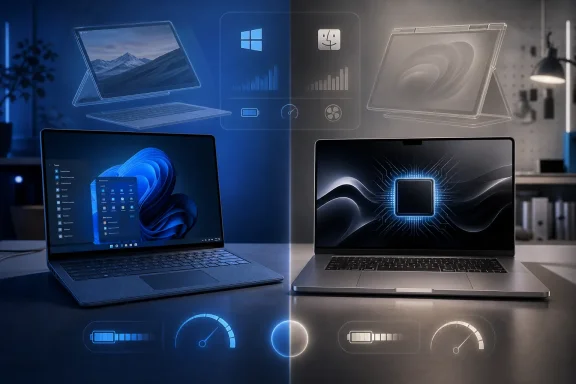
The argument is less about the Surface Laptop 7 being a bad machine than about what it represents. The reviewer credits the Snapdragon X Elite model with strong battery life, premium construction, a good keyboard and trackpad, and workable Windows on Arm application support. But the familiar clamshell design, lingering Arm compatibility concerns, and Windows 11’s broader software experience ultimately made the system feel conservative rather than distinctive.
Surface began as Microsoft’s attempt to show PC makers what Windows hardware could be. The line produced genuinely unusual devices: the detachable Surface Book, the rotating-screen Surface Laptop Studio, and the original Surface Pro tablet-laptop hybrid.
That range has narrowed sharply. As reported by Windows Central, Microsoft has retired the Surface Go and Surface Laptop Go lines, leaving Surface Pro and Surface Laptop as the core consumer families. Surface Book and Surface Laptop Studio have already disappeared from active development.
Microsoft is not standing entirely still. The company introduced Snapdragon X2 versions of Surface Pro and Surface Laptop in June, and its Surface Laptop Ultra is planned as a high-performance creator and AI-development machine using Nvidia RTX Spark hardware. Microsoft also added an optional integrated privacy display to some business-focused Surface Laptop configurations.
Still, the How-To Geek piece argues that these moves do not replace the kind of form-factor experimentation that made Surface compelling to enthusiasts in the first place.
That comparison will not land the same way for every Windows user. macOS remains a poor substitute for organizations dependent on Windows-only applications, Active Directory tooling, certain engineering software, or specialized peripherals. Apple’s laptops also still lack touchscreen support, which remains a practical Surface advantage for note-taking, markup, and tablet-style work.
But the criticism should be familiar to longtime Surface owners: Microsoft’s hardware is increasingly polished and predictable while the company’s most visible Windows changes have centered on Copilot, AI features, and service integration.
For Surface buyers, the practical question is no longer whether the current Laptop and Pro are competent—they are—but whether their conventional designs and Windows-on-Arm trade-offs fit the workload better than a Mac, ThinkPad, Asus, or another Windows alternative.
The argument is less about the Surface Laptop 7 being a bad machine than about what it represents. The reviewer credits the Snapdragon X Elite model with strong battery life, premium construction, a good keyboard and trackpad, and workable Windows on Arm application support. But the familiar clamshell design, lingering Arm compatibility concerns, and Windows 11’s broader software experience ultimately made the system feel conservative rather than distinctive.
 From showcase hardware to a narrower lineup
Surface began as Microsoft’s attempt to show PC makers what Windows hardware could be. The line produced genuinely unusual devices: the detachable Surface Book, the rotating-screen Surface Laptop Studio, and the original Surface Pro tablet-laptop hybrid.That range has narrowed sharply. As reported by Windows Central, Microsoft has retired the Surface Go and Surface Laptop Go lines, leaving Surface Pro and Surface Laptop as the core consumer families. Surface Book and Surface Laptop Studio have already disappeared from active development.
Microsoft is not standing entirely still. The company introduced Snapdragon X2 versions of Surface Pro and Surface Laptop in June, and its Surface Laptop Ultra is planned as a high-performance creator and AI-development machine using Nvidia RTX Spark hardware. Microsoft also added an optional integrated privacy display to some business-focused Surface Laptop configurations.
Still, the How-To Geek piece argues that these moves do not replace the kind of form-factor experimentation that made Surface compelling to enthusiasts in the first place.
Why the Mac won this comparison
The writer chose Apple’s M4 MacBook Pro after considering other Windows vendors, including Asus and Lenovo. Apple’s design is also mature, but the MacBook Pro was judged to offer a faster chip, stronger video-call processing, closer iPhone integration, and a more cohesive software-and-hardware experience.That comparison will not land the same way for every Windows user. macOS remains a poor substitute for organizations dependent on Windows-only applications, Active Directory tooling, certain engineering software, or specialized peripherals. Apple’s laptops also still lack touchscreen support, which remains a practical Surface advantage for note-taking, markup, and tablet-style work.
But the criticism should be familiar to longtime Surface owners: Microsoft’s hardware is increasingly polished and predictable while the company’s most visible Windows changes have centered on Copilot, AI features, and service integration.
For Surface buyers, the practical question is no longer whether the current Laptop and Pro are competent—they are—but whether their conventional designs and Windows-on-Arm trade-offs fit the workload better than a Mac, ThinkPad, Asus, or another Windows alternative.
References
- Primary source: How-To Geek
Published: 2026-07-15T14:30:15+00:00
I switched from Surface to a Mac because Microsoft stopped innovating
What happened to Microsoft pushing PC boundaries? www.howtogeek.com
- Related coverage: itpro.com
Microsoft Surface Laptop 8 (13.8in) review | IT Pro
The business model of the Surface Laptop 8 is a Panther Lake beast with long battery life and a privacy displaywww.itpro.com - Official source: microsoft.com
Surface Laptop Ultra: The new performance Surface Laptop | Microsoft Surface
Discover the new Surface Laptop Ultra. Built for world makers and creative pros who require cutting-edge AI performance, power, and portability.www.microsoft.com - Official source: learn.microsoft.com
Surface integrated privacy screen overview - Surface | Microsoft Learn
Learn how the Surface integrated privacy screen works, including how to enable it, manage settings, and understand display behavior.learn.microsoft.com - Official source: news.microsoft.com
- Official source: support.microsoft.com
Surface Laptop 8th Edition update history | Microsoft Support
List of updates for Surface Laptop 8th Edition.support.microsoft.com

