

A fresh guide from AddictiveTips says VPN use remains legal in most countries, but its country-by-country rundown underscores how quickly the answer changes once a user crosses a border.
For Windows users, the basic distinction is straightforward: running a VPN client to encrypt traffic on public Wi-Fi, connect to a company network, or reduce ISP visibility is generally lawful. A VPN does not, however, legalize copyright infringement, fraud, prohibited content, or other conduct that is illegal where the user is located. Using one to switch streaming regions is usually a service-terms issue rather than a criminal matter.
The notable development is not a universal “VPN ban,” but increasingly targeted rules aimed at providers, distribution, content access, and circumvention.
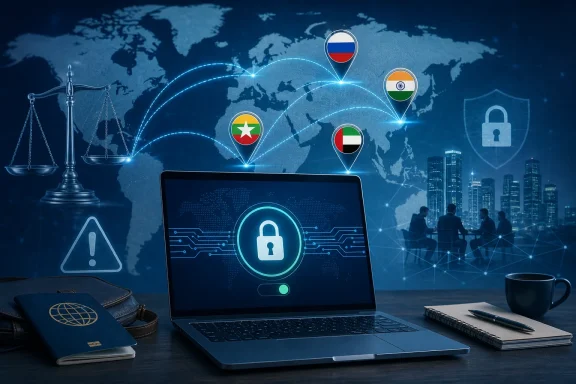
Myanmar’s 2025 Cybersecurity Law regulates VPN service providers rather than imposing a clean, universal ban on individual use, according to legal analysis published after the law took effect. That matters because broad claims that VPNs are simply illegal there can obscure the actual risk: enforcement, blocking, device scrutiny, and the content accessed may all be more relevant than whether a VPN app is installed.
Russia has also tightened its approach. The Kremlin confirmed in July 2025 that new administrative liability covers advertising tools used to reach restricted online resources, including VPN services. That is different from a blanket ban on personal VPN use, but it adds legal exposure for vendors, promoters, and businesses operating in the market while Roskomnadzor continues blocking non-compliant services.
India is another case where “legal” does not mean private. CERT-In’s 2022 cybersecurity directions require covered VPN providers to retain specified customer and usage records for five years. Several international providers responded by removing physical servers from India rather than comply. A Windows laptop connected to a VPN endpoint in India may therefore have a materially different privacy posture from one using infrastructure elsewhere.
UAE cybercrime law focuses on using a false IP address or technical means to commit a crime or conceal it. In other words, a corporate VPN connection is not the same thing as using one to evade a local prohibition. Penalties attach to the underlying offense and intent, which can be severe.
For Windows users, the basic distinction is straightforward: running a VPN client to encrypt traffic on public Wi-Fi, connect to a company network, or reduce ISP visibility is generally lawful. A VPN does not, however, legalize copyright infringement, fraud, prohibited content, or other conduct that is illegal where the user is located. Using one to switch streaming regions is usually a service-terms issue rather than a criminal matter.
 Restrictions are becoming more specific
The notable development is not a universal “VPN ban,” but increasingly targeted rules aimed at providers, distribution, content access, and circumvention.Myanmar’s 2025 Cybersecurity Law regulates VPN service providers rather than imposing a clean, universal ban on individual use, according to legal analysis published after the law took effect. That matters because broad claims that VPNs are simply illegal there can obscure the actual risk: enforcement, blocking, device scrutiny, and the content accessed may all be more relevant than whether a VPN app is installed.
Russia has also tightened its approach. The Kremlin confirmed in July 2025 that new administrative liability covers advertising tools used to reach restricted online resources, including VPN services. That is different from a blanket ban on personal VPN use, but it adds legal exposure for vendors, promoters, and businesses operating in the market while Roskomnadzor continues blocking non-compliant services.
India is another case where “legal” does not mean private. CERT-In’s 2022 cybersecurity directions require covered VPN providers to retain specified customer and usage records for five years. Several international providers responded by removing physical servers from India rather than comply. A Windows laptop connected to a VPN endpoint in India may therefore have a materially different privacy posture from one using infrastructure elsewhere.
The UAE example: intent matters
The guide correctly flags the United Arab Emirates as a place where the purpose of VPN use matters. The UAE’s telecom regulator says companies, banks, and institutions may use VPNs for internal-network access. But the regulator also warns that hosting or operating a service that bypasses local ISP filtering can lead to blocking.UAE cybercrime law focuses on using a false IP address or technical means to commit a crime or conceal it. In other words, a corporate VPN connection is not the same thing as using one to evade a local prohibition. Penalties attach to the underlying offense and intent, which can be severe.
What admins and travelers should do
Windows admins should treat VPN deployment as a compliance issue, not merely a connectivity choice:- Confirm the local rules before sending staff or managed devices abroad.
- Preconfigure approved corporate VPN profiles before travel; app stores and provider sites may be blocked after arrival.
- Do not assume consumer “no-logs” claims override local retention, registration, or disclosure rules.
- Keep corporate remote access separate from staff attempts to bypass local content restrictions.
References
- Primary source: AddictiveTips
Published: 2026-07-17T10:27:04+00:00
Are VPNs Illegal? Laws, Bans, and Penalties by Country
Are VPNs illegal where you live? Find out which countries restrict VPN use, what activities can break the law, and how to stay compliant.www.addictivetips.com