

Windows 11 has spent years feeling less like a shared project and more like something delivered from a sealed corporate pipeline. Features appeared, disappeared, shipped half-formed, or arrived in public releases before most enthusiasts ever had a meaningful chance to test them. Feedback often seemed to vanish into the void. The Windows Insider Program, once one of Microsoft’s most energetic community experiments, became harder to understand and less rewarding to participate in.
That is why Microsoft’s latest attempt to revive Windows enthusiasm matters. The company is not just changing a few channel names or posting another “we hear you” blog. It is trying to rebuild a relationship that used to be one of Windows’ greatest strengths: the bond between the people building the operating system and the people who cared enough to run unstable builds, file feedback, test edge cases, and argue about details long before features reached everyone else.
The mood around Windows 11 is not magically fixed. Trust does not return because a company says the right things for a few weeks. But the recent changes to the Windows Insider Program, combined with Microsoft’s broader quality push for Windows 11, suggest that something important is shifting.
There was a time when being a Windows Insider felt like being part of the story. Early Windows 10 builds turned operating system development into a community event. New builds were discussed like breaking news. Enthusiasts compared screenshots, hunted for hidden features, debated design choices, and watched Microsoft experiment in public.
It was not only technical. It was cultural.
The Insider Program had mascots, in-jokes, community rituals, and a sense that Microsoft was willing to be a little weird in public. Ninja Cat was silly, but that silliness mattered. It suggested that Windows was not just a licensing engine or a corporate deployment platform. It suggested there were people behind it who wanted users to feel involved.
That kind of energy is hard to manufacture. It emerges when a product team gives enthusiasts a reason to care. For years, Microsoft benefited from that enthusiasm. Insiders tolerated rough builds because they felt like their testing had purpose. They accepted risk because they believed they were helping shape Windows. They gave Microsoft free labor, yes, but they also gave it something more valuable: attention, goodwill, and advocacy.
That goodwill has eroded.
Windows 11 launched with a modern visual identity, but also with regressions that annoyed power users immediately. Taskbar flexibility was reduced. Context menus changed in ways that disrupted muscle memory. Some long-requested features seemed to stall. Other features, especially around promotion, widgets, Edge, and Copilot, felt more like Microsoft priorities than user priorities.
For enthusiasts, the problem was not simply that Windows 11 changed things. Windows users have always argued about change. The deeper frustration was that the feedback loop felt broken. If people complained about obvious pain points and those pain points remained unresolved for years, the implicit message was clear: Microsoft was listening politely, but not necessarily acting.
Over time, the distinction between Canary, Dev, Beta, and Release Preview blurred for many users. Some channels contained features that might never ship. Some had builds tied to future platform work. Some had staged rollouts that meant two people on the same channel could read the same build post, install the same update, and still not see the same feature.
That is frustrating for casual testers, but it is especially damaging for enthusiasts. The entire appeal of an Insider build is that it lets you try what Microsoft is building. If a feature is announced but only a subset of people receive it, the experience becomes arbitrary. Insiders are left wondering whether they are missing a configuration switch, affected by a gradual rollout, or simply excluded from the test group.
Microsoft’s new approach tries to make that cleaner.
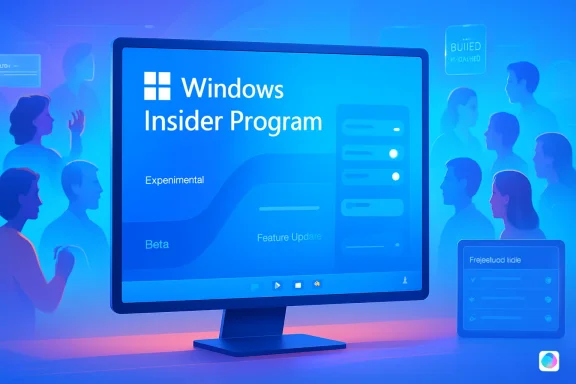
The refreshed structure focuses on Experimental and Beta as the two primary tracks. Experimental replaces the old Dev and Canary framing for users who want early, less certain work. Beta is meant to represent features that are closer to shipping. The distinction is simple: Experimental is where ideas appear early and may change, while Beta should be the more stable, more predictable channel.
The most important change may be Microsoft’s decision to end gradual feature rollouts in Beta. If Microsoft announces a Beta feature and an Insider installs that Beta update, that feature should be present. That sounds obvious, but it is a major quality-of-life change for a program built around testing.
Predictability matters. If Microsoft wants useful feedback, testers need access to the same experience Microsoft is asking them to evaluate. A fragmented rollout can be useful for telemetry, but it weakens the community experience. Ending that confusion in Beta is a strong signal that Microsoft understands the difference between experimentation and participation.
For years, enthusiasts have used unofficial tools and workarounds to enable hidden Windows features. That behavior should have told Microsoft something: people wanted agency. They did not merely want to receive whatever A/B test Microsoft assigned them. They wanted to explore, compare, test, and report back.
A first-party feature flags page brings some of that activity into the open. It lets Microsoft keep control of the testing surface while giving Insiders a clearer way to opt into the features they actually joined the program to try.
This could also improve feedback quality. If a user intentionally enables a feature, tests it, and files feedback, that feedback carries a different context from a complaint about something that appeared unexpectedly. It is easier for Microsoft to understand who tested what, when, and why.
The key will be implementation. If the feature flags page only includes a few carefully selected features, it may feel limited. If it becomes a reliable place for announced Experimental features, it could become one of the most important improvements to the Insider Program in years.
This is not flashy, but it matters enormously.
Testing pre-release operating system builds is risky. People expect bugs. What they do not want is to feel trapped. If joining the Insider Program means committing to a clean install later, many users will never join in the first place. Enthusiasts may tolerate that risk on a secondary machine, but fewer people will do it on a daily driver.
By making channel movement and exits less painful, Microsoft reduces the psychological barrier to participation. It also makes the program feel less punitive. A good preview program should let users move closer to the edge when they are curious and step back when they need stability.
There will still be exceptions. The earliest “Future Platforms” work will remain more isolated, and leaving that track may still require a clean install. That makes sense if those builds are not aligned to retail Windows releases. But for the broader Insider audience, reducing clean-install friction is a meaningful improvement.
Microsoft appears to know that. Its broader Windows quality push focuses on performance, reliability, and craft. Those are exactly the right words, but they will only matter if they translate into daily improvements users can feel.
Performance is not just benchmark scores. It is whether File Explorer opens quickly every time. It is whether the Start menu responds instantly. It is whether context menus stop feeling inconsistent. It is whether Windows feels light enough on modern hardware and respectful enough on older machines.
Reliability is not just avoiding blue screens. It is whether Windows Update behaves predictably. It is whether Bluetooth devices reconnect without drama. It is whether sleep, wake, docking, printing, Windows Hello, and everyday drivers work without users having to troubleshoot the platform itself.
Craft is the hardest category, but maybe the most important. Windows 11 has often felt like an operating system designed by teams that did not always agree with each other. Some areas look modern. Others feel inherited. Some settings are elegant. Others lead to legacy control panels or dead ends. Some features are useful. Others feel like promotions wearing the costume of productivity.
If Microsoft is serious about craft, it needs to make Windows feel coherent again. That means fewer random entry points, fewer forced experiences, better defaults, clearer settings, and more respect for the user’s workflow.
Microsoft’s plan to reduce update disruption is one of the most important parts of the Windows 11 quality push. The company has discussed giving users more control over when updates install, letting people skip updates during setup so they can reach the desktop faster, restart or shut down without being forced into an update, and pause updates for longer when necessary.
That is exactly the kind of change users have been requesting for years.
Windows Update sits at the intersection of security, reliability, and user autonomy. Microsoft has to keep PCs protected, but the company also needs to recognize that a computer is often a work tool, a school tool, a creative tool, or a gaming device being used at a specific moment for a specific reason. If Windows chooses that moment to impose itself, users blame Windows.
Giving people more control does not mean abandoning security. It means treating users as participants rather than obstacles. If Microsoft can reduce forced restarts, reduce update noise, and make update timing more predictable, Windows 11 will immediately feel more respectful.
When Windows 11 removed or reduced long-standing taskbar flexibility, many users saw it as Microsoft prioritizing a simplified vision over real workflows. Some people use vertical taskbars because they have ultrawide monitors. Some prefer the taskbar at the top because that is how they have worked for decades. Some just want their PC arranged their way.
The taskbar is one of the most visible and frequently used parts of Windows. When users lose control over it, they feel it constantly.
Bringing back flexibility is Microsoft acknowledging that personalization is not clutter. It is part of what makes Windows Windows. The operating system became dominant partly because it adapted to different hardware, different work styles, and different users. A polished design is valuable, but Windows should not become polished at the expense of flexibility.
If Microsoft can restore taskbar options without compromising reliability or consistency, it will send a powerful message: feedback can reverse course.
AI can be useful in an operating system. It can help search, summarize, automate, troubleshoot, and assist with accessibility. But when AI entry points appear in too many apps or interrupt too many flows, they begin to feel like marketing rather than utility.
Reducing unnecessary Copilot entry points is a good step. The question is whether Microsoft can continue showing restraint. Enthusiasts are not necessarily anti-AI. Many are early adopters. But they are sensitive to features that feel bolted on, especially when long-standing Windows issues remain unresolved.
A better Windows AI strategy would be quiet, contextual, and optional. It would focus on places where AI clearly saves time or improves accessibility. It would avoid duplicative buttons and promotional surfaces. Most importantly, it would make AI feel like a tool the user controls, not a strategy the user is forced to witness.
The old problem with Feedback Hub was not just interface friction. It was confidence. Users could submit feedback, upvote issues, add details, and still see no visible movement. Over time, that teaches people not to bother.
A redesigned Feedback Hub can help, but the real fix is transparency. Microsoft should show which issues are under review, which are acknowledged, which are fixed, and which are not being pursued. It should connect feedback to build changes more explicitly. It should tell users when their reports helped identify a problem.
Daniel Rubino’s suggestion that Microsoft credit Insiders who contributed to changes is exactly the kind of cultural shift the program needs. Recognition does not have to be elaborate. A simple note in release notes naming a feedback item, community thread, or group of Insiders would reinforce that participation matters.
People are more willing to test rough software when they can see the line between their effort and the result.
The early Insider Program worked because it felt human. Engineers, program managers, writers, and enthusiasts interacted in ways that felt relatively direct. There were limits, of course, but the community had a sense of shared momentum.
To recreate that, Microsoft needs more than scheduled events. It needs named owners. It needs consistent communication. It needs build notes that explain not only what changed, but why. It needs to acknowledge when feedback conflicts, when tradeoffs are difficult, and when a decision is unpopular but necessary.
Windows users are not a monolith. Enterprise administrators, gamers, accessibility advocates, developers, students, creators, and casual users often want different things. Enthusiast feedback can be loud, but it is not always representative. Microsoft’s challenge is to listen without simply chasing the loudest complaint.
That is why transparency is so important. If Microsoft chooses not to act on feedback, it should be willing to explain why. Silence creates resentment. Explanation creates at least the possibility of trust.
Windows is everywhere. That ubiquity can make it seem inevitable. But inevitability breeds neglect. Users may rely on Windows, but relying on something is not the same as loving it. Enthusiasts, developers, and power users are often the people who keep a platform culturally alive. They write guides, build tools, troubleshoot friends’ PCs, recommend hardware, test edge cases, and defend the platform when it deserves defending.
When those users feel ignored, the damage spreads.
Windows 11 arrived in an era when Microsoft was increasingly focused on cloud, subscriptions, AI, and enterprise services. That business strategy made sense financially, but it also left many users wondering whether Windows itself was still a priority. The operating system sometimes felt like a surface for Microsoft services rather than a product being lovingly refined.
The new quality push is Microsoft saying, in effect, that Windows still matters as a product. Not just as a distribution channel. Not just as an enterprise endpoint. Not just as the place Copilot lives. As the daily environment for hundreds of millions of people.
That is the right message. Now Microsoft has to prove it.
Those are not abstract promises. They are measurable.
Users will know whether File Explorer feels faster. They will know whether Windows Update is less disruptive. They will know whether Beta builds actually contain the features Microsoft says they contain. They will know whether Feedback Hub becomes more useful. They will know whether Copilot becomes more restrained or continues to spread.
That makes this a real credibility test.
If Microsoft follows through, Windows 11 could enter a much better phase. Not because it will suddenly become perfect, but because users may begin to feel that the operating system is moving in the right direction for the right reasons.
If Microsoft backslides, the reaction will be harsher. Enthusiasts have heard promises before. A reboot of the Insider Program raises expectations. Once Microsoft tells users it wants them involved again, ignoring them becomes even more damaging.
That is the practical value of the Insider Program.
But the emotional value is just as important. When enthusiasts feel invited into the process, Windows feels alive. When they feel excluded, Windows becomes just another piece of infrastructure.
Microsoft seems to understand that it lost some of the “spirit of the game.” The wacky mascots, the build-watching culture, the community debates, and the sense of discovery were never just fluff. They were signs of a healthier relationship between Microsoft and its most engaged users.
Bringing that back will require consistency. It will require humility. It will require Microsoft to ship fixes that users actually asked for, not just features that support a broader corporate narrative. It will require Windows to feel less noisy, more stable, more personal, and more respectful.
The good news is that Microsoft has started making the right moves. The Insider reboot, the clearer channels, the feature flags, the reduced Beta rollout confusion, the update controls, and the renewed focus on performance and craft all point in the same direction.
Windows 11 may finally be getting its spark back.
Now Microsoft has to keep it lit.
Source: Windows Central Windows Wrap: Windows 11 is getting its spark back
That is why Microsoft’s latest attempt to revive Windows enthusiasm matters. The company is not just changing a few channel names or posting another “we hear you” blog. It is trying to rebuild a relationship that used to be one of Windows’ greatest strengths: the bond between the people building the operating system and the people who cared enough to run unstable builds, file feedback, test edge cases, and argue about details long before features reached everyone else.
The mood around Windows 11 is not magically fixed. Trust does not return because a company says the right things for a few weeks. But the recent changes to the Windows Insider Program, combined with Microsoft’s broader quality push for Windows 11, suggest that something important is shifting.
 Windows enthusiasm used to be part of the product
There was a time when being a Windows Insider felt like being part of the story. Early Windows 10 builds turned operating system development into a community event. New builds were discussed like breaking news. Enthusiasts compared screenshots, hunted for hidden features, debated design choices, and watched Microsoft experiment in public.It was not only technical. It was cultural.
The Insider Program had mascots, in-jokes, community rituals, and a sense that Microsoft was willing to be a little weird in public. Ninja Cat was silly, but that silliness mattered. It suggested that Windows was not just a licensing engine or a corporate deployment platform. It suggested there were people behind it who wanted users to feel involved.
That kind of energy is hard to manufacture. It emerges when a product team gives enthusiasts a reason to care. For years, Microsoft benefited from that enthusiasm. Insiders tolerated rough builds because they felt like their testing had purpose. They accepted risk because they believed they were helping shape Windows. They gave Microsoft free labor, yes, but they also gave it something more valuable: attention, goodwill, and advocacy.
That goodwill has eroded.
Windows 11 launched with a modern visual identity, but also with regressions that annoyed power users immediately. Taskbar flexibility was reduced. Context menus changed in ways that disrupted muscle memory. Some long-requested features seemed to stall. Other features, especially around promotion, widgets, Edge, and Copilot, felt more like Microsoft priorities than user priorities.
For enthusiasts, the problem was not simply that Windows 11 changed things. Windows users have always argued about change. The deeper frustration was that the feedback loop felt broken. If people complained about obvious pain points and those pain points remained unresolved for years, the implicit message was clear: Microsoft was listening politely, but not necessarily acting.
The Insider Program had become too confusing
A major part of Microsoft’s reboot is a simplified channel structure. That may sound administrative, but it addresses one of the biggest problems with the Insider Program: it became difficult to know what any channel actually meant.Over time, the distinction between Canary, Dev, Beta, and Release Preview blurred for many users. Some channels contained features that might never ship. Some had builds tied to future platform work. Some had staged rollouts that meant two people on the same channel could read the same build post, install the same update, and still not see the same feature.
That is frustrating for casual testers, but it is especially damaging for enthusiasts. The entire appeal of an Insider build is that it lets you try what Microsoft is building. If a feature is announced but only a subset of people receive it, the experience becomes arbitrary. Insiders are left wondering whether they are missing a configuration switch, affected by a gradual rollout, or simply excluded from the test group.
Microsoft’s new approach tries to make that cleaner.
The refreshed structure focuses on Experimental and Beta as the two primary tracks. Experimental replaces the old Dev and Canary framing for users who want early, less certain work. Beta is meant to represent features that are closer to shipping. The distinction is simple: Experimental is where ideas appear early and may change, while Beta should be the more stable, more predictable channel.
The most important change may be Microsoft’s decision to end gradual feature rollouts in Beta. If Microsoft announces a Beta feature and an Insider installs that Beta update, that feature should be present. That sounds obvious, but it is a major quality-of-life change for a program built around testing.
Predictability matters. If Microsoft wants useful feedback, testers need access to the same experience Microsoft is asking them to evaluate. A fragmented rollout can be useful for telemetry, but it weakens the community experience. Ending that confusion in Beta is a strong signal that Microsoft understands the difference between experimentation and participation.
Feature flags could make testing feel intentional again
The Experimental channel is also getting a feature flags page, giving Insiders more direct control over visible features being tested. That is a practical improvement, but it also changes the psychology of the program.For years, enthusiasts have used unofficial tools and workarounds to enable hidden Windows features. That behavior should have told Microsoft something: people wanted agency. They did not merely want to receive whatever A/B test Microsoft assigned them. They wanted to explore, compare, test, and report back.
A first-party feature flags page brings some of that activity into the open. It lets Microsoft keep control of the testing surface while giving Insiders a clearer way to opt into the features they actually joined the program to try.
This could also improve feedback quality. If a user intentionally enables a feature, tests it, and files feedback, that feedback carries a different context from a complaint about something that appeared unexpectedly. It is easier for Microsoft to understand who tested what, when, and why.
The key will be implementation. If the feature flags page only includes a few carefully selected features, it may feel limited. If it becomes a reliable place for announced Experimental features, it could become one of the most important improvements to the Insider Program in years.
Lowering the cost of leaving matters too
One of the most overlooked changes is Microsoft’s effort to make it easier to move between Insider channels or leave the program without wiping a PC, in cases where the Windows core version allows it.This is not flashy, but it matters enormously.
Testing pre-release operating system builds is risky. People expect bugs. What they do not want is to feel trapped. If joining the Insider Program means committing to a clean install later, many users will never join in the first place. Enthusiasts may tolerate that risk on a secondary machine, but fewer people will do it on a daily driver.
By making channel movement and exits less painful, Microsoft reduces the psychological barrier to participation. It also makes the program feel less punitive. A good preview program should let users move closer to the edge when they are curious and step back when they need stability.
There will still be exceptions. The earliest “Future Platforms” work will remain more isolated, and leaving that track may still require a clean install. That makes sense if those builds are not aligned to retail Windows releases. But for the broader Insider audience, reducing clean-install friction is a meaningful improvement.
Windows 11 needs more than nostalgia
It is tempting to focus on the fun part of this story. The Windows Insider Program used to have personality, and many longtime Windows fans would love to see that return. But mascots, community meetups, and friendly blog posts cannot paper over the real issue: Windows 11 has to get better.Microsoft appears to know that. Its broader Windows quality push focuses on performance, reliability, and craft. Those are exactly the right words, but they will only matter if they translate into daily improvements users can feel.
Performance is not just benchmark scores. It is whether File Explorer opens quickly every time. It is whether the Start menu responds instantly. It is whether context menus stop feeling inconsistent. It is whether Windows feels light enough on modern hardware and respectful enough on older machines.
Reliability is not just avoiding blue screens. It is whether Windows Update behaves predictably. It is whether Bluetooth devices reconnect without drama. It is whether sleep, wake, docking, printing, Windows Hello, and everyday drivers work without users having to troubleshoot the platform itself.
Craft is the hardest category, but maybe the most important. Windows 11 has often felt like an operating system designed by teams that did not always agree with each other. Some areas look modern. Others feel inherited. Some settings are elegant. Others lead to legacy control panels or dead ends. Some features are useful. Others feel like promotions wearing the costume of productivity.
If Microsoft is serious about craft, it needs to make Windows feel coherent again. That means fewer random entry points, fewer forced experiences, better defaults, clearer settings, and more respect for the user’s workflow.
The update changes are a major credibility test
Few things damage trust in Windows more than disruptive updates. Users understand that updates are necessary, especially security updates. What frustrates them is losing control over timing.Microsoft’s plan to reduce update disruption is one of the most important parts of the Windows 11 quality push. The company has discussed giving users more control over when updates install, letting people skip updates during setup so they can reach the desktop faster, restart or shut down without being forced into an update, and pause updates for longer when necessary.
That is exactly the kind of change users have been requesting for years.
Windows Update sits at the intersection of security, reliability, and user autonomy. Microsoft has to keep PCs protected, but the company also needs to recognize that a computer is often a work tool, a school tool, a creative tool, or a gaming device being used at a specific moment for a specific reason. If Windows chooses that moment to impose itself, users blame Windows.
Giving people more control does not mean abandoning security. It means treating users as participants rather than obstacles. If Microsoft can reduce forced restarts, reduce update noise, and make update timing more predictable, Windows 11 will immediately feel more respectful.
The taskbar is symbolic
The return of more taskbar customization, including top and side positions, is more than a UI tweak. It is symbolic of the entire Windows 11 debate.When Windows 11 removed or reduced long-standing taskbar flexibility, many users saw it as Microsoft prioritizing a simplified vision over real workflows. Some people use vertical taskbars because they have ultrawide monitors. Some prefer the taskbar at the top because that is how they have worked for decades. Some just want their PC arranged their way.
The taskbar is one of the most visible and frequently used parts of Windows. When users lose control over it, they feel it constantly.
Bringing back flexibility is Microsoft acknowledging that personalization is not clutter. It is part of what makes Windows Windows. The operating system became dominant partly because it adapted to different hardware, different work styles, and different users. A polished design is valuable, but Windows should not become polished at the expense of flexibility.
If Microsoft can restore taskbar options without compromising reliability or consistency, it will send a powerful message: feedback can reverse course.
Copilot needs restraint, not saturation
Another important signal is Microsoft’s stated desire to be more intentional about where Copilot appears in Windows. That matters because many users have grown tired of AI being placed everywhere whether or not it improves the experience.AI can be useful in an operating system. It can help search, summarize, automate, troubleshoot, and assist with accessibility. But when AI entry points appear in too many apps or interrupt too many flows, they begin to feel like marketing rather than utility.
Reducing unnecessary Copilot entry points is a good step. The question is whether Microsoft can continue showing restraint. Enthusiasts are not necessarily anti-AI. Many are early adopters. But they are sensitive to features that feel bolted on, especially when long-standing Windows issues remain unresolved.
A better Windows AI strategy would be quiet, contextual, and optional. It would focus on places where AI clearly saves time or improves accessibility. It would avoid duplicative buttons and promotional surfaces. Most importantly, it would make AI feel like a tool the user controls, not a strategy the user is forced to witness.
Feedback Hub has to become meaningful
Microsoft has also emphasized improvements to Feedback Hub. That is necessary because feedback mechanisms only matter if people believe they influence outcomes.The old problem with Feedback Hub was not just interface friction. It was confidence. Users could submit feedback, upvote issues, add details, and still see no visible movement. Over time, that teaches people not to bother.
A redesigned Feedback Hub can help, but the real fix is transparency. Microsoft should show which issues are under review, which are acknowledged, which are fixed, and which are not being pursued. It should connect feedback to build changes more explicitly. It should tell users when their reports helped identify a problem.
Daniel Rubino’s suggestion that Microsoft credit Insiders who contributed to changes is exactly the kind of cultural shift the program needs. Recognition does not have to be elaborate. A simple note in release notes naming a feedback item, community thread, or group of Insiders would reinforce that participation matters.
People are more willing to test rough software when they can see the line between their effort and the result.
The community piece cannot be fake
Microsoft is also bringing back more direct community engagement, including meetups and public conversations with Insiders. That can be valuable, but only if it avoids feeling like corporate theater.The early Insider Program worked because it felt human. Engineers, program managers, writers, and enthusiasts interacted in ways that felt relatively direct. There were limits, of course, but the community had a sense of shared momentum.
To recreate that, Microsoft needs more than scheduled events. It needs named owners. It needs consistent communication. It needs build notes that explain not only what changed, but why. It needs to acknowledge when feedback conflicts, when tradeoffs are difficult, and when a decision is unpopular but necessary.
Windows users are not a monolith. Enterprise administrators, gamers, accessibility advocates, developers, students, creators, and casual users often want different things. Enthusiast feedback can be loud, but it is not always representative. Microsoft’s challenge is to listen without simply chasing the loudest complaint.
That is why transparency is so important. If Microsoft chooses not to act on feedback, it should be willing to explain why. Silence creates resentment. Explanation creates at least the possibility of trust.
Microsoft is trying to correct a strategic mistake
The deeper story is that Microsoft seems to be recognizing a strategic mistake: it treated Windows like a platform that could coast.Windows is everywhere. That ubiquity can make it seem inevitable. But inevitability breeds neglect. Users may rely on Windows, but relying on something is not the same as loving it. Enthusiasts, developers, and power users are often the people who keep a platform culturally alive. They write guides, build tools, troubleshoot friends’ PCs, recommend hardware, test edge cases, and defend the platform when it deserves defending.
When those users feel ignored, the damage spreads.
Windows 11 arrived in an era when Microsoft was increasingly focused on cloud, subscriptions, AI, and enterprise services. That business strategy made sense financially, but it also left many users wondering whether Windows itself was still a priority. The operating system sometimes felt like a surface for Microsoft services rather than a product being lovingly refined.
The new quality push is Microsoft saying, in effect, that Windows still matters as a product. Not just as a distribution channel. Not just as an enterprise endpoint. Not just as the place Copilot lives. As the daily environment for hundreds of millions of people.
That is the right message. Now Microsoft has to prove it.
Why enthusiasts should be cautiously optimistic
The most encouraging part of the current moment is that the changes are specific. Microsoft is not only saying “quality matters.” It is pointing to concrete areas: taskbar flexibility, update control, File Explorer performance, Windows Hello reliability, reduced notification noise, better widgets control, clearer Insider channels, feature flags, and improved feedback loops.Those are not abstract promises. They are measurable.
Users will know whether File Explorer feels faster. They will know whether Windows Update is less disruptive. They will know whether Beta builds actually contain the features Microsoft says they contain. They will know whether Feedback Hub becomes more useful. They will know whether Copilot becomes more restrained or continues to spread.
That makes this a real credibility test.
If Microsoft follows through, Windows 11 could enter a much better phase. Not because it will suddenly become perfect, but because users may begin to feel that the operating system is moving in the right direction for the right reasons.
If Microsoft backslides, the reaction will be harsher. Enthusiasts have heard promises before. A reboot of the Insider Program raises expectations. Once Microsoft tells users it wants them involved again, ignoring them becomes even more damaging.
The best version of Windows is built in public
Windows is too large, too diverse, and too important to be shaped only behind closed doors. Microsoft cannot predict every workflow from internal testing. It cannot reproduce every hardware combination in a lab. It cannot know every accessibility challenge, developer need, gaming edge case, or enterprise deployment concern without users participating.That is the practical value of the Insider Program.
But the emotional value is just as important. When enthusiasts feel invited into the process, Windows feels alive. When they feel excluded, Windows becomes just another piece of infrastructure.
Microsoft seems to understand that it lost some of the “spirit of the game.” The wacky mascots, the build-watching culture, the community debates, and the sense of discovery were never just fluff. They were signs of a healthier relationship between Microsoft and its most engaged users.
Bringing that back will require consistency. It will require humility. It will require Microsoft to ship fixes that users actually asked for, not just features that support a broader corporate narrative. It will require Windows to feel less noisy, more stable, more personal, and more respectful.
The good news is that Microsoft has started making the right moves. The Insider reboot, the clearer channels, the feature flags, the reduced Beta rollout confusion, the update controls, and the renewed focus on performance and craft all point in the same direction.
Windows 11 may finally be getting its spark back.
Now Microsoft has to keep it lit.
Source: Windows Central Windows Wrap: Windows 11 is getting its spark back
