

Microsoft’s “Windows 12” story — an AI‑first, modular operating system with Copilot baked into the platform and advanced features behind a subscription and hardware gate — has raced around the internet in recent days, but the claim stack is far thinner than the headlines suggest and many of the most explosive details remain unverified.
The narrative that captured attention ties together several recurring elements in Microsoft coverage: internal codenames (notably “Hudson Valley Next” and “CorePC”), proposals to treat AI as a core platform capability rather than an optional add‑on, concerted work on modularizing Windows, and rumored hardware thresholds that would require dedicated Neural Processing Units (NPUs) to unlock the full AI experience. Those themes appeared together in a widely circulated translation and secondary reporting that presented them as a near‑term shipping plan.
Within 48 hours the story prompted extensive pushback from better‑connected Microsoft watchers and Windows beat reporters. Several follow‑ups argued the original piece conflated engineering prototypes, internal experiments and OEM roadmaps with a concrete shipping timetable — and that Microsoft had not announced a consumer‑facing, subscription‑gated “Windows 12” to be released this year. The distinction matters: engineering breadcrumbs and product roadmaps are sources of legitimate speculation, but they are not the same as an official product plan.
This article takes that rumor stack apart: what was reported, which claims are verifiable today, which are likely misinterpretations, and what the plausible technical and commercial trade‑offs would be if Microsoft were to pursue an AI‑first, modular Windows with subscription‑tiered AI services.
Practical implications if Microsoft centralizes Copilot:
A modular approach could deliver real benefits:
What to watch next: Microsoft’s official announcements, Windows Insider previews, OEM certification programs (for Copilot+ classes), and clear product guidance on what hardware and licensing mean for end users. Until then, treat the viral claims as a mix of plausible strategic direction, engineering experiments, and speculative business scenarios — ones that merit planning and vigilance but not immediate panic.
The PC ecosystem is on the cusp of meaningful change driven by AI; how that change is managed — technically, commercially, and socially — will determine whether the next chapter expands inclusion and productivity or accelerates fragmentation and frustration. The responsible path for users and IT teams is the same as it always has been: inventory, test, and insist on primary sources before making large commitments.
Source: Digg Windows 12 Reportedly Set for Release This Year as a Fully Modular, Subscription-Based, AI-Focused OS | technology
 Background / Overview
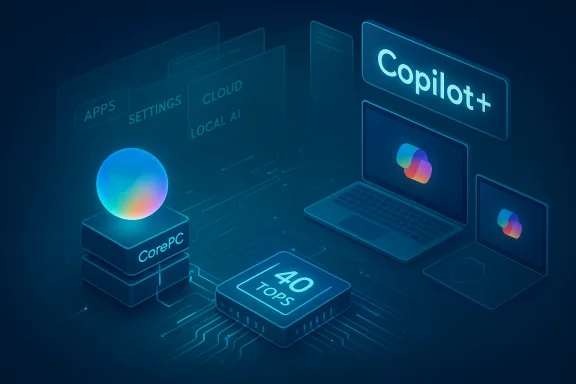
The narrative that captured attention ties together several recurring elements in Microsoft coverage: internal codenames (notably “Hudson Valley Next” and “CorePC”), proposals to treat AI as a core platform capability rather than an optional add‑on, concerted work on modularizing Windows, and rumored hardware thresholds that would require dedicated Neural Processing Units (NPUs) to unlock the full AI experience. Those themes appeared together in a widely circulated translation and secondary reporting that presented them as a near‑term shipping plan.Within 48 hours the story prompted extensive pushback from better‑connected Microsoft watchers and Windows beat reporters. Several follow‑ups argued the original piece conflated engineering prototypes, internal experiments and OEM roadmaps with a concrete shipping timetable — and that Microsoft had not announced a consumer‑facing, subscription‑gated “Windows 12” to be released this year. The distinction matters: engineering breadcrumbs and product roadmaps are sources of legitimate speculation, but they are not the same as an official product plan.
This article takes that rumor stack apart: what was reported, which claims are verifiable today, which are likely misinterpretations, and what the plausible technical and commercial trade‑offs would be if Microsoft were to pursue an AI‑first, modular Windows with subscription‑tiered AI services.
What the viral reports actually claimed
The viral narrative distilled to a few headline assertions that drove public reaction.- Windows 12 (codenamed Hudson Valley Next) will ship imminently as a ground‑up modular redesign called CorePC, replacing or superseding Windows 11.
- Copilot will be elevated from an optional assistant to a core, system‑level agent integrated across the OS experience.
- Full functionality will require dedicated on‑device NPUs with a stated performance threshold (commonly cited as ~40 TOPS), effectively gating advanced features to machines with modern neural silicon.
- Some advanced AI features — and potentially deeper Copilot capabilities — will be accessible only via a subscription, locking out owners of older PCs unless they pay for cloud or premium tiers.
What is verifiably true right now
Readers deserve a clear, evidence‑based baseline.- Microsoft has publicly moved Windows toward deeper AI integration; Copilot and on‑device model support are active parts of Windows 11 and related offerings. This is a documented strategic direction rather than a secret.
- Microsoft runs hardware programs and branding like Copilot+ PCs and has been working with OEMs to define device classes optimized for local AI inference. Those moves create legitimate hardware tiers that can carry extra features.
- There is no confirmed Microsoft announcement that a retail product called “Windows 12” will ship this year with a hard NPU requirement and subscription‑only advanced OS features. Veteran reporters and internal Microsoft contacts have pushed back on the stronger claims and the implied timetable. Treat a full, numbered Windows successor arriving imminently as unverified.
- Microsoft already sells subscription services (for example, Windows 365 Cloud PC and Microsoft 365), but those are distinct commercial products and do not constitute a subscription‑gated core OS in the way the viral piece framed it. Conflation of Cloud PC with a subscription OS is a common source of confusion.
Dissecting the technical claims
Copilot as a system service: plausible and already underway
Microsoft has systematically moved Copilot from a sidebar chatbot to a platform interaction model that can access system and cloud context, act on the user’s behalf (with consent), and expose capabilities across apps. That transition makes the idea of Copilot functioning as a system service plausible and consistent with public updates to Windows 11. However, platform status does not automatically mean the OS can be fully rearchitected overnight — integration takes time and incremental shipping.Practical implications if Microsoft centralizes Copilot:
- Greater cross‑app automation and agentic behaviors.
- New privacy and telemetry considerations for enterprise and consumer configurations.
- Opportunities for Microsoft to monetize specialized, high‑value Copilot features.
The NPU/40 TOPS hardware gate: technically specific but unproven
The claim that Windows’ “full” AI experience would require a dedicated NPU capable of roughly 40 TOPS is one of the most consequential technical assertions — and one of the easiest to misread.- Why the number matters: TOPS (trillions of operations per second) is a shorthand for raw inference throughput. Larger local models and multimodal workloads do benefit from higher TOPS, and the industry is coalescing around on‑device accelerators for latency, privacy, and offline capability.
- Why the claim is suspect: reporting that presented a single TOPS threshold as a universal requirement conflated prototype performance targets and internal engineering benchmarks with an official device requirement. Microsoft has not published a universal, retail hardware threshold that gates the entire OS to a specific TOPS metric.
- On‑device acceleration can be augmented by cloud inference or hybrid modes, meaning older machines may receive degraded but usable experiences rather than outright exclusion.
- Hardware diversity and OEM roadmaps make a single numeric threshold difficult to enforce broadly without widespread OEM coordination and a clear upgrade path for users.
CorePC and modular Windows: an engineering arc, not necessarily a rewrite
The idea of a modular Windows is not new; Microsoft has experimented for years with component separation and more updateable subsystems. Names like CorePC that appear in engineering notes are plausible internal experiments aimed at fixing long‑standing update and reliability problems. The leap from modularization experiments to shipping an entirely new, numbered OS this year is where the rumor likely overreached.A modular approach could deliver real benefits:
- Faster, smaller updates that reduce reboot windows.
- Tailored OS builds for distinct device classes (gaming, ultraportables, cloud thin clients).
- Easier security and maintenance for enterprise images.
Commercial model and subscription gating: separating fact from fear
The viral narrative suggested Microsoft might hide advanced AI features behind a subscription, effectively locking millions out of upgrades. This taps into real anxieties: the shift to service models can change ownership expectations and upgrade economics. But again, context matters.- Microsoft already offers subscription services that layer on top of Windows: Windows 365 Cloud PC and Microsoft 365 are mature offerings with published pricing; they illustrate how Microsoft can monetize cloud and productivity features while leaving a base OS license intact. Those offerings are not a precedent for converting the base consumer OS into a subscription product overnight.
- Vendors often create premium device tiers (e.g., Copilot+ PCs) that ship with specific hardware and experiences. Those tiers can legitimately justify premium pricing for devices while still allowing older devices to operate with reduced feature sets. The worry is whether Microsoft would require subscription payment to access software capabilities on existing hardware — and there is no public confirmation of such a plan.
Who benefits — and who is at risk
Clear winners if an AI‑first Windows arrives
- Enterprises that can standardize on new hardware and negotiate volume licensing will harness on‑device AI for privacy, latency, and productivity gains.
- OEMs that partner early for Copilot+ experiences gain a feature differentiator and potential value capture.
- Developers who build AI‑native apps that take advantage of local models and agentic APIs will find richer platform primitives.
At‑risk groups and systemic concerns
- Owners of older PCs — particularly those on constrained budgets or with long replacement cycles — face a potential capability gap if premium AI experiences require new silicon or subscriptions. That gap could be technical (no NPU) or economic (no subscription). Forum analyses and community threads highlight these fears about stratification and e‑waste.
- IT managers in large organizations must weigh the cost of renewing fleets, retraining staff, and retesting applications if a new Windows architecture arrives without backward compatibility guarantees.
- Privacy‑conscious users and regulators will scrutinize how Copilot system services collect and use context across apps and accounts. Deep system integration raises legitimate governance and compliance questions that enterprises should address proactively.
Practical guidance for users, IT teams and OEMs
If you run Windows devices or manage fleets, here are concrete steps to prepare for an uncertain, AI‑driven Windows future.- Don’t panic; verify. Follow Microsoft’s official channels and trusted Windows beat reporting for announcements rather than reacting to single secondary articles. Several reputable reporters and internal contacts have already pushed back on the strongest rumor claims.
- Audit hardware inventory now. Record CPU, GPU, and any accelerators present in your estate, and prioritize machines nearing end‑of‑life for replacement planning if AI features are business critical.
- Test hybrid strategies. Evaluate cloud‑augmented Copilot experiences (for example, Windows 365 Cloud PC) as fallback options for older machines that can’t support on‑device acceleration. Knowing how cloud modes degrade or preserve functionality will be crucial.
- Harden privacy and governance. If Copilot becomes a system service, update policies and consent flows in enterprise group policy and MDM systems to preserve least privilege and auditability.
- Engage OEM lifecycles. Ask device vendors about roadmaps for neural silicon and upgrade paths; OEMs that plan to market Copilot‑optimized devices will publish certification and driver support timelines.
- Prepare compatibility tests for line‑of‑business apps. Any substantial OS architectural shift increases the risk of regressions; put preflight tests and rollback plans in place.
Which claims are still unverifiable — and why that matters
Several specific, high‑impact claims remain unverified and require primary confirmation:- The 40 TOPS NPU requirement: this numeric threshold has been reported in translations and leaks but lacks a primary Microsoft policy or published specification. Treat it as an engineering target or prototype benchmark rather than a shipping requirement unless Microsoft states otherwise.
- A full consumer subscription lock on advanced OS features: Microsoft already offers subscriptions for cloud PC and productivity suites, but no public evidence shows a plan to convert the base retail OS into a subscription‑gated product on the claimed timeline. Conflation with Windows 365 is a common misreading.
- A definitive 2026 shipping date for a Windows 12 successor: veteran reporting and Microsoft contacts who have pushed back suggest that immediate release timetables are speculative; Microsoft’s near‑term focus has been described more as improving Windows 11 and delivering Copilot enhancements incrementally.
The bigger picture: why this rumor wave matters
Even if the most alarmist claims do not come true, the viral debate is useful because it forces three conversations that will shape the PC industry:- The tension between hardware gating and inclusion. If premium AI experiences require new silicon, the industry must decide how to serve users on legacy hardware without fragmenting the platform or creating perverse e‑waste incentives.
- The economics of system‑level AI. Microsoft and other platform owners will explore where to draw lines between free base features and premium AI services; those choices will change how consumers perceive ownership of the OS.
- The governance imperative. System integration of agents like Copilot magnifies the need for privacy safeguards, audit trails, and enterprise controls. Policymakers and IT teams will be watching closely.
Conclusion
The idea of a modular, AI‑first Windows that elevates Copilot and uses on‑device neural silicon to unlock richer experiences is coherent with Microsoft’s strategic direction — but the specific, headline‑friendly package many readers saw online (a Windows 12 launching this year, locked to 40 TOPS NPUs and behind a subscription paywall) is not supported by primary confirmations and has been widely questioned by experienced reporters.What to watch next: Microsoft’s official announcements, Windows Insider previews, OEM certification programs (for Copilot+ classes), and clear product guidance on what hardware and licensing mean for end users. Until then, treat the viral claims as a mix of plausible strategic direction, engineering experiments, and speculative business scenarios — ones that merit planning and vigilance but not immediate panic.
The PC ecosystem is on the cusp of meaningful change driven by AI; how that change is managed — technically, commercially, and socially — will determine whether the next chapter expands inclusion and productivity or accelerates fragmentation and frustration. The responsible path for users and IT teams is the same as it always has been: inventory, test, and insist on primary sources before making large commitments.
Source: Digg Windows 12 Reportedly Set for Release This Year as a Fully Modular, Subscription-Based, AI-Focused OS | technology
