

Bluetooth 6 is the next major Bluetooth milestone and it changes three things that matter to everyday users: much finer device positioning, meaningful audio quality and latency gains via new codecs, and lower-power, smarter device discovery — but widespread benefits will arrive only as chipmakers, accessory makers, and OS vendors push firmware and drivers into real products.
Bluetooth Core Specification 6.0 was published by the Bluetooth Special Interest Group (SIG) in September 2024 and introduced a set of features that focus less on headline throughput and more on precision, reliability, and real-world audio performance. The SIG described Channel Sounding, enhanced advertising controls, Isochronous Adaptation Layer (ISOAL) improvements, and other quality-of-life and security upgrades as the foundation of the new core release. Since then the SIG moved to a biannual cadence for core-spec updates and rolled out Bluetooth Core 6.2 in late 2025, which refines latency, testing, and HCI transport behavior for LE Audio and other use cases. This faster cadence makes Bluetooth developments more incremental and quicker to enter devices, but it also means vendors must track multiple small spec changes instead of one big jump every few years. Windows users should note that Microsoft’s own adoption path for LE Audio and related Bluetooth features has progressed in parallel: Windows 11 builds gained LE Audio and “super wideband stereo” improvements in 24H2, and Microsoft has previewed a two‑device shared‑audio feature that uses LE Audio primitives. Those Windows-specific previews illustrate both the potential and the real-world complexity of rolling out new Bluetooth primitives across host OS, drivers, and accessory firmware.
The Bluetooth roadmap now points to finer precision, improved audio options, and more efficient host behavior — and while Bluetooth 6 won’t make every existing peripheral obsolete overnight, it sets a practical foundation for noticeably better wireless experiences in the next wave of phones, headsets, and PCs.
Source: Windows Central https://www.windowscentral.com/hardware/bluetooth-6/
 Background / Overview
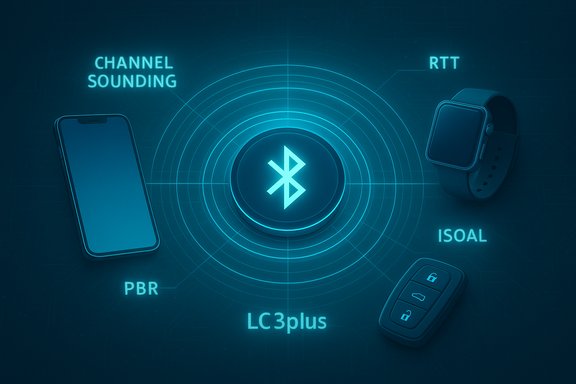
Bluetooth Core Specification 6.0 was published by the Bluetooth Special Interest Group (SIG) in September 2024 and introduced a set of features that focus less on headline throughput and more on precision, reliability, and real-world audio performance. The SIG described Channel Sounding, enhanced advertising controls, Isochronous Adaptation Layer (ISOAL) improvements, and other quality-of-life and security upgrades as the foundation of the new core release. Since then the SIG moved to a biannual cadence for core-spec updates and rolled out Bluetooth Core 6.2 in late 2025, which refines latency, testing, and HCI transport behavior for LE Audio and other use cases. This faster cadence makes Bluetooth developments more incremental and quicker to enter devices, but it also means vendors must track multiple small spec changes instead of one big jump every few years. Windows users should note that Microsoft’s own adoption path for LE Audio and related Bluetooth features has progressed in parallel: Windows 11 builds gained LE Audio and “super wideband stereo” improvements in 24H2, and Microsoft has previewed a two‑device shared‑audio feature that uses LE Audio primitives. Those Windows-specific previews illustrate both the potential and the real-world complexity of rolling out new Bluetooth primitives across host OS, drivers, and accessory firmware. What’s new in Bluetooth 6 (and why it matters)
Bluetooth Channel Sounding: centimeter-level distance, secure ranging
- What it is: Channel Sounding combines Phase‑Based Ranging (PBR) with Round‑Trip Timing (RTT) to enable highly accurate distance measurements between two Bluetooth LE devices. The SIG describes this as a secure, fine‑ranging capability capable of centimeter-level accuracy in practical scenarios.
- Why it matters: Historically Bluetooth-based location used RSSI (signal strength), which is coarse and unreliable. Channel Sounding uses physical signal properties and time-of-flight techniques that dramatically improve precision. That opens immediate, practical scenarios:
- “Find My” and device-recovery scenarios where a phone or watch can steer you with meter-to-centimeter guidance.
- Digital keys (cars, hotels) that only unlock when you are truly within physical proximity, reducing relay/MITM attack risks.
- Context‑aware peripherals that respond only when you are within a distinct, configurable zone (e.g., keyboards that unlock or sleep based on distance).
- Technical guardrails: PBR offers high accuracy but is cyclic (phase values wrap), so RTT is used as a complementary method to remove distance ambiguity and extend range. The spec’s implementation details — frequency separation choices, channel widths, and antenna paths — determine the usable range and precision envelope. In practice, a single-antenna device can benefit; multiple antennas improve robustness and angle estimation.
- Real-world rollout: Companies already demo implementable stacks and SoC integrations that extend Channel Sounding into 3D localization and angle estimation, pointing to early commercial implementations in 2025–2026 — but full ecosystem utility requires both hosts and accessories to support the feature.
Smarter scanning and pairing: Decision‑Based Advertising Filtering and Monitoring Advertisers
Bluetooth 6 introduces advertising-management improvements that reduce wasted scanning work and host power usage.- Decision‑Based Advertising Filtering (DBAF) and Monitoring Advertisers place more of the matching logic into the controller/host-controller interface (HCI) so the host doesn’t have to run high‑duty scans to discover which advertiser(s) remain in range. The result is faster, more efficient device switching and less battery drain on both phones and accessories.
- For users this means:
- Faster, less flaky pairing and switching between headsets and laptops.
- Smaller wasted CPU impact on phones and PCs when scanning for beacons or peripherals.
- Better behavior for always-advertising accessories (tags, trackers) that need to be observed without forcing constant host wake cycles.
ISOAL and isochronous stream improvements: better audio timing without sacrificing throughput
Bluetooth LE Audio introduced isochronous channels to enable synchronized, time-aligned audio streams between hosts and multiple sinks; Bluetooth 6 improves the Isochronous Adaptation Layer (ISOAL) to reduce latency while preserving throughput.- Why that’s important: Increasing packet payloads and throughput often increased jitter and latency. ISOAL enhancements let devices send larger packets — boosting effective throughput and firmware‑update reliability — while keeping the timing tight enough for media. That reduces or eliminates lip‑sync issues and makes multi‑sink scenarios (two headsets, for example) more realistic.
- Practical outcome: Expect smoother LE Audio playback, more reliable firmware-over-the-air (FOTA) flows for headsets, and better responsiveness for peripherals that stream small, timely payloads (HID, sensors).
LC3plus: a licensed, high‑resolution codec that moves the needle for wireless audio
- What LC3plus brings: LC3plus is the higher‑end sibling of the BLE‑standardized LC3 codec. It supports high‑resolution modes (up to 96 kHz / 24‑bit transmission), lower coding delay (sub‑10 ms is achievable in practical modes), robust packet‑loss concealment, and bitrate scalability up to ~500 kbps per channel for transparent audio. LC3plus gained Hi‑Res Audio Wireless certification from the Japan Audio Society, which confirms its high sampling‑rate and bit‑depth capabilities.
- Licensing caveat: Unlike LC3 (which is a free part of the Bluetooth LE Audio baseline), LC3plus is offered under a patent license administered by Fraunhofer IIS (co‑developer of the codec). That means LC3plus will appear primarily in licensed, premium devices where manufacturers choose to pay for the higher fidelity and lower latency.
- What users should expect: Premium wireless headphones and some pro‑grade accessories are the likeliest early adopters of LC3plus. For the mainstream, LC3 (the free standard codec) delivers very good quality and battery life, and only users who need Hi‑Res Wireless or ultra‑low latency will see a clear benefit from LC3plus in the short term.
The Windows angle: where Microsoft and PC makers stand
Windows has been actively adding LE Audio support and related platform plumbing. Microsoft’s work in Windows 11 (notably the 24H2 cycle) introduced new audio behaviors — including “super wideband stereo” that prevents stream downgrades to mono when using a headset microphone — and a staged preview of Shared Audio built on LE Audio primitives. Those Windows moves show how host OS features and Bluetooth core updates must collide with OEM drivers, firmware, and accessory updates before users actually experience benefits.- Practical realities for PC buyers:
- Many laptops sold in 2024–2025 still shipped with Bluetooth 5.x controllers. Even when a PC contains a newer Bluetooth radio, functionality depends on OEM driver updates (and often firmware updates for accessories). Community analysis and hardware teardowns repeatedly show the Bluetooth feature level can vary by vendor firmware and driver combinations.
- Microsoft’s Shared Audio preview was initially gated to a subset of “Copilot+” PCs and required specific driver and accessory firmware states to function. This staged approach lowers risk but slows broad availability. IT administrators and early adopters should expect gradual expansion across SKUs rather than an overnight change.
Who benefits most — and who can safely wait
Clear winners
- Audiophiles and content creators who need low-latency, high-fidelity wireless audio will see measurable gains once LC3plus‑enabled devices and host support become commonplace.
- Wearable and asset-tracking scenarios — retail beacons, indoor navigation, and “Find My” network participants — benefit hugely from Channel Sounding’s precision and security improvements.
- Enterprise deployments that rely on robust, low-power beacons, axis-aware HMIs, or secure proximity (digital keys, access control) will gain reliability and reduced attack surface from distance-bounding features.
Most users — you can wait
For the majority of consumers, Bluetooth 5.x and modern LE Audio-capable devices already provide excellent battery life, acceptable latency for media, and sufficient range. If you aren’t aiming for hi‑res wireless audio or centimeter-level positioning today, there is little practical urgency to jump to Bluetooth 6 hardware immediately. The older standard will remain fine for keyboards, mice, typical headphones, and general-purpose accessories for many years.Practical checklist: how to prepare and what to check before buying
- Check device specs — not marketing blurbs.
- Look for explicit mention of Bluetooth 6.0 (or 6.2) in phone/laptop/SoC spec sheets; major vendors list this in the wireless section. Apple lists Bluetooth 6 for the iPhone 17 family; Google’s Pixel 10 spec pages also list Bluetooth 6.0 for that phone. Those are examples of host devices shipping with native support in 2025.
- Confirm accessory codec support.
- If you care about LC3plus Hi‑Res Wireless, check the headphone maker’s documentation for LC3plus support and whether the vendor mentions the Hi‑Res Wireless / JAS certification badge. Remember that LC3 (the standard LE Audio codec) is widely available and delivers strong battery/quality tradeoffs even without LC3plus.
- Update drivers and firmware.
- Even if your laptop’s radio supports Bluetooth 6 features, OEM drivers and vendor firmware for earphones/headsets must be updated to access new functionality (LE Audio, LC3 variants, Channel Sounding). Microsoft and vendors commonly gate features behind driver/firmware versions, so install OEM updates and accessory firmware before expecting different behavior.
- Use Windows Device Manager to verify Bluetooth version.
- Windows often exposes the LMP version in Device Manager; mapping LMP numbers to Bluetooth core versions is a straightforward way to confirm what your adapter actually reports. That guide mapping LMP to versions remains a practical resource for Windows users troubleshooting compatibility.
- Consider external adapters for PCs.
- If your laptop lacks a modern Bluetooth radio and you want early access to Bluetooth 6 features, a USB/Bluetooth combo dongle with vendor support for Bluetooth 6.x (and matching driver packages) is an option — but check driver maturity reports first. Community experiences with USB wireless adapters show real-world variability in throughput and stability depending on drivers.
Security and privacy — improvements and new considerations
Bluetooth 6 strengthens security in specific, practical areas:- Channel Sounding includes distance-bounding measures that defend against relay attacks — an important improvement for digital‑key scenarios and proximity‑based authentication. The spec explicitly combines PBR and RTT to make spoofing harder.
- However, new broadcast and Auracast‑style primitives (LE Audio broadcast modes) raise access-control questions for public deployments. Microsoft’s careful, gated Shared Audio preview illustrates how vendors are intentionally limiting initial exposure while crafting UX and privacy controls. In public Auracast scenarios, implementers must decide whether broadcasts are encrypted/controlled or entirely open; the security model chosen will change threat and privacy profiles.
- Operational note for IT: when deploying Bluetooth broadcast systems in enterprise or public venues, plan for explicit access controls and a firmware-update regime to keep radios and accessories patched against vulnerabilities exposed by new stack elements.
Timeline and adoption expectations
- Spec timeline: Bluetooth 6.0 published in September 2024; SIG moved to biannual core releases and published Bluetooth Core 6.2 in November 2025. That faster cadence will push smaller features into devices sooner but also fragment the timeline for vendor support.
- Device timeline: Early flagship phones (for example, the iPhone 17 family and the Pixel 10 series) shipped with Bluetooth 6.x networking components in 2025, demonstrating vendor willingness to adopt the new core in first‑wave devices. Wider laptop and accessory adoption picked up through 2025 and is expected to accelerate through 2026 as OEMs update Wi‑Fi/Bluetooth combo modules and accessory firmware. But PCs show slower, staggered adoption driven by OEM driver commitments and chipset availability.
- The bottom line: expect Bluetooth 6 features to arrive broadly across phones, earbuds, and some laptops in 2026, but adoption will be uneven — premium audio and flagship devices first, then midrange and enterprise devices as drivers and firmware proliferate.
Risks and caveats IT buyers and enthusiasts should watch
- Feature fragility across stacks: A Bluetooth 6‑capable radio doesn't guarantee full access to 6.0 functionality until the OS, drivers, and accessory firmware are all updated. Claims of “Bluetooth 6 support” in spec sheets often require version‑matching to unlock the full feature set; this is a multi‑party delivery problem.
- LC3plus is licensed: Premium codec availability will be gated by vendor licensing choices; expect LC3plus to be present in higher-margin consumer headsets and not necessarily in every pair you see on the shelf. That means “lossless” or “hi‑res” wireless labels may apply to a subset of devices.
- Latency variability: Even with ISOAL improvements and lower connection intervals introduced in 6.2, real latency depends on device buffering, DSP processing, and proprietary audio enhancements (ANC, spatial processing) inside headphones. Competitive gamers should still prefer wired or dedicated low‑latency RF solutions for deterministic performance.
- Privacy in broadcast contexts: Auracast-style broadcasting and public shared audio scenarios need careful access control to avoid unwanted listeners. Implementers must decide encryption and pairing models before rolling public broadcasts into venues. Microsoft’s conservative two‑sink preview is an explicit signal that the risks are being considered, but the ecosystem must align on secure defaults.
Practical buying guidance — quick checklist
- If you want hi‑res wireless audio or the best low-latency experience: buy LC3plus‑enabled headphones and a host known to support LC3plus (check vendor pages and firmware notes). Expect a premium price and a firmware update window.
- If you want better tracking, Find‑My features, or secure proximity keys: prioritize devices that advertise Channel Sounding / Bluetooth 6 support and confirm OS or app support for the higher‑precision APIs. Early adopters include some flagship phones and specialized tag-manufacturers.
- If you are fine with existing Bluetooth performance: there is no rush. Bluetooth 5.x and current LE Audio devices are excellent for day‑to‑day use. Plan upgrades as part of normal device refresh cycles.
Final analysis — the realistic impact of Bluetooth 6
Bluetooth 6 is evolutionary rather than revolutionary: it consolidates years of targeted improvements into a spec that prioritizes precision, robustness, and higher‑quality audio options. The most tangible short‑term wins are:- highly accurate, secure proximity sensing for tracking and digital keys (Channel Sounding),
- better multi‑sink and synchronized audio with lower perceptible latency (ISOAL + LE Audio evolution),
- and an optional licensable codec (LC3plus) that gives vendors a path to Hi‑Res Wireless.
The Bluetooth roadmap now points to finer precision, improved audio options, and more efficient host behavior — and while Bluetooth 6 won’t make every existing peripheral obsolete overnight, it sets a practical foundation for noticeably better wireless experiences in the next wave of phones, headsets, and PCs.
Source: Windows Central https://www.windowscentral.com/hardware/bluetooth-6/
