

Washington managed services provider Nortec Communications is using Microsoft’s July 2026 commercial licensing changes to make a familiar pitch: treat Microsoft 365 renewals as an access-control and cost-governance exercise, not merely an invoice approval.
In a July 13 press release distributed by WBOC, Nortec said organizations should inventory inactive accounts, match licenses to job roles, document approval paths and review monthly invoices before renewal. The advice is routine for IT departments, but Microsoft’s latest price and packaging changes make the timing more relevant for customers whose contracts renew after July 1.
Microsoft’s licensing update took effect on July 1, 2026. The company raised US commercial list pricing for Microsoft 365 E3 with Teams from $36 to $39 per user per month, an 8% increase, and Microsoft 365 E5 with Teams from $57 to $60, a 5% increase. Microsoft says existing customers retain prior pricing until their next renewal; renewals after July 1 move to the updated rates.
The price changes cover more than the enterprise suites. Office 365 E3 and E5, select Business and Frontline offers, Windows Enterprise, Enterprise Mobility + Security, Entra and Microsoft 365 Apps are also affected. Consumer and education subscriptions are not part of this commercial update, according to Microsoft’s pricing FAQ.
Nortec also points to the 5% premium attached to monthly billing on annual or triennial commitments under Microsoft’s New Commerce Experience. That surcharge is separate from the July 2026 list-price changes and has applied to new and renewing subscriptions under that billing model since April 2025.
A renewal review should cover:
The immediate job for organizations nearing renewal is to reconcile the tenant’s assigned licenses with active staff and required controls before the next contract date locks in higher pricing.
In a July 13 press release distributed by WBOC, Nortec said organizations should inventory inactive accounts, match licenses to job roles, document approval paths and review monthly invoices before renewal. The advice is routine for IT departments, but Microsoft’s latest price and packaging changes make the timing more relevant for customers whose contracts renew after July 1.
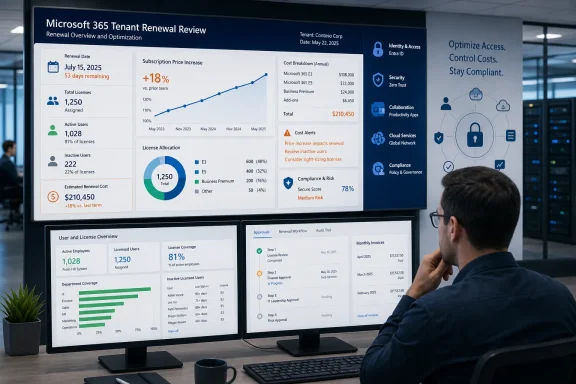 Microsoft’s new prices are already in effect
Microsoft’s licensing update took effect on July 1, 2026. The company raised US commercial list pricing for Microsoft 365 E3 with Teams from $36 to $39 per user per month, an 8% increase, and Microsoft 365 E5 with Teams from $57 to $60, a 5% increase. Microsoft says existing customers retain prior pricing until their next renewal; renewals after July 1 move to the updated rates.The price changes cover more than the enterprise suites. Office 365 E3 and E5, select Business and Frontline offers, Windows Enterprise, Enterprise Mobility + Security, Entra and Microsoft 365 Apps are also affected. Consumer and education subscriptions are not part of this commercial update, according to Microsoft’s pricing FAQ.
Nortec also points to the 5% premium attached to monthly billing on annual or triennial commitments under Microsoft’s New Commerce Experience. That surcharge is separate from the July 2026 list-price changes and has applied to new and renewing subscriptions under that billing model since April 2025.
The practical work is unglamorous
For Windows admins and Microsoft 365 tenant owners, the useful part of Nortec’s message is the operational checklist. License waste frequently comes from accounts that were never removed, users upgraded for a short-lived project, overlapping third-party products, and roles granted directly rather than through managed Entra ID groups.A renewal review should cover:
- Disabled, inactive and departing-user accounts, including mailbox and OneDrive retention requirements.
- License assignments against actual app, security and compliance needs.
- Group-based licensing and approval workflows for joiners, movers and leavers.
- Whether included Microsoft capabilities can replace separate tools.
- Billing frequency, contract term and the renewal date for each subscription.
The immediate job for organizations nearing renewal is to reconcile the tenant’s assigned licenses with active staff and required controls before the next contract date locks in higher pricing.
References
- Primary source: WBOC TV
Published: 2026-07-14T13:20:00+00:00
Washington Managed IT Services Provider Explains Microsoft 365 Control
Control Microsoft 365 Renewals, Access, and Costs with – Insights from a Washington Managed IT Provider Washington,www.wboc.com
