• Thread Author
Microsoft has turned its Copilot chat experience into a functioning checkout lane, enabling in-chat purchases through new integrations with Shopify, PayPal and Etsy and rolling out a U.S.-first Copilot Checkout that keeps merchants as the merchant of record while collapsing discovery-to-purchase into a single conversational surface.

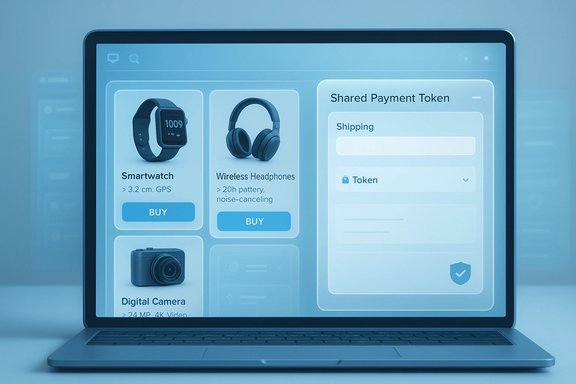
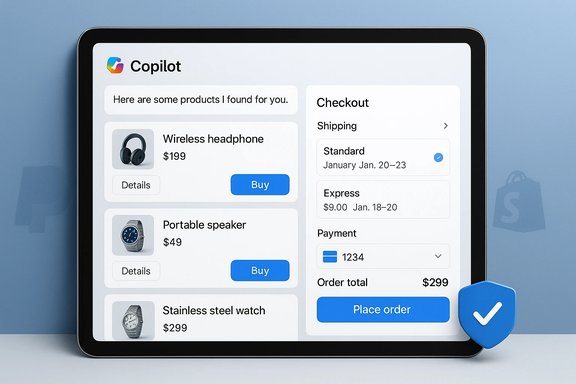
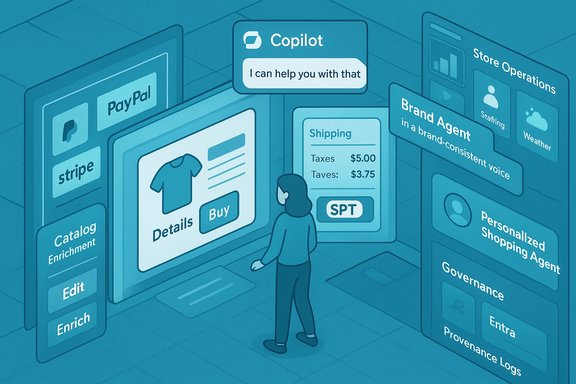
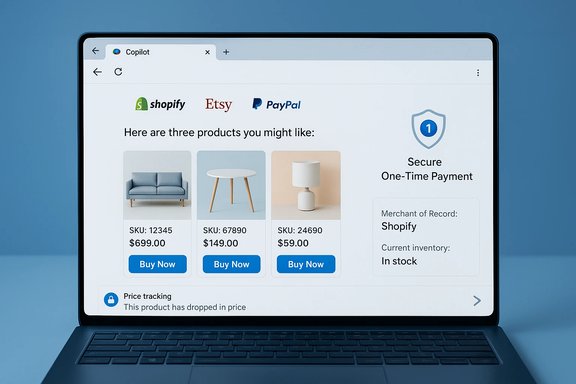
E‑commerce product page on a laptop showing three items, brand logos, and a Secure One-Time Payment badge.Background / Overview​

The move marks another decisive step in the industry shift from “links to actions”: rather than finishing a shopping conversation with a link to a merchant page, Copilot can now surface product choices and complete a checkout inside the chat or Copilot app itself. Microsoft positions this capability as Copilot Checkout—a friction-reducing feature that stitches together product discovery, price-tracking, merchant checkout rails and tokenized payments so users can confirm orders without being redirected to traditional storefront pages.
This rollout follows a wave of similar agentic commerce initiatives launched across the ecosystem over the past year, where platforms and commerce providers introduced machine-readable product feeds, delegated-payment primitives and standardized agent-to-merchant protocols. The core technical primitives—structured catalog metadata, ephemeral tokenized payments, and an orchestration/runtime layer that manages multi-step agent flows—are now in active deployment across multiple vendors. Microsoft’s Copilot Checkout leverages those same primitives while relying on partnerships with Shopify, PayPal, Etsy and payments partners such as Stripe to route payments and keep merchants responsible for fulfillment and returns.
The promise is tangible: faster conversions, fewer tabs, and a more personal “concierge” experience inside a tool many people already use for answers. But the emergence of agentic checkout also raises immediate questions about privacy, merchant control, dispute handling, discoverability, and platform economics. This feature is as much a technical integration challenge as it is a strategic shift in where control and value accrue in the shopping stack.

How Copilot Checkout works — a technical walkthrough​

The agentic stack in plain terms​

At a high level, Copilot Checkout implements three coordinated layers:
  • Discovery & product feed ingestion — Merchants (via Shopify or other platforms) publish machine-readable catalog data: SKUs, variants, GTINs, images, descriptions, inventory and shipping windows. Agents query these canonical records rather than scraping HTML product pages, which reduces hallucination risk and keeps responses grounded in merchant-provided data.
  • Agent orchestration & conversational flow — The Copilot runtime parses natural-language shopper intent, asks clarifying questions when needed (size, color, delivery window), and presents a short list of vetted options. It maintains provenance—tracking which product records produced each suggestion—so actions can be tied back to auditable orders.
  • Tokenized / delegated checkout — When the user confirms a purchase, the assistant requests a secure, short-lived checkout session or payment token that hands the transaction back to the merchant’s checkout system. The merchant remains the merchant of record; fulfillment, returns and customer service stay with them.

Key technical pieces​

  • Machine-readable product metadata: This is the foundation. Agents rely on structured feeds (Shopify Catalog or similar) so queries like “best cordless drill under $100” return verifiable SKUs with up‑to‑date inventory and shipping metadata.
  • Checkout token: Instead of exposing raw payment instruments to the agent, the platform exchanges ephemeral credentials or a delegated payment token that authorizes a single transaction or session. This reduces direct exposure of card data to the assistant and gives a clear audit trail.
  • Provenance & observability: Every step—from the query that discovered an item, to the agent’s reasoning and the checkout token—must be logged and associated with the resulting order to support disputes, refunds and regulatory requirements.

Where the plumbing comes from​

Implementations of agentic commerce increasingly follow a standard pattern: platforms offer a catalog API or feed, payment partners support delegated/tokenized rails, and assistants expose a checkout affordance inside the conversation. Microsoft has bundled these pieces into Copilot Checkout, enabling merchants on Shopify (with opt-in/opt-out choices) and sellers on Etsy to be discoverable and shoppable within Copilot.

The merchant side: benefits and trade-offs​

Benefits for merchants​

  • New distribution channel: Agentic surfaces turn every conversational touchpoint into a potential storefront. Merchants who adopt machine-readable catalogs can appear inside assistant results without building bespoke integrations for each AI platform.
  • Higher conversion potential: By shortening the funnel from discovery to checkout, assistants often lift conversion rates—users who ask and immediately confirm are less likely to abandon.
  • Retention of merchant-of-record status: The architecture routes orders back to merchant checkout rails, preserving control over fulfillment and customer records.

Practical onboarding mechanics​

  • Shopify merchants are being enrolled by default after an opt-out window; merchants can also explicitly configure which AI platforms may surface their products and what storefront policies are shared with agents.
  • Sellers on marketplaces like Etsy may be included through marketplace-level integrations that expose listings for discovery inside the assistant.
  • Payment partners (Stripe, PayPal) provide the tokenized rails that let agents initiate purchases without storing raw card details.

Trade-offs and risks for merchants​

  • Discovery opacity: Platforms can control ranking and prominence inside assistant responses. That creates a new optimization problem—what some call Answer Engine Optimization—where merchants must tune metadata and policies to appear in conversational results.
  • Dependency on platform rules and fees: Even if the merchant remains the merchant of record, platform-level rules and potential fees for in-chat purchases introduce new commercial dynamics that can be hard to predict.
  • Operational friction if data hygiene is poor: Agentic checkout depends on clean catalogs and accurate inventory signals; stale data can cause order failures, disputes and chargebacks, putting vendor reputation at risk.

The consumer experience: convenience with caveats​

What users gain​

  • Convenience & speed: The most obvious benefit is reducing context switches—no need to open multiple tabs, compare carts, or re-enter shipping details across sites.
  • Guided buying: Copilot can ask intelligent clarifying questions—filter by dimensions, materials, or shipping urgency—and present curated options so decisions are easier.
  • Integrated price tracking & rewards: Copilot also bundles helpful features such as price tracking notifications and cashback offers routed through payment partners, providing real monetary benefits if everything works as advertised.

What users should watch for​

  • Data used for personalization & advertising: The experience improves when Copilot has access to browsing context, purchase history or account signals. That same data can be used for personalization and may feed into advertising or measurement products unless consumers adjust privacy settings.
  • Consent and opt-in: Many features require explicit opt-in for Copilot to read tab context, stored credentials or purchase history. Responsible defaults and clear consent flows are essential for trust.
  • Dispute resolution complexity: Although merchants are the merchant of record, the addition of an assistant orchestrating checkout adds an intermediary layer that complicates dispute narratives—users should check how refunds, buyer protections and dispute handling are documented for in-chat purchases.

Privacy, security and compliance concerns​

Privacy trade-offs​

Agentic checkout accumulates a concentrated dataset: queries, intent signals, chosen products, and transaction provenance tied to accounts. That dataset is extremely valuable for personalization and advertising, but also raises risk if used without clear boundaries.
  • Platforms must make it explicit what data powers personalization and what is used for advertising.
  • Users should expect to manage settings across devices and browsers to fully opt out of tracking, since cookie clearing or device-limited preferences may not be enough to revoke all signals.

Payment security & fraud mitigation​

Tokenized checkout substantially reduces exposure of raw card data to assistants, which is a meaningful security improvement. But tokens introduce other requirements:
  • Tokens must be short-lived and scoped.
  • There must be auditable logs tying token issuance to the confirming user intent.
  • Payment and fraud systems must adapt to agent-originated flows and new claims patterns.
Failure to instrument these systems correctly could create new vectors for fraud or dispute escalation.

Regulatory and consumer protection questions​

  • Disclosure and transparency: Agents must state when recommendations are influenced by commercial relationships, platform placement or sponsored content.
  • Data portability and retention: Consumers and regulators will press platforms for clarity on how long conversational logs are retained and how they can be exported or deleted.
  • Antitrust scrutiny: When large OS/platform owners convert conversations into commerce and control discoverability, regulators may examine whether those platforms unfairly advantage their own services or partners.

Business implications — who wins, who risks losing​

Platform plays​

Platforms such as Microsoft, OpenAI and Google are racing to capture the “last inch” of shopping: the moment of purchase. Owning that surface confers several strategic benefits:
  • New monetization: Platforms can monetize discovery, placement, or checkout convenience—either through fees, revenue share, or offer-placement economics.
  • Sticky experiences: The more users complete high-frequency actions like shopping inside an assistant, the more integrated the assistant becomes in daily life.
  • Data advantage: Transactions provide feedback loops that improve personalization and agent accuracy.

Merchants and commerce platforms​

Commerce platforms (Shopify, Etsy) benefit by syndicating catalogs widely, converting their long tail of merchants into discoverable feeds that drive demand. However, merchants face increased dependency on platform policies and must invest in catalog hygiene and fulfillment reliability.

Payments industry​

Payments firms that supply tokenization and dispute tools (Stripe, PayPal) play a vital role and stand to monetize new payment flows. They also absorb operational risk for disputes initiated in conversational contexts and must upgrade tooling accordingly.

Competitive dynamics​

These integrations do not occur in a vacuum. ChatGPT’s Instant Checkout, Google’s shopping agents and other entrants already push the market toward in-chat commerce. Microsoft’s Copilot strategy differentiates itself through deep OS and browser integration (Edge + Windows account signals) and enterprise-forward governance features—advantages that may tilt adoption among users who trust Microsoft’s ecosystem.

Comparing the approaches: Microsoft vs. other assistants​

Microsoft’s approach emphasizes merchant-of-record continuity and integration with large commerce platforms like Shopify and marketplaces like Etsy, while also relying on established payments partners to provide secure tokenized checkout. Other assistants (for example, ChatGPT’s Instant Checkout) have taken earlier steps toward in-chat purchases, but platforms differ in rollout strategy, fees, and where they place merchant control.
Key distinctions to watch:
  • Enrollment model: Shopify merchants may be auto-enrolled with opt-out windows, while other platforms might require explicit opt-in.
  • Fee and revenue model: Platforms can charge merchants for in-chat transactions, keep affiliates, or maintain neutral search-style treatment.
  • Privacy and governance: Microsoft’s enterprise and account-level governance controls may appeal to privacy-minded users and organizations, but cross-device opt-out complexity remains a practical issue.

Practical guidance and takeaways for Windows and Edge users​

  • Review Copilot privacy settings: Understand and configure what Copilot can read—open tabs, browsing history, or stored payment and shipping information—before enabling in-chat checkout features.
  • Merchants: audit catalog hygiene: Ensure SKUs, images, variant information, shipping windows and return policies are accurate and machine-readable to prevent order errors once agentic discovery surfaces your products.
  • Users: know buyer protections: Verify whether purchases completed inside Copilot provide the same dispute and buyer protection guarantees you expect from the merchant or payment provider.
  • Security hygiene: Use payment methods with buyer protections (PayPal or card networks that support dispute resolution) and monitor statements for unfamiliar charges when using new in-chat checkout paths.

Risks and unanswered operational questions​

  • Attribution and discoverability algorithms: Merchants must be prepared for a world where appearing in an assistant’s top result matters. The criteria for ranking inside a conversational result—relevance, price, merchant agreements—are opaque and likely to evolve.
  • Operational fallbacks: How does the assistant handle partial failures—out-of-stock items, token expiration, or mismatch between cart and fulfillment? Robust fallbacks and clear user-facing messaging are essential to avoid negative experiences.
  • Cross-border and tax compliance: In-chat orders that span jurisdictions introduce complexities in tax calculation, duties and regulatory compliance that need merchant and platform coordination.
  • Long-term competition and market power: Platforms that tie an assistant closely to an OS or browser may have structural advantages that attract merchants and reduce the viability of independent discovery channels.
Where claims are company‑reported or early-stage—such as usage numbers, growth multipliers, or near-term merchant rollout schedules—they should be treated as directional and subject to later validation as broader adoption data becomes available.

Strategic verdict — what this means for Windows users, merchants, and the web​

Copilot Checkout is a natural next step in the evolution of commerce on the internet: it closes the loop between conversational discovery and transaction completion. For consumers, the upside is clear—less friction, faster purchases, and potentially better personalization. For commerce platforms and payment providers, agentic commerce opens new monetization and distribution channels.
Yet the change is not only technical; it's strategic. The platform that hosts the shopping surface gains disproportionate influence: it shapes discoverability, defines dispute narratives, and controls the new measurement primitives that will guide merchants’ optimization strategies. That concentration of influence invites scrutiny from merchants, consumers and regulators alike.
The net outcome will depend on execution: do platforms implement robust privacy defaults, transparent ranking rules, auditable provenance of agent actions and reliable tokenized payment flows? Or will convenience outpace governance, creating friction for consumers and burdens for merchants? The answer will determine whether copilot-driven checkout becomes a durable convenience or another battleground in the debate over platform power and user agency.

Conclusion​

Turning conversations into purchases is now a production capability, and Microsoft’s Copilot Checkout—backed by integrations with Shopify, PayPal and marketplaces like Etsy—concretely demonstrates the commerce future many companies have been designing toward: agentic commerce, where discovery, personalization and checkout are woven into the fabric of the conversational assistant.
Adoption will hinge on the small, operational details: accurate product feeds, scoped payment tokens, clear provenance and dispute pathways, and transparent opt-in controls. When those pieces work together, users gain a faster, smarter shopping experience; when they fail, the consequences will be customer confusion, merchant headaches and regulator attention.
For Windows and Edge users, the new experience is compelling but not frictionless—review privacy settings, understand buyer protections, and expect the ecosystem to iterate quickly. For merchants, the message is simple: investing in clean, machine‑readable product data and reliable fulfillment is no longer optional; it is a prerequisite to appearing and competing inside the assistants users increasingly trust.
The next year will be decisive. If platforms pair convenience with clear governance and robust merchant tooling, agentic checkout could become a mainstream, secure way to shop. If not, it will be a cautionary tale about speed without sufficient safeguards.

Source: Axios Microsoft turns Copilot chats into a checkout lane with Shopify, PayPal and Etsy
 

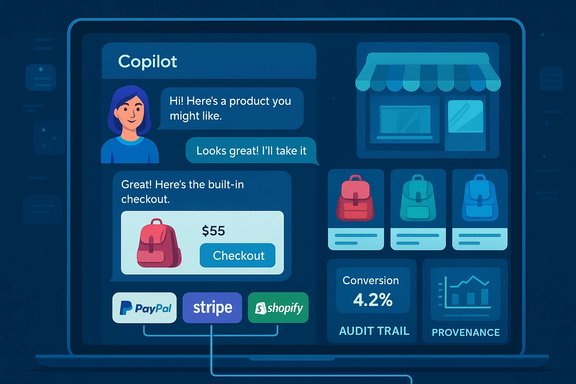
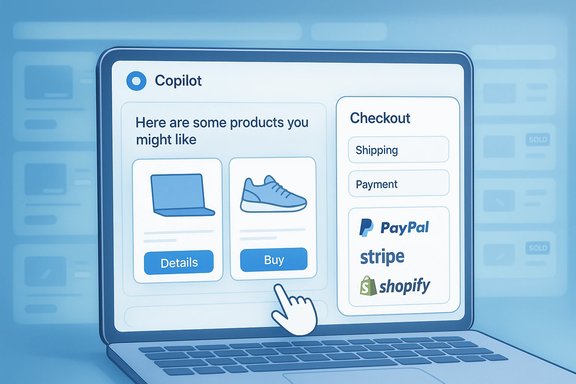
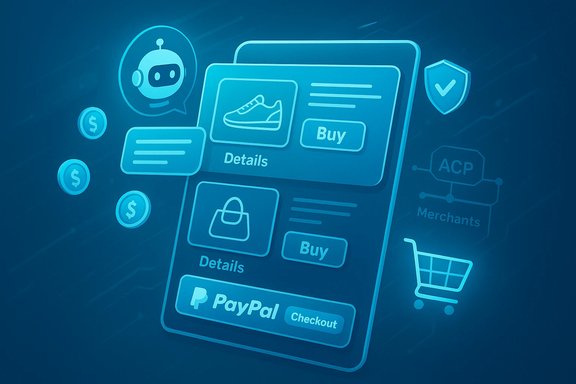
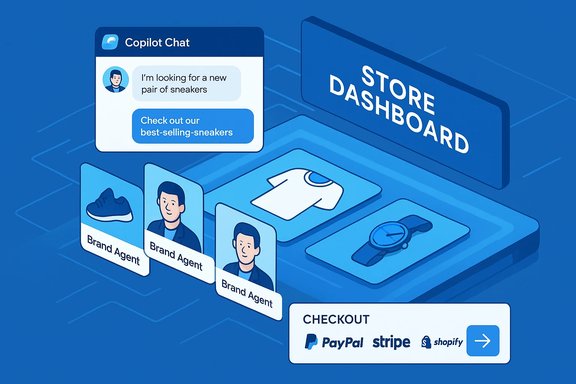
A Copilot chat UI on a dashboard guides ecommerce checkout with product, price, and payment logos.
Microsoft has quietly turned Copilot into a commerce surface: Copilot Checkout lets shoppers move from discovery to payment without leaving the conversation, and Brand Agents bring brand‑voiced, in‑site assistants that can guide customers and feed purchases into that native checkout — a coordinated push Microsoft calls agentic commerce that launches in the United States with PayPal, Shopify and Stripe as first‑wave partners.

Background / Overview​

Microsoft’s January announcement positions Copilot not just as an assistant but as a transactional layer that can recommend, assist and complete purchases. The centerpiece is Copilot Checkout: an in‑chat, tokenized checkout widget surfaced when Copilot determines a user is ready to buy. Microsoft says merchants remain the merchant of record — they keep the order, fulfillment, returns and customer relationships — while Copilot orchestrates discovery and hands off settlement to integrated payment partners. Complementing this is Brand Agents, prebuilt shopping assistants merchants can deploy on their sites (initially via Shopify + Microsoft Clarity). Brand Agents are trained on a merchant’s catalog and brand guidelines so responses align with brand voice and policies, and Microsoft exposes dashboards for engagement and conversion metrics. Microsoft frames these capabilities as templates in Copilot Studio together with catalog‑enrichment and store‑ops agents, forming an end‑to‑end “agentic” retail toolkit. Multiple independent outlets — from trade press to mainstream business sites — reported the rollout and confirmed early partners (Urban Outfitters, Anthropologie, Ashley Furniture and Etsy sellers) and payment/platform integrations (Shopify, PayPal, Stripe). These outlets also picked up Microsoft’s messaging that Shopify merchants will be automatically enrolled after an opt‑out window while PayPal/Stripe merchants must apply.

What exactly is Copilot Checkout?​

The user experience​

  • A shopper asks Copilot to find or compare products.
  • Copilot returns curated product cards with details and a Buy affordance.
  • Selecting Buy opens an embedded checkout widget inside the Copilot UI where shipping, payment and fulfillment options are confirmed — no redirect to an external storefront.
  • Payment processing and settlement occur through a merchant’s existing commerce stack via delegated/tokenized flows handled by partners such as PayPal, Stripe or Shopify Checkout.
Microsoft emphasizes the flow is conversational and auditable: Copilot stores provenance linking suggestions to canonical product records so a merchant and buyer can reconcile pricing, availability and timestamps if disputes arise. The company also says Copilot will rely on machine‑readable product feeds (SKU, GTIN, inventory, images, shipping metadata) rather than scraping, to reduce hallucination and ensure traceability.

The technical anatomy (high level)​

  1. Structured catalog ingestion — agents rely on canonical product feeds and catalog enrichment tooling to normalize and complete metadata.
  2. Conversational orchestration — the Copilot runtime interprets intent, asks clarifying questions (size, color, delivery), and links every recommendation back to an auditable catalog entry.
  3. Delegated, tokenized checkout — ephemeral checkout sessions or single‑use payment tokens are requested from the merchant’s PSP so Copilot never stores raw card credentials.
These three layers mirror emerging industry practices and the Agentic Commerce Protocol models championed across the payments and AI ecosystem. Microsoft explicitly references partners such as Mastercard and Visa and their agentic payment initiatives (Mastercard Agent Pay, Visa Intelligent Commerce) as part of its long‑term interoperability efforts.

Brand Agents: the on‑site, brand‑voiced assistant​

What Brand Agents do​

Brand Agents are prepackaged, brand‑trained assistants designed to be deployed on merchant websites (Shopify first) and across Copilot surfaces. Their intended functions include:
  • Responding in a brand’s chosen tone and style.
  • Guiding customers through discovery, size/fit and product comparisons.
  • Surfacing shipping, returns and policy answers inline.
  • Suggesting complementary products and post‑purchase recommendations.
  • Triggering the in‑chat Copilot Checkout flow when buyers are ready.
Microsoft sells Brand Agents as a fast, measurable way to drive engagement and conversion: merchants get dashboards (via Microsoft Clarity integration) showing engagement rates, conversion uplift, average order value changes and comparisons between agent‑assisted sessions and organic traffic. Early case references shared by Microsoft include brands reporting multiple‑times conversion increases in assisted sessions, although Microsoft notes these are early pilot results.

Deployment and merchant controls​

  • Brand Agents are available now for Shopify merchants. Installation requires Microsoft Clarity and joining a waitlist or opt‑in flow; Microsoft advertises a rapid deployment timeline (“hours, not weeks”).
  • Shopify merchants are slated for automatic enrollment into Copilot Checkout after an opt‑out window; non‑Shopify merchants should apply to enable Copilot Checkout through PayPal or Stripe integrations. Merchants can manage Copilot behavior and settings from Shopify admin.

Merchant, payments and partner ecosystem​

Microsoft’s strategy is explicitly partner‑first. At launch Copilot Checkout ties into:
  • Shopify — powers automatic merchant enrollment and provides checkout plumbing for Shopify storefronts.
  • PayPal — offers store sync, buyer/seller protections and a path for non‑Shopify merchants to participate.
  • Stripe — supplies delegated payment primitives and support for tokenized checkout.
  • Mastercard and Visa — Microsoft says it is working with them to leverage agentic payments standards such as Mastercard Agent Pay and Visa Intelligent Commerce.
Independent trade outlets and the Microsoft press materials echo the architecture: Copilot acts as a distribution and orchestration surface while payment service providers and merchants continue to handle settlement, fraud checks and dispute resolution. This division of responsibilities is Microsoft’s answer to concerns about platforms usurping merchant control.

Why Microsoft is making this move — business rationale​

  • Friction reduction: collapsing discovery, comparison and payment into one conversational session reduces context switching and addresses cart abandonment points.
  • New distribution channel: Copilot surfaces merchant catalogs across Microsoft properties (Copilot.com, Bing, Edge, MSN), potentially exposing products to high‑intent users who never reach merchant storefronts.
  • Operational automation: catalog enrichment and store‑ops agent templates reduce manual onboarding and frontline friction, lowering time to market for merchants of all sizes.
  • Competitive positioning: owning the conversation and checkout moment keeps Microsoft competitive with other platform offers from OpenAI/Stripe, Google, and niche vendors.

Early performance claims — treat vendor metrics cautiously​

Microsoft and partners published optimistic early metrics — for example, internal materials cite journeys that include Copilot produced “53% more purchases within 30 minutes” and that “when shopping intent is present, journeys with Copilot are 194% more likely to result in a purchase.” These figures appear in Microsoft’s blog and partner communications and have been reprinted across trade outlets. They should be treated as vendor‑provided pilot metrics and require independent validation before being used as benchmarks for all merchants. Key points of caution:
  • Pilot populations are typically self‑selecting and may overrepresent technically sophisticated or highly engaged merchants.
  • Conversion lift in a tightly controlled demo does not guarantee identical results at scale across categories, geographies or merchant sizes.
  • Attribution around conversational automation is complex; proving causality (AI → conversion) needs careful A/B testing under merchant control.
Microsoft itself acknowledges these are early signals and encourages merchants to run controlled tests using Copilot Studio templates and Clarity dashboards.

Privacy, security and operational risks​

Embedding checkout and brand agents into conversational surfaces brings operational benefits — and new responsibilities.

Payment and fraud liability​

  • Tokenization and delegated payment sessions reduce Copilot’s exposure to raw card data. However, merchants and PSPs must explicitly define liability boundaries in their contracts with Microsoft and each other. Clarify who handles chargebacks, fraud disputes and flows for guest vs. authenticated checkout.

Provenance and audit trails​

  • Agents must log product provenance, timestamps, and checkout tokens to support dispute resolution. Merchants should confirm what data Microsoft retains, how long logs are stored, and whether logs capture sufficient granularity for chargeback defense.

Data protection and privacy​

  • Merchant‑of‑record status does not remove cross‑platform data flows. Merchants should audit what user signals Copilot accesses (account order history, saved preferences, cross‑site signals), review consent flows, and ensure compliance with regional privacy laws (CCPA, GDPR, etc..

Fraud vectors​

  • Agentic checkout could invite novel abuses — automated bulk ordering, bot‑driven cart stuffing, and credential‑stuffing attacks. Merchants must ensure robust rate‑limiting, device‑risk assessments and anti‑fraud tooling are part of their PSP and Microsoft integration plan.

Hallucination and brand risk​

  • While Microsoft prioritizes machine‑readable catalogs to reduce hallucinations, Brand Agents trained on brand content must be monitored for tone drift, incorrect policy statements or off‑brand recommendations. Brand safety controls and human‑in‑the‑loop governance remain essential.

Recommendations for merchants (practical checklist)​

  1. Inventory readiness: Verify product feeds (SKU, GTIN, inventory, images, shipping metadata) are accurate and synced to whichever PSP or platform (Shopify, PayPal, Stripe) you use. Poor metadata undermines agent reliability.
  2. Governance and logging: Ask Microsoft for exportable audit logs and sample retention policies; confirm they meet your legal and chargeback defense requirements.
  3. Fraud policy mapping: Clarify chargeback liability boundaries in contractual terms with PSPs and Microsoft; ensure your fraud checks (3‑D Secure, velocity checks) apply to Copilot Checkout flows.
  4. Measure with control groups: Run A/B tests with Brand Agents enabled vs. control to measure genuine lift; use Clarity analytics and internal KPIs for fair comparison.
  5. Privacy and consent: Update privacy notices and opt‑out mechanisms to reflect agentic interactions; ensure data minimization for signals shared with Copilot.
  6. Plan for returns and support: Map Copilot‑initiated orders into your existing fulfillment and returns workflows; test common support flows (cancel, return, exchange) end‑to‑end.

Competitive landscape and industry context​

Agentic commerce is now a multi‑party race. OpenAI and Stripe demonstrated in‑chat checkout concepts earlier, and payments networks have been preparing standards and toolkits for agentic payments (Mastercard Agent Pay, Visa Intelligent Commerce). Microsoft’s approach emphasizes merchant continuity (merchant of record), multi‑provider interoperability and leveraging Shopify’s extensive merchant base for rapid scale. This multi‑provider, protocol‑oriented strategy may reduce merchant lock‑in if industry participants converge on shared standards. Key comparisons:
  • OpenAI + Stripe: early Instant Checkout pilots proving the concept that chat → payment works.
  • Microsoft + Shopify/PayPal/Stripe: merchant‑first framing, claiming broad merchant coverage via Shopify auto‑enrollment and PayPal/Stripe application paths.
  • Google/other players: experiments that prioritize integration within search and shopping ecosystems rather than Copilot‑centric distribution.

What consumers should know​

  • Convenience vs. control: Copilot Checkout promises frictionless purchases, but consumers should check payment receipts, merchant email confirmations and return policies just as they would after buying on a merchant site.
  • Protect accounts: Use strong, unique passwords and enable multifactor authentication on Microsoft accounts and payment wallets to protect against unauthorized agent‑initiated purchases.
  • Verify merchant details: Because Copilot can surface multiple sellers and variants, confirm the merchant of record and expected shipping windows before completing a purchase.

Governance and regulatory considerations​

Regulators and consumer protection bodies will watch agentic commerce closely. Areas likely to attract scrutiny include:
  • Transparency: Clear disclosure when a purchase is being completed via an AI agent, who the merchant of record is, and what consumer protections apply.
  • Liability and dispute handling: Contracts detailing who is responsible for fraud, refunds and merchant errors when transactions originate via agents.
  • Data protection: Cross‑border flows of transactional and personalization data raise compliance considerations under GDPR, CCPA and other regimes.
Merchants and platforms should prepare to produce evidence trails for audits and consumer protection inquiries; Microsoft’s AgentOps and observability tooling are positioned as part of that response but must be validated in practice.

Implementation realities and likely pitfalls​

  • Metadata quality is the gating factor: without clean product feeds, agents will struggle to match inventory, sizes or availability reliably.
  • Integration surface area: Although Microsoft claims frictionless onboarding for Shopify merchants, non‑Shopify sellers will need to follow application and verification flows with PayPal or Stripe — expect a verification lag and operational onboarding work.
  • Fee and commercial questions: Microsoft’s public messaging emphasizes merchant control but does not publish a clear fee model for Copilot Checkout or Brand Agents; merchants should negotiate economics and understand any commission, data or service fees before widespread adoption.

Final analysis — strengths, opportunities and real risks​

Notable strengths​

  • Friction removal can materially reduce cart abandonment and improve conversion velocity when implemented with clean feeds and trusted PSPs.
  • Merchant‑first orientation (merchant of record, Shopify auto‑enroll) reduces fear of platform capture and encourages merchant participation at scale.
  • Ecosystem leverage across Microsoft property (Copilot, Edge, Bing) gives merchants potential reach beyond their direct channels.

Potential risks and downsides​

  • Incomplete transparency on commercial terms and precise liability allocations leaves merchants negotiating from a weak information position.
  • Operational mismatch: not every merchant has the catalog hygiene, fulfillment capacity or fraud mitigation maturity to handle accelerated, agent‑driven ordering.
  • Regulatory friction: early adopters will likely be examined by consumer protection authorities, particularly for undisclosed agentic upsells or unanticipated data sharing.
  • Overreliance on vendor metrics: the early conversion claims are promising but vendor‑provided; merchants should validate in their own controlled experiments.

Quick start: steps for merchants who want to pilot Copilot Checkout & Brand Agents​

  1. Audit product feed quality (SKUs, images, inventory accuracy). Fix high‑impact categories first.
  2. If on Shopify: review your admin for Copilot Checkout controls and opt‑out options; install Microsoft Clarity to enable Brand Agents and join the waitlist.
  3. If using PayPal or Stripe: apply to be a Copilot Checkout merchant and prepare to provide product feeds and fulfillment policies during onboarding.
  4. Establish logging and dispute workflows with your PSP and legal counsel. Ask for sample audit logs before you go live.
  5. Run pilot A/B tests on a controlled subset of traffic; measure conversion, AOV, returns rate and chargebacks.
  6. Iterate Brand Agent voice, response policies and human‑handoff triggers to keep the assistant on‑brand and safe.

Conclusion​

Microsoft’s Copilot Checkout and Brand Agents mark a deliberate escalation in the industry’s race to make AI a transactional surface — not just an adviser. By combining conversational orchestration, catalog automation and tokenized payment rails, Microsoft is offering merchants a fast path from discovery to checkout while attempting to preserve merchant control and compliance primitives. The approach is pragmatic: partner with established PSPs and Shopify to accelerate scale, adopt tokenized payments to limit data exposure, and ship Copilot Studio templates so retailers can deploy without heavy engineering lift. But the operational and governance work now moves to merchants and payments partners. Success will depend on feed quality, fraud controls, contractual clarity over liability and fees, and careful, controlled testing of actual lift. Vendor metrics are encouraging but should be validated in real merchant environments before being treated as industry benchmarks. For retailers and platforms willing to invest in catalog hygiene, operational readiness and governance, Copilot Checkout and Brand Agents offer a new surface of high‑intent demand; for those unprepared, the technology may amplify operational risks as quickly as it drives conversions.
Source: VOI.id Microsoft Introduces Copilot Checkout and Brand Agent, AI-Based Shopping Assistant
 

Microsoft has quietly moved Copilot from chat companion to checkout surface: Copilot Checkout lets U.S. users discover, compare, and complete purchases inside a Copilot conversation without being redirected to merchant storefronts, and it ships alongside merchant-facing tools called Brand Agents that let stores deploy brand‑voiced shopping assistants across Copilot and their own sites.

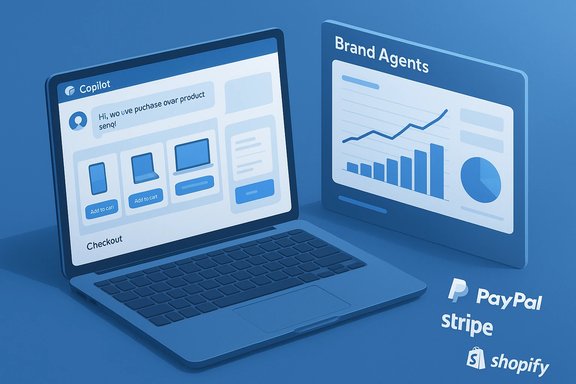
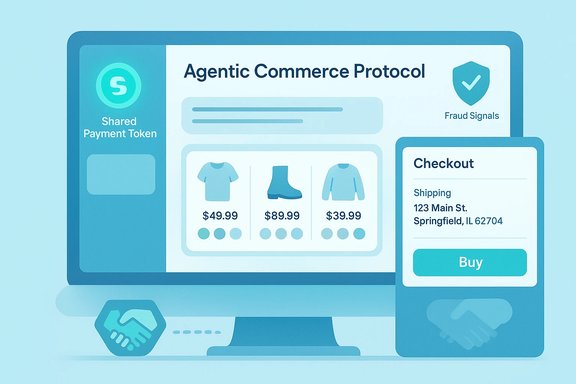
Blue 3D scene of a laptop chat UI beside a brand analytics dashboard with PayPal, Stripe and Shopify logos.Background​

The line between discovery and payment in online shopping has been fraying for months. Platforms and payments providers have been building agentic commerce — the ability for an AI assistant to move beyond suggestions and actually execute transactions with delegated, tokenized payment flows. Microsoft’s Copilot Checkout is the latest, high‑profile example of that shift, joining similar efforts from other big platforms and payments vendors. Early messaging positions Copilot as a conversational discovery surface that can complete the transaction while leaving fulfillment, returns, taxes, and customer relationships in the merchant’s control. This announcement debuted publicly during NRF 2026 and was detailed in Microsoft’s retail push materials and partner releases. PayPal, Stripe, and Shopify are the initial payments and platform partners named by Microsoft; merchants such as Urban Outfitters, Anthropologie, Ashley Furniture, and selected Etsy sellers are listed among early participants. Shopify merchants will be automatically enrolled in Copilot Checkout following an opt‑out window, while PayPal and Stripe merchants must apply to participate.

What Copilot Checkout is — the product in plain terms​

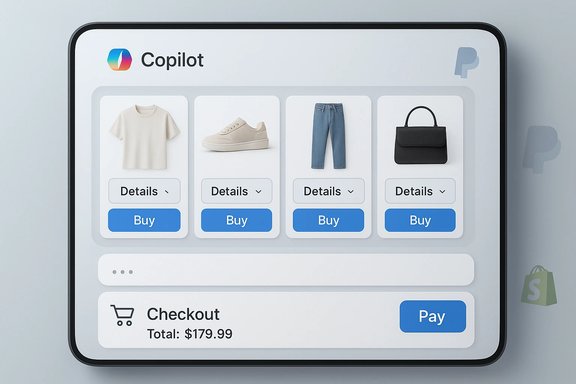
At the consumer surface, Copilot Checkout embeds interactive product cards into chat conversations. When a user asks Copilot to find an item, the assistant can return product cards with Details and Buy actions. Choosing Buy opens a compact, branded checkout interface rendered inside Copilot where the shopper confirms shipping and payment details and completes the order without a full redirect to the merchant site. Microsoft frames this as “conversation to conversion” — collapsing discovery and purchase into one unified flow. Key user-facing behaviors:
  • Product discovery, comparison, and selection in conversation.
  • An in‑chat checkout widget that collects shipping and payment choices.
  • Delegated settlement and fraud handling by the merchant’s payment processor (PayPal, Stripe, Shopify Checkout).
  • Merchant remains the merchant of record; merchants keep order and customer data tied to fulfillment and returns.

How Copilot Checkout works — technical anatomy​

Copilot Checkout stitches together three core layers that mirror the emerging agentic commerce architecture.

1. Catalog ingestion and canonical product data​

Merchants expose machine‑readable product feeds — SKUs, GTINs, inventory levels, images, shipping metadata — so Copilot can reference verifiable records rather than hallucinated descriptions. Microsoft supplies catalog enrichment templates in Copilot Studio to normalize and augment feeds where needed. PayPal’s store sync service is one example of tooling that maps merchant catalogs into agentic discovery surfaces.

2. Conversational orchestration (Copilot runtime)​

Copilot interprets buyer intent, asks clarifying questions (size, color, delivery window), and presents curated, shoppable options. A critical design goal is provenance: every recommendation should link back to a catalog record and an auditable trace to support disputes and customer service. Those logs are essential operational material for merchants when a buyer questions price, availability, or delivery.

3. Delegated, tokenized checkout​

When the user confirms purchase intent, Copilot initiates a short‑lived checkout session or requests a delegated payment token from the merchant’s payment provider. That provider then executes settlement, fraud checks, and any buyer/seller protections. This tokenization model reduces Copilot’s exposure to raw payment credentials and shifts PCI and fraud responsibilities back to specialized PSPs. PayPal and Stripe are being used for delegated settlement flows at launch.

Brand Agents: merchant tooling and analytics​

Microsoft isn’t stopping at checkout. The company also introduced Brand Agents — AI shopping assistants merchants can deploy on their own websites and across Copilot surfaces. These agents are intended to:
  • Speak in the merchant’s brand voice and follow brand rules.
  • Guide customers through discovery and comparison workflows.
  • Surface direct checkout links (including Copilot Checkout buy flows).
  • Provide post‑purchase recommendations and support.
Merchants using Brand Agents receive a dashboard with engagement metrics: conversion uplift, average order value, engagement rates, and comparisons between agent‑assisted and organic sessions. Brand Agents are initially rolling out to Shopify merchants and require installation of Microsoft Clarity on the store for early access. This is a merchant‑centric play: Brand Agents are not just chat widgets, they are a managed channel that feeds into Copilot’s in‑chat discovery funnel while preserving merchant control of inventory and fulfillment.

Partnerships and rollout details​

The rollout strategy and partner configuration are central to how quickly Copilot Checkout can scale.
  • Partners at launch: PayPal, Stripe, Shopify. PayPal’s press release calls out store sync and agentic commerce services that make merchant catalogs discoverable inside Copilot.
  • Merchant examples: Urban Outfitters, Anthropologie, Ashley Furniture, and selected Etsy sellers are cited as early participants. Microsoft materials and partner press releases include these names.
  • Shopify automatic enrollment: Microsoft and Shopify will automatically enroll Shopify merchants in Copilot Checkout after an opt‑out window, enabling rapid scale if merchants do not opt out. Non‑Shopify merchants must apply to be Copilot Checkout merchants. Microsoft’s merchant guidance outlines enrollment through Microsoft Merchant Center and one‑to‑many integration via ACP (Agentic Commerce Protocol).
These details reflect a pragmatic route to reach scale: automatic Shopify enrollment delivers immediate coverage for millions of stores, while PayPal and Stripe integrations provide alternative rails for merchants who prefer those PSPs.

Why this matters: benefits and the business case​

For merchants and platforms, Copilot Checkout promises several tangible benefits.
  • Friction reduction and higher conversion: By removing the redirect and checkout page handoff, Copilot aims to shorten the purchase path and reduce cart abandonment. Vendor materials cite uplift metrics — Microsoft and PayPal reference increases in near‑term purchases and higher conversion rates when Copilot is involved. These figures are vendor‑provided and observational, but they illustrate the conversion hypothesis driving the feature.
  • New distribution surface: Copilot adds a discovery funnel that can surface merchant inventory to buyers who might otherwise never reach a merchant’s site. For niche sellers (for example, Etsy creators) this can be a significant new channel.
  • Lower integration cost via store sync and ACP: PayPal’s store sync and the Agentic Commerce Protocol are designed to let merchants publish catalogs once and be discoverable across multiple AI shopping surfaces. That reduces engineering burden compared to custom integrations for each assistant.
  • Brand‑controlled conversational experiences: Brand Agents let merchants encode brand tone, shop policies, and merchandising rules into conversational agents — increasing the likelihood that interactions remain on‑brand while still leveraging Copilot distribution.
These benefits are attractive: improved conversion economics and expanded reach are compelling reasons for merchants to at least pilot participation.

Risks, caveats, and unresolved questions​

The same architecture that unlocks convenience can also introduce operational, privacy, and security complexities. Below are the major risks IT, legal, and product teams must weigh.

1. Vendor metrics and unverifiable claims​

Microsoft and PayPal publish conversion uplift figures (for example, claims of 53% more purchases within 30 minutes and 194% higher conversion in shopping‑intent journeys). These are observational vendor metrics and Microsoft’s materials explicitly note they come from internal data, which may not generalize. Merchants should treat such numbers as directional and validate them through controlled A/B tests.

2. Fraud, chargebacks, and dispute mechanics​

Delegated checkout and tokenization reduce Copilot’s exposure to raw card data, but they don’t remove fraud risk. Agent‑initiated purchases can be lucrative to fraudsters if onboarding and identity flows are not hardened. Merchants need clear SLAs with PSPs for fraud monitoring, chargeback handling, and dispute resolution, including how conversational provenance logs are used in disputes. PayPal emphasizes buyer and seller protections for eligible transactions, but specifics and eligibility criteria will matter.

3. Data flows and privacy​

Copilot orchestrates discovery and collects shipping/payment preferences inline. Merchants retain customer relationships according to Microsoft, but the operational mechanics of data transfer (what Copilot stores, what is handed to the merchant, retention periods, telemetry) require careful review. GDPR, CCPA, and PCI implications vary by region; a U.S. rollout today still requires careful privacy mapping if cross‑border customers are involved.

4. Merchant operational readiness​

Automatic enrollment for Shopify merchants raises concerns about consent and readiness. Merchants must ensure catalog accuracy, inventory synchronization, pricing rules, and fulfillment SLAs before being discoverable on another surface. An incorrect catalog or delayed fulfillment exposed through Copilot can damage brand trust very quickly. Microsoft offers catalog enrichment templates, but merchants still need operational oversight.

5. User experience and impulse buying​

In‑chat checkout reduces friction — which can be positive for conversion — but it also increases the potential for accidental or impulse purchases. UI controls, explicit confirmations, and friction where appropriate (for high‑value orders) are important to prevent consumer regret and subsequent disputes. The balance between conversion and consumer protection will be central to long‑term consumer trust in these channels.

6. Competition and platform risk​

Platforms that own the discovery and purchase moment acquire leverage. Merchants must evaluate whether access to Copilot’s high‑intent audience justifies the risk of becoming dependent on yet another distribution channel — particularly if platform policies, fees, or ranking algorithms change. Historical examples in platform economics caution that sudden changes in rules can materially affect merchant economics.

Practical guidance for merchants and IT teams​

Merchants considering Copilot Checkout should follow a disciplined pilot path.
  • Verify catalog fidelity: ensure SKUs, GTINs, images, prices, inventory, shipping options and return policies are accurate in your product feed.
  • Audit fulfillment and SLA readiness: define expected ship windows, inventory reservation rules, and customer communications flows for orders arriving from Copilot.
  • Confirm PSP SLAs: review fraud controls, dispute handling, and tokenization behavior with your PSP (PayPal, Stripe, Shopify Checkout) and define responsibilities for chargebacks and refunds.
  • Enable observability: log provenance metadata and integrate Copilot‑sourced orders into your OMS and CRM with clear tags for source and session transcript.
  • Run controlled pilots: use A/B tests to validate conversion uplift, average order value changes, and refund/chargeback rates before broad rollout.
  • Review privacy and compliance: map customer data flows, opt‑in/opt‑out mechanisms, retention policies, and cross‑border data transfer implications.
  • Prepare brand tone and guardrails for Brand Agents: encode merchandising rules, return policies, and product exclusions so the Brand Agent does not make inappropriate recommendations.
These steps reduce operational risk and make outcomes measurable.

How Copilot Checkout fits the broader competitive landscape​

Copilot Checkout is not an isolated experiment — it’s part of a larger industry movement toward in‑assistant commerce.
  • OpenAI launched Instant Checkout inside ChatGPT in 2025 with Stripe and other partners, demonstrating the category’s viability and establishing early integrations and patterns. Other players, including Google’s Gemini and Perplexity, have introduced shopping capabilities in their assistants. Microsoft’s advantage is its breadth of Copilot surfaces across Windows, Office, and Edge and its deep relationships with enterprise and retail partners.
  • Payments providers are racing to provide agentic commerce primitives (delegated payments, store sync) that make it easy for merchants to plug into multiple AI channels with a single integration. PayPal’s agentic commerce launch and store sync are designed for this exact scenario.
  • The Agentic Commerce Protocol (ACP) and similar standards push interoperability: they let assistant surfaces call into different PSPs and merchant backends consistently, lowering friction for merchants and allowing assistants to act across ecosystems while preserving merchant controls.
This multi‑vendor ecosystem reduces the danger of vendor lock‑in but raises operational complexity: merchants must choose integration paths that align with their fulfillment, fraud, and customer‑service constraints.

Strengths and notable innovations​

  • Seamless discovery-to-purchase flow reduces friction and can materially improve conversion if implemented responsibly.
  • Delegated tokenized payments reduce PCI surface area for the conversational layer and keep settlement with established PSPs.
  • Brand Agents and Copilot Studio templates give merchants a practical path to deploy conversational shopping with brand control and integrated analytics.
  • One‑to‑many catalog syndication (PayPal store sync, ACP) lowers integration cost and speeds merchant onboarding to multiple AI shopping surfaces.
These are meaningful technical and commercial innovations that align with how modern commerce at scale must operate.

Potential long‑term impacts and regulatory watchpoints​

The structural shift of moving purchases into assistant surfaces invites regulatory and policy scrutiny.
  • Consumer protection regulators will watch whether in‑chat purchases provide clear disclosures (merchant identity, prices, taxes, cancellation rights) equivalent to traditional web checkout.
  • Data protection authorities will scrutinize cross‑border flows of payment and customer data between assistants, PSPs, and merchants.
  • Competition regulators may watch whether platform owners use in‑assistant checkout to gain unfair advantage over merchants or to preference certain merchants, especially if discovery ranking affects outcomes materially.
For merchants, staying abreast of regulatory guidance and maintaining contractual clarity with platform and PSP partners will be essential.

Conclusion​

Copilot Checkout and Brand Agents mark a practical, platform‑scale push to make AI assistants transactional, not just advisory. The feature set is thoughtful: canonical product feeds, delegated tokenized payments, merchant‑retained responsibility, and brand‑voiced agents all address many of the early pain points that previously made in‑chat commerce risky.
Yet the launch is not without trade‑offs. Vendor metrics are promising but observational; fraud, privacy, and operational readiness remain real-world constraints that merchants and IT teams must test and govern. Automatic Shopify enrollment accelerates scale, but also raises legitimate operational and consent questions that merchants should address proactively.
For merchants and technologists, the sensible path is cautious experimentation: validate catalog integrity, measure real uplift in controlled pilots, harden fraud and dispute workflows with partners, and document data flows for privacy compliance. Done right, Copilot Checkout could be an important new distribution surface that converts intent into sales faster. Done without rigor, it risks a rash of disputes, damaged brand experiences, and regulatory attention.
Microsoft’s move places another major channel in merchants’ hands — one that promises convenience for consumers and new revenue opportunities for retailers, while requiring heightened operational discipline from every participant in the commerce stack.
Source: Digital Trends Microsoft introduces Copilot Checkout to help you shop and pay without leaving the chat
 

Microsoft has begun turning Copilot from a conversational adviser into a checkout counter, launching Copilot Checkout — an in‑chat purchase flow that lets U.S. users discover products and complete transactions inside Copilot conversations without being redirected to merchant websites.

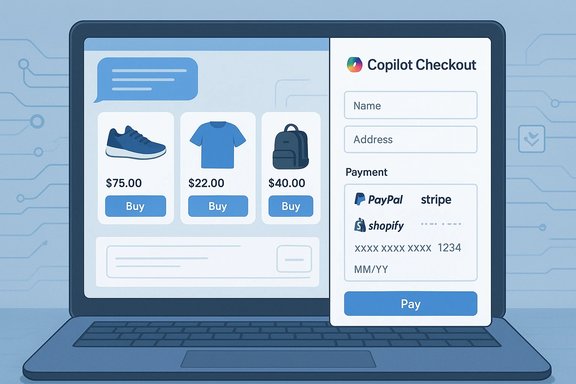
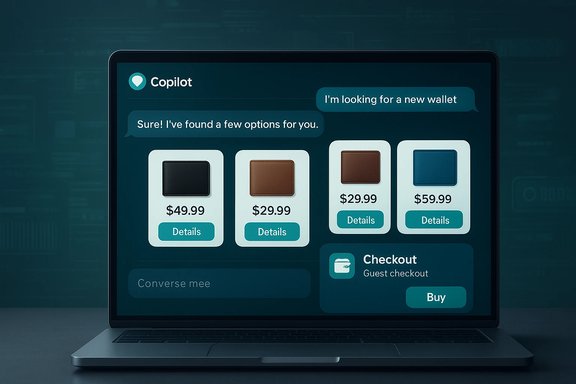
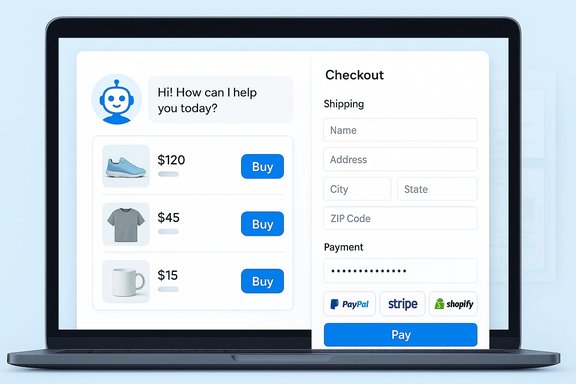
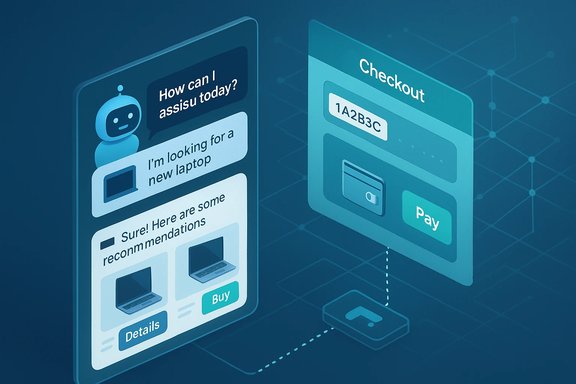
Laptop displays an online checkout with product cards and a payment form.Background / Overview​

Microsoft introduced Copilot Checkout as part of a broader push into what the company calls agentic commerce — the idea that AI agents should not only recommend products but also act to execute transactions when a user consents. The initial rollout is U.S.‑first on Copilot.com, and Microsoft positions the feature as a merchant‑centric design: Copilot orchestrates the conversational surface while third‑party payments and commerce platforms handle settlement and merchant operations. At launch Microsoft named PayPal, Stripe, and Shopify as primary partners: PayPal will power inventory surfacing, branded checkout, guest checkout and card acceptance; Stripe will provide agentic payment plumbing; and Shopify merchants will be automatically enrolled by default (subject to an opt‑out window), giving Microsoft quick merchant coverage through Shopify’s platform. Independent reporting and partner announcements confirm these roles.

How Copilot Checkout Works — The Technical Anatomy​

Three coordinated layers​

Microsoft describes Copilot Checkout as the composition of three core layers that mirror emerging agentic commerce architectures:
  • Structured catalog ingestion — merchants provide machine‑readable product feeds (SKU, GTIN, inventory, images, shipping metadata) or use partner tools (for example, PayPal’s store sync) so Copilot can ground recommendations in canonical product records rather than scraped pages.
  • Conversational orchestration (Copilot runtime) — the assistant interprets shopper intent, asks clarifying questions (size, color, delivery preferences), and surfaces product cards with Details and Buy actions directly in the chat. Provenance is emphasized: Microsoft says it will link suggestions back to canonical records to support audit trails and disputes.
  • Delegated, tokenized checkout — when the user confirms a purchase, Copilot requests an ephemeral checkout session or delegated payment token from a payment provider (Stripe, PayPal, or Shopify Checkout). Settlement, fraud checks and the handling of raw payment credentials remain with the merchant’s payment stack rather than Copilot itself. This reduces Copilot’s exposure to cardholder data while keeping merchants as the merchant of record.
These primitives align with standards emerging in the industry — notably the Agentic Commerce Protocol (ACP) that Stripe and others have promoted to standardize agent‑to‑merchant interactions and delegated payment flows. Microsoft’s public materials and partner statements indicate Copilot Checkout uses those patterns.

What the shopper sees​

From a user perspective the flow is intentionally simple: a shopper asks Copilot to find or compare items, Copilot returns curated options with product cards, and selecting Buy opens a branded checkout pane that gathers shipping and payment information inline. No full‑page redirect is required on supported merchants; the checkout completes inside the Copilot UI. Microsoft stresses that the experience supports both authenticated wallet payments and guest card checkouts.

What Microsoft and Partners Claim — Verified Claims and Vendor Metrics​

  • Copilot Checkout is available now in the United States on Copilot.com and will expand to other Copilot surfaces over time (Bing, Edge, MSN). This is confirmed by Microsoft’s retail announcement and partner press material.
  • PayPal says it will “power surfacing merchant inventory, branded checkout, guest checkout and credit card payments” and will leverage its store sync capability to make merchants discoverable across AI channels. That claim is documented in PayPal’s January 8, 2026 press release.
  • Stripe confirms it is helping power Copilot Checkout and points to the Agentic Commerce Protocol as the technical interface for delegated payments. Stripe’s announcement states Stripe will connect Copilot to sellers using ACP patterns.
  • Shopify participation: Shopify merchants will be automatically enrolled (with an opt‑out window) so Copilot can access a large catalog quickly; Microsoft’s merchant onboarding messaging and Shopify‑facing statements confirm this default enrollment model. Merchants can manage Copilot-related settings in their Shopify admin.
  • Microsoft and partners present conversion uplift numbers in early partner materials (for example, PayPal cited journeys with Copilot leading to 53% more purchases within 30 minutes and conversion rates 194% higher when shopping intent is present). These are vendor‑provided metrics and should be treated as preliminary — they reflect partner testing environments and are not independently audited in the public record. Flagged as vendor claims.

Why This Matters: Potential Benefits​

For merchants​

  • Reduced checkout friction — collapsing discovery and purchase into one conversational surface removes tab switching, page load delays and multiple form fills, which historically contribute to cart abandonment. Microsoft and partners pitch this as a conversion improvement strategy.
  • New discovery surface — Copilot becomes a gateway where merchants may be surfaced to high‑intent shoppers who explicitly ask for product guidance, potentially increasing reach beyond traditional search and marketplaces.
  • Simplified onboarding for many stores — Shopify’s automatic enrollment promises rapid scale and low technical lift for many sellers. PayPal’s store sync and Stripe’s ACP integrations are designed to let merchants publish canonical feeds with minimal custom work.
  • Merchant of record continuity — by keeping the merchant as the official seller (handling fulfillment, returns, and disputes), Microsoft attempts to limit the disruption to merchant workflows and back‑office systems. That separation can ease integration concerns and liability conversations.

For consumers​

  • Faster, more conversational purchases — shoppers get a guided, context‑rich experience: product comparisons, reviews, price history and a one‑step checkout inside the chat window.
  • Familiar payments and protections — partner wallets and processors (PayPal wallet, Stripe, card networks) provide recognized trust signals and dispute mechanisms that may boost consumer confidence in in‑chat transactions.

Critical Analysis — Strengths, Risks, and Operational Realities​

Strengths: infrastructure maturity and partner alignment​

Microsoft’s strategy capitalizes on existing commerce plumbing rather than trying to own settlement and fulfillment. By partnering with PayPal, Stripe, and Shopify, Microsoft avoids storing raw payment credentials and leverages established fraud, dispute and compliance tooling. That partnership model lowers the technical bar for merchants and keeps familiar liabilities with payment processors and merchants themselves. The architecture (catalog feeds + conversational runtime + tokenized checkout) is sensible and mirrors the best practices emerging across the industry. The ACP and tokenized checkout models reduce direct exposure of card data to the assistant. Stripe’s published documentation on delegated tokens and PayPal’s agentic services show the plumbing needed to keep transactions auditable and reduce a central conversational surface’s PCI scope. Those technical controls are critical to making in‑chat commerce viable at scale.

Risks and open questions​

  • Data, privacy, and profiling — moving purchases into Copilot concentrates sensitive personal data (purchase history, shipping addresses, payment choices) around a powerful conversational agent. Even if raw card numbers are tokenized and handled by PSPs, conversational logs, product interaction data, and personal preferences will be harvested by the platform unless explicitly restricted. Merchants and regulators will want clarity on data retention, use for training models, and cross‑surface profiling. Microsoft’s public materials reference governance and observability tooling, but details on retention, third‑party sharing, and opt‑out controls remain sparse in the public announcements.
  • Liability and dispute resolution — the merchant‑of‑record model helps, but agentic transactions introduce complex edge cases: what happens if Copilot misstates price, availability, or variants? Who bears the operational cost when an in‑chat order is placed for an out‑of‑stock item due to catalog sync lag? Microsoft emphasizes audit trails and provenance, but the real test is contractual SLAs, dispute flows and the speed of reconciliation between Copilot logs and merchant systems. Early announcements indicate these problems have been considered, but practical performance will vary across merchant ecosystems.
  • Fraud and chargeback exposure — in‑chat purchases could attract new fraud patterns: manipulated conversational prompts, social engineering inside the conversation, or token‑reuse attacks. Tokenized flows reduce exposure to raw credentials but do not eliminate fraud risks tied to account compromise, shipping fraud, or identity verification. Payment partners will need to extend fraud telemetry into the agent layer and ensure chargeback and identification processes remain robust.
  • Merchant consent and brand control — Shopify’s automatic enrollment of merchants is a double‑edged sword. It provides immediate scale for Copilot’s catalog but raises valid concerns among merchants about appearance, commissions, data sharing and how their brand and pricing appear inside an AI surface they do not fully control. Merchants should review the opt‑out timeframe and the admin controls available before accepting default enrollment. Microsoft says Shopify merchants can manage Copilot behavior in Shopify admin, but independent confirmation and merchant‑side controls will determine merchant sentiment in practice.
  • Regulatory and antitrust attention — platform control over discovery plus the convenience of in‑chat checkout concentrates both attention and revenue. Regulators in multiple jurisdictions are already scrutinizing how large platforms leverage distribution to disadvantage merchants or capture downstream economics. Copilot’s aggregation of high‑intent shoppers across surfaces could attract regulatory scrutiny over preferential treatment, opaque ranking, or fee structures. Transparent rules and clear merchant agreements will be necessary to defuse long‑term frictions.

Practical readiness checklist for merchants​

  • Confirm feed fidelity: ensure canonical product feeds (SKU, GTIN, inventory, shipping windows) are accurate and synced in near real time to avoid disappointed buyers.
  • Test delegated checkout flows: validate token issuance, settlement timing, and fraud signals with your PSP (Stripe/PayPal) in a sandbox before live rollouts.
  • Review SLA/contract terms: clarify liability, refund mechanics, and data sharing obligations with Microsoft and your PSP.
  • Audit brand appearance and pricing: ensure Copilot displays accurate branding, policy links and price provenance to prevent misrepresentation.
  • Monitor conversion and dispute metrics: instrument observability to detect fraud spikes, synchronization errors and customer support load.

Governance, Provenance and Auditability​

Microsoft repeatedly emphasizes provenance — linking conversational recommendations to canonical product records — as a necessary capability for dispute resolution and audit trails. That provenance is not merely a compliance checkbox; it’s the foundation for reconciling conversational assertions (price, availability, variant) with merchant records. The delegated checkout model (short‑lived tokens and one‑time sessions) produces auditable handoffs, but the efficacy of dispute resolution depends on how quickly logs, timestamps and catalog snapshots can be matched with orders. Early Microsoft and partner messaging indicates these features are built into Copilot Studio and merchant tooling, but retailers should demand real hands‑on validation.

Competition and Market Context​

Copilot Checkout enters an increasingly competitive landscape. OpenAI and Stripe rolled out in‑chat checkout experiences in 2024–2025; Google and other search and AI vendors have been experimenting with integrated commerce flows. Microsoft’s key differentiator is scale across enterprise and consumer surfaces and its partnership strategy that leaves merchants as the merchant of record while offering a unified conversational entry point. Whether Copilot can capture substantial commerce share will depend on user adoption of Copilot surfaces, merchant participation, and how compelling the in‑chat experience proves compared with established marketplaces.

Real‑World Scenarios: Where Copilot Checkout Helps — and Where It Might Not​

High‑impact scenarios​

  • Impulse and intent‑driven buys — accessories, consumer electronics, home goods where buyers ask for quick recommendations and are ready to act.
  • Complex product discovery — shoppers who need comparative guidance (size, specs, materials) and appreciate the conversational clarifications Copilot can provide.
  • Small sellers discovery — Etsy shops and niche sellers that gain distribution without needing to drive direct traffic to their storefronts.

Low‑value or risky scenarios​

  • High‑value, bespoke purchases — items needing sales consultation, customizations, or legal disclosures may not be ideal for in‑chat checkout unless the agent supports rich configuration and consultation logs.
  • Heavily regulated goods — categories requiring age verification, strict compliance or complex warranty terms demand specialized flows beyond basic tokenized checkout. Merchants in these verticals should request explicit assurances about verification and compliance support.

Recommendations for IT, Product and Legal Teams​

  • Treat Copilot Checkout as a new distribution channel: run controlled pilots, measure conversion uplift, support loads and dispute rates before scaling broadly.
  • Insist on observability and replayability: ensure Copilot provides detailed logs (conversation transcript, product record IDs, token IDs, timestamps) so disputes and customer support inquiries can be resolved quickly.
  • Negotiate clear data usage terms: require contractual limitations on how conversational data can be used for training models, advertising, or cross‑selling, and insist on deletion/retention policies aligned with privacy commitments.
  • Validate fraud controls end‑to‑end: test device‑level and behavioral signals that PSPs use when authorizing tokenized transactions, and ensure your fraud team is looped into Copilot flows.

What to Watch Next​

  • Merchant uptake metrics — how many Shopify merchants actually remain opted‑in after the default enrollment window, and whether non‑Shopify sellers adopt PayPal or Stripe integration paths.
  • Conversion and dispute statistics — independent audits or third‑party benchmarks of conversion improvements and dispute rates will be decisive for merchant sentiment. Vendor claims exist today but are not independently verified in public reporting.
  • Regulatory reactions — how competition and platform regulators respond to a major OS and search owner aggregating both discovery and checkout in a single surface.
  • Expansion across Microsoft surfaces — rollout beyond Copilot.com into Bing, Edge and MSN will materially change reach dynamics and merchant exposure; watch the timing and technical requirements for those expansions.

Microsoft’s Copilot Checkout is a logical next step in the industry’s move from "search and link" to "ask and buy." The architecture — catalog grounding, conversational orchestration and delegated, tokenized payments — reflects hard lessons learned from previous in‑assistant commerce pilots. Partnering with PayPal, Stripe and Shopify reduces technical risk and reuses trusted payment rails, while the promise of reduced friction and new discovery reach will be attractive to many merchants.
At the same time, significant operational challenges remain: synchronization between catalog feeds and real inventory, robust fraud detection in conversation‑driven purchases, data governance and consumer privacy, and the practical details of dispute resolution when agentic assistants assert pricing or availability. Vendor metrics are promising but currently vendor‑sourced; independent validation will be essential as the channel scales.
For merchants and product teams, the sensible path is pragmatic: pilot deliberately, demand strong observability and contractual clarity, and treat Copilot as a new channel whose economics and operational costs must be measured precisely. For consumers, Copilot Checkout promises convenience — but long‑term trust will hinge on transparent protections, clear provenance for what was promised, and reliable dispute remediation when the inevitable edge cases arise.
Source: eWeek Microsoft Copilot Checkout Brings Shopping Into the Chat
 

Microsoft has quietly moved the line where discovery ends and purchase begins: Copilot Checkout and Brand Agents turn Copilot from a research and recommendation surface into a transactional storefront, and they arrive at a moment when multiple industry players are racing to become the payments and standards layer for “agentic commerce.”

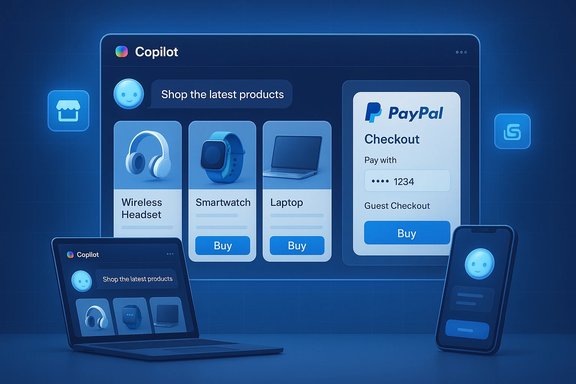
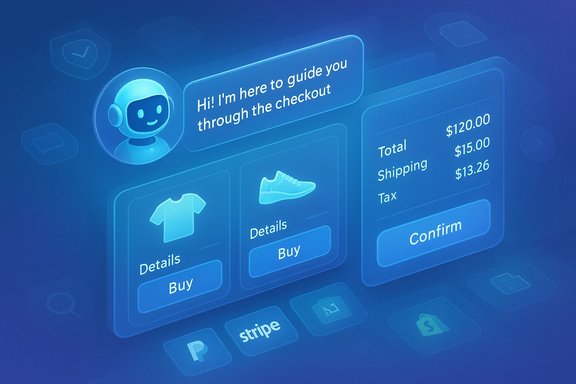
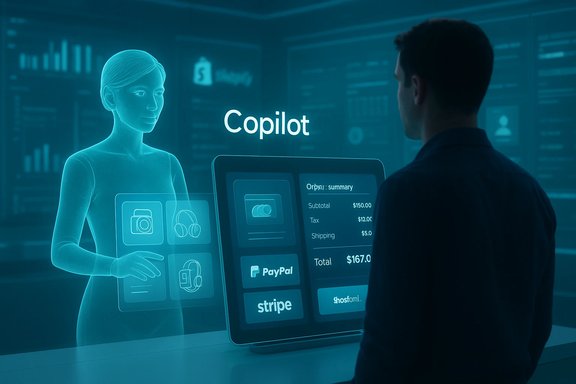
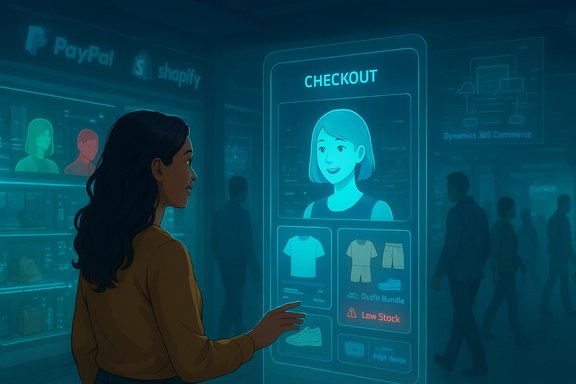
Neon futuristic checkout screen with an assistant avatar, product cards, a security shield, and a Checkout button.Background / Overview​

Microsoft announced Copilot Checkout and Brand Agents in its retail-focused rollout on January 8, 2026. Copilot Checkout enables shoppers to complete purchases inside the Copilot conversation on Copilot.com (and across the Copilot ecosystem), while Brand Agents are brand‑trained AI shopping assistants available today to Shopify merchants. These launches build on an emerging industry pattern: OpenAI shipped Instant Checkout in ChatGPT in 2025, Stripe and OpenAI published the Agentic Commerce Protocol (ACP), and Google introduced its own Agent Payments Protocol (AP2). The result is a fast-evolving marketplace of protocols, tokenization schemes, and partner-led payment primitives designed to let AI agents discover, recommend, and pay for goods on behalf of users.
  • Copilot Checkout: in-chat purchase flow that keeps merchants as the merchant of record and partners with platforms like Shopify plus payment processors such as Stripe and PayPal.
  • Brand Agents: site-embedded, catalog-grounded conversational assistants that speak in a brand’s voice and are managed through Microsoft tooling (including Microsoft Clarity for analytics).
  • Standards and rails: Microsoft leans on open standards and partner payment rails — the Agentic Commerce Protocol (ACP) is now part of the broader ecosystem; competing and complementary efforts like Google’s AP2 and industry tokenization initiatives are actively being adopted by networks and processors.
This shift is not a single‑vendor experiment. It is a cross-industry pivot to collapse the buying funnel into conversational surfaces while preserving merchant control over fulfillment, returns, and customer relationships — if merchants adopt the required technical and operational controls.

What Microsoft announced, in plain terms​

Copilot Checkout — the in-chat checkout​

Copilot Checkout turns recommendations into a shoppable block inside Copilot. After a shopper and Copilot agree on a product, Copilot can present pricing, taxes, shipping, and a checkout button — all without sending the user to a merchant’s site. Microsoft positions this as a delegated, tokenized flow: payment tokens or ephemeral checkout sessions are used so sensitive card data does not flow through the conversational surface, and merchants retain order ownership and fulfilment responsibilities.
Key product claims Microsoft made at launch:
  • U.S. availability on Copilot.com with partner activations through PayPal, Shopify, and Stripe.
  • Initial merchant participation includes national and marketplace sellers (examples publicized at launch: Urban Outfitters, Anthropologie, Ashley Furniture, and selected Etsy sellers).
  • Shopify merchants will be automatically enrolled by default (with an opt‑out window) — non‑Shopify merchants can apply for onboarding through Microsoft’s merchant channels.
  • Microsoft is working with network partners like Mastercard and Visa to leverage existing tokenization and agent-focused payment solutions (Mastercard Agent Pay, Visa Intelligent Commerce).

Brand Agents — a brand’s voice, packaged​

Brand Agents are prebuilt shopping assistants trained on a merchant’s product catalog, brand tone, and rules. Microsoft promotes them as turnkey: install Microsoft Clarity, join the Brand Agents waitlist for Shopify stores, and deploy in hours rather than weeks. Brand Agents are intended to deliver:
  • Catalog-grounded answers to detailed product questions.
  • Guided shopping experiences that feel “on brand” and are optimized for conversion.
  • Analytics surfaced through Microsoft Clarity so teams can compare agent‑assisted sessions to organic sessions and track conversion uplift, average order value, and engagement metrics.
Microsoft’s messaging claims higher engagement and conversion in sessions where Brand Agents assist shoppers. Specific case examples cited by Microsoft are vendor-supplied and should be treated as early performance data pending independent validation.

How these pieces fit into the broader “agentic commerce” landscape​

Standards and tokens: ACP, AP2, and tokenization primitives​

The technical plumbing driving agent‑enabled checkout is beginning to standardize — but not under a single, unified spec. Two competing or complementary efforts are prominent:
  • Agentic Commerce Protocol (ACP) — developed and maintained by a community that includes OpenAI and Stripe. ACP provides a specification for how agents discover products, create cart states, and exchange payment tokens with merchants. ACP uses primitives (examples: checkout session APIs, shared payment tokens) to avoid exposing raw payment credentials to the agent or conversational surface.
  • Agent Payments Protocol (AP2) — Google’s design for agent-driven payments that emphasizes cryptographically-signed mandates, verifiable credentials, and traceability across complex payment methods and authorization models.
Both approaches aim to solve the same fundamental problems: authorization, non‑repudiation, and fraud/risk control when agents transact on users’ behalf. The industry will likely see overlapping implementations for some time; that creates both opportunity (multiple rails to choose from) and friction (fragmentation, integration complexity).

Payments and network readiness​

Major payment networks and processors are proactively building agentic capabilities:
  • Stripe, PayPal, and Shopify have public integrations and tooling that enable merchants to accept in-chat purchases.
  • Visa and Mastercard have introduced agent-focused programs (tokenization, AI‑ready credentialing) to enable secure agent payouts and buyer consent controls.
  • New payment primitives such as single‑use, merchant-scoped payment tokens (Shared Payment Tokens) are central to delegated-checkout designs because they reduce PCI exposure on conversational surfaces.
These rails are important: they determine how secure, auditable, and scalable in-chat shopping experiences will be in practice.

Strengths: what’s compelling about Copilot Checkout and Brand Agents​

1. Friction reduction — collapsing discovery and checkout​

Moving checkout into the conversation reduces context switches and page navigation, which historically are prime sources of cart abandonment. For high-intent, low-consideration purchases, this matters a lot and can measurably shorten the time from interest to sale.

2. Merchant control over fulfillment and branding​

Microsoft emphasizes that merchants remain the merchant of record. That is a crucial distinction: orders, returns, tax handling, and customer service remain in merchants’ systems, not under Copilot’s control. Brand Agents are explicitly trained on merchant catalogs and brand guidelines, which helps preserve consistent brand voice.

3. Rapid deployment with templates​

Copilot Studio templates (catalog enrichment, personalized shopping agents, store operations agents) and the Microsoft Clarity integration aim to reduce the engineering lift required to stand up agentic experiences. For merchants without large engineering teams, templates can materially lower time‑to‑trial.

4. Industry-level momentum and interoperable rails​

Open standards and cross‑industry participation (Stripe/OpenAI’s ACP, Google’s AP2, network work from Visa/Mastercard) mean multiple vendors are investing in the same problem space. That competition should accelerate tooling, interoperability, and risk controls.

Risks, unknowns, and operational caveats​

1. Vendor-supplied performance claims need independent validation​

Microsoft and partner case studies cite conversion uplifts and engagement improvements (one example cited more than 3x conversion in agent-assisted sessions for a premium sleepwear brand). These are promising signals, but they are vendor-provided numbers. Merchants should require transparent baseline comparisons, sampling windows, and methodology before relying on headline performance claims.

2. Catalog and data quality are mission-critical​

Agents are only as good as the data they reason over. Poor SKU hygiene, stale inventory, bad images, and inconsistent metadata will result in hallucinations, incorrect pricing, and frustrated customers. The catalog enrichment templates help, but merchants must treat product data as a first‑class asset and establish data governance and quality thresholds before broad rollout.

3. Privacy, consent, and regulatory exposure​

In‑chat purchases introduce new privacy surface area: agent logs, conversational history, and potentially derived profile data. Merchants must map data flows to privacy obligations (GDPR, CCPA-type rules, PCI requirements) and ensure that consent mechanisms and retention policies are clear. Tokenization reduces PCI scope but does not eliminate the need for robust data controls.

4. Fraud, chargebacks, and dispute economics​

Delegated checkout reduces some attack surfaces but introduces new dispute scenarios (agent misinterpretation, unauthorized delegated transactions). Merchant teams need to understand who bears liability in different chargeback and fraud scenarios and what contractual protections PSPs provide.

5. Fragmentation and potential lock‑in​

Microsoft’s ecosystem — Copilot Studio, Azure AI Foundry, Microsoft Fabric, and Microsoft Clarity — offers convenient integration but also creates migration risk if critical business flows are tightly coupled to Microsoft’s stack. Merchants should negotiate exportability of agent training artifacts, data records, and SLAs to avoid future vendor lock-in.

6. Consumer trust and UX expectations​

Consumers may accept AI-assisted shopping when it delivers clear value and control. However, obscure agent behavior, unclear pricing provenance, or opaque authorization steps will erode trust quickly. Transparent UI affordances (confirmations, receipts, explicit “you are buying via Copilot” screens) are essential.

Practical checklist for merchants and ecommerce teams​

  • Audit and fix product data quality
  • Ensure each SKU has authoritative price, inventory, GTIN(s), shipping metadata, and high‑quality images.
  • Target minimum thresholds (for example: 95% of SKUs with complete metadata) before wide rollout.
  • Establish governance and AgentOps playbooks
  • Define hard stops for agent actions (e.g., agent can recommend and add-to-cart but must require human confirmation for refunds or subscriptions).
  • Create escalation and monitoring procedures for unexpected agent behavior.
  • Test in narrow pilots, measure rigorously
  • Run controlled A/B tests comparing agent-assisted sessions to organic traffic on conversion rate, AOV, return rate, and escalation frequency.
  • Require vendor‑supplied case study data to include methodology, time windows, and statistical significance.
  • Confirm legal and payment terms
  • Verify merchant-of-record responsibilities, dispute processes, and settlement timelines with the payment partners (Stripe/PayPal/Shopify).
  • Ensure the contract covers chargeback liability, fraud protection, and data export rights.
  • Implement privacy and consent notices
  • Update privacy policy and in‑session UX to note agent interactions, how conversational data is used, and retention periods.
  • Provide clear opt-out channels for both consumers and merchants where applicable.
  • Instrument telemetry and observability
  • Integrate Microsoft Clarity (or an equivalent) to capture heatmaps, session replays, engagement depth, and conversion funnels for agent-assisted sessions.
  • Track agent-specific KPIs: conversations initiated, chat engagement rate, add-to-cart lift, checkout completion rate, average order value uplift, and any safety incidents.
  • Plan for rollback and remediation
  • Have a safe fallback (e.g., revert to web checkout) and a remediation plan for catalog errors, incorrectly priced items, or agent misbehavior.

Technical details merchants should confirm before onboarding​

  • Which checkout protocol will be used for my catalog? ACP, AP2, or a proprietary connector?
  • How are payment tokens scoped and revoked? Are tokens single‑use and merchant‑scoped?
  • What fraud and risk checks occur at the PSP vs. at the conversational surface?
  • Where are logs and conversational transcripts stored and for how long?
  • What controls exist to freeze agent‑driven transactions pending merchant verification?
Asking these questions up front reduces surprises and makes operational handoffs smoother.

Where this could lead: scenarios and predictions​

  • Short term (months): Expect many pilot deployments with narrow, high-intent categories (furniture, apparel, specialty goods) and measurable conversion lifts in well-curated catalogs. Merchant opt‑outs and tighter governance will be frequent for categories with high fraud risk or regulatory scrutiny.
  • Medium term (12–24 months): Multiprotocol coexistence. ACP and AP2-style implementations will interoperate through gateways and middleware, but merchants and PSPs will need to choose which rails they support. Payment networks will introduce AI-aware tokenization and new UX patterns for mandate management.
  • Long term (years): As consumer comfort grows and reliable standards emerge, conversational shopping could become a primary channel for many categories — but it will be regulated more heavily, and trust mechanisms (mandates, verifiable credentials, strong consent flows) will be baked into payment rails.

What IT teams and SEOs must watch​

  • SEO to AIO shift: as AI agents become discovery surfaces, merchants must optimize product feeds, structured data, and catalog readiness for AIO — AI-driven optimization — rather than only web-based SEO in the traditional sense.
  • Monitoring for hallucinations: add automated checks that reconcile agent-suggested product details with canonical PIM records before exposing offers to customers.
  • Latency and edge performance: conversational checkout needs low-latency access to inventory and pricing APIs; caching strategies must not present stale prices in agent responses.
  • Accessibility and legal compliance: ensure agents’ conversational flows meet accessibility standards and conform to consumer protection rules across jurisdictions.

Final analysis — practical optimism, disciplined rollout​

Microsoft’s Copilot Checkout and Brand Agents are consequential moves that accelerate an industry trend: collapsing search and checkout into an agentic conversation. The strengths are clear — friction reduction, brand-centric conversational experiences, and rapid templated deployment — and the backing of payment networks and open standards gives technical credibility.
However, practical success depends less on novelty and more on disciplined execution: merchant data quality, governance and monitoring, legal clarity on liability, and transparent consent flows for consumers. Vendor claims about conversion lifts are promising but need independent, controlled validation before they can be treated as a reliable forecast for every merchant.
For retailers and platform teams, the immediate priority should be to pilot with a limited SKU set, instrument outcomes carefully, validate vendor claims against your own KPIs, and negotiate contract terms that preserve data portability and merchant control. When those guardrails are in place, agentic commerce can be a powerful new channel — but it will reward the best-prepared merchants and punish those that treat AI assistants as a pure marketing bolt-on without the operational discipline to match.

Key takeaways
  • Copilot Checkout and Brand Agents bring in-chat purchasing and brand-aligned conversational assistants to Microsoft’s Copilot ecosystem.
  • Merchant onboarding will leverage major partners (Shopify, Stripe, PayPal), network tokenization (Visa, Mastercard), and public protocols — but merchant data quality, governance, and contractual protections determine success.
  • Treat vendor-supplied performance claims as potential indicators, not guarantees; validate with rigorous A/B testing and telemetry.
  • Prepare for a multi‑protocol world where ACP, AP2, and proprietary integrations coexist: plan interoperability, exportability, and fallback strategies from day one.

Source: Search Engine Roundtable Microsoft Introduces Copilot Checkout & Brand Agents
 

Microsoft and PayPal have taken conversational commerce from demonstration to checkout-line reality: shoppers can now discover, decide, and pay for products directly inside Copilot with the launch of Copilot Checkout, powered in part by PayPal’s new agentic commerce services.

Blue UI mockup of Copilot shopping app with product cards and PayPal checkout.Background​

Microsoft’s Copilot has steadily evolved from an assistant for productivity into a multi-surface platform for discovery and transactions. The latest step — Copilot Checkout — embeds a branded, shoppable experience inside the Copilot conversation flow so users no longer need to leave the chat to complete a purchase. PayPal’s role is to power merchant inventory surfacing, branded checkout screens, guest checkout, and card payments. The integration leverages PayPal’s newly introduced store sync and related agentic commerce capabilities to make merchant catalogs discoverable and purchasable inside Copilot, with the initial rollout beginning on Copilot.com and plans to expand to additional devices and channels where Copilot is available.
This move aligns Microsoft with a broader industry pattern: major AI platforms are collapsing discovery and checkout into a single conversational journey. Partners named at launch include household retail brands and marketplaces, and payments integrations extend across PayPal, Stripe, and Shopify’s merchant base. Microsoft and its partners argue this lowers friction and converts intent to purchase faster — a claim that underpins the merchant pitch for fast adoption.

What Copilot Checkout is — the product in plain terms​

Copilot Checkout is an in-chat commerce workflow that does four things in sequence:
  • Discovery: Copilot surfaces product suggestions based on user prompts, context, and intent.
  • Exploration: Each product card offers a “Details” view for deeper product metadata and the ability to compare or ask follow-up questions.
  • Purchase: A “Buy” or checkout action invokes a branded, PayPal-backed checkout screen inside Copilot.
  • Fulfillment orchestration: The order is routed to the merchant’s existing commerce stack via PayPal’s agentic commerce plumbing (store sync and related orchestration services).
Key platform and partner features at launch include:
  • Multiple funding options for consumers, including PayPal wallet and guest card checkout.
  • Merchant product catalog integration through PayPal’s store sync to make SKUs discoverable to Copilot.
  • Support for existing e-commerce ecosystems: Shopify merchants can be enrolled automatically after an opt-out window; Stripe and Shopify are also payment pathway partners.
  • PayPal’s protections and post-purchase services (tracking, dispute resolution) applied to eligible transactions.
  • Tokenized payment flows and delegated payments handling to reduce merchant complexity around card processing.

Why Microsoft and PayPal are making this play​

The business rationale is straightforward and twofold.
First, collapsing the discovery-to-purchase path reduces friction at the most crucial moment of the buying funnel: intent. AI conversations create context-rich intent signals — when a shopper says “I need a bedside lamp” and follows up with size, budget, and style constraints, Copilot can return curated options and a one-click path to checkout. Microsoft’s internal figures presented in vendor materials indicate substantial near-term uplift: for example, cited data shows Copilot-led journeys producing dozens of percentage points more purchases within minutes. Those performance claims fuel the merchant case for rapid enrollment.
Second, PayPal’s broader strategy is to become the interoperable payments hub for agentic commerce — the category label for AI agents that discover, negotiate, and transact on behalf of users. PayPal has been integrating with several assistant ecosystems and has introduced services (agent ready, store sync) designed to let merchants expose catalogs across multiple AI surfaces with minimal extra work. For PayPal, being the payments and services layer across Copilot, ChatGPT, and other AI platforms consolidates a competitive advantage: access to conversational checkouts and the sale flow that follows.

Cross-checking the claims and what’s verified​

Several repeated claims across the product and partner statements stand out and merit verification:
  • Conversion uplift claims: Vendor materials cite that journeys with Copilot drive significantly higher conversion—figures such as “53% more purchases within 30 minutes” and nearly 200% higher conversion where shopping intent exists have been quoted. These numbers originate from Microsoft’s internal data sets and have been repeated in partner releases. They are presented as observational and vendor-sourced; independent validation across merchant verticals has not yet been published. Treat these figures as directional performance indicators — compelling but not definitive for all merchants or categories.
  • Scale and the “192,000” figure: PayPal and Microsoft reference scale metrics in collateral. The phrasing around “backed by over 192,000” in vendor language is ambiguous without context: it is unclear whether that number refers to merchants, SKU feeds, active shoppers, or a different metric. The exact definition remains vendor-supplied and should be confirmed directly with PayPal for merchants making strategic decisions.
  • Technology and payment routing: Architectural claims — tokenization, delegated payments APIs, and the use of PayPal’s store sync to move product catalogs into agentic surfaces — are corroborated by multiple vendor announcements. The delegated payments model, where PayPal handles card processing and payment orchestration, has precedent in earlier partnerships (e.g., integrations into other assistant platforms) and is consistent with best practice to reduce merchant PCI scope.
  • Shopify automatic enrollment mechanics: Microsoft and Shopify statements indicate Shopify merchants will be automatically enrolled in Copilot Checkout following an opt‑out window. The precise timelines, opt‑out mechanics, and merchant notification rules are vendor-defined and merit close attention from merchants and platform partners.
In short: the core product claims are verifiable and consistent across multiple vendor announcements and independent reporting. Performance metrics and scale figures are vendor-originated and should be treated as marketing-backed evidence rather than neutral, third-party outcomes.

Strengths and near-term opportunities​

  • Drastically lower friction: When discovery and checkout exist in the same conversational surface, the path from desire to purchase shortens. For high-intent, in-the-moment purchasing (gifts, single-item upgrades, accessories), this reduces cart abandonment and can convert impulse demand faster.
  • Unified payments and protections: PayPal’s involvement brings wallet funding, guest card flows, seller and buyer protections, and familiar dispute mechanisms. That lowers a major merchant hesitation: can in-chat commerce deliver buyer protections and help manage returns and disputes?
  • One-integration reach (for merchants): PayPal’s store sync and agentic commerce server promise a “one-to-many” model where a single integration makes catalog data discoverable across multiple assistants — a huge operational win for small and midsize merchants that cannot build bespoke integrations for each platform.
  • Brand-controlled experiences: Copilot Checkout includes branded checkout screens, not just white-label generic forms. That helps merchants preserve brand identity and reduces the cognitive dissonance customers sometimes feel when leaving a brand site to a third-party payment flow.
  • Opportunities for new merchandising formats: Conversational shopping opens the door for contextual bundles, design assistance (as Ashley Furniture’s involvement suggests), and guided discovery experiences that traditional search and indexed product lists don’t support.

Risks, trade-offs, and where merchants should proceed cautiously​

  • Data ownership and customer relationships: When an assistant surfaces products and completes purchases, the customer experience and data path may bypass a merchant’s traditional first-party touchpoints. Merchants must explicitly negotiate what customer data returns to them, how CRM/fulfillment data will be reconciled, and whether they remain the merchant of record for promotions, refunds, and tax compliance.
  • Ambiguity in opt-in/opt-out and automatic enrollment: Automatic enrollment of merchants (notably Shopify’s auto-enroll after an opt-out window) accelerates supply-side availability but raises governance questions. Merchants may find their catalog discoverable on new surfaces without fully understanding the terms or revenue share implications.
  • Over-reliance on vendor performance claims: The conversion lifts quoted in vendor materials are compelling but observational. Those numbers may be skewed by early adopter product categories, curated partner merchants, or promotional conditions. Merchants should run controlled pilots and A/B tests to validate performance in their categories.
  • Operational friction: inventory, fulfillment, and returns: Agent-driven purchases need accurate, real-time inventory and precise metadata. Errors in product metadata (size, color, lead time) or stale inventory can produce high rates of cancellations and returns, damaging both brand reputation and margin. Merchants must ensure inventory sync is robust and that order routing, tax calculation, and shipping estimations are reliable.
  • Fraud, chargebacks, and dispute complexity: Conversational purchases involve different negotiation surfaces than conventional e-commerce. The delegated payments model and tokenization mitigate some card-data exposure, but seller liability and dispute management logic must be clear. Merchants should confirm how PayPal’s buyer/seller protections apply in agentic contexts and who bears chargeback risk in edge cases.
  • Regulatory and antitrust scrutiny: Bringing commerce inside dominant assistant surfaces invites regulatory attention. Antitrust concerns could arise if large platforms favor their own services or create pay-to-play dynamics that disadvantage independent merchants. Consumer protection regulators will also examine how consent, disclosure of sponsorship, and returns/refund policies are presented in conversational UIs.
  • User experience pitfalls and accidental purchases: Natural language interactions can be ambiguous. A poorly designed confirmation flow could lead to accidental purchases or mis-specified orders. Copilot Checkout must include explicit, clear confirmation steps and allow easy cancellation before fulfillment to prevent consumer complaints.

Technical and operational checklist for merchants​

Merchants planning to join Copilot Checkout (or to be discovered via PayPal’s store sync) should prepare across technical, commercial, and customer-experience dimensions:
  • Clean and normalize product metadata:
  • Ensure titles, variants, taxonomy, and images are structured and follow clear taxonomies.
  • Include accurate dimensions, materials, and fulfillment lead times.
  • Real-time inventory and price synchronization:
  • Avoid stale inventory by syncing stock levels and disabling discoverability for out-of-stock SKUs.
  • Keep pricing parity where required by marketplaces or brand policies.
  • Clarify data flow and customer ownership:
  • Contractually confirm which customer fields are passed back to your CRM and what analytics are available.
  • Negotiate retention, marketing, and consent clauses for downstream messaging.
  • Test fulfillment paths:
  • Validate order IDs, tracking feeds, and return authorizations are compatible with existing OMS and WMS systems.
  • Define human-in-the-loop guardrails:
  • Set thresholds for manual review (large-value orders, suspicious billing/shipping mismatches, complex discounts).
  • Review contract and fee structures:
  • Understand fees, payouts, settlement cadence, and who is the merchant of record for tax reporting.
  • Plan for disputes and fraud:
  • Confirm chargeback adjudication rules and whether PayPal’s protections apply automatically for agentic transactions.
  • Monitor UX metrics:
  • Track funnel steps inside the conversation, session-level conversion, and downstream retention to measure real value.

Consumer experience and trust considerations​

Conversational checkout can be highly convenient — but convenience without transparency erodes trust quickly. To preserve consumer confidence, Copilot Checkout and its partners must:
  • Provide clear confirmation screens that summarize exactly what will be charged, delivery dates, and return terms.
  • Disclose merchant identity, prices, taxes, and shipping before final confirmation.
  • Offer familiar post-purchase tools: order tracking, returns initiation, and dispute resolution accessible from the assistant interface.
  • Allow users to select payment funding sources (card vs. PayPal balance vs. other wallets) with clear UI affordances.
  • Present a straightforward cancellation path before the merchant begins fulfillment.
If those trust-preserving elements are not present, merchants risk increased disputes and PR fallout even if conversion temporarily rises.

Competitive landscape and strategic implications​

The rise of in-chat commerce places payments providers, platform owners, and marketplaces in direct competition for discovery and wallet supremacy. Several strategic implications stand out:
  • Payments incumbents are racing to be the default in AI commerce. PayPal’s alliance with major assistant ecosystems represents an offensive strategy to defend wallet relevance and expand transaction volume beyond traditional checkout flows.
  • Platform-neutral merchant gateways are valuable. Merchants want “write once, appear everywhere” distribution models. PayPal’s store sync and agentic server pitch addresses that need — but merchants should avoid vendor lock-in by demanding portability and clear exit terms.
  • Marketplaces and retailers will rethink channel economics. If AI surfaces take a meaningful share of discovery and conversion, marketplaces that previously dominated discovery channels will need to adapt or risk losing control of the purchase endpoint.
  • Regulators will watch. When a handful of platforms mediate both discovery and payment, regulators may scrutinize competitive behavior, default preferences, or self-favoring recommendations. That scrutiny could shape how assistants present sponsored vs. organic results.

What consumers should expect and watch for​

For shoppers, the immediate benefits are convenience and speed. Consumers should expect:
  • A single-flow shopping experience where the assistant presents options and completes a purchase without launching external websites.
  • Payment options that include PayPal wallet and guest card checkout, together with buyer protection features where eligible.
  • Branded checkout experiences that clarify which merchant is selling and handling returns.
Consumers should remain vigilant about:
  • Verifying merchant identity and return policies before confirming purchases.
  • Keeping records of order IDs and confirmation screens; conversational UIs sometimes make it harder to find historical receipts unless the platform provides an obvious order history.
  • Monitoring payment statements for unexpected charges and understanding how to initiate disputes or returns inside the assistant interface.

Final verdict — a major step with guardrails needed​

Copilot Checkout represents a pivotal move in conversational commerce: it changes the mental model of e-commerce from a link-driven, page-oriented journey to a conversational transaction. For merchants, that means a fresh distribution channel with meaningful conversion potential — provided they prepare metadata, fulfillment, and dispute processes to match the speed of intent.
For PayPal, the partnership cements a strategy of acting as the commerce and payment orchestration layer across assistant ecosystems. For Microsoft, integrating seamless payments into Copilot turns the assistant into a more valuable surface for both users and merchants.
However, the early performance claims are vendor-sourced and should be validated by independent pilots. Merchants must negotiate clear terms on customer data, enrollment mechanics, fees, and liability. Consumers will benefit from convenience only if transparency, clear confirmations, and robust protections remain central to the experience.
The era of agentic commerce is here, and Copilot Checkout is a tangible step toward a future where conversations end with purchases. That future promises higher conversion and new merchandising formats — but it also demands careful governance, solid technical hygiene, and a renewed focus on trust if it is to scale responsibly.

Source: Retail Systems Shoppers pay for items directly in Microsoft's Copilot through PayPal partnership
 

Microsoft’s Copilot has quietly become a checkout lane: shoppers in the United States can now complete purchases directly inside Copilot conversations, and Stripe says it is one of the payment engines powering the new Copilot Checkout experience. This move stitches Microsoft’s conversational AI, merchant catalogs and tokenized payment plumbing into a single in‑chat purchase flow that promises lower friction for buyers and a new distribution surface for merchants—but it also raises immediate questions about fraud, data governance, merchant onboarding and long‑term platform power.

Laptop screen shows an online store with smartwatch, wireless headphones, camera, and a Shared Payment Token panel.Background​

Microsoft unveiled Copilot Checkout as part of a broader agentic commerce push showcased around NRF 2026. The company positions the feature as an extension of Copilot’s discovery capabilities: when a conversation has shopping intent, Copilot can present curated product cards with Details and Buy actions; tapping Buy opens a branded checkout pane inside the chat so the buyer can confirm shipping and payment without leaving Copilot. Microsoft emphasizes that this is a delegated, tokenized checkout: payment settlement, fraud checks and merchant operations remain with the merchant’s chosen commerce and payments stack. Early partners named at launch include PayPal, Shopify and Stripe, and example merchants include Urban Outfitters, Anthropologie, Ashley Furniture and Etsy sellers. This announcement sits inside a fast‑moving industry trend: AI platforms are racing to collapse discovery and checkout into a single conversational surface. OpenAI’s Instant Checkout inside ChatGPT (launched with Stripe in 2025) is an earlier precedent; Google and other AI platforms are experimenting with similar flows. Microsoft frames Copilot Checkout as “merchant‑forward” and “consent‑first,” but the real test will be operational robustness—catalog accuracy, fraud mitigation, dispute resolution and clear merchant controls.

Overview: what Microsoft shipped and what Stripe says it provides​

At a product level, Copilot Checkout surfaces product suggestions within a chat, then invokes a checkout widget when the buyer chooses to purchase. There are three coordinated layers behind the experience:
  • Catalog ingestion and normalization — merchants publish machine‑readable product feeds (SKUs, GTINs, inventory, images, shipping windows) or rely on platform store‑sync tools so Copilot can reference canonical product records instead of scraped or hallucinated content.
  • Conversational orchestration — Copilot’s runtime interprets buyer intent, asks clarifying questions (size, color, delivery timing) and maintains provenance linking recommendations to canonical catalog records.
  • Delegated, tokenized checkout — when the user confirms, Copilot requests a short‑lived checkout session or a Shared Payment Token (SPT) from the payment provider; the PSP executes settlement and fraud checks and returns the outcome. The merchant remains the merchant of record.
Stripe’s description of its role is infrastructure‑first: Stripe says it connects Copilot to sellers via the Agentic Commerce Protocol (ACP)—an open specification Stripe helped develop—issues shared payment tokens so the assistant never stores raw card numbers, and supplies risk signals that sellers can use when they choose to process payments through their own stacks or with another provider. Stripe’s newsroom post frames this as building the “payments plumbing” for an era when AI agents both recommend and execute purchases. PayPal and Shopify appear as complementary partners: PayPal brings store‑sync and branded wallet/guest checkout capabilities, while Shopify provides a rapid enrollment path to millions of merchants via its Agentic Storefronts/Agentic Storefront enrollment model. Microsoft, Stripe and PayPal all state that merchants retain control of pricing, fulfillment, returns and customer data. These are central design points intended to reduce merchant resistance when a platform inserts itself into the payment flow.

The technical plumbing: Agentic Commerce Protocol, shared tokens, and merchant control​

Stripe’s technical summary highlights three primitives that operators must get right for agentic checkout to work at scale:
  • Agentic Commerce Protocol (ACP) — ACP is an interoperability layer that standardizes how agents (like Copilot) request checkout sessions, how product provenance is maintained, and how payment tokens and risk signals are exchanged between agents, payment providers and merchant backends. The goal is to avoid bespoke, point‑to‑point integrations for each merchant or agent. Stripe has published ACP patterns and used analogous approaches in prior integrations (for example, Instant Checkout in ChatGPT).
  • Shared Payment Tokens (SPTs) and ephemeral checkout sessions — instead of letting Copilot hold card data, Stripe issues a time‑scoped token that the merchant can consume to capture payment; that token carries limited scope and is intended to reduce the conversational surface’s PCI footprint. This tokenized model lets the assistant orchestrate the flow while the PSP and merchant remain responsible for settlement, chargebacks and fraud controls.
  • Catalog provenance and enrichment — agents must reference canonical product entries to avoid hallucinations. Microsoft supplies catalog enrichment templates and Brand Agent tooling in Copilot Studio to help merchants prepare structured feeds and brand‑voiced conversational behavior. Shopify’s Agentic Storefronts and PayPal’s Store Sync are explicitly designed to make merchant catalogs discoverable to AI platforms.
Taken together, these components are intended to let Copilot act as the UI and conversational layer while placing money flow and operational liability where existing systems already manage it: with payment processors, gateways and the merchant’s commerce stack.

Why Stripe’s involvement matters (and what it actually means)​

Stripe’s presence is significant for three reasons:
  • Infrastructure credibility. Stripe is a well‑known payments infrastructure provider with experience exposing APIs, webhooks and fraud signals to merchants and marketplaces. Having Stripe as a named partner signals that Copilot’s in‑chat checkout uses industry‑grade tokenization and risk tools rather than a proprietary black box.
  • Interoperability via ACP. Stripe’s support for ACP reduces the need for bespoke agent‑to‑merchant integrations, potentially lowering onboarding friction for merchants who already use Stripe or can integrate ACP patterns. That standardization is a core argument for scaling agentic commerce beyond pilot projects.
  • Operational flexibility for merchants. Stripe’s model allows the seller to process the tokenized payment through Stripe or another provider while still benefiting from Stripe’s fraud signals. That flexibility is a practical concession to merchant heterogeneity—some sellers prefer to keep existing PSP relationships even as agents mediate checkout.
However, Stripe’s role also introduces practical tradeoffs. Merchants must decide whether to accept tokenized flows from agents and how to integrate risk telemetry into their existing fraud and reconciliation processes. The token model reduces Copilot’s exposure to raw card data but does not remove operational complexity for merchants—especially when orders, refunds and disputes cross agent and merchant systems.

Merchant experience and onboarding: the Shopify auto‑enrollment question​

Microsoft’s approach relies heavily on platform partners for scale. Shopify merchants will be automatically enrolled in Copilot Checkout after an opt‑out window, giving Microsoft immediate catalog reach to millions of storefronts. That accelerates coverage, but automatic enrollment raises legitimate concerns:
  • Merchants may not be fully prepared operationally for in‑chat purchases (product metadata quality, shipping windows, tax configuration, returns and expected SLAs).
  • Auto‑enrollment can create surprise integration work and support load if merchants start receiving orders from channels they didn’t actively configure.
  • Legal and contract questions around fees, liability and dispute handling need to be crystal clear so merchants know how chargebacks and fraud losses are allocated.
For merchants not on Shopify, PayPal and Stripe will be onboarding partners—Microsoft indicates those merchants must apply or configure their feeds through the relevant partner tools. This hybrid enrollment model is designed to quickly scale merchant coverage while keeping some explicit opt‑in control for non‑Shopify sellers.

User experience: convenience versus clarity​

For buyers, Copilot Checkout offers clear usability advantages: contextual discovery and purchase happen in the same window; checkout forms and shipping confirmations are rendered inline; recognized wallets and payment methods (PayPal, card via Stripe, Shopify checkout) provide trust signals that may increase conversion. Vendor materials highlight dramatic uplifts in near‑term purchases for journeys that include Copilot. PayPal’s press release, for example, asserts that journeys with Copilot drive 53% more purchases within 30 minutes and claim a 194% higher conversion rate when shopping intent is present—metrics Microsoft and partners use to justify in‑chat checkout. Those numbers are vendor‑provided and currently lack independent third‑party verification; they should be treated as directional rather than definitive. Convenience, however, brings clarity challenges:
  • How are product prices, taxes and shipping timelines displayed and guaranteed in the conversational flow?
  • Who is responsible if Copilot shows an item as in stock but the merchant’s backend indicates otherwise once the tokenized request arrives?
  • How transparent are fee structures to the buyer (platform fees, PSP fees, taxes)?
Microsoft and partners emphasize merchant‑of‑record continuity—the seller remains the official party responsible for fulfillment and returns—but the user still sees Copilot as the shopping surface. That mismatch between where the UI lives and where operational responsibility lies will need clear, consistent UI cues and receipts to avoid consumer confusion and disputes.

Security, fraud and privacy: structural controls and open questions​

The tokenized checkout model is a reasonable engineering choice: by issuing ephemeral payment tokens and routing settlement through established PSPs, Copilot minimizes its direct handling of card data. Stripe emphasizes shared tokens and risk signals to reduce PCI exposure while enabling agent‑initiated purchases. That said, several security and privacy questions remain:
  • Fraud vectors. Agents can accelerate conversion, but they also create new attack surfaces (automated purchasing flows, credential stuffing, social engineering in conversational prompts). Platforms and PSPs will need robust, cross‑system fraud telemetry and shared scorecards to reliably detect and stop abuse in near‑real time.
  • Data retention and reuse. Even if raw card numbers are tokenized, conversational logs will contain sensitive data—product interests, shipping addresses, and purchase patterns—that can be used to profile users. Microsoft references governance tooling and observability but has not yet made full details public about retention windows, use for model training, or cross‑surface data sharing. Merchants and regulators will demand transparency and fine‑grained controls.
  • Liability and dispute resolution. The delegated model puts settlement and chargeback processes with the merchant’s PSP, but ambiguity can arise when misstatements in conversational recommendations lead to contested orders. Auditable provenance logs that link Copilot recommendations back to canonical product records are necessary for resolving disputes; Microsoft highlights this point, but the mechanics of dispute escalation across agent, platform and PSP are operationally complex.
In short, tokenization and ACP reduce certain classes of risk, but they do not eliminate the need for strong cross‑party agreements, real‑time risk signals and explicit consumer‑facing disclosures.

Competitive context: how this compares to ChatGPT Instant Checkout and other efforts​

Microsoft’s Copilot Checkout is an expected next step in a broader industry pattern. OpenAI’s Instant Checkout (integrated with Stripe in 2025) proved the technical feasibility and merchant value proposition for in‑chat purchases; Microsoft’s implementation mirrors those techniques but ties them to Copilot Studio tooling and Microsoft’s enterprise ecosystem. Stripe’s prior work on Instant Checkout demonstrates the reuse of ACP and tokenized checkout patterns across platforms. Independent coverage from outlets such as The Verge and Axios frames Microsoft’s launch as part of a multi‑front race among major platforms to own the moment of purchase. Microsoft’s differentiation claims are twofold: distribution (Copilot across Copilot.com, Edge, Bing, and integrated apps) and merchant tooling (Copilot Studio templates, Brand Agents, and catalog enrichment). Whether those advantages translate to market share will depend on merchant uptake, governance clarity and how well partners like Stripe, PayPal and Shopify operationalize the necessary plumbing at scale.

Practical guidance for merchants and IT teams​

For merchants evaluating participation in Copilot Checkout, several practical steps are essential:
  • Audit catalog fidelity. Ensure product feeds include accurate SKUs, GTINs, images, inventory and shipping metadata. Agents rely on canonical records; mismatches lead to disputes and negative buyer experiences.
  • Review fraud and settlement flows. Understand how shared payment tokens map into your existing charge capture, settlement and chargeback workflows. Confirm how risk signals from Stripe or PayPal will be incorporated into your fraud rules.
  • Clarify liabilities in contracts. Seek explicit terms around fee allocation, dispute resolution flow, and responsibilities when conversations misstate price or availability.
  • Prepare customer service and returns processes. Expect new channels of orders from agentic surfaces and ensure customer service teams can match Copilot conversation logs to orders for fast resolution.
  • Set data governance policies. Determine what conversational logs and buyer signals you will allow Microsoft to store and whether model training or cross‑surface profiling is permitted under your agreement.
These steps will help merchants convert the immediate distribution opportunity into sustainable revenue without unwanted operational risk.

Strengths and opportunities​

  • Lower friction at the point of intent. Collapsing discovery and checkout into one conversational surface reduces context switching and can materially improve conversion for high‑intent buyers. Microsoft and partners present early uplift metrics to support this thesis.
  • Merchant‑forward design. By retaining merchant‑of‑record semantics and relying on established PSPs for settlement, Microsoft’s approach reduces disruptions to merchant back‑end processes and liability models.
  • Interoperability and scale via ACP. Open standards reduce the need for bespoke integrations and allow agents to work across diverse merchant systems—an essential capability if agentic commerce is to scale beyond limited pilots.

Risks and open questions​

  • Operational complexity for merchants. Tokenized flows still require reconciliation, fraud rule tuning and SLA coordination across parties—complex work that will create short‑term friction.
  • Vendor claims vs. independent verification. Conversion uplift numbers cited by Microsoft and PayPal come from partner materials; they should be treated as preliminary vendor claims pending independent audits or broader industry studies.
  • Privacy and profiling concerns. Conversational logs concentrate behavioral signals that can be repurposed for profiling and advertising unless strict governance and user controls are enforced. Microsoft’s governance tooling is referenced in announcements, but full privacy details and retention limits are not yet public.
  • Regulatory scrutiny and consumer protections. As agentic commerce grows, expect regulators to examine disclosures, opt‑in mechanics, refund handling and whether automatic enrollments (e.g., Shopify’s opt‑out model) meet fairness standards.

Conclusion​

Copilot Checkout is a concrete step in the maturation of agentic commerce: Microsoft has married conversational discovery, merchant tooling and delegated tokenized payments to create an in‑chat purchase surface, and Stripe’s participation confirms that major payments infrastructure vendors see value in standardizing the plumbing for these flows. For merchants, Copilot promises new reach and potentially higher conversions—but it also demands careful operational readiness, contractual clarity and attention to fraud and data governance.
The technical architecture (catalog feeds + conversational runtime + tokenized checkout) is sensible and mirrors industry best practices, but the commercial and privacy questions will be decided in the coming months as real orders, disputes and fraud signals flow through the system. Vendors are optimistic and early partner metrics are encouraging, but those numbers are vendor‑provided and require independent validation. Stripe, PayPal and Shopify provide complementary capabilities, and Microsoft’s merchant‑first framing helps reduce friction—yet the success of Copilot Checkout ultimately depends on rigorous merchant pilots, transparent governance and reliable cross‑party operational SLAs. For readers tracking AI commerce, the architecture and partnerships behind Copilot Checkout are important early signals: agentic commerce is shifting from experiments to production, and payments infrastructure firms such as Stripe will be central to whether the moment of purchase moves from web pages to conversations in a way that is secure, auditable and merchant‑friendly.

Source: FF News | Fintech Finance Stripe Helps Power a New Shopping Experience in Microsoft Copilot
 

Laptop screen displays Copilot e-commerce UI with recommended products and a Checkout pane.
Microsoft has quietly turned Copilot into a checkout lane: users in the United States can now complete purchases directly inside Copilot conversations through a new in-chat checkout experience called Copilot Checkout, a move that folds discovery, cataloged inventory, and tokenized payments into a single conversational surface.

Background​

Microsoft’s announcement places Copilot squarely in the center of a fast-growing industry trend often called agentic commerce — where AI agents not only recommend products but can execute transactions on behalf of users. The company demonstrated how a simple request like “find a small bedside lamp” can return product cards with Details and Buy buttons; selecting Buy opens a checkout widget inside the chat so customers can enter shipping and payment information without visiting the merchant’s website. The rollout is initially available on Copilot.com in the United States and launched with a set of select merchants and payments partners. This is not an isolated experiment. OpenAI’s ChatGPT launched a comparable Instant Checkout feature in 2024–2025, powered by Stripe and the Agentic Commerce Protocol, enabling in-chat purchases from Etsy and participating Shopify merchants; Instacart and other merchants also joined the ChatGPT commerce ecosystem. Google has likewise added agentic checkout features into Search and AI Mode, and smaller players such as Perplexity have integrated shopping flows into their agents. The result is an industry-wide push to capture the moment of purchase inside AI interfaces rather than sending users back and forth between chat, search, and merchant sites.

What Microsoft is shipping now​

The essentials — what Copilot Checkout does​

  • In-chat product discovery and buy flow: Product suggestions appear as interactive cards inside Copilot chats with direct Details and Buy affordances. Tapping Buy launches a native checkout UI in the conversation.
  • Payments and PSP partnerships: At launch, Microsoft is working with payments and commerce partners including PayPal, Stripe, and Shopify to power inventory surfacing and settlement. PayPal’s announcement states it will power branded checkout, guest checkout, and credit card payments starting with Copilot.com.
  • Merchant participation and reach: Microsoft highlighted early merchant names such as Urban Outfitters, Anthropologie, Ashley Furniture, and select Etsy sellers. Microsoft frames Copilot as the conversational surface while merchants remain merchant of record for fulfillment, returns, and customer data.
  • Catalog and tooling: Microsoft is shipping Copilot Studio templates and catalog-enrichment tooling to help merchants prepare machine‑readable product feeds so agents recommend grounded product records rather than scraped or hallucinated content.

How it appears to shoppers​

From the user’s perspective, the flow is intended to be frictionless:
  1. Ask Copilot for recommendations (for example, “sneaker suggestions under $120”).
  2. Copilot returns product cards with Details and Buy buttons.
  3. Click Buy and fill in shipping and payment details within Copilot’s checkout widget.
  4. Receive order confirmation and (where supported) an entry in Copilot order history.
This mirrors the basic user experience OpenAI built with Instant Checkout in ChatGPT and Stripe’s agentic commerce primitives.

The technical plumbing: tokenized payments, catalog fidelity, and provenance​

Copilot Checkout is built on a stack of coordinated primitives that the industry is converging on:
  • Canonical product feeds: Merchants supply structured product data (SKUs, GTINs, inventory, variant metadata, images, shipping windows) so the assistant references authoritative records rather than free-form scraped descriptions. This reduces hallucination risk and creates provenance for each recommendation.
  • Delegated, tokenized checkout: When a buyer initiates a purchase, Copilot requests a short-lived checkout token or session from the merchant’s payment provider (for example, Stripe’s Shared Payment Token pattern). The payment provider handles settlement, fraud checks, and PCI-sensitive workflows so Copilot does not store raw payment credentials.
  • Agent orchestrator and templates: Copilot Studio and Azure’s orchestration layers provide templates for Brand Agents, catalog enrichment, and store-operations agents. These tools let merchants build brand-voiced assistants and automate catalog preparation.
These pieces align with the broader Agentic Commerce Protocol design worked on by Stripe and OpenAI, and now used by multiple platforms to standardize how assistants surface products and invoke merchant checkouts. The protocol is intended to make agent‑to‑merchant flows auditable, scoped, and interoperable across payment providers.

How Microsoft’s move compares with competitors​

OpenAI / ChatGPT​

OpenAI’s Instant Checkout pioneered the in-chat checkout model at scale: ChatGPT enabled purchases from Etsy sellers and worked to onboard Shopify merchants via Stripe and the Agentic Commerce Protocol. Microsoft’s Copilot Checkout follows the same playbook: integrate catalog feeds, rely on PSPs for tokenized payments, and surface Buy affordances in conversations. The market now contains multiple compatible agentic checkout implementations.

Google​

Google’s agentic checkout experiments focus on Search and “AI Mode,” where Google can detect price moves, apply Google Pay, and — with user permission — act to purchase items when they hit a target price. Google’s approach emphasizes deeply integrated merchant partnerships (Wayfair, Chewy, Quince, select Shopify stores) and the use of Google Pay for checkout execution. The difference is distribution: Google’s Search surface is the dominant discovery channel for many shoppers, while Microsoft’s strength is bundling Copilot into Edge, Windows, and its own web surfaces.

Perplexity and others​

Smaller AI-first browsers and agents such as Perplexity have also added shopping flows, showing that the move toward in-chat purchases is an industry-wide phenomenon — not simply a three‑way battle between Microsoft, OpenAI, and Google. These entrants create competitive pressure on merchants and marketplaces and contribute to the fragmentation of where and how consumers complete purchases.

Benefits: why Microsoft and merchants are bullish​

  • Reduced friction and higher conversion potential: Removing redirects and multi‑page checkout friction is likely to reduce cart abandonment and accelerate impulse buys. Microsoft and its partners highlight conversion lifts in vendor materials. These vendor-supplied metrics should be validated in independent pilots, but the UX logic is straightforward: fewer steps = fewer drop-off points.
  • A unified discovery-to-purchase surface: Copilot can combine natural-language discovery, alternatives, price history, review summaries, and checkout into a single conversational loop — helpful for shoppers who prefer guided, dialogic purchase decisions.
  • Brand Agents and personalization: Copilot Studio templates let merchants create brand‑voiced agents that preserve style guides, return policies, and promotional rules — potentially improving on-site conversion and reducing misaligned recommendations.
  • Trusted payments partners: Integrations with PayPal, Stripe, and Shopify bring recognized payment signals and buyer protections that may increase consumer trust in in-chat purchases. PayPal and Stripe emphasize buyer/seller protections and risk tooling as part of their Copilot integrations.

Risks and unresolved questions​

While the UX promise is compelling, several practical and structural risks require careful consideration.

1) Catalog accuracy and hallucination risk​

The assistant’s recommendations are only as good as the product feeds behind them. If merchants supply incomplete or stale inventories, Copilot may advertise out-of-stock items or incorrect attributes. Microsoft’s catalog‑enrichment tooling helps, but quality of feeds and synchronization SLAs remain a merchant responsibility. Independent verification of inventory and real‑time hooks are essential to reduce disputes.

2) Liability, refunds, and merchant-of-record complexity​

Microsoft states merchants remain the merchant of record; however, conversational UIs introduce new dispute vectors: mis-specified product attributes, mismatched prices, or inaccurate delivery windows surfaced by the agent. Merchants, payment processors, and platform operators must clearly define dispute resolution paths, refund mechanics, and contractually who bears chargeback or fraud risk. These operational details will determine whether Copilot Checkout remains a scalable channel.

3) Fraud, authentication, and chargebacks​

Agentic commerce introduces novel fraud scenarios — for example, attackers tricking assistants into presenting malicious buy flows or spoofed merchant listings. Tokenized payment patterns mitigate exposure to raw card data, but fraud detection and merchant-level fraud liability remain challenging and require robust PSP telemetry and integrated fraud tooling.

4) Privacy and data usage​

Copilot potentially aggregates browsing context, order history, and conversational memory to make personalized recommendations and streamline checkout. Users should be able to control how Copilot stores or uses order data, what is shared with merchants, and whether conversational memory persists between sessions. Privacy policy clarity and granular controls will be essential for consumer trust.

5) Competition and platform concentration​

If Copilot becomes an important distribution channel, merchant economics and platform power dynamics will shift. Automatic enrollment mechanics for Shopify merchants (mentioned in vendor and product documents) raise questions about merchant consent, revenue-sharing, and discoverability tradeoffs versus marketplaces like Amazon that have long dominated the in-channel purchase experience. Independent watchdogs and merchant associations will likely scrutinize any default-on enrollment pathways.

6) Regulatory scrutiny​

National and regional regulators are already watching platform-level commerce and consumer protection closely. In-chat purchases complicate disclosures (e.g., representing shipping, taxes, or return windows inside a conversational UI). Platforms and merchants should expect scrutiny on transparency, advertising disclosures (sponsored product placements in conversation), and consumer protection compliance.

Practical guidance: what merchants and IT leaders should do now​

For retailers preparing to integrate with Copilot Checkout or similar agentic commerce surfaces, operational readiness matters more than headline integrations.
  1. Ensure canonical product feeds are complete, versioned, and real‑time: SKU, GTIN, inventory, lead times, images, and accurate variant mappings.
  2. Test delegated checkout flows end-to-end in sandbox environments: validate token issuance, fraud signals, and settlement paths with PSPs (Stripe, PayPal, Shopify Checkout).
  3. Define dispute and customer-service SLAs that cover Copilot-derived orders: returns, cancellations, and chargebacks must be contractually clear.
  4. Audit personalization and memory settings: ensure no consumer data is used inappropriately and provide clear opt-out flows for data retention.
  5. Implement observability and provenance logging: every recommendation should link back to a canonical product ID and timestamp to simplify dispute resolution.
  6. Prepare marketing and merchandising teams for a new discovery surface: conversational prompts and curated recommendation decks require new creative assets and metadata focus.
These steps translate the conceptual benefits of in-chat checkout into operational reliability and protect margin and brand reputation during early adoption.

Consumer perspective: convenience vs control​

From a shopper’s view, Copilot Checkout reduces friction. The ability to ask for recommendations and immediately buy, without page reloads or manual form-filling, is undeniably convenient. Integrated payment options such as PayPal and Stripe bring familiar trust signals and buyer protections. For routine purchases — everyday items, reorders, or low-complexity goods — in-chat checkout could save minutes and increase satisfaction.
That convenience comes with tradeoffs. Consumers must trust that the assistant accurately represents price, availability, shipping, and return policies. They must also be comfortable with Copilot retaining an order history and potentially using that data for future recommendations. Strong, transparent UI cues (merchant name, price, tax, shipping, estimated delivery) and accessible order confirmations will be critical to building trust.

Broader market impact and competitive dynamics​

  • Retailers: Those who integrate cleanly stand to gain discovery traffic and potentially higher conversion rates. However, the new channel changes the economics of customer acquisition and may compress margins if platforms assert greater control over the last click.
  • Marketplaces: Platforms like Amazon face competitive pressure from agentic assistants that surface and buy from third‑party merchants. Industry reports suggest marketplace incumbents are uneasy about assistants redirecting users away from their ecosystems.
  • Payments and PSPs: Providers such as Stripe and PayPal are central to agentic commerce because they supply the tokenization, fraud telemetry, and settlement rails. Their role positions them as critical intermediaries that can influence standards and merchant adoption rates.
  • Consumers: Greater choice in where to discover and buy goods could increase competition and reduce friction for low-complexity purchases, while potentially centralizing purchase data with assistant operators.

What remains uncertain — things to watch​

  • Scale and merchant breadth: Microsoft named a handful of early merchants at launch; whether Copilot Checkout can scale to millions of merchants (and how quickly Shopify merchants are enrolled) will shape its commercial viability. Automatic enrollment mechanics reported in early materials deserve scrutiny and independent validation.
  • Conversion and retention metrics: Vendor materials cite conversion uplifts and faster purchase windows; these are promising but must be validated by independent A/B tests across merchant categories to determine true ROI. PayPal’s release included specific uplift figures that should be treated as vendor claims until verified by neutral audits.
  • Regulatory responses: Expect regulators to probe disclosure, advertising, and consumer protection angles as agentic commerce gains traction. The companies building these flows will need to demonstrate transparent flows and clear avenues for recourse.
  • Interoperability and standards: The Agentic Commerce Protocol and tokenized payment primitives promise cross-platform interoperability, but adoption and implementation consistency across vendors will determine whether assistants can truly act as universal purchasing agents.

Conclusion​

Microsoft’s Copilot Checkout marks a natural but consequential step: turning conversational discovery into a native purchasing surface. The feature bundles Copilot’s recommendation capabilities with tokenized payments from partners like PayPal, Stripe, and Shopify, and positions Copilot as another major channel in the emerging ecosystem of agentic commerce. Early merchant and PSP support gives the initiative immediate practical reach, but the success of in-chat checkout depends on operational rigor — clean product data, robust fraud controls, transparent consumer disclosures, and clear liability contracts between platforms, payments providers, and merchants. For merchants and IT leaders, the immediate priority is not rhetoric but readiness: vet integrations, harden catalog feeds, and define dispute and privacy policies now. For consumers, the experience promises convenience — but it requires vigilance and clear UI signals to ensure that buying in a conversation remains safe, accurate, and fair.

Bold choices are being made across the industry: assistants are becoming stores, and stores must decide whether to sell inside those assistants — or risk being bypassed entirely. The next wave of agentic commerce will reveal who gains from the convenience of in-chat purchases and who pays the hidden costs of shaving friction from the checkout path.
Source: TechJuice Microsoft Integrates AI-Powered Shopping Inside Copilot
 

Google Search and Microsoft Bing both pushed another week of tectonic shifts: renewed ranking volatility in Search; Google quietly expanding and hardening AI answer infrastructure (including new hires and policy nudges); Microsoft moving from discovery to in-chat commerce with Copilot Checkout and Brand Agents; advertising policy updates that open narrow new ad categories; and a sharp, visible example of how AI-driven discovery can collapse a business model — Tailwind’s dramatic engineering layoffs. The ecosystem’s theme is relentless: AI features are changing what users see, how they transact, and what publishers and merchants must optimize for — and the implications for SEO, PPC, product owners and platform engineers are immediate and operational.

Blue, futuristic UI panels show AI chat, product catalog, inventory data, and analytics dashboards.Background / Overview​

The last 18 months of product changes across Google and Microsoft have accelerated search’s transformation from a link‑first index to an assistant‑first discovery fabric. Google’s AI Mode, Gemini-powered AI Overviews, and experimental agentic flows have reshaped how results are presented. Microsoft’s Copilot and Bing experiments now emphasize synthesized answers, clearer citation affordances, and — crucially — transactional handoffs that keep the purchase path inside an AI conversation. Those platform moves have produced two simultaneous forces: (1) disruption of traditional referral traffic and measurement, and (2) new operational, governance and technical demands for merchants, publishers and advertisers.
This article synthesizes the week’s reporting, verifies key claims where public evidence exists, examines technical and business risks, and provides practical guidance for teams that must respond now.

What changed this week — quick summary​

  • Google Search experienced ongoing ranking volatility that SEOs continue to track and attribute to AI-related product experiments and signal updates.
  • Google is investing in search‑quality hires focused on AI Answers — hiring for a Chief of Staff for Search Intelligence and a Senior Software Engineer for AI Answers Quality. These job postings confirm Google’s prioritization of answer quality for AI Overviews and AI Mode.
  • Google Discover has been flooded in some cases by AI‑generated / low‑quality stories (often using expired domains) and Google says it is actively working on a fix.
  • Google Search Console users have flagged inconsistencies in the Links report and related Search Console data — a measurement caveat that matters when volatility is already high.
  • Tailwind Labs cut three of four engineers (75%) after CEO Adam Wathan reported a ~40% drop in documentation traffic and a precipitous revenue decline attributed to AI-driven discovery changes. This episode is a stark, public example of the “AI‑disintermediation” problem for documentation- or traffic‑driven business models.
  • Microsoft launched Copilot Checkout and Brand Agents, onboarding partners such as PayPal, Shopify and Stripe, and positioning in‑conversation purchases as an agentic commerce channel. Microsoft also rolled out merchant tooling and Brand Agents templates for Shopify sellers.
  • Google Ads will permit advertising for federally regulated prediction markets in the United States starting January 21, 2026, under a tightly gated certification and regulatory verification process.
  • Microsoft is hiring senior staff to fight spam across Bing/Copilot, and Bing is experimenting with larger Copilot CTAs and redesigned home‑page layouts that promote the assistant experience.

Background: why volatility and AI product pushes are linked​

The mechanics: answers, agents and the “decoupling” of clicks​

Search engines are adding synthesized answers and agentic flows on top of existing ranking systems. When a search surface returns a useful, condensed answer or initiates a multi‑step agent that fans out to providers, the traditional click‑through path is shortened — sometimes entirely eliminated. That shift reduces conventional referral traffic and changes how measurement systems (GSC, analytics) should be interpreted. Google’s AI Mode and Microsoft’s Copilot are examples of this trend: they produce human‑readable syntheses and can surface curated merchant or publisher options without requiring a user to visit every underlying page.

Why this raises volatility​

  • Ranking signals now feed not only page lists but also model‑level answer selection systems; when those models or their training signals shift, the resulting display changes can look like ranking volatility.
  • Measurement changes (e.g., UI experiments, removal of legacy query parameters, or new answer surfaces that suppress traditional impressions/clicks) amplify the perception of volatility and complicate diagnostics. Monitoring tools that assume historical click/referral behavior will misattribute or miss shifts tied to AI answers.

Deep dive: Google — product signals, hires, personalization and policy​

Google is hiring for AI answer quality and operational leadership​

Google’s job listings this week are explicit: there’s a Chief of Staff role to the VP of Engineering in Search Intelligence, and a Senior Software Engineer position targeted at “AI Answers Quality” — both indicate resourcing to improve the quality, measurement, and deployment reliability of AI Overviews and AI Mode responses. The roles list responsibilities such as building signals, autoraters, live experiments and protecting against regressions, which is exactly the engineering work required to make answer-first results safe for broad rollouts. Why this matters: hiring dedicated search‑quality engineers and operational leadership confirms Google’s roadmap is not a short‑term experiment; it’s an organizational priority that will reshape search product roadmaps and the criteria used to surface answers.

Google’s public stance: don’t game LLMs; write for humans​

Danny Sullivan has publicly discouraged publishers from restructuring content into “bite‑sized chunks” purely to serve LLMs or rank in AI Overviews, stressing that content should be human‑focused rather than tailored to the present behavior of a specific model. That guidance is both product‑level and policy‑level: Google wants durable, user‑centric content rather than brittle, model‑specific formats that attempt to game transient behavior. Practical implication: long‑term content strategy should prioritize clarity, provenance, structured metadata and authoritativeness, rather than micro‑formatting solely for current model preferences.

Discover spam and the response cycle​

Reports documenting fake or AI‑generated stories appearing in Google Discover (often using expired domains or manipulated reputation signals) forced a public acknowledgement from Google that it is “actively working on a fix.” Platform-level fixes for these adversarial patterns take time: the attacker lifecycle is fast, and policy enforcement, machine‑learned spam classifiers and provenance checks must be adapted. While a fix is promised, publishers should treat Discover‑sourced volatility as a moving target and instrument analytics to detect and quarantine suspicious spikes.

Tailwind: a canary in the coal mine for documentation‑driven businesses​

Tailwind Labs’ decision to cut three of four engineers (75%) after reporting a roughly 40% drop in documentation traffic and a steep revenue decline has become a widely discussed example of how AI can break a specific business model: free, high‑quality documentation that funnels users to paid tooling. Coverage by mainstream outlets confirmed the CEO’s public comments and the numbers he shared. Key lessons from the Tailwind episode:
  • Free discovery channels can be replaced by model‑led answers that eliminate the need to visit canonical docs. That breaks discovery funnels that depend on educational content.
  • Open‑source popularity is not a guarantee of monetization if discovery patterns change; usage growth and documentation visits are distinct metrics.
  • Companies that monetize via educational funnels (docs → paid‑tier conversion) need diversification: product‑level hooks that can’t be easily replaced by a generated code snippet (e.g., private templates, pro integrations, hosted services, or enterprise features).
Actionable steps for teams:
  • Audit where paid conversions actually originate and identify whether documentation is still a primary conversion path.
  • Experiment with product‑level features or gated developer experiences that require more than a code snippet to access.
  • Invest in direct channels (email lists, product onboarding, deep customization) that are resilient to zero‑click answers.
  • Maintain a clear signal chain (canonical product metadata, store syncs) so agentic platforms can attribute provenance when they surface paid offers.

Microsoft’s Copilot Checkout and Brand Agents: agentic commerce is live​

Microsoft launched Copilot Checkout in the U.S., promising in‑chat purchasing with partner integrations (PayPal, Stripe, Shopify) and merchant tooling to onboard catalogs and Brand Agents. Microsoft’s messaging positions Copilot Checkout as consent‑first, tokenized, and integrated with existing merchant stacks (Shopify merchants can be automatically enrolled following an opt‑out period). PayPal and other partners published supporting statements confirming payments support and store syncs. What this changes:
  • The commerce funnel can now be collapsed into the conversation: discovery → product selection → payment, all inside Copilot. That materially shortens the path to purchase and centralizes attribution on agent interactions rather than publisher referral.
  • Merchants must supply high‑fidelity, machine‑readable product catalogs (SKU, GTIN, inventory, shipping metadata) and implement tokenized checkout flows to be included in agentic commerce. Shopify’s auto‑enrollment model illustrates the direction: platform‑driven catalog normalization becomes a must‑have.
Risks and guardrails:
  • Merchant data quality is the single greatest risk: poor inventory, stale pricing, or inaccurate metadata will produce bad customer outcomes and reputational damage inside the agent surface.
  • Legal and consumer protections must be baked into flows (disclosures, returns, refunds, and payment liability). The vendors highlight protections and trust features, but merchants remain liable for the accuracy of product claims presented in‑chat.
Operational checklist for merchants:
  • Validate and canonicalize catalog data; run reconciliation checks between agent recommendations and PIM records.
  • Tokenize checkout (Shopify/Stripe/PayPal flows) and instrument attribution fields to preserve first‑party capture.
  • Pilot with a narrow SKU set and instrument A/B tests to validate vendor performance claims before wide rollout.

Advertising & policy: prediction markets and other ad surface moves​

Google announced that, effective January 21, 2026, it will permit ads for federally regulated prediction markets in the United States, but only for entities authorized by the Commodity Futures Trading Commission (CFTC) or registered with the National Futures Association (NFA). The policy carve‑outs are strict — binary options and unregulated platforms remain banned — and advertisers must complete Google’s certification. This is a narrow, compliance‑driven expansion, not a general gambling liberalization. Implications for advertisers:
  • Regulated exchanges that obtain certification can now target users via Search/YouTube and the Google Ads network — but geographic and regulatory constraints will limit scale.
  • Marketers must design creative and targeting that comply with strict consumer protection and disclosure requirements.
Other ad experiments (image search ads, in‑answer placements) continue to test platform boundaries. These ad surfaces further push organic referrals down the funnel and increase competition for visibility in nontraditional slots (image carousels, AI Overviews).

Hiring and enforcement: platform responses to trust and spam​

Platforms are reacting defensively: Google’s hiring of a Chief of Staff for Search Intelligence and an AI Answers Quality engineer, and Microsoft’s posting for a very senior PM to fight spam in Bing/Copilot, indicate a staffing surge focused on trust, provenance and quality enforcement. Microsoft’s hiring message — “spam is killing trust in AI & search” — is explicit about the risk vector. Why resourcing matters:
  • Automated answer surfaces scale rapidly; a small rate of spam or hallucination can lead to widespread user trust erosion. Staffing up for detection, model‑level autoraters, and operational playbooks is essential to maintain platform integrity.
  • For publishers, stronger enforcement can be a double‑edged sword: it may reduce fake content but also heighten the threshold for inclusion in AI Overviews if signal quality rules change.

Measurement caveats and Search Console anomalies​

Engineers and SEOs reported anomalies in reporting (e.g., missing rows in Search Console’s Links report) and wider measurement shocks (historical tracking parameters disabled). When measurement signals drift or lose fidelity, reactive optimization can be misleading or harmful. The practical advice: treat Search Console and analytics as one input among several, not the sole truth. Use server logs, first‑party telemetry and multi‑vector monitoring to build a robust picture.
Actionable measurement steps:
  • Archive Search Console exports daily and compare to first‑party logs for divergence detection.
  • Instrument agent interactions (if applicable) with robust UTM and attribution metadata to preserve provenance.
  • When ranking volatility appears, perform capacity checks (crawlability, crawl budget, structured data and canonical signals) before assuming content quality problems.

Practical guidance for SEO, content and product teams​

Content & editorial​

  • Write for people, not LLMs. Follow Danny Sullivan’s guidance: durable, authoritative content that helps users will best survive algorithm and model shifts.
  • Use structured data defensively. Structured metadata (product, organization, shipping/returns) is essential to surface in agentic flows and to provide machine‑readable provenance.
  • Avoid brittle “LLM‑only” microsites. Optimization for a single model’s present behavior is a losing long‑term strategy.

Merchants & e‑commerce​

  • Prepare catalogs for agents. High‑fidelity feeds with inventory, GTIN, shipping and return metadata will be required to compete in Copilot Checkout / agentic commerce ecosystems.
  • Pilot and measure. Treat vendor conversion claims as hypotheses; test, instrument and validate against your own KPIs.

Advertising & paid media​

  • Understand new ad categories’ guardrails. If you represent a regulated prediction market, plan certification and compliance before investing in Google Ads.
  • Diversify acquisition. Avoid single‑channel dependency as platform UI and answer behaviors shift.

Technical and engineering​

  • Automate catalogue reconciliation. For agents that initiate checkout, reconcile agent outputs with canonical PIM data through automatic checks to prevent stale prices or out‑of‑stock recommendations.
  • Invest in provenance signals. Author metadata, canonical links, and publisher verification protocols reduce risk of being misattributed or de‑prioritized.

Strengths in the unfolding landscape​

  • Platform transparency is improving: Microsoft’s clearer citations in Copilot and Google’s stated commitment to fix Discover abuse show platforms are acknowledging publisher friction and taking steps to address it.
  • New commerce primitives unlock conversion: Copilot Checkout’s tokenized, consent‑first approach provides a lower‑friction path for merchants to meet buyers in a new discovery surface. PayPal, Stripe and Shopify backing gives the plumbing credibility.

Risks and blind spots​

  • Measurement collapse: When answers and agentic interactions replace clicks, historical analytics and attribution models break. Teams that don’t adopt new telemetry will make bad decisions.
  • Policy vs. product contradictions: Tools that enable scale content creation (Opal‑style builders) sit uneasily with anti‑spam policies; without clarifying examples and guardrails, honest publishers risk accidental penalties.
  • Consolidation of platform power: As agents handle discovery and transactions, platforms capture more value unless merchants secure direct relationships, data portability and contractual protections.

What we could not independently verify (cautionary flags)​

  • Many community‑reported numerical claims (uplifts reported by early Copilot merchants, specific conversion lift percentages cited in vendor PRs) should be treated as vendor‑supplied metrics until independent studies are available. Vendor KPIs can be optimistic and measured in narrow pilot conditions. Treat them as directional, not definitive.
  • Some community chatter on ranking causes remains correlational: declared “volatility” episodes are often correlated with product tests, measurement changes, and policy enforcement windows — but causation is hard to establish without platform confirmation or controlled tests. Use caution when attributing traffic loss to a single factor.

Tactical checklist for the next 90 days​

  • Inventory discovery channels and quantify conversion dependence on documentation, organic snippets and referral traffic.
  • Implement catalog hygiene and PIM reconciliation if you sell products; test tokenized checkout flows with one or two partners.
  • Harden telemetry: export Search Console daily, instrument server logs for SERP referral patterns, and store agent interaction metadata where possible.
  • Run content audits to ensure pages are human‑first, authoritative, and include clear authorship/provenance signals.
  • If you run regulated financial products, assess certification requirements for new Google Ads categories and schedule compliance workflows to meet January 21, 2026 deadlines where relevant.

Strategic outlook: adapt, instrument, defend​

The week’s headlines underscore a consistent thesis: AI features are not peripheral experiments; they are changing the mechanics of discovery, monetization and measurement. Publishers and merchants that succeed will do three things well: (1) adapt product and content to be machine‑readable and verifiable by agents, (2) instrument first‑party telemetry to retain visibility into discovery-to-conversion flows, and (3) defend revenue models through diversification and contractual protections when integrating with platform agentic services.
Tailwind’s example is a warning: popularity alone doesn’t guarantee sustainable monetization when the discovery layer changes. Copilot Checkout shows how convenience and vendor partnerships can unlock new commerce channels — but only for merchants that meet operational readiness and governance standards. And platform hires focused on AI answer quality and spam reduction are a tacit admission that trust is fragile and must be engineered, not assumed.

Conclusion​

Search in 2026 is an ecosystem of answers, agents and ads. The week’s developments — from staffing moves at Google and Microsoft to new commerce and ad policies, from the Tailwind layoffs to Discover spam fixes — form a coherent narrative: platforms are scaling agentic features that change referral dynamics and demand higher data quality, better provenance, and stronger operational controls from publishers and merchants. The response from teams should be systematic: measure differently, prepare catalogs and data for agents, invest in content that serves users first, and treat vendor performance claims skeptically until validated by controlled tests. The winners will be organizations that blend editorial integrity with engineering discipline and governance.


Source: Search Engine Roundtable Video: Google Volatility, Personalized Google AI Answers, Microsoft Copilot Checkout & More SEO & PPC News
 

Microsoft and PayPal have quietly turned Copilot into a checkout lane: shoppers in the United States can now discover, decide and pay for items without leaving the Copilot conversation, thanks to a PayPal-powered integration that supplies inventory surfacing, branded in-chat checkout, guest checkout and card acceptance through PayPal’s agentic commerce services and store sync.

Laptop screen shows Copilot shopping UI with wallet options and prices.Background / Overview​

Microsoft's Copilot Checkout is the next step in the fast-growing trend commonly called agentic commerce—AI agents that not only recommend products but also execute transactions on behalf of users. The feature was rolled out initially on Copilot.com in the U.S. with plans to expand to other Copilot surfaces and devices, and it launches with an ecosystem of partners including PayPal, Shopify and Stripe plus selected merchants from established retail chains and marketplaces.
At a high level, Copilot Checkout collapses the traditional discovery-to-purchase funnel into a single conversational surface: users ask Copilot for suggestions, Copilot returns curated product cards with "Details" and "Buy" affordances, and selecting Buy opens a branded checkout widget inside the chat where shipping and payment are entered and settlement is executed by the merchant’s chosen payment partner. Microsoft says merchants remain the merchant of record for fulfillment and returns while Copilot orchestrates the experience.
Microsoft and PayPal emphasize faster conversion and higher purchase rates in vendor-supplied metrics; for example, PayPal’s announcement cites Microsoft data showing significantly higher purchases within short windows of interaction. Those figures are vendor-provided and should be treated as signals to validate in controlled merchant pilots.

How Copilot Checkout Works — Technical Anatomy​

1) Catalog ingestion and store sync​

The backbone of any in-chat commerce flow is canonical, machine-readable product data. Copilot Checkout relies on merchants exposing structured product feeds—SKUs, GTINs, images, inventory, pricing, shipping windows and metadata—so the assistant can reference authoritative records rather than hallucinated or scraped content. PayPal’s store sync capability is the primary mechanism called out for making merchant product catalogs discoverable to Copilot and other AI surfaces.
  • Store sync reduces integration friction by enabling one-to-many catalog distribution across AI shopping endpoints.
  • Microsoft supplies Copilot Studio templates (catalog enrichment, Brand Agents, store-ops) to normalize and enrich item attributes for conversational use.

2) Conversational orchestration (Copilot runtime)​

Copilot interprets shopper intent, asks clarifying questions (size, color, budget, delivery timing), and presents curated product options inline. The chat surface shows interactive product cards that can be expanded for details or purchased directly via an embedded buy flow. Provenance—linking recommendations back to the canonical SKU record—is a key design point to support disputes and audits.

3) Delegated, tokenized checkout​

When a user confirms a purchase, Copilot invokes a delegated checkout session or a short-lived token from the merchant’s payment provider. The tokenized model means Copilot does not store raw payment details; settlement, fraud checks and PCI-sensitive operations are handled by PayPal, Stripe or Shopify’s checkout rails depending on the merchant setup. This pattern reduces surface area for sensitive data exposure and creates auditable handoffs between agent and payment processor.

What PayPal Brings: Store Sync, Wallet and Protections​

PayPal’s role in Copilot Checkout is threefold and central to the initial commerce plumbing:
  • Inventory surfacing: PayPal’s agentic commerce services surface merchant inventory into Copilot via store sync so items become discoverable and selectable in chat.
  • Branded, guest and card checkout: PayPal will render branded checkout widgets inside Copilot, support guest card payments and accept PayPal Wallet as a funding option.
  • Trust and dispute support: PayPal highlights buyer and seller protections as risk mitigation primitives for in-chat purchases, promising standard protections where eligible.
These capabilities give merchants a single integration option to syndicate catalogs to multiple AI ecosystems while retaining order routing back to their fulfillment systems. PayPal positions store sync as an interoperable, merchant-friendly bridge between merchant systems and agentic platforms.

Merchant Onboarding, Scale and Defaults​

Microsoft’s launch strategy mixes explicit opt-in paths with broad platform-level enrollment to seed scale quickly:
  • Shopify merchants: slated to be automatically enrolled after an opt‑out window, giving Microsoft immediate catalog breadth without one-by-one merchant onboarding. This default opt-in model accelerates reach but raises merchant control questions.
  • PayPal and Stripe merchants: typically must apply or connect their stores to participate, which places a light friction barrier and preserves merchant choice.
  • Early retail participants: Microsoft highlighted partners such as Urban Outfitters, Anthropologie, Ashley Furniture and selected Etsy sellers as initial participants.
Automatic enrollment via platform partners is a growth lever—one integration grants broad distribution—but it is also a flashpoint for merchant debate over control, fees, data sharing and brand presentation inside AI surfaces.

The Shopper Experience: Discovery to Confirmation​

From the user perspective the flow is deliberately frictionless:
  • Ask Copilot for a recommendation (for example, “show me bedside lamps under $120”).
  • Copilot returns curated product cards with images, specs and "Details" / "Buy" buttons.
  • Tapping Buy opens an inline checkout widget where the user confirms shipping and payment.
  • Payment is executed via delegated token from PayPal/Stripe/Shopify; the shopper receives confirmation and, where supported, an entry in Copilot order history.
Multiple funding options are available at launch, including the PayPal wallet and guest card payments, which lowers friction for first‑time buyers and preserves familiar trust signals.

Benefits — What Merchants and Consumers Stand to Gain​

  • Shorter purchase path and higher conversion: Microsoft and PayPal report substantial lift in near-term purchases during Copilot journeys; these vendor figures underpin the merchant pitch that in-chat checkout captures intent at the moment it forms. Vendor-supplied numbers should be validated in controlled tests.
  • Single integration for many channels: PayPal’s store sync promises a one-to-many catalog distribution model, lowering engineering cost for merchants seeking presence across multiple AI shopping surfaces.
  • Recognized payment trust signals: Using established processors such as PayPal or Stripe can reduce friction and buyer hesitation compared with unfamiliar checkout forms.
  • Brand Agents and Copilot Studio tooling: Merchants gain templates to deploy brand-voiced shopping agents, personalize conversational tone, and automate catalog enrichment—tools intended to accelerate time-to-market.

Risks, Unknowns and Operational Headaches​

Agentic commerce introduces several non-trivial operational and regulatory challenges that merchants and IT teams must plan for.

Catalog fidelity and hallucination risk​

Conversational agents respond in natural language, which elevates the need for impeccable, canonical product metadata. If a Copilot suggestion points to an outdated SKU, incorrect price, or wrong availability, disputes will follow and reputational damage can accumulate. Merchant tooling must prioritize automated catalog normalization and frequent sync cadence.

Fraud and chargeback velocity​

In-chat checkouts compress the time between intent and payment, and faster checkout can also mean faster fraud cycles. Merchants and PSPs must ensure fraud telemetry, device signals and bot-level detection are integrated into the delegated checkout flows—particularly when guest checkout and federated wallets are allowed.

Liability and merchant-of-record clarity​

Microsoft’s framing keeps merchants as the merchant of record, but the practical division of responsibilities—who pays for a mistaken price, or who handles an incorrect availability claim—must be explicit in partner SLAs. Contracts should cover auditing obligations, data accountability and dispute resolution pathways when Copilot-supplied recommendations conflict with merchant systems.

Opt‑in defaults and brand control​

Shopify-style automatic enrollment accelerates scale but risks surprising merchants that prefer to opt out. Brand presentation inside Copilot, price parity, and promotional controls must be clearly configurable so merchants retain control over how their products are shown and when.

Privacy and data flows​

Agentic commerce aggregates conversational context, purchase intent, and user identifiers across platform boundaries. Merchants and platforms must document data flows, retention policies and consent mechanisms—especially for cross-border purchases where local privacy and consumer protection laws differ.

Practical Preparation: A Minimal AgentOps Checklist for Merchants​

Merchants that want to participate, or that will be auto-enrolled via a partner, should prioritize these preparatory steps:
  • Inventory hygiene: Ensure canonical feeds include GTINs, SKU mappings, accurate inventory levels and transparent shipping windows.
  • Pricing and promotion controls: Lock down price parity rules and decide whether promotional pricing is shared to third-party surfaces.
  • Fraud integration: Coordinate with payment partners to forward fraud signals and configure risk thresholds for tokenized checkouts.
  • Return/fulfillment SLAs: Confirm the operational handoffs and communication templates for order confirmations and returns initiated from Copilot.
  • Monitoring and telemetry: Export agentic-checkout events to centralized logs so anomalies can be detected and analyzed.
  • Legal and terms updates: Update T&Cs and privacy notices to reflect in‑chat purchasing, delegated payments and data sharing with platforms and PSPs.

How This Fits the Competitive Landscape​

Copilot Checkout is part of a broader industry shift toward embedding commerce inside AI surfaces. Comparable moves have appeared across major platforms:
  • OpenAI’s Instant Checkout and integrations with Stripe, Etsy and Shopify illustrated early in-chat purchase flows.
  • Google has tested agent-native checkout features in Search and AI Mode with Google Pay integration and merchant pilots.
  • Stripe and Shopify are actively building agentic commerce protocols and storefronts to standardize how agents discover and transact with merchants.
Microsoft aims to differentiate by bundling Copilot as a conversational surface across Windows, Edge and other endpoints and by leaning into partner plumbing (PayPal, Shopify, Stripe) so the company can scale merchant access without owning the checkout rails outright.

Business Implications: Who Wins and Who Must Adapt​

  • Payments providers (PayPal, Stripe): Stand to gain by becoming the trusted, delegated settlement layer for agentic commerce and by offering value-added services such as store sync and dispute handling. PayPal’s agentic commerce play positions it as an interoperability hub between merchants and AI surfaces.
  • Platforms (Microsoft, OpenAI, Google): Capture higher engagement and potential monetization of the discovery surface; their role as the conversational front-end increases responsibility for UX, provenance and policy enforcement.
  • Merchants and brands: Gain new distribution and conversion channels but need to invest in data hygiene, AgentOps and contract clarity. Smaller merchants benefit from simplified integrations while larger brands must protect pricing, inventory accuracy and brand presentation.
  • Consumers: Benefit from faster, more contextual purchases and recognized payment trust signals, but they also depend on clear disclosure about merchant responsibility, return policies and dispute processes.

Governance, Standards and the Need for Auditable Protocols​

The technological stack behind Copilot Checkout mirrors an industry consensus around a few primitives: machine-readable product feeds, delegated payment tokens, and an Agentic Commerce Protocol to standardize how agents call merchant checkouts. These primitives are necessary but not sufficient—platforms must publish governance frameworks, logging standards and audit trails to resolve disputes and contractual ambiguity. Merchants should insist on SLA-level commitments for catalog freshness, dispute resolution latency and financial liability in merchant agreements.

How to Pilot Copilot Checkout — Suggested Steps​

  • Select a narrow test: choose a small set of SKUs and one geographic market to minimize operational exposure.
  • Integrate via PayPal store sync or your PSP of choice, and test end-to-end tokenized checkouts.
  • Measure conversion uplift, dispute rates and fulfillment latency versus the baseline channel.
  • Iterate on catalog metadata, image quality and copy until Copilot recommendations match merchant expectations.
  • Expand incrementally, maintaining telemetry and a rollback plan if error rates increase.

Critical Analysis and Verdict​

Copilot Checkout represents a logical and technically sound evolution of conversational commerce: the architecture—catalog ingestion, conversational orchestration, delegated tokenized checkout—follows industry best practices and reduces friction at the moment of purchase. PayPal’s store sync and buyer/seller protections address immediate merchant concerns about scale and trust, and Microsoft’s Copilot Studio tooling lowers the technical barrier for brands to appear in agentic surfaces.
However, vendor-supplied uplift numbers should be treated as starting hypotheses. Operational readiness—catalog hygiene, integrated fraud telemetry, clear contractual liability and transparent opt‑in/opt‑out mechanisms—will determine whether Copilot Checkout converts early promise into durable revenue. The unresolved questions around liability, rapid chargeback cycles, privacy and brand control mean that merchants should approach broad enrollment cautiously and run measured pilots with robust telemetry.
If executed with discipline, agentic commerce can materially reduce abandonment, capture high‑intent shoppers and create a new, highly convertible discovery surface. If executed without clear governance and operational rigor, it risks creating a new set of cross-party disputes, rapid fraud cycles and merchant frustration. The companies that pair scale with auditable protections, SLAs and transparent merchant controls will capture the most sustainable value as this channel matures.

Conclusion​

The PayPal–Microsoft collaboration to power Copilot Checkout is a milestone in agentic commerce: it makes in-chat purchasing a practical option for merchants and shoppers today while exposing the hard operational work that must follow. Merchants should treat Copilot Checkout as a meaningful new distribution channel—but one that requires careful data discipline, contractual clarity and operational safeguards before scaling. For payments providers, this is an opportunity to own a critical orchestration layer; for platforms, it is a reminder that delivering convenience must be matched with transparent governance. The debut proves the mechanics work; the test now is whether the ecosystem can make them reliable, auditable and merchant-friendly in everyday retail operations.

Source: Retail Systems Shoppers pay for items directly in Microsoft's Copilot through PayPal partnership
 

Microsoft’s Copilot is now not just an assistant for answers — it’s a checkout lane. The company announced Copilot Checkout, a new in-chat purchasing experience that lets U.S. users discover products, view details, and complete purchases without leaving the Copilot conversation. The rollout attaches branded checkout flows to product recommendations in Copilot, with payments handled via integrations with PayPal, Stripe, and Shopify, and initial retail partners including Urban Outfitters, Anthropologie, Ashley Furniture and Etsy sellers.

A blue holographic checkout UI with a friendly bot guiding you through details and totals.Background​

Copilot has evolved from an AI helper to a broad platform that Microsoft positions as a new front end to the web and enterprise applications. Microsoft’s move to embed shopping and checkout inside Copilot is part of a larger industry trend toward agentic commerce — AI systems that not only recommend products but also execute transactions on behalf of users. That trend is visible across major competitors: OpenAI added instant checkout features to ChatGPT, Google has been developing agentic checkout for Search and AI Mode, and third-party AI agents like Perplexity have integrated buying flows. Copilot Checkout aims to reduce friction by enabling purchases directly inside the chat flow and by using third-party payment rails and merchant integrations so retailers remain the merchant of record. Microsoft says Copilot Checkout is available on Copilot.com in the U.S. initially, with a broader rollout planned over time. Shopify merchants will be automatically enrolled after an opt-out window, while merchants can apply to onboard through PayPal or Stripe.

What Microsoft, PayPal and Stripe are shipping​

Core features of Copilot Checkout​

  • Embedded product discovery and buy buttons: When a Copilot conversation surfaces a product, users see “Details” and “Buy” options right in the chat. Selecting Buy opens a native checkout within Copilot.
  • Multiple payment partners: Copilot Checkout is built to work with PayPal, Stripe and Shopify, giving merchants flexible options to enable agentic commerce.
  • Merchant of record remains the seller: Microsoft emphasizes retailers will remain the merchant of record, preserving the legal and fiscal relationship between brands and buyers.
  • Agentic tooling for merchants: Microsoft is rolling out Brand Agents and catalog enrichment templates to help merchants get discoverable within AI agents and present richer product data.

Payment and technical plumbing​

Stripe’s integration uses the Agentic Commerce Protocol and a Shared Payment Token primitive to populate checkout without exposing buyer credentials directly to the AI layer. Stripe issues the token after the buyer enters payment details; the token is then passed to the merchant, who can settle the payment via Stripe or another processor while benefiting from Stripe’s fraud signals. This design aims to balance convenience, security, and merchant control. PayPal’s integration leverages its store sync capability and agentic commerce services to surface merchant inventory and to support branded checkout and guest payments. PayPal highlights buyer and seller protections as part of the Copilot experience and promotes its agentic commerce stack for merchant onboarding.

Why this matters: the promise and the business case​

Embedding checkout into conversational AI is not a mere UX tweak — it reshapes conversion funnels and merchant economics.
  • Lower friction, higher conversion: Microsoft and partners argue that shortening the path from discovery to payment increases conversion and accelerates purchase decisions. PayPal’s announcement cites internal Microsoft data showing large lifts in purchase rates tied to Copilot journeys. Those metrics — if reproducible broadly — would be powerful for retailers. Caveat: the metrics publicized are proprietary and observational; Microsoft notes they may not generalize across all segments.
  • New revenue channels for platforms: If consumers do more buying inside Copilot, Microsoft captures more of the customer experience and has new channels for advertising, referral fees, or commerce services revenue. Even when merchants remain the merchant of record, the platform controlling discovery and checkout can extract substantial value.
  • Frictionless experience for consumers: For shoppers, the experience promises to be faster: fewer redirects, fewer pages, and a single conversational context for comparing and buying items. That convenience is what will drive adoption if privacy and security concerns are adequately addressed.
  • Faster merchant onboarding via platform partners: Shopify merchants are being auto-enrolled after an opt-out period, significantly lowering the barrier for many small and mid-sized retailers. Stripe and PayPal offer agentic commerce suites intended to let merchants appear in AI discovery surfaces with a single integration.

Strengths and technical merits​

1. Pragmatic architecture that respects merchant control​

Microsoft’s approach keeps the merchant of record as the seller while leveraging tokenized primitives and standardized protocols. That division preserves retailers’ control over fulfillment, returns, tax, and many compliance obligations — while enabling Copilot to own the front-end UI. Stripe’s Shared Payment Token concept is a strong technical move: it avoids full exposure of payment credentials to intermediary agents and gives sellers flexibility for settlement.

2. Reduced integration friction for merchants​

Shopify’s auto-enrollment model and PayPal/Stripe agentic suites lower the integration barrier. For many merchants, avoiding engineering heavy integrations and letting their existing platform make catalog and checkout discoverable to AI agents will accelerate adoption. Microsoft’s Brand Agents and catalog enrichment templates simplify how retailers present product information to AI, which can improve matching and reduce erroneous recommendations.

3. Fraud and risk signals at scale​

Using mature payment processors — Stripe and PayPal — brings decades of fraud detection and risk tooling into Copilot Checkout flows. Stripe’s Radar-like signals and PayPal’s protections can help mitigate abuse that would otherwise be catastrophic in agentic commerce. Tokenization and merchant-side processing also reduce the attack surface for credential theft.

Key risks, unknowns and practical concerns​

Privacy and data control​

While merchants remain the merchant of record, Copilot still orchestrates the discovery and checkout interface. That gives Microsoft access to intent signals, browsing context, and potentially rich identifiers tied to payment behaviors. How Microsoft will store, use, and share these signals — including for ad targeting, personalization, or product recommendations — is a crucial privacy question not fully answered in the initial announcements. The absence of detailed, public-facing data governance documentation tied specifically to Copilot Checkout is an immediate gap to watch.

AI hallucinations and unintended purchases​

AI assistant behavior is not flawless. The risk of hallucination-driven purchases — where an agent incorrectly interprets user intent or inserts an unauthorized item into a cart — must be mitigated with clear UI affordances, multi-step confirmations, and fail-safe prompts before payment finalization. Early press coverage and industry commentary explicitly raise this concern; the experience design of Copilot Checkout will determine whether users trust it.

Merchant-disintermediation and customer relationship erosion​

Platforms that control discovery plus checkout can gradually capture first-party customer data and post-sale engagement opportunities. Even when merchants remain merchant of record, they may lose channels for direct marketing, loyalty-building, and CRM data collection. Over time, this could shift the power balance between brands and platform owners. Retailers must evaluate whether the conversion uplift offsets the potential long-term loss of customer-owned relationships.

Compliance, chargebacks and disputes​

Agentic checkout introduces procedural complexity for disputes. If a conversation led to a purchase, how will dispute timelines and evidence be documented? Which entity mediates disputes when the UI and recommendation context are Microsoft-controlled but the transaction and fulfillment are with the merchant? These practical questions touch payments compliance, chargeback management, and consumer protection rules and will require robust operational playbooks.

Concentration and antitrust sensitivities​

Embedding commerce into a dominant platform raises regulatory scrutiny risk. If AI assistants become the dominant first touch for discovery and checkout, regulators may examine whether platform rules disadvantage competing merchants or payment processors. Microsoft’s partnerships are broad, but the company’s control over the interface — and potential to prioritize partners or its own offerings — could be significant in antitrust reviews. Historical patterns show regulators pay attention to platform gatekeeper behavior.

What merchants should evaluate before joining Copilot Checkout​

  • Review the onboarding model: determine whether automatic Shopify enrollment applies and whether opting out is required or recommended.
  • Understand data flows: request details on what customer and behavioral data Microsoft will collect and how it will be shared with the merchant.
  • Confirm merchant-of-record responsibilities: verify who handles tax, returns, chargebacks, and customer support for Copilot-driven purchases.
  • Map dispute workflows: test sample chargeback scenarios to validate how evidence and conversational logs are provided to payment processors.
  • Test fraud controls: ensure fraud detection and risk scoring (Stripe/PayPal signals) are enabled and tuned for agentic flows.
Practical onboarding checklist:
  • Sync product catalog metadata and images for accurate discovery.
  • Verify shipping, taxes, and returns policies in the context of Copilot’s UI.
  • Implement monitoring alerts for conversion anomalies and sudden spikes in agent-driven orders.
  • Pilot with low-risk SKUs before enabling high-value items.

What consumers should watch for​

  • Confirm payment method details and final order summary before tapping “Buy”. Even in conversational flows, the last screen should show total, seller, shipping and return policy clearly.
  • Prefer tokenized payment methods and use PayPal or platform wallets when available, since tokenization reduces credential exposure.
  • Keep receipts and cross-check order confirmations from the merchant. If the confirmation appears to come only from Copilot or Microsoft, consumers should verify the merchant-of-record and check for emails from the seller.
  • Enable two-factor authentication on payment accounts and monitor statements for unexpected charges.

Regulatory and industry context​

Agentic commerce sits at the intersection of payments regulation, consumer protection, and platform competition. Key regulatory concerns will include:
  • Data protection and consumer consent: Regulators will scrutinize how user intent and discovery metadata are collected and whether consumers are adequately informed.
  • Payment compliance: KYC/AML and PSD2-like requirements are still relevant. Tokenization helps, but payment processors and merchants must ensure compliance across jurisdictions.
  • Advertisement and disclosure rules: If Copilot surfaces products with implicit preference or sponsored placement, transparency rules on advertising and sponsored content will apply.
  • Competition oversight: The balance of power between discovery, checkout, and merchant control will attract attention from competition authorities if these AI assistants become primary gateways for e-commerce.

Comparative landscape: Microsoft vs OpenAI vs Google​

Microsoft’s Copilot Checkout enters a fast-moving competitive landscape. OpenAI has already been testing instant checkout features in ChatGPT, and Google is integrating agentic checkout into Search and AI Mode. Each approach differs in partner mix and market reach.
  • Microsoft leverages existing enterprise relationships, integrates major payment players (Stripe, PayPal, Shopify), and benefits from deep OS and productivity footholds. Its advantage is unified experiences across consumer and commercial products.
  • OpenAI’s ChatGPT has higher active-user metrics but has faced friction in signing up merchant partners and building trust across retail ecosystems. The success of OpenAI’s commerce ambitions hinges on reliable merchant integration and consumer trust.
  • Google brings unrivaled search intent signals and advertiser relationships; its model is likely to emphasize integrated search-to-buy flows anchored in Google Shopping and ad ecosystems.
All three companies are racing to own the user intent layer — the winner will have outsized influence on which merchants win attention and how payments and data flows are monetized.

Critical analysis: balancing optimism with caution​

Microsoft’s Copilot Checkout is a technically sound and commercially logical next step for platform-driven AI commerce. The use of tokenization and open protocols like the Agentic Commerce Protocol reduces some security and integration friction. Partnering with established payment processors — Stripe and PayPal — brings operational and fraud mitigation maturity to a new class of transaction flows. However, the public messaging leaves important questions unanswered. Key metrics cited by partners are primarily internal and observational; they should be treated as directional rather than definitive until independent studies validate long-term conversion lifts across categories and merchant sizes. Microsoft’s claim of substantial purchase increases and journey compression, for example, is based on internal data that includes caveats about representativeness. Merchants should require rigorous A/B testing and controlled rollouts to avoid overestimating lift. Privacy governance, dispute resolution mechanics, and the platform’s long-term stewardship of customer relationships are the core strategic risks. Retailers will need to weigh short-term conversion improvements against the long-term importance of owning the customer relationship and first-party data. Consumers will need strong UI signals and clear consent models to feel comfortable when shopping directly inside chatbots.

Practical recommendations​

For merchants:
  • Pilot with a limited SKU set and run parallel experiments that compare Copilot-driven orders to conventional channels.
  • Negotiate explicit data-sharing and export rights to retain first-party customer information.
  • Ensure fulfillment and returns processes are tightly integrated with the Copilot flow, including automated status updates.
For consumers:
  • Treat Copilot Checkout like any other online checkout: verify totals, seller identity, and return policies before confirming payment.
  • Use payment methods that support protections (PayPal, card protections) and monitor statements after initial purchases.
For regulators and policymakers:
  • Demand transparency on how intent signals are collected, stored, and monetized.
  • Clarify consumer redress pathways when dialogs generate disputed purchases.

The bottom line​

Copilot Checkout represents a decisive step in the migration of commerce into conversational AI. Microsoft’s approach — combining platform UI control, tokenized payments, and partner-run merchant operations — is pragmatic and likely to drive adoption quickly in the U.S. market. The technical choices (Agentic Commerce Protocol, Shared Payment Tokens) and partnerships with Stripe, PayPal and Shopify are strong signals that the system was designed with real-world commerce constraints in mind. Yet, substantial challenges remain. The balance between immediate conversion gains and long-term merchant control, the handling of conversational ambiguity and hallucinations, and the transparency of data use are unresolved tensions that will define whether Copilot Checkout is a sustainable win for retailers, consumers and the broader digital commerce ecosystem. Careful pilots, robust disclosures, and operational clarity will determine if this new checkout lane becomes a trusted, mainstream path to purchase — or another experiment in platform-driven commerce.

Source: Finextra Research Microsoft partners PayPal and Stripe for Copilot AI shopping
 

Microsoft and PayPal’s new in-chat checkout capability turns a conversational assistant into a commerce platform, and it could alter how consumers discover, evaluate, and buy products online by collapsing the traditional “search → browse → buy” funnel into a single agentic interaction.

Blue neon mobile checkout UI with product details, Buy buttons, and PayPal checkout.Background​

Microsoft has rolled out Copilot Checkout, an in-chat shopping and payment flow embedded in Microsoft Copilot, that allows U.S. users to discover products, view details, and complete purchases without leaving the chat interface. PayPal will power key parts of the transactional stack — from inventory sync and branded checkout to payment processing and buyer/seller protections — while partners such as Stripe and Shopify provide complementary plumbing and merchant onboarding. The companies present this as the first mainstream expression of agentic commerce: AI agents that do more than recommend — they act on the user’s behalf to complete transactions.
At launch, Microsoft says the feature is live on Copilot.com for U.S. users and that merchant integrations are being handled through PayPal’s agentic commerce tooling, Shopify’s automatic enrollment for merchants, and Stripe’s Agentic Commerce Suite. The vendors claim significant conversion uplifts for bona fide shopping sessions — figures that are drawn from internal analyses rather than third-party audits — and are framing Copilot Checkout as a major shift in retail commerce infrastructure.

What Copilot Checkout is and how it works​

From prompt to payment: the user flow​

  • A user prompts Copilot with a shopping intent, for example: “Show me the best running sneakers under $100.”
  • Copilot surfaces curated product options, each with Details and Buy affordances directly in the chat.
  • The user selects a product and invokes Copilot Checkout, which presents a branded checkout card or modal inside Copilot.
  • Payment options include PayPal wallet, card payments via PayPal/Stripe orchestration, or guest checkout where available.
  • Behind the scenes, the merchant’s inventory and catalog data are surfaced using store-sync or an Agentic Commerce Protocol (ACP) endpoint; payment tokens and fraud signals flow through the payment provider; order fulfillment is handled by the merchant.
This creates a single conversational session that spans discovery, comparison, decision, and purchase — all without navigating away to a merchant website.

The pieces under the hood​

  • AI discovery and recommendation: Copilot uses contextual prompts, user preferences, and merchant catalogs to present options in-chat.
  • Catalog / inventory sync: Merchants expose product data through store-sync tools or ACP endpoints so Copilot can display up-to-date availability and pricing.
  • Payment orchestration: PayPal and Stripe provide payment handling, tokenization, and fraud signals. Shared payment tokens or equivalents (a concept already implemented in other agentic checkout systems) are used so payment credentials are not exposed to third parties.
  • Buyer & seller protections: PayPal extends its existing buyer and seller protection frameworks to eligible transactions processed through Copilot Checkout.
  • Merchant control and merchant-of-record: Merchants retain control of pricing, product pages, fulfillment, and order management; Copilot is the front-end and discovery layer.

Why this matters: conversion, intent, and the economics of AI-native checkout​

The rationale Microsoft and PayPal are selling is direct and measurable: capture intent at the moment it emerges. Their messaging emphasizes two core claims:
  • Users are more likely to buy within a short window after an informative search or conversational session.
  • When shopping intent is present within the session, conversion rates increase dramatically.
The companies quote a pair of headline metrics: a 53% uplift in purchases within 30 minutes of a Copilot session and a 194% increase in conversion when shopping intent is present. Those numbers come from internal observational data compiled by Microsoft in 2025, and they express the potential upside of reducing friction between discovery and checkout.
From an economic standpoint, collapsing friction can drive higher conversion, higher average order value (if agents effectively upsell), and lower cart abandonment for merchants. For platforms, embedding checkout can capture a larger share of the commerce experience — historically the domain of marketplaces and search engines.

Agentic Commerce Protocol and ecosystem interoperability​

A key technical enabler here is the Agentic Commerce Protocol (ACP) — an open specification designed to let AI agents interact programmatically with merchant systems for catalog discovery, checkout initiation, and secure payment token exchange. ACP (and similar agentic specs) allow platforms like Copilot to:
  • Request a merchant’s purchasable product representation.
  • Initiate checkout without handling raw payment credentials.
  • Exchange short-lived payment tokens that merchants can redeem with their payment processors.
  • Preserve merchant control over branding, fulfillment logic, taxes, and returns.
ACP and related tooling are already being adopted by payment infrastructure vendors and commerce platforms, which reduces integration friction and makes it practical for millions of merchants to become discoverable by AI agents with minimal engineering lift.

Strengths: what Copilot Checkout gets right​

1. Reducing friction where it matters most​

By keeping discovery and purchase within the same UX, Copilot Checkout removes the cognitive and mechanical steps of switching contexts, navigating disparate sites, and re-entering shipping and payment details. This is the clearest path to the conversion improvements vendors describe.

2. Payment and trust layer handled by established providers​

Having PayPal and Stripe in the stack reduces operational risk. Those companies bring years of fraud detection, tokenization, and dispute resolution experience. Branded checkouts backed by PayPal also tap into consumer trust that can reduce purchase anxiety.

3. Interoperability via open standards​

ACP and store-sync approaches allow merchants to participate without bespoke integrations per platform. That keeps the ecosystem open and makes the model scalable — a key advantage over single-vendor marketplace approaches.

4. Merchant-first controls​

In vendor materials, merchants are presented as the merchant of record who keeps control of pricing, fulfillment, and returns. This preserves existing commerce flows and reconciles Copilot Checkout with traditional back-office systems.

5. Network effects and automatic Shopify enrollment​

Microsoft’s decision to include automatic enrollment for Shopify merchants (with an opt-out window) accelerates merchant reach. If broadly adopted, the result is a large catalog surface area available to Copilot users from day one.

Risks, trade-offs, and unanswered questions​

1. Data privacy and profiling​

Embedding commerce into AI assistants means conversational data will be tightly coupled to purchase behavior. That raises questions about how long purchase-intent conversations are retained, how they are used to personalize future recommendations, and what third parties (merchants, payment processors) can infer from that dataset.

2. Internal metrics vs. independent verification​

Key performance claims (53% more purchases within 30 minutes; 194% higher conversion with shopping intent) stem from internal, observational analyses rather than independent audits. Those figures should be treated as indicative, not definitive, until third-party measurement validates them.

3. Merchant economics and fees​

The announcements highlight new distribution channels for merchants, but they are silent on the economics: fees, revenue shares, and how dispute and return costs will be allocated. Merchants operating on razor-thin margins will weigh any additional platform fees against the promised conversion benefits.

4. Fraud, disputes, and chargebacks in agentic flows​

Agent-mediated payment flows complicate traditional fraud models. Tokenized payments and shared risk signals help, but novel attack vectors may emerge — for example, manipulated agent prompts or malicious synthetic listings that exploit the agent’s trust model. How chargebacks and disputes are adjudicated in opaque, AI-mediated sessions will be a source of friction and legal complexity.

5. Consumer control and consent​

If agents become proactive (e.g., “I can buy that for you”), the boundary between helpfulness and overreach will be tested. Clear UI affordances and explicit consent prompts for purchases will be necessary to prevent accidental buys and regulatory scrutiny.

6. Competitive and antitrust implications​

Concentrating discovery and checkout in a small number of AI assistants could attract regulatory attention, especially if dominant platforms start steering traffic and capturing payments revenue (a dynamic that once applied to search giants). Market concentration risks and preferential placement of partner merchants deserve scrutiny.

7. Fulfillment, returns, and the last mile​

Instant checkout inside Copilot simplifies payment, but logistics still matter. The in-chat flow must surface reliable shipping estimates, return policies, and availability. Poor fulfillment experiences will erode consumer trust even if the checkout UX is seamless.

Who wins, who loses​

Winners​

  • Payment processors and orchestration platforms that support tokenized, agentic payment flows stand to gain volume and long-term influence in the commerce stack.
  • Large and mid-sized merchants that can optimize catalog representation and fulfillment to capitalize on high-intent in-chat buyers.
  • Consumers who prioritize convenience, and who trust PayPal or other branded checkout providers for security and dispute resolution.

At risk​

  • Independent retailers that don’t adopt the required integration may be less discoverable inside agentic platforms, widening the gap between digitally mature merchants and the rest.
  • Traditional marketplaces that rely on external traffic redirected to merchant sites may lose some prime discoverability; conversely, marketplaces that integrate quickly could expand their reach.
  • Privacy-conscious users and regulators; centralized agentic commerce raises novel privacy and transparency concerns.

Practical implications for merchants​

Fast-track checklist to evaluate Copilot Checkout​

  • Assess catalog readiness: Do product feeds expose accurate SKUs, stock levels, pricing, and images?
  • Review fulfillment capabilities: Can shipping, tracking, and returns be handled reliably at the expected volume?
  • Understand payment mechanics and fees: Clarify which provider handles payment processing, who is the merchant of record, and what fee schedule applies.
  • Test user experience: Verify how product descriptions, attribution, and brand presentation render inside Copilot.
  • Verify dispute and fraud workflows: Confirm how buyer disputes, refunds, and chargebacks are managed across the agentic stack.

Onboarding models to expect​

  • Shopify merchants: automatic enrollment with an opt-out option — low friction but watch for terms.
  • PayPal store-sync merchants: activating visibility via PayPal’s agentic commerce services.
  • Non-Shopify merchants: application-based onboarding through Microsoft/Stripe/PayPal connectors or deploying an ACP-compliant endpoint.

The standards battle: why open protocol matters​

Open standards like ACP are foundational to preventing a fractured agentic commerce landscape. If each platform uses proprietary connectors, merchants face vendor lock-in and high integration costs. ACP’s goals are:
  • Make agentic commerce interoperable across assistants and payment providers.
  • Allow merchants to remain merchant-of-record.
  • Protect payment credentials by exchanging short-lived tokens rather than raw card data.
  • Provide a common semantics for product offers, inventory state, and fulfillment options.
Broad adoption of these standards is critical for healthy competition and for protecting merchant agency in an AI-driven shopping world.

UX and safety design considerations​

Designers of agentic checkout must consider:
  • Clear, time-stamped purchase confirmations in chat that summarize order line items, price, taxes, shipping, and return window.
  • Explicit consent UI before completing purchases, especially for transactions over a threshold.
  • Traceable audit logs for refunds and disputes that include the agent prompt that led to purchase.
  • Rate limiting and anomaly detection to prevent rapid, automated purchasing at scale.
  • Controls for family/shared accounts to prevent unauthorized buys.

Broader industry context​

Copilot Checkout is the latest move in a rapid industry shift toward embedding commerce into AI-driven experiences. Other AI platforms and commerce providers have launched similar capabilities in recent months, and payment companies have begun to coalesce around tokenization, shared payment tokens, and agentic protocols. The trend points to a future where AI-native checkout is a standard capability across assistants and conversational platforms.
This will put pressure on retailers to adopt agentic standards, optimize product data for conversational discovery, and adapt fulfillment operations to shorter decision windows. It will also change marketing strategies: brands will need to optimize for conversational discoverability rather than traditional search-engine optimization alone.

Regulatory and policy implications​

Agentic commerce touches several regulatory domains:
  • Consumer protection: Rules about clear pricing, consent, and returns apply in chat-driven purchases as they do on websites; enforcement frameworks may need modernization to address AI-specific edge cases.
  • Payments regulation: Tokenization, money movement, and cross-border payments all draw in payments law and AML/KYC obligations.
  • Privacy regulation: Conversational data tied to purchases may be subject to data subject access requests, deletion rights, and limitations on profiling, depending on jurisdiction.
  • Competition law: Regulators may examine whether dominant AI platforms favor certain merchants or extract unfair rents by bundling discovery and payment.

Verdict: transformative, but not without caveats​

Copilot Checkout represents a credible, practical step toward mainstream agentic commerce. The combination of Microsoft’s discovery layer, PayPal’s payments brand and protections, and the interoperability work driven by Stripe and ACP proponents addresses the three core technical and behavioral hurdles to in-chat buying: discovery, secure payment, and trust.
That said, the most persuasive performance claims are drawn from internal datasets and early pilot programs; independent, longitudinal measurement is needed to validate the scale of the conversion benefits. Merchants and regulators should also watch closely for how fees, data sharing, and dispute resolution are implemented in practice.
If executed with transparency, robust consent models, and equitable merchant economics, in-chat checkout could improve consumer convenience and expand channels for merchants. If handled poorly, it risks concentrating commerce power, eroding privacy expectations, and shifting costs and risks onto merchants and consumers in ways that are hard to reverse.

What to watch next​

  • Adoption pace among small- and medium-sized merchants, particularly non-Shopify stores.
  • Independent performance studies measuring conversion and customer satisfaction across multiple vendors and categories.
  • Regulatory guidance or enforcement actions addressing agentic commerce transparency, consent, and liability.
  • Fee disclosures and merchant agreements revealing the long-term economics of agentic distribution.
  • UX refinements that surface shipping, returns, and dispute flows inline and make consent explicit.

Conclusion​

Copilot Checkout is a milestone in the steady migration of commerce into AI-first environments. It packages discovery, choice, and payment into a conversational flow that could reshape digital retail economics and user behavior. The technical building blocks — catalog sync, tokenized payments, and open agent protocols — are largely in place, and major infrastructure players have aligned quickly around the concept.
The promise is clear: faster paths to purchase and a more seamless experience for high-intent shoppers. The challenge now is execution — protecting consumer rights, preserving merchant autonomy, and ensuring the underlying metrics and incentives are independently verifiable. The next 12 months will determine whether agentic commerce becomes a fair, open frontier for buyers and sellers, or another gatekeeper-controlled distribution channel that reshapes retail to the platform’s advantage.

Source: Techiexpert.com PayPal and Microsoft Launch "Copilot Checkout," Ushering in the Era of Agentic Commerce - Techiexpert.com
 

3D laptop screen shows a chat-assisted shopping cart and a checkout form with payment options.
Microsoft’s Copilot has quietly moved from assistant to checkout lane: shoppers in the United States can now complete purchases directly inside Copilot conversations, with payments and merchant plumbing provided by partners including PayPal, Stripe and Shopify — and Etsy sellers already surfacing in early availability.

Background​

Microsoft unveiled the new in-chat purchase flow, Copilot Checkout, as part of a broader retail push built around agentic commerce — AI agents that not only recommend products but execute transactions on a user’s behalf when authorized. The feature first appeared on Copilot.com in the U.S., where Copilot can now return product cards with Details and Buy buttons; selecting Buy opens a branded checkout pane inside the conversation so customers can enter shipping and payment details without being redirected to a merchant site. Microsoft’s launch materials and partner announcements make three key operational claims explicit:
  • Merchants remain the merchant of record — responsible for pricing, fulfillment, returns and customer relationships.
  • Payments and transaction execution are handled by established processors and commerce platforms (PayPal, Stripe, Shopify) using delegated, tokenized flows to limit Copilot’s exposure to raw card data.
  • Shopify merchants will be automatically enrolled in Copilot Checkout after a short opt‑out window to accelerate reach into millions of storefronts; PayPal- and Stripe‑connected merchants can apply to participate.
These structural choices mirror what other AI platforms have already tested. OpenAI’s Instant Checkout, powered by Stripe and the Agentic Commerce Protocol (ACP), enabled in‑chat purchases in ChatGPT during 2025 and set many of the technical expectations for tokenized, delegated payments that Microsoft and its partners now implement.

How Copilot Checkout works — a technical overview​

Copilot Checkout assembles three coordinated layers that are becoming standard for agentic commerce: catalog ingestion, conversational orchestration, and delegated checkout. Each layer has distinct engineering and governance implications.

1. Canonical, machine‑readable product catalogs​

Copilot expects merchants to provide structured product metadata — SKUs, GTINs, inventory levels, images, shipping windows and tax rules — so the assistant can ground recommendations in authoritative records rather than scraped pages or free‑text summaries. Microsoft also ships a Catalog Enrichment Agent template in Copilot Studio (public preview) that automates attribute extraction from images, descriptive enrichment, categorization and error resolution to raise feed quality. This step reduces hallucination risk and establishes provenance for recommendations.

2. Conversational orchestration and provenance​

The Copilot runtime interprets shopper intent, asks clarifying questions (size, color, delivery window) when needed, and surfaces curated product cards with a clear link back to the canonical product record. Microsoft emphasizes auditable provenance: every suggestion should be traceable to a specific catalog entry so that price or availability disputes can be reconciled. This conversational layer is where personalization, upsell logic and brand voice are applied.

3. Delegated, tokenized checkout​

When a buyer confirms a purchase, Copilot requests a short‑lived checkout session or a Shared Payment Token (SPT) from the payments partner; the PSP (Stripe, PayPal, or Shopify Checkout) performs settlement, fraud checks and dispute handling. The agent therefore orchestrates the UX while the merchant’s existing commerce stack executes and logs the transaction — keeping the merchant of record intact and reducing Copilot’s exposure to sensitive payment credentials. This model follows the ACP pattern introduced in earlier industry rollouts.

Launch partners and the merchant picture​

Microsoft’s launch-day partner set mixes payment rails and platform distribution:
  • PayPal: announced it will power inventory surfacing, branded checkout, guest checkouts and card acceptance for Copilot Checkout, leveraging its store‑sync capabilities to map merchants’ catalogs into agentic surfaces.
  • Stripe: confirmed it helps power the checkout flow for Stripe‑connected merchants and supports ACP-based delegated payment primitives.
  • Shopify: provides the distribution lever that immediately increases coverage. Microsoft and Shopify confirmed an opt‑out automatic enrollment mechanism for Shopify merchants, which will enable millions of storefronts to become agent‑ready by default unless merchants explicitly opt out.
  • Etsy: sellers are surfaced through partner plumbing; Microsoft and Etsy highlight that one integration can help Etsy’s unique inventory appear across new conversational surfaces.
Early retailers shown in public demos and partner materials include Urban Outfitters, Anthropologie and Ashley Furniture, demonstrating both fashion and furniture use cases. Microsoft’s public messaging emphasizes choice: merchants keep fulfillment and returns, while Copilot provides the discovery and checkout surface.

What this means for merchants — opportunities and immediate gains​

For merchants willing to experiment, Copilot Checkout can deliver several measurable benefits:
  • Reduced friction and higher conversion: eliminating the redirect to a merchant site shortens the purchase path at the moment of intent; Microsoft and partners claim conversion uplift and faster purchase velocity when intent is present. These vendor-reported metrics are compelling as hypotheses, but they should be validated in merchants’ own A/B tests.
  • New discovery surface: participating stores can appear inside conversational queries that would otherwise never reach the merchant’s website, unlocking incremental reach from Copilot’s user base.
  • Standardized merchant control: because the merchant remains the merchant of record, existing fulfillment, tax, returns and post‑purchase flows continue to operate through established systems — easing some operational concerns compared with platform‑owned marketplace experiences.
  • Catalog automation: the Catalog Enrichment Agent and related templates reduce manual onboarding friction by extracting attributes from images, enriching descriptions, and mapping to taxonomies suitable for AI discovery. This speeds time‑to‑market on agentic surfaces.
For Windows‑hosted retailers and IT teams, the practical upside is straightforward: faster time to conversion, a turnkey distribution channel via Shopify integrations, and a set of Copilot Studio tools for maintaining brand voice and data hygiene.

Risks, blind spots and governance considerations​

The practical benefits come with concrete operational and regulatory risks that retailers and platform operators must manage.

Hallucinations, price and availability drift​

Even with canonical product feeds, synchronization delays and feed quality issues can cause Copilot to show stale prices or out‑of‑stock items. That creates a flashpoint for chargebacks, customer frustration and reputational harm. Microsoft’s provenance claims reduce this risk but do not eliminate it; merchants must ensure feed accuracy and real‑time inventory syncing. Vendor assertions about accuracy need merchant verification in live pilots.

Liability: who pays when the agent is wrong?​

Microsoft stresses merchants remain the merchant of record, but the practical fault line can be messy. If Copilot surfaces an incorrect price or misstates shipping windows and a user accepts the in‑chat checkout, disputes will still involve the merchant’s fulfillment and support teams. Contracts between Microsoft and commerce partners will matter: merchants should insist on clear indemnities, SLA clauses for feed freshness, and dispute escalation paths before broad enrollment.

Data, privacy and customer relationship control​

Agentic surfaces aggregate decision-level signals and may collect metadata about intent and purchase paths. While merchants retain order data, the platform still captures conversational context. Retailers should require contractual clarity on who owns conversational logs, how long they are retained, and whether they can be exported or deleted — particularly given regional privacy law obligations outside the U.S.

Automatic enrollment and merchant consent​

Shopify’s opt‑out automatic enrollment will rapidly increase coverage, but it risks alienating merchants that prefer an explicit opt‑in. Automatic enrollment can be efficient for distribution, but merchants must be able to control how their brand appears, whether they allow in‑chat pricing, and how refunds and returns are handled. Retailers should review merchant admin controls and the timeline for opt‑out carefully.

Platform concentration and vendor lock‑in​

Relying on a small set of agentic platforms (Copilot, ChatGPT, Google’s agentic mode) increases the strategic importance of those platforms. Merchants should design for portability: maintain clean, machine‑readable feeds, document catalog taxonomies, and ask for contractual terms that preserve the ability to remove or export data. Open standards such as the Agentic Commerce Protocol help, but commercial terms and platform economics will shape long‑term dependence.

Competitive context: where Copilot fits in the agentic commerce map​

Copilot Checkout is the latest high-profile industry push into shopping inside AI assistants. OpenAI’s Instant Checkout was a major first step that demonstrated viability and established ACP as a working standard; Google and other players are experimenting with in‑search and in‑assistant checkout flows as well. Microsoft’s differentiator is tight integration with Shopify and a merchant-forward message that preserves merchant-of-record status while offering Copilot Studio tooling for Brand Agents and catalog tooling. This is not a winner-take-all sprint; each platform brings different assets:
  • OpenAI / ChatGPT: earlier consumption scale and adoption of ACP through Stripe integrations.
  • Microsoft Copilot: distribution across Windows, Edge and Copilot.com plus enterprise integrations via Copilot Studio and Azure AI Foundry.
  • Google: search intent scale and existing payments/ads economy tied to merchant placements.
  • Shopify, Stripe, PayPal: the commerce plumbing that can make agentic checkout practical at scale.
Merchants will increasingly implement a multi‑platform strategy, ensuring catalog readiness and legal protections before going live on any single agentic surface.

Practical steps for IT teams and retailers — a checklist​

Merchants considering Copilot Checkout should treat the rollout like a product launch: measure, pilot, and scale with guardrails. The following steps prioritize operational safety and measurable impact.
  1. Inventory and feed readiness
    • Audit catalog metadata: SKUs, GTINs, images, shipping windows, tax rules.
    • Enforce strict sync cadence and validate inventory accuracy in near‑real time.
  2. Governance and legal protections
    • Review merchant contracts and Microsoft/partner terms: indemnities, data access, SLA for feed freshness, dispute procedures.
    • Define retention policies for conversational logs and customer‑intent data.
  3. Pilot design
    • Run a controlled pilot on a subset of SKUs (low-complexity, high-margin items).
    • Measure conversion uplift, return rates, order accuracy and customer satisfaction.
  4. Payments and fraud controls
    • Confirm delegated token flows are configured with fraud prevention and that PSP risk signals are passed to merchant systems.
    • Validate reconciliation and reporting for tokenized transactions.
  5. Customer service and returns
    • Map in‑chat receipts to existing order management systems and ensure CS teams can access provenance traces linking the Copilot suggestion to the catalog record.
  6. Brand presentation and voice
    • If using Brand Agents or Copilot Studio templates, review agent prompts and tone to align with brand policies and compliance rules.
  7. Opt‑out and admin controls
    • If a Shopify merchant, verify the opt‑out deadline and admin controls for Copilot Checkout visibility and merchandising.
  8. Regulatory readiness
    • Assess local consumer protection, payments and privacy rules for each target market before expanding beyond the initial U.S. availability.

Governance and industry standards — why protocols matter​

Open, well‑documented standards such as the Agentic Commerce Protocol (ACP) are central to keeping agentic commerce interoperable and merchant-friendly. ACP provides the primitives for ephemeral tokens, merchant-scoped payment flows and provenance metadata, which reduce friction for merchants joining multiple agentic platforms. While ACP does not solve contractual or commercial disputes, it reduces the engineering burden of multi‑platform support and increases portability. Merchants should insist on protocols and exportable data formats as part of onboarding negotiations.

Short‑term outlook and what to watch​

  • Merchant telemetry from early pilots: conversion lifts, average order value changes and post‑purchase metrics will determine merchant appetite. Watch for independent merchant case studies and third‑party analyses.
  • Opt‑out uptake: whether substantial Shopify merchants choose to opt out will signal merchant trust in the model.
  • Dispute patterns: the frequency and nature of price/availability disputes will indicate whether catalogue sync and provenance workflows are sufficient.
  • Regulatory scrutiny: consumer protection and payments regulators in multiple jurisdictions will assess whether agentic checkouts present new consumer harm vectors.
  • Platform economics: fees, revenue shares and preferred placement behaviors will influence merchant decisions about where and how extensively to participate.

Conclusion — a pragmatic invitation with caveats​

Copilot Checkout represents a meaningful, practical advance in agentic commerce: a polished, distributed surface where discovery and checkout live in a single conversational flow. Microsoft’s strategy — pairing Copilot with Shopify, Stripe and PayPal while delivering Catalog Enrichment and Brand Agents through Copilot Studio — reduces technical friction and accelerates merchant rollout. The model preserves merchant-of-record responsibilities and uses delegated payment tokens to protect sensitive credentials. However, the true test will be operational: feed quality, dispute handling, consumer trust and clear contractual terms will determine whether Copilot Checkout becomes generative value for merchants or a source of complexity and risk. Retailers and IT leaders should approach participation deliberately: run measured pilots, demand contractual clarity on data and liability, instrument outcomes rigorously, and retain the option to opt out if the economics or governance do not meet expectations.
For Windows‑centric IT teams and retailers embedded in the Microsoft ecosystem, Copilot Checkout is an important channel to evaluate now — not because it’s guaranteed to deliver, but because it changes where discovery and transactional value may accrue in the coming years. The vendors have built the plumbing; the rest comes down to execution, discipline and governance.

Source: Retail TouchPoints Etsy, Shopify Among Early Partners for Microsoft’s Copilot Checkout - Retail TouchPoints
 

Microsoft has quietly moved Copilot from advice to action: Copilot Checkout lets U.S. users discover products and complete purchases without leaving the Copilot conversation, using partner payment rails and merchant catalog integrations to render an in‑chat checkout that claims faster conversion and lower friction.

Tablet screen shows Copilot shopping app with product cards and a checkout panel.Background​

Microsoft introduced Copilot Checkout as part of a broader retail and “agentic commerce” push that collapses discovery, comparison, and payment into a single conversational surface. The feature is available first on Copilot.com to U.S. users and is positioned as an in‑chat checkout layer that preserves the merchant as the merchant of record while delegating payment processing and catalog plumbing to third‑party partners.
This release follows a fast‑moving industry trend: major AI platforms are embedding checkout into conversational experiences so agents can act, not just advise. Microsoft frames the move as practical—reducing redirect friction and converting intent into transactions—while supplying “Brand Agents” and Copilot Studio templates to help merchants onboard quickly.

What Copilot Checkout actually is​

The user-facing experience​

From a shopper’s perspective, Copilot Checkout appears as a natural extension of conversation. When a user asks Copilot to find or compare items, the assistant returns curated product cards that include Details and Buy affordances. Selecting Buy opens a branded, embedded checkout pane inside the Copilot UI where the shopper confirms shipping, selects payment, and completes the order—without a full‑page redirect to a merchant website. Microsoft stresses that both authenticated wallet and guest card checkout flows are supported.

How Microsoft positions merchant control​

Although the checkout UI is inside Copilot, Microsoft and its partners emphasize that the seller remains the merchant of record—responsible for inventory, pricing, fulfillment, returns, taxes, and customer service. The in‑chat experience is therefore an orchestrated interface layer; actual settlement, fraud checks and card processing are handled by payment partners and the merchant’s commerce stack.

Technical anatomy — how the system works under the hood​

Copilot Checkout stitches three coordinated technical layers that mirror industry patterns for in‑agent commerce:
  • Structured catalog ingestion — Merchants publish machine‑readable product feeds (SKU, GTIN, images, inventory, price, shipping metadata). Copilot consumes canonical product records rather than scraping storefront HTML, which is intended to reduce hallucination risk and ensure provenance. Microsoft supplies catalog‑enrichment tooling to normalize feeds where needed.
  • Conversational orchestration (Copilot runtime) — The runtime interprets shopper intent, asks clarifying questions (size, color, delivery window), and maintains an auditable trace linking recommendations to product records. That provenance trail is designed to support dispute resolution and analytics.
  • Delegated, tokenized checkout — When a buyer confirms purchase intent, Copilot requests a short‑lived checkout session or a token from a payment partner. Payment processing, fraud assessment, and settlement occur in the payment provider or merchant checkout system so Copilot does not store raw card data. This tokenized delegation reduces Copilot’s exposure to sensitive payment credentials.
These primitives align closely with the Agentic Commerce Protocol (ACP) patterns that have emerged industry‑wide for agent‑to‑merchant interactions. Microsoft and partners explicitly rely on tokenized handoffs and store‑sync services to bind conversational suggestions to live inventory and pricing.

Launch partners, merchant onboarding, and scale strategy​

Named partners and merchant examples​

At launch Microsoft named multiple partners and early merchants: PayPal, Stripe, and Shopify are core plumbing partners, and pilot merchants include national retailers and marketplace sellers such as Urban Outfitters, Anthropologie, Ashley Furniture, and select Etsy sellers. PayPal in particular will power inventory surfacing via its store‑sync capability and provide branded checkout and buyer/seller protections on eligible transactions.

Shopify automatic enrollment​

To accelerate merchant coverage, Microsoft’s partnership with Shopify is notable: Shopify merchants will be automatically enrolled by default, subject to an opt‑out window, enabling rapid scale across millions of storefronts unless merchants explicitly opt out. Merchants using PayPal or Stripe have alternative onboarding paths. The automatic enrollment mechanism is a pragmatic growth move but one that has implications for merchant consent, economics, and operational readiness.

Multiple payment rails​

Copilot Checkout is built to route transactions through whichever payments stack the merchant uses. PayPal’s role emphasizes store sync and wallet/guest checkout support; Stripe supplies tokenized agentic payment primitives; Shopify uses its own checkout stack for Shopify merchants where applicable. This multi‑rail design gives flexibility but increases the complexity of operational SLAs and dispute handoffs.

Why Microsoft believes this matters — claims and verifications​

Microsoft and partners sell Copilot Checkout on two core benefits: reduced friction at the moment of intent and higher conversion. Vendor materials cite internal metrics—examples include a 53% uplift in purchases within 30 minutes of a Copilot session and a 194% increase in conversion when shopping intent is present. These figures are explicitly vendor‑sourced observational metrics. They signal potential but have not been independently audited and should be treated as promotional guidance requiring merchant validation in controlled pilots.
Critical verification note: the conversion uplift numbers are present in Microsoft and partner PR and reporting; independent third‑party validation is not yet publicly available. Merchants and analysts should request raw methodology, sample sizes, and control groups before using these metrics to forecast revenue.

UX and consumer protections​

Checkout flow and transparency​

The in‑chat checkout pane surfaces shipping options, payment selection, and order totals. Microsoft says buyers will see branded checkout UI and that buyer protections (for example through PayPal) will apply to eligible transactions. Copilot’s interface must make clear the merchant identity, final price (including taxes and shipping), expected shipping windows, and returns policy before the user confirms, because the assistant adds a layer of abstraction between discovery and merchant storefront.

Buyer protections and dispute handling​

Payment partners have tried to anticipate disputes: PayPal has pledged to extend eligible buyer/seller protections to Copilot Checkout transactions, and Stripe’s tokenized flows preserve PSP-level fraud signals. Nevertheless, the practical mechanics of chargebacks, disputes, and refund windows—especially where conversational discrepancies (price, availability) are reported—require contractual clarity among platform, PSP, and merchant. Microsoft’s provenance logging is intended to support audits, but implementation details vary by partner.

Privacy and consent​

Copilot’s shopping features require permissions to access context (browsing tabs, account data) when using proactive modes. Microsoft states these behaviors are opt‑in. Shoppers should verify the privacy settings that control Copilot Mode and stored payment instruments, and merchants must ensure data flows comply with applicable privacy regimes and PCI/DSS responsibilities when integrating tokenized payments.

Operational, security, and fraud considerations for merchants​

Catalog fidelity and provenance​

Copilot depends on canonical, up‑to‑date product feeds. Merchants must ensure SKU accuracy, inventory synchronization, correct pricing, and clearly documented shipping/return rules. The cost of failing here is immediate: erroneous inventory, incorrect pricing and disputes can lead to chargebacks, reputational damage, and elevated fraud risk. Microsoft supplies catalog enrichment templates to assist, but merchants retain responsibility for data correctness.

Tokenized payments and fraud telemetry​

The delegated, tokenized checkout model reduces the conversational surface’s exposure to raw card data, but it doesn’t remove the need for robust fraud telemetry. Merchants should integrate platform and PSP telemetry into order acceptance workflows, set realistic fraud thresholds for agentic transactions, and test token lifetimes and settlement flows in a staging environment before broad rollouts.

SLAs, chargebacks and legal liability​

Automatic enrollment (e.g., Shopify’s opt‑out) shifts the adoption cadence but does not absolve merchants of contractual responsibilities. Merchants should negotiate explicit SLAs with PSPs and Microsoft covering settlement windows, fraud liability, chargeback handling, and data retention. Clear AgentOps playbooks—who escalates a disputed conversation, what logs are retained, and how refunds are executed—are necessary operational controls.

Regulatory and policy implications​

Embedding checkout inside a platform raises several regulatory questions that matter to both merchants and policymakers:
  • Disclosure and transparency: The UI must clearly disclose merchant identity, final price, and terms. Any ambiguity that disguises who is selling or who is responsible for returns can attract regulatory scrutiny.
  • Consumer protection: Regulators will watch chargeback and refund outcomes, especially when conversational assistants summarize or paraphrase merchant policies that later prove inaccurate.
  • Data governance: Consent flows for Copilot Mode, data retention for provenance logs, and cross‑border data transfers will require careful compliance mapping.
Microsoft and partners have emphasized merchant‑of‑record continuity and buyers’ protections, but the legal reality will be shaped by contract terms and real‑world dispute outcomes — not just marketing statements. Merchants should assume regulators will expect clarity and remediation paths in real transactions.

How Copilot Checkout compares to competitors​

Several major platforms have pursued similar agent‑native checkout experiences:
  • OpenAI + Stripe — OpenAI’s Instant Checkout (debuted earlier) used Stripe primitives and partner integrations to enable in‑chat purchases inside ChatGPT. The functionality and technical design share the same agentic commerce building blocks: product feed ingestion, delegated tokens, and PSP routing.
  • Google — experimentation around checkout inside Search and AI Mode has been reported, focusing on in‑context purchases and integration with payment partners.
Microsoft’s differentiators are its distribution (Edge, Windows, Bing, Copilot.com), its partner network (Shopify auto‑enrollment, PayPal’s store sync), and a merchant tooling story (Brand Agents and Copilot Studio templates) that aims to ease onboarding. However, the practical success of any approach depends on execution across catalog fidelity, fraud controls, and consumer trust—areas where every platform is still learning.

Practical advice — short checklists​

For shoppers (trying Copilot Checkout)​

  • Verify final order details on the confirmation screen: merchant name, full price (taxes, shipping), delivery window, and returns policy.
  • Prefer payment methods that carry buyer protections (for example, PayPal) during early use to leverage dispute channels if needed.
  • Review Copilot privacy and permission settings, and restrict Copilot Mode if you do not want proactive tab scanning.

For merchants (running pilots)​

  • Validate catalog feeds end‑to‑end: SKUs, pricing, inventory and GTINs should be accurate and synchronized.
  • Run a limited SKU pilot to measure conversion, fraud, and chargebacks before a broad rollout—don’t rely solely on vendor lift numbers.
  • Negotiate SLAs with PSPs and Microsoft covering chargeback liability, settlement timings, and escalation paths.
  • Instrument provenance logging and AgentOps playbooks for dispute resolution and analytics.

Strengths and immediate opportunities​

  • Reduced friction: The in‑chat checkout path removes the redirect step that commonly causes cart abandonment, offering a tangible UX improvement for high‑intent consumers.
  • Fast merchant scale via Shopify: Automatic enrollment of Shopify merchants accelerates reach, giving Copilot immediate product breadth for discovery. That scale can be a revenue opportunity for merchants that get onboarding right.
  • Payment partner experience: Leveraging experienced PSPs (PayPal, Stripe) brings proven fraud tooling and consumer protections into the flow, which should increase shopper trust relative to a single‑provider experiment.
  • Provenance and observability: Microsoft’s emphasis on linking suggestions to canonical records is a practical move to help resolve disputes that arise from conversational misunderstandings.

Risks, caveats, and unresolved questions​

  • Vendor‑sourced conversion metrics: The uplift figures cited by vendors are promising but not independently validated; reliance on these numbers without controlled testing risks over‑investment in optimistic forecasts.
  • Operational complexity: Multiple payment rails and automatic Shopify enrollment create a complex matrix of settlement, fraud, and dispute workflows. Merchants must manage these fragile handoffs or face exposure to chargebacks and customer service overhead.
  • UI clarity and deception risk: An embedded purchase UI introduces potential confusion about who is selling, who is responsible for returns, and where the authoritative terms live. Poor UI affordances could increase disputes and regulatory attention.
  • Privacy and consent mechanics: Proactive Copilot behaviors (e.g., scanning tabs) are opt‑in, but default settings, stored payment methods, and telemetry collection must be transparent to avoid surprises for consumers and compliance issues for merchants.
  • Liability edges: When an AI agent summarizes product attributes or misstates availability, the legal question of whether the platform or the merchant is liable will be tested in real disputes; contract clarity and retained logs are essential mitigations.

Recommendations for stakeholders​

  • Merchants should treat Copilot Checkout as a new distribution channel and run small, measurable pilots focused on high‑quality SKUs with simple returns and predictable shipping. Instrument the pilot with the same rigor used for marketplace integrations.
  • Payment providers and platforms should publish clear dispute workflows and expected liability boundaries so merchants can price and insure themselves appropriately. Demand concrete SLAs.
  • Regulators and consumer groups should monitor disclosure practices and dispute outcomes as agentic commerce scales; transparency about who is the merchant and where the contract is formed matters.
  • Shoppers should prefer payment instruments with established buyer protections during the early rollout and verify order summaries before confirming purchases.

Conclusion​

Copilot Checkout is a consequential step in the evolution of conversational commerce: it turns discovery and dialogue into a purchase surface by combining catalog ingestion, conversational orchestration, and tokenized delegated checkout. Microsoft’s U.S.‑first rollout, supported by PayPal, Stripe and Shopify and accelerated via Shopify’s automatic enrollment, creates a fast path to merchant scale and a tangible UX win for consumers who value speed and convenience.
That promise is tempered by operational friction and unresolved governance questions. Vendor‑provided conversion lifts are encouraging but not yet independently validated; merchants must verify catalog fidelity, test fraud signals, and negotiate explicit SLAs before relying on Copilot as a primary sales channel. Consumers will benefit only if the UI is clear about merchant identity and terms, and if payment partners and Microsoft deliver robust dispute and protection mechanics in practice.
For Windows and Edge users, Copilot Checkout offers convenience and potentially faster checkout—an attractive proposition when the technical and operational pieces work. For merchants, it is a meaningful new channel with both upside and measurable operational costs. The next phase will prove whether agentic commerce becomes a stable, auditable retail channel or a high‑volume experiment that amplifies the same fulfillment, fraud, and legal headaches merchants already manage on the open web.

Source: Computerworld Copilot gets a shopping feature – beginning with US users
 

Microsoft’s Copilot now surfaces a native checkout flow so U.S. users can buy from merchants like Etsy sellers, Urban Outfitters and Anthropologie without leaving the chat—an experience powered in part by Stripe’s payment infrastructure and anchored on the Agentic Commerce Protocol and tokenized payment primitives.

Stylized monitor and phone show Agentic Commerce Protocol with checkout and product cards.Background​

The move to embed payments directly into conversational agents—often called agentic commerce or conversational commerce—is no longer experimental. Over the past 12–18 months platform vendors, payments firms, and commerce platforms have built interoperable plumbing to let AI agents not only recommend products but also complete transactions on a user’s behalf. Microsoft’s Copilot Checkout is the latest high-profile example of that shift: it stitches Copilot’s conversational layer to merchant catalogs and external payment rails so consumers can go from discovery to purchase entirely inside a chat interface. This launch follows earlier efforts in the same space—most notably Instant Checkout inside ChatGPT (a collaboration between Stripe and OpenAI) and other vendor pilots—which helped define the technical patterns now becoming common: canonical product feeds, delegated checkout sessions, short-lived payment tokens, and an interoperability standard known as the Agentic Commerce Protocol (ACP). These patterns reduce the amount of new, bespoke engineering merchants must do while enabling platforms to present a single, smooth buyer experience.

Overview: what Copilot Checkout is and why it matters​

Copilot Checkout is a built-in checkout widget that appears inside the Copilot conversation when the assistant detects shopping intent. Instead of sending users to an external storefront, Copilot surfaces product cards with “Details” and “Buy” actions; selecting Buy opens a branded checkout pane inside Copilot where the shopper confirms shipping and payment details. Microsoft says merchants remain the merchant of record—they control fulfillment, returns, taxes, and customer service—while payments and risk checks are handled by connected payment providers such as PayPal, Stripe, or Shopify Checkout. Why this matters:
  • It shortens the path from discovery to purchase—reducing tab switches, page loads, and manual form fills that historically create friction and cart abandonment.
  • It creates a new distribution surface for merchants: Copilot becomes an additional storefront where high‑intent discovery can convert immediately.
  • It consolidates multiple services—catalog ingestion, conversational orchestration, tokenized payments, and fraud signals—into a coordinated flow designed for scale.
Microsoft and partners frame the shift as “merchant-forward” and “consent-first,” but the commercial and technical choices baked into the system will determine whether merchants truly retain control or if platforms will gain outsized leverage over discovery and downstream economics.

How Copilot Checkout works (technical anatomy)​

Copilot Checkout is built from three coordinated layers that mirror the emerging agentic commerce architecture:

1. Catalog ingestion and normalization​

Merchants publish machine‑readable product feeds (SKUs, GTINs, inventory, images, shipping windows) or use partner store-sync tools (for example PayPal’s store sync or Shopify’s storefront syndication) to ensure Copilot references canonical product records rather than scraped or hallucinated content. These canonical feeds are essential for provenance, pricing accuracy, and dispute resolution.

2. Conversational orchestration​

Copilot’s runtime interprets user intent, asks clarifying questions (size, color, delivery timing), and maintains provenance that links recommendations to canonical product records. This provenance—an auditable log of why Copilot recommended an item and which catalog record it came from—is crucial for merchant trust and for resolving disputes when descriptions, pricing, or availability diverge.

3. Delegated, tokenized checkout​

When a user confirms a purchase, Copilot initiates a tokenized checkout flow. Rather than capturing raw card numbers inside the assistant, the payment partner issues a short‑lived Shared Payment Token (SPT) or equivalent, scoped to the merchant and order amount. The agent (Copilot) passes that token to the merchant, who completes settlement through their payment stack—either via Stripe, the merchant’s existing processor, or another supported route—while still benefiting from fraud signals and risk scores provided by the payment platform. The Agentic Commerce Protocol (ACP) defines the handshake and endpoints for these interactions.

Stripe’s role and the Agentic Commerce Protocol​

Stripe’s announcement explains that it provides the infrastructure to power Copilot Checkout experiences, acting as the intermediary between Microsoft and sellers by implementing ACP patterns and issuing the Shared Payment Token that allows the checkout to complete without exposing raw payment credentials. Stripe positions itself as an infrastructure layer (payments plumbing) that supplies tokenization, risk signals, and settlement routing while leaving the merchant-of-record relationship intact. Key technical points Stripe emphasizes:
  • ACP is an open specification that standardizes how agents and sellers communicate checkout state, supported payment methods, and fulfillment options.
  • The SPT is scoped to a merchant and order total, minimizing the risk of credential leakage.
  • Merchants can still choose to process the final transaction with Stripe or with another processor while benefiting from Stripe’s fraud signals.
These design choices align with prior Stripe work powering in-chat checkout experiences (for example Instant Checkout in ChatGPT) and reflect a repeated pattern: tokenize at the platform boundary, hand settlement to the merchant stack, and provide cross‑platform risk telemetry.

Who’s participating at launch (merchant and partner landscape)​

Microsoft’s initial rollout in the United States lists PayPal, Stripe and Shopify as primary payments and onboarding partners, with sample merchants including Urban Outfitters, Anthropologie, Ashley Furniture and Etsy sellers. Shopify merchants are slated to be automatically enrolled after an opt‑out period to accelerate scale, while other merchants can apply to join Copilot Checkout through PayPal or Stripe integrations. What each partner brings:
  • PayPal: Store Sync and branded checkout options, plus buyer/seller protections on eligible transactions. PayPal positions its agentic commerce services as a single integration that syndicates merchant catalogs into AI ecosystems.
  • Shopify: scale and low-friction merchant onboarding via automatic enrollment, simplifying participation for many merchants and providing immediate catalog reach.
  • Stripe: token-based payments, ACP implementation, and risk signals for fraud detection and scoring; helps non-Shopify merchants expose checkouts to Copilot.

Verifiable claims and vendor metrics — what’s proven, what’s claimed​

Vendors have presented early metrics that suggest meaningful conversion uplift when discovery and checkout are collapsed into a single conversational experience. For example, Microsoft/partners have cited figures such as “53% more purchases within 30 minutes of a Copilot session” and “194% higher conversion when shopping intent is present.” These numbers appear in partner materials and press releases; they are vendor-provided and observational, and should be treated as preliminary until independently audited. What is independently verifiable today:
  • Copilot Checkout is live in the U.S. on Copilot.com and integrates with PayPal, Stripe and Shopify at launch, as confirmed by platform and partner announcements.
  • The Agentic Commerce Protocol and the Shared Payment Token construct are published and documented by Stripe, providing concrete endpoints and message flows for implementers.
What remains vendor-claim territory:
  • The specific conversion uplifts and percentage gains are published by partners, but these metrics are not yet independently audited nor normalized across merchant categories, SKU complexity, or geographies. Treat them as directional indicators rather than universal guarantees.

Security, privacy and compliance: safeguards and open questions​

The technical architecture includes sensible primitives for reducing raw credentials exposure: SPTs scoped to a merchant/order and short-lived checkout sessions reduce the attack surface compared with an assistant storing card numbers. ACP defines clear endpoints for creating, updating, and completing checkouts, and payments providers supply fraud signals that merchants can use when deciding whether to accept or reject transactions. However, practical and policy-level risks remain:
  • Data flows and provenance: Even if merchants remain merchant of record, platforms will have logs of discovery sessions, intent signals, and purchase metadata. How long those logs persist, who can access them, and whether platforms can use them for ranking or monetization must be contractually defined.
  • Dispute resolution and chargebacks: When a conversational agent misstates availability or price, liability and resolution pathways must be explicit. Provenance logs help—but merchant operations teams will need SLAs and operational playbooks for Copilot-originated orders.
  • Fraud vector evolution: Agentic commerce introduces new fraud categories (e.g., manipulated context to trigger purchases). Platforms and PSPs must evolve risk models and adaptive challenge flows to mitigate those risks.
  • Consumer transparency: Clear UI signals are required so shoppers always know the merchant identity, total costs, return policies, and how disputes are handled before confirming payment.
These are not theoretical concerns; they are the operational problems that determine whether agentic commerce scales safely. Microsoft and partners emphasize design choices that preserve merchant control and protect payment credentials, but those assurances need operational validation across millions of transactions.

Business and competitive implications​

For merchants
  • Opportunity: Copilot Checkout offers a new high‑intent channel that can materially shorten the conversion path and provide incremental demand, particularly for product categories where quick decisions are common (apparel, small home goods, accessories).
  • Tradeoffs: Merchants must weigh immediate conversion benefits against the long-term value of owning first-party customer relationships and data. Automatic enrollment (Shopify) makes participation easy but creates questions about opt-out timing, promotional tilts, and data export rights.
For platforms and payments providers
  • Platform value capture: Platforms that control discovery and checkout can capture referral fees, advertising revenue, or take deeper slices of commerce economics even when they don’t become merchant-of-record.
  • Infrastructure race: Payments firms and commerce platforms are racing to provide ACP-compatible tooling, fraud telemetry, and easy onboarding to be the default rails for agentic commerce.
For consumers
  • Convenience vs. clarity: In‑chat checkout can be faster and more context-aware, but consumers need clear, consistent UI cues and easy access to return and dispute processes to trust purchases made inside assistants.
For regulators
  • New questions about disclosure, opt-in, and the use of intent signals for commercial purposes will surface quickly. Policymakers may demand clearer consumer redress pathways and transparency around how intent-derived data is used or monetized.

Practical guidance: how merchants and IT teams should prepare​

  • Audit product feeds and canonical data
  • Ensure SKUs, GTINs, prices, inventory counts, and shipping windows are accurate and machine‑readable. Agentic systems depend on canonical feeds to avoid costly disputes.
  • Clarify data sharing and export rights in contracts
  • Negotiate explicit terms that grant merchants access to buyer contact info, provenance logs, and exported order data so first-party relationships can be preserved.
  • Validate tokenized checkout flows
  • Run test orders that exercise Shared Payment Token flows and complete end‑to‑end settlement on the merchant’s payment stack. Verify fraud signals and challenge logic.
  • Update customer service and returns scripts
  • Prepare CS teams to handle Copilot-origin orders, explain provenance information to customers, and map agentic receipts to existing order management systems.
  • Pilot with a limited SKU set
  • Start small to measure actual conversion lift and to validate operability: packaging, shipping accuracy, and dispute rates.
  • Monitor economics and promotional placement risks
  • Track unit economics carefully. Conversational surfaces may later add paid placements or preferential ranking; merchants should prepare to evaluate the ROI of any paid visibility.

Risks and what to watch next​

  • Catalog fidelity and hallucinations: If Copilot recommends items that are out of stock or incorrectly priced, customer trust and merchant reputations can erode quickly. Auditable provenance and robust feed validation are non-negotiable.
  • Liability clarity: When an assistant misstates a price or misrepresents availability, contracts must be explicit about who bears responsibility for refunds, chargebacks, and reputational damage.
  • Platform power dynamics: Automatic enrollment (e.g., Shopify’s opt-out model) accelerates scale, but it also concentrates influence. Merchants should insist on clear controls and data portability.
  • Regulatory attention: Expect consumer protection regulators to scrutinize disclosure practices, especially around how intent signals are captured and monetized.
  • Fraud and automated attacks: Fraud patterns evolve; relying only on existing fraud models will be insufficient. Continuous adaptation and investment in agentic-specific detection are necessary.
These risks are manageable but demand operational rigor. The tooling is maturing quickly—ACP, SPTs, and store-sync primitives give merchants and PSPs a coherent technical framework—but the long-term success of in-chat commerce depends on durable operational agreements, transparent governance, and independent validation of vendor claims.

A balanced assessment​

Copilot Checkout is a logical next step in the evolution of conversational commerce. Technically, the solution follows sensible engineering patterns: canonical product cataloging, tokenized delegated payments, and standardized agent-to-merchant protocols. Stripe, PayPal and Shopify each bring complementary strengths—payments plumbing, catalog syndication, and merchant enrollment—that collectively reduce the friction of participation for merchants. At the same time, the launch surfaces the hard operational realities that will determine whether agentic commerce is a durable channel or a high‑profile experiment. Catalog accuracy, dispute mechanics, fraud mitigation and clear consumer disclosures are the mundane but critical work that turns a technical prototype into a scalable commerce channel. Vendor-provided uplift metrics are promising but preliminary; independent, third‑party audits will be necessary to separate promotional claims from reproducible, long‑term benefits.

Final thoughts for WindowsForum readers​

Copilot Checkout and the broader agentic commerce stack are important to follow for any merchant, developer, or IT leader who runs an online store or integrates commerce into their product roadmap. The combination of in-chat discovery and tokenized checkout promises to reduce friction and unlock new conversion pathways—provided merchants prepare with clean catalogs, robust operational playbooks, and explicit contractual protections for data and dispute handling.
The technology is ready; the operational work is where winners will be decided. Merchants should pilot cautiously, demand contractual clarity, and treat early gains as an opportunity to build durable first‑party relationships rather than to cede long‑term control to platform surfaces.
Copilot Checkout brings shopping directly into conversation—and Stripe, PayPal and Shopify are the immediate plumbing partners enabling that experience—but success will hinge not on the novelty of in-chat buy buttons, but on rigorous catalog hygiene, resilient fraud defenses, clear consumer disclosures, and merchant-centric governance that preserves control and trust.

Source: Tech Edition Stripe supports in-chat shopping through Microsoft Copilot
 

Microsoft has begun turning Copilot from a conversational advisor into a transactional workhorse, unveiling a suite of agentic AI tools that embed checkout, catalog intelligence, merchandising and store operations into a single Copilot-driven commerce playbook for retailers and B2B sellers. The rollout pairs an in-chat purchase flow called Copilot Checkout with prebuilt Copilot Studio templates—Brand Agents, a personalized shopping agent, catalog enrichment, and store operations agents—delivered alongside partner payment rails such as PayPal, Stripe and Shopify to enable discovery-to-purchase journeys without redirecting shoppers off site.

A shopper browses a futuristic, multi-panel e-commerce interface guided by Copilot.Background / Overview​

Agentic commerce describes an operational model where AI agents do more than recommend: they act—discovering products, validating inventory, invoking payment tokens and writing back catalog updates—while observability, identity and governance guard every action. Microsoft’s recent packaging of Copilot Studio templates, Azure AI Foundry orchestration, and commerce connectors is an attempt to deliver those primitives as enterprise-ready building blocks for retailers and B2B sellers. The vendor frames this as an “intelligence layer” that connects merchandising, checkout, storefronts and store operations into auditable, policy-controlled agent workflows. This initiative is timely: industry data and platform pilots through 2024–2025 showed a dramatic surge in AI-driven shopping interest, prompting the payments and platform ecosystem to converge on common protocols—most notably the Agentic Commerce Protocol (ACP) and tokenized delegated payment primitives—so agents can safely initiate and complete transactions without handling raw card credentials. Microsoft’s Copilot approach leverages those emerging rails while emphasizing that merchants remain the merchant of record (they keep fulfillment, returns and customer relationships).

Copilot Checkout: what it is and how it works​

The user experience and merchant model​

Copilot Checkout surfaces a Buy path inside a conversation: when the assistant and shopper agree on an item, Copilot presents product cards with Details and Buy actions, and selecting Buy opens an embedded checkout widget inside Copilot where shipping, taxes and payment method are confirmed—no redirect required for supported merchants. Microsoft says the checkout is delegated: Copilot orchestrates the UX while payment processing and settlement occur via the merchant’s existing payment provider, and the merchant remains responsible for fulfillment and customer service. Key rollout facts:
  • Copilot Checkout is available in the United States on Copilot.com at launch.
  • Initial payment and platform partners named include PayPal, Stripe and Shopify; PayPal will power inventory surfacing, branded checkout and guest payments across Copilot Checkout.
  • Microsoft highlighted early participating merchants such as Urban Outfitters, Anthropologie, Ashley Furniture, and selected Etsy sellers; Shopify merchants will be automatically enrolled after an opt-out window, offering rapid initial coverage for the Copilot catalog surface.

The technical plumbing​

Copilot Checkout is built from three coordinated layers designed to reduce hallucination risk and preserve merchant control:
  • Canonical product feeds — Agents reference machine-readable product data (SKU, GTIN, inventory, images, shipping metadata), not scraped HTML, so recommendations map to auditable records.
  • Conversational orchestration (Copilot runtime) — The runtime interprets intent, asks clarifying questions (size, color, delivery window), and maintains provenance linking suggestions to canonical catalog records for dispute resolution and analytics.
  • Delegated, tokenized checkout — When a buyer confirms, Copilot requests a short-lived checkout session or Shared Payment Token (SPT) from the payment provider; the PSP executes settlement and fraud checks, minimizing Copilot’s exposure to raw card data.
These primitives align with burgeoning industry standards such as ACP and payment-provider token systems—already being adopted by Stripe, OpenAI and other platform players—to make agentic commerce interoperable across assistants and stores.

Business implications and early metrics (treat as vendor claims)​

Microsoft and its partners position Copilot Checkout as a conversion and friction reduction play: collapsing discovery and purchase into one conversational surface should reduce context switching and cart abandonment. Partner materials cite significant uplifts in early tests—PayPal’s launch materials referenced journeys showing 53% more purchases within 30 minutes and a 194% lift in conversion where shopping intent is present—but these figures are vendor-provided and remain early, non-audited results that warrant independent validation in live merchant deployments. Treat these as promising pilot data, not industry averages.

Brand Agents and personalized shopping templates​

Brand Agents: voice, rules and Shopify integration​

Brand Agents are prebuilt shopping assistants Microsoft is offering initially for Shopify merchants. These agents are trained on a brand’s product catalog and guidance so they speak in a brand-consistent voice, surface accurate product knowledge, and follow policy and returns rules. Deployment paths include site-embedded experiences and presence across Copilot surfaces, with integrations for analytics and engagement measurement via Microsoft Clarity. Microsoft frames Brand Agents as a turnkey way for merchants to increase engagement and conversion without building agents from scratch. Shopify’s role is central: its Agentic Storefronts and catalog syndication make it simpler for Copilot to access structured product feeds, and the automatic enrollment model greatly accelerates coverage for Copilot Checkout—though merchants retain controls in the Shopify admin to opt out or manage presentation. This integration reduces onboarding friction but raises governance questions about default enrollments and consent management that retailers should evaluate carefully.

Personalized shopping agent template​

Microsoft’s personalized shopping agent template in Copilot Studio is aimed at delivering real-time discovery, configurators and recommendations across web, mobile and in-store touchpoints. The template supports capabilities that matter for B2B sellers as well—large catalogs, detailed specs, bundles and role-based pricing—making it applicable to contract buyers and replenishment-driven procurement workflows in addition to standard consumer retail. Microsoft bills the template as low-code/no-code to shorten time-to-deploy while providing enterprise governance via Azure Foundry.

Catalog enrichment: automating product data at scale​

Catalog quality is the foundation for reliable conversational commerce. Microsoft’s catalog enrichment agent template (now in public preview) automates extraction and normalization of product attributes, including from images and unstructured sources, augments listings with external social and market signals, and supports writeback workflows to PIMs/ERPs—reducing manual catalog maintenance and improving search, recommendations and personalization. Retailers with large assortments or specification-heavy B2B SKUs can see immediate operational relief from reduced onboarding time and fewer classification errors. Microsoft also published learn-how documentation for deploying the Catalog Enrichment Agent in tenant environments, highlighting triggers, review queues, and confidence thresholds that let merchants balance automated fixes against human review. Early brand references include apparel retailer Guess, which Microsoft cites as using the template to turn product images and vendor data into enriched content for personalized shopping scenarios. That brand-level claim appears across Microsoft’s announcement channels and related trade coverage.

Store operations agents: frontline automation​

Retail staffing shortages and tool fragmentation make store operations an obvious domain for agentic automation. Microsoft’s store operations agent template—also in public preview—gives store managers and frontline staff natural-language access to inventory, store policies and operational data and combines internal signals (sales, inventory, foot traffic) with external data (weather, local events) to recommend staffing levels and priority actions.
This agent aims to reduce tool switching, shorten training time for seasonal staff, and help managers respond to real-world conditions faster. Microsoft points to use cases in distribution, branch counter sales and warehouse fulfillment where similar agent patterns can reduce friction. As with other templates, the governance story (agent identity, logs, policy enforcement) is presented as a core differentiator for enterprise adoption.

Governance, security and operational risk​

What Microsoft claims it provides​

Microsoft positions Copilot Studio and Azure AI Foundry (its agent orchestration stack) as including identity, observability and AgentOps tooling: agent identities tied to Entra, logs and provenance for every agent action, and policy controls that can block risky behaviors or require human escalation. These capabilities are critical in an environment where agents can execute multi-step flows—updating catalogs, reserving inventory, issuing delegated payment tokens or modifying pricing. Microsoft’s marketing materials emphasize auditability, least-privilege access and lifecycle governance.

Key risk areas retailers must assess​

  • Pricing and availability mismatches: If conversation-driven recommendations use stale or inconsistent feeds, buyers may be charged prices or promised availability that differ from the merchant’s systems—creating chargebacks, refunds and brand damage. The canonical feed requirement helps, but merchants must verify feed freshness and reconciliation safeguards.
  • Fraud and payment delegation gaps: Delegated tokens reduce Copilot’s exposure to card data, but tokenization and fraud checks are only as strong as the PSP integrations and ACP implementations; merchants should insist on strong fraud controls, monitoring and dispute flows from their PSPs.
  • Data privacy and consent: Automatic enrollment (Shopify’s opt-out model) speeds scale but should be carefully audited for customer consent, privacy disclosures and compliance with local regulations where automated shopfront appearances might expose consumer data.
  • Operational complexity and liability: Keeping merchants as the merchant of record reduces one class of legal risk, but synchronization errors across catalogs, promotions and returns processes could create customer disputes. Clear SLAs, reconciliation tooling and visible provenance are essential.

Practical controls and recommended vendor diligence​

  • Pilot with bounded scope: Start with low-risk SKUs and replenishment categories where price volatility is low and catalog attributes are well-governed.
  • Require feed validation and observability: Demand feed-level monitoring and frequent reconciliation reports; measure mismatch rates and set thresholds for human review.
  • Test fraud and chargeback workflows with PSPs: Validate how AP/ACP tokens surface in dispute cases and ensure PSPs provide logs and remediation paths.
  • Review default enrollment policies: For Shopify or other aggregated onboarding, validate opt-out mechanisms, merchant notification flows and administrative controls in the merchant admin console.
  • Define escalation rules: Ensure agents escalate to human operators on low-confidence decisions, price exceptions, or policy conflicts.
These steps reduce operational surprises and make agentic deployments auditable and manageable in production.

B2B commerce: why this matters beyond retail​

Microsoft explicitly positioned many of these templates as applicable to B2B needs—large catalogs, rule-driven pricing, contract terms and replenishment ordering map well to agentic patterns. Embedding checkout and ordering directly into procurement workflows (for routine, contract-compliant orders) can shorten purchase cycles and reduce friction for repeat purchases. Catalog enrichment can dramatically lower the cost of managing specification-heavy assortments, and store/branch agents can be retooled for counter sales, parts distribution and branch inventory decisions.
For procurement and B2B sellers, the value proposition centers on:
  • Faster re-order cycles and improved adherence to contract pricing.
  • Fewer manual catalog cleanups and more consistent product specifications across portals and marketplaces.
  • Automation of back-office tasks that historically slowed ecommerce adoption (onboarding SKUs, matching supplier data, reconciling invoices).

Market context: competitors, standards and ecosystem​

Copilot Checkout arrives amid an industry sprint. OpenAI’s Instant Checkout rollout in ChatGPT and the emergence of ACP (backed by Stripe and partners) mean multiple assistants and payment providers are vying to own the purchase moment. Microsoft’s partner-centric approach—integrating PayPal, Stripe and Shopify and leaning on ACP/tokenization standards—reflects a strategy of interoperability rather than building a closed, proprietary checkout stack. Still, real-world adoption will depend on merchant trust, the maturity of PSP integrations, and the effectiveness of governance controls.

Strengths and practical opportunities​

  • Integrated discovery-to-purchase flow reduces friction and can materially improve conversion for high-intent shoppers. Early pilot signals are encouraging.
  • Prebuilt templates and low-code deployment speed time-to-value for retailers and B2B sellers who lack large AI engineering teams, lowering the bar for experimentation.
  • Standards-based payment plumbing (ACP/SPT) reduces the need for bespoke integrations and helps preserve merchant control over settlement and dispute handling.
  • Operational automation (catalog enrichment, store operations) promises direct labor savings and measurable improvements in catalog quality, search relevance and frontline productivity.

Risks and open questions​

  • Vendor-provided conversion metrics need independent validation. Early claims of large uplifts are promising but may reflect selective pilot conditions or short-term novelty effects. Merchants should insist on A/B tests and auditable performance metrics in their own contexts.
  • Default enrollment models change the commercial boundary. Automatic enrollment of Shopify merchants accelerates scale but shifts the onus to merchants to opt out—raising governance and transparency questions that require attention.
  • Liability at the intersection of agent actions and merchant systems. Price or inventory mismatches will surface in real-world disputes; contractual clarity and technical reconciliations are required before broad adoption.
  • Fraud adaptation by attackers. As agents take on transactional roles, fraudsters will target token exchange, account takeover and feed-manipulation vectors; PSPs and merchants must harden detection and response.

Practical adoption roadmap for merchants​

  • Run a controlled pilot: Choose a narrow catalog slice (e.g., high-frequency replenishment SKUs or low-variance accessories) and instrument Copilot sessions with tight logging and reconciliation.
  • Validate feed quality: Use catalog enrichment templates to clean data before turning on in-chat buy flows; establish confidence thresholds for automatic vs. human-reviewed writebacks.
  • Test payment and dispute flows: Simulate chargebacks and refunds with your PSP to confirm token lifecycle, logs and remediation steps work end-to-end.
  • Measure conversion and customer satisfaction: Run parallel A/B experiments and track lift in conversion, AOV and refund rates to build an internal ROI case.
  • Document escalation policies and audit trails: Ensure Copilot-originated transactions have clear provenance, escalation rules and owner responsibilities in your operations playbook.

Conclusion​

Microsoft’s agentic commerce announcement stitches together an ambitious set of capabilities—Copilot Checkout, Brand Agents, personalized shopping templates, catalog enrichment and store operations agents—into a coherent platform play that aims to turn discovery into instantaneous commerce while keeping merchants in control of settlement and fulfillment. The offering leans on emerging industry standards and major PSP partners to minimize friction and accelerate merchant coverage, and it includes enterprise governance features that address many operational concerns.
For retailers and B2B sellers, the concrete near-term value is real: faster checkouts, cleaner product data and frontline tools that reduce manual work. However, the move also raises critical questions—about default merchant enrollment, the robustness of delegated payment flows, and the authenticity of early vendor-reported conversion gains—that demand thorough pilot testing, contractual clarity and strong operational controls.
Adoption should start conservatively: pilot with well-governed SKUs, validate the catalog and payment plumbing, measure outcomes with rigorous A/B tests, and codify escalation and audit processes. If those controls are in place, agentic commerce as packaged in Copilot represents a practical next step for organizations ready to collapse friction from intent to transaction—and to manage the attendant operational and governance responsibilities that come with handing agents the power to act.
Source: Digital Commerce 360 Microsoft introduces agentic AI tools to automate retail and B2B commerce operations
 

Microsoft’s new agentic commerce push folds checkout, catalog management and frontline operations into Copilot, promising to convert conversational intent into completed purchases while also automating the back‑office work that long frustrates merchants and B2B sellers. The announcement — centered on a live U.S. rollout of Copilot Checkout and a suite of agent templates in Copilot Studio — marks Microsoft's most aggressive move yet to make Copilot not just an assistant, but an end‑to‑end commerce platform that spans consumer and business buying flows.

A man interacts with a holographic Copilot assistant showing a payment summary.Background​

Microsoft’s announcements were made alongside retail industry activity at NRF and via Microsoft’s product channels, and they reflect a wider industry trend: AI-driven discovery and conversational UX are increasingly feeding transactions rather than merely surfacing product information. Retail analytics firms report that traffic from generative AI sources exploded during the 2025 holiday season, and Microsoft argues these changing discovery patterns created a strong business case for embedding checkout and commerce primitives into Copilot itself. At the same time, Microsoft is packaging these capabilities as customizable agent templates — prebuilt, configurable building blocks in Copilot Studio — so retailers, distributors, and B2B sellers can deploy purpose‑built assistants for tasks such as personalized shopping, catalog enrichment, and store operations. The goal is to reduce manual toil, accelerate decision cycles, and connect data that typically lives in disconnected systems.

What Microsoft announced — the product set​

Copilot Checkout: buy without the redirect​

  • What it is: Copilot Checkout lets shoppers complete purchases directly inside Copilot (Copilot.com at launch) rather than being redirected to a merchant site. The purchase flow shows product details, pricing with tax and shipping, and lets users supply payment/shipping information inside the Copilot interface. Microsoft positions merchants as the merchant of record while Copilot serves as the discovery and checkout surface.
  • Payment and platform partners: Microsoft announced integrations with PayPal, Stripe, and Shopify to handle payments, wallets and merchant catalog sync. PayPal issued a coordinating press release emphasizing support for PayPal wallet, guest checkout and seller/buyer protections within Copilot Checkout.
  • Merchants and availability: Copilot Checkout is available in the United States on Copilot.com. Microsoft listed early participating merchants including selected Etsy sellers, Urban Outfitters, Anthropologie and Ashley Furniture. Shopify merchants will be automatically enrolled after an opt‑out window, while non‑Shopify merchants can apply to onboard.

Brand Agents and personalized shopping agents​

  • Brand Agents: A turnkey capability for merchants (initially available to Shopify merchants) to train an agent on a company’s catalog, brand content and voice so the agent can answer detailed product questions, guide buyers, and support conversational commerce. Microsoft describes these as a way to import brand identity into every shopper interaction.
  • Personalized shopping agent template: A Copilot Studio template that retailers can customize for web, mobile and in‑store experiences. It supports real‑time product discovery, recommendations and configuration logic, and Microsoft positions it as useful for both DTC and B2B scenarios where catalogs are large and purchases are role‑based or repeat.

Catalog enrichment agent​

  • Function: Extract product attributes from images, enrich them with external signals (social insights, other metadata) and automate tasks such as onboarding, categorization and error correction. Microsoft says this improves search accuracy, personalization and recommendations across channels. The template is in public preview and early users include apparel retailer Guess.

Store operations agent template​

  • Function for frontline staff: A natural‑language assistant for store managers and associates that answers inventory questions, surfaces store policies and recommends operational actions. It analyzes internal data (sales trends, foot traffic) and external factors (weather, local events) to suggest staffing, promotions or fulfillment priorities. Microsoft frames this as a way to reduce manual coordination and help retail teams respond faster to changing conditions; Microsoft says the same patterns apply to B2B branch operations, counter sales and warehouses.

How it works under the hood (what Microsoft has disclosed)​

Microsoft is delivering these features through Copilot and Copilot Studio and is adopting open agent standards to simplify merchant onboarding. The company highlights three integration points:
  • Catalog ingestion via merchant feeds (Microsoft Merchant Center or Shopify sync), which informs discovery and powers Brand Agents.
  • Payment and checkout orchestration through partners (PayPal, Stripe and Shopify), which handle authorization and settlement while Microsoft controls the UX.
  • Copilot Studio templates that connect to internal data sources (POS, inventory, ERP) and external signals (weather APIs, event calendars) so agents can reason over multi‑source data.
Microsoft also published conversion metrics and usage claims: the company says Copilot apps exceed 100 million monthly active users and that AI feature usage across Microsoft products reaches in the hundreds of millions; Microsoft cites conversion uplift statistics for Copilot‑led shopping journeys, though those metrics are company‑provided and will need independent verification as real user data accumulates.

Strategic implications for retail and B2B commerce​

Faster paths from intent to transaction​

Embedded checkout shortens the path from discovery to purchase. For low‑consideration or repeat orders — think replenishment purchases, standardized B2B SKUs, or simple consumer goods — removing redirects and friction can materially increase conversion velocity. That’s the core bet Microsoft is making. Early partner messaging from PayPal and Shopify confirms the commerce plumbing is in place to support this use case.

A new surface for brand control and voice​

Brand Agents let merchants control tone, product guidance and the conversational experience without building an entire stack of AI tooling themselves. For brand teams this is appealing: it preserves brand identity while extending reach into the places customers are asking questions. The tradeoff is that the brand experience now runs within Microsoft’s UI and policies, not directly on the merchant’s owned site.

B2B efficiency and catalog complexity​

B2B sellers who manage thousands of SKUs with complex specifications stand to benefit from automated catalog enrichment. Extracting attributes from images and auto‑resolving errors can reduce manual catalog maintenance costs and improve consistency across sales portals and marketplaces. That matters because bad product data is a frequent cause of order errors and lost revenue in B2B channels. Microsoft’s templates aim to address precisely that workload.

Operational intelligence at the edge​

Store operations agents — and the idea of combining internal POS data with external signals — can produce smarter staffing and fulfillment decisions at store and branch level. In high‑velocity retail environments, intelligent suggestions can reduce stockouts and overstaffing, and can make promotions more contextually relevant. Microsoft positions this as a productivity play for frontline employees.

Strengths: what Microsoft brings to the table​

  • Scale and reach: Microsoft already has a large installed base for Copilot and enterprise services; stated user metrics put Copilot apps above 100 million MAU and show massive engagement with AI features across Microsoft’s product family. That scale matters when trying to make an embedded checkout model attract meaningful buyer traffic.
  • Partnered commerce stack: By leveraging PayPal, Stripe and Shopify for payments and merchant onboarding, Microsoft avoids building proprietary payments rails and benefits from existing merchant trust networks and fraud controls. PayPal’s explicit support for store sync and checkout functionality helps smooth product feed synchronization.
  • Integrations for the enterprise: Copilot Studio templates and connections to Microsoft’s broader data platform (Azure, Dynamics, Microsoft Merchant Center) make it easier for enterprise retailers and B2B sellers to plug Copilot agents into existing ERP, PIM and inventory systems. For IT teams, this reduces point‑to‑point engineering work.
  • Templates lower development cost: Pre‑built templates for catalog enrichment, personalized shopping and store operations shorten time‑to‑value for retailers who lack deep AI engineering capabilities. This democratization of agent building is a natural extension of Copilot Studio’s agent paradigm.

Risks and unresolved questions​

Data flows, privacy and merchant control​

Embedding checkout in a third‑party interface raises immediate questions about data governance. Microsoft says merchants remain the merchant of record, but the buyer‑facing experience and many interaction signals will be captured by the Copilot surface. Merchants — especially regulated B2B sellers — must understand what interaction data Microsoft retains, how product and customer data are shared, and how that affects compliance obligations (GDPR, CCPA/CPRA, industry‑specific requirements). These specifics were not fully detailed in the initial disclosures and require careful review during onboarding.

Fraud, disputes and chargebacks​

Partners like PayPal and Stripe reduce risk, but agent‑driven checkout introduces novel fraud vectors (social‑engineered purchases, account takeover via conversational flows). The interplay between merchant liability and platform mediation (who disputes the charge, who handles refunds, how evidence is exchanged) must be explicitly contractually defined. Microsoft’s partner statements suggest protections exist, but real incidents will reveal operational gaps.

UX trust and buyer expectations​

Consumers are accustomed to reviewing merchant sites before purchasing. Moving checkout into Copilot may boost impulse conversions but could also reduce buyer confidence for high‑consideration items if buyers prefer to inspect merchant return policies, reviews and warranty details on the official website. Merchant success may therefore be category‑dependent: low‑risk, portable goods will likely convert well; complex purchases may not. Microsoft’s marketing metrics showing conversion upticks are promising but reflect early test conditions and must be validated across categories and merchant cohorts.

Competitive and regulatory scrutiny​

This approach places Microsoft in direct competition with major shopping surfaces — Amazon, Google Shopping and specialist marketplaces — but also increases regulatory attention. Issues like scraping, data portability, anticompetitive bundling and platform neutrality could surface if Copilot’s discovery algorithms privilege certain merchants or product feeds. Historical disputes around how third parties surface commerce data (for example, previous controversies involving automated price scraping or “Buy” features on other platforms) show the industry watches these moves closely.

Vendor lock‑in and platform dependency​

Shopify merchants are being auto‑enrolled following an opt‑out period, which accelerates scale but raises questions about merchant choice and control. Automatic enrollment tactics can create friction for merchants who do not want their products surfaced in third‑party interfaces, and that dynamic deserves scrutiny by merchants and platform operators alike.

Technical and operational checklist for IT and commerce teams​

For retail CIOs, e‑commerce directors and B2B digital transformation leads planning to evaluate or pilot Copilot commerce capabilities, the following checklist highlights practical steps and decisions:
  • Inventory integration plan
  • Map PIM, ERP and POS endpoints that must feed Copilot.
  • Decide whether to use Microsoft Merchant Center, Shopify sync, or direct API ingestion.
  • Data governance and privacy
  • Establish what shopper interaction signals Copilot will collect and how they map to merchant CRM and compliance records.
  • Contractually define retention, access, deletion and breach notification responsibilities.
  • Payments and risk
  • Choose payment partners (PayPal, Stripe) and confirm dispute workflows, chargeback responsibilities and fraud prevention tools.
  • UX and product suitability
  • Identify SKUs and categories likely to succeed in embedded checkout (replenishment, accessories, low‑consideration goods).
  • Maintain high‑value experiences on merchant sites while using Copilot for discovery and lower‑risk transactions.
  • Monitoring and performance
  • Instrument Copilot interactions for conversions, refunds, returns and customer satisfaction.
  • Set up alerting for anomalous traffic or sudden dispute spikes.
  • Staff training and store operations
  • Pilot store operations agents in a small set of stores to validate staffing recommendations and process changes before scaling.
  • Opt‑out and brand voice
  • If using Shopify, be prepared to manage enrollment settings and review Brand Agent training data to ensure compliance with brand guidelines.

Verification notes and caution flags​

  • Microsoft’s user and conversion metrics (100M+ Copilot MAU, conversion uplifts like “53% more purchases within 30 minutes”) are company disclosures; they are plausible given Microsoft’s scale but should be treated as vendor‑provided benchmarks pending independent audits. Earnings transcripts and press materials cite similar figures; companies often publish selective metrics during product launches, so independent measurement is prudent.
  • The Adobe statistic widely quoted by Microsoft and partners — a roughly 693% increase in traffic to retail sites driven by generative AI during the 2025 holiday season — originates from Adobe’s holiday analysis and has been repeated across multiple outlets. It reflects referral traffic changes and should be interpreted in context (base rates, definition of “AI referrals,” and sampling methodology affect the headline). Organizations planning strategy on this basis should request the full Adobe methodology and segment analysis relevant to their categories.
  • Claims about merchant onboarding mechanics (Shopify automatic enrollment after an opt‑out period) are supported by Microsoft‑partner communications but merchants should verify opt‑out windows, default settings and admin controls in their Shopify admin panels and merchant agreements before assuming automatic enrollment.

Competitive context​

Microsoft’s move is part of a broader industry push where large platform owners aim to capture the high‑intent moments of commerce inside AI surfaces. Google, OpenAI/ChatGPT and specialist vendors have been exploring embedded buy flows and “agentic” commerce capabilities. Microsoft’s differentiators are its enterprise reach, partner payment integrations, and agent templates designed for enterprise workflows rather than purely consumer chat. That said, other players may emphasize different tradeoffs — for instance, tighter control over merchant pages (seller direct experiences) or alternative monetization and advertising models. Expect competition to center on merchant economics, buyer trust, and the balance between platform convenience and merchant control.

Bottom line and what to watch next​

Microsoft’s Copilot commerce initiative is consequential because it stitches discovery, conversation, checkout and operations into a single agentic experience. For retailers and B2B sellers, the potential upside is real: faster conversions, reduced catalog toil, and smarter frontline decisioning. For IT leaders, the launch raises immediate priorities around data governance, payments orchestration, fraud mitigation and contractual clarity with platform partners.
Over the coming quarters, key signals to monitor include:
  • Real‑world conversion and return metrics across categories (do conversion uplifts persist beyond early adopters?.
  • Dispute and fraud trends for agent‑mediated checkouts versus traditional site checkouts.
  • Merchant controls and transparency (how easy is it to opt out, audit interaction data and enforce brand policy?.
  • Regulatory scrutiny or platform policy changes prompted by broader competitive tension in commerce‑driven AI surfaces.
For WindowsForum readers responsible for ecommerce systems, the practical next step is to pilot selectively: start with non‑mission‑critical SKUs, validate integration points with payments and PIM systems, and instrument the pilot to collect the metrics that matter for your business (conversion lift, return rate, dispute rate, AOV and customer satisfaction). The era of agentic commerce has arrived in earnest; measured, data‑driven pilots will separate opportunistic hype from sustainable advantage.

Source: Digital Commerce 360 Microsoft introduces agentic AI tools to automate retail and B2B commerce operations
 

PayPal’s dual announcements this week accelerate a clear industry shift: AI is moving beyond product discovery into the payment lane itself, and PayPal intends to be at the center of that shift—powering Microsoft’s new Copilot Checkout while offering advertisers a cross‑merchant measurement engine built on its Transaction Graph.

Chatbot-guided shopping: laptop recommendations on the left and a Checkout panel on the right.Background​

The commerce landscape in early 2026 is defined by "agentic commerce"—AI agents that not only recommend products but also act on purchase intent and complete transactions. Microsoft’s Copilot Checkout is one of the first large‑scale expressions of that idea: a native, in‑chat purchase flow that lets shoppers discover, compare, and pay without being redirected off the Copilot interface. PayPal announced that it will power inventory surfacing, branded checkout widgets, guest checkout, and card acceptance for Copilot Checkout, enabling merchants’ catalogs to become purchasable inside Copilot through PayPal’s store sync and agentic commerce tools. At roughly the same time, PayPal Ads unveiled Transaction Graph Insights & Measurement, a first‑party measurement and insights suite that uses PayPal’s transaction graph to give advertisers a cross‑merchant, deterministic view of shopper behavior and campaign outcomes—claiming coverage across hundreds of millions of consumer accounts and tens of millions of merchants. That capability is pitched as an antidote to walled‑garden measurement and modeled attribution. These two moves are tightly related: one collapses the discovery‑to‑purchase funnel into conversational surfaces, and the other offers merchants and advertisers a way to measure the real commerce outcomes that flow from those surfaces.

What Microsoft’s Copilot Checkout actually does​

The product in plain terms​

Copilot Checkout converts a Copilot conversation that reaches shopping intent into an inline checkout interaction. A user asks Copilot for suggestions, Copilot returns curated product cards with “Details” and “Buy” affordances, and the buyer can complete payment within the Copilot experience—no redirect, no new tab, and the merchant remains the merchant of record. Payments at launch are routed through partners including PayPal, Stripe and Shopify (Shopify merchants are being enrolled through an opt‑out pathway).

Technical anatomy (high level)​

  • Catalog ingestion: merchants publish machine‑readable feeds (SKU, GTIN, inventory, images, shipping metadata). Microsoft’s Copilot Studio and merchant tools provide templates for catalog enrichment so agents have authoritative records rather than scraped or hallucinated content.
  • Conversational orchestration: Copilot interprets intent, asks clarifying questions, and presents curated, interactive product cards.
  • Delegated/tokenized checkout: Copilot requests a short‑lived checkout session or delegated payment token from the merchant’s PSP (e.g., PayPal, Stripe). The payment partner executes settlement and fraud checks so Copilot doesn’t hold raw card data.
This architecture mirrors accepted best practices for agentic commerce: canonical product data plus tokenized payment flows and auditable provenance logs.

PayPal’s role: store sync, protections, and funding rails​

PayPal’s contribution to Copilot Checkout centers on three capabilities:
  • Catalog surfacing via store sync — a one‑to‑many ingestion and mapping service that aims to make merchant product catalogs discoverable across AI shopping surfaces without bespoke integrations per platform.
  • Branded, in‑chat checkout — PayPal supplies the checkout UI inside Copilot, preserving merchant branding and the merchant‑of‑record model.
  • Payment and trust primitives — support for PayPal Wallet funding options, guest card checkout, and the promise of PayPal’s buyer/seller protections and fraud mitigation on eligible transactions.
PayPal frames store sync and its agentic commerce tooling as a merchant‑friendly shortcut: integrate once and reach multiple AI agents. That single‑integration pitch addresses an obvious engineering barrier for merchants facing a proliferation of agentic endpoints.

Transaction Graph Insights: what it claims and why it matters​

The product​

PayPal Ads’ Transaction Graph Insights & Measurement purports to provide interactive analytics, deterministic attribution, and independent validation through a Measurement Partnership Program with third‑party validators (AppsFlyer, Cint/Lucid, Experian, Kantar, LiveRamp and others). It’s positioned as a full‑funnel view connecting search, shop, share and payment signals across PayPal’s ecosystem. Key claimed capabilities:
  • Interactive Transaction Graph Insights for visualization and recommendations.
  • First‑party Measurement suite using deterministic transaction data for attribution, incrementality and sales‑lift analysis.
  • Measurement Partnership Program enabling independent validation of PayPal Ads campaigns.

Scale and case examples​

PayPal’s material highlights access to more than 430 million consumer accounts and “tens of millions” of merchants, and showcases early advertiser wins—Ulta Beauty is cited as seeing a 20% lift in PayPal transaction spend during an Offsite Ads campaign and a large above‑benchmark brand favorability lift measured by Lucid. These are persuasive anecdotes for advertisers seeking more reliable evidence of ROI. That said, the Ulta numbers are vendor‑presented case data and should be interpreted as early signals, not definitive benchmarks.

Early partners, onboarding and scale​

Microsoft’s initial merchant list includes Urban Outfitters, Anthropologie, Ashley Furniture, and Etsy sellers; payment partners named at launch include PayPal, Stripe and Shopify. Microsoft’s merchant activation model mixes explicit onboarding (PayPal/Stripe application paths) with Shopify’s opt‑out enrollment for merchants on its platform—an approach that delivers instant scale but raises questions about merchant readiness. Shopify’s automatic enrollment is a practical accelerator: it immediately exposes millions of SKUs to Copilot’s discovery engine. However, merchants who are automatically enrolled must ensure feed quality and fulfillment readiness or risk poor customer experiences and disputes.

Why this matters to merchants and advertisers​

  • Shorter path to purchase. Copilot claims substantial near‑term conversion benefits: journeys that included Copilot reportedly generated 53% more purchases within 30 minutes of interaction, and interactions with explicit shopping intent saw conversion rates 194% higher versus journeys without Copilot. These figures come from Microsoft and PayPal materials and signal the conversion potential of conversational checkout—but they remain vendor‑sourced and require independent validation with controlled experiments.
  • New discovery surface. AI assistants like Copilot operate at a different user moment than search or social. They capture contextual intent in the conversation and can convert that intent where it’s expressed, rather than relying on later redirects and cart re‑engagement.
  • Measurement parity. Advertisers have long grumbled about opaque walled gardens and modeled attribution. A deterministic transaction graph that spans merchants and platforms promises tighter measurement—if it’s delivered with privacy safeguards and independent validation. PayPal’s Measurement Partnership Program tries to address this with certified third‑party validators.

Risks, unanswered questions and pitfalls​

Vendor‑sourced metrics and the need for independent validation​

Many of the uplift claims are drawn from vendor analytics and illustrative campaigns. Vendor metrics are useful directional signals but are subject to selection bias, sample framing, and campaign differences. Treat vendor uplift figures as hypotheses to be validated through A/B tests, holdouts, and independent third‑party measurement before committing ad budgets or making channel‑mix decisions.

Catalog quality and operational fragility​

Agentic commerce amplifies the cost of stale or inaccurate product data. If an AI presents an out‑of‑stock item or incorrect dimensions as a recommendation, the resulting dispute or return creates friction that is far more visible to the brand because the purchase appeared inside a trusted assistant. Merchants must therefore invest in:
  • Real‑time inventory feeds.
  • Precise GTIN/SKU mapping.
  • Accurate image and shipping metadata.
  • Provenance and audit logs linking Copilot recommendations back to canonical catalog records.

Data governance, privacy and consent​

Conversational agents collect rich intent and context signals that have commercial value. The data‑sharing model between Copilot, payment partners and merchants must be transparent and consent‑driven. Regulators will watch:
  • What is stored and for how long?
  • How are intent signals used for personalized ads?
  • Who can match conversational logs to payment identities?
Merchants should insist on auditable data‑use agreements that clarify retention, exportability, and allowed use.

Liability, disputes and fraud​

Delegated, tokenized checkout reduces Copilot’s PCI exposure but does not eliminate complex dispute scenarios: who owns liability when the assistant misrepresents a product, or when conversational prompts lead to accidental purchases? Contracts among platforms, PSPs, and merchants must define responsibilities for refunds, chargebacks, and customer service. PayPal’s promise of buyer/seller protections for eligible Copilot transactions helps, but merchants must still confirm policy coverage and operational steps for dispute resolution.

Merchant control and brand experience​

This model preserves the merchant‑of‑record concept, but repeated interaction surfaces like Copilot will shape discovery and favor platforms that own the conversational UI. Brands should weigh short‑term conversion gains against the long‑term strategic value of direct customer relationships and first‑party data ownership.

Practical recommendations for merchants and advertisers​

Merchants onboarding to Copilot Checkout or any agentic channel should adopt a staged, disciplined approach:
  • Start small: pilot with a curated subset of high‑margin, low‑return SKUs and monitor fulfillment, returns and CS load.
  • Harden feeds: automate inventory, pricing, and GTIN enrichment; validate image and description fidelity in Copilot sample displays.
  • Negotiate data terms: require exportable first‑party customer data and explicit rules on intent data use, retargeting, and co‑op marketing.
  • Define SLAs: set settlement timelines, chargeback handling processes, and reconciliation procedures with PSPs and platform partners.
  • Measure rigorously: use holdout groups, independent measurement partners, and the Transaction Graph only as one input alongside other sales channels.
For advertisers evaluating Transaction Graph Insights:
  • Insist on independent validation via the Measurement Partnership Program or certified third parties.
  • Cross‑check PayPal’s deterministic results against internal POS/CRM data and third‑party panels to spot divergences.
  • Use Transaction Graph findings to inform strategic decisions (which categories to prioritize in agentic channels) rather than as a single source of truth until proven across multiple campaigns.

Competitive and industry context​

Copilot Checkout joins a wave of platform plays: OpenAI’s Instant Checkout and integrations with PayPal/OpenAI, Google’s agentic checkout pilots, and Stripe’s Agentic Commerce Suite are all nudging commerce into conversational surfaces. Each platform brings different product economics and merchant control tradeoffs:
  • OpenAI focuses on broad agentic reach and has integrated payment partners for instant checkout.
  • Microsoft emphasizes merchant control through merchant‑of‑record posture and a partner layer (PayPal, Stripe, Shopify).
  • Stripe provides the agentic payment rails and tokenization and positions itself as the payments infrastructure for agentic flows.
PayPal’s strategy is to act as the interoperable payments hub across multiple agentic platforms—powered by store sync and agent‑ready tooling—so merchants can syndicate catalogs across ecosystems without separate integrations. That interoperability pitch is compelling for merchants managing complex channel portfolios, but it also concentrates discovery and payment flows into fewer orchestration layers—raising strategic questions about dependence on third‑party agentic networks.

Measurement, privacy and regulation — what to watch​

  • Independent audits and third‑party validators. PayPal’s Measurement Partnership Program is a step toward independent validation, but advertisers should look for published methodologies and reproducible test designs.
  • Regulatory scrutiny. As agentic commerce scales, expect scrutiny from consumer protection agencies and payments regulators on disclosures, liability allocation, and the use of intent data for advertising. Clear disclosure UX—showing merchant identity, total price, shipping, and return policies in the final checkout view—will be a guardrail.
  • Privacy‑protecting measurement approaches. Deterministic graphs are powerful but must be balanced with privacy controls and opt‑outs. Advertisers and platforms should publish transparency reports describing data flows and retention.

Strengths and strategic upside​

  • Convenience at the moment of intent reduces friction and can materially shorten the funnel when intent is explicit.
  • Merchant‑friendly integrations (store sync, Shopify enrollment) lower engineering cost and accelerate time to market.
  • Deterministic measurement from transaction graphs offers the possibility of more reliable attribution and sales‑lift measurement than modeled approaches tied to ad impressions alone.
These strengths are real and explain why major payments and commerce infrastructure players have moved quickly to stake claims in agentic commerce.

Weaknesses and long‑term risks​

  • Overreliance on vendor metrics. Early uplift claims must be validated by neutral measurement. Vendor anecdotes (Ulta, Blizzard) are useful but not conclusive.
  • Operational exposure. Poor feed hygiene will degrade UX quickly in agentic environments, making the channel a reputational risk for brands.
  • Concentration risk. If merchant traffic and payments centralize within a handful of agentic platforms, bargaining power shifts and platform economics may compress merchant margins over time.

Conclusion​

PayPal’s twin bets—powering Microsoft’s Copilot Checkout and offering a Transaction Graph measurement backbone—signal a strategic ambition to be both the payments engine and the measurement fabric of agentic commerce. Together, the announcements detail a pragmatic architecture for conversational shopping: canonical catalogs, delegated tokenized payments, and deterministic transaction measurement.
The potential is significant: faster conversions, richer merchant attribution, and new distribution channels for brands. But the path to durable value requires disciplined pilots, transparent measurement and robust governance. Vendor‑sourced performance claims provide compelling hypotheses; merchants and advertisers should validate them with holdouts, independent validators and operational readiness checks before allocating meaningful budget or relying on Copilot-originated traffic as a primary revenue stream. As agentic commerce moves from demonstrations to production, the winners will be the merchants and platforms that combine conversion‑level convenience with rigorous data discipline, clear contracts, and consumer protections that build long‑term trust.

Source: Crowdfund Insider PayPal Enables AI-Driven Digital Commerce With Microsoft Partnership | Crowdfund Insider
 

Microsoft’s latest push turns its Copilot assistant into a full-fledged commerce surface, folding discovery, personalization, and checkout into a single conversational experience and handing merchants a suite of agent templates designed to automate catalog, merchandising, and store operations.

Isometric store dashboard UI with Copilot Chat, brand-agent cards, and checkout options.Background​

Microsoft framed the move as an expansion of what it calls agentic AI — systems that do more than recommend, and instead can act on behalf of users and businesses across multi-step workflows. The company unveiled a U.S.-first rollout that includes a native in-chat checkout called Copilot Checkout, brand-voiced Brand Agents and customizable Copilot Studio templates for personalized shopping, catalog enrichment, and store operations. Microsoft positions merchants as the merchant of record while Copilot operates as the discovery and checkout surface. This announcement sits atop broader Microsoft retail and commerce work exposed throughout 2024–2025, including the company’s Cloud for Retail efforts and the Dynamics 365 Commerce roadmap that formalizes headless, omnichannel commerce capabilities for enterprise retailers. Those enterprise foundations are explicitly cited as the plumbing that lets Microsoft present Copilot as an enterprise-grade commerce surface rather than a one-off consumer experiment.

What Microsoft announced — the product set explained​

Copilot Checkout: conversation to conversion​

  • What it is: Copilot Checkout is an embedded checkout widget inside Copilot conversations that lets shoppers discover, view product details, confirm shipping, and pay — without being redirected to an external storefront. Microsoft says this experience is live on Copilot.com in the United States at launch.
  • Payment and platform partners: Microsoft named PayPal, Stripe, and Shopify as chief partners for payments, tokenized checkout plumbing, and merchant onboarding. Shopify merchants are being automatically enrolled after an opt-out window in order to scale coverage quickly, while non-Shopify merchants can apply to onboard. Early retail participants include mainstream brands and curated sellers such as Urban Outfitters, Anthropologie, Ashley Furniture and Etsy merchants.
  • How it works (high level): Catalogs and inventory are surfaced through store-sync or machine-readable feeds, Copilot orchestrates the conversational flow, and payment is delegated to the partner payment processors via ephemeral tokens so raw card data is not centralized on the Copilot interface. Microsoft emphasizes merchants remain responsible for fulfillment, returns, taxes and customer service.

Brand Agents and Copilot Studio templates​

  • Brand Agents let merchants train a brand-voiced shopping agent on their catalog and policies to deliver a consistent, on-brand conversational experience across Copilot surfaces and merchant touchpoints. Microsoft positions these as turnkey for Shopify merchants initially.
  • Personalized shopping, catalog enrichment, and store operations templates provide no-code/low-code building blocks for:
  • real-time recommendations based on order history,
  • automated extraction of product attributes from images,
  • inline catalog data correction and categorization,
  • inventory-aware guidance for store associates (staffing, promotions, fulfillment).
These templates are aimed at reducing merchant onboarding friction and operational toil — a strategic move to make Copilot useful not only for consumer-facing discovery but for the entire retail operating model.

The technology stack and verification of claims​

Microsoft’s commerce push rests on several named technical pieces:
  • Azure OpenAI / GPT models (Copilot’s natural language and reasoning layer).
  • Azure AI Foundry / Copilot Studio for agent orchestration and governance.
  • Dynamics 365 Commerce and Microsoft Cloud for Retail for enterprise integration with POS, inventory, and fulfillment systems.
Microsoft and industry reporting include performance claims that should be read as vendor-provided metrics unless independently audited. These include numbers such as:
  • The company’s claim that Copilot apps surpass 100 million monthly active users, and that more than 800 million monthly active users interact with some AI features across Microsoft products. These figures were shared by Microsoft in various corporate briefings and earnings summaries.
  • Conversion and funnel metrics Microsoft and partners have cited internally: shopping journeys involving Copilot are reported to be 33% shorter, there is a 53% increase in purchases within 30 minutes of a Copilot session, and when explicit shopping intent is present Copilot sessions are 194% more likely to result in a purchase. These are observational, internal metrics that illustrate potential uplift but should be validated in controlled merchant pilots before being accepted as universal.
  • Industry-wide context: Adobe Analytics reported a striking rise in AI-driven shopping referrals during the 2025 holiday season — cited as a 693% increase in traffic from generative AI tools year-over-year — a dataset Microsoft referenced when making the business case for embedding checkout inside conversational surfaces. That Adobe finding has been widely reported and is central to Microsoft’s rationale for “agentic commerce.”
Where vendor metrics are used in this article, they are attributed to Microsoft or its partners and flagged as vendor-provided; independent verification may not yet exist for broader claims about conversion uplift, and merchants should treat these as directional until they test performance on their own SKUs and audiences.

Business implications for retailers, sellers and platforms​

For brands and merchants​

  • Faster conversion: If Copilot truly shortens paths to purchase, merchants could see higher conversion rates and reduced cart abandonment — especially for high-consideration categories where AI summarization of specs and reviews speeds decision-making. Microsoft’s early pilots and internal metrics claim measurable uplift.
  • New distribution surface: Copilot represents an additional channel — not a replacement for storefronts — but its steering power for discovery is significant. Merchants with good data hygiene (structured SKUs, complete images, GTINs) are more likely to be surfaced by Brand Agents and personalized templates. The emerging optimization discipline is being called Generative Engine Optimization (GEO): a practical playbook for making products visible to AI assistants.
  • Operational automation: Catalog enrichment and store-ops agents can cut manual work, shrinking onboarding times and improving search relevance inside a merchant’s catalog — a clear efficiency play for large catalogs or B2B catalogs where product attributes matter.

For payments and marketplaces​

  • Partners such as PayPal and Stripe gain new transaction volume channels and become gatekeepers for risk, tokenization and settlement in agentic checkout flows. Their fraud and dispute processes will be central to whether merchants accept in-chat transactions at scale. Microsoft emphasizes that payment processors and merchants continue to handle settlement and fraud signals.
  • Shopify’s auto-enrollment approach gives Copilot immediate breadth of merchant coverage — a strategic shortcut to scale — but it raises governance questions around merchant consent, disclosure, and the default opt-out mechanics. That onboarding design is likely to draw scrutiny from merchants and regulators.

Competitive dynamics​

  • Microsoft’s move places it squarely in a race with other big players pursuing conversational commerce: OpenAI/ChatGPT, Google, Amazon, and major retailers such as Walmart (which has its own agentic shopping initiatives). Each competitor brings a different mix of reach, marketplace control, or payments-infrastructure leverage. Microsoft’s advantage is system-level presence across Windows and Office surfaces plus deep enterprise retail integrations via Dynamics 365.
  • Standards and interoperability will matter. Google, payments networks and others have been working on protocols (for example, proposals around agent payments or agentic commerce primitives) to ensure safety, consent and consistent buyer protections across assistant-to-merchant interactions. Industry protocol work will influence whether merchants get locked into single-assistant ecosystems or can adopt cross-assistant visibility.

Privacy, fraud and regulatory risks — a sober view​

The convenience of in-chat checkout and agentic automation comes with measurable risks that operators and regulators will watch closely.

Fraud and misuse​

  • Microsoft’s own security reporting and industry summaries show a dramatic increase in AI‑enabled fraud techniques and that Microsoft’s platforms blocked multi-billion-dollar fraud attempts across a 12‑month window — a scale that underscores how generative tools lower the bar for creating plausible fake storefronts, reviews, and social-engineering content. These security signals are part of the reason major platforms emphasize fraud controls in agentic checkouts.
  • New attack surfaces: in-chat checkout adds a layer where phishing, coerced purchases, or accidental buys could be engineered via malicious prompts, compromised accounts, or deceptive recommendations. Payment partners will need to harden token lifecycles, provenance signals and buyer authentication while operators must provide robust audit trails and clear UX for user consent.

Privacy and data ownership​

  • Microsoft states merchants remain the merchant of record, but embedding checkout and storing order history inside Copilot creates new vectors for personal data aggregation. Centralizing order history and preferences in an assistant can increase utility — but also concentrates risk if access, retention, or consent models are ambiguous. Merchants and enterprises should demand clear data contracts, explicit customer consent flows, and portability of order data.

Consumer protection and regulatory scrutiny​

  • The more assistants can make purchases on behalf of users or push impulse buys via frictionless checkout, the more likely consumer-protection agencies will probe disclosures, cancellation windows, and liability allocations when an AI makes or accelerates a bad decision. Early protocols and partner pledges are voluntary; expect regulatory attention as agentic commerce grows.

Practical recommendations for merchants, IT teams and shoppers​

For merchants and retail IT teams​

  • Validate vendor metrics with small pilots: do not accept conversion lift claims wholesale; run controlled A/B tests measuring order value, return rates, and dispute incidence.
  • Harden catalog data: invest in SKU quality, GTINs, image alt text and structured attributes to maximize discoverability inside Brand Agents and Copilot templates.
  • Negotiate SLAs and liability flows with payment partners: clarify who handles chargebacks, fraud investigations, and refund mechanics when purchases originate via an assistant.
  • Audit agent behavior and logs: demand access to provenance and decision logs to explain why a product was recommended and to support dispute resolution.

For enterprise procurement and security teams​

  • Treat agentic commerce like any third‑party integration: require penetration testing, privacy assessments, and fraud scenario drills before enabling production checkout. Align audit trails with internal compliance and chargeback governance.

For shoppers​

  • Use explicit account-level controls: when available, prefer authenticated wallet or guest checkout and check order summaries carefully before confirming. Expect new UI affordances to explain merchant-of-record status and dispute paths; read them.

Strengths, limits and what to watch next​

Notable strengths​

  • Convenience and conversion: collapsing discovery, personalization and checkout into one surface is a meaningful UX improvement that can materially reduce friction for complex purchases. Microsoft’s enterprise stack and payment partnerships make this a credible, scalable approach for large merchants.
  • Operational efficiencies: catalog enrichment and store‑ops agents address real pain points — particularly for merchants with large catalogs, frequent assortments, or B2B complexity. Automating those tasks can reduce time-to-market for new SKUs and improve search and recommendation quality.

Potential limits and open questions​

  • Vendor-provided metrics: uplift numbers are compelling but vendor‑owned. Independent third‑party audits or published case studies with methodology will be essential to validate claims like the 53% uplift within 30 minutes or the 194% conversion rate multiplier.
  • Merchant consent and default enrollment: Shopify’s auto-enrollment model may be efficient for scaling but could provoke vendor backlash if merchants feel insufficiently informed or unable to control how their catalog appears in AI channels.
  • Regulatory and fraud pressures: as agentic checkout becomes more common, expect both fraudsters to innovate and regulators to impose disclosure, consent and liability rules — especially where consumers can be moved to purchase with minimal friction. Microsoft and payment partners will need continual investment in fraud detection and consumer protections.

Conclusion​

Microsoft’s Copilot commerce initiative is the clearest signal yet that conversational assistants are moving from discovery tools into commerce infrastructure. The combination of Copilot Checkout, Brand Agents, and prebuilt Copilot Studio templates — backed by Azure, Dynamics 365 Commerce and major payment partners — represents a deliberate, platform-level attempt to make conversational commerce reliable and enterprise-ready. At the same time, the launch spotlights tradeoffs: faster funnels and better discovery versus concentrated personal data, new fraud vectors, and vendor-driven marketplace dynamics. For merchants and IT teams the sensible path is careful piloting: validate conversion claims on your merchandise mix, harden data and fraud defenses, and insist on transparent contracts and provenance logs before entrusting a large share of sales to an assistant. The era of agentic commerce is not a finished product — it’s a strategic inflection point that will reward methodical, security-minded adoption while exposing gaps for the hurried or underprepared.
Source: IT Voice Media https://www.itvoice.in/microsoft-re...ls-for-seamless-shopping-and-smarter-selling/
 

Microsoft’s latest push to embed “agentic AI” across the retail stack marks a decisive step beyond conversational copilots toward autonomous, context-aware systems that can orchestrate merchandising, fulfillment, payments and frontline operations with minimal human friction.

A woman interacts with a glowing holographic checkout to choose outfits in a futuristic store.Overview​

Microsoft unveiled a broad portfolio of agentic AI capabilities for retail that includes an in-chat purchase flow called Copilot Checkout, Brand Agents for merchant-level personality and discovery, catalog enrichment templates in Copilot Studio, and new Dynamics 365 capabilities designed to expose retail business logic for agents to consume and act on. The company positioned these releases as foundational to a new operating model for retail—what it calls agentic commerce—and will demonstrate many of the features at NRF 2026.
The announcements respond to a clear market signal: shoppers increasingly rely on AI tools to discover products and convert intent into transactions. Industry measurements show that traffic from generative AI tools to retail sites exploded during the 2025 holiday season, underscoring why platform-level commerce capabilities now appear critical for merchants that want to capture buyers at the moment they express intent.
This article synthesizes the public product details, independent reporting and vendor statements, verifies major technical claims where possible, and evaluates the opportunities and risks for retailers that move quickly—or slowly—into agentic retail automation.

Background: agentic AI and the next retail operating model​

What is agentic AI in retail?​

Agentic AI moves beyond the "assistant" paradigm to a model where software agents can anticipate, orchestrate, and in defined scopes execute tasks across systems—while keeping humans in control. For retail, that means agents that can:
  • detect customer intent from conversation or browsing signals,
  • enrich and normalize product data automatically,
  • recommend items and build outfits,
  • start and complete a checkout flow,
  • coordinate inventory and fulfillment decisions,
  • and automate routine store operations such as planogram checks or staff tasking.
The shift changes the integration surface for retailers: instead of point solutions that support discovery, checkout or inventory independently, agentic commerce requires a unified intelligence layer that spans edge devices (in-store terminals and kiosks), cloud services, payment rails, and backend ERP/OMS systems.

Why now?​

Two trends converge. First, generative and conversational AI tools dramatically increased their presence in shopping behavior; analytics firms reported a multi-hundred-percent rise in referral traffic from AI sources during the 2025 holidays as shoppers used chatbots and AI assistants to research and find deals. Second, platforms and payments providers are investing to let merchants complete transactions where intent arises—inside conversations, chats, and AI-generated surfaces—rather than directing customers off-platform to retailer sites.
Combined, these dynamics create a window for platform owners to capture not only attention but the transaction itself. Retailers who fail to integrate risk losing conversion while those who integrate intelligently can shrink funnel friction and improve personalization.

What Microsoft announced — product and partner details verified​

Copilot Checkout: shopping without leaving the conversation​

Microsoft’s flagship capability is Copilot Checkout, which allows users to discover and select items inside Copilot and complete purchases without being redirected to merchant websites. According to vendor statements and partner press releases, Copilot Checkout is live in the U.S. and supports payments and merchant storefront surfacing via partners including PayPal, Shopify, and Stripe. Several national and lifestyle brands—Urban Outfitters, Anthropologie, Ashley Furniture—and selected Etsy sellers are participating in early launches.
Key points about Copilot Checkout verified across vendor materials:
  • Merchants remain the merchant of record; Microsoft surfaces the buying interface but does not assume payment settlement responsibilities.
  • Payment and checkout capabilities are delivered through integrations with PayPal, Stripe and Shopify payments infrastructure.
  • Shopify merchants will be automatically enrolled after an opt-out window unless they choose otherwise; other merchants can apply to enable Copilot Checkout via Microsoft’s onboarding flow.
  • Checkout currently rolls out on Copilot.com in the U.S., with partner ramping scheduled across January and beyond.
These design choices—merchant of record and partner-based payments—are important because they preserve merchant control of orders, tax calculations and fulfillment flows while giving Microsoft the ability to present purchasable inventory inside conversational surfaces.

Brand Agents, shopping agent templates and catalog enrichment​

Microsoft also introduced Brand Agents (starting with Shopify merchants) and a set of shopping-agent templates in Copilot Studio. These templates let merchants create conversational agents that:
  • reflect brand voice,
  • perform conversational product discovery,
  • assemble outfits or product bundles,
  • offer personalized recommendations based on shopper context.
Complementing Brand Agents is a catalog enrichment agent template that extracts product attributes from images, merges social/behavioral signals, and automates catalog tasks such as onboarding, categorization and error correction. The template is in public preview, intended to feed clean, structured product data into discovery and recommendation systems.

Dynamics 365 and the MCP server for agentic commerce​

On the backend, Microsoft outlined a Dynamics 365 Commerce MCP Server—an extension of Dynamics that exposes core retail business logic (catalog, pricing, promotions, inventory, carts, orders, fulfillment) as capabilities agents can discover and execute against. The plan is to make these capabilities available in preview, enabling agents to make real-time decisions and actions across the enterprise stack.
Microsoft emphasized open standards and orchestration protocols—referencing work on interoperability for agentic commerce—to make onboarding and execution more predictable for merchants and partners.

Early partners and use cases​

Several brands and platforms were named in launch materials or partner statements. Notable examples and the use cases they highlight:
  • Etsy: enabled sellers’ inventory to be discoverable inside Copilot Checkout, aiming to connect unique items with high-intent buyers without extra integrations.
  • Guess and Strandbags: cited the catalog enrichment and recommendation agents as tools to boost discovery and frontline efficiency.
  • Kappahl Group (European fashion retailer): reported interest in Brand Agents and templates to lift conversion and reduce return rates through better outfit-building recommendations.
  • Payment partners (PayPal, Stripe) and commerce platforms (Shopify): provided the checkout plumbing and merchant onboarding paths that make in-chat purchases feasible.
These examples illustrate the dual front of agentic commerce: consumer-facing conversion pathways and backend automation that reduces operational toil for merchants.

What agentic retail automation delivers — benefits for merchants​

Agentic AI promises concrete, measurable gains when implemented well. The most compelling benefits include:
  • Faster conversions: moving a customer from discovery to transaction inline reduces drop-off from redirecting to external cart flows.
  • Capture of intent signals: agents engaged in conversation can detect purchase intent early and act at the moment of highest propensity.
  • Reduced returns through better decision support: enriched product data and outfit-building agents can improve fit and selection, reducing mismatch-driven returns.
  • Operational efficiency at scale: automating routine catalog tasks, data cleanup, and frontline decision prompts frees staff to focus on exceptions and service.
  • Omnichannel consistency: agents that can act across web, mobile, and in-store surfaces promote coherent customer experiences and inventory visibility.
  • Lower integration costs for merchants: Shopify automatic enrollment and payment-provider integrations simplify entry for many sellers.
For retailers with clean data and mature fulfillment operations, these improvements can translate into higher basket sizes, improved conversion rates, and lower cost per order.

Technical realities and constraints​

Despite the glow of product demos, agentic commerce requires non-trivial technical work across multiple layers:
  • Data hygiene and canonical product records are prerequisites. Catalog enrichment helps but does not replace the need for accurate SKUs, variant mappings and inventory feeds.
  • Real-time inventory and fulfillment orchestration are complex. Agents that recommend or commit stock must be tightly coupled to order management and fulfillment to avoid oversell.
  • Edge and in-store compute: many retail scenarios depend on low-latency responses in stores. That means deploying lightweight agent runtimes at the edge or optimizing connectivity between point-of-sale systems and cloud-based agents.
  • Explainability and audit trails: agents that make or recommend decisions must log actionable audit records and provide human-readable explanations for compliance and customer-service workflows.
  • Model accuracy and hallucination risk: product attribute extraction and conversational recommendations rely on models that can mislabel or overconfidently assert incorrect details; robust human-in-the-loop validation remains necessary for high-value flows.
These technical constraints argue for a phased rollout: start with non-critical automation (catalog cleanup, recommendation surfacing), then extend to transaction execution once monitoring and rollback mechanisms are robust.

Privacy, compliance and merchant control — critical risk areas​

Agentic commerce changes the locus of control over customer experience and data, raising several governance issues:
  • Data sharing and privacy: conversational checkout surfaces are intermediaries. Merchants must ensure that customer data, payment information, and order histories are handled according to privacy laws and contractual obligations.
  • Consent and transparency: shoppers should understand which entity owns the checkout UI, how their data is used, and who they should contact for returns and disputes.
  • Platform dependence: automatic Shopify enrollment and seamless buy-in may accelerate reach, but it also raises questions about merchant choice, revenue share, and long-term control over the shopping experience.
  • Regulatory scrutiny: as platforms embed buying capabilities, antitrust and consumer-protection regulators may examine whether dominant platforms capture too much commercial value or disadvantage independent retailers.
  • Fraud and payment risk: opening conversational surfaces to checkout increases attack surfaces; payment partners and merchants must enforce strong anti-fraud and identity verification controls.
Retailers must negotiate clear contractual protections, data-processing addenda, and transparency controls when enabling in-conversation commerce.

Business model implications: who benefits and what shifts​

Agentic commerce redistributes value across the e-commerce ecosystem:
  • Platform owners (Microsoft and similar) gain new levers to influence discovery and capture transactions within their surfaces.
  • Payment and commerce infrastructure providers (PayPal, Stripe, Shopify) benefit from more transaction volume and stickier integrations.
  • Brands that participate successfully gain incremental conversion and distribution, but they may also cede behavioral signals and parts of the customer relationship to the platform.
  • Smaller merchants and marketplaces can gain reach through simplified onboarding, but may face pressure on margins and brand differentiation if platforms mediate most interactions.
Retailers should carefully quantify the economics: conversion lift vs. fees, customer lifetime value changes when discovery occurs off-site, and impacts on first-party data capture.

Operational playbook: steps retailers should take now​

  • Establish data foundations
  • Audit catalogs, SKU mappings and image-to-attribute coverage.
  • Deploy automated quality checks and rule-based validation.
  • Pilot in low-risk flows
  • Start with catalog enrichment, recommendation agents and discovery surfaces.
  • Measure conversion lift, A/B test agent behaviors, and validate returns impact.
  • Harden fulfillment and inventory sync
  • Ensure OMS/ERP integration supports real-time availability and cancellations.
  • Add safeguards against oversell and reconcile agent-initiated orders.
  • Define governance and procurement terms
  • Require data processing agreements that preserve merchant control.
  • Negotiate revenue share, transaction fees and liability for incorrect transactions.
  • Secure payments and fraud controls
  • Coordinate with payment partners to enforce KYC, device signals and transaction risk scoring.
  • Monitor conversational checkout patterns for anomalies.
  • Train customer-facing teams
  • Prepare store staff and contact centers to handle agent-driven orders and exceptions.
  • Equip teams with agent summaries and audit trails for troubleshooting.
  • Track new KPIs
  • Beyond conversion and AOV, measure intent capture rate, agent-assisted conversion velocity, returns per agent-recommended sale and time to resolve exceptions.
These actions position retailers to take advantage of agentic commerce while maintaining control and resiliency.

Competitive landscape and industry reaction​

Microsoft’s entry intensifies competition among major platform owners seeking the choke points of retail. Other players, including search and AI companies, are experimenting with in-chat or in-AI-commerce capabilities. The industry is coalescing around concepts such as agentic commerce and standards for agent interoperability, but debates remain about openness, merchant sovereignty, and the right model for payments and data flows.
Early indications show strong partner interest—payment providers have publicly supported Copilot Checkout launches and some commerce platforms have signaled rapid enrollment paths for their merchants. Meanwhile, some merchants are cautious about auto-enrollment or handing the first moment of discovery to a platform. These tensions will shape contractual norms and merchant adoption strategies over the next 12–18 months.

Points of caution and unverifiable claims​

Several vendor and industry claims bear close scrutiny:
  • Conversion and returns impact: vendor statements and pilot anecdotes indicate improved conversion and fewer returns, but robust, independent, long-term studies are not yet public. Retailers should treat early percentage claims as indicative, not predictive, until validated by controlled experiments.
  • Scale and user metrics: Microsoft publicly reported that the family of Copilot apps has exceeded 100 million monthly active users; while that figure comes from company statements and earnings commentary, usage definitions can vary between product families and should be understood in context.
  • Adoption timelines: Microsoft has placed some capabilities into public preview and has announced partner rollouts; the cadence for full production-scale availability across markets and languages will vary. European retailers should confirm local availability, data residency and compliance details before relying on agentic commerce in production.
Where claims are forward-looking or supported primarily by vendor pilots, treat them as strategic signals rather than guarantees. Strong due diligence and short, measurable pilots will reveal true impact.

Regulatory and ethical considerations​

Agentic systems that act on behalf of businesses raise new regulatory and ethical questions:
  • Consumer protection: platforms must clearly show the merchant identity, final price (including tax and shipping), and return policies before the consumer completes a purchase.
  • Accountability: legal frameworks will need to assign responsibility for erroneous agent actions—whether to the agent developer, platform, merchant or payment provider.
  • Advertising and transparency: if agents prioritize certain merchants, disclosure rules for sponsored placement may apply; regulators could require clear labeling of paid vs. organic recommendations.
  • Bias and fairness: recommendation agents must be audited for bias that could skew discoverability away from small or minority-owned merchants.
Retailers and platforms should proactively design controls and disclosures to meet both the letter and spirit of emerging consumer-protection standards.

The bottom line for WindowsForum readers and enterprise IT teams​

Agentic AI for retail is not a fad—it's an architectural shift that ties discovery, checkout, fulfillment and frontline operations into a single, programmable intelligence layer. Microsoft’s announcements provide the building blocks: conversational checkout sewn into Copilot, templates to create brand-aligned agents, catalog enrichment to clean and normalize product data, and Dynamics 365 extensions to let agents safely act on business logic.
For enterprise IT and retail technology leaders, the practical agenda is clear:
  • Treat agentic commerce as a cross-functional initiative that spans merchandising, payments, compliance, customer service and infrastructure.
  • Invest in canonical product data and observability early; agents will amplify both capability and risk where data is poor.
  • Build clear governance, auditing, and rollback patterns into agent workflows.
  • Run short, rigorous pilots that measure conversion lift, returns impact and operational cost savings before scaling.
The winners will be retailers that combine clean data, solid fulfillment operations, and governance discipline to let agents automate routine work while preserving the human relationships and brand differentiation that still drive loyalty.

Conclusion​

Microsoft’s agentic AI rollout for retail signals a major industry inflection: commerce is moving from static catalog pages and separate carts to dynamic, conversational surfaces where agents can detect intent and act. The technology promises faster conversions, smarter discovery and tangible operational savings—but only for retailers who invest in data discipline, integration, governance and customer transparency.
Agentic commerce is not a plug-and-play upgrade; it’s an architectural evolution that demands careful pilots, contractual clarity with platforms and payment partners, and a relentless focus on consumer trust. When implemented with those guardrails, agentic retail automation can transform friction into a competitive advantage.

Source: eeNews Europe Microsoft targets intelligent retail automation with agentic AI
 

Microsoft and PayPal have pushed the shopping cart inside the chat window: Copilot Checkout lets U.S. shoppers discover, compare, and complete purchases entirely within Copilot conversations, while PayPal supplies inventory surfacing, branded payments, guest checkouts, and card acceptance for participating merchants.

Mobile shopping UI showing four product cards with Buy buttons and a $179.99 total.Background​

Microsoft unveiled Copilot Checkout as part of a broader retail and "agentic commerce" push that folds conversational shopping, catalog tooling, and store-operations automation into the Copilot family. The initial rollout targets Copilot.com in the United States and ships with partner support from PayPal, Shopify, and Stripe, plus a set of early retail participants.
This move converts Copilot from a discovery and advisory surface into a transaction-capable platform that can shorten the path from intent to payment. Microsoft frames the offering as merchant-forward: Copilot orchestrates the user experience while merchants remain the merchant of record for fulfillment, returns, and customer relationships.
PayPal positions its collaboration as enabling tens of millions of merchants to "grow efficiently" and provide consumers with an intuitive shopping experience when paying with PayPal, according to partner statements.

What Copilot Checkout actually does​

At the consumer surface Copilot Checkout transforms a product recommendation into a shoppable, in-chat interaction:
  • Copilot returns curated product cards when a user requests recommendations or comparisons.
  • Each card shows actions such as Details and Buy; selecting Buy opens a native checkout pane inside the Copilot conversation.
  • The checkout pane collects shipping and payment choices and confirms the order without redirecting the user to the merchant’s storefront.
From a systems perspective the flow is intentionally delegated: Copilot orchestrates UI and conversation but hands settlement, fraud checks, and credential-sensitive operations to payment partners and the merchant’s commerce stack. Microsoft emphasizes that Copilot does not hold raw card data; instead it requests a short-lived session or payment token from the payment provider to execute the transaction.

Key user benefits Microsoft and partners highlight​

  • Reduced friction: no full-page redirects or multi-tab juggling between discovery and checkout.
  • Faster conversion: early vendor-supplied metrics claim strong uplift in short-term purchasing behavior. (See "Early performance" below.
  • Familiar payment options: PayPal wallet and guest card checkout are supported at launch.

The technical anatomy: three layers that matter​

Copilot Checkout is built on three coordinated primitives that mirror the emerging architecture for agentic commerce.

1) Canonical product data / catalog ingestion​

Agents must reference reliable, machine-readable product records (SKUs, GTINs, inventories, images, shipping metadata) rather than scraped pages. Microsoft supplies catalog-enrichment templates in Copilot Studio; PayPal’s store sync is a primary mechanism cited for ingesting merchant catalogs into agentic surfaces. This canonicalization is essential to reduce hallucinations and maintain provenance for recommendations.

2) Conversational orchestration (Copilot runtime)​

The Copilot runtime interprets intent, asks clarifying questions (size, color, delivery window), and links each recommendation back to a canonical product record to support audits and disputes. This layer turns multi-step shopping interactions into structured flows while creating logs for provenance and analytics.

3) Delegated / tokenized checkout​

When the user confirms a purchase Copilot requests a short-lived checkout session or a delegated token from the merchant’s payment provider (PayPal, Stripe, or Shopify Checkout). The PSP executes settlement, fraud checks, and PCI-sensitive operations, which reduces Copilot’s exposure to raw payment credentials. This tokenized model is a recurring pattern across platforms building agent-native commerce.

PayPal’s role: store sync, branded payments, protections​

PayPal’s integration is central to the initial Copilot Checkout experience:
  • Store sync: PayPal’s store sync capability makes merchant catalogs discoverable across Copilot and other agent surfaces, enabling one-to-many catalog distribution from a single merchant integration.
  • Branded checkout and funding options: PayPal supports PayPal Wallet payments, guest card payments, and branded checkout screens inside Copilot.
  • Buyer/seller protections and fraud tools: PayPal points to its existing buyer and seller protection primitives as risk mitigants for Copilot-originated transactions.
PayPal executives frame the partnership as a way to let merchants syndicate their catalogs to multiple AI ecosystems while preserving merchant control over fulfillment, returns, and customer relationships. That positioning underpins the claim that merchants do not lose ownership of the customer experience when purchases complete inside Copilot.

Brand Agents: the brand voice inside and outside the site​

Alongside Copilot Checkout Microsoft launched Brand Agents — prebuilt, brand-voiced shopping assistants that merchants can train on their catalog and brand guidelines.
  • Brand Agents answer common product questions, make comparisons, and guide customers toward confident purchase decisions without pushing an immediate checkout.
  • Brand Agents are initially available to Shopify merchants and integrate with Microsoft Clarity for behavioral analytics (heatmaps, session recordings, performance metrics).
Microsoft positions Brand Agents as a way for merchants to replicate an in-store salesperson’s role on their website and across Copilot surfaces, with direct measurement tools to compare AI-assisted sessions against organic traffic. Early adopters report material improvements in engagement and conversion for sessions assisted by Brand Agents, though most published figures are vendor-supplied and should be validated in independent pilots.

Merchant onboarding and practical adoption paths​

Microsoft and its partners have designed differentiated onboarding paths to accelerate scale:
  • Shopify merchants: automatically enrolled into Copilot Checkout after a brief opt-out window; no extra apps or integrations are necessary, and checkout management is exposed through the Shopify admin panel.
  • PayPal / Stripe merchants: merchants using PayPal or Stripe may apply to join Copilot Checkout; in many cases these PSPs provide the plumbing for catalog ingestion and delegated settlement.
  • Optional Microsoft Merchant Center feed: having a product feed in Microsoft Merchant Center increases organic discoverability inside Copilot but is not strictly required for participation.
For Brand Agents, the immediate steps are to install Microsoft Clarity (free and Shopify-compatible), join the waitlist or enroll if already using Clarity, and configure brand voice and catalog data so agents can be trained to reflect the brand’s tone and rules.

Early performance and vendor metrics — promising but vendor-supplied​

Microsoft and PayPal supplied preliminary performance indicators that form a core part of the merchant pitch:
  • Microsoft data quoted by partners claims 53% more purchases within 30 minutes for journeys that included Copilot compared to those that did not.
  • Another claimed figure states that when purchase intent exists, Copilot-assisted journeys are 194% more likely to result in a purchase.
These figures appear across partner announcements and trade reporting as early, observational data from Microsoft’s tests and pilot deployments. Treat them as directional signals rather than industry-standard benchmarks: independent merchant pilots and third-party audits are required to understand durability, variance across categories, and the net impact after factoring in fees, chargebacks, return rates, and fraud.

Strengths: why this could matter for merchants and shoppers​

  • Shorter intent-to-conversion path: collapsing discovery and payment into a single conversational surface reduces context switching and the drop-off associated with redirects.
  • Friction reduction through tokenized checkout: delegated payment tokens minimize Copilot’s PCI exposure and centralize settlement with established PSPs.
  • Rapid merchant scale via platform partners: Shopify auto-enrollment gives immediate access to millions of storefronts (unless merchants opt out), and store sync promises one-to-many catalog distribution.
  • Brand-preserving design: Microsoft emphasizes that merchants remain the merchant of record and that checkout can be branded to the seller—an important commercial and legal distinction.
  • Turnkey analytics with Microsoft Clarity: Brand Agents integrated with Clarity allow merchants to compare AI-assisted sessions against organic traffic and iterate on agent behavior.

Risks, unanswered questions, and operational caveats​

While the engineering is credible, several operational and governance risks require careful mitigation.

Fraud, chargebacks, and faster attack cycles​

Delegated, conversational checkout can shorten fraud windows and introduce new attack vectors tied to agent behavior and token lifecycles. Security teams must design bot-detection, agent-level authentication, and rapid signal-sharing with PSPs to avoid elevated chargeback rates. These are real operational concerns repeatedly highlighted by analysts.

Data provenance and dispute resolution​

The conversational surface must retain auditable links between recommendations and canonical SKU records to defend merchants in disputes and to enable robust returns handling. Microsoft emphasizes provenance, but merchants must validate the completeness and fidelity of logs in real-world conditions.

Default enrollment and merchant consent​

Shopify’s automatic enrollment (post opt-out) accelerates scale but raises questions about consent, economics, and control. Merchants should confirm contractual terms, fees, dispute SLAs, and settlement timelines before relying heavily on the channel. Several trade reporters and analysts caution that auto-enrollment can create surprises for merchants who did not plan for agentic discovery traffic.

Transparency and customer expectations​

Conversational shopping must make the merchant identity, final price, shipping, tax, and return terms explicit at the point of confirmation. UI clarity is essential to avoid confusion that could drive disputes or regulatory scrutiny. Documentation and early demos show attention to branding and price presentation, but merchants must run customer tests to ensure expectations match reality.

Regulatory, privacy, and cross-border complexity​

Agentic commerce surfaces already raise regulatory questions about disclosure, liability, and consumer protections. Cross-border operations will compound tax, customs, and payment compliance complexities. Microsoft and PayPal stress merchant-of-record continuity, but merchants and counsel should evaluate how agent-originated transactions interact with existing consumer-protection and payments law in their jurisdictions.

Practical checklist for merchants (recommended rollout approach)​

  • Prepare a pilot SKU set: select a controlled subset of inventory to test Copilot Checkout, returns, and fulfillment triggers.
  • Verify catalog fidelity: ensure SKUs include accurate inventory, GTINs, images, descriptions, and shipping metadata compatible with store sync or Merchant Center ingestion.
  • Test tokenized checkout flows: validate settlement, fraud signals, and token expiry semantics with your PSP (PayPal/Stripe/Shopify Checkout).
  • Negotiate SLAs: secure written agreements about chargebacks, liability, and settlement windows with payment partners and the platform.
  • Instrument provenance and analytics: enable Microsoft Clarity for Brand Agents trials and log agent-to-SKU mappings for auditability.
  • Observe customer support impact: measure changes in returns, disputes, and support volume during the pilot and scale only when KPIs stabilize.

Payments and ecosystem partners — who’s in the loop​

At launch the principal partners named are PayPal, Shopify, and Stripe, with Microsoft indicating plans to expand partner coverage across other Copilot surfaces. Shopify merchants are slated for automatic enrollment (subject to opt-out); PayPal and Stripe merchants can apply to join Copilot Checkout. Microsoft also mentions integration opportunities with major card networks as the ecosystem matures, though some partnership details and timelines remain vendor-forward and evolving.
Note: claims about specific future integrations (for example, named programs from Mastercard or Visa) are present in some vendor summaries but not consistently documented across launch materials; these items should be regarded as forward-looking and verified directly with the payment partners or Microsoft before assuming their availability. Flagging such claims for verification is prudent.

UX and trust design: what good looks like​

A commercially useful Copilot Checkout experience should include:
  • Clear merchant attribution and branded elements in the checkout pane.
  • Explicit display of item price, taxes, shipping, and return policy before final confirmation.
  • An obvious link to the merchant's customer service and order tracking post-purchase.
  • Audit trails that map conversational prompts and agent responses to canonical SKUs for dispute resolution.
These UX guardrails reduce confusion, bolster trust, and will help contain disputes and chargebacks in early production runs.

How Brand Agents change on-site discovery​

Brand Agents let merchants embed a brand-controlled conversational layer on their own site and across Copilot. Practically, this:
  • Reproduces a sales-associate experience for complex categories (apparel fit, furniture dimensions, product compatibility).
  • Keeps the brand voice consistent across the storefront and agentic surfaces.
  • Generates a measurable funnel lift when instrumented with Microsoft Clarity analytics.
Merchants should treat Brand Agents as both a discovery tool and a new channel that requires active management: content governance, escalation paths for policy/bad data, and continuous training on catalog changes are all necessary to preserve accuracy and compliance.

Long-term implications: the platform wars for purchase intent​

Copilot Checkout accelerates a trend where major platform providers want to own the moment of purchase. The economics hinge on who controls discovery, who captures trust signals, and how payments providers and merchants split the operational load.
  • Platforms benefit from richer engagement and potential revenue share models.
  • Payment providers benefit from being the trusted settlement layer across multiple agent ecosystems.
  • Merchants gain easier access to customers but must manage operational risk and channel economics.
The history of platform-driven commerce shows both rapid benefit and structural risk: convenience can increase conversion but also concentrate control and margins unless merchants retain contractual clarity and operational safeguards.

Final assessment and recommendations​

Copilot Checkout and Brand Agents represent a significant evolution in conversational commerce: the technical components (catalog ingestion, conversational orchestration, tokenized checkout) are coherent and reflect industry best practices for delegating payment-sensitive operations to established PSPs. Early vendor metrics are promising and suggest the potential to materially shorten the path from intent to purchase.
However, these benefits arrive with operational, legal, and fraud-related caveats. The vendor-provided conversion lifts should be validated by independent merchant pilots; merchants must treat auto-enrollment defaults cautiously and negotiate clear SLAs with PSPs and platforms. Security teams need new playbooks for agentic signals and accelerated fraud cycles, while product teams must enforce provenance and UI transparency to maintain consumer trust.
Actionable takeaways for merchants and IT teams:
  • Run a controlled pilot with a small SKU subset and explicit KPIs for conversion, returns, disputes, and fraud.
  • Confirm integration details and SLAs with your PSP and Microsoft before full enrollment.
  • Instrument Brand Agents with Microsoft Clarity and keep an operations playbook for escalations and data governance.
  • Prioritize clear UI messaging in the checkout pane to reduce customer confusion and regulatory scrutiny.
Copilot Checkout is a milestone in the emergence of agentic commerce: the mechanics to buy inside a conversational assistant are functionally real today. The crucial next steps are operational — testing at scale, securing contractual protections, and building transparent UX and auditability so that convenience becomes a dependable channel rather than an ephemeral experiment.

Source: Marketing4eCommerce https://marketing4ecommerce.net/en/microsoft-copilot-checkout/
 

Back
Top