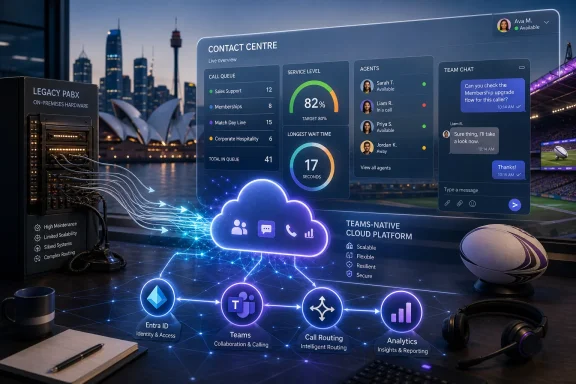
New South Wales Rugby League said on June 16, 2026, in Sydney that it has moved from a legacy PABX phone system to AnywhereNow’s Tendfor, a Microsoft Teams-native contact centre and attendant console platform. The announcement is not just another customer win in the cloud telephony market. It is a neat case study in how Microsoft Teams is becoming the default front door for organisations that once treated calling, reception, support, and internal collaboration as separate worlds. The real story is less about rugby league’s back office than about the slow retirement of the office phone system as a standalone institution.
For years, the private automatic branch exchange — the PABX — survived every wave of enterprise modernisation because it did one thing reliably: it made phones ring. Even as email, chat, mobile apps, CRM systems, and video meetings reshaped office work, the telephony stack often remained a protected island, maintained by specialists and integrated only where absolutely necessary.
NSWRL’s move to Tendfor shows why that island is shrinking. The organisation says it wanted faster time-to-value, simpler operations, and a better day-to-day experience for staff and callers. Those goals are now familiar to any IT team asked to justify a standalone voice estate in a Microsoft 365-heavy workplace.
The announcement frames the migration as a rapid technology uplift, but it also reflects a broader architectural shift. If staff already live in Teams, and if Microsoft’s cloud calling layer is good enough for routing, presence, queues, and reception workflows, then a separate telephony universe starts to look less like resilience and more like drag.
That does not mean every PABX is obsolete tomorrow. Large organisations with complex compliance, emergency calling, recording, union, or geographic requirements will keep hybrid voice arrangements for years. But the default assumption has changed: the phone system now has to explain why it should not be absorbed into the collaboration platform.
Some products connect to Teams through Direct Routing and session border controllers. Some embed selected Teams experiences inside a separate agent desktop. Others use Microsoft Graph, Cloud Communications APIs, Teams Phone, and the Teams client itself as the operational substrate. These distinctions matter because they shape deployment speed, call control, troubleshooting, licensing, user training, and failure modes.
AnywhereNow’s Tendfor is being positioned as a platform built on Microsoft APIs from the ground up, without SBC workarounds for the voice-native routing described in the announcement. That claim explains why NSWRL’s proof of concept could apparently go live within a few hours. A system designed to sit naturally inside the Microsoft cloud estate has fewer translation layers to configure before the first call is answered.
But “native” is not magic. Native integration generally means tighter dependence on Microsoft’s platform roadmap, API capabilities, service limits, and licensing model. For many WindowsForum readers, that trade will be acceptable — even desirable — because it replaces bespoke telephony plumbing with a more supportable cloud architecture. For others, particularly those with deeply customised call flows or regulated recording requirements, it will raise the question of where Microsoft’s platform ends and the vendor’s control begins.
Traditional telephony projects often carried the rhythm of infrastructure work. There were circuits, appliances, call plans, dial plans, trunks, carrier dependencies, handset inventories, reception workflows, and change windows. Even when the final system worked well, the journey could feel closer to a migration program than a software rollout.
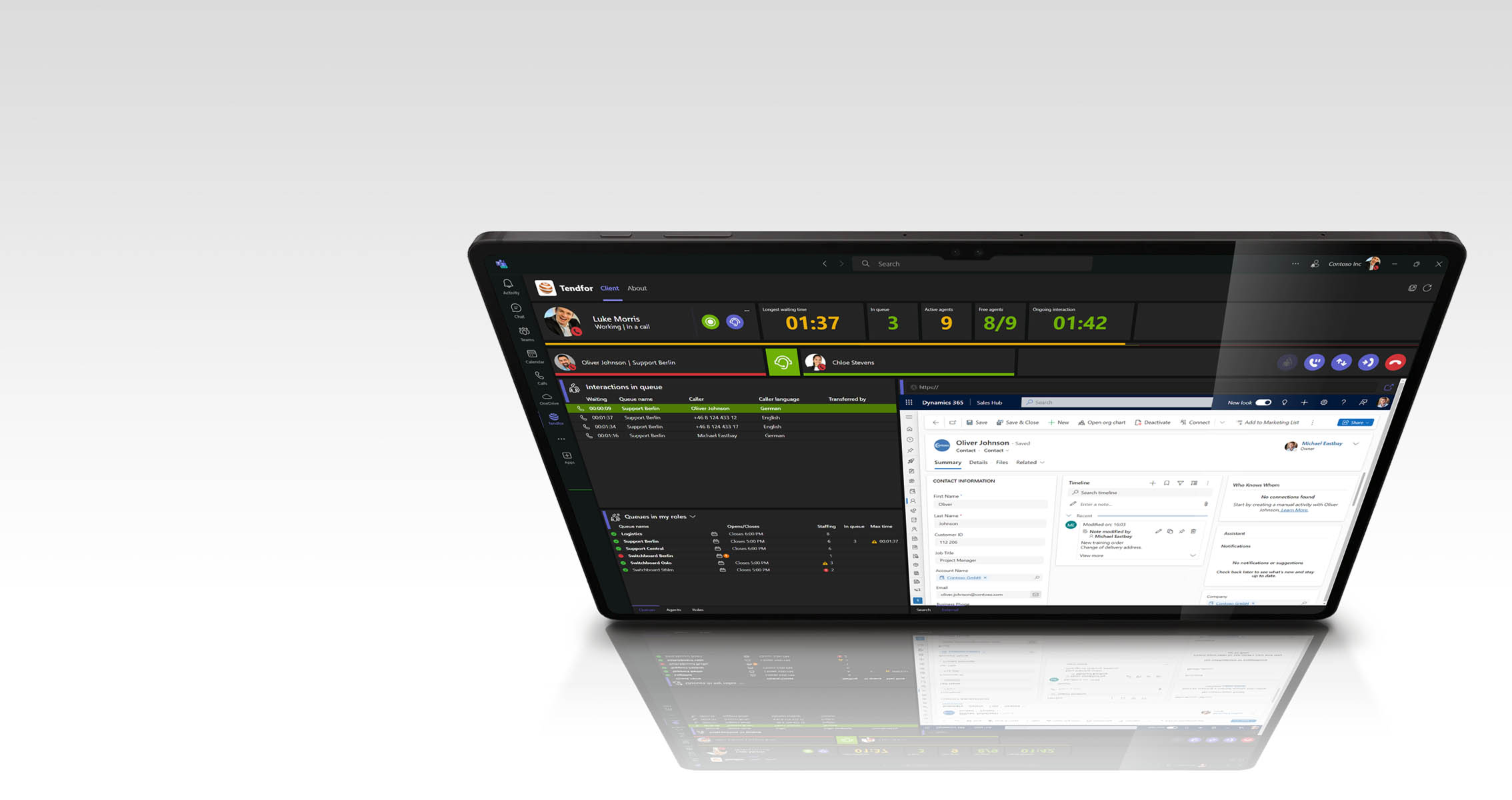
By contrast, a successful Teams-native contact centre trial can show value almost immediately if the tenant, identity, Teams Phone environment, and user groups are already in place. Agents can learn inside a familiar interface. Supervisors can monitor queues without asking staff to live in yet another disconnected application. Reception workflows can be reshaped around presence and availability rather than static extension lists.
That speed is not merely convenient. It changes who gets to participate in the decision. When a proof of concept can demonstrate real call handling within hours, business stakeholders can evaluate outcomes instead of watching IT describe an architecture diagram. In NSWRL’s case, the announcement says the platform supported operations during the proof of concept quickly enough to become a deciding factor.
Average wait time can improve because routing is better, staffing is better matched, call volume is lower, menus are clearer, agents are more available, or simply because the measurement window is brief. The first 48 hours after a deployment are useful, but they are not the same as a season, a finals week, a membership campaign, or a sudden operational incident. A mature verdict would need abandonment rates, repeat calls, transfer rates, peak-hour performance, queue distribution, and satisfaction data.
Still, the number matters because it suggests the migration did not stumble at the most visible point: callers getting through. The risk in replacing telephony is rarely abstract. If email is slow for a day, staff grumble. If analytics dashboards lag, managers wait. If calls queue indefinitely, the organisation looks broken from the outside.
That is why early call-handling performance carries symbolic weight. A contact centre migration succeeds first by not becoming a story inside the organisation. In that sense, NSWRL’s 17-second figure is less a full performance benchmark than an absence of embarrassment — and in voice migrations, that is not a trivial achievement.
NSWRL sits inside an ecosystem of clubs, competitions, officials, pathways, members, fans, partners, and community participants across New South Wales and the Australian Capital Territory. Calls are not just generic customer service interactions. They can involve fixtures, registrations, rules, events, media, community programs, and urgent coordination.
That makes the contact centre not merely a reception layer but a routing system for organisational attention. When call handling is manual, knowledge tends to live in people’s heads: who knows this answer, who is in today, who can take this issue, who is likely to pick up. Microsoft Teams is attractive in this context because presence, identity, calling, chat, and collaboration are already bound together.
The practical advantage is not that every employee becomes an agent. It is that the distance between the person who receives a question and the person who can resolve it becomes shorter. In sports administration, where public-facing work and internal coordination constantly overlap, that compression is valuable.
For Microsoft, the prize is obvious. Every successful Teams contact centre deployment increases the gravity of Microsoft 365. Teams becomes not just where employees meet, but where customers, callers, members, and partners enter the organisation. Once that happens, identity, compliance, analytics, CRM, Power Platform, and Copilot-adjacent workflows all become easier to sell into the same environment.
For vendors such as AnywhereNow, the opportunity is equally clear but more constrained. They can ride Teams adoption, but they also have to differentiate inside Microsoft’s shadow. Their products must be more than a skin over queues and more than a bridge from old telephony into Teams. They need to prove that they understand contact centre operations deeply enough to justify a specialised platform while remaining native enough that IT does not feel it is buying another silo.
NSWRL’s announcement leans heavily into that balance. Tendfor is described as both a contact centre and an attendant console, part of a broader AnywhereNow portfolio that also includes enterprise dialogue management, virtual agents, and AI-driven insight. That is the right vocabulary for the market in 2026, but the hard test will be whether the product continues to simplify operations after the easy migration story is over.
But the Teams era has brought the attendant console back in a different form. Reception is no longer just a person transferring a call to an extension. It is a coordination function across availability, location, role, queue, channel, and urgency.
That is why a combined contact centre and attendant console matters. The main number and the service queue are often separated in org charts, but callers do not care. They want to reach the right human or get the right answer. A platform that treats reception, routing, and agent workflows as one fabric can reduce the awkward handoffs that make organisations feel larger and slower than they really are.
For NSWRL, this is especially relevant because the organisation’s audience is not one homogeneous customer base. A club administrator, a parent, a volunteer, a partner, and a media contact may all enter through similar communications paths but need very different outcomes. The value of the console is not just answering quickly; it is directing intelligently.
The NSWRL announcement, however, is not primarily an AI story. Its concrete claims are about migration speed, Teams-native integration, reduced complexity, early wait-time performance, and operational visibility. That is important because it suggests the first wave of value came from plumbing, not from machine intelligence.
This is where the market’s rhetoric and operational reality diverge. AI may eventually reshape contact centres, but many organisations still need to solve more basic problems first: calls landing in the right place, agents seeing the right context, supervisors understanding volume, receptionists knowing who is available, and IT avoiding a maze of SBCs and bolt-ons.
In that sense, NSWRL’s deployment is more persuasive because it is not overclaiming the AI angle. The foundation matters. A contact centre with poor routing and inconsistent call capture will not become excellent merely because a model can summarise the aftermath. If AI is going to matter here, it will matter most after the communications layer is clean enough to generate reliable signals.
Legacy phone systems frequently work until someone asks a basic management question. How many calls were missed yesterday? Which queue is overloaded? Which departments are absorbing transfers? How long do callers wait during specific windows? Are staff using the system as designed, or routing around it with mobiles and direct calls?
A Teams-aligned contact centre can make those questions easier to answer because the calling layer is closer to identity, collaboration, and cloud reporting. It also gives IT a more coherent support surface. Instead of diagnosing a chain that runs from carrier to appliance to trunk to PBX to desktop client to headset, administrators can increasingly reason from Microsoft 365 identities, policies, queues, and vendor dashboards.
Visibility also changes governance. Once call flows can be measured, they can be argued about with evidence. That may be uncomfortable at first, particularly in organisations where reception and service practices evolved informally. But it is the difference between “we think callers are waiting too long” and “this queue fails every Tuesday afternoon because the responsible team is unavailable during a predictable meeting block.”
If voice, meetings, chat, identity, contact centre routing, and reception workflows all converge on Microsoft 365 and a single integrated vendor platform, the organisation gains simplicity but also reduces architectural diversity. An outage or service degradation in the Microsoft stack can have wider consequences. A licensing change can alter economics. An API change can force vendor adaptation. A tenant misconfiguration can ripple into communications.
That does not make the move unwise. Most organisations are already heavily dependent on Microsoft 365, whether they admit it or not. The more honest question is whether maintaining a separate telephony stack genuinely reduces risk or simply preserves a second complex system with its own fragility.
For NSWRL-sized organisations, the answer often favours consolidation. The operational burden of running legacy voice infrastructure can outweigh the theoretical comfort of separation. But IT teams should still document survivability assumptions, emergency calling arrangements, support escalation paths, and fallback processes before declaring the old world solved.
Agents and reception staff are conservative for good reasons. They are the ones who face callers when a transfer fails, a queue behaves unexpectedly, or a screen hides the action they need. A new platform that looks elegant to IT can still be a daily irritation if it adds clicks, hides context, or makes edge cases harder.
Teams-native systems have a built-in advantage here because many staff already understand the basic environment. Presence, search, chat, and calling are familiar. But that familiarity can also create false confidence. Contact centre work is more structured than ordinary Teams calling, and organisations still need role-based training, queue discipline, escalation rules, and clear ownership.
NSWRL’s early results suggest the deployment avoided the classic trap of delivering a technically successful system that users resist. The more durable question is whether the organisation continues to tune workflows after go-live. Contact centres are living systems; the first configuration is rarely the best one.
That is especially true when replacing a legacy PABX. The hard work is not merely provisioning the new system. It is discovering how the old one was actually used. Call flows may differ from documentation. Main numbers may perform hidden functions. Receptionists may have built informal processes around personalities rather than roles. Departments may depend on workarounds no one has named.
A good partner surfaces those realities before go-live. A poor one simply replicates the old mess in a new interface. The fact that NSWRL highlighted responsiveness and consistency of engagement suggests the delivery experience was part of the value proposition, not a footnote.
This is a useful reminder for WindowsForum’s IT audience: cloud-native does not mean partner-free. It means the partner’s job changes from rack-and-stack telephony engineering to workflow discovery, governance design, change management, and continuous optimisation.
That does not mean specialist CCaaS giants are going away. High-volume enterprise contact centres still need sophisticated workforce optimisation, campaign management, omnichannel orchestration, deep analytics, outbound capabilities, and industry-specific compliance. A bank’s fraud operation or an airline’s disruption desk is not the same problem as a sports organisation’s service and reception workflows.
But there is a large middle of the market where the dedicated contact centre desktop may be overkill. These organisations need queues, routing, visibility, call recording options, reception, and sensible reporting, but they also need fast deployment and low friction. For them, Teams is not merely “good enough.” It may be better aligned with how the organisation already works.
NSWRL’s migration belongs to this middle. Its significance is not that it proves Teams-native contact centres can replace every heavyweight platform. It shows that the centre of gravity is moving, and that many organisations will judge contact centre technology by how naturally it fits into Microsoft 365.
Readers should treat those claims as a starting point rather than a benchmark study. We do not have the before-and-after call volumes, the old PABX architecture, the licensing costs, the training timeline, the abandonment rate, the full routing design, or long-term support metrics. The announcement gives us enough to understand the strategic direction, not enough to grade the project exhaustively.
Even so, the pattern aligns with what many Microsoft-centric organisations are already doing. Teams Phone has matured, partner contact centre offerings have become more credible, and the tolerance for maintaining disconnected voice infrastructure has declined. When a respected sports body moves a real operational workload onto a Teams-native platform and reports quick early gains, it becomes one more data point in a larger migration away from legacy telephony.
The smart reading, then, is neither hype nor dismissal. NSWRL’s story is best understood as a practical example of an organisation choosing consolidation, speed, and staff familiarity over the inherited comfort of a traditional phone system.
 The Old Phone System Is Losing Its Last Defensive Line
For years, the private automatic branch exchange — the PABX — survived every wave of enterprise modernisation because it did one thing reliably: it made phones ring. Even as email, chat, mobile apps, CRM systems, and video meetings reshaped office work, the telephony stack often remained a protected island, maintained by specialists and integrated only where absolutely necessary.NSWRL’s move to Tendfor shows why that island is shrinking. The organisation says it wanted faster time-to-value, simpler operations, and a better day-to-day experience for staff and callers. Those goals are now familiar to any IT team asked to justify a standalone voice estate in a Microsoft 365-heavy workplace.
The announcement frames the migration as a rapid technology uplift, but it also reflects a broader architectural shift. If staff already live in Teams, and if Microsoft’s cloud calling layer is good enough for routing, presence, queues, and reception workflows, then a separate telephony universe starts to look less like resilience and more like drag.
That does not mean every PABX is obsolete tomorrow. Large organisations with complex compliance, emergency calling, recording, union, or geographic requirements will keep hybrid voice arrangements for years. But the default assumption has changed: the phone system now has to explain why it should not be absorbed into the collaboration platform.
Teams-Native Is a Loaded Phrase, Not a Marketing Decoration
The most important phrase in the NSWRL announcement is “Teams-native.” It is also the phrase buyers should interrogate hardest, because the contact centre market has spent several years stretching it to cover very different technical models.Some products connect to Teams through Direct Routing and session border controllers. Some embed selected Teams experiences inside a separate agent desktop. Others use Microsoft Graph, Cloud Communications APIs, Teams Phone, and the Teams client itself as the operational substrate. These distinctions matter because they shape deployment speed, call control, troubleshooting, licensing, user training, and failure modes.
AnywhereNow’s Tendfor is being positioned as a platform built on Microsoft APIs from the ground up, without SBC workarounds for the voice-native routing described in the announcement. That claim explains why NSWRL’s proof of concept could apparently go live within a few hours. A system designed to sit naturally inside the Microsoft cloud estate has fewer translation layers to configure before the first call is answered.
But “native” is not magic. Native integration generally means tighter dependence on Microsoft’s platform roadmap, API capabilities, service limits, and licensing model. For many WindowsForum readers, that trade will be acceptable — even desirable — because it replaces bespoke telephony plumbing with a more supportable cloud architecture. For others, particularly those with deeply customised call flows or regulated recording requirements, it will raise the question of where Microsoft’s platform ends and the vendor’s control begins.
NSWRL Wanted Speed, and Speed Became the Proof
NSWRL’s IT Operations Manager, Maurice Veliz, said the simplicity of implementation was critical and that the speed of deployment “blew us away.” That quote is vendor-release language, but it points to a real procurement dynamic: in cloud communications, proof-of-concept speed is becoming a product feature.Traditional telephony projects often carried the rhythm of infrastructure work. There were circuits, appliances, call plans, dial plans, trunks, carrier dependencies, handset inventories, reception workflows, and change windows. Even when the final system worked well, the journey could feel closer to a migration program than a software rollout.
By contrast, a successful Teams-native contact centre trial can show value almost immediately if the tenant, identity, Teams Phone environment, and user groups are already in place. Agents can learn inside a familiar interface. Supervisors can monitor queues without asking staff to live in yet another disconnected application. Reception workflows can be reshaped around presence and availability rather than static extension lists.
That speed is not merely convenient. It changes who gets to participate in the decision. When a proof of concept can demonstrate real call handling within hours, business stakeholders can evaluate outcomes instead of watching IT describe an architecture diagram. In NSWRL’s case, the announcement says the platform supported operations during the proof of concept quickly enough to become a deciding factor.
A 17-Second Wait Time Is a Small Number With a Big Shadow
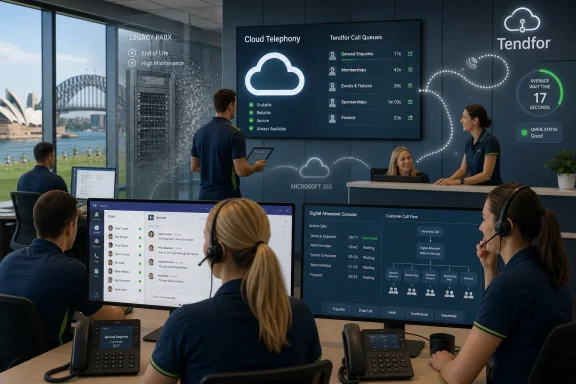
The headline operational metric in the announcement is that NSWRL achieved an average wait time of 17 seconds within the first 48 hours after AnywhereNow was in place. That is an encouraging early signal, especially given that staff were adopting a new platform. It is also a metric that deserves careful handling.Average wait time can improve because routing is better, staffing is better matched, call volume is lower, menus are clearer, agents are more available, or simply because the measurement window is brief. The first 48 hours after a deployment are useful, but they are not the same as a season, a finals week, a membership campaign, or a sudden operational incident. A mature verdict would need abandonment rates, repeat calls, transfer rates, peak-hour performance, queue distribution, and satisfaction data.
Still, the number matters because it suggests the migration did not stumble at the most visible point: callers getting through. The risk in replacing telephony is rarely abstract. If email is slow for a day, staff grumble. If analytics dashboards lag, managers wait. If calls queue indefinitely, the organisation looks broken from the outside.
That is why early call-handling performance carries symbolic weight. A contact centre migration succeeds first by not becoming a story inside the organisation. In that sense, NSWRL’s 17-second figure is less a full performance benchmark than an absence of embarrassment — and in voice migrations, that is not a trivial achievement.
Sports Administration Is a Harder Communications Job Than It Looks
It is tempting to treat a rugby league body as a softer enterprise case than a bank, hospital, utility, or public-sector agency. That would be a mistake. Sports administration is full of sharp communication spikes, geographically dispersed stakeholders, seasonal surges, emotional callers, and operational dependencies that do not wait for a ticket queue to mature.NSWRL sits inside an ecosystem of clubs, competitions, officials, pathways, members, fans, partners, and community participants across New South Wales and the Australian Capital Territory. Calls are not just generic customer service interactions. They can involve fixtures, registrations, rules, events, media, community programs, and urgent coordination.
That makes the contact centre not merely a reception layer but a routing system for organisational attention. When call handling is manual, knowledge tends to live in people’s heads: who knows this answer, who is in today, who can take this issue, who is likely to pick up. Microsoft Teams is attractive in this context because presence, identity, calling, chat, and collaboration are already bound together.
The practical advantage is not that every employee becomes an agent. It is that the distance between the person who receives a question and the person who can resolve it becomes shorter. In sports administration, where public-facing work and internal coordination constantly overlap, that compression is valuable.
Microsoft’s Contact Centre Strategy Is an Ecosystem Play
Microsoft has not tried to turn Teams into a full contact centre by itself in the way some buyers might expect. Instead, it has encouraged an ecosystem of certified and integrated partners using different models. That strategy lets Microsoft keep Teams as the hub while vendors build the specialised routing, supervision, analytics, recording, and workflow layers that contact centres require.For Microsoft, the prize is obvious. Every successful Teams contact centre deployment increases the gravity of Microsoft 365. Teams becomes not just where employees meet, but where customers, callers, members, and partners enter the organisation. Once that happens, identity, compliance, analytics, CRM, Power Platform, and Copilot-adjacent workflows all become easier to sell into the same environment.
For vendors such as AnywhereNow, the opportunity is equally clear but more constrained. They can ride Teams adoption, but they also have to differentiate inside Microsoft’s shadow. Their products must be more than a skin over queues and more than a bridge from old telephony into Teams. They need to prove that they understand contact centre operations deeply enough to justify a specialised platform while remaining native enough that IT does not feel it is buying another silo.
NSWRL’s announcement leans heavily into that balance. Tendfor is described as both a contact centre and an attendant console, part of a broader AnywhereNow portfolio that also includes enterprise dialogue management, virtual agents, and AI-driven insight. That is the right vocabulary for the market in 2026, but the hard test will be whether the product continues to simplify operations after the easy migration story is over.
The Attendant Console Has Quietly Become Strategic Again
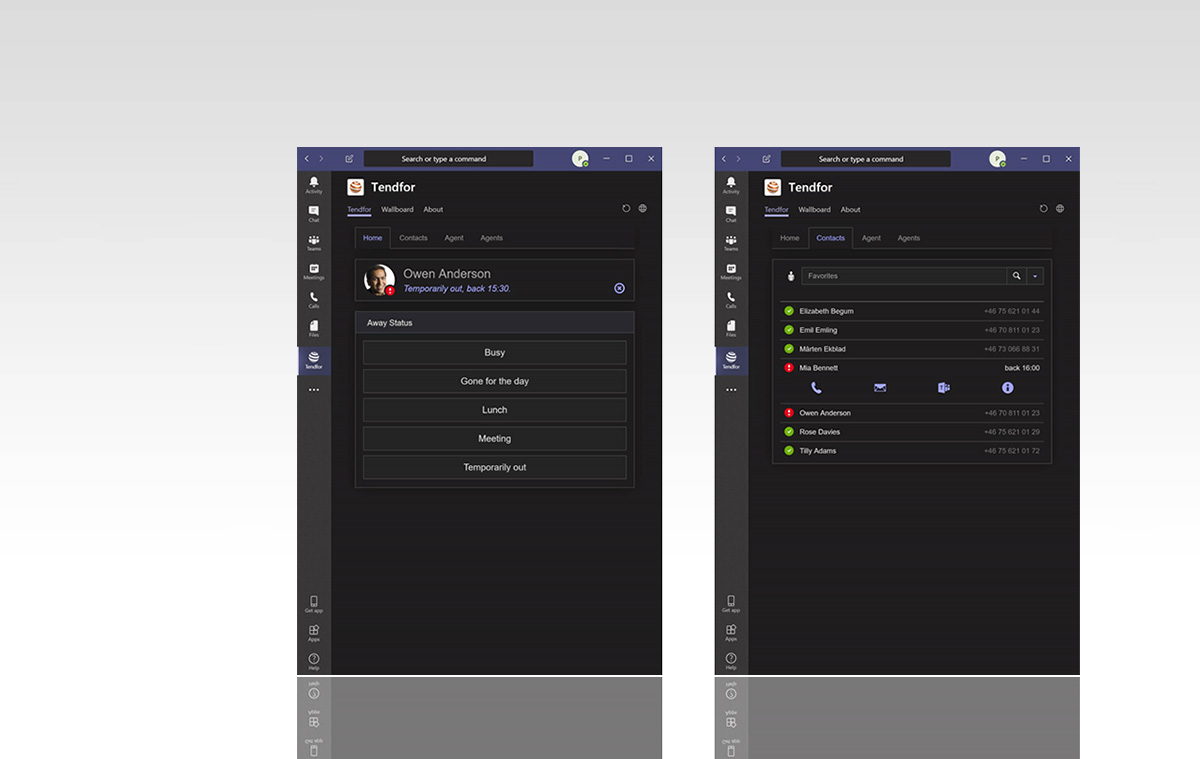
The humble attendant console used to be a reception tool. In many organisations, it was a specialised screen for transferring calls, seeing extensions, and handling the main number. Cloud collaboration made it seem less important for a while, because everyone had direct numbers, mobile phones, chat, and calendars.But the Teams era has brought the attendant console back in a different form. Reception is no longer just a person transferring a call to an extension. It is a coordination function across availability, location, role, queue, channel, and urgency.
That is why a combined contact centre and attendant console matters. The main number and the service queue are often separated in org charts, but callers do not care. They want to reach the right human or get the right answer. A platform that treats reception, routing, and agent workflows as one fabric can reduce the awkward handoffs that make organisations feel larger and slower than they really are.
For NSWRL, this is especially relevant because the organisation’s audience is not one homogeneous customer base. A club administrator, a parent, a volunteer, a partner, and a media contact may all enter through similar communications paths but need very different outcomes. The value of the console is not just answering quickly; it is directing intelligently.
The AI-Native Label Is Still Waiting for Its Moment of Proof
AnywhereNow describes itself as a provider of AI-native customer experience solutions. That is now table stakes in the contact centre market, where nearly every vendor claims some combination of transcription, sentiment analysis, virtual agents, summarisation, knowledge retrieval, agent assistance, or automated quality management.The NSWRL announcement, however, is not primarily an AI story. Its concrete claims are about migration speed, Teams-native integration, reduced complexity, early wait-time performance, and operational visibility. That is important because it suggests the first wave of value came from plumbing, not from machine intelligence.
This is where the market’s rhetoric and operational reality diverge. AI may eventually reshape contact centres, but many organisations still need to solve more basic problems first: calls landing in the right place, agents seeing the right context, supervisors understanding volume, receptionists knowing who is available, and IT avoiding a maze of SBCs and bolt-ons.
In that sense, NSWRL’s deployment is more persuasive because it is not overclaiming the AI angle. The foundation matters. A contact centre with poor routing and inconsistent call capture will not become excellent merely because a model can summarise the aftermath. If AI is going to matter here, it will matter most after the communications layer is clean enough to generate reliable signals.
The Hidden Win Is Operational Visibility
The announcement says the shift gives NSWRL greater agility and improved visibility. That phrase can sound generic, but in telephony projects it is often the most valuable outcome.Legacy phone systems frequently work until someone asks a basic management question. How many calls were missed yesterday? Which queue is overloaded? Which departments are absorbing transfers? How long do callers wait during specific windows? Are staff using the system as designed, or routing around it with mobiles and direct calls?
A Teams-aligned contact centre can make those questions easier to answer because the calling layer is closer to identity, collaboration, and cloud reporting. It also gives IT a more coherent support surface. Instead of diagnosing a chain that runs from carrier to appliance to trunk to PBX to desktop client to headset, administrators can increasingly reason from Microsoft 365 identities, policies, queues, and vendor dashboards.
Visibility also changes governance. Once call flows can be measured, they can be argued about with evidence. That may be uncomfortable at first, particularly in organisations where reception and service practices evolved informally. But it is the difference between “we think callers are waiting too long” and “this queue fails every Tuesday afternoon because the responsible team is unavailable during a predictable meeting block.”
The Risk Moves From Hardware Failure to Platform Dependence
Cloud migrations do not eliminate risk; they relocate it. In the old telephony world, the nightmare was a failed appliance, carrier outage, misconfigured trunk, or ageing PBX that only one contractor understood. In the Teams-native world, the nightmare is dependency concentration.If voice, meetings, chat, identity, contact centre routing, and reception workflows all converge on Microsoft 365 and a single integrated vendor platform, the organisation gains simplicity but also reduces architectural diversity. An outage or service degradation in the Microsoft stack can have wider consequences. A licensing change can alter economics. An API change can force vendor adaptation. A tenant misconfiguration can ripple into communications.
That does not make the move unwise. Most organisations are already heavily dependent on Microsoft 365, whether they admit it or not. The more honest question is whether maintaining a separate telephony stack genuinely reduces risk or simply preserves a second complex system with its own fragility.
For NSWRL-sized organisations, the answer often favours consolidation. The operational burden of running legacy voice infrastructure can outweigh the theoretical comfort of separation. But IT teams should still document survivability assumptions, emergency calling arrangements, support escalation paths, and fallback processes before declaring the old world solved.
The Human Factor Is the Migration
The announcement notes high early adoption across NSWRL agents. That detail matters because voice technology projects are often won or lost by people who never sat in the procurement meetings.Agents and reception staff are conservative for good reasons. They are the ones who face callers when a transfer fails, a queue behaves unexpectedly, or a screen hides the action they need. A new platform that looks elegant to IT can still be a daily irritation if it adds clicks, hides context, or makes edge cases harder.
Teams-native systems have a built-in advantage here because many staff already understand the basic environment. Presence, search, chat, and calling are familiar. But that familiarity can also create false confidence. Contact centre work is more structured than ordinary Teams calling, and organisations still need role-based training, queue discipline, escalation rules, and clear ownership.
NSWRL’s early results suggest the deployment avoided the classic trap of delivering a technically successful system that users resist. The more durable question is whether the organisation continues to tune workflows after go-live. Contact centres are living systems; the first configuration is rarely the best one.
The Partner Layer Still Matters in a Cloud-Native World
One of the more revealing parts of the announcement is its emphasis on AnywhereNow and its partner working closely with NSWRL through preparation, configuration, go-live, and post-launch optimisation. Cloud software has trained buyers to expect self-service speed, but communications projects still benefit from experienced delivery.That is especially true when replacing a legacy PABX. The hard work is not merely provisioning the new system. It is discovering how the old one was actually used. Call flows may differ from documentation. Main numbers may perform hidden functions. Receptionists may have built informal processes around personalities rather than roles. Departments may depend on workarounds no one has named.
A good partner surfaces those realities before go-live. A poor one simply replicates the old mess in a new interface. The fact that NSWRL highlighted responsiveness and consistency of engagement suggests the delivery experience was part of the value proposition, not a footnote.
This is a useful reminder for WindowsForum’s IT audience: cloud-native does not mean partner-free. It means the partner’s job changes from rack-and-stack telephony engineering to workflow discovery, governance design, change management, and continuous optimisation.
The Contact Centre Market Is Converging on the Employee Desktop
The broader industry trend is unmistakable. Contact centre software used to assume agents would live in a dedicated application, with integrations reaching outward into CRM, knowledge bases, workforce systems, and telephony. The Teams-native model flips that assumption for many midmarket and operational contact centres: the collaboration desktop becomes the place where customer interaction is handled.That does not mean specialist CCaaS giants are going away. High-volume enterprise contact centres still need sophisticated workforce optimisation, campaign management, omnichannel orchestration, deep analytics, outbound capabilities, and industry-specific compliance. A bank’s fraud operation or an airline’s disruption desk is not the same problem as a sports organisation’s service and reception workflows.
But there is a large middle of the market where the dedicated contact centre desktop may be overkill. These organisations need queues, routing, visibility, call recording options, reception, and sensible reporting, but they also need fast deployment and low friction. For them, Teams is not merely “good enough.” It may be better aligned with how the organisation already works.
NSWRL’s migration belongs to this middle. Its significance is not that it proves Teams-native contact centres can replace every heavyweight platform. It shows that the centre of gravity is moving, and that many organisations will judge contact centre technology by how naturally it fits into Microsoft 365.
The Manila Times Wire Story Is Vendor News, but the Pattern Is Real
The source material is a wire-style announcement carried by The Manila Times, not an independent technical review. That distinction matters. The claims come from the vendor-customer narrative: fast deployment, strong early performance, smooth collaboration, and a successful migration.Readers should treat those claims as a starting point rather than a benchmark study. We do not have the before-and-after call volumes, the old PABX architecture, the licensing costs, the training timeline, the abandonment rate, the full routing design, or long-term support metrics. The announcement gives us enough to understand the strategic direction, not enough to grade the project exhaustively.
Even so, the pattern aligns with what many Microsoft-centric organisations are already doing. Teams Phone has matured, partner contact centre offerings have become more credible, and the tolerance for maintaining disconnected voice infrastructure has declined. When a respected sports body moves a real operational workload onto a Teams-native platform and reports quick early gains, it becomes one more data point in a larger migration away from legacy telephony.
The smart reading, then, is neither hype nor dismissal. NSWRL’s story is best understood as a practical example of an organisation choosing consolidation, speed, and staff familiarity over the inherited comfort of a traditional phone system.
The Signal Inside NSWRL’s 17-Second Queue
NSWRL’s migration is not a referendum on every contact centre architecture, but it does offer several concrete lessons for organisations already standardising on Microsoft 365.- A Teams-native contact centre can shorten deployment timelines when the Microsoft tenant, calling environment, identity model, and user groups are already prepared.
- Early wait-time improvements are encouraging, but they should be judged alongside abandonment rates, peak-period performance, transfer patterns, and customer satisfaction over a longer period.
- Removing SBC-heavy workarounds can simplify operations, but it also increases dependence on Microsoft’s APIs, Teams Phone behaviour, and the vendor’s ability to track platform changes.
- The attendant console deserves renewed attention because reception, routing, and service queues increasingly overlap in modern organisations.
- The most important post-migration work is not technical celebration; it is ongoing tuning of call flows, staff roles, reporting, and escalation paths.
- AI features will matter more when the underlying communications layer is clean, measurable, and consistently used by staff.
References
- Primary source: The Manila Times
Published: Mon, 15 Jun 2026 23:21:49 GMT

NSW Rugby League Modernises its Contact Centre with AnywhereNow’s Microsoft Teams-native Tendfor Solution | The Manila Times
Sydney, Australia - 16 June 2026 - New South Wales Rugby League (NSWRL), one of the most established and respected organisations across the world of Rugby League, has chosen to migrate to AnywhereNow’s Tendfor contact centre solution. The fully native Microsoft Teams attendant console and voice... www.manilatimes.net
- Official source: learn.microsoft.com
- Related coverage: anywhere.now

Tendfor | Certified Contact Center for Microsoft Teams | AnywhereNow
The world's 1st fully certified contact center & attendant console solution for Microsoft Teams, built on native API integration. Learn more with AnywhereNow.www.anywhere.now - Official source: marketplace.microsoft.com

Tendfor Contact Center and Reception Solution for Microsoft Teams
A Microsoft Teams-native omnichannel contact center and reception solution for customer interactionsmarketplace.microsoft.com
- Related coverage: c.digitalisationworld.com

Tendfor 3.20 aims to enhance Microsoft Teams for customer conversations
Tendfor introduces version 3.20 to enhance customer interactions via Microsoft Teams, aiming for seamless, efficient, and AI-driven communication management.c.digitalisationworld.com - Related coverage: tendfor.com
A word on contact center and attendant console certification for Teams
Teams Multi-Tenant Azure Cloud Switchboard Attendant Console Contact Center Centre Call Center Recording Wallboard Statistics Mobile App Mobile Agent Agents Phone System Enterprise Voice Graph Cloud Communications API Microsoft 365, certificationtendfor.com
- Related coverage: computer-talk.com