

OpenAI signaled in early June 2026 that it is building a robotics division, with Sam Altman recruiting engineers to help program and manufacture useful robots, a move that immediately invites comparison with Tesla’s Optimus humanoid effort and the wider physical-AI race. The short answer for Tesla investors is: yes, they should notice, but not because OpenAI is about to ship a better robot next quarter. They should worry because OpenAI’s move weakens the most valuable assumption embedded in Tesla’s robotics story — that Tesla will define the category before anyone else arrives. In technology markets, the first serious rival often matters less for what it sells than for what it proves possible.
For years, robots have been the place where AI optimism goes to be humbled by friction, torque, battery life, safety certification, and the world’s inconvenient refusal to behave like a benchmark. A chatbot can hallucinate and apologize. A robot that hallucinates near a stairwell, a forklift, or a child is a product-liability seminar with motors.
That is why OpenAI’s robotics push matters even in the absence of a product spec sheet. The company is not merely adding another software feature to ChatGPT or licensing a model to a device maker. Altman’s call for engineers to help program and manufacture robots puts OpenAI on a different plane: from intelligence provider to embodied-system builder.
The move also fits a broader turn in AI from digital agents to physical agents. The first wave of generative AI automated text, code, image, and video tasks inside screens. The next ambition is obvious and much harder: systems that can perceive, plan, and act in messy real-world environments. If AI is to become infrastructure rather than an app, it eventually has to touch the physical economy.
That is where Tesla enters the story. Tesla has spent years presenting Optimus not as a hobby project but as a central pillar of its long-term valuation. Elon Musk has repeatedly argued that the robot could become larger than Tesla’s car business. Investors may discount the rhetoric, but Tesla’s market value has clearly depended on belief in businesses beyond selling electric vehicles.
That is a plausible story, but it is not the same as a moat. Cars are difficult; humanoid robots are different. A vehicle’s operating environment is constrained by roads, lanes, traffic rules, and a driving task that, while hard, is narrow compared with unloading a dishwasher, sorting irregular parts, changing tools, or navigating a crowded warehouse.
Optimus has always benefited from narrative scarcity. There were robotics companies, of course, but few with Tesla’s public-market visibility, manufacturing mythology, retail investor base, and CEO megaphone. The market could treat Optimus as if Tesla were building the iPhone of robots before the rest of the world had admitted phones mattered.
OpenAI’s entrance punctures that scarcity. It says the category is not Tesla’s private frontier. It says the company most associated with frontier AI believes embodiment is important enough to recruit for directly. That does not make OpenAI a better robotics company overnight, but it changes the investor psychology around Tesla’s claim to inevitability.
But robots are not merely chatbots with joints. The hardest problems in robotics often sit at the boundary between perception, control, mechanical design, and reliability. A robot that performs one task in a lab video may fail when the lighting changes, the object is slightly deformed, the floor is wet, the tool is misplaced, or a human interrupts at the wrong moment.
Tesla’s advantage is that it already lives in the world of manufacturing tolerances, service networks, suppliers, production ramps, and field failures. The company has built millions of vehicles, endured brutal ramp cycles, designed custom electronics, and integrated hardware and software under cost pressure. That matters.
Still, the robotics race is not a simple contest between Tesla’s factories and OpenAI’s models. The winner may be the company that best combines learning systems, task-specific hardware, simulation, teleoperation, fleet data, safety tooling, and deployment discipline. Tesla has pieces of that stack. OpenAI has different pieces. Neither has yet proven it can sell a general-purpose humanoid robot at scale.
That argument is seductive and incomplete. Humanoid robots are expensive because human bodies are mechanically ambitious. Two legs are harder than wheels. Hands are harder than grippers. Generality adds cost, fragility, and failure modes. Many profitable robots in warehouses and factories will not look human because they do not need to.
This matters for Tesla because Optimus has become the visible avatar of the company’s AI future. But OpenAI may not need to copy Optimus to compete with the economic premise behind it. A robotics division could focus first on manipulation, industrial systems, data collection rigs, or partnerships with existing robot makers. It could become the intelligence layer for many bodies rather than the manufacturer of one iconic body.
That would be a subtler threat. Tesla can compete with another humanoid demo on stage. It is harder to compete with a software platform that becomes the default control layer for robots built by dozens of specialized companies.
In that model, OpenAI does not need to own the entire robot. It needs to own the model, the interface, the task-planning layer, the simulation environment, the safety framework, and the developer relationship. Hardware partners could build arms, mobile bases, warehouse machines, elder-care devices, or specialized industrial systems.
That would look less like Tesla and more like Microsoft Windows in the PC era or Android in phones, except for machines that move. For WindowsForum readers, the analogy is familiar: platform control often beats device purity when ecosystems scale. The company that defines the software abstraction can profit even when hardware margins compress.
Tesla, by contrast, tends to prefer vertical integration. That can produce elegant products and strong cost control when it works. It can also slow adoption if customers want flexibility, interoperability, procurement options, and vendor diversity. In enterprise robotics, those boring procurement concerns may matter more than stage-show charisma.
Tesla’s car business is already facing a more mature EV market, intensifying Chinese competition, margin pressure, and a brand that has become inseparable from Musk’s public persona. The stock’s premium has long depended on the idea that Tesla is not just an automaker. It is an autonomy company, an energy company, a robotics company, and perhaps a general AI company.
The more companies pile into physical AI, the less Tesla can rely on Optimus as a monopoly-shaped option on the future. That does not mean Optimus fails. It means investors should stop treating success as winner-take-all by default.
There is a difference between building a great robotics business and justifying a valuation that assumes dominance across multiple emerging markets. OpenAI’s robotics move attacks the second proposition more than the first. Tesla can still win meaningful share while the stock becomes less forgiving.
Tesla wants to own much of that stack. OpenAI may want to own the intelligence layer. Google DeepMind, Figure, 1X, Agility Robotics, Apptronik, Symbotic, and others are already pushing different combinations of bodies, brains, and deployment niches. The result is less likely to resemble a two-company duel than a long sorting process across use cases.
Factories may adopt one type of robot. Warehouses may adopt another. Hospitals and elder-care facilities may require conservative, safety-certified machines with limited autonomy. Homes may be the last frontier, not the first, because consumers have low tolerance for expensive machines that fail unpredictably.
This is why the “should Tesla investors be worried?” question needs reframing. The issue is not whether OpenAI ships a humanoid robot before Tesla. The issue is whether robotics becomes an open, competitive, multi-vendor market before Tesla can convert Optimus into a durable platform.
Enterprise robots will need authentication, logging, patching, remote management, network segmentation, policy enforcement, and incident response. They will connect to cloud services, local servers, cameras, sensors, ERP systems, warehouse software, and help-desk workflows. A robot fleet is not just automation; it is IT infrastructure with wheels, arms, and a much larger blast radius.
Microsoft will almost certainly matter here, even if it is not building the robot body. Azure, Entra ID, Defender, Windows IoT, Microsoft 365, Power Platform, and enterprise device-management habits all sit adjacent to the problem. If OpenAI’s robotics ambitions mature, Microsoft’s relationship with OpenAI becomes strategically relevant beyond chat and coding assistants.
For sysadmins, the arrival of physical AI means the endpoint-security conversation gets more literal. A compromised laptop leaks data. A compromised robot might damage inventory, injure someone, or become a mobile surveillance device. The governance bar will be higher because the consequences leave the screen.
OpenAI’s broader government and defense entanglements have already made some employees and observers uneasy. Robotics intensifies that debate because embodied AI can be dual-use in the most literal sense. A system that can navigate, perceive, manipulate, and coordinate in the physical world has obvious civilian applications and obvious security implications.
Tesla faces a different but related safety challenge. The company’s autonomous-driving history has trained regulators and skeptics to scrutinize how it markets machine capability. If Optimus is sold as autonomous before it is robustly autonomous, Tesla will inherit the same trust gap in a more physically intimate domain.
The industry will be tempted to sell magic. It should resist. The first widely deployed robots may need narrow tasks, geofenced environments, human supervision, conservative controls, and boring dashboards. That may disappoint people waiting for Rosie from The Jetsons, but it is how real infrastructure arrives.
Homes are unstructured, cluttered, emotionally loaded, and full of edge cases. A warehouse can standardize bins, aisles, labels, workflows, lighting, and safety zones. A home contains pets, toddlers, stairs, spilled cereal, sentimental objects, locked cabinets, guests, and a thousand implicit rules no model fully understands.
OpenAI’s consumer AI strength could help here. ChatGPT has taught people to converse with software in natural language, and a robot assistant would need that kind of interface. But language fluency is not household competence. A robot that understands “clean up the kitchen” must translate intention into a long chain of safe physical actions.
That is why near-term robotics revenue is more likely to come from controlled commercial settings than mass-market homes. Tesla may eventually sell Optimus to consumers, and OpenAI may eventually enable consumer robots. But investors should be wary of timelines that compress decades of robotics difficulty into a product-cycle fantasy.
Tesla also has an internal customer for Optimus. If the robot can perform useful factory tasks inside Tesla facilities, the company can iterate before facing the full brutality of external customers. That is a genuine advantage. Internal deployment can produce data, reveal failures, and build confidence without immediately depending on consumer sales.
But Tesla’s lead is hard to measure because the industry is still in the demo-to-deployment transition. Videos do not equal unit economics. A prototype that walks does not equal a robot that works two shifts a day. A robot that performs a scripted task does not equal a fleet that pays back its purchase price.
OpenAI’s arrival narrows Tesla’s narrative lead even if it does not erase Tesla’s engineering progress. In public markets, that distinction matters. Investors price stories before they price income statements, and the robotics story just became crowded.
That includes manufacturing, logistics, agriculture, construction, health care, maintenance, and domestic labor. These sectors represent enormous economic value, but they are also slow, regulated, fragmented, and operationally complex. AI companies have learned how to scale software globally; robots scale through supply chains, safety cases, service teams, and customer-specific integration.
This is why OpenAI’s manufacturing language matters. It suggests the company understands that robotics cannot be solved by a model release alone. Hardware, data collection, embodiment, and deployment loops are part of the research problem.
Still, OpenAI is entering a field that punishes abstraction. The company can recruit brilliant engineers and still discover that cable routing, motor heat, gripper wear, and cleaning protocols matter as much as model weights. The physical world is not impressed by valuation.
A crowded field creates benchmarks, customer comparisons, supplier competition, hiring liquidity, and pressure to demonstrate actual usefulness. It also reduces the chance that one company defines the safety norms for machines that may one day share workplaces and homes with humans.
For Tesla investors, that is uncomfortable. For the industry, it is necessary. A single-company robotics future would be fragile, especially when the technology touches labor markets, surveillance, safety, and national-security concerns.
The healthier outcome is a robotics market where Tesla is one strong player among several, OpenAI powers some systems but not all, and customers choose based on performance rather than myth. That may produce less spectacular stock-market storytelling. It may produce better robots.
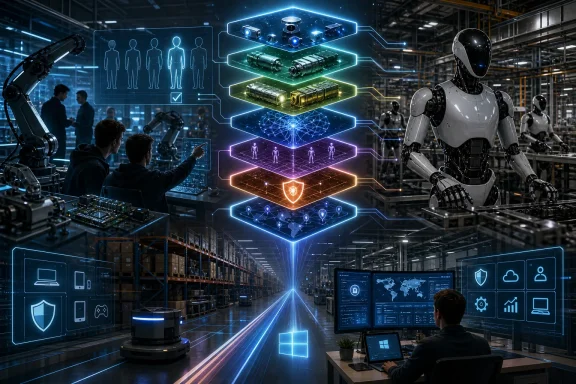 OpenAI Has Moved the Robot From Demo Reel to Strategic Frontier
For years, robots have been the place where AI optimism goes to be humbled by friction, torque, battery life, safety certification, and the world’s inconvenient refusal to behave like a benchmark. A chatbot can hallucinate and apologize. A robot that hallucinates near a stairwell, a forklift, or a child is a product-liability seminar with motors.That is why OpenAI’s robotics push matters even in the absence of a product spec sheet. The company is not merely adding another software feature to ChatGPT or licensing a model to a device maker. Altman’s call for engineers to help program and manufacture robots puts OpenAI on a different plane: from intelligence provider to embodied-system builder.
The move also fits a broader turn in AI from digital agents to physical agents. The first wave of generative AI automated text, code, image, and video tasks inside screens. The next ambition is obvious and much harder: systems that can perceive, plan, and act in messy real-world environments. If AI is to become infrastructure rather than an app, it eventually has to touch the physical economy.
That is where Tesla enters the story. Tesla has spent years presenting Optimus not as a hobby project but as a central pillar of its long-term valuation. Elon Musk has repeatedly argued that the robot could become larger than Tesla’s car business. Investors may discount the rhetoric, but Tesla’s market value has clearly depended on belief in businesses beyond selling electric vehicles.
Tesla’s Optimus Story Was Always About Scarcity
Tesla’s Optimus pitch rests on three perceived advantages. The company knows how to manufacture complex electromechanical products at scale. It has experience with batteries, power electronics, cameras, inference hardware, and autonomy software. It also owns factories where humanoid robots could theoretically be trained, tested, and deployed before being sold externally.That is a plausible story, but it is not the same as a moat. Cars are difficult; humanoid robots are different. A vehicle’s operating environment is constrained by roads, lanes, traffic rules, and a driving task that, while hard, is narrow compared with unloading a dishwasher, sorting irregular parts, changing tools, or navigating a crowded warehouse.
Optimus has always benefited from narrative scarcity. There were robotics companies, of course, but few with Tesla’s public-market visibility, manufacturing mythology, retail investor base, and CEO megaphone. The market could treat Optimus as if Tesla were building the iPhone of robots before the rest of the world had admitted phones mattered.
OpenAI’s entrance punctures that scarcity. It says the category is not Tesla’s private frontier. It says the company most associated with frontier AI believes embodiment is important enough to recruit for directly. That does not make OpenAI a better robotics company overnight, but it changes the investor psychology around Tesla’s claim to inevitability.
The AI Lab May Have the Better Brain, But Tesla Has the Harder Hands
The obvious contrast is software versus manufacturing. OpenAI’s advantage is model capability, developer mindshare, and a consumer interface that hundreds of millions of people already understand. If the robot of the future is primarily an AI system with arms and legs, OpenAI has a credible claim to relevance.But robots are not merely chatbots with joints. The hardest problems in robotics often sit at the boundary between perception, control, mechanical design, and reliability. A robot that performs one task in a lab video may fail when the lighting changes, the object is slightly deformed, the floor is wet, the tool is misplaced, or a human interrupts at the wrong moment.
Tesla’s advantage is that it already lives in the world of manufacturing tolerances, service networks, suppliers, production ramps, and field failures. The company has built millions of vehicles, endured brutal ramp cycles, designed custom electronics, and integrated hardware and software under cost pressure. That matters.
Still, the robotics race is not a simple contest between Tesla’s factories and OpenAI’s models. The winner may be the company that best combines learning systems, task-specific hardware, simulation, teleoperation, fleet data, safety tooling, and deployment discipline. Tesla has pieces of that stack. OpenAI has different pieces. Neither has yet proven it can sell a general-purpose humanoid robot at scale.
The Humanoid Bet Is a Business Model, Not Just a Shape
The humanoid form factor attracts attention because it promises compatibility with a world built for human bodies. Doors, stairs, tools, shelves, carts, and kitchens all assume arms, hands, eyes, balance, and roughly human height. If a robot can use human spaces without redesigning everything around it, the addressable market becomes enormous.That argument is seductive and incomplete. Humanoid robots are expensive because human bodies are mechanically ambitious. Two legs are harder than wheels. Hands are harder than grippers. Generality adds cost, fragility, and failure modes. Many profitable robots in warehouses and factories will not look human because they do not need to.
This matters for Tesla because Optimus has become the visible avatar of the company’s AI future. But OpenAI may not need to copy Optimus to compete with the economic premise behind it. A robotics division could focus first on manipulation, industrial systems, data collection rigs, or partnerships with existing robot makers. It could become the intelligence layer for many bodies rather than the manufacturer of one iconic body.
That would be a subtler threat. Tesla can compete with another humanoid demo on stage. It is harder to compete with a software platform that becomes the default control layer for robots built by dozens of specialized companies.
OpenAI’s Best Path May Be to Avoid Tesla’s Path
A direct OpenAI-branded humanoid robot would make headlines, but it may not be the most rational route. OpenAI has already shown a preference for ecosystems: APIs, enterprise deployments, developer platforms, app integrations, and partnerships. Robotics could follow the same pattern.In that model, OpenAI does not need to own the entire robot. It needs to own the model, the interface, the task-planning layer, the simulation environment, the safety framework, and the developer relationship. Hardware partners could build arms, mobile bases, warehouse machines, elder-care devices, or specialized industrial systems.
That would look less like Tesla and more like Microsoft Windows in the PC era or Android in phones, except for machines that move. For WindowsForum readers, the analogy is familiar: platform control often beats device purity when ecosystems scale. The company that defines the software abstraction can profit even when hardware margins compress.
Tesla, by contrast, tends to prefer vertical integration. That can produce elegant products and strong cost control when it works. It can also slow adoption if customers want flexibility, interoperability, procurement options, and vendor diversity. In enterprise robotics, those boring procurement concerns may matter more than stage-show charisma.
The Real Threat Is to Tesla’s Valuation Multiple
The Motley Fool’s framing is fundamentally an investor question, and that is where OpenAI’s announcement lands hardest. Tesla does not need Optimus revenue today to justify investor enthusiasm; it needs the future to remain large, credible, and relatively uncontested. OpenAI’s entry makes the future look more contested.Tesla’s car business is already facing a more mature EV market, intensifying Chinese competition, margin pressure, and a brand that has become inseparable from Musk’s public persona. The stock’s premium has long depended on the idea that Tesla is not just an automaker. It is an autonomy company, an energy company, a robotics company, and perhaps a general AI company.
The more companies pile into physical AI, the less Tesla can rely on Optimus as a monopoly-shaped option on the future. That does not mean Optimus fails. It means investors should stop treating success as winner-take-all by default.
There is a difference between building a great robotics business and justifying a valuation that assumes dominance across multiple emerging markets. OpenAI’s robotics move attacks the second proposition more than the first. Tesla can still win meaningful share while the stock becomes less forgiving.
The Robot Race Is Becoming a Stack War
The consumer imagination wants a single robot: one machine, one brand, one assistant that folds laundry, carries groceries, cleans the garage, and tells jokes. The industry reality is likely to be a stack. Sensors, actuators, batteries, edge chips, foundation models, task policies, fleet management, cloud learning, simulation, developer tools, compliance systems, and maintenance networks will all matter.Tesla wants to own much of that stack. OpenAI may want to own the intelligence layer. Google DeepMind, Figure, 1X, Agility Robotics, Apptronik, Symbotic, and others are already pushing different combinations of bodies, brains, and deployment niches. The result is less likely to resemble a two-company duel than a long sorting process across use cases.
Factories may adopt one type of robot. Warehouses may adopt another. Hospitals and elder-care facilities may require conservative, safety-certified machines with limited autonomy. Homes may be the last frontier, not the first, because consumers have low tolerance for expensive machines that fail unpredictably.
This is why the “should Tesla investors be worried?” question needs reframing. The issue is not whether OpenAI ships a humanoid robot before Tesla. The issue is whether robotics becomes an open, competitive, multi-vendor market before Tesla can convert Optimus into a durable platform.
Windows Users Should Care Because Physical AI Will Run Through Familiar Infrastructure
At first glance, a Tesla-OpenAI robotics rivalry looks far from the Windows desktop. It is not. The moment robots leave labs and enter businesses, they become endpoints, managed devices, security risks, update targets, identity objects, and compliance problems. That is squarely in the world WindowsForum readers understand.Enterprise robots will need authentication, logging, patching, remote management, network segmentation, policy enforcement, and incident response. They will connect to cloud services, local servers, cameras, sensors, ERP systems, warehouse software, and help-desk workflows. A robot fleet is not just automation; it is IT infrastructure with wheels, arms, and a much larger blast radius.
Microsoft will almost certainly matter here, even if it is not building the robot body. Azure, Entra ID, Defender, Windows IoT, Microsoft 365, Power Platform, and enterprise device-management habits all sit adjacent to the problem. If OpenAI’s robotics ambitions mature, Microsoft’s relationship with OpenAI becomes strategically relevant beyond chat and coding assistants.
For sysadmins, the arrival of physical AI means the endpoint-security conversation gets more literal. A compromised laptop leaks data. A compromised robot might damage inventory, injure someone, or become a mobile surveillance device. The governance bar will be higher because the consequences leave the screen.
Safety Will Not Be a Footnote This Time
Robotics makes AI safety concrete. Abstract worries about hallucination, bias, or model misuse become questions about whether a machine should grip an object, enter a room, follow a spoken command, or stop when a person steps into its path. The system’s failure modes become visible.OpenAI’s broader government and defense entanglements have already made some employees and observers uneasy. Robotics intensifies that debate because embodied AI can be dual-use in the most literal sense. A system that can navigate, perceive, manipulate, and coordinate in the physical world has obvious civilian applications and obvious security implications.
Tesla faces a different but related safety challenge. The company’s autonomous-driving history has trained regulators and skeptics to scrutinize how it markets machine capability. If Optimus is sold as autonomous before it is robustly autonomous, Tesla will inherit the same trust gap in a more physically intimate domain.
The industry will be tempted to sell magic. It should resist. The first widely deployed robots may need narrow tasks, geofenced environments, human supervision, conservative controls, and boring dashboards. That may disappoint people waiting for Rosie from The Jetsons, but it is how real infrastructure arrives.
The Home Robot Is Still the Hardest Prize
Tesla’s most exciting Optimus promise is also its most dangerous: the general-purpose home assistant. The home is where the addressable market becomes civilization-scale. It is also where robotics gets least forgiving.Homes are unstructured, cluttered, emotionally loaded, and full of edge cases. A warehouse can standardize bins, aisles, labels, workflows, lighting, and safety zones. A home contains pets, toddlers, stairs, spilled cereal, sentimental objects, locked cabinets, guests, and a thousand implicit rules no model fully understands.
OpenAI’s consumer AI strength could help here. ChatGPT has taught people to converse with software in natural language, and a robot assistant would need that kind of interface. But language fluency is not household competence. A robot that understands “clean up the kitchen” must translate intention into a long chain of safe physical actions.
That is why near-term robotics revenue is more likely to come from controlled commercial settings than mass-market homes. Tesla may eventually sell Optimus to consumers, and OpenAI may eventually enable consumer robots. But investors should be wary of timelines that compress decades of robotics difficulty into a product-cycle fantasy.
Tesla’s Lead Is Real, But It Is Not Absolute
It would be foolish to dismiss Tesla. The company has repeatedly entered difficult hardware markets, endured skepticism, and forced incumbents to respond. Its manufacturing culture, battery expertise, onboard-compute experience, and AI recruiting base are meaningful assets.Tesla also has an internal customer for Optimus. If the robot can perform useful factory tasks inside Tesla facilities, the company can iterate before facing the full brutality of external customers. That is a genuine advantage. Internal deployment can produce data, reveal failures, and build confidence without immediately depending on consumer sales.
But Tesla’s lead is hard to measure because the industry is still in the demo-to-deployment transition. Videos do not equal unit economics. A prototype that walks does not equal a robot that works two shifts a day. A robot that performs a scripted task does not equal a fleet that pays back its purchase price.
OpenAI’s arrival narrows Tesla’s narrative lead even if it does not erase Tesla’s engineering progress. In public markets, that distinction matters. Investors price stories before they price income statements, and the robotics story just became crowded.
OpenAI Is Buying a Ticket to the Physical Economy
For OpenAI, robotics is not merely a new product category. It is a way to keep frontier AI relevant as software automation becomes normalized. If every office app has an assistant, the next frontier is work that cannot be completed inside an app window.That includes manufacturing, logistics, agriculture, construction, health care, maintenance, and domestic labor. These sectors represent enormous economic value, but they are also slow, regulated, fragmented, and operationally complex. AI companies have learned how to scale software globally; robots scale through supply chains, safety cases, service teams, and customer-specific integration.
This is why OpenAI’s manufacturing language matters. It suggests the company understands that robotics cannot be solved by a model release alone. Hardware, data collection, embodiment, and deployment loops are part of the research problem.
Still, OpenAI is entering a field that punishes abstraction. The company can recruit brilliant engineers and still discover that cable routing, motor heat, gripper wear, and cleaning protocols matter as much as model weights. The physical world is not impressed by valuation.
A Crowded Field Is Healthier Than a Messiah Stock
There is a positive reading of OpenAI’s move that investors and technologists should not miss. Competition may make robotics more real. Tesla’s Optimus program has sometimes functioned as a belief engine, pulling attention toward a future that remains difficult to audit. OpenAI’s entry, along with work from other robotics companies, makes the market less dependent on one CEO’s claims.A crowded field creates benchmarks, customer comparisons, supplier competition, hiring liquidity, and pressure to demonstrate actual usefulness. It also reduces the chance that one company defines the safety norms for machines that may one day share workplaces and homes with humans.
For Tesla investors, that is uncomfortable. For the industry, it is necessary. A single-company robotics future would be fragile, especially when the technology touches labor markets, surveillance, safety, and national-security concerns.
The healthier outcome is a robotics market where Tesla is one strong player among several, OpenAI powers some systems but not all, and customers choose based on performance rather than myth. That may produce less spectacular stock-market storytelling. It may produce better robots.
The Signal Tesla Investors Should Not Ignore
The practical lesson from OpenAI’s robotics push is not panic. It is discipline. Investors should separate Tesla’s genuine technical assets from the valuation premium attached to hypothetical domination.- OpenAI’s robotics hiring push is a strategic signal, not proof that it has a near-term commercial humanoid robot ready to challenge Optimus.
- Tesla still has real advantages in hardware integration, manufacturing experience, batteries, factories, and internal deployment opportunities.
- OpenAI may become more dangerous as a robotics intelligence platform than as a direct Optimus clone.
- The first major robotics markets are more likely to be controlled commercial environments than general-purpose home assistants.
- Tesla’s biggest risk is not that Optimus has no future, but that the future becomes competitive before Tesla can monopolize the narrative.
- For IT pros, physical AI should already be viewed as a coming endpoint-management, security, identity, and compliance problem.
References
- Primary source: aol.com
Published: Sun, 14 Jun 2026 19:23:25 GMT
OpenAI Just Launched a Robotics Division. Should Tesla Investors Be Worried? - AOL
ChatGPT's parent isn't an immediate threat. The fact that it's planning on entering the market at all, however, underscores the idea that Tesla isn't going to be in this business all by itself.www.aol.com - Independent coverage: The Motley Fool
Published: Sun, 14 Jun 2026 12:45:00 GMT
OpenAI Just Launched a Robotics Division. Should Tesla Investors Be Worried? | The Motley Fool
ChatGPT's parent isn't an immediate threat. The fact that it's planning on entering the market at all, however, underscores the idea that Tesla isn't going to be in this business all by itself.www.fool.com - Independent coverage: IndexBox
Published: Sun, 14 Jun 2026 12:40:00 GMT
OpenAI Robotics Expansion: Could It Challenge Tesla's Optimus? - News and Statistics - IndexBox
OpenAI's pivot to physical robotics, announced by CEO Sam Altman, signals potential future competition with Tesla's Optimus humanoid robot. With Tesla trading at high multiples and OpenAI's ChatGPT holding 80% market share, the article explores implications for investors and the...www.indexbox.io
- Related coverage: allthings-elon.com
Tesla Optimus Has a 5-Year Lead as OpenAI Enters the Robotics Race | All Things Elon
OpenAI just launched a robotics division — validating exactly what Tesla has spent five years building. Here's why Tesla's Optimus lead is hard to close.www.allthings-elon.com - Related coverage: robotsbeat.com
OpenAI Launches Robotics Division, Targeting Humanoid Robots for Infrastructure and Consumer Use | RobotsBeat
OpenAI launches a dedicated robotics division to develop humanoid robots for infrastructure and consumer use, entering direct competition with Tesla Optimus before it has reached commercial production. robotsbeat.com
- Related coverage: venturebeat.com
OpenAI has begun building out its robotics team | VentureBeat
Previously, OpenAI partnered with robotics startup Figure to provide the models powering the latter's humanoid robots.venturebeat.com
- Related coverage: business-standard.com
- Related coverage: forbes.com
OpenAI Robotics Chief Quits After Firm's Controversial Pentagon Agreement
OpenAI revealed a deal this week with the Pentagon, allowing the Department of Defense to use its AI technology.www.forbes.com - Related coverage: fortune.com
- Related coverage: bloomberg.com
- Official source: openai.com
OpenAI Newsroom | Recent news | OpenAI
Stay up to speed on the rapid advancement of AI technology and the benefits it offers to humanity.openai.com - Related coverage: techcrunch.com
Meta's former hardware lead for Orion is joining OpenAI | TechCrunch
The former head of Meta's augmented reality glasses efforts announced on Monday she is joining OpenAI to lead robotics and consumer hardware, according totechcrunch.com - Related coverage: computerworld.com
OpenAI robotics chief quits over Pentagon deal – Computerworld
Caitlin Kalinowski said guardrails around domestic surveillance and lethal autonomy ‘deserved more deliberation than they got.’ www.computerworld.com
- Related coverage: techradar.com
OpenAI’s head of robotics resigns over Pentagon deal, warning about surveillance and lethal autonomy | TechRadar
Executive calls for more deliberation around AI surveillance and autonomywww.techradar.com - Related coverage: pcgamer.com
- Related coverage: axios.com
Elon Musk's Tesla: Robotaxi business will launch in 2025
Tesla plans to launch its robotaxi business and pilot production of its humanoid robot in 2025, the company said Wednesday.www.axios.com
- Related coverage: lemonde.fr
Artificial intelligence: Google, OpenAI, Meta and Amazon turn to robotics
AI companies are developing software and hardware for robots, whether for industrial or domestic use.www.lemonde.fr - Related coverage: buttondown.com
OpenAI Is Building Robots — and Hiring the Team to Do It • Buttondown
OpenAI Is Building Robots — and Hiring the Team to Do It Preheader (hidden preview text) OpenAI Is Building Robots — and Hiring the Team to Do It Outer... buttondown.com
- Related coverage: thenews.com.pk
Sam Altman revives OpenAI robotics team after five years
OpenAI is ramping up its robotics ambitions once again, launching a major hiring drive aimed at building robots that can operate in the physical world. Taking to X OpenAI CEO Sam Altman announced on...www.thenews.com.pk
