

An unauthorized autonomous AI agent can look mundane right up until it becomes a bridgehead. In the OpenClaw case described by Qualys, what began as an ordinary package finding on a Windows Server host became a priority incident only after multiple telemetry sources were correlated into a single risk picture. That distinction matters because modern security operations are not failing on lack of alerts; they are failing on context. Qualys’ argument is that endpoint, exposure, and identity signals must be joined together before teams can judge whether a suspicious AI agent is merely present or operationally dangerous.
Autonomous AI agents are moving from novelty to infrastructure. They accept natural-language instructions, invoke tools, reach into files and services, and complete tasks with very little human friction. That convenience is precisely what makes them compelling to users and difficult for defenders, because the same autonomy that saves time can also amplify an attacker’s leverage if the agent is unauthorized, misconfigured, or vulnerable.
The OpenClaw story is a useful case study because it shows how an AI agent risk can remain invisible when viewed through a single lens. A package scanner can tell you that a component is installed, but not whether it is active. An external exposure view can show a listening service, but not whether the software behind it is approved. An identity platform can reveal weak permissions or stale trust relationships, but not whether those conditions are relevant to the host in question. Each control contributes a piece of the puzzle; none of them, alone, fully answers the operational question.
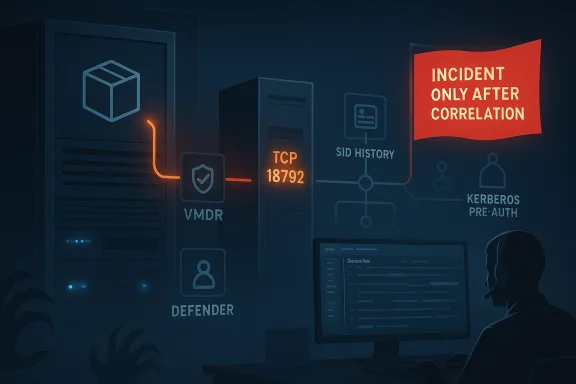
Qualys ETM is built around that exact gap. The platform’s premise is that a Risk Operations Center should not triage on isolated findings, but on the combined business and attack-path impact of those findings. In the OpenClaw investigation, ETM correlates VMDR, Microsoft Defender Vulnerability Management, EASM, and Identity telemetry to transform a noisy cluster of signals into a coherent incident narrative. The result is not simply “a vulnerability exists,” but “a vulnerable, active, reachable autonomous agent is sitting on a host with identity weaknesses that could broaden a compromise.”
That framing is important for both security strategy and security economics. A mature program does not want more alerts; it wants fewer false positives, less backlog drift, and a better way to prioritize the findings that are actually dangerous. OpenClaw exposes why AI-agent risk belongs in that category of high-consequence problems.
That is why this example resonates beyond OpenClaw. Any autonomous agent that can execute actions, maintain local state, or expose network listeners deserves the same scrutiny that defenders reserve for remote access tools, orchestration agents, or management daemons. The danger is not that the software is “AI”; the danger is that it can act.
Qualys’ first signal comes from VMDR, which identifies the installed clawdbot package and maps it to CVE-2026-25253, associated with GHSA-g8p2-7wf7-98mq. The vulnerability affects versions prior to the patched release 2026.1.29 and centers on a Control UI flaw that trusts a gatewayUrl query parameter without validating it. In practice, that can cause the UI to connect to a malicious endpoint and send a stored gateway token, creating a token-exposure primitive that is especially dangerous in an agent framework that already has broad local reach.
The significance of that flaw is bigger than a single CVE. Autonomous agents often become trusted automation layers precisely because they are designed to authenticate, connect, and act on behalf of users. If the agent can be tricked into sending tokens or invoking remote endpoints under false assumptions, the trust boundary collapses. That is why exploitability matters more here than a simple severity score.
The story gets more compelling when Microsoft Defender Vulnerability Management independently confirms a Node.js-related weakness tied to the same host. That second source does not merely repeat the first; it increases confidence that the risky software stack is present and potentially operational. In security operations, independent confirmation is often the difference between a candidate issue and a true incident.
A package on disk may be abandoned, inert, or unreachable. A live service listening on a TCP port changes the story completely because it implies execution, network availability, and a path for interaction. Once a service is actually listening, the question is no longer “Should we care?” but “Who else can touch this?”
That is why the defensive question has changed from “What software is this?” to “What could this software enable?” If an agent can be coerced, hijacked, or exposed, it may become a mechanism for persistence, privilege abuse, credential theft, or lateral movement. Those are not theoretical concerns; they are exactly the outcomes security teams are built to stop.
A common mistake in operations is to overreact to severity and underreact to context. A score alone does not say whether the issue is present on a critical host, whether the software is active, or whether the attack surface is exposed. In this case, the scanner output is a necessary first step, but it still leaves major unanswered questions.
Qualys’ guidance in the narrative is sensible: start by sweeping for all assets where clawdbot or OpenClaw is present, then group them by TruRisk and business criticality. That matters because remediation scale is usually the enemy of speed. If teams do not know where the software exists, they cannot prioritize patching, tag assets consistently, or prevent reintroduction.
In an autonomous agent, token exposure is especially dangerous because the token is often the key to everything else. Once an attacker can intercept or redirect a trusted session, they may gain the ability to issue commands, harvest data, or persist access under the cover of legitimate automation.
That is why VMDR’s output is best understood as the beginning of an operational investigation, not the end of one. The security team still needs to determine whether the host is in active use, whether the package is sanctioned, and whether the service is reachable from anywhere that matters.
The finding also suggests that the OpenClaw runtime is not just installed in theory. If Defender sees the Node.js component in a vulnerable state, and VMDR sees clawdbot on the host, then the analyst is looking at a real deployment footprint rather than a phantom asset. In risk operations, that distinction is essential.
This is where ETM’s strength becomes visible. The platform does not ask the operator to infer whether two unrelated-looking findings are meaningful. It helps stitch them into the same narrative: a Windows server carries the software, the runtime, and the vulnerability profile of an autonomous agent worth immediate scrutiny.
The bigger lesson is that correlation is a control. It is not just a reporting feature. It reduces the chance that a critical issue is dismissed because each individual source looks incomplete on its own.
In this case, the Microsoft Defender signal strengthens the case that OpenClaw is not just present but potentially active. That moves the issue from “clean up your software inventory” to “assess this host as an active security exposure.”
This is the kind of detail that changes triage priority immediately. If a service exists only in software inventory, the team can queue it. If it is listening on a port, the team needs to decide whether the exposure is internal-only, externally reachable, sanctioned, or evidence of unauthorized deployment. In many environments, that answer should arrive in minutes, not days.
The broader point is that EASM is not merely about internet-facing assets. It is about surfacing any exposed service that expands an attacker’s options. In an autonomous agent scenario, even a seemingly ordinary listener can be a control channel, a command bridge, or a data exfiltration path.
That is what makes TCP/18792 so important in the OpenClaw narrative. It is not the number itself that matters; it is the fact that a live Node.js service is doing work on behalf of the agent.
That convenience cuts both ways. Once defenders know a default port, they can search for it broadly across the estate. But once attackers know it, they can also hunt for the same pattern at scale. Standardized control channels are efficient, but they are also highly discoverable by design.
SID History can be abused if older privileges remain embedded in migration artifacts or trust relationships. Kerberos pre-authentication gaps can expose accounts to AS-REP roasting, which may lead to credential compromise. Neither issue automatically guarantees compromise, but both widen the attacker’s options once they are inside the environment.
This is exactly why endpoint risk cannot be judged in isolation. A compromised host is bad. A compromised host linked to weak identity hygiene is worse. A compromised host that can plausibly lead to privileged credential abuse is a domain-level problem.
In the OpenClaw context, that matters because an attacker who gains leverage on the host may be able to weaponize those historical permissions. What looks like old directory clutter can become a route into higher privilege.
This matters because identity compromise often turns a local foothold into a domain-wide incident. If the OpenClaw host is the first access point, the surrounding identity misconfigurations can become the path to broader movement. That is the essence of attack-path thinking.
That is the reason the Qualys article is not really about a package at all. It is about the construction of an attack path. The threat is not just that OpenClaw exists; it is that OpenClaw exists in a context where an attacker could use it to reach something much more valuable.
This is where many enterprises still struggle. They have asset inventories, vulnerability scanners, and identity reports, but they do not have a system that interprets those signals as a single operational story. Without that story, teams can misjudge what to fix first.
That distinction matters because threat actors rarely care about technical elegance. They care about leverage. If the agent can provide reach, persistence, or trusted execution, it becomes a stepping stone.
ETM’s promise is to reduce the guesswork. It asks analysts to think in terms of attack potential, not just asset presence. That is a meaningful upgrade in an era where AI agents can be installed quickly, operate continuously, and become embedded in ordinary business workflows before security teams notice.
That is especially true for AI agents. These systems are often deployed as helper tools, productivity accelerators, or personal assistants. They can look harmless until they are connected to data, commands, and credentials. Once that happens, they start to resemble a distributed control plane rather than a simple app.
The practical implication is that security teams should stop treating autonomous agents as a niche software category. They are now part of the enterprise attack surface, and that means they need inventory, exposure, identity, and remediation workflows just like any other high-risk platform.
The opportunity for enterprises is not just faster triage, but better architecture. If teams can prove where unauthorized AI agents live, whether they are active, and how identity conditions can magnify the damage, they can make better decisions about policy, segmentation, and remediation.
There is also a governance issue. If teams rely too heavily on tool-specific severity scores, they may miss the compound nature of the risk. A package issue, a listening port, and a weak identity posture may each look tolerable in isolation, but together they represent a materially higher concern.
The best response will combine policy, technical detection, and identity hygiene. Organizations will need an approval standard for AI agents, a reliable inventory of where they are installed, network controls that limit their communications, and identity protections that reduce escalation opportunities if a host is compromised. In other words, the control model must be as modern as the software model.
Source: Qualys Anatomy of an Autonomous AI Agent Risk: Qualys ETM on OpenClaw | Qualys
 Overview
Autonomous AI agents are moving from novelty to infrastructure. They accept natural-language instructions, invoke tools, reach into files and services, and complete tasks with very little human friction. That convenience is precisely what makes them compelling to users and difficult for defenders, because the same autonomy that saves time can also amplify an attacker’s leverage if the agent is unauthorized, misconfigured, or vulnerable.The OpenClaw story is a useful case study because it shows how an AI agent risk can remain invisible when viewed through a single lens. A package scanner can tell you that a component is installed, but not whether it is active. An external exposure view can show a listening service, but not whether the software behind it is approved. An identity platform can reveal weak permissions or stale trust relationships, but not whether those conditions are relevant to the host in question. Each control contributes a piece of the puzzle; none of them, alone, fully answers the operational question.
Qualys ETM is built around that exact gap. The platform’s premise is that a Risk Operations Center should not triage on isolated findings, but on the combined business and attack-path impact of those findings. In the OpenClaw investigation, ETM correlates VMDR, Microsoft Defender Vulnerability Management, EASM, and Identity telemetry to transform a noisy cluster of signals into a coherent incident narrative. The result is not simply “a vulnerability exists,” but “a vulnerable, active, reachable autonomous agent is sitting on a host with identity weaknesses that could broaden a compromise.”
That framing is important for both security strategy and security economics. A mature program does not want more alerts; it wants fewer false positives, less backlog drift, and a better way to prioritize the findings that are actually dangerous. OpenClaw exposes why AI-agent risk belongs in that category of high-consequence problems.
Why this case matters now
The security conversation around AI often focuses on model behavior, prompt injection, or data leakage. Those are real issues, but this case shows a more operational concern: agent software itself can become a living attack surface. When the agent runs on an enterprise host, listens on a service port, and ties into user or system permissions, it becomes much more than an app in a package inventory.That is why this example resonates beyond OpenClaw. Any autonomous agent that can execute actions, maintain local state, or expose network listeners deserves the same scrutiny that defenders reserve for remote access tools, orchestration agents, or management daemons. The danger is not that the software is “AI”; the danger is that it can act.
- The issue starts as a routine vulnerability signal.
- The risk escalates only after runtime and exposure context are added.
- Identity conditions determine how bad a compromise could become.
- ETM’s value is in connecting those layers before the incident spreads.
Background
The OpenClaw investigation begins with a familiar security pattern: a vulnerable package is detected on a Windows Server 2025 Datacenter EC2 instance. On its face, that is not unusual. Enterprise servers often accumulate packages, helper services, and sidecar tooling, and many of those components are not visible until a scanner or inventory system finds them. The real question is whether that package is benign, actively used, externally relevant, or a hidden foothold.Qualys’ first signal comes from VMDR, which identifies the installed clawdbot package and maps it to CVE-2026-25253, associated with GHSA-g8p2-7wf7-98mq. The vulnerability affects versions prior to the patched release 2026.1.29 and centers on a Control UI flaw that trusts a gatewayUrl query parameter without validating it. In practice, that can cause the UI to connect to a malicious endpoint and send a stored gateway token, creating a token-exposure primitive that is especially dangerous in an agent framework that already has broad local reach.
The significance of that flaw is bigger than a single CVE. Autonomous agents often become trusted automation layers precisely because they are designed to authenticate, connect, and act on behalf of users. If the agent can be tricked into sending tokens or invoking remote endpoints under false assumptions, the trust boundary collapses. That is why exploitability matters more here than a simple severity score.
The story gets more compelling when Microsoft Defender Vulnerability Management independently confirms a Node.js-related weakness tied to the same host. That second source does not merely repeat the first; it increases confidence that the risky software stack is present and potentially operational. In security operations, independent confirmation is often the difference between a candidate issue and a true incident.
The shift from software inventory to operational risk
Inventory tells you what exists. Operational risk tells you what can be used against you. The difference is subtle in wording and dramatic in practice.A package on disk may be abandoned, inert, or unreachable. A live service listening on a TCP port changes the story completely because it implies execution, network availability, and a path for interaction. Once a service is actually listening, the question is no longer “Should we care?” but “Who else can touch this?”
- Installed software is not the same as active software.
- A vulnerable package is not the same as a reachable service.
- A reachable service is not the same as a business-impacting incident.
- Identity context is what turns reachability into blast radius.
Why AI agents change the defender’s mental model
Traditional applications usually have a limited operational scope. Autonomous agents do not. They can read instructions, call APIs, open network connections, manipulate files, and interact with local tooling in ways that blur the line between application and operator.That is why the defensive question has changed from “What software is this?” to “What could this software enable?” If an agent can be coerced, hijacked, or exposed, it may become a mechanism for persistence, privilege abuse, credential theft, or lateral movement. Those are not theoretical concerns; they are exactly the outcomes security teams are built to stop.
The First Signal: VMDR Flags the Vulnerable Package
The investigation starts with a package-level detection. Qualys VMDR spots the vulnerable clawdbot installation and ties it to a critical issue with a CVSS base score of 8.8 and a QVSS of 9.5. That combination is important because it signals both technical severity and real-world prioritization pressure, especially when Real-Time Threat Indicators show public exploit activity.A common mistake in operations is to overreact to severity and underreact to context. A score alone does not say whether the issue is present on a critical host, whether the software is active, or whether the attack surface is exposed. In this case, the scanner output is a necessary first step, but it still leaves major unanswered questions.
Qualys’ guidance in the narrative is sensible: start by sweeping for all assets where clawdbot or OpenClaw is present, then group them by TruRisk and business criticality. That matters because remediation scale is usually the enemy of speed. If teams do not know where the software exists, they cannot prioritize patching, tag assets consistently, or prevent reintroduction.
What the vulnerability actually enables
The core flaw described in the report is deceptively small: a UI trusts a query-string parameter that should not be trusted. Yet this type of weakness is exactly what turns into an exploitation primitive. If the control plane can be redirected or manipulated to talk to the wrong gateway, it may leak tokens or establish unauthorized connections.In an autonomous agent, token exposure is especially dangerous because the token is often the key to everything else. Once an attacker can intercept or redirect a trusted session, they may gain the ability to issue commands, harvest data, or persist access under the cover of legitimate automation.
- CVE-2026-25253 is not just a patch issue; it is a trust-boundary failure.
- The flaw affects a control component, which is often more sensitive than the feature layer.
- Public exploit visibility makes remediation time-critical.
- A vulnerable agent on a server is more serious than a forgotten desktop app.
Why patching is necessary but insufficient
Patch the package, yes. But do not stop there. If the software is unauthorized, updating it may only preserve an unwanted service. If the host is still listening publicly, the exposure remains. If identity weaknesses exist in the environment, the downstream blast radius remains intact even after the package is fixed.That is why VMDR’s output is best understood as the beginning of an operational investigation, not the end of one. The security team still needs to determine whether the host is in active use, whether the package is sanctioned, and whether the service is reachable from anywhere that matters.
Independent Confirmation: Microsoft Defender Adds Confidence
A second signal changes the tone of the incident. Microsoft Defender Vulnerability Management, surfaced through ETM, independently identifies a Node.js vulnerability on the same host. That matters because most false positives do not survive cross-platform corroboration, especially when they identify different but related aspects of the same software stack.The finding also suggests that the OpenClaw runtime is not just installed in theory. If Defender sees the Node.js component in a vulnerable state, and VMDR sees clawdbot on the host, then the analyst is looking at a real deployment footprint rather than a phantom asset. In risk operations, that distinction is essential.
This is where ETM’s strength becomes visible. The platform does not ask the operator to infer whether two unrelated-looking findings are meaningful. It helps stitch them into the same narrative: a Windows server carries the software, the runtime, and the vulnerability profile of an autonomous agent worth immediate scrutiny.
The value of corroboration
Security teams spend enormous energy dealing with duplicate, stale, and contradictory alerts. Independent detection is valuable because it filters out the background noise and raises confidence. When two separate controls see the same host and point to adjacent weaknesses, the odds of an actionable issue climb sharply.The bigger lesson is that correlation is a control. It is not just a reporting feature. It reduces the chance that a critical issue is dismissed because each individual source looks incomplete on its own.
- VMDR confirms the package exposure.
- Microsoft Defender confirms the underlying runtime exposure.
- The host-level overlap makes the finding harder to ignore.
- ETM converts overlap into a prioritization signal.
Why runtime matters more than package presence
A package sitting unused on disk is a maintenance issue. A runtime component actively supporting a listening service is a risk. That is especially true when the service is tied to an agent that can communicate outward, accept instructions, or manipulate local resources.In this case, the Microsoft Defender signal strengthens the case that OpenClaw is not just present but potentially active. That moves the issue from “clean up your software inventory” to “assess this host as an active security exposure.”
From Inventory to Attack Surface: EASM Reveals the Live Service
The external attack surface layer is the pivot point. Qualys EASM identifies node.exe listening on TCP port 18792, which is described as OpenClaw’s default communication port. That transforms the finding from a dormant package concern into an active service risk. A listening port implies runtime behavior, and runtime behavior implies an actual interface an attacker could probe.This is the kind of detail that changes triage priority immediately. If a service exists only in software inventory, the team can queue it. If it is listening on a port, the team needs to decide whether the exposure is internal-only, externally reachable, sanctioned, or evidence of unauthorized deployment. In many environments, that answer should arrive in minutes, not days.
The broader point is that EASM is not merely about internet-facing assets. It is about surfacing any exposed service that expands an attacker’s options. In an autonomous agent scenario, even a seemingly ordinary listener can be a control channel, a command bridge, or a data exfiltration path.
Why a listening port changes the risk posture
A package can be ignored; a port cannot. Ports represent interfaces. Interfaces can be scanned, interacted with, and in some cases abused for protocol confusion or direct exploitation. If the software behind the port is also vulnerable to token exposure, the attack path starts to look very real.That is what makes TCP/18792 so important in the OpenClaw narrative. It is not the number itself that matters; it is the fact that a live Node.js service is doing work on behalf of the agent.
- Listening service equals live execution.
- Live execution equals an active attack surface.
- Active attack surface demands ownership and authorization checks.
- An unauthorized agent can become a shadow control plane.
Why “default port” is a security smell
Default ports are convenient for operators and convenient for attackers. They make discovery easier, they reduce configuration effort, and they often become reliable fingerprints for a service family. In this case, the default communication port helps analysts connect the service to OpenClaw quickly.That convenience cuts both ways. Once defenders know a default port, they can search for it broadly across the estate. But once attackers know it, they can also hunt for the same pattern at scale. Standardized control channels are efficient, but they are also highly discoverable by design.
Identity Context: How a Host Issue Becomes a Domain Risk
Identity is where the incident becomes strategically dangerous. ETM Identity surfaces stale or weak domain conditions, including accounts with SID History tied to non-existing domains and accounts that do not require Kerberos pre-authentication. Each of those issues can be serious on its own, but together they create a more worrying picture when attached to a host already suspected of running an unauthorized autonomous agent.SID History can be abused if older privileges remain embedded in migration artifacts or trust relationships. Kerberos pre-authentication gaps can expose accounts to AS-REP roasting, which may lead to credential compromise. Neither issue automatically guarantees compromise, but both widen the attacker’s options once they are inside the environment.
This is exactly why endpoint risk cannot be judged in isolation. A compromised host is bad. A compromised host linked to weak identity hygiene is worse. A compromised host that can plausibly lead to privileged credential abuse is a domain-level problem.
Why SID History is more than legacy baggage
SID History often exists because enterprises migrate, merge, or reorganize. The problem is that old identifiers sometimes outlive the systems and domains they once belonged to. If those historical values are not managed carefully, they can become a bypass mechanism or an escalation path.In the OpenClaw context, that matters because an attacker who gains leverage on the host may be able to weaponize those historical permissions. What looks like old directory clutter can become a route into higher privilege.
- Legacy identity data can survive long after its intended use.
- Stale privileges are a favorite target for attackers.
- Migration artifacts deserve the same scrutiny as live accounts.
- Identity debt becomes blast-radius debt.
Why Kerberos pre-authentication still matters
Disabling Kerberos pre-authentication may be operationally convenient in some edge cases, but it also weakens the account. If an attacker can request pre-auth data without proving knowledge of the password first, the environment can become vulnerable to offline cracking attempts and follow-on abuse.This matters because identity compromise often turns a local foothold into a domain-wide incident. If the OpenClaw host is the first access point, the surrounding identity misconfigurations can become the path to broader movement. That is the essence of attack-path thinking.
Building the Attack Path: Endpoint, Exposure, and Identity Together
Once the evidence is assembled, the narrative changes from “here is a vulnerable AI package” to “here is a plausible compromise chain.” VMDR shows the vulnerable package. Microsoft Defender shows related Node.js exposure. EASM shows the runtime listening on a recognizable port. Identity telemetry shows a route by which compromise could extend into broader domain impact.That is the reason the Qualys article is not really about a package at all. It is about the construction of an attack path. The threat is not just that OpenClaw exists; it is that OpenClaw exists in a context where an attacker could use it to reach something much more valuable.
This is where many enterprises still struggle. They have asset inventories, vulnerability scanners, and identity reports, but they do not have a system that interprets those signals as a single operational story. Without that story, teams can misjudge what to fix first.
What the combined signals really say
The combined picture is stark. The host runs a vulnerable autonomous agent. That agent is listening on a network port. The environment includes identity weaknesses that could make privilege escalation or lateral movement easier. In other words, the host is not just vulnerable; it is potentially strategically useful to an attacker.That distinction matters because threat actors rarely care about technical elegance. They care about leverage. If the agent can provide reach, persistence, or trusted execution, it becomes a stepping stone.
- The package creates a software trust issue.
- The port creates an exposure issue.
- The identity layer creates a blast-radius issue.
- Together, they create a prioritization emergency.
Why ROC analysts need this model
A Risk Operations Center does not exist to catalog problems. It exists to decide which problems are worth interrupting the business for. That is much harder when findings are fragmented across tools.ETM’s promise is to reduce the guesswork. It asks analysts to think in terms of attack potential, not just asset presence. That is a meaningful upgrade in an era where AI agents can be installed quickly, operate continuously, and become embedded in ordinary business workflows before security teams notice.
Why Visibility Alone Is No Longer Enough
The OpenClaw lesson is not that traditional tools failed. It is that traditional tools, by design, each see only part of the truth. Visibility without correlation can still leave a team blind to operational risk. A package scanner sees code. A network tool sees ports. An identity tool sees permissions. The defender needs all three to answer the real question.That is especially true for AI agents. These systems are often deployed as helper tools, productivity accelerators, or personal assistants. They can look harmless until they are connected to data, commands, and credentials. Once that happens, they start to resemble a distributed control plane rather than a simple app.
The practical implication is that security teams should stop treating autonomous agents as a niche software category. They are now part of the enterprise attack surface, and that means they need inventory, exposure, identity, and remediation workflows just like any other high-risk platform.
The organizational lesson
The strongest security teams are not the ones with the most tools. They are the ones with the best decision structure. OpenClaw shows that context is the force multiplier. Without it, a critical finding may sit in backlog because it looks like one more package issue. With it, the same finding becomes a live incident requiring immediate intervention.- Asset context tells you what the finding belongs to.
- Exposure context tells you whether it can be reached.
- Identity context tells you how far it might spread.
- Correlation turns noise into priority.
Strengths and Opportunities
Qualys’ approach in this case is compelling because it maps directly to how attackers work. Adversaries do not stop at the first weakness; they chain weaknesses together until the result is useful. ETM mirrors that logic by connecting separate telemetry streams into a single risk narrative, which is much closer to real-world defense than isolated alerting.The opportunity for enterprises is not just faster triage, but better architecture. If teams can prove where unauthorized AI agents live, whether they are active, and how identity conditions can magnify the damage, they can make better decisions about policy, segmentation, and remediation.
- Cross-domain correlation reduces false confidence from single-source findings.
- Risk-based prioritization helps teams focus on exploitable, reachable issues first.
- Active service detection distinguishes dormant software from live exposure.
- Identity awareness helps estimate blast radius, not just host-level impact.
- Business context supports better executive decisions and faster remediation.
- Asset tagging and saved searches improve repeatability and huntability.
- Patch validation can be tied to re-scan and reappearance monitoring.
Risks and Concerns
The OpenClaw example also highlights real operational hazards. First, AI agents can be installed or enabled faster than security teams can approve them. Second, once they are active, they may expose services or communication paths that are not obvious from a software catalog. Third, the surrounding identity environment can silently convert a local issue into a domain-level event.There is also a governance issue. If teams rely too heavily on tool-specific severity scores, they may miss the compound nature of the risk. A package issue, a listening port, and a weak identity posture may each look tolerable in isolation, but together they represent a materially higher concern.
- Shadow AI deployment can bypass normal approval and review workflows.
- Token exposure can create rapid credential or session compromise.
- Default-port listeners make discovery easy for both defenders and attackers.
- Identity debt can magnify the impact of an otherwise contained incident.
- Patch-only thinking may leave exposure and authorization gaps untouched.
- Tool silos can delay response when correlation is most needed.
- Unauthorized automation can blur accountability and ownership.
Looking Ahead
OpenClaw is likely a preview of the next phase of enterprise risk management rather than an isolated oddity. As autonomous agents become more common, defenders will need ways to measure not only whether the software is vulnerable, but also whether it is sanctioned, connected, reachable, and capable of meaningful action. That is a much richer problem than classical software inventory.The best response will combine policy, technical detection, and identity hygiene. Organizations will need an approval standard for AI agents, a reliable inventory of where they are installed, network controls that limit their communications, and identity protections that reduce escalation opportunities if a host is compromised. In other words, the control model must be as modern as the software model.
What security teams should watch next
- New AI-agent package families appearing in standard software inventories.
- Listening services on default or undocumented ports tied to automation tools.
- Cross-tool confirmation of the same runtime across endpoint and exposure systems.
- Identity misconfigurations that increase the value of a single host compromise.
- Repeat detection after remediation, which may indicate reinstallation or policy drift.
Source: Qualys Anatomy of an Autonomous AI Agent Risk: Qualys ETM on OpenClaw | Qualys
Last edited:
