

Shoosmiths Is Not Buying the AI Future Off the Shelf
The obvious headline is that a law firm has built a generative AI contract review tool with Microsoft. The more revealing story is that Shoosmiths decided the generic legal AI market was not good enough for the work it wanted to automate.
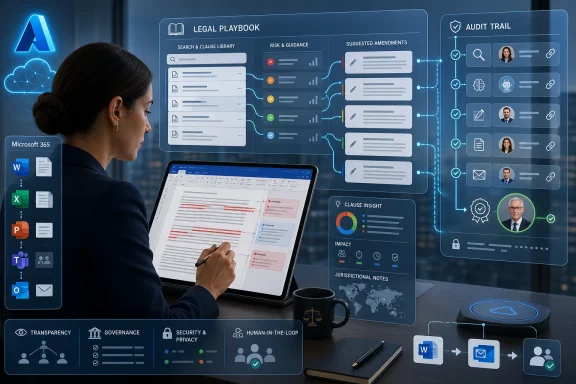
Project Apollo is being positioned as a system built on Shoosmiths’ own legal know-how, rather than a horizontal AI wrapper pointed at a pile of contracts. The firm says the tool reviews draft contracts against internal playbooks, preferred language, risk positions, and commercial expectations. That is a different proposition from asking a chatbot to “review this agreement” and hoping the answer sounds plausible.
The distinction matters because contract review is not merely a text classification problem. A senior lawyer reviewing a contract is not just spotting missing indemnities or awkward termination language. They are weighing client appetite, deal leverage, sector norms, timing pressure, and the difference between a point worth fighting and a point worth parking.
Shoosmiths’ pitch is that Apollo can expose that reasoning rather than simply outputting redlines. Chief executive David Jackson’s key phrase is not productivity, though productivity is certainly part of the sell. It is the claim that lawyers can see not only what amendments were made, but why.
That “why” is the whole fight. In professional services, AI that produces answers is useful. AI that teaches the logic of those answers is potentially disruptive.
Microsoft Becomes the Platform Beneath the Legal Playbook
Microsoft’s role gives the project broader significance beyond one firm’s innovation roadmap. Apollo is built on Microsoft Azure and uses AI models to compare contracts against Shoosmiths’ playbooks, according to Microsoft’s own account of the collaboration. That puts Microsoft not merely in the productivity layer, but in the infrastructure layer beneath a law firm’s core work product.
This is the shape Microsoft has been chasing across regulated industries. Copilot gets users comfortable with AI inside Word, Outlook, Teams, and Excel. Azure then becomes the place where firms build the bespoke systems that are too sensitive, too workflow-specific, or too competitively important to hand to a generic SaaS vendor.
For WindowsForum readers, that pattern should look familiar. Microsoft’s enterprise strategy has always been strongest when it makes the operating environment feel inevitable. In the 1990s and 2000s, that meant Windows, Office, Exchange, and Active Directory. In the AI era, it means Microsoft 365, Copilot, Azure AI, identity, compliance, audit, data boundaries, and developer tooling all braided into one procurement story.
The legal sector is a particularly attractive test bed because it is document-heavy, expensive, risk-sensitive, and culturally allergic to uncontrolled automation. If Microsoft can help a law firm convince partners that AI output can be reviewed, explained, logged, and controlled, it has a template it can reuse in accounting, consulting, insurance, procurement, and financial services.
That is why Darren Hardman, Microsoft UK and Ireland’s chief executive, framed Apollo as a way to make the knowledge of experienced Shoosmiths lawyers available to everyone in the firm. It is a polished executive line, but it also captures Microsoft’s preferred enterprise AI thesis: the model is not the product; the product is organizational memory made queryable and operational.
The Audit Trail Is the Product Feature Lawyers Actually Need
Most AI announcements still lead with speed. Apollo leads, more interestingly, with auditable reasoning.
That phrase can sound like marketing varnish, but in law it points to a real operational problem. A contract review tool that suggests a clause change is only useful if a lawyer can defend the recommendation to a partner, a client, an opponent, or, in the worst case, a court. “The model said so” is not a professional standard.
Shoosmiths says Apollo shows the basis for its recommendations, including the internal knowledge it draws from. In practical terms, that means the value is not just in the redline but in the path back to the playbook. The firm wants a junior solicitor to see the expected position, the deviation in the contract, the reason the deviation matters, and the language that would bring the document into line.
That is also why the firm is keeping a senior lawyer in the loop. Shoosmiths says Apollo output will be reviewed and signed off by a senior lawyer, which is both a legal safeguard and a political necessity inside the partnership model. AI may draft the first move, but accountability still sits with a human professional.
The auditability claim should still be treated carefully. Generative AI systems can provide explanations that look coherent without being faithful to the actual computational path that produced an answer. The strongest version of Apollo’s design is not that the model explains itself in abstract terms, but that its recommendation is grounded in explicit firm playbooks, versioned contract rules, and reviewable source material.
That is the emerging standard for professional AI: not magic, not autonomy, not omniscience, but traceability. A system does not need to be infallible to be useful. It needs to be reviewable, bounded, and honest about where its answer came from.
The Junior Lawyer Problem Was Always an AI Problem in Disguise
Shoosmiths is also selling Apollo as a training accelerator for junior lawyers, and this is where the launch becomes more than an efficiency story. Contract review has long been one of the ways junior solicitors learn judgment by repetition. They compare drafts, absorb partner preferences, ask why a clause is unacceptable, and gradually internalize the craft.
The risk of legal AI is that it removes the repetitive work before trainees have extracted the lesson from it. If a machine produces the first review and a senior lawyer only checks the result, the junior may become a passive courier between system and supervisor. That is the nightmare version: faster output, weaker lawyers.
Apollo is being framed as the opposite. By showing not only the amendment but the reasoning behind it, Shoosmiths argues the system can compress the learning cycle. A developing lawyer sees a senior-style explanation at the moment of work, not days later in a markup returned from a busy partner.
That is plausible, but not automatic. Software can surface good reasoning, but it cannot force reflection. A trainee who accepts AI suggestions without contesting them learns less than a trainee who struggles through a draft and then compares their judgment with the system’s.
The implementation detail that matters, therefore, is not whether Apollo can produce a decent markup. It is whether Shoosmiths designs the work around it so that juniors remain active participants. The tool may be a tutor, but only if the firm treats it as part of legal education rather than a silent production engine.
The One-Million-Prompt Bonus Was the Cultural Beta Test
Apollo did not arrive in a vacuum. Shoosmiths spent the previous year making AI adoption conspicuous, measurable, and financially meaningful.
In April 2025, the firm announced a £1 million bonus pot tied to staff collectively reaching one million Microsoft Copilot prompts. By December, it said the target had been hit more than four months ahead of schedule. That was a gimmick, but a revealing one.
The obvious criticism is that prompt counts are a crude metric. A million prompts do not prove a million useful interventions, and organizations can easily confuse activity with transformation. Anyone who has lived through dashboard-driven IT adoption knows that when a metric becomes a target, people learn how to feed the metric.
But the bonus scheme also solved a genuine adoption problem. Many organizations buy AI tools and then discover that staff use them unevenly, quietly, or not at all. Shoosmiths made usage visible and socially legitimate. It told staff, in effect, that experimenting with AI was not a private vice but an institutional expectation.
That matters because Apollo requires more than technical deployment. A contract review system built on firm knowledge needs lawyers who are willing to trust it enough to use it, skeptical enough to check it, and engaged enough to improve it. The Copilot bonus was less a productivity program than a cultural rehearsal.
The lesson for IT leaders is uncomfortable but useful. AI rollouts are not primarily software rollouts. They are behavior-change programs with software attached.
Proprietary AI Is Becoming the New Law Firm Status Symbol
Shoosmiths is not alone in deciding that the most important AI tools may need to be owned, shaped, or deeply customized by the firm itself. Kirkland & Ellis has reportedly committed hundreds of millions of dollars to proprietary AI development. Freshfields has announced work with Anthropic, a deal with Google to deploy Gemini, and partnerships with legal AI providers including Thomson Reuters and DeepJudge.
The common thread is not that every major firm wants to become a software company. It is that elite legal work depends on differentiated judgment, and firms are nervous about letting that judgment be mediated by the same vendor tools their competitors can buy.
A law firm’s playbooks are not just internal documentation. They are a codified version of market experience: what the firm has seen, what clients accept, where risk hides, how negotiation positions shift, and how a partner wants a point framed. If those playbooks become machine-readable, they become both more valuable and more sensitive.
This is where the legal AI market splits. Commodity tools will handle summaries, first-pass reviews, diligence triage, translation, and routine drafting. Proprietary systems will try to capture the firm-specific layer: not what the law says in general, but how this firm advises this client in this context.
Shoosmiths’ Apollo sits firmly in that second category. It is not just a contract review interface. It is an attempt to operationalize house style, client preference, and risk tolerance.
That may be the durable advantage. Large language models will keep changing, and the underlying model provider may matter less over time. The defensible asset is the curated knowledge layer wrapped around the model.
The Microsoft Dependency Cuts Both Ways
The Microsoft partnership gives Shoosmiths credibility, infrastructure, and enterprise-grade integration. It also raises a familiar strategic question: how much of the firm’s AI future should sit inside Microsoft’s stack?
For many firms, the answer will be “as much as possible,” because Microsoft already owns the productivity surface where lawyers work. Contracts live in Word. Emails live in Outlook. Calls and meetings live in Teams. Identity, permissions, compliance, and document management often orbit Microsoft 365 even when specialist legal systems sit alongside it.
That gravitational pull is Microsoft’s advantage. If an AI tool can live near the document, respect enterprise identity, inherit security controls, and connect to approved knowledge sources, it has a much easier path through procurement and governance than a shiny standalone product.
But platform dependence has costs. Firms that build deeply on Azure and Microsoft AI services gain speed, but they also accept Microsoft’s pricing, roadmap, model availability, compliance posture, and integration assumptions. If the legal AI layer becomes strategically critical, the platform underneath it becomes strategically critical too.
This is not a reason to avoid Microsoft. It is a reason to architect deliberately. The smartest firms will separate their proprietary knowledge assets from the replaceable parts of the AI stack. They will want playbooks, evaluation data, audit logs, and workflow logic that can survive model changes, vendor changes, and future regulatory demands.
In other words, Shoosmiths’ bet on Microsoft makes sense. But the long-term value of Apollo will depend on whether Shoosmiths owns the right layers.
Contract Review Is Where AI Can Be Useful Without Pretending to Be a Lawyer
Legal AI hype often overreaches by implying that systems can replace legal judgment wholesale. Contract review is a more credible target because it is structured enough to benefit from automation but nuanced enough to require supervision.
A contract can be compared against a playbook. Deviations can be flagged. Preferred clauses can be suggested. Risk levels can be described. Negotiation positions can be ranked. Those are tasks where AI can reduce drudgery without claiming to decide the law.
The work is also economically attractive. Contract review consumes huge amounts of associate time, and clients have long objected to paying premium rates for repetitive first-pass drafting. If AI can reduce the hours spent getting to a partner-ready draft, firms can protect margins while offering faster service.
That does not mean the technology is harmless. A bad contract review recommendation can create real commercial risk. A system that misses a liability cap, misunderstands a data-processing obligation, or normalizes an unfavorable termination right can cause damage that only becomes visible months later.
This is why the human review promise matters. Apollo’s credibility rests on being a decision-support system, not a decision-maker. The moment a firm starts treating AI redlines as presumptively correct, the risk profile changes.
The practical benchmark should be simple: does the tool make a good lawyer faster, or does it make a weak review look polished? The first is transformation. The second is liability with better formatting.
The Real Competition Is Between Knowledge Systems, Not Chatbots
The legal market has spent two years talking about models. The next stage will be about knowledge systems.
A model can read a clause and generate a plausible comment. A knowledge system knows which playbook applies, which client preference overrides the default, which jurisdiction matters, which prior negotiation history is relevant, and which risks require escalation. That is a much harder thing to build.
Shoosmiths’ description of Apollo points toward this harder layer. The system is meant to reflect preferred language, risk profile, and commercial position for each client. If that works in practice, the tool is not merely accelerating review. It is standardizing the firm’s advice across teams and offices.
Standardization is both a strength and a danger. Clients like consistency, and firms benefit when institutional knowledge does not disappear into inboxes or individual partner habits. But legal advice also depends on context, and overly rigid playbooks can flatten judgment.
The best systems will therefore need controlled flexibility. They must know the default position, but also show when the default may not fit. They must help juniors learn the rule, but also teach them why the rule has exceptions.
That is a more ambitious design problem than most AI demos admit. It requires knowledge engineering, legal governance, interface design, evaluation discipline, and partner trust. The model is only one component.
Windows Shops Should Recognize the Governance Story
Although Apollo is a legal-sector story, its lessons travel directly into enterprise IT.
Every regulated organization now faces the same set of questions. Which data can AI touch? Which recommendations require approval? Where are prompts and outputs logged? How are model changes tested? Who owns the knowledge base? How does the organization stop staff from pasting sensitive work into unapproved tools?
Shoosmiths is effectively answering those questions by building inside a controlled Microsoft environment and tying outputs to internal knowledge. That approach is not glamorous, but it is how AI will become normal in professional workflows. The future is less “ask the chatbot anything” and more “use this approved assistant for this bounded task, with these sources and this review process.”
For sysadmins and IT pros, this means the AI governance workload is moving from policy documents into architecture. Identity, access control, data classification, retention, logging, endpoint management, and incident response all become part of AI deployment. The legal department may own the professional standard, but IT owns many of the controls that make the standard enforceable.
The user experience matters too. Lawyers live in Microsoft Word, just as finance teams live in Excel and sales teams live in CRM systems. AI tools that require users to leave the workflow will struggle. AI tools embedded where work already happens will spread quickly, sometimes faster than governance teams expect.
That is the Windows ecosystem angle: Microsoft does not need every organization to buy the same AI product. It needs every organization to build AI habits inside Microsoft-controlled workflows.
The Market Is Moving Faster Than the Professional Rules
One reason Apollo is interesting is that it arrives while professional norms around AI are still unsettled. Law firms know they must use the technology, but they also know that confidentiality, competence, privilege, supervision, and liability do not disappear because a model is involved.
Regulators and professional bodies have been moving toward common themes: lawyers must understand the tools they use, protect client data, verify outputs, and remain responsible for the advice delivered. That creates a strong incentive for firms to prefer systems with audit trails, controlled data access, and human sign-off.
Apollo’s “auditable reasoning” language is therefore not accidental. It is a response to the anxieties of partners, clients, insurers, and regulators. The firm is saying that AI is not operating as a black box freelancer. It is working from approved internal guidance under senior review.
Still, the unresolved question is quality assurance at scale. How often is Apollo right? How are errors categorized? How are playbooks updated? How does the firm test the system after a model upgrade? What happens when two internal sources conflict? Which matters are excluded because the risk is too high?
Those questions are not criticisms of Shoosmiths specifically. They are the questions every serious AI deployment must answer once the press release fades. The firms that win will not be those with the flashiest launch. They will be those with the best operational discipline.
Apollo Turns Shoosmiths’ AI Bet From Adoption Theater Into Workflow Power
The most concrete reading of Apollo is that Shoosmiths has moved from encouraging AI use to embedding AI in a defined legal workflow. That is a meaningful step up in maturity.
The Copilot prompt challenge made AI visible across the firm. Apollo makes AI specific. It gives the technology a job, a knowledge base, an approval process, and a measurable place in the production of legal work.
That is how enterprise AI becomes real. Not through a thousand random prompts scattered across inboxes, but through repeatable workflows where the organization can compare outcomes before and after adoption. Contract review is a good candidate because the work is frequent, expensive, documentable, and tied to identifiable risk.
The broader legal industry will watch whether Shoosmiths can turn that workflow into advantage. If Apollo shortens review cycles, improves consistency, and helps junior solicitors develop faster, the firm will have evidence that proprietary AI is worth the investment. If it becomes another underused tool that produces impressive demos and uneven real-world uptake, it will be a cautionary tale about confusing innovation branding with operational change.
For now, the direction is clear. Law firms no longer want AI merely as an assistant. They want it as a controlled expression of institutional expertise.
The Clauses Behind the Press Release
The Apollo launch leaves several practical points for firms, IT teams, and clients to watch as legal AI moves from experimentation into daily work.
- Shoosmiths has chosen to build a proprietary contract review system with Microsoft rather than rely entirely on off-the-shelf legal AI platforms.
- Apollo’s most important promise is not faster redlining but explainable recommendations grounded in the firm’s own playbooks and client-specific positions.
- Senior lawyer review remains central, which keeps the tool in the realm of supervised decision support rather than autonomous legal advice.
- The project builds on Shoosmiths’ earlier firmwide Copilot adoption push, suggesting the firm treated cultural readiness as a prerequisite for workflow automation.
- Microsoft’s role shows how Azure and Microsoft 365 are becoming the default enterprise substrate for bespoke AI systems in regulated professional services.
- The long-term test will be whether Apollo improves legal training and consistency without weakening the judgment that junior lawyers are supposed to develop.
Shoosmiths’ Apollo is not the end state of AI in law; it is a signpost toward the next, more serious phase. The first wave was about access to models, the second about adoption, and the third will be about converting private institutional knowledge into governed software systems that sit inside everyday work. For law firms, that raises the stakes from “who uses AI?” to “whose judgment does the AI embody?”—and for Microsoft, it is another reminder that the most valuable AI products may be the ones enterprises build on top of its stack themselves.