

Forty years after Microsoft shipped the first Windows to manufacturers on November 20, 1985, the OS that built the modern PC era is at once celebrating a milestone and confronting one of its most fractious public moments: a rapid pivot toward agentic, AI-first features that many users are calling unwanted, buggy, and privacy‑risking. What began as an executive soundbite — “Windows is evolving into an agentic OS” — has metastasized into a broader debate about reliability, control, and the role of machine intelligence inside the desktop itself.
Microsoft marked Windows’ original release on November 20, 1985, with the informal debut of Windows 1.0 that set the stage for four decades of iterative OS design. The date is material: the company and its partners are using Windows’ 40th anniversary as a marketing beat while simultaneously rolling new AI features into Windows 11. The anniversary context matters because it frames a generational expectation: the platform should be stable, respectful of user choice, and backward‑compatible. In 2024–2025 Microsoft repositioned Windows as an AI platform rather than merely a shell for apps. That strategy bundles three visible pillars:
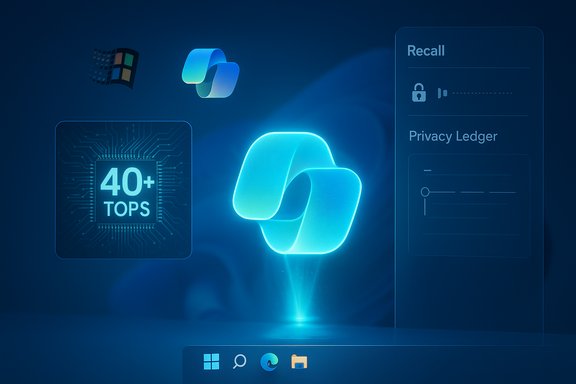
Microsoft’s messaging also paired the agentic vision with concrete platform work: the Windows AI Foundry runtime for local model execution, Model Context Protocol support for agents to call tools, and hardware guidance that earmarks NPUs at 40+ TOPS for the richest on‑device experiences. Those are verifiable, engineering‑level moves; the controversy is about presentation and defaults, not the existence of technology.
in a ton of feedback” and that there’s “a lot to fix” around reliability, performance, and inconsistent dialogs. That admission is a necessary first step, but public apologies alone don’t repair erosion of trust. Users want demonstrable controls and durable defaults. Concretely, the core technical and product steps Microsoft should prioritize include:
The principal failure so far is not that Microsoft is experimenting with AI — it’s that the company has not yet met the social contract required to put agency into the OS. Users and enterprises are not rejecting AI in principle; they are demanding trust, transparency, and reversible control. Those are products in their own right: turn them into defaults, and much of the argument evaporates. Leave them as afterthoughts, or worse, as monetized upsells, and the backlash will keep growing.
Windows can evolve — and it must. The safer, saner path is pragmatic: keep agentic features optional, publish independent verification for hardware claims, fix regressions that make everyday computing worse, and offer a first‑class “expert” mode that preserves local control. Do those things and Windows’ next decades will be defined by capability, not coercion. Do otherwise and the anniversary memory will be of an OS that traded polish and sovereignty for shiny, brittle automation — a cautionary tale for any platform turning intelligence into initiative.
Source: Gizmodo As Windows Turns 40, It's ‘Evolving’ Into a Bloated AI Slop Machine
 Background / Overview
Microsoft marked Windows’ original release on November 20, 1985, with the informal debut of Windows 1.0 that set the stage for four decades of iterative OS design. The date is material: the company and its partners are using Windows’ 40th anniversary as a marketing beat while simultaneously rolling new AI features into Windows 11. The anniversary context matters because it frames a generational expectation: the platform should be stable, respectful of user choice, and backward‑compatible. In 2024–2025 Microsoft repositioned Windows as an AI platform rather than merely a shell for apps. That strategy bundles three visible pillars:- System‑level Copilot experiences (voice, vision, and task automation).
- A hardware tier called Copilot+ PCs that rely on powerful neural processing units (NPUs).
- Platform plumbing intended for agentic workflows: local runtimes, a Model Context Protocol (MCP) for tool calls, and OS APIs to let agents orchestrate across apps.
What Microsoft said — and why wording mattered
When the head of Windows framed the narrative as an “agentic OS,” the phrase transmitted a set of mental models to users that Microsoft did not meaningfully unpack for the general public. In plain terms, an agentic OS is an operating system that can host persistent AI agents that maintain context, execute multi‑step workflows, and act on a user’s behalf with scoped permissions. Technically coherent, yes — but the marketing shorthand implied initiative, and initiative is the precise quality many users distrust in tools that run at system level.Microsoft’s messaging also paired the agentic vision with concrete platform work: the Windows AI Foundry runtime for local model execution, Model Context Protocol support for agents to call tools, and hardware guidance that earmarks NPUs at 40+ TOPS for the richest on‑device experiences. Those are verifiable, engineering‑level moves; the controversy is about presentation and defaults, not the existence of technology.
The hard evidence: Copilot ads, demos, and public misfires
A short promotional clip shared by Microsoft’s Windows account — intended to showcase Copilot helping a user resize text — became an emblem of the problem. In the ad Copilot points the user to display scaling rather than the accessibility text size control, and then inexplicably recommends a percentage already selected on the device. The result: a demo that undercuts the product promise and amplifies skepticism about Copilot’s reliability. Multiple outlets reproduced and analyzed the clip; the reaction wasn’t only about one video, it was about optics: if the flagship “help” demo fails basic accuracy tests on camera, the claim that Copilot will safely act for users becomes harder to accept. That single ad magnified what many users were already saying: Copilot’s current rollouts are inconsistent, occasionally incorrect, and sometimes overconfident — a known failure mode of contemporary chat‑style assistants. Critics noted similar failures in task‑specific Copilot experiences such as the Gaming Copilot, where advice about in‑game controls or objectives can be misleading or plainly wrong. Those errors matter because they expose how an agentic layer could make changes or recommendations that are wrong yet presented with undue confidence.The hardware angle: Copilot+ PCs and a 40+ TOPS baseline
Microsoft’s Copilot+ hardware program is central to the agentic story. Copilot+ machines are marketed with NPUs capable of 40+ TOPS (trillions of operations per second) and a curated feature set optimized for local inference — things like Live Captions, Windows Studio Effects, Cocreator in Paint, and the controversial Recall feature. Microsoft’s product pages and developer guidance explicitly list 40+ TOPS as the threshold for many Copilot+ experiences, and the company is actively certifying devices from Qualcomm, Intel, AMD, and OEM partners under that rubric. This hardware gating creates a two‑tier reality: richer, lower‑latency local AI on Copilot+ devices, while older hardware gets a degraded or cloud‑dependent experience. There are pragmatic strengths here. On‑device inference reduces round‑trip latency, limits what must be sent to the cloud, and can improve perceived privacy if the OS genuinely processes sensitive data locally and gives users control. But the 40+ TOPS number is a performance guideline, not an absolute UX guarantee; TOPS figures are highly workload‑dependent and must be validated by independent benchmarks if IT buyers are to trust them. That validation is largely absent so far.Recall, privacy, and the limits of local processing
Perhaps the most fraught single feature in the Copilot story is Recall, an opt‑in timeline of screenshots and UI captures intended as a searchable memory of past activity. Microsoft reworked Recall after early privacy blowback, adding encryption, local‑only storage, Windows Hello gating, and exclusion lists. Still, independent testing and reporting — notably from security‑minded outlets — found gaps: filters failing to redact credit‑card numbers or other sensitive items under certain conditions, and earlier Insider builds that stored data in ways researchers could easily inspect. Recall is emblematic of the tradeoff: automated recall can be profoundly useful, especially for accessibility, but it also materially increases the local surface area for accidental disclosure or compromise. These concerns are amplified by the fact that Recall relies on broad capture of on‑screen content. Even when the data is encrypted and controlled locally, a compromised device or user error can expose a trove of personal and enterprise data. Microsoft’s promise of local processing only is helpful, but the engineering, UX, and auditability guarantees around that promise have yet to satisfy many privacy experts and enterprise teams.Why users reacted so strongly: trust, bloat, and the feeling of being sold to
The agentic debate isn’t only about accuracy or privacy. It bundles a set of repeated grievances that have accumulated over years:- Perceived loss of control: defaults that nudge or require sign‑in with a Microsoft Account, reduced local‑account pathways in Out‑Of‑Box Experience (OOBE), and the closing of previously available bypasses.
- In‑OS promotion and upsell: persistent prompts for Edge, OneDrive, Microsoft 365, and other services that many users see as monetization inserted into a platform they expect to own.
- Continuous innovation cadence: faster feature drops can mean more regressions and less predictability for power users and admins who need stability.
What Microsoft has acknowledged — and where it could do better
Microsoft’s leadership has publicly acknowledged the pushback and said it is listening. The Windows lead explicitly replied to developer critiques, noting that the team “take- Deliver a clearly discoverable Pro / Expert path during OOBE that preserves local account options and disables promotional surfaces by default for professional installs.
- Ship a transparent privacy ledger in Settings → Privacy & security that lists what data Copilot agents can access, why it’s needed, and a human‑readable audit trail of agent actions.
- Publish independent benchmark methodology for NPU claims (40+ TOPS) and fund third‑party lab verification so enterprise buyers can trust the Copilot+ claim.
- Harden Recall and any screen‑capture features with third‑party security audits and bug‑bounty programs focused on local‑data exfiltration scenarios.
- Institute stronger rollback and staging behavior for feature drops so admins can defer risky updates without losing security patches.
Strengths of the agentic vision — why Microsoft thinks this matters
It’s important to be candid about the upside. Agentic features can deliver real productivity and accessibility gains:- Fewer manual steps: Agents that assemble meeting materials, reschedule calendar items across time zones, or synthesize research notes can save hours.
- Better accessibility: Screen‑aware help and voice‑first workflows can be transformative for users with mobility or vision impairments.
- Latency and privacy benefits: On‑device inference on suitably provisioned Copilot+ hardware can reduce the need to send sensitive queries to cloud services and provide faster responses.
Risks and the “trust tax”
But the upside comes with costs — a “trust tax” that users are being asked to pay:- Autonomy risk: Agents that can act rather than suggest raise obvious governance problems (who authorized the action, how to revoke it, and how to audit its decisions).
- Privacy surface: Recall‑style histories are extraordinarily valuable to attackers. Encryption helps, but device compromise or misconfiguration can nullify those protections.
- Monetization creep: If agentic prompts routinely favor Microsoft‑owned services, the OS starts to look like a storefront, not a neutral platform — a perception that has real reputational consequences.
- Fragmented experience: Hardware gating (Copilot+ requirements) risks splitting the user base into a privileged, marketed cohort and a slower, cloud‑dependent remainder — a recipe for inconsistent behavior and disappointed expectations.
Practical advice for users, IT admins, and developers (short list)
- For individuals: treat Copilot features as opt‑in until you’ve validated them on your hardware and use‑cases. Review privacy and Recall settings, and enable Windows Hello on machines that store sensitive data.
- For IT admins: use Windows Update for Business rings or Intune flighting to stage Copilot and Recall rollouts, and insist on vendor documentation for Copilot+ hardware claims if you intend to buy at scale.
- For developers: push for stable, documented APIs and predictable behavior. If agentic toolchains break deterministic behavior or obscure error conditions, migration risk to other platforms rises.
How the narrative could change at Ignite and beyond
Microsoft chose to preview the agentic framing ahead of Microsoft Ignite; that timing matters because the company typically uses Ignite to align partners and reassure enterprise customers. The conference (November 18–21, 2025) — itself paired with Windows’ 40th anniversary events — is an opportunity for Microsoft to show concrete guardrails rather than aspirational rhetoric. If Ignite demos demonstrate measured opt‑in models, third‑party validation, and immediate admin controls, the tone of the debate could shift. If instead the product message is more demos and fewer governance details, the backlash will persist.One final caution: what’s verifiable — and what remains single‑source
Most of the technical claims are verifiable: Microsoft’s Copilot+ guidance and 40+ TOPS ambitions appear on official pages, and independent outlets have reproduced key product screenshots and guidance. Similarly, the promotional Copilot video that misled users is available in circulation and has been analyzed by multiple outlets. Those are high‑confidence facts. By contrast, some high‑visibility social posts cited in the backlash (individual X posts from public figures) were widely reported but not always consistently archived in a stable, searchable way. Treat direct quote transcripts drawn from social media with care — they may be accurate reflections of sentiment, but single‑post evidence sometimes disappears or is altered; rely on multiple independent archives when quoting specific text. Reporting aggregated through reputable outlets (WindowsLatest, Windows Central, TechRadar, Tom’s Hardware) provides corroboration of the broader narrative, but linkable archival fidelity for every single reply is uneven.Conclusion — what the 40th anniversary moment reveals
Windows’ 40th anniversary is an apt moment for a sanity check. The agentic OS vision contains legitimate, exciting possibilities: context‑aware help, powerful accessibility gains, and new productivity paradigms. Microsoft has invested in hardware, runtimes, and protocols that make an AI‑rich Windows plausible in engineering terms. But plausibility is not the same as readiness.The principal failure so far is not that Microsoft is experimenting with AI — it’s that the company has not yet met the social contract required to put agency into the OS. Users and enterprises are not rejecting AI in principle; they are demanding trust, transparency, and reversible control. Those are products in their own right: turn them into defaults, and much of the argument evaporates. Leave them as afterthoughts, or worse, as monetized upsells, and the backlash will keep growing.
Windows can evolve — and it must. The safer, saner path is pragmatic: keep agentic features optional, publish independent verification for hardware claims, fix regressions that make everyday computing worse, and offer a first‑class “expert” mode that preserves local control. Do those things and Windows’ next decades will be defined by capability, not coercion. Do otherwise and the anniversary memory will be of an OS that traded polish and sovereignty for shiny, brittle automation — a cautionary tale for any platform turning intelligence into initiative.
Source: Gizmodo As Windows Turns 40, It's ‘Evolving’ Into a Bloated AI Slop Machine
