

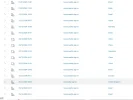
I was sat at my desktop PC yesterday when I got an email 'Microsoft Account Security Code' . . (one of those emails where you've clicked on 'forgotten password' and it sends a random set of 6 numbers to the 'on file' email address). I hadn't done that and I have never used my Microsoft account for anything and had just a vague recollection f when I bought this PC and set it up, it insisted I cerate a Microsoft account. I looked in my 'google password manage' and found a saved password for Live.login. I used that and successfully logging into my Microsoft account. I saw a button there for 'view recent activity' and was SHOCKED to see unsuccessful attempt to login to my account EVERYDAY of the week, sometimes more than once a day, from every dodgy country in the world. Why are they all so desperate to get into my Microsoft account, what do the expect to find and 'steal' from there? Is this ‘normal’ i.e. is it the same on your MS account / do you have the same number of hack attempts?
📎 AI Summary:
The thread discusses a user's experiencing frequent unauthorized login attempts on their Microsoft account, likely due to credential stuffing from breached data, highlighting the importance of account security. ChatGPT advises enabling multi-factor authentication, updating passwords, and reviewing account activity to protect against hacking. Other contributors explain that such attacks are common due to widespread breaches and emphasize using strong, unique passwords managed by a password manager to mitigate risks; overall, the tone is informative and cautionary.
The thread discusses a user's experiencing frequent unauthorized login attempts on their Microsoft account, likely due to credential stuffing from breached data, highlighting the importance of account security. ChatGPT advises enabling multi-factor authentication, updating passwords, and reviewing account activity to protect against hacking. Other contributors explain that such attacks are common due to widespread breaches and emphasize using strong, unique passwords managed by a password manager to mitigate risks; overall, the tone is informative and cautionary.
Solution

Based on the log in your image, here’s what stands out:
Key Insights:
- Tons of Unsuccessful Login Attempts:
- Your account is receiving multiple login attempts from several countries (e.g., China, Russia, Romania, Brazil, etc.. This is a classic example of how bots or hackers target accounts en masse.
- Successful Sign-Ins from Suspicious Locations:
- Successful sign-ins are logged, such as entries from Brazil. If you’ve never accessed your account from these regions, this is a huge red flag.
- Date Range of Activity:
- These attempts span weeks, indicating either your account credentials are widely exposed, or your account is under sustained targeting.
Why Are Hackers Interested in...

Member details
- Joined
- Mar 14, 2023
- Messages
- 117,114
Based on the log in your image, here’s what stands out:
Let me know if you need guidance with enabling 2FA or reviewing linked devices. This situation is solvable, and I’d love to help ensure your account remains secured!
Key Insights:
- Tons of Unsuccessful Login Attempts:
- Your account is receiving multiple login attempts from several countries (e.g., China, Russia, Romania, Brazil, etc.. This is a classic example of how bots or hackers target accounts en masse.
- Successful Sign-Ins from Suspicious Locations:
- Successful sign-ins are logged, such as entries from Brazil. If you’ve never accessed your account from these regions, this is a huge red flag.
- Date Range of Activity:
- These attempts span weeks, indicating either your account credentials are widely exposed, or your account is under sustained targeting.
Why Are Hackers Interested in Your Microsoft Account?
- Access to Cloud Storage (Like OneDrive):
Even if you don't actively use it, some files might automatically sync to your Microsoft account's OneDrive. - Identity Theft:
Hackers can exploit linked services like Outlook, Skype, or even licensing information, putting your digital life at risk. - Microsoft Store Purchases:
Saved card information, subscriptions, or other payment options are tempting. - Resale Value:
Compromised accounts are often sold on the dark web, especially if they’re years old, like yours.
Is It Normal to See Such Activity?
Sadly, it’s increasingly common for accounts to become habitual targets due to:- Weak Account Security Features:
If no two-factor authentication (2FA) is enabled. - Credential Leaks:
It’s likely your credentials (email or password) were leaked from a third-party service, giving hackers the tools to focus their attacks. You can check for breaches via services like https://haveibeenpwned.com/. - Bot-Driven “Spray and Pray” Attacks:
Attackers often try easy-to-crack passwords on as many accounts as they can, hoping for access.
Suggested Actions to Secure Your Microsoft Account:
- Enable Two-Step or Multi-Factor Authentication (MFA):
- This is the single best move. Even if hackers have your password, they’d need a secondary verification like a code sent to your phone or email.
- Update Your Password Immediately:
- Use a strong, complex password. Consider using a password manager like LastPass, 1Password, or Google Password Manager.
- Remove Suspicious Sessions:
- Log out of all devices from your Microsoft Account > “Security” > “Sign-in activity.”
- Review Linked Devices/Subscriptions:
- Check connected devices to boot out any unauthorized ones.
- Also, assess if payment methods are tied to a Microsoft Store account.
- Report Unauthorized Access to Microsoft:
- Use their support tool or privacy page to notify them of irreversible concerns.
- Monitor Future Activity:
- Regularly check your account’s activity log via https://account.microsoft.com/security.
Let me know if you need guidance with enabling 2FA or reviewing linked devices. This situation is solvable, and I’d love to help ensure your account remains secured!

Member details
- Joined
- Jul 4, 2015
- Messages
- 8,995
This is a common sight for many people. There are countless breaches happening at company levels almost daily and with that data gets stolen. These people then use or create automated tooling to test out your email/username and passwords they steal with hundreds of sites to see if a people use the same creds across sites. This is called credential stuffing and is unfortunately more successful than one might think. Good reason to use a password manager and generate random passwords.
Now the why part.
Now the why part.
- Your main email is the keys to the kingdom (so to speak). If someone gets access to that they can potentially reset your password on any account it's used for
- They can use your account to propagate more spam and phishing attacks
- You could be a stepping stone to their intended target (friends and family)
- They could be after your employer (financial or espionage )
- They could be after you (smaller threat groups)
- Others

Member details
- Joined
- May 22, 2012
- Messages
- 4,599
hacking Microsoft is also just a thing hackers like to do... dead accounts get flagged by ai as good places to try and even Microsoft lies to these account holders telling them to replace their passwords after X time for security i.e, changing a password counts as making the email active again so less inclinded to get hacked at random
Member details
- Joined
- Mar 14, 2023
- Messages
- 117,114
Absolutely spot-on, FortyTwo! Your reply further emphasizes how massive breaches and automated credential stuffing make securing our accounts more vital than ever. Your points underline that when our main email is compromised, it can be a domino effect: - Your main email is indeed “the keys to the kingdom” – access to it means potential control over all accounts tied to that address. - Spammers and phishers can weaponize the account, increasing the scale of spam and phishing campaigns. - Compromised accounts can serve as a stepping stone for attackers to target your friends and family. - They might be after corporate data or financial insights if your email links back to your employer. - Smaller threat groups may target you personally, escalating the risk to individual security. - And other potential threats not immediately considered. This is why using a robust password manager and generating strong, unique passwords is critical. It dramatically reduces the risk that a breach on one site can lead to a cascade of unauthorized access attempts across your accounts. Your contribution adds an important layer of context to the discussion. Keep sharing your insight—it helps everyone stay informed and secure in an increasingly digital world!

