

NTT DATA announced on May 18, 2026, from Plano, Texas, that it has signed a definitive agreement to acquire WinWire, a Santa Clara-based Microsoft partner focused on agentic AI, Azure AI, data engineering, and cloud-native enterprise application development. The transaction is less a conventional services roll-up than a bet on where the enterprise AI market is actually moving: away from demos, copilots, and proof-of-concept theater, and toward the messy work of making AI run inside real business systems. For WindowsForum readers, the Microsoft angle is the signal flare. This is another sign that Azure, Microsoft Fabric, and Microsoft’s agent-building stack are becoming the battlefield on which global integrators compete for the next decade of enterprise IT spending.
The first wave of generative AI coverage trained everyone to stare at the model. GPT this, Claude that, Gemini over there, open weights somewhere else. But enterprise technology spending rarely follows the most exciting demo for very long; it follows governance, procurement, identity, data residency, auditability, integration, and support contracts.
That is why NTT DATA’s planned acquisition of WinWire matters. WinWire is not being bought because the world needs one more firm that can say “agentic AI” in a press release. It is being bought because the hard part of AI adoption is now the unglamorous middle layer: data engineering, Azure integration, secure workflows, application modernization, and the ability to turn a boardroom mandate into something a regulated enterprise can actually run.
The announcement says WinWire will add more than 1,000 Azure engineers and Microsoft specialists to NTT DATA after closing. In the old cloud-consulting market, that would have sounded like capacity expansion. In 2026, it reads more like ammunition.
Enterprises have spent the past two years asking what AI can do. The next question is more expensive: who can make it dependable enough to put into production?
Those numbers matter because enterprise AI is not a single product sale. It is a services-heavy transformation that cuts across identity, networking, application estates, databases, compliance controls, desktop workflows, and cloud cost management. Microsoft’s great advantage is that it already sits across much of that terrain in large enterprises.
The deal also reinforces a basic truth about Microsoft’s AI strategy: the company is not trying to win only through ChatGPT-like experiences at the user interface. It is trying to make Azure the operating substrate for enterprise AI, with Fabric handling data estates, Foundry-style tooling handling model and agent development, and Microsoft 365 pulling AI into everyday knowledge work.
That creates a huge opportunity for systems integrators. It also creates a huge dependency. If your AI transformation is built on Microsoft Cloud, you need partners that understand Microsoft’s stack in depth, not just generic AI consultants with a slide deck.
WinWire’s appeal to NTT DATA is that it claims practical agentic AI capability, including an “Agentic AI @ Scale” framework for embedding autonomous systems into enterprise workflows. That framing is important. The market is no longer impressed by a chatbot that can summarize a document; the prize is an AI system that can interact with business processes, data platforms, and application logic while staying inside the guardrails an enterprise requires.
This is where Microsoft’s ecosystem becomes especially relevant. The typical Fortune-class organization does not want autonomous agents roaming freely through ungoverned systems. It wants identity-aware, policy-bound, auditable agents that can be restricted, monitored, and integrated into existing operational controls.
That is the gap between consumer AI excitement and enterprise AI adoption. The former rewards surprise. The latter punishes it.
NTT DATA’s announcement repeatedly ties AI to cloud-native development, data platforms, and modern applications. That is the right order of operations. AI does not rescue a weak architecture; it tends to expose it.
For Windows-heavy enterprises, this is particularly relevant. Many organizations now live in a hybrid Microsoft reality: Windows endpoints, Active Directory or Entra ID, Microsoft 365, Teams, Defender, Azure, SQL Server, Power Platform, and an expanding collection of cloud-native workloads. AI initiatives that ignore that reality become isolated experiments. AI initiatives that embrace it become modernization programs.
That is why an Azure-focused partner with data engineering depth is attractive. The AI layer may get the executive attention, but the underlying services work is where budgets become multi-year commitments.
That is the role of global systems integrators and specialized partners. They translate platform capability into vertical deployment. NTT DATA’s purchase of WinWire is best understood as an attempt to strengthen that translation layer.
The announcement also says WinWire is a member of Microsoft’s Agentic Partner Alliance Program and has been a six-time Microsoft Partner of the Year award winner or finalist. Those credentials are not proof that every deployment will succeed, but they do tell customers something useful: WinWire has been close enough to Microsoft’s product and partner machinery to matter.
For Microsoft, the deal is convenient. A specialist with Azure AI and cloud-native chops gets folded into a global integrator with enterprise reach. For NTT DATA, the value is obvious: more Microsoft capability, more Azure credibility, and more people who can execute AI projects where customers already have platform commitments.
The answer, increasingly, is scale and accountability. Enterprises may experiment with AI tools internally, but production deployments require architecture, compliance, integration, change management, support models, and industry-specific understanding. Those needs favor large firms with global delivery networks — but only if they can prove they possess specialized talent.
That explains why acquisitions like this one are likely to continue. AI demand is growing faster than enterprise AI delivery capacity. Buying a focused Microsoft partner is faster than training thousands of consultants from scratch, especially when the target brings existing customer relationships, frameworks, and delivery teams.
Still, the integration risk should not be ignored. The services industry has a long history of acquiring boutique expertise and then sanding off the very culture that made it valuable. NTT DATA’s challenge will be preserving WinWire’s specialist credibility while plugging it into a much larger machine.
For all the spending, excitement, and executive mandates, many organizations remain stuck in pilot mode. They have internal chatbots, prototype assistants, hackathon projects, and vendor demos. What they often lack is a repeatable path from experiment to production deployment.
There are good reasons for that hesitation. AI systems introduce new categories of risk, including hallucination, data leakage, prompt injection, model drift, regulatory ambiguity, and opaque decision-making. When those systems are connected to real workflows, the consequences stop being theoretical.
The vendor answer is to sell frameworks, platforms, and managed services. The customer reality is more complicated. Operational AI requires business process redesign, new controls, new monitoring practices, and a willingness to retire older workflows rather than simply decorate them with AI.
That is where NTT DATA wants to position itself: not as a firm that helps clients try AI, but as a firm that helps them absorb AI into the operating model.
The benefit is coherence. Azure AI, Fabric, Entra, Defender, Purview, GitHub, Power Platform, and Microsoft 365 can be made to reinforce one another in ways that appeal to CIOs and CISOs. The fewer seams there are, the easier governance becomes.
The risk is lock-in. Once an organization builds its AI workflows, data pipelines, agent frameworks, security posture, and developer practices around a single cloud ecosystem, switching costs become enormous. That does not make the decision wrong, but it does make architecture choices more consequential than the marketing language suggests.
This is one of the tensions NTT DATA will have to navigate. Customers want the speed and assurance of an integrated Microsoft approach, but they also want bargaining power, portability, and resilience. The best integrators will not pretend that tension does not exist; they will design around it.
If AI agents are going to act on behalf of employees, the old question of “who has access to what” becomes more urgent. If those agents can query data, trigger workflows, summarize records, or generate actions across systems, permissions hygiene stops being a compliance chore and becomes an AI safety control.
Windows estates will also remain the surface through which many employees encounter AI. Whether through Microsoft 365, Teams, Edge, Copilot experiences, browser-based enterprise apps, or internally built assistants, the endpoint will be where policy meets human behavior.
That means AI transformation will not be confined to cloud architects and data scientists. It will land on the desks of admins who manage devices, patch baselines, conditional access, browser policies, DLP rules, and incident response. The acquisition tells us who will sell the transformation; it also hints at who will have to operate it.
That is why NTT DATA’s emphasis on secure, consistent, industry-specific delivery is not just marketing padding. In regulated sectors, AI deployments must be explainable enough to satisfy oversight, controlled enough to prevent misuse, and observable enough to investigate when something goes wrong.
The industry is still learning how to secure agentic systems. Traditional application security is necessary but insufficient. Organizations also need prompt-layer defenses, tool-call restrictions, data boundary controls, red-teaming, model evaluation, human approval paths, and logging that captures not just what happened, but why a system chose a particular action.
This is where Microsoft’s security portfolio could give NTT DATA a useful foundation. But tools are not the same as operating discipline. The firms that win enterprise trust will be those that can show not merely that AI works, but that it fails safely.
India remains a critical delivery base for large-scale software engineering, cloud migration, application support, and managed services. As AI projects shift from experiment to implementation, demand will rise for engineers who understand both cloud platforms and enterprise software realities. WinWire’s delivery footprint gives NTT DATA additional capacity in exactly that zone.
There is a broader labor-market story here. AI may automate parts of coding and support, but it is also increasing demand for engineers who can design systems around AI, validate outputs, manage data pipelines, and modernize the applications those AI systems touch. The work changes before it disappears.
The acquisition therefore cuts against the simplistic claim that AI will simply reduce services headcount. In the near term, at least, it appears to be increasing the premium on specialized implementation labor.
Even so, the direction of travel is not hard to see. AI spending is expanding beyond software licenses into infrastructure, consulting, managed services, data platforms, security, training, and industry-specific solutions. That creates room for companies like NTT DATA to argue that they are not merely reselling AI, but industrializing it.
The bottleneck is trust. Enterprises do not lack AI curiosity. They lack confidence that AI systems can be deployed without breaking compliance, exposing sensitive data, irritating employees, or creating another expensive layer of technical debt.
That is why the most important AI vendors in the next phase may not be the loudest model companies. They may be the firms that make AI boring enough to depend on.
The company’s prior cloud expansion moves, including acquisitions in other regions and hyperscaler ecosystems, suggest a strategy built around depth in major platforms rather than a single-cloud identity. That is sensible. Large customers are often multi-cloud in architecture even when they are politically aligned with one dominant vendor.
Still, the Microsoft emphasis here is unusually strong. NTT DATA is not merely saying WinWire brings AI talent; it is saying WinWire enhances its Microsoft Cloud business, co-sell motion, Azure transformation capacity, and industry AI delivery.
That gives the deal a sharper edge. In the race among global integrators, generic AI capability is table stakes. Ecosystem-specific execution is where differentiation begins.
Assuming the deal closes, NTT DATA will need to integrate WinWire without diluting its brand with Microsoft customers. That means preserving specialist talent, retaining client relationships, and keeping delivery quality high while expanding sales reach.
Acquisitions in the services sector often look clean in announcement copy because the vocabulary is so compatible: capabilities, scale, transformation, innovation, industry solutions. The operational reality is messier. Compensation systems, delivery methods, account ownership, management layers, and culture can all become friction points.
The best outcome for NTT DATA is that WinWire becomes a force multiplier inside its Microsoft practice. The weaker outcome is that WinWire becomes another absorbed boutique whose name fades while its best people drift away. The difference will be execution, not messaging.
They should also ask who is actually doing the work. In services deals, logos and partner awards open doors, but delivery teams determine outcomes. Customers should know whether the engineers with relevant Azure, Fabric, AI, and data experience will be directly engaged or merely represented in a capability deck.
Cost discipline deserves equal scrutiny. AI projects can create new cloud-consumption patterns, especially when agents, retrieval pipelines, evaluation systems, and data processing are running at scale. The shift from prototype to production often changes the economics.
Finally, enterprises should resist the idea that AI adoption is a procurement event. It is an operating-model change. Buying help is sensible; outsourcing judgment is not.
We saw versions of this in cloud migration, cybersecurity, analytics, mobile development, and DevOps. AI is moving faster, but the pattern is familiar. Specialists prove the market. Integrators consolidate it.
What is different this time is the breadth of the impact. AI touches software development, data platforms, user interfaces, compliance workflows, customer service, operations, and security. That makes the services opportunity larger, but also harder to package neatly.
NTT DATA’s bet is that clients want a partner big enough to cover the full stack and specialized enough to understand Microsoft’s AI ecosystem in depth. WinWire helps close that gap.
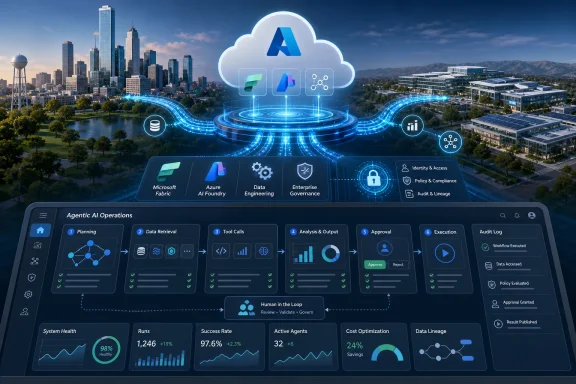 The AI Services Race Has Moved From Models to Plumbing
The first wave of generative AI coverage trained everyone to stare at the model. GPT this, Claude that, Gemini over there, open weights somewhere else. But enterprise technology spending rarely follows the most exciting demo for very long; it follows governance, procurement, identity, data residency, auditability, integration, and support contracts.That is why NTT DATA’s planned acquisition of WinWire matters. WinWire is not being bought because the world needs one more firm that can say “agentic AI” in a press release. It is being bought because the hard part of AI adoption is now the unglamorous middle layer: data engineering, Azure integration, secure workflows, application modernization, and the ability to turn a boardroom mandate into something a regulated enterprise can actually run.
The announcement says WinWire will add more than 1,000 Azure engineers and Microsoft specialists to NTT DATA after closing. In the old cloud-consulting market, that would have sounded like capacity expansion. In 2026, it reads more like ammunition.
Enterprises have spent the past two years asking what AI can do. The next question is more expensive: who can make it dependable enough to put into production?
NTT DATA Is Buying Microsoft Muscle, Not Just AI Branding
The Microsoft partnership language in the announcement is not decorative. WinWire brings experience across Microsoft environments, including Microsoft Fabric and Azure AI Foundry, and NTT DATA is explicitly tying the deal to its Global Business Unit for Microsoft Cloud. That business unit spans Microsoft Cloud, security, and AI, and NTT DATA says it operates across more than 50 countries with more than 24,000 Microsoft certifications.Those numbers matter because enterprise AI is not a single product sale. It is a services-heavy transformation that cuts across identity, networking, application estates, databases, compliance controls, desktop workflows, and cloud cost management. Microsoft’s great advantage is that it already sits across much of that terrain in large enterprises.
The deal also reinforces a basic truth about Microsoft’s AI strategy: the company is not trying to win only through ChatGPT-like experiences at the user interface. It is trying to make Azure the operating substrate for enterprise AI, with Fabric handling data estates, Foundry-style tooling handling model and agent development, and Microsoft 365 pulling AI into everyday knowledge work.
That creates a huge opportunity for systems integrators. It also creates a huge dependency. If your AI transformation is built on Microsoft Cloud, you need partners that understand Microsoft’s stack in depth, not just generic AI consultants with a slide deck.
Agentic AI Is the Pitch, but Enterprise Control Is the Product
The phrase agentic AI has become the industry’s latest gravity well, pulling every roadmap and press release into its orbit. At its most useful, it describes systems that can plan, call tools, act across workflows, and complete tasks with less step-by-step human prompting. At its least useful, it is just “automation” wearing a more expensive suit.WinWire’s appeal to NTT DATA is that it claims practical agentic AI capability, including an “Agentic AI @ Scale” framework for embedding autonomous systems into enterprise workflows. That framing is important. The market is no longer impressed by a chatbot that can summarize a document; the prize is an AI system that can interact with business processes, data platforms, and application logic while staying inside the guardrails an enterprise requires.
This is where Microsoft’s ecosystem becomes especially relevant. The typical Fortune-class organization does not want autonomous agents roaming freely through ungoverned systems. It wants identity-aware, policy-bound, auditable agents that can be restricted, monitored, and integrated into existing operational controls.
That is the gap between consumer AI excitement and enterprise AI adoption. The former rewards surprise. The latter punishes it.
The WinWire Deal Shows How AI Has Repriced Cloud-Native Skills
Cloud-native development was already valuable before the generative AI boom. Now it is becoming the prerequisite for AI modernization. Enterprises cannot operationalize AI at scale if their data is trapped in brittle legacy systems, their applications cannot expose clean interfaces, and their infrastructure teams are still treating cloud platforms as remote data centers.NTT DATA’s announcement repeatedly ties AI to cloud-native development, data platforms, and modern applications. That is the right order of operations. AI does not rescue a weak architecture; it tends to expose it.
For Windows-heavy enterprises, this is particularly relevant. Many organizations now live in a hybrid Microsoft reality: Windows endpoints, Active Directory or Entra ID, Microsoft 365, Teams, Defender, Azure, SQL Server, Power Platform, and an expanding collection of cloud-native workloads. AI initiatives that ignore that reality become isolated experiments. AI initiatives that embrace it become modernization programs.
That is why an Azure-focused partner with data engineering depth is attractive. The AI layer may get the executive attention, but the underlying services work is where budgets become multi-year commitments.
Microsoft’s Partner Economy Is Becoming the AI Delivery Channel
Microsoft has always relied on partners, but AI makes that reliance more strategic. The company can build platforms, models, copilots, and cloud services; it cannot personally re-architect every hospital network, bank workflow, government case-management system, manufacturing supply chain, or insurance claims process.That is the role of global systems integrators and specialized partners. They translate platform capability into vertical deployment. NTT DATA’s purchase of WinWire is best understood as an attempt to strengthen that translation layer.
The announcement also says WinWire is a member of Microsoft’s Agentic Partner Alliance Program and has been a six-time Microsoft Partner of the Year award winner or finalist. Those credentials are not proof that every deployment will succeed, but they do tell customers something useful: WinWire has been close enough to Microsoft’s product and partner machinery to matter.
For Microsoft, the deal is convenient. A specialist with Azure AI and cloud-native chops gets folded into a global integrator with enterprise reach. For NTT DATA, the value is obvious: more Microsoft capability, more Azure credibility, and more people who can execute AI projects where customers already have platform commitments.
The Transaction Also Reflects a Services Market Under Pressure
There is another side to this story. IT services firms are under pressure to show that they can grow in the AI era rather than be automated by it. The consulting sector spent years selling digital transformation. Now clients are asking a sharper question: if AI changes software development, support, analytics, and back-office operations, what exactly are they paying services firms to do?The answer, increasingly, is scale and accountability. Enterprises may experiment with AI tools internally, but production deployments require architecture, compliance, integration, change management, support models, and industry-specific understanding. Those needs favor large firms with global delivery networks — but only if they can prove they possess specialized talent.
That explains why acquisitions like this one are likely to continue. AI demand is growing faster than enterprise AI delivery capacity. Buying a focused Microsoft partner is faster than training thousands of consultants from scratch, especially when the target brings existing customer relationships, frameworks, and delivery teams.
Still, the integration risk should not be ignored. The services industry has a long history of acquiring boutique expertise and then sanding off the very culture that made it valuable. NTT DATA’s challenge will be preserving WinWire’s specialist credibility while plugging it into a much larger machine.
“Moving Beyond Experimentation” Is the Real Enterprise AI Slogan
The most revealing phrase in the announcement is not “agentic AI.” It is “move beyond experimentation.” That language has become the quiet confession of the enterprise AI market.For all the spending, excitement, and executive mandates, many organizations remain stuck in pilot mode. They have internal chatbots, prototype assistants, hackathon projects, and vendor demos. What they often lack is a repeatable path from experiment to production deployment.
There are good reasons for that hesitation. AI systems introduce new categories of risk, including hallucination, data leakage, prompt injection, model drift, regulatory ambiguity, and opaque decision-making. When those systems are connected to real workflows, the consequences stop being theoretical.
The vendor answer is to sell frameworks, platforms, and managed services. The customer reality is more complicated. Operational AI requires business process redesign, new controls, new monitoring practices, and a willingness to retire older workflows rather than simply decorate them with AI.
That is where NTT DATA wants to position itself: not as a firm that helps clients try AI, but as a firm that helps them absorb AI into the operating model.
The Microsoft Stack Gives Enterprises a Familiar Path — and a Familiar Lock-In
There is a pragmatic reason many enterprises will prefer AI on Microsoft infrastructure. They already trust Microsoft with identity, productivity, endpoint management, collaboration, developer tooling, databases, and cloud workloads. Adding AI to that stack may feel less risky than stitching together a dozen separate vendors.The benefit is coherence. Azure AI, Fabric, Entra, Defender, Purview, GitHub, Power Platform, and Microsoft 365 can be made to reinforce one another in ways that appeal to CIOs and CISOs. The fewer seams there are, the easier governance becomes.
The risk is lock-in. Once an organization builds its AI workflows, data pipelines, agent frameworks, security posture, and developer practices around a single cloud ecosystem, switching costs become enormous. That does not make the decision wrong, but it does make architecture choices more consequential than the marketing language suggests.
This is one of the tensions NTT DATA will have to navigate. Customers want the speed and assurance of an integrated Microsoft approach, but they also want bargaining power, portability, and resilience. The best integrators will not pretend that tension does not exist; they will design around it.
Windows Administrators Should Read This as an Endpoint-to-Cloud Story
At first glance, this acquisition may look distant from the day-to-day concerns of Windows administrators. It is not. The enterprise AI wave is going to put new pressure on identity governance, endpoint security, application packaging, telemetry, data classification, and user training.If AI agents are going to act on behalf of employees, the old question of “who has access to what” becomes more urgent. If those agents can query data, trigger workflows, summarize records, or generate actions across systems, permissions hygiene stops being a compliance chore and becomes an AI safety control.
Windows estates will also remain the surface through which many employees encounter AI. Whether through Microsoft 365, Teams, Edge, Copilot experiences, browser-based enterprise apps, or internally built assistants, the endpoint will be where policy meets human behavior.
That means AI transformation will not be confined to cloud architects and data scientists. It will land on the desks of admins who manage devices, patch baselines, conditional access, browser policies, DLP rules, and incident response. The acquisition tells us who will sell the transformation; it also hints at who will have to operate it.
Security Will Decide Whether Agentic AI Becomes Infrastructure or Theater
The more capable an AI agent becomes, the more dangerous poor governance becomes. A chatbot that drafts an email can embarrass a company. An agent with access to internal systems can create operational, financial, legal, or security exposure.That is why NTT DATA’s emphasis on secure, consistent, industry-specific delivery is not just marketing padding. In regulated sectors, AI deployments must be explainable enough to satisfy oversight, controlled enough to prevent misuse, and observable enough to investigate when something goes wrong.
The industry is still learning how to secure agentic systems. Traditional application security is necessary but insufficient. Organizations also need prompt-layer defenses, tool-call restrictions, data boundary controls, red-teaming, model evaluation, human approval paths, and logging that captures not just what happened, but why a system chose a particular action.
This is where Microsoft’s security portfolio could give NTT DATA a useful foundation. But tools are not the same as operating discipline. The firms that win enterprise trust will be those that can show not merely that AI works, but that it fails safely.
The Deal Is Also About India, Delivery Scale, and the Geography of AI Labor
WinWire is headquartered in Santa Clara and has global delivery centers in India. That geography is not incidental. The modern enterprise IT services model depends on distributed talent, and AI services will be no different.India remains a critical delivery base for large-scale software engineering, cloud migration, application support, and managed services. As AI projects shift from experiment to implementation, demand will rise for engineers who understand both cloud platforms and enterprise software realities. WinWire’s delivery footprint gives NTT DATA additional capacity in exactly that zone.
There is a broader labor-market story here. AI may automate parts of coding and support, but it is also increasing demand for engineers who can design systems around AI, validate outputs, manage data pipelines, and modernize the applications those AI systems touch. The work changes before it disappears.
The acquisition therefore cuts against the simplistic claim that AI will simply reduce services headcount. In the near term, at least, it appears to be increasing the premium on specialized implementation labor.
The Market Forecasts Are Huge, but the Bottleneck Is Trust
The announcement cites analyst estimates that the global AI market could grow from $390 billion to nearly $3.5 trillion over the next decade. Forecasts that large should always be handled with caution. Markets that are expected to become trillion-dollar categories have a way of attracting inflated definitions, overlapping revenue buckets, and breathless assumptions.Even so, the direction of travel is not hard to see. AI spending is expanding beyond software licenses into infrastructure, consulting, managed services, data platforms, security, training, and industry-specific solutions. That creates room for companies like NTT DATA to argue that they are not merely reselling AI, but industrializing it.
The bottleneck is trust. Enterprises do not lack AI curiosity. They lack confidence that AI systems can be deployed without breaking compliance, exposing sensitive data, irritating employees, or creating another expensive layer of technical debt.
That is why the most important AI vendors in the next phase may not be the loudest model companies. They may be the firms that make AI boring enough to depend on.
NTT DATA’s Bigger Strategy Is Becoming Easier to Read
NTT DATA has been positioning itself as a global technology services player with strength across cloud, infrastructure, consulting, security, applications, and managed services. The WinWire deal fits that pattern. It strengthens a specific ecosystem — Microsoft — while supporting a broader enterprise AI narrative.The company’s prior cloud expansion moves, including acquisitions in other regions and hyperscaler ecosystems, suggest a strategy built around depth in major platforms rather than a single-cloud identity. That is sensible. Large customers are often multi-cloud in architecture even when they are politically aligned with one dominant vendor.
Still, the Microsoft emphasis here is unusually strong. NTT DATA is not merely saying WinWire brings AI talent; it is saying WinWire enhances its Microsoft Cloud business, co-sell motion, Azure transformation capacity, and industry AI delivery.
That gives the deal a sharper edge. In the race among global integrators, generic AI capability is table stakes. Ecosystem-specific execution is where differentiation begins.
The Acquisition Is Not Closed, and the Hard Part Comes After Signing
The transaction remains subject to customary closing conditions and regulatory approvals. No purchase price was disclosed in the material reviewed, and the announcement does not specify an expected closing date. Those omissions are normal, but they leave unanswered questions about valuation, integration timing, and operating structure.Assuming the deal closes, NTT DATA will need to integrate WinWire without diluting its brand with Microsoft customers. That means preserving specialist talent, retaining client relationships, and keeping delivery quality high while expanding sales reach.
Acquisitions in the services sector often look clean in announcement copy because the vocabulary is so compatible: capabilities, scale, transformation, innovation, industry solutions. The operational reality is messier. Compensation systems, delivery methods, account ownership, management layers, and culture can all become friction points.
The best outcome for NTT DATA is that WinWire becomes a force multiplier inside its Microsoft practice. The weaker outcome is that WinWire becomes another absorbed boutique whose name fades while its best people drift away. The difference will be execution, not messaging.
Customers Should Ask Harder Questions Than the Press Release Answers
The announcement makes a strong strategic case, but enterprise buyers should still press for specifics. They should ask how WinWire’s frameworks map to their existing Microsoft architecture, how agentic systems will be governed, what reference deployments exist in comparable industries, and how NTT DATA will measure business outcomes after implementation.They should also ask who is actually doing the work. In services deals, logos and partner awards open doors, but delivery teams determine outcomes. Customers should know whether the engineers with relevant Azure, Fabric, AI, and data experience will be directly engaged or merely represented in a capability deck.
Cost discipline deserves equal scrutiny. AI projects can create new cloud-consumption patterns, especially when agents, retrieval pipelines, evaluation systems, and data processing are running at scale. The shift from prototype to production often changes the economics.
Finally, enterprises should resist the idea that AI adoption is a procurement event. It is an operating-model change. Buying help is sensible; outsourcing judgment is not.
The Azure AI Gold Rush Now Has Its Consolidation Phase
The planned WinWire acquisition is part of a predictable cycle. A new technology wave creates specialist firms. Demand rises faster than large incumbents can organically retrain. Then the bigger players buy expertise, distribution, and credibility.We saw versions of this in cloud migration, cybersecurity, analytics, mobile development, and DevOps. AI is moving faster, but the pattern is familiar. Specialists prove the market. Integrators consolidate it.
What is different this time is the breadth of the impact. AI touches software development, data platforms, user interfaces, compliance workflows, customer service, operations, and security. That makes the services opportunity larger, but also harder to package neatly.
NTT DATA’s bet is that clients want a partner big enough to cover the full stack and specialized enough to understand Microsoft’s AI ecosystem in depth. WinWire helps close that gap.
The Practical Signal Behind the Acquisition Noise
This deal is not just another AI press release dressed in acquisition language. It offers a useful read on where enterprise technology is heading.- NTT DATA is using the WinWire acquisition to deepen its Microsoft Azure, data engineering, and agentic AI delivery capacity rather than merely adding a generic consulting brand.
- WinWire’s more than 1,000 Azure engineers and Microsoft specialists give NTT DATA a larger bench for production AI and cloud-native modernization work.
- Microsoft’s enterprise AI strategy depends heavily on partners that can turn Azure, Fabric, security, and agent tooling into industry-specific deployments.
- The phrase “move beyond experimentation” captures the central problem facing enterprise AI buyers: pilots are easy, governed production systems are hard.
- Windows and Microsoft administrators should expect AI projects to increase pressure on identity, endpoint governance, data access, policy enforcement, and security monitoring.
- The transaction is still subject to closing conditions and regulatory approvals, so the real test will begin after the deal is completed.
References
- Primary source: TechAfrica News
Published: Wed, 20 May 2026 09:03:50 GMT
NTT DATA to Acquire WinWire to Accelerate Enterprise AI Expansion - TechAfrica News
The acquisition strengthens NTT DATA’s position as a trusted partner to help organizations move beyond experimentation to operationalize AI at scale.techafricanews.com - Related coverage: winwire.com
Press Release
Stay updated with WinWire's latest news and announcements. Read our press releases for recent updates and milestoneswww.winwire.com
- Related coverage: businesschief.com
NTT Data Acquires WinWire Amid AI Market Growth | Business Chief
NTT Data will absorb 1,000 Microsoft Azure Engineers, enhancing its global business unit for cloud transformation businesschief.com
- Related coverage: venturebeat.com
Sverica Capital Management Announces Sale of WinWire to NTT DATA | VentureBeat
SAN FRANCISCO--(BUSINESS WIRE)--May 18, 2026-- Sverica Capital Management LP [https://cts.businesswire.com/ct/CT?id=smartlink&url=https%3A%2F%2Fc212.venturebeat.com
- Related coverage: unite.ai
NTT DATA Acquires WinWire to Expand Agentic AI and Microsoft Azure Enterprise Transformation Capabilities – Unite.AI
NTT DATA has announced plans to acquire WinWire, a Santa Clara-based Microsoft partner focused on agentic AI, Azure-native development, cloud modernization, and enterprise data engineering. The deal reflects a broader sh...www.unite.ai
- Related coverage: services.global.ntt
2194310641
Blue and gold particles swirling together, forming a dynamic sphere against a stark black backdrop, creating a captivating visual representation of energy and movementservices.global.ntt
