

Microsoft plans to let organizations give trusted external presenters access to production controls in Teams events, extending a role that can start and end an event and decide what attendees see. The feature is listed as in development on the Microsoft 365 Roadmap, with general availability targeted for August 2026 in worldwide multi-tenant tenants.
Roadmap item 567298 covers federated B2B users and guest accounts. Once the change arrives, organizers will be able to select those external presenters in Teams’ Who has control of production tools setting.
That matters for organizations that outsource event production, bring in agency staff, or rely on vendors to operate broadcasts. Instead of requiring an internal employee to remain responsible for the live production interface, an approved third party can reportedly handle the event workflow directly.
Microsoft’s Teams documentation describes production-tool control as the ability to start an event, manage the attendee-facing view, and end the event. In practice, this is more consequential than the normal presenter role: it gives someone control over the live audience experience, not merely permission to speak or share content.
The setting applies to Teams events, including the structured broadcast-style formats where organizers control the stage, attendee visibility, and production flow. Microsoft already allows organizers to designate specific organizers, co-organizers, and presenters for those controls; the roadmap update expands that pool to trusted users outside the tenant.
Teams administrators and event organizers should review how external presenters are invited and authenticated before assigning production privileges. The relevant risks are straightforward: a selected outside presenter may be able to begin a live event early, alter what attendees see, or end the broadcast.
Microsoft’s current Teams planning guidance notes that external presenters can be invited to public events using unique join links. That makes verifying the intended recipient, limiting redistribution of those links, and rehearsing production handoffs sensible precautions for higher-profile sessions.
There is no indication in the roadmap entry that the feature changes tenant-wide external-access policies or turns production control on by default. Organizations will need to deliberately select eligible federated or guest users in the event option.
Microsoft is targeting the rollout for August 2026, so admins using third-party event producers should plan to test the permission model when it reaches their tenant.
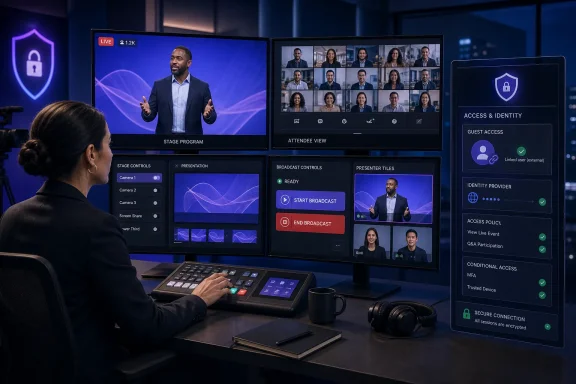 External producers get a seat at the control desk
Roadmap item 567298 covers federated B2B users and guest accounts. Once the change arrives, organizers will be able to select those external presenters in Teams’ Who has control of production tools setting.That matters for organizations that outsource event production, bring in agency staff, or rely on vendors to operate broadcasts. Instead of requiring an internal employee to remain responsible for the live production interface, an approved third party can reportedly handle the event workflow directly.
Microsoft’s Teams documentation describes production-tool control as the ability to start an event, manage the attendee-facing view, and end the event. In practice, this is more consequential than the normal presenter role: it gives someone control over the live audience experience, not merely permission to speak or share content.
The setting applies to Teams events, including the structured broadcast-style formats where organizers control the stage, attendee visibility, and production flow. Microsoft already allows organizers to designate specific organizers, co-organizers, and presenters for those controls; the roadmap update expands that pool to trusted users outside the tenant.
Admins should treat it as an event-production permission
The change should reduce friction for professionally run town halls and similar events, particularly where the production team is not employed by the host organization. But it also introduces a permission that deserves more scrutiny than a basic guest invitation.Teams administrators and event organizers should review how external presenters are invited and authenticated before assigning production privileges. The relevant risks are straightforward: a selected outside presenter may be able to begin a live event early, alter what attendees see, or end the broadcast.
Microsoft’s current Teams planning guidance notes that external presenters can be invited to public events using unique join links. That makes verifying the intended recipient, limiting redistribution of those links, and rehearsing production handoffs sensible precautions for higher-profile sessions.
There is no indication in the roadmap entry that the feature changes tenant-wide external-access policies or turns production control on by default. Organizations will need to deliberately select eligible federated or guest users in the event option.
Microsoft is targeting the rollout for August 2026, so admins using third-party event producers should plan to test the permission model when it reaches their tenant.
References
- Primary source: Microsoft 365 Roadmap
Published: 2026-07-14T22:41:38.6349466Z
Microsoft 365 Roadmap | Microsoft 365
The Microsoft 365 Roadmap lists updates that are currently planned for applicable subscribers. Check here for more information on the status of new features and updates.www.microsoft.com
- Official source: learn.microsoft.com
Plan for Teams events - Microsoft Teams | Microsoft Learn
Admin guidance for Teams events. Get an overview of Teams events, including planning considerations, policy controls, and guidance to help prepare for events in your organization..learn.microsoft.com
