

Colorado consumer advocates are using Windows 10’s end of support as Exhibit A in a new campaign against devices becoming unusable because their software support expires.
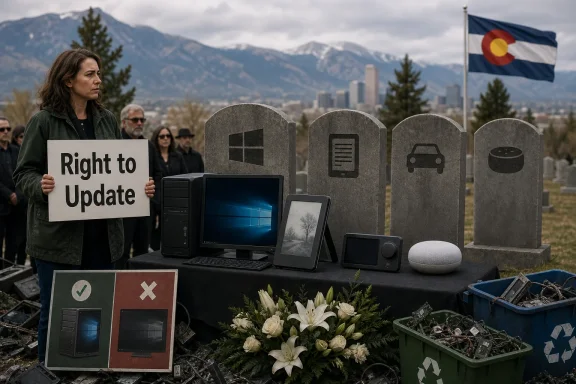
As reported by The Colorado Sun, CoPIRG staged a mock graveside service for obsolete electronics in Denver on Wednesday, with Windows 10 PCs, older Kindles, Spotify’s Car Thing and discontinued Google Nest hardware standing in for the broader problem. The group says products that still physically work are increasingly sidelined by support cutoffs, cloud-service shutdowns and upgrade requirements.
CoPIRG’s accompanying report estimates that expired software and discontinued online services have generated 1.7 billion pounds of U.S. e-waste since 2014. It puts the potential Windows 10 contribution at up to 1.6 billion pounds, based on PCs that cannot officially move to Windows 11.
Microsoft ended standard Windows 10 support on October 14, 2025. That did not switch off existing PCs: they still boot, run installed software and can remain useful for offline or tightly managed work. But machines not eligible for Windows 11 are at a real long-term security disadvantage once updates stop.
Microsoft’s consumer Extended Security Updates program is the important qualification missing from the “Windows 10 is obsolete” shorthand. Eligible Windows 10 version 22H2 PCs can receive critical and important security updates through October 13, 2026. The program does not add features, non-security fixes or conventional technical support, but it can buy owners and administrators a year to plan rather than junk a working device immediately.
That distinction matters. A PC blocked from Windows 11 by its processor, TPM or other hardware checks is not necessarily electronic waste today. It is, however, a machine with a hardening deadline unless its owner moves it to a supported operating system, isolates it from riskier network use, or replaces it.
The policy idea runs into difficult questions. Operating-system vendors cannot safely support every platform forever, and online services have real operating costs. But clear support-period disclosures would give consumers, schools and IT buyers a concrete lifecycle fact to weigh before purchase—rather than discovering it after an otherwise functional product loses a required service.
The Kindle example is particularly blunt. The Colorado Sun reports that Amazon ended store and library connectivity for 13 older Kindle models in May, although Amazon’s current support materials indicate that some older models can still receive manual firmware updates and continue to read locally transferred content.
For Windows users, the immediate task is more mundane: inventory Windows 10 hardware, check Windows 11 eligibility, enroll eligible personal PCs in ESU where appropriate, and decide which systems can be safely retained past October 2026.
As reported by The Colorado Sun, CoPIRG staged a mock graveside service for obsolete electronics in Denver on Wednesday, with Windows 10 PCs, older Kindles, Spotify’s Car Thing and discontinued Google Nest hardware standing in for the broader problem. The group says products that still physically work are increasingly sidelined by support cutoffs, cloud-service shutdowns and upgrade requirements.
CoPIRG’s accompanying report estimates that expired software and discontinued online services have generated 1.7 billion pounds of U.S. e-waste since 2014. It puts the potential Windows 10 contribution at up to 1.6 billion pounds, based on PCs that cannot officially move to Windows 11.
 Windows 10 is not dead — but the clock is running
Microsoft ended standard Windows 10 support on October 14, 2025. That did not switch off existing PCs: they still boot, run installed software and can remain useful for offline or tightly managed work. But machines not eligible for Windows 11 are at a real long-term security disadvantage once updates stop.Microsoft’s consumer Extended Security Updates program is the important qualification missing from the “Windows 10 is obsolete” shorthand. Eligible Windows 10 version 22H2 PCs can receive critical and important security updates through October 13, 2026. The program does not add features, non-security fixes or conventional technical support, but it can buy owners and administrators a year to plan rather than junk a working device immediately.
That distinction matters. A PC blocked from Windows 11 by its processor, TPM or other hardware checks is not necessarily electronic waste today. It is, however, a machine with a hardening deadline unless its owner moves it to a supported operating system, isolates it from riskier network use, or replaces it.
Colorado’s proposed “right to update”
CoPIRG wants manufacturers to state, at the point of sale, how long they will support a product’s software and connected services. The group also says it may push Colorado lawmakers for “right to update” legislation, extending the state’s right-to-repair approach into software maintenance and cloud connectivity.The policy idea runs into difficult questions. Operating-system vendors cannot safely support every platform forever, and online services have real operating costs. But clear support-period disclosures would give consumers, schools and IT buyers a concrete lifecycle fact to weigh before purchase—rather than discovering it after an otherwise functional product loses a required service.
The Kindle example is particularly blunt. The Colorado Sun reports that Amazon ended store and library connectivity for 13 older Kindle models in May, although Amazon’s current support materials indicate that some older models can still receive manual firmware updates and continue to read locally transferred content.
For Windows users, the immediate task is more mundane: inventory Windows 10 hardware, check Windows 11 eligibility, enroll eligible personal PCs in ESU where appropriate, and decide which systems can be safely retained past October 2026.
References
- Primary source: The Colorado Sun
Published: 2026-07-15T10:08:00+00:00
Keeping Colorado's consumer electronics out of the graveyard
Advocacy groups want Coloradans to have the right to keep using their old consumer electronics instead of having big companies cut off service.coloradosun.com
